MacBook Neo Review: $599, A18 Pro, and the Highest Repairability in 14 Years

Index
$599. The same A18 Pro chip found in the iPhone 16 Pro. And a 6 out of 10 from iFixit for repairability, the highest score for a MacBook since 2012. These three things in a single product are what make the MacBook Neo interesting and why it is the most strategic Mac Apple has launched in years.
What is the MacBook Neo
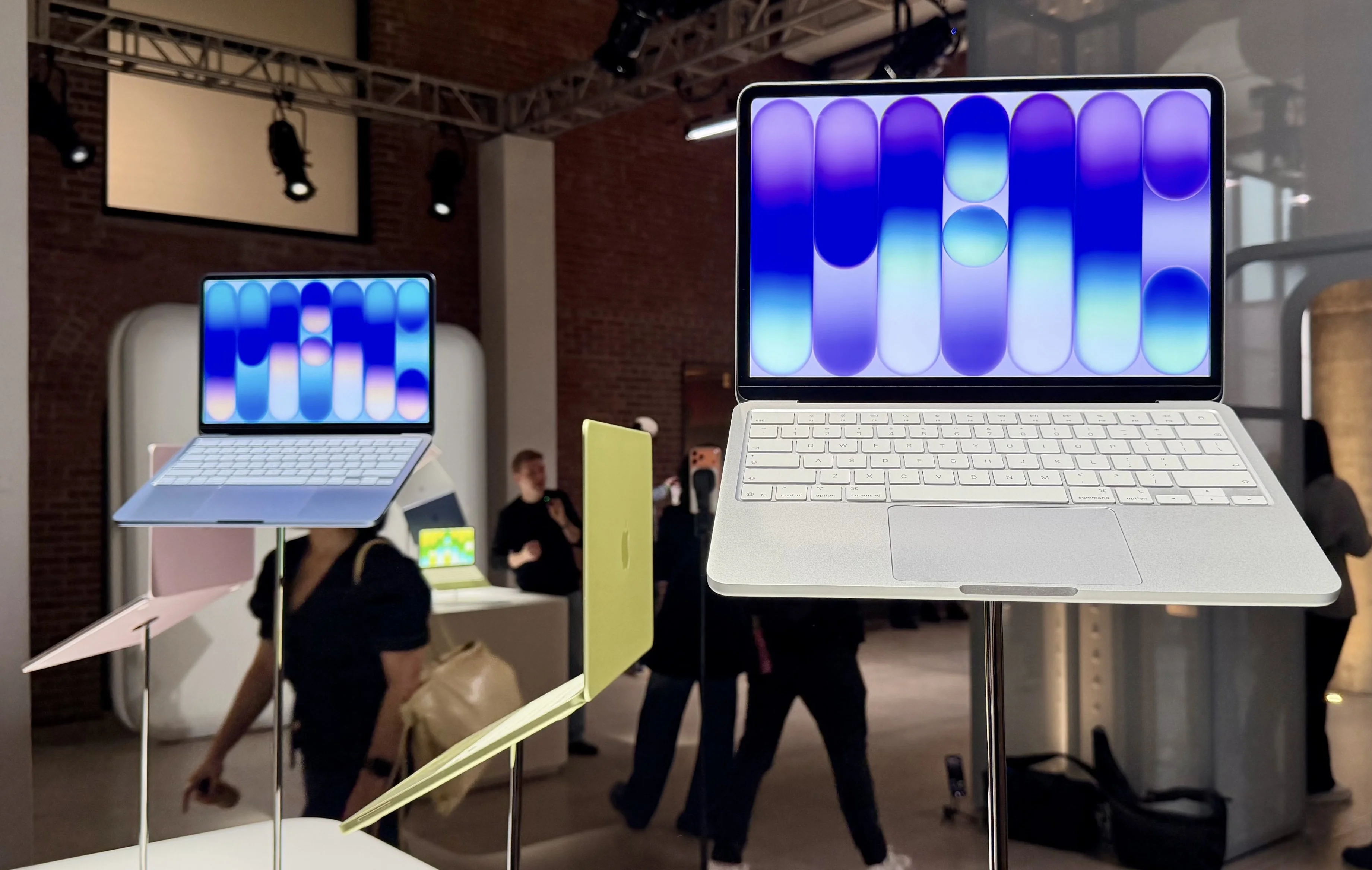
Apple introduced the MacBook Neo on March 4th and made it available for purchase on March 11, 2026. It is the company's first laptop with a starting price below $1000: starting at $599, rising to $699 with 512 GB and Touch ID, and in the educational channel, it's available for $499. It's not a discounted MacBook Air nor a refresh of the M1. It's a new product, with its own place in the lineup.
What enables this price is a chip decision. Instead of using a discontinued M-series, Apple opted for the A18 Pro, the same SoC from the 2024 iPhone 16 Pro, with one fewer GPU core. The thesis is not maximum power per dollar: it’s a cheap entry point to macOS for students, first-time laptop buyers, and users coming from Windows who never justified $1100. Tim Cook confirmed that the launch week was the best in terms of new Mac buyers in the history of the company.
Design and Colors
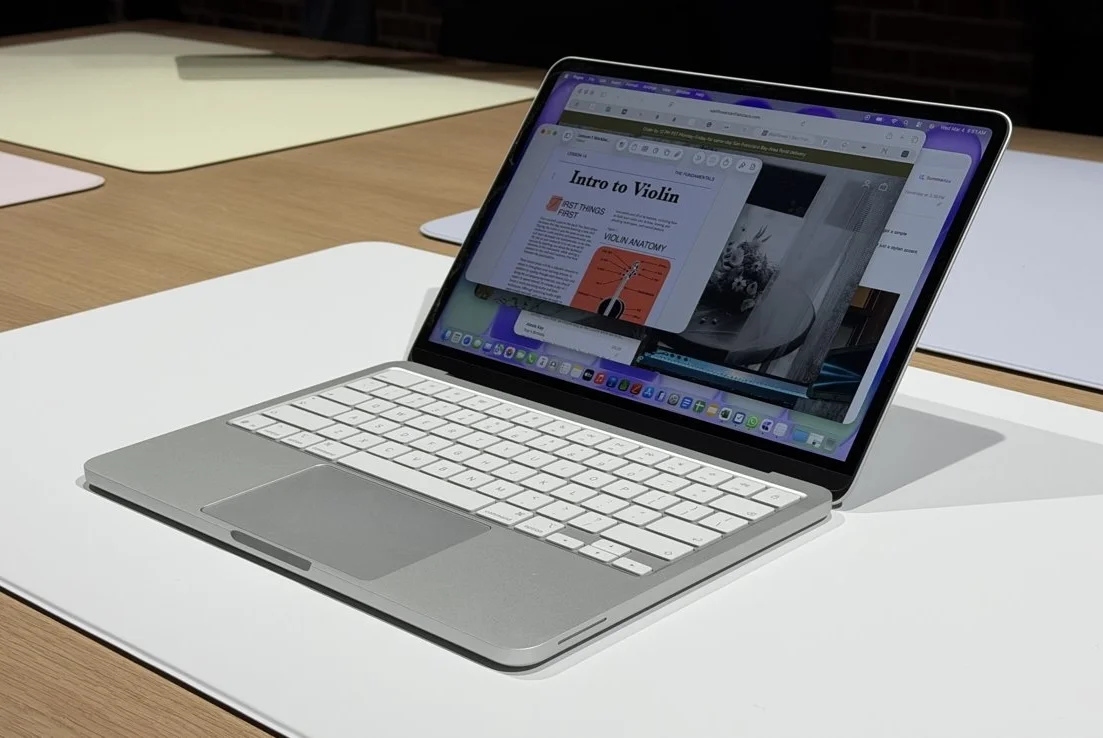
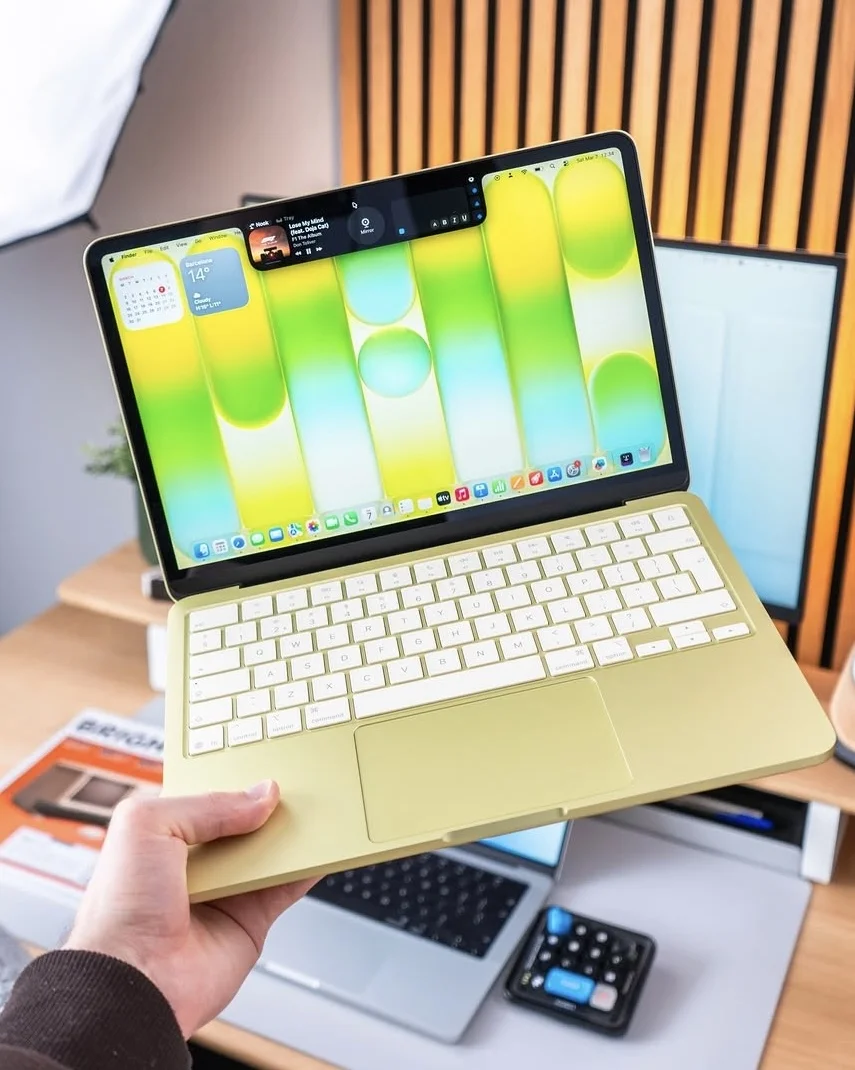
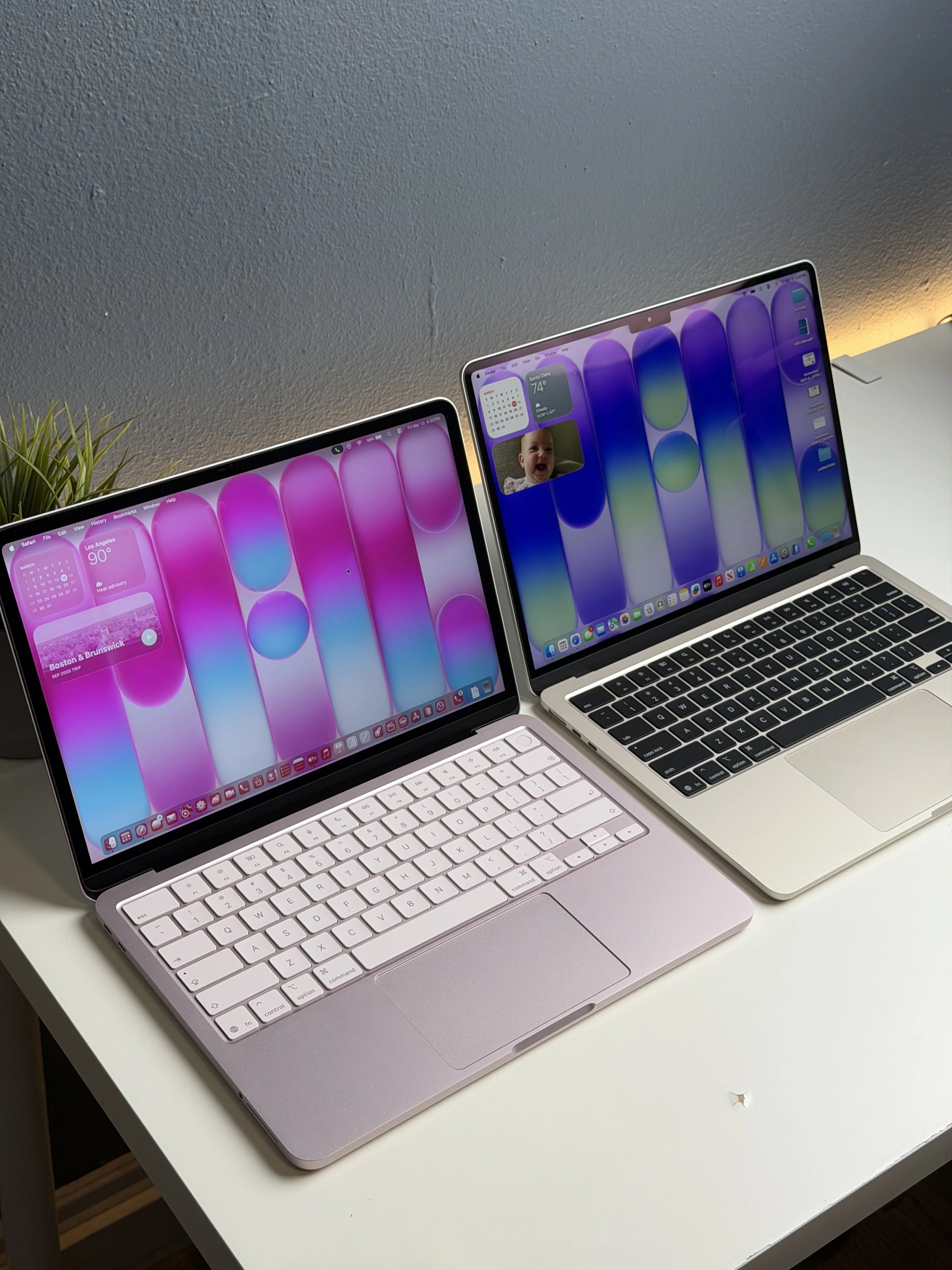
On a desk, the Neo resembles a MacBook Air. Same weight (2.7 lbs), similar dimensions, although slightly thicker, same unibody aluminum chassis. Two visible changes: the logo is anodized aluminum instead of polished mirror, and there’s no notch. Less declared but important: recycled aluminum makes up 60% by weight, an Apple record for any of its products.
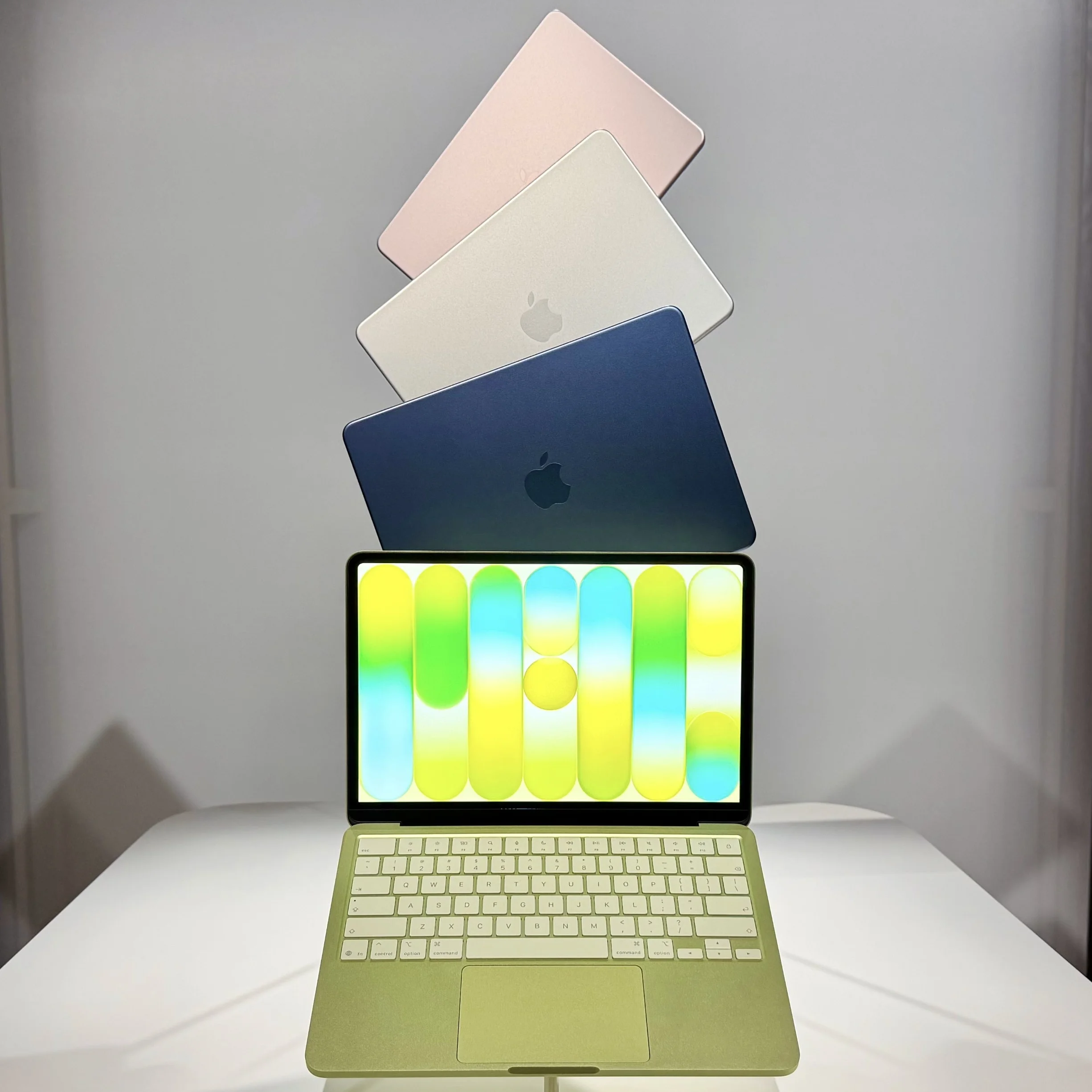
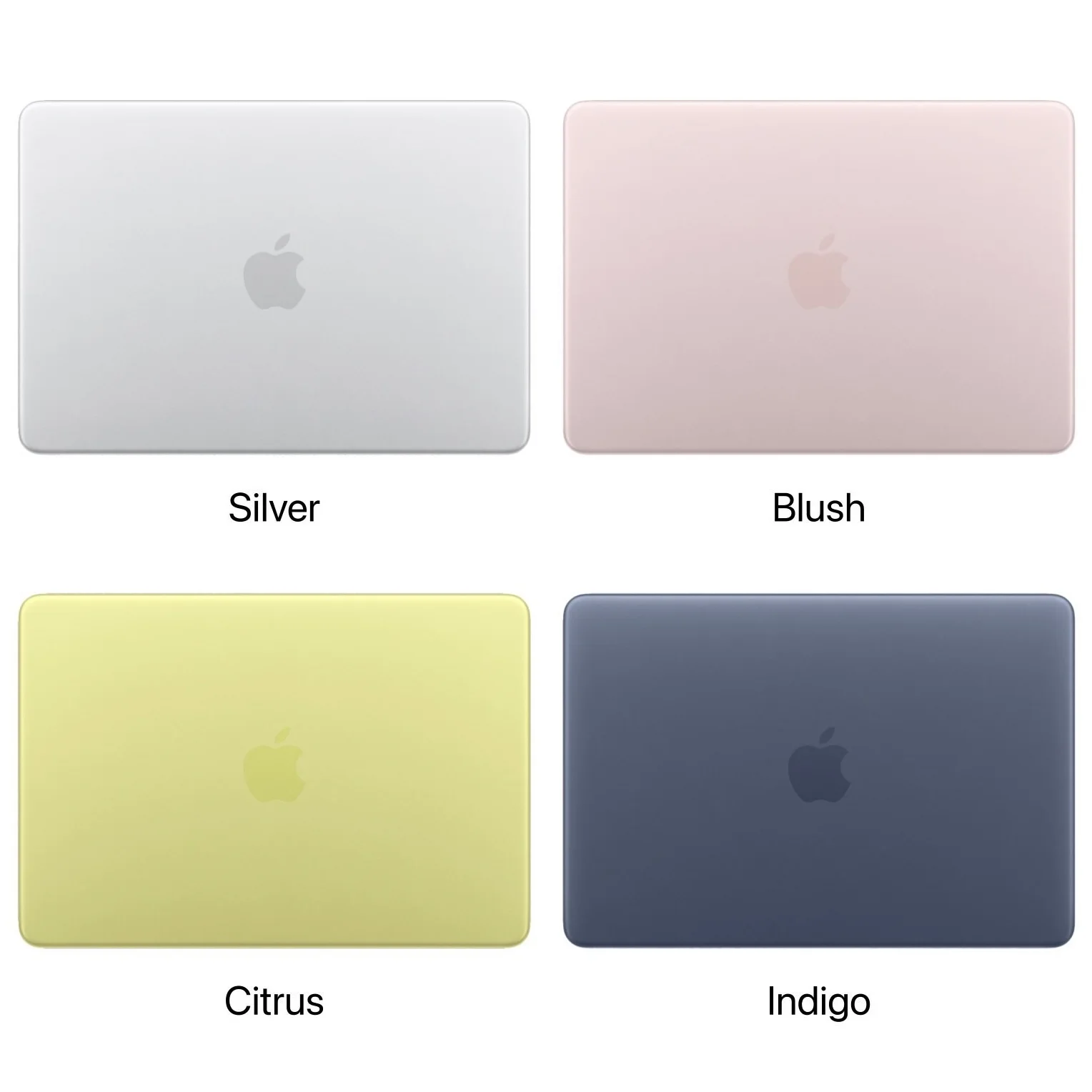
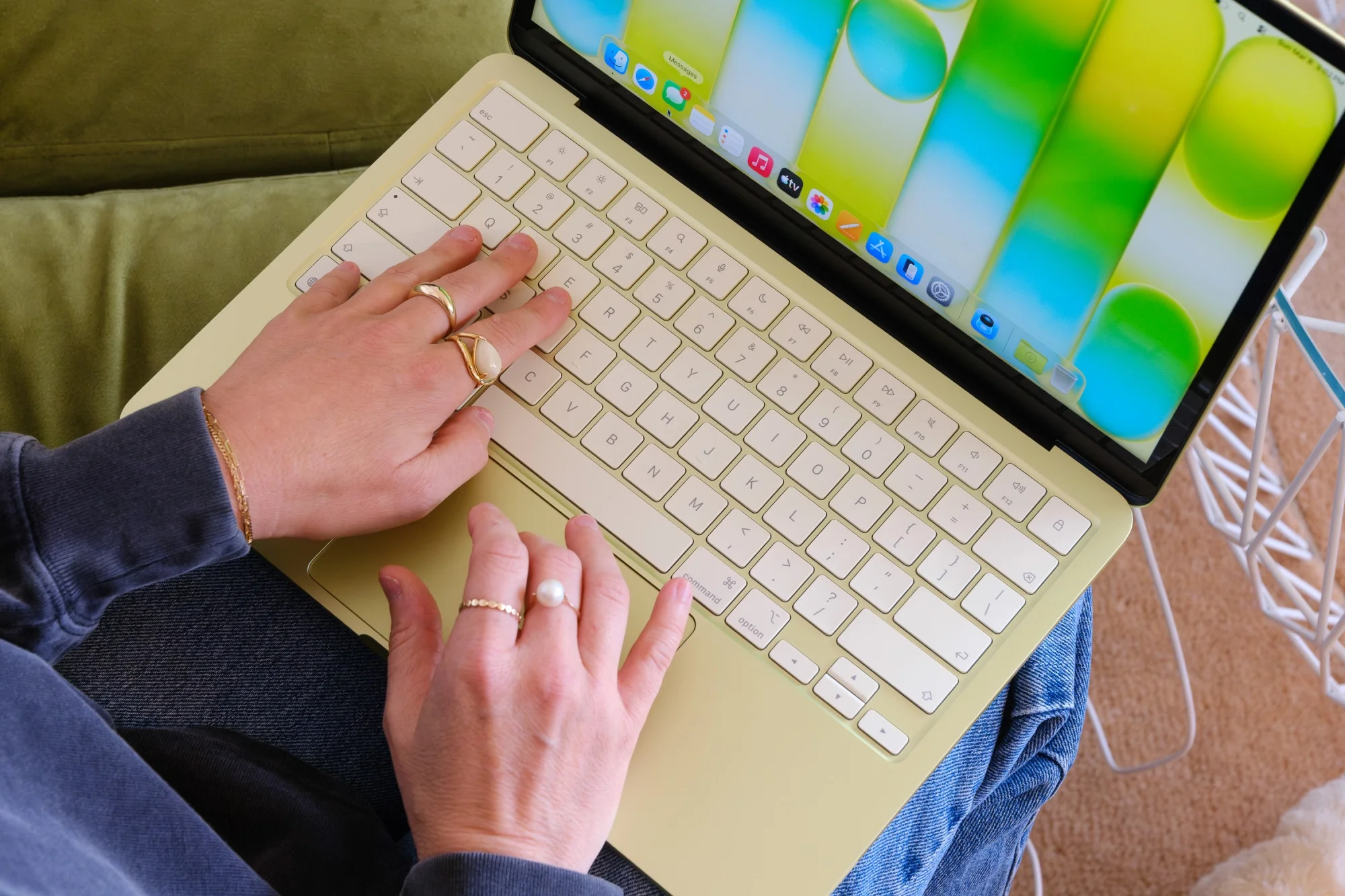
Then come the colors. Silver keeps the classic line; Indigo is a dark blue; Blush a pale pink; Citrus a bright yellow not seen in Apple since the Tangerine iBooks. In all cases, the keyboard is color-matched with the lid, and that visually is a strong decision: the color doesn’t stop at the chassis, it invades the workspace.
Citrus was the public face of the review cycle — almost all the covers, almost all the viral photos. According to pre-sale data mentioned in interviews, it’s the most requested color. Not a coincidence: the Neo targets a younger buyer than the Air, and Citrus is the color that fastest communicates "this isn't your dad’s laptop".
Keyboard, Trackpad, and Touch ID
The Magic Keyboard types well, with firm travel and more direct feedback than spongy. What's missing is significant: there is no backlighting. For a laptop whose target includes students taking notes at night, that will be felt. It was the most visible cost concession on the input side.
The trackpad is the first mechanical one on a MacBook since 2015. Without Taptic Engine, it clicks physically by moving the entire piece. It is still clickable over the entire surface, but lacks Force Click, haptic feedback, and pressure sensitivity. For most, it won't matter; for someone coming from a MacBook Pro, it’s noticeable on the first day.
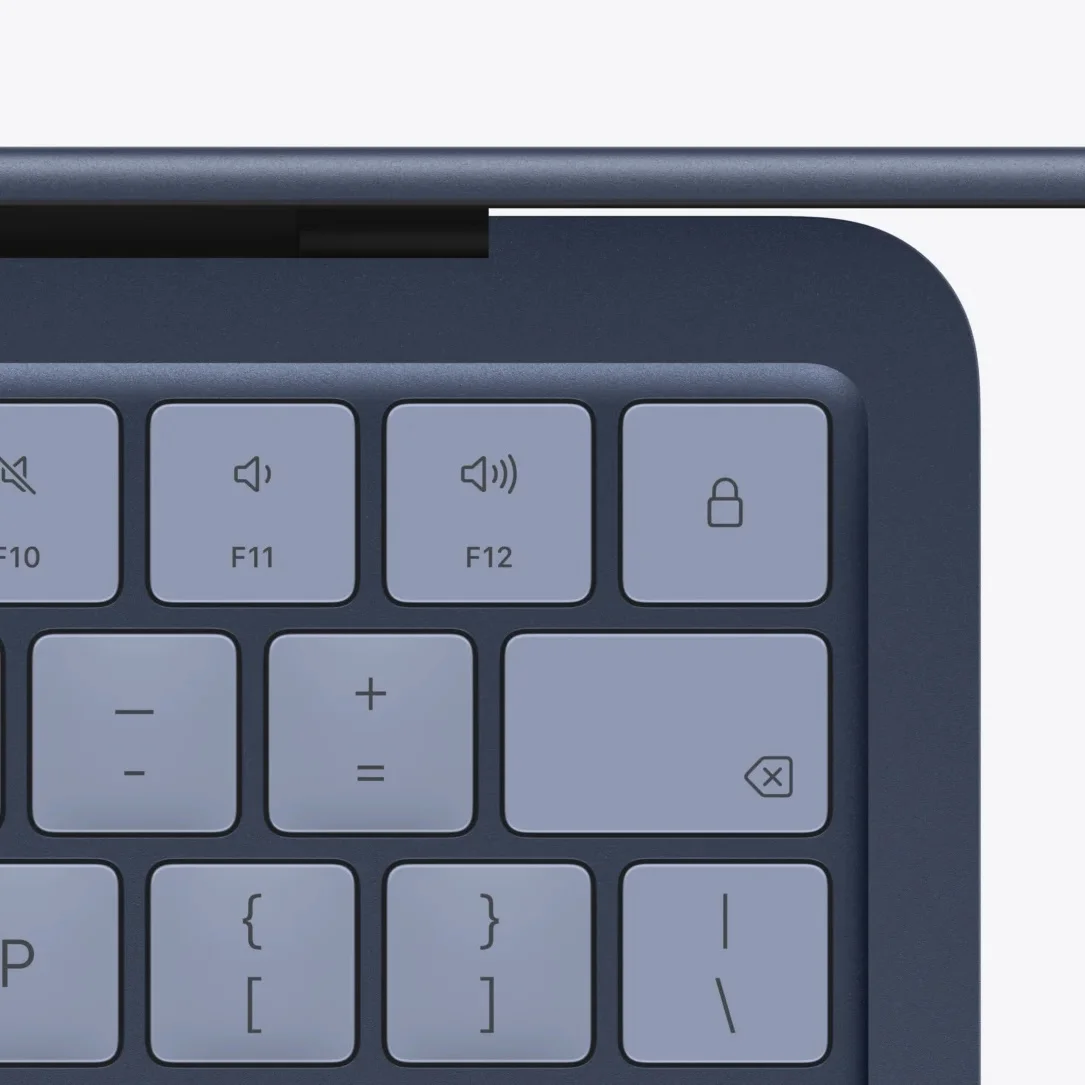
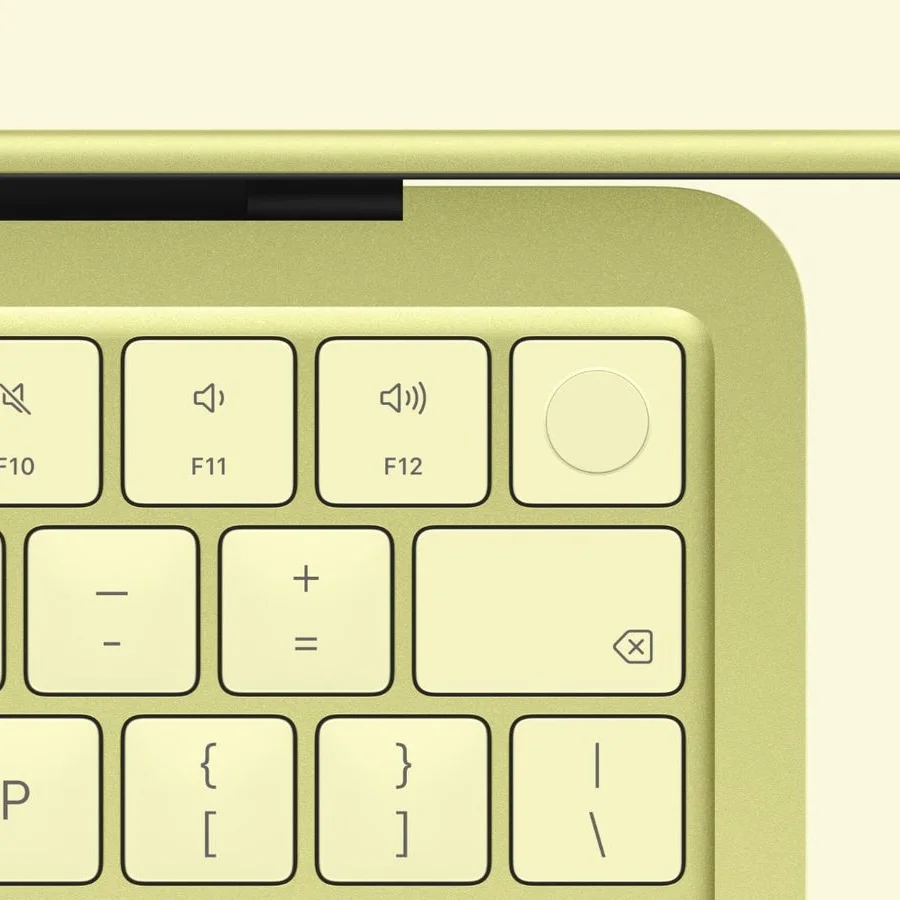
Touch ID marks the model division. The $599 one doesn't have it; the $699 adds the sensor, biometrics, and doubles storage to 512 GB. But there is a detail that almost no review covered: iFixit confirmed that swapping Touch ID modules between two different Neos works with proper calibration via Repair Assistant. The parts pairing, which until now blocked repairs even with OEM parts, is resolved on the Neo. We’ll revisit that point later.
Display
13-inch Liquid Retina IPS, 2408 × 1506 at 219 ppi, 500 nits. In real use, it works: sharp text, vivid colors, good performance under ambient light. What's missing is important: there is no P3 wide color gamut or True Tone — first Mac in years without True Tone. For browsing, text, and video it makes no difference. For designers or color editors, it's a deal-breaker.
Ports, Speakers, and Charging
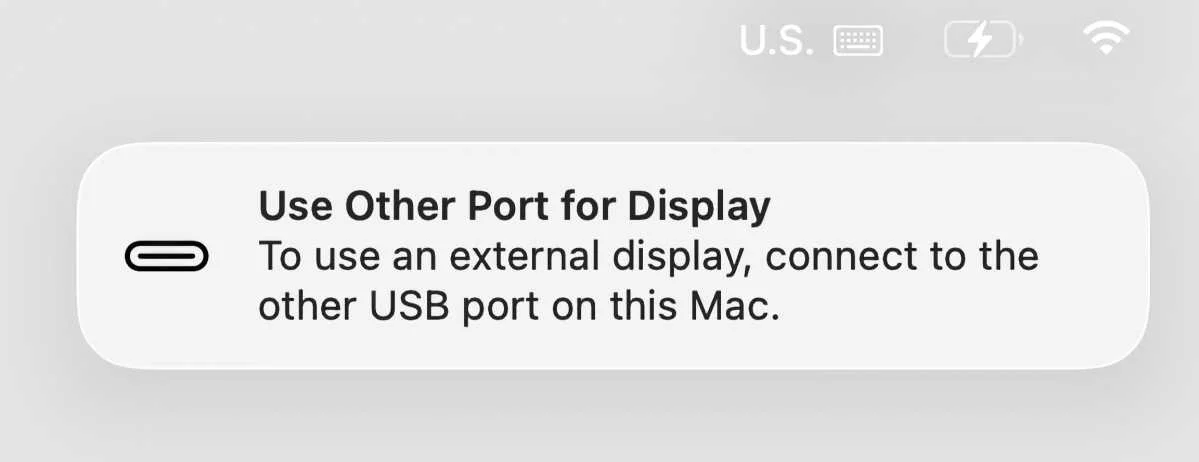
Two USB-C and a 3.5 mm jack. The weird thing: the two USB-C ports are not equivalent. One is USB 3 (10 Gbps, DisplayPort, charging) and the other is USB 2 (480 Mbps, charging only, no video output). If you plug a monitor into the wrong port, macOS warns you with a notification; if you connect an SSD to USB 2, you'll wonder why Blackmagic shows 40 MB/s. It's the kind of detail you won't find in the spec sheet.
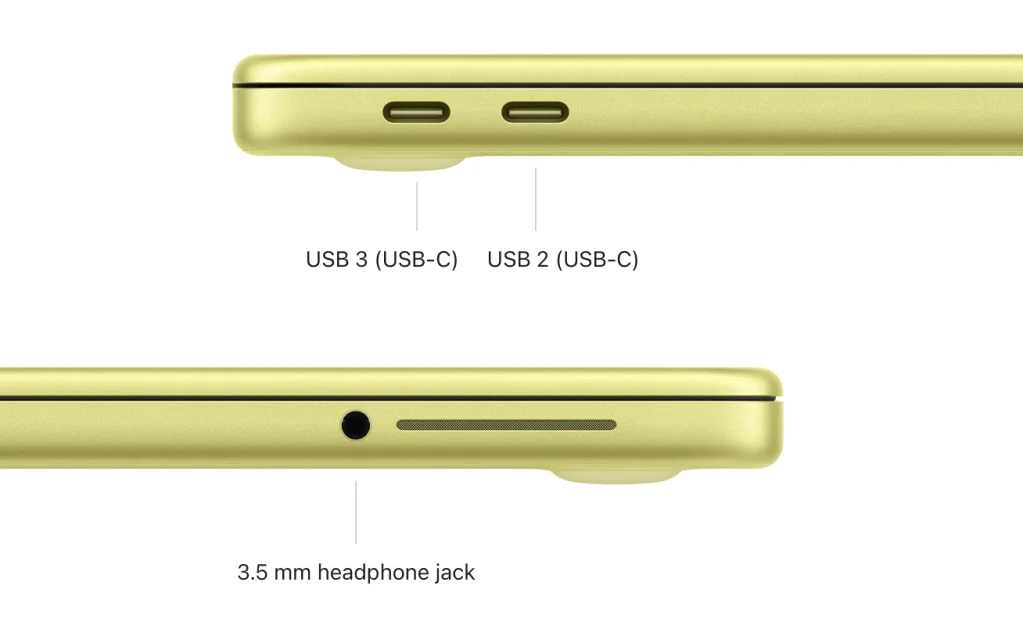
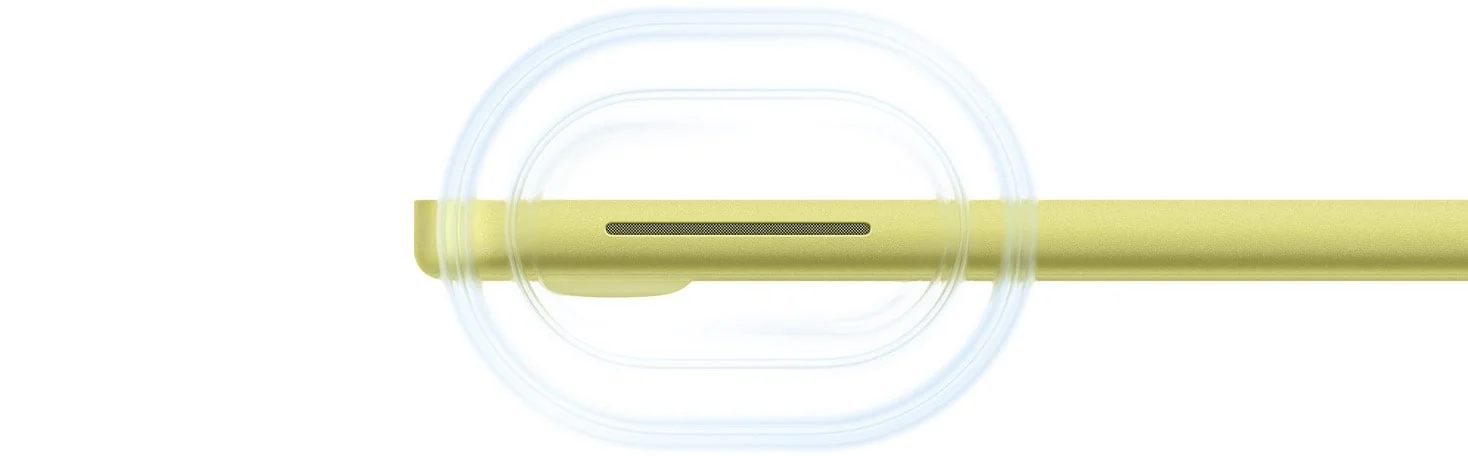
There is no MagSafe, a decision that hurts given the target includes backpacks and classrooms. The included charger is a 20W USB-C (except in the UK and EU, where it’s sold without a charger due to regulation). The audio, however, is the most disproportionate feature of the product: the side-firing speakers with Dolby Atmos sound better than anyone expects from $599 — the unanimity on this point among reviews is rare.
A18 Pro: The iPhone Chip Inside a Mac
The question every reviewer asked was whether a mobile chip performs on a desktop. The short answer: for most tasks, yes; for professional workloads, no.
In Geekbench 6, the Neo scores a single-core of 3461. It surpasses the M1, M2, and M3, and falls 6% short of the current Air's M4. In multi-core, it scores 8668: on par with the M1, quite below the M3 or M4. For GPU Metal, it performs similarly to an M1.
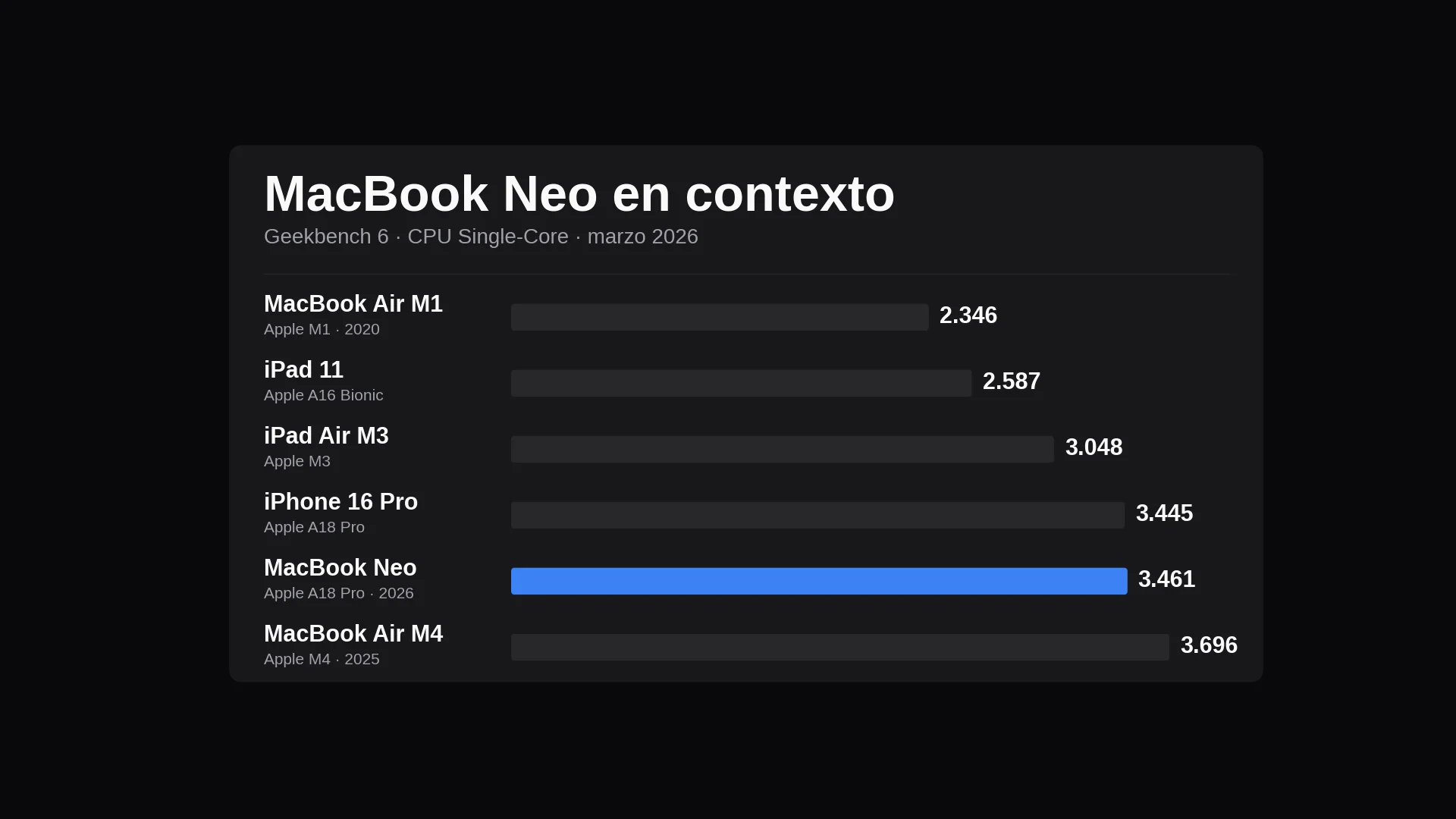
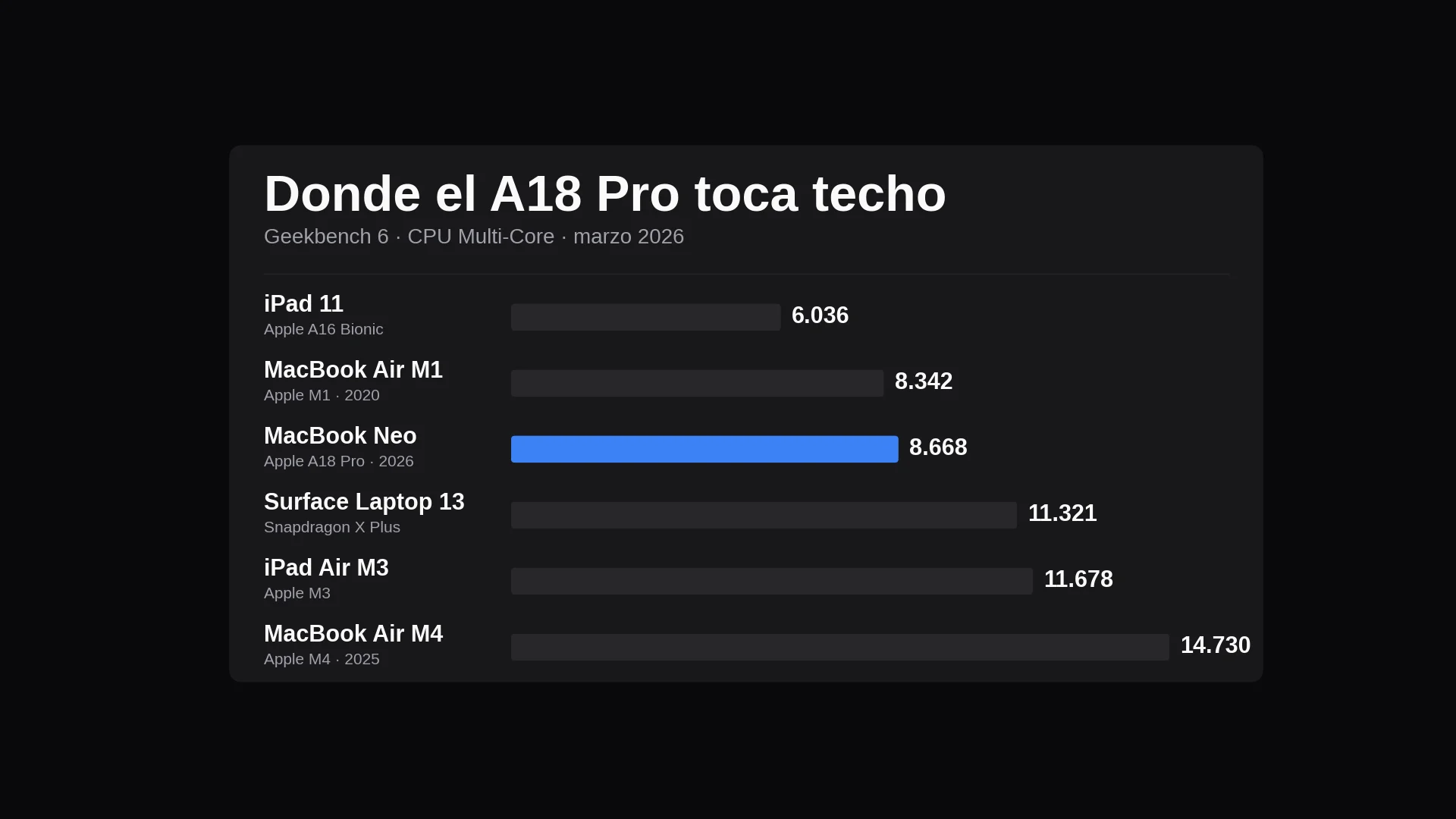
Outside of synthetics, the reality is more nuanced. Safari with ten tabs, Slack, Notion, Pages, and the typical productivity combo: zero lag, no visible swap, long-lasting battery. In Handbrake transcoding 1080p, the Neo took 9 min 57 s (Tom's Hardware) versus 5 min from the pricier Surface Laptop 13. In Xcode compiling a large codebase: 6 min 47 s. You can do all that; you just have to wait longer.
The real bottleneck isn’t the chip. It's the 8 GB unified memory RAM, soldered, with no possible upgrade — the A18 Pro by design doesn't support more. For lightweight use, it's enough; it begins to show when you have Lightroom Classic with large catalogs, virtual machines, or dozens of tabs with Electron apps. The Neo ages there. The thermal, however, resolves well: fanless, cool chassis even under extended Cinebench. Battery: 13 h 28 min in the Tom's Guide test (Apple claims 16 h).
Repairability: Where Apple Played a Different Card
This is where the Neo distinguishes itself from the rest of the Mac line. iFixit gave it a 6 out of 10, the highest score for a MacBook since 2012. For context: the MacBook Air M4 scores a fraction; AirPods are at 0; the iPhone 17 Pro stands at 7.
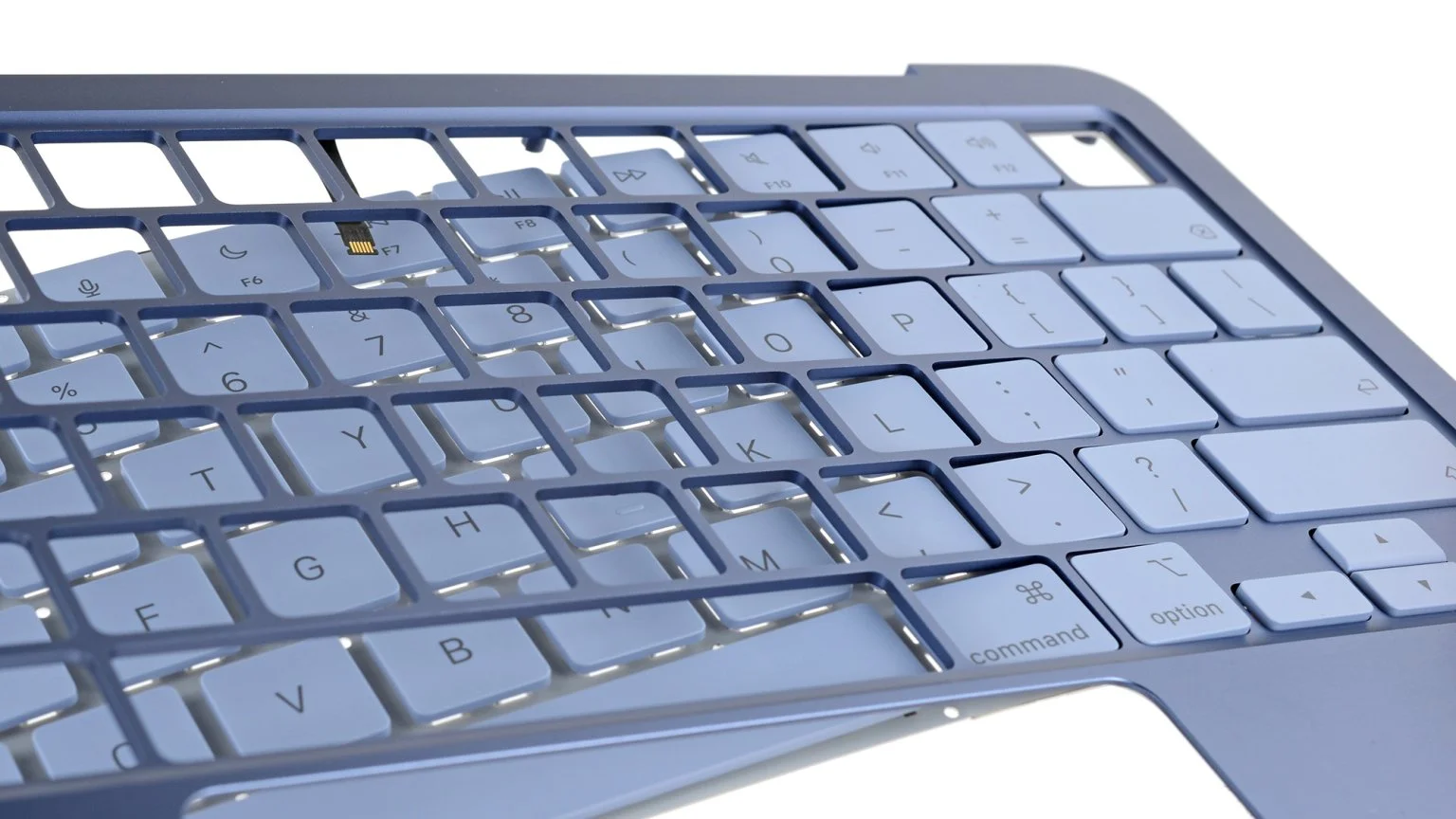
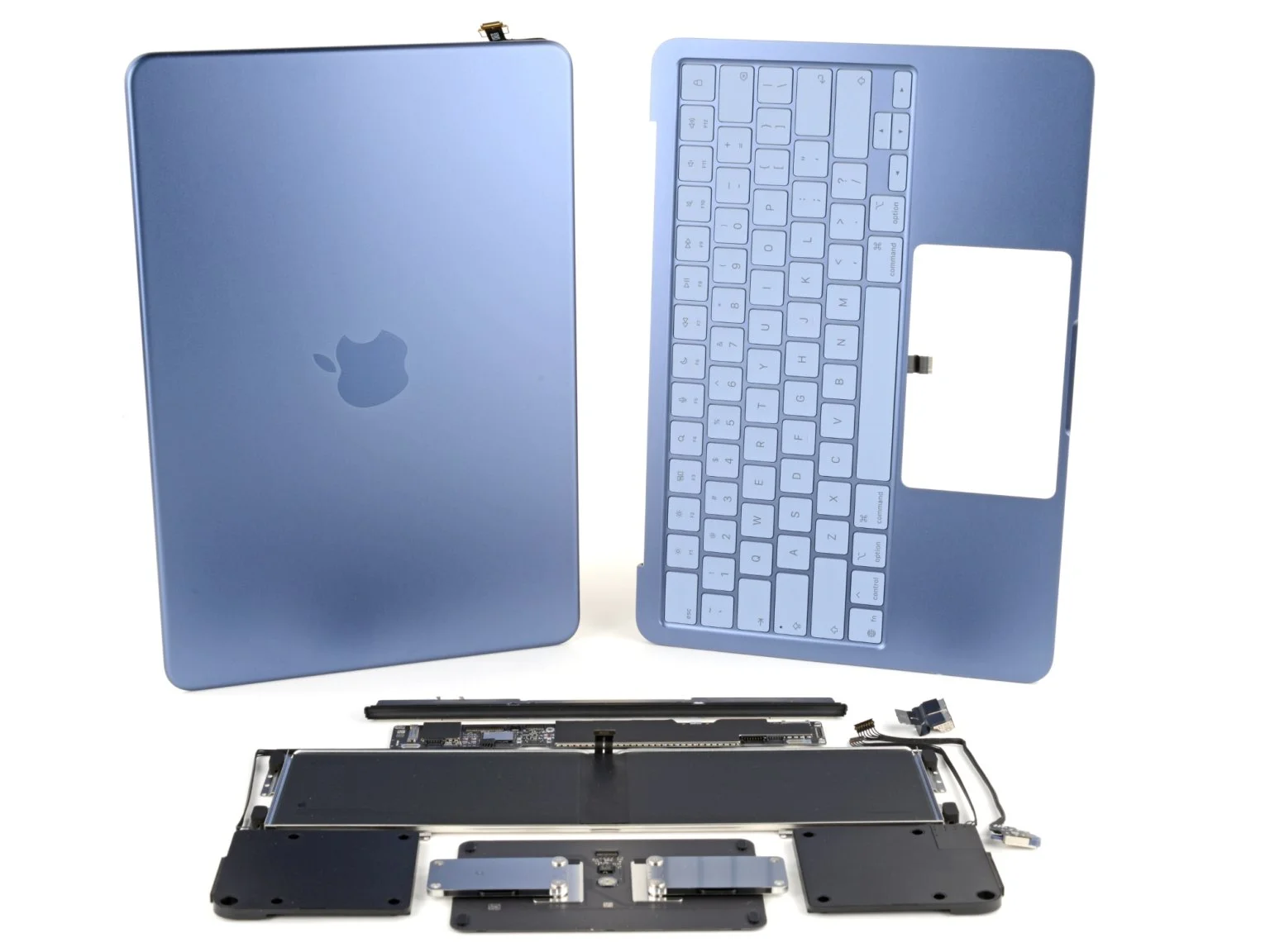
The broad numbers: eight pentalobe screws to open the base (still annoying), but once opened, the lid disengages by hand — no heat gun, no picks, no perimeter prying. Inside, components are laid out flat: speakers, USB-C ports, trackpad, logic board, and display are accessible without disassembling something on top.
The battery is the strongest cultural shift. MacBook Pro and Air models have come for years with batteries glued with stretch-release adhesive strips that even experienced teardowners frequently break. The Neo features a 36.5 Wh battery held by 18 screws and no glue. Replacing it ceases to be a risky operation.
The USB-C ports are modular: if one breaks (something that happens in the education channel with kids misplugging cables), you replace just the port, not the entire logic board. On the MacBook Air, that would be a several hundred dollar board replacement. The keyboard is also removable: 41 screws, but without replacing the machined top case that in the Air is riveted to the structural chassis.
And the most important detail: parts pairing, the historical complaint of official technicians, is resolved. iFixit swapped Touch ID modules between two different Neos, and the calibration via Repair Assistant worked. They swapped displays, and the webcam's activation green dot appeared even before running the Repair Assistant.
What remains soldered: RAM and SSD. No possible upgrade, and Apple didn't promise there would be.
Overall, the strategic reading is clear. This is not philanthropy. It’s a bet: that the Neo will have fewer warranty claims, less ecosystem churn (a broken screen at 18 months doesn’t end in "I’m buying a Windows"), and greater longevity in the education channel, where fleets are maintained for three to four years. Viewed as a five-year project and not as an individual product, it makes all the sense in the world.
Who It’s For (And Who It’s Not)
Clear target: first Mac, students, families not wanting to commit to $1100, users coming from Windows, professionals seeking a lightweight second machine.
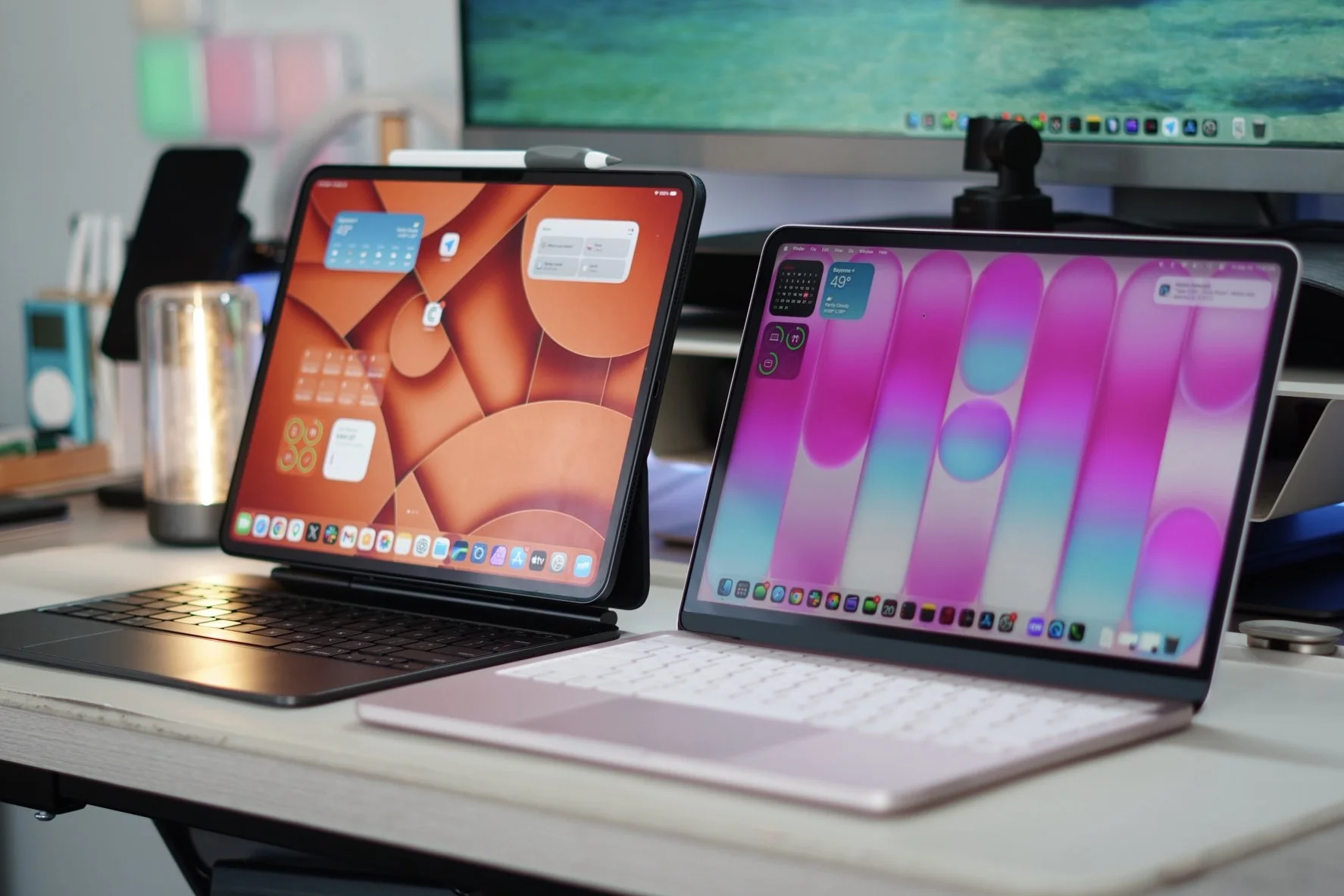
Who it’s not for: creatives needing P3 and True Tone, devs compiling intense code, 4K or 8K video editors, power users with virtual machines or local AI models. All of them are better served by the MacBook Air M5 ($1099, 16 GB base, Thunderbolt 4, P3, MagSafe) or directly by the Pro. Within the same range, the alternative is an iPad Pro with Magic Keyboard: it ends at a similar price, but iPadOS still falls short of macOS.
Conclusion,
The MacBook Neo is not the best Mac in the lineup. It's the most strategically important that Apple has released in years, and the interesting part isn’t the isolated price: it’s the price combined with the change in repairability, combined with the A18 Pro as a supply chain decision, combined with the four colors as a read of a new buyer.
What ages poorly: 8 GB of RAM in 2026 is tight. In 2028, with Apple Intelligence and increasingly heavy web apps, it’s going to hurt. The $599 base model is hard to justify next to the $699 one: a hundred dollars resolve storage and biometrics all at once, and that’s the real sweet spot of the line. The Neo 2 with 12 or 16 GB is already the obvious product on the roadmap; this generation marks the inflection point, not the destination.
MacBook Neo
La MacBook más barata de la historia de Apple, con A18 Pro, 8 GB de RAM, chasis de aluminio reciclado al 60% y el score de reparabilidad más alto en una MacBook desde 2012.
✓ Pros
- Precio inédito: $599 cambia de era para Mac ($499 en canal educación)
- A18 Pro con single-core por encima de M1, M2 y M3, a 6% del M4
- Reparabilidad récord: batería atornillada sin adhesivo, puertos USB-C modulares, teclado reemplazable sin tocar el top case
- Chasis de aluminio reciclado al 60%, 2.7 lb, cuatro colores con teclado color-matched
- Audio side-firing con Dolby Atmos desproporcionadamente bueno para el precio
- Integración completa con el ecosistema Apple
✕ Cons
- 8 GB de RAM soldados, sin camino de upgrade
- Uno de los dos USB-C es USB 2 (480 Mbps, sin salida de video)
- Sin MagSafe, sin teclado retroiluminado
- Sin Touch ID en el modelo base de $599
- Display sin P3 ni True Tone (primera Mac en años sin True Tone)
- Trackpad mecánico en lugar de Force Touch y Taptic Engine
- SSD soldado: no hay upgrade posible
Information based on official specs. The author has not had physical access to the product for this report.
Comments (0)
No comments yet. Be the first!
You might also like


iPhone Air: the Lightness Revolution
We analyze the new iPhone Air. Apple redefines portability with aeroluminum, the A19 Bionic Air chip, and surprising autonomy in an ultrathin body.
21 September 2025
iPhone 17: the evolution everyone expected
We analyze the iPhone 17. Finally, the 120Hz ProMotion display comes to the base model, along with the A19 Bionic chip and new 48MP cameras.
18 September 2025