"Not happening": Google dismisses Liquid Glass for Pixels.

Index
Sameer Samat, president of the Android ecosystem at Google, shut down a rumor that had been stirring the Pixel community for a week with a tweet: the Liquid Glass language introduced by Apple with iOS 26 is not coming to the Pixel operating system. This clarification resolves the main doubt but leaves two others open — what really happens with Android 17 and what the rest of the Android ecosystem is doing meanwhile.
The tweet that shut down the rumor
The rumor began with a 15-second teaser for The Android Show: I/O Edition on May 12th. In the clip, the bugdroid flips a switch and becomes translucent, almost glass-like. The community interpreted it as a preview of Liquid Glass-type UI for Android 17, and mockups of Pixels with that aesthetic began circulating. Samat responded directly on X: "Not happening, you're all crazy." Mishaal Rahman, also from Google, echoed the message hours later. The Android Show on May 12th will clarify the rest.
Material 3 Expressive is the opposite bet
The denial makes sense when looking at the direction Google has been taking. Material 3 Expressive, launched in 2025 with Android 16, prioritizes "springy" animations, dynamic color, and strong visual hierarchy — all supported by Google's internal data showing that users identified key elements up to four times faster. Liquid Glass takes the opposite path: translucency, refraction, and simulated depth on each surface. They are different UI philosophies, not variants of the same approach.
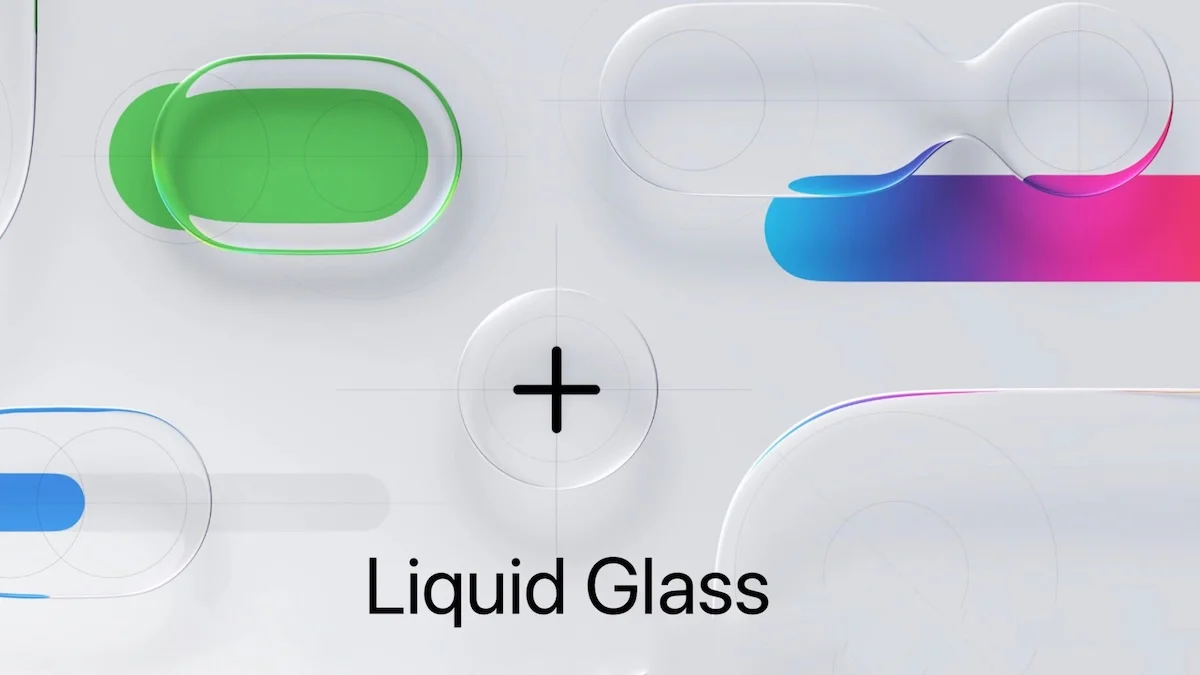
Here's where the asterisk comes in. Leaks from January 2026 published by 9to5Google and TechSpot showed that Android 17 will indeed add more blur to components like the volume bar, shutdown menu, and Quick Settings panel. For Samat, blur does not equate to Liquid Glass: Apple's language is quite more than translucency. The line is fine, but it exists.
The rest of the ecosystem has already copied Apple
Samat's "not happening" applies to the operating system running on Pixels, not to other brands using Android. Samsung confirmed One UI 8.5 — which will debut with the Galaxy S26 line — featuring floating navigation panels, transparencies in Settings, Gallery, and Calculator, and 3D icons that media like 9to5Google directly attribute to the influence of iOS 26. OnePlus, in its OxygenOS 16, was criticized by Android Authority for adopting visual elements that seem copied from the iPhone. Oppo ColorOS and Xiaomi have long embraced glass-like aesthetics. The practical consequence is that the "Android" experience now depends more on the manufacturer than the operating system itself.
Conclusion
Pixels are distancing themselves from the iPhone just as Samsung, OnePlus, Oppo, and Xiaomi are getting closer. The differentiation between Google's pure Android and the rest of the ecosystem has never been so marked — and for those who value platform identity, that's good news. The Android Show on May 12th will determine if Google really sticks to the "not happening" or if Android 17 ends up blurring the line.
Information based on official specs. The author has not had physical access to the product for this report.
Comments (0)
No comments yet. Be the first!
You might also like

iPhone 17: design changes, colors, and hardware improvements
Apple renews its base model with Pro features: 120Hz ProMotion display, A19 Bionic chip, and new 48MP cameras. All about the iPhone 17.
16 August 2025
iPhone 18 Pro: The Four Colors Leaked and Apple Now Producing the Variable Aperture Camera
Apple has started production of the variable aperture camera for the iPhone 18 Pro, and its four colors have been leaked, with Dark Cherry taking the lead.
17 April 2026
Apple Glasses: four designs, acetate, and Apple's bet to counter Meta in 2027
Apple Glasses launch in 2027 with acetate, four styles, and zero display. We review what they are, what they are not, and how they face Meta Ray-Ban Display.
22 April 2026
iPhone 17: the evolution everyone expected
We analyze the iPhone 17. Finally, the 120Hz ProMotion display comes to the base model, along with the A19 Bionic chip and new 48MP cameras.
18 September 2025
ASUS Debuts RGB Stripe Pixel OLED at CES 2026: Three New ROG Monitors Solve Text Issue
At CES 2026, ASUS introduced three new ROG monitors featuring RGB Stripe Pixel OLED, the groundbreaking panel innovation that finally resolves color fringing in text and makes OLED a no-compromise option for gaming and productivity.
29 April 2026