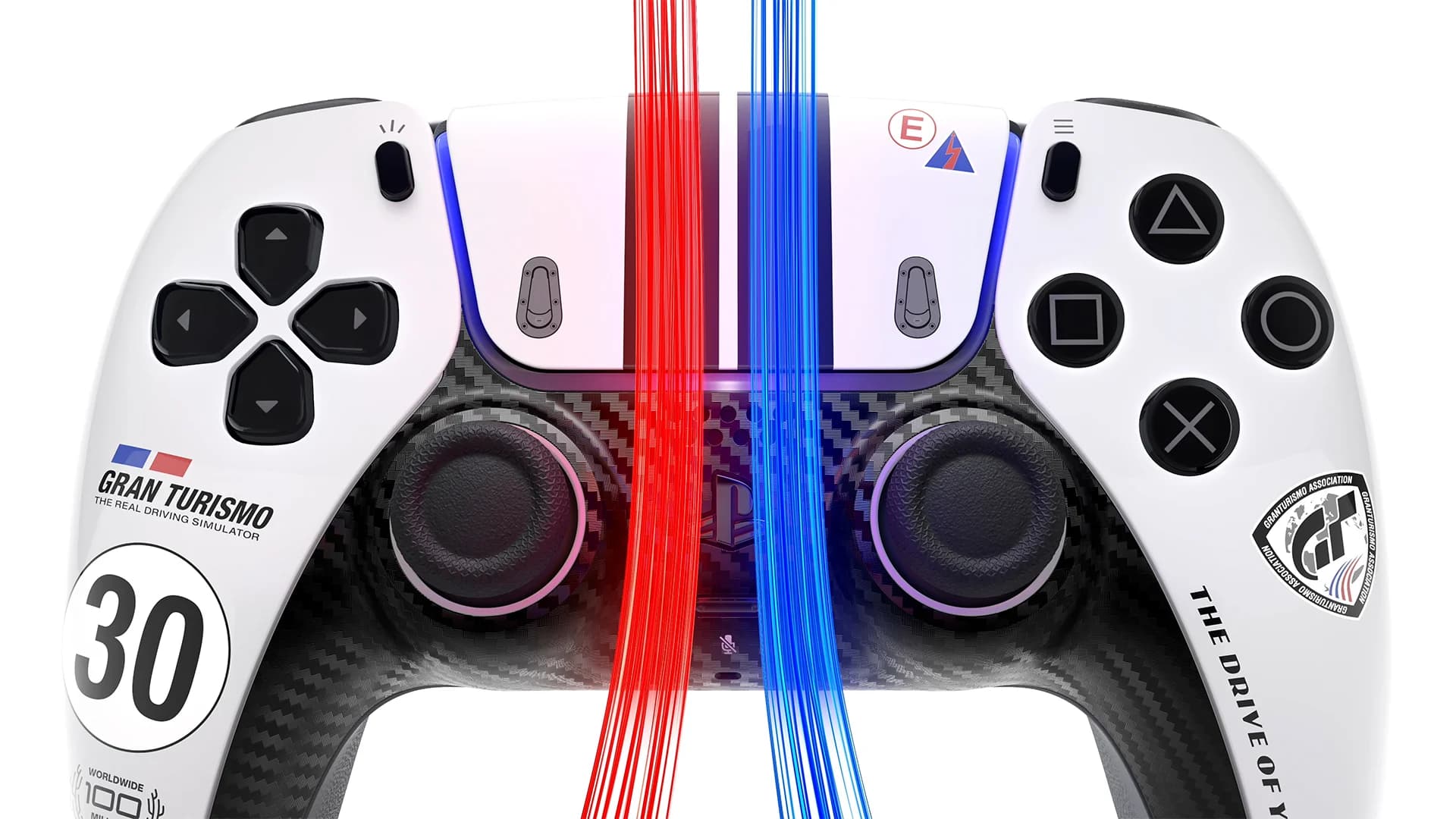
UltraGear evo is LG’s push into 5K gaming with built-in AI: these are the three models

Index
LG introduced a new premium sub-brand within its gaming monitor family at CES 2026: UltraGear evo. It launches with three flagships that share a 5K baseline and add an AI processor inside the monitor itself: the ultrawide OLED 39GX950B, the MiniLED 27GM950B, and the panoramic 52G930B. The inaugural trio leaves an editorial blemish: the most expensive model gave up OLED and was left out of the AI features the brand is selling as its headline promise.
What UltraGear evo is
UltraGear evo is the new premium sub-brand within the UltraGear family, with 5K as the common minimum resolution. What sets it apart from conventional UltraGear models is a dedicated AI processor built into the monitor that enables three features: 5K AI Upscaling (scaling to the panel’s native resolution), AI Scene Optimization, and AI Sound. It runs counter to the dominant upscaling model (DLSS, FSR), where the GPU does the work: here, processing happens inside the monitor, without cutting into graphics performance, and it works with any compatible source (PC, console, handheld) as long as the input is at least Full HD. The key detail: only two of the three models launched under the evo brand include these AI features. The largest and most expensive one does not.
39GX950B: the 5K2K OLED many were waiting for
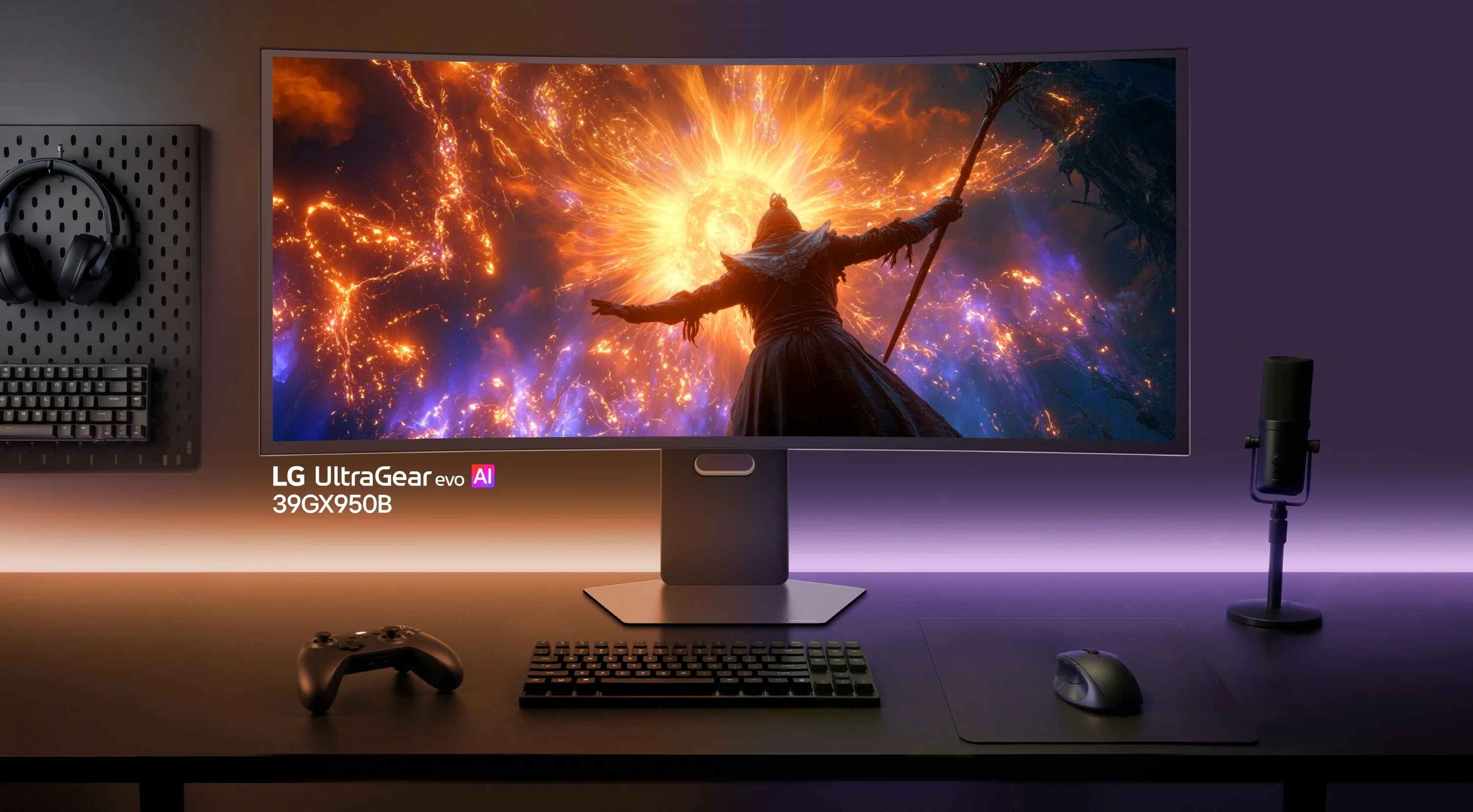
The 39GX950B is a 21:9 ultrawide OLED with 5K2K (5120×2160) resolution on a 1500R curved screen, a sensible correction versus the aggressive 800R curve of the predecessor 45GX950A, which many considered excessive. It uses LG’s fourth-generation Primary RGB Tandem WOLED panel, with VESA DisplayHDR True Black 500 certification and up to 99.5% DCI-P3 coverage. Dual Mode lets users switch between 165 Hz at native resolution for cinematic games and 330 Hz at WFHD (2560×1080) for competitive FPS, with a 0.03 ms response time (GtG). Pixel density reaches 142 PPI: enough to keep text sharp, although system scaling is advisable for extended productivity use. Serious connectivity: DisplayPort 2.1, two HDMI 2.1 ports, and USB-C with DisplayPort Alt Mode and 90 W charging. Price: USD 1,799.
27GM950B: the first serious 5K MiniLED play
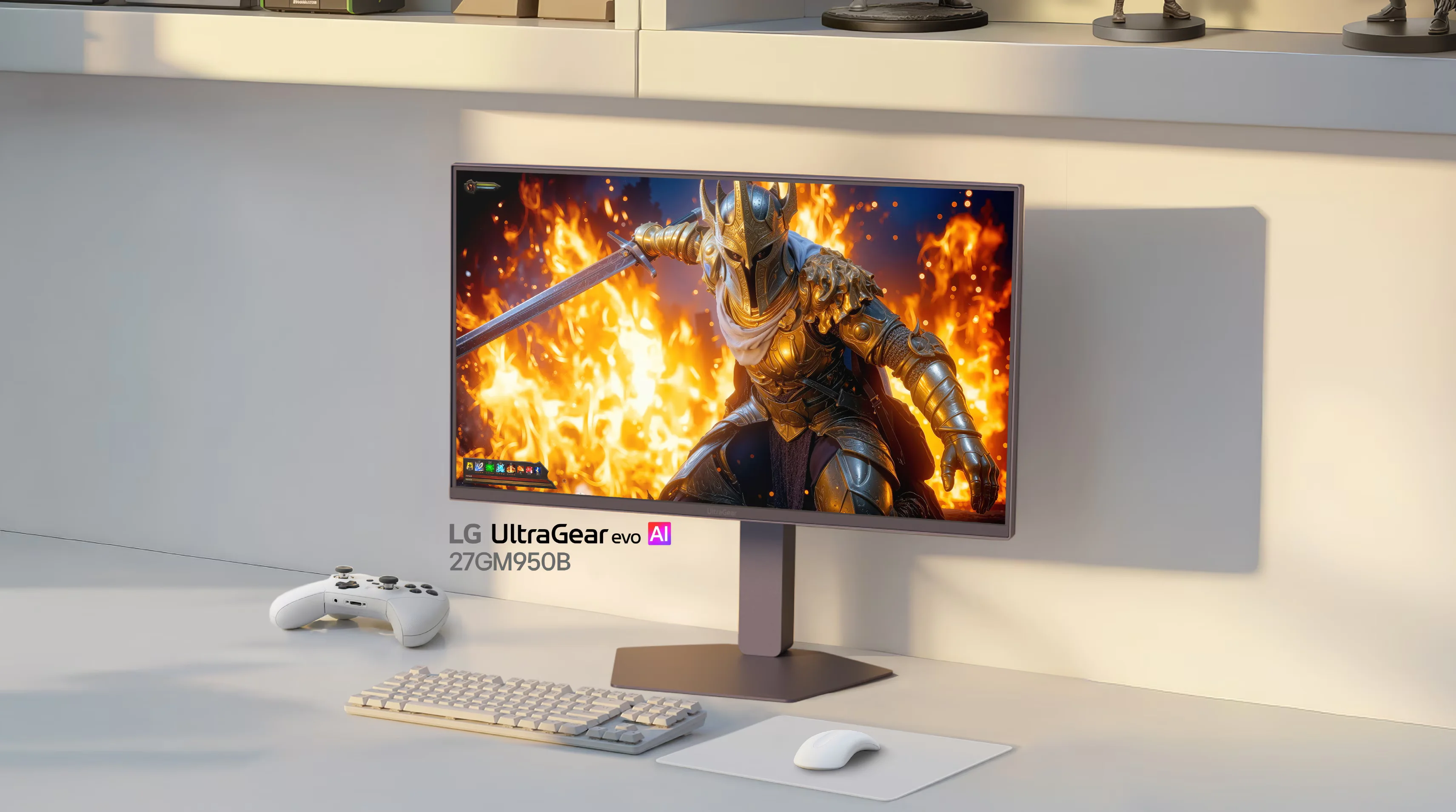
The 27GM950B is LG’s first serious foray into MiniLED at 5K resolution (5120×2880). What the brand calls Hyper Mini LED has 2,304 local dimming zones and 9,216 LEDs according to the official specifications: 1.5× more zones and 5.9× more LEDs than LG’s previous MiniLED model, the 27GR95UM. The stated goal is to attack blooming, the halo effect around bright objects on dark backgrounds that continues to affect high-density MiniLED displays. To that end, it adds Zero Optical Distance, a technique that minimizes the gap between the panel and the backlight to reduce light bleed. The numbers are compelling: 1,250 nits peak brightness, VESA DisplayHDR 1000, up to 99% DCI-P3, and 218 PPI at 27 inches. It also brings Dual Mode (165 Hz at 5K, 330 Hz at QHD) and a 1 ms response time (GtG). DisplayPort 2.1 with UHBR20 guarantees the bandwidth needed for high-refresh 5K without visible compression. It is the most affordable of the three, at USD 1,199.
52G930B: the largest model in the evo lineup, with asterisks
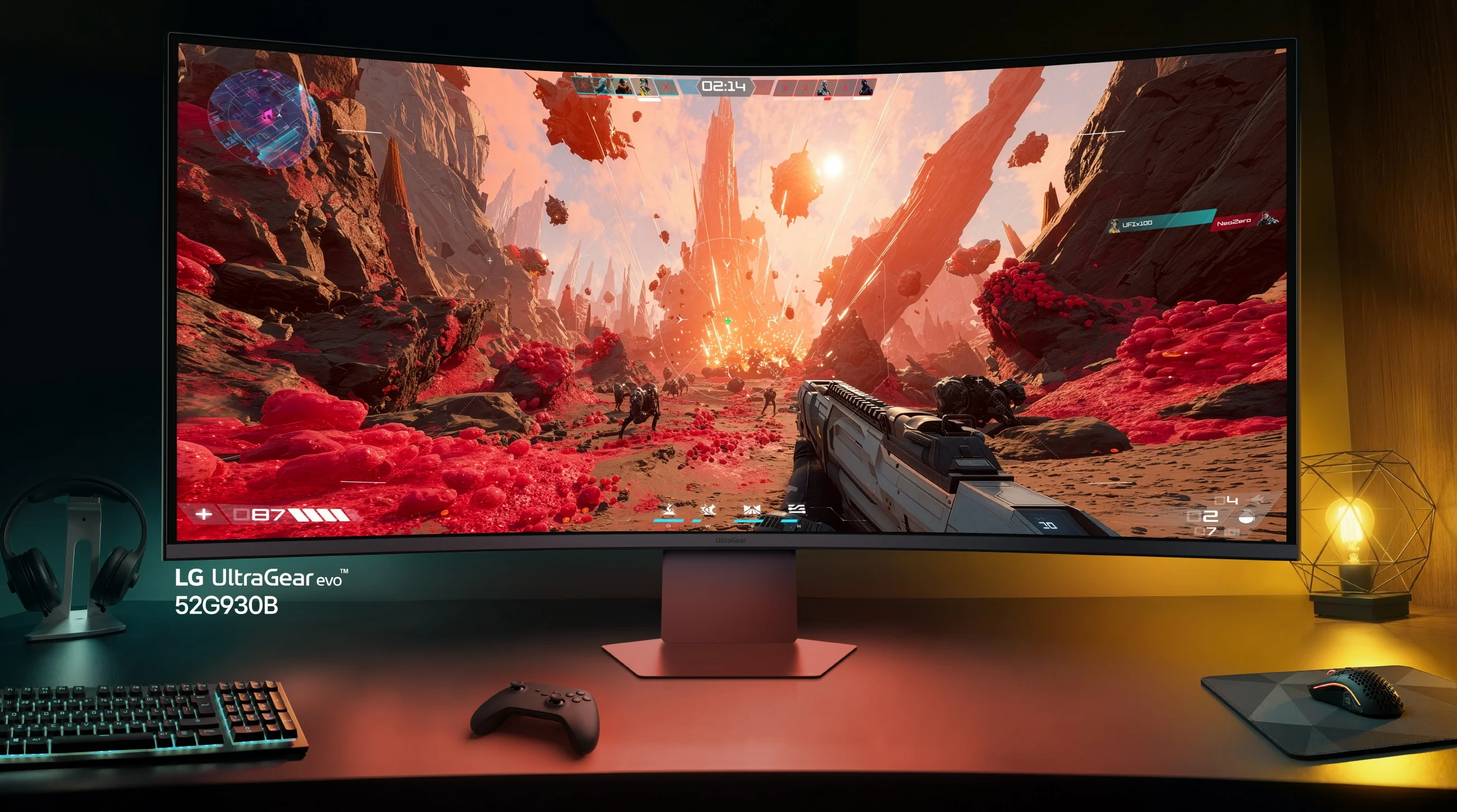
The 52G930B is the largest model in the UltraGear evo catalog: 52 inches at 5K2K (5120×2160), 21:9, 240 Hz refresh rate, 1 ms (GtG), and a 1000R curve. Its vertical height is equivalent to that of a 42-inch 16:9 display stretched horizontally, positioning the monitor as a replacement for a multi-monitor gaming and productivity setup. The marketing line says "world’s largest 5K2K 240Hz," a qualification specific to resolution and refresh rate: the Samsung Odyssey Ark, for instance, is 55" but 4K.
Here come the asterisks. First, it is not OLED: the panel is VA. That is a clear technical regression versus the predecessor 45GX950A, which was a 5K2K OLED. Second, it does not include the AI features LG is selling as the UltraGear evo banner. The footnote in the official press release is explicit: 5K AI Upscaling, AI Scene Optimization, and AI Sound are available "exclusively" on the 39GX950B and 27GM950B. Third, its HDR certification is DisplayHDR 600 and color coverage drops to 95% DCI-P3, more modest levels than its siblings. Connectivity: DisplayPort 2.1, two HDMI 2.1 ports, USB-C with 90 W, and two downstream USB-A ports with KVM functionality. Price: USD 1,999.
How the three models compare
A side-by-side look makes it clear that the most expensive model is not the most complete one in the lineup.
The 27GM950B comes out as the model with the highest certified brightness, the best HDR in the lineup, and, at the same time, the lowest price. The 52G930B ranks highest in size and raw refresh rate, but lower in panel technology, HDR certification, color coverage, and signature features. The editorial question is direct: what is the most expensive UltraGear evo monitor doing without the two things that justify the "evo" name?
Conclusion
The inaugural UltraGear evo lineup has two clear winners and one less coherent proposition. The 27GM950B is probably the most interesting of the three in terms of price-to-innovation ratio: it is the most affordable, the only one with HDR 1000 certification, and the first serious MiniLED implementation at 5K for gaming. The 39GX950B is the most complete and the obvious choice for anyone who values OLED black depth and an uncompromised 21:9 ultrawide format. The 52G930B demands caution: at USD 1,999, without OLED and without the AI features that give the sub-brand its name, it is worth waiting for independent testing before jumping into a purchase.
LG UltraGear evo 39GX950B
39-inch ultrawide OLED gaming monitor with 5K2K resolution, 4th-gen Primary RGB Tandem panel, and 165/330 Hz Dual Mode. A flagship in the UltraGear evo lineup with a dedicated AI processor.
Pros
- 4th-gen Primary RGB Tandem OLED with UL-validated perfect blacks.
- Dual Mode between 165 Hz at 5K2K and 330 Hz at WFHD covers both cinematic and competitive gaming.
- Sensible 1500R curvature, correcting the predecessor 45GX950A’s exaggerated 800R curve.
- Dedicated AI processor with 5K upscaling and no extra GPU demand.
- Full connectivity: DP 2.1, two HDMI 2.1 ports, and USB-C with 90 W charging.
Cons
- High price: USD 1,799 to access the full proposition.
- RGWB layout keeps the white subpixel; it is not the new RGB-stripe design.
- 142 PPI density requires OS scaling for comfortable text.
LG UltraGear evo 27GM950B
27-inch gaming monitor with LG’s first 5K MiniLED implementation: 2,304 dimming zones, 1,250 nits, and a dedicated AI processor. The most affordable UltraGear evo model.
Pros
- The brand’s first 5K MiniLED implementation, with 2,304 zones and Zero Optical Distance.
- 1,250 nits peak brightness and VESA DisplayHDR 1000 certification, the highest in the lineup.
- Dual Mode between 165 Hz at 5K and 330 Hz at QHD covers both cinematic and competitive gaming.
- The most affordable model in the evo lineup at USD 1,199.
Cons
- It is LCD: unlike the 39GX950B, it does not deliver perfect OLED blacks.
- Risk of residual blooming until the implementation is verified.
- 1 ms (GtG) trails OLED panels in fast transitions.
LG UltraGear evo 52G930B
52-inch 21:9 ultrawide gaming monitor at 5K2K with a 240 Hz refresh rate. The largest UltraGear evo model, but with a VA panel and without the AI features that give the sub-brand its name.
Pros
- 52" at 5K2K delivers 33% more workspace than standard UHD.
- 240 Hz refresh rate, the highest in the evo lineup.
- Integrated KVM via two USB-A ports to switch input between devices.
Cons
- VA panel instead of OLED, a regression versus the predecessor 45GX950A.
- Does not include the AI features that give the evo sub-brand its name.
- VESA DisplayHDR 600 and 95% DCI-P3, the most modest levels in the lineup.
- No hardware G-SYNC module, only software compatibility.
- USD 1,999 positions it as the most expensive despite the less premium panel.
Author
Alexis PaezInformación basada en specs oficiales del comunicado de LG Newsroom Global, fichas técnicas de LG México, LG US y LG Canadá. El autor no tuvo acceso físico a ninguno de los productos para este reporte.
Comments
Share article
You might also like


ASUS Debuts RGB Stripe Pixel OLED at CES 2026: Three New ROG Monitors Solve the Text Problem
ASUS introduced three new ROG monitors at CES 2026 featuring RGB Stripe Pixel OLED, the new panel technology that finally solves color fringing in text and makes OLED a no-compromise option for gaming and productivity.


Pixel 11 Pro XL, Galaxy S26 Ultra, and iPhone 17 Pro Max: the three have converged, and something else decides the winner
All three come with 12 GB of RAM, a vapor chamber, and 5,000 mAh. We compare zoom, charging, and display—and why timing in the sales cycle matters more than the spec sheet.