WWDC 2026 for developers: Core AI, Foundation Models, and the end of SiriKit

Index
The WWDC 2026 keynote was for the public. The Platforms State of the Union, the second presentation that followed, was for the people who build the apps. And there the message went deeper: for developers, this edition was a reset of the contract. Apple introduced a framework for running AI models on-device, opened its AI system to models from Google and Anthropic, and set an expiration date for SiriKit. These are the updates that matter if you work on Apple platforms.
Core AI: running AI models on-device
The biggest announcement for developers is Core AI, a new framework for running generative AI models directly on Apple silicon. This is not Core ML under another name: it is a system designed specifically for generative AI workloads, especially language models running on-device. It is Apple’s answer to the question developers have been asking since LLMs appeared: how do I run a language model on the iPhone without sending the data to a server?
Foundation Models: one protocol, several brains
The revamped version of the Foundation Models framework is built on Core AI, and this is where the mindset shift becomes clear. Apple defined a public Swift protocol, LanguageModel, that any external provider can implement. The first two to do so are Anthropic and Google: their cloud models become available through the same API as Apple’s on-device model.
In practice, a developer can switch between Apple’s local model, Google’s Gemini, and Anthropic’s Claude by installing them as Swift Package Manager packages, without touching the code that handles the session. The new version of Foundation Models adds free Private Cloud Compute for most developers, with no API keys required, and accepts images as input, not just text.
Apple opening its framework to models from its direct competitors is the most unexpected move in the announcement. The same company that spent years defending control over the entire stack is now letting Claude and Gemini plug in as first-class citizens. The models powering the new Siri, in fact, were also built together with Google, a story that deserves its own analysis.
The end of SiriKit
The most consequential change is not a new feature, but one that is dying. Apple formally deprecated SiriKit, the framework that has connected apps with the voice assistant since 2016. In its place, App Intents becomes the only path through which Siri can call a third-party app.
App Intents has existed since 2022, but until now it was optional. It no longer is. An app that keeps using the old SiriKit classes will compile under iOS 27 and will generate deprecation warnings, but it will not appear in the new Siri. It is functional invisibility: the assistant that billions of users will receive when iOS 27 ships in September simply will not see that app. Apple gave a two- to three-year window before removing SiriKit completely, but the incentive to migrate is already on the table.
The upside is that App Intents has grown. The new version adds richer entity types, streaming responses for long-running actions, multi-turn conversational follow-up, and an annotations API that lets apps act on what is on screen just by asking.
Liquid Glass, now unavoidable
The design language Apple introduced in 2025 has been refined and is no longer a future option. It is more consistent, more customizable, and more readable, and apps built with SwiftUI adopt it automatically when recompiled with the new tools: the glass tint responds to the system’s intensity control without you touching a single line.
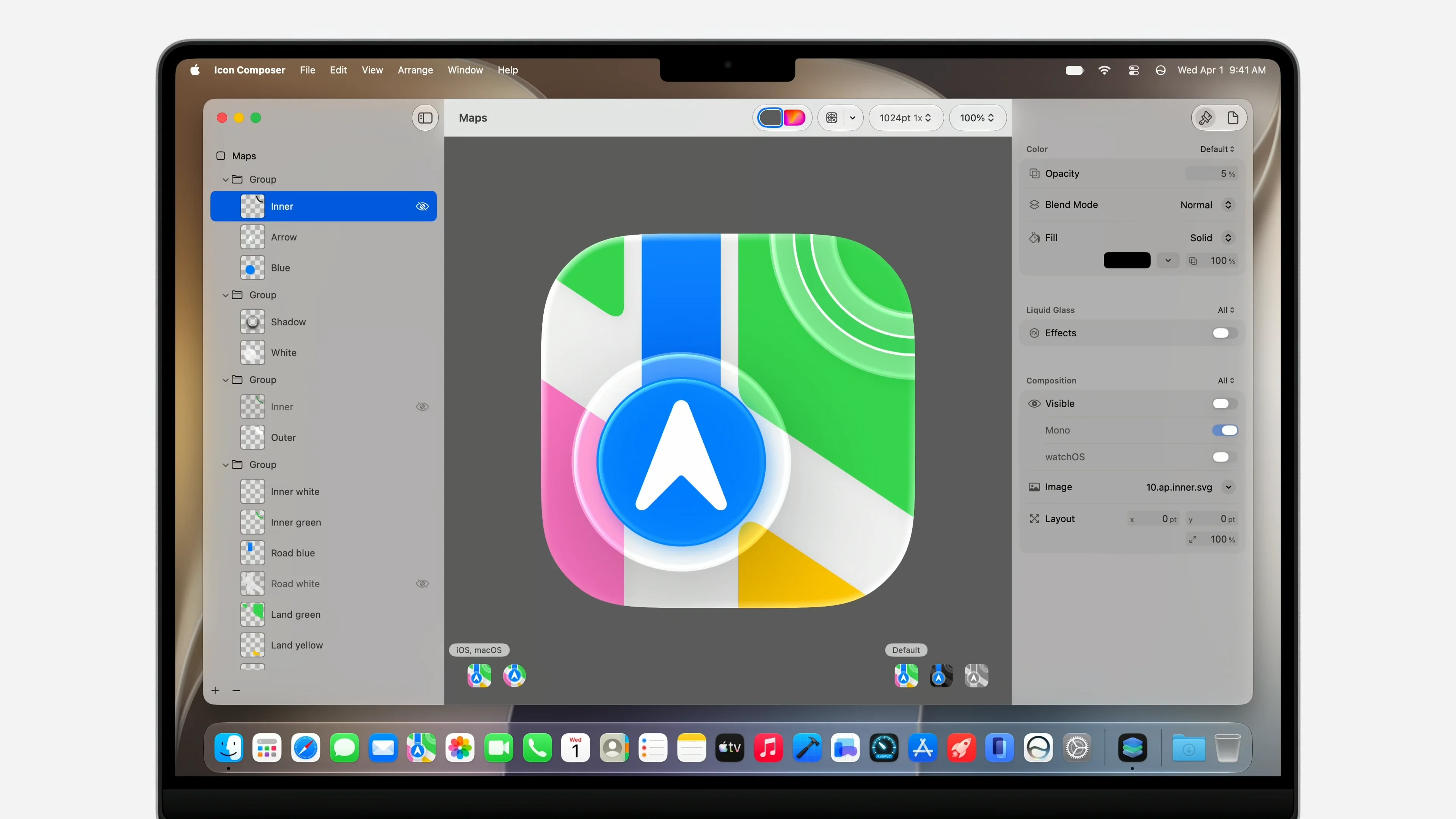
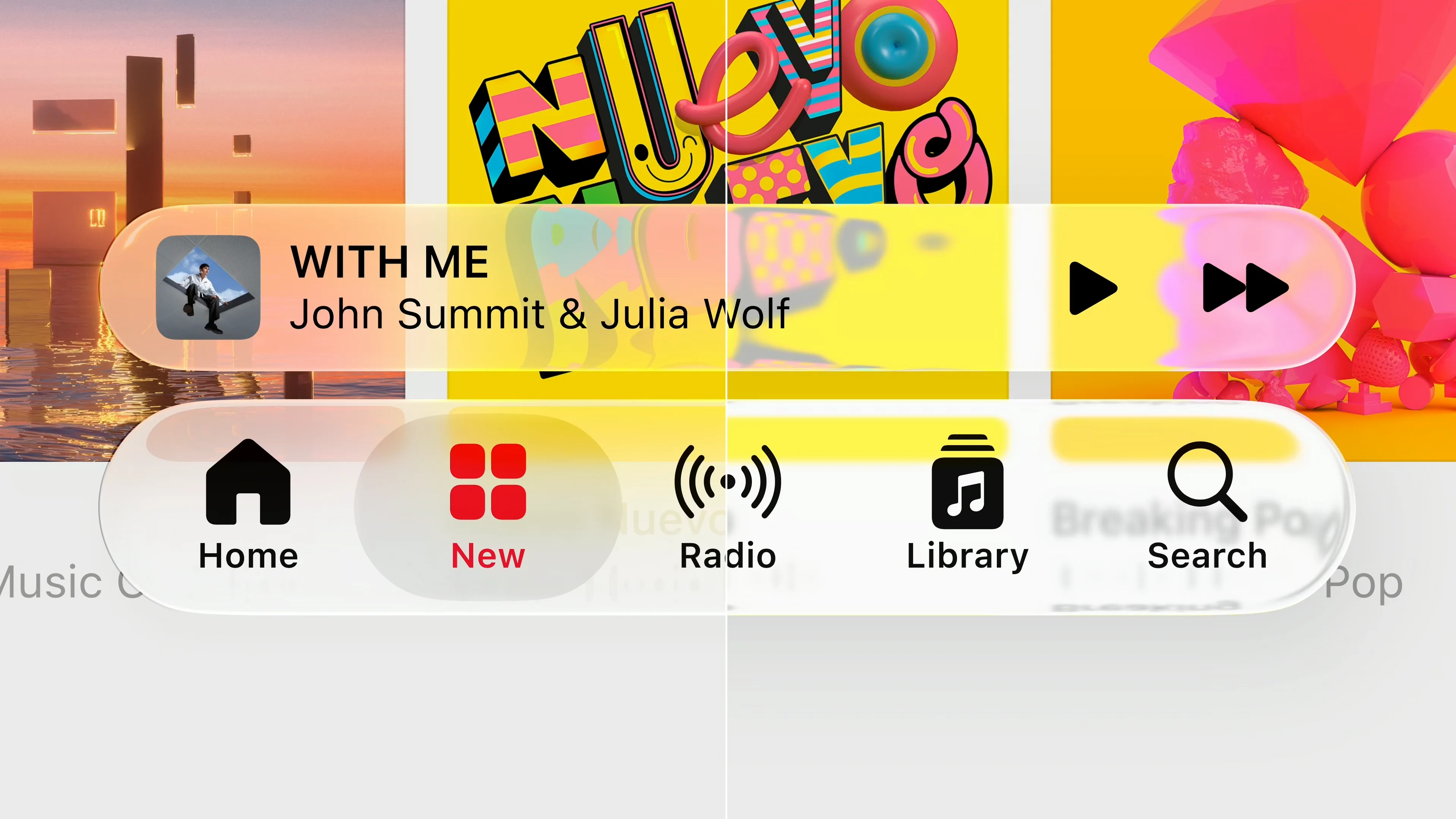
For icons, Apple added refraction effects and sharper automatic rendering, all through Icon Composer, the tool that builds icons that adapt to light, dark, tinted, and transparent modes. The result is visible in Apple’s own system apps: Music’s floating navigation bar, for example, is pure Liquid Glass.
iOS apps that stretch
iOS apps are now resizable. That means they can take advantage of larger screens when running on an iPad or on a Mac via iPhone mirroring, and Apple added a resizable Simulator to make testing different sizes less painful. The detail is not minor: the system pushing apps that adapt to any size is the clearest signal yet that a foldable iPhone is coming.

SwiftUI followed up with a batch of practical improvements: drag to reorder and swipe for actions in any container, nested layouts that resize up to twice as fast, and automatic caching for asynchronous images. Nothing revolutionary on its own, but together they remove several long-standing pain points.
Device Hub and the other tools
The tool that most changes day-to-day work is Device Hub, which replaces the traditional Simulator. From the Mac, developers can control virtual and physical hardware in much greater detail: they can mirror an iPhone, change its appearance, adjust Liquid Glass intensity, or modify accessibility options without touching the device.
The rest of the tools moved as well. Reality Composer Pro 3 split off from Xcode and is now a standalone app that opens from the Applications folder. And Xcode 27 arrived 30% lighter and with a coding assistant that integrates agents from Google and Anthropic, a bet that deserves its own chapter.
Conclusion
For developers, WWDC 2026 left three tasks depending on your profile. If your app talks to Siri through SiriKit, migrating to App Intents is urgent: without it, you disappear from the assistant everyone will use. If you build AI features, Core AI and Foundation Models are the structural shift, because you can run models on-device or plug in Claude and Gemini with the same code. And if design matters to you, Liquid Glass can no longer be avoided, although automatic adoption and Icon Composer make it manageable.
The underlying thread is the same one running through the whole conference: Apple opened its frameworks to models from Google and Anthropic. Whether that is a strategic opening move or an acknowledgment that it could not get there alone is the question that is only beginning to be answered.
Author
Alexis Paez