iPhone 18 Pro: four colors leak and Apple is already producing the variable-aperture camera

Index
April got off to a hot start for iPhone 18 Pro rumors. In the last 48 hours, two leaks have started to outline the real product: Macworld published the four colors Apple is reportedly preparing, including internal Pantone codes, and ETNews reports confirm that Sunny Optical has already begun producing the actuators for the new variable-aperture camera, the year’s most important upgrade.
Five months ahead of the September keynote, we are no longer in “it could happen” territory. The supply chain is moving, and specific color references are appearing: a concrete product is coming.
The four leaked colors of the iPhone 18 Pro
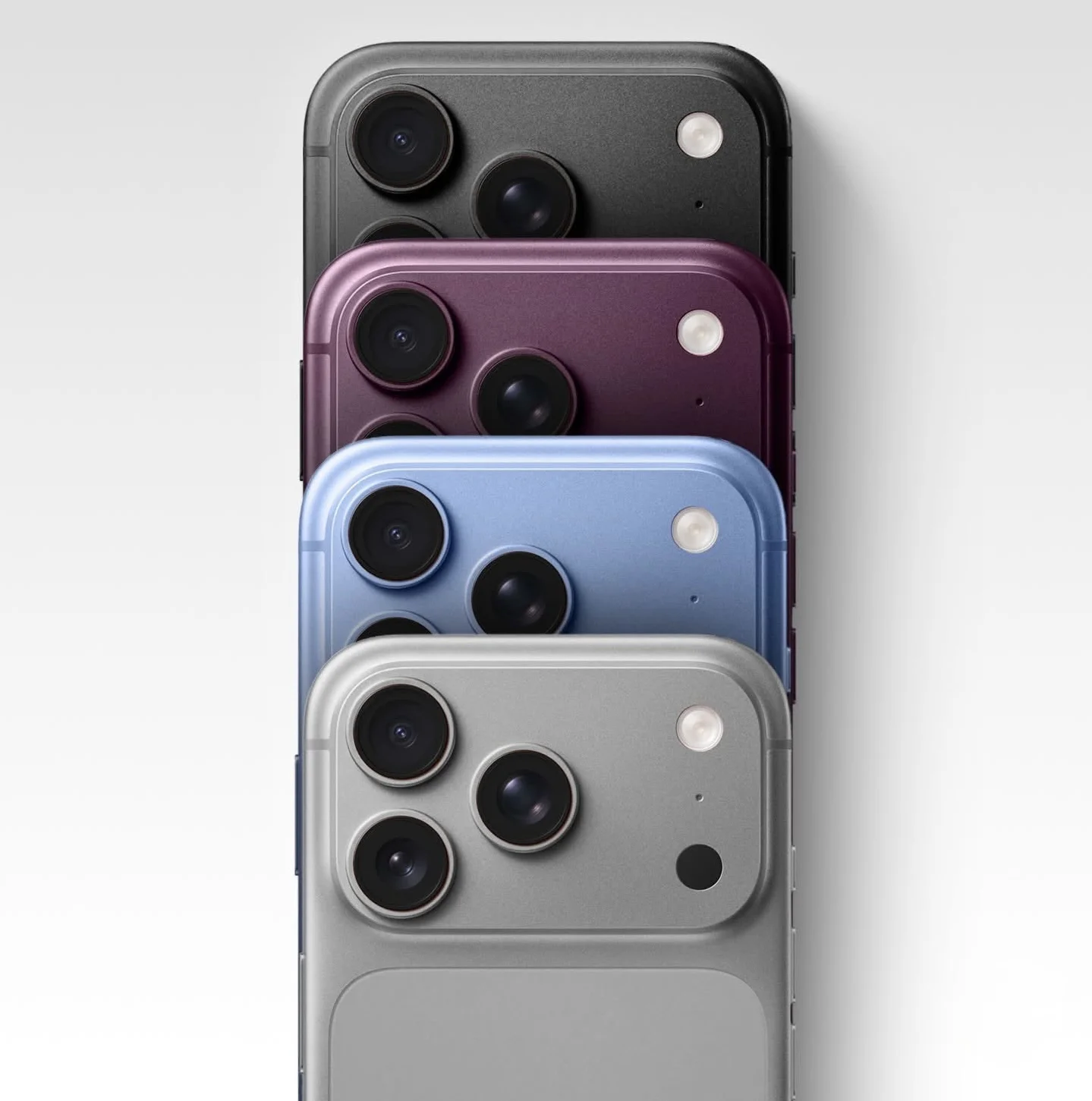
The source is the same one that got the 17 Pro colors right: Macworld, citing a contact in Apple’s supply chain. The iPhone 18 Pro and 18 Pro Max would be offered in Dark Cherry, Light Blue, Dark Gray, and Silver, with these internal Pantone codes:
- Light Blue → Pantone 2121
- Dark Cherry → Pantone 6076
- Dark Gray → Pantone 426C
- Silver → Pantone 427C
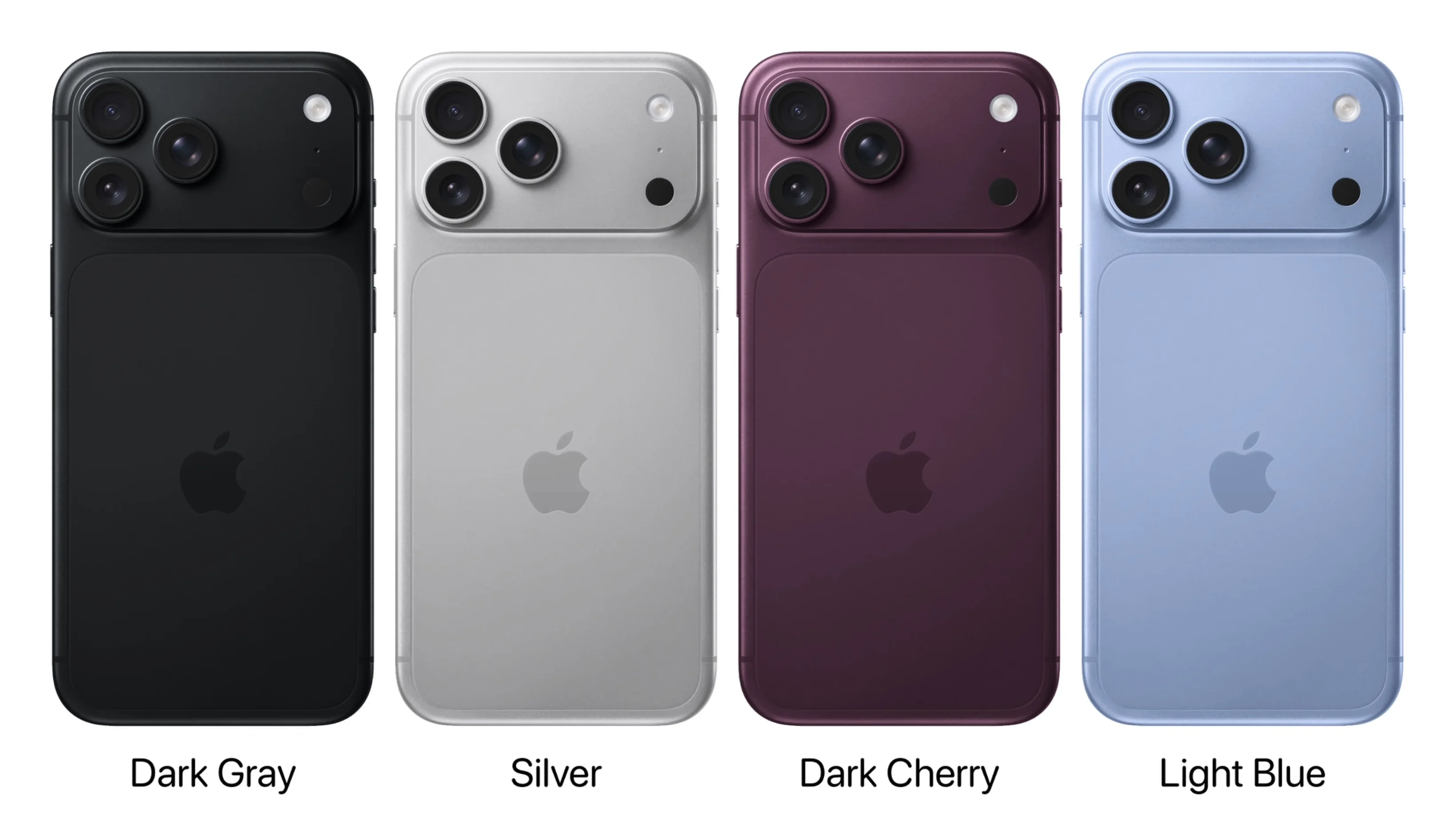
Macworld notes that the colors are still in development and, since the 18 Pro has not yet entered mass production, one of them could be dropped before launch. A steel gray color leaked for the 17 Pro but never saw the light of day.
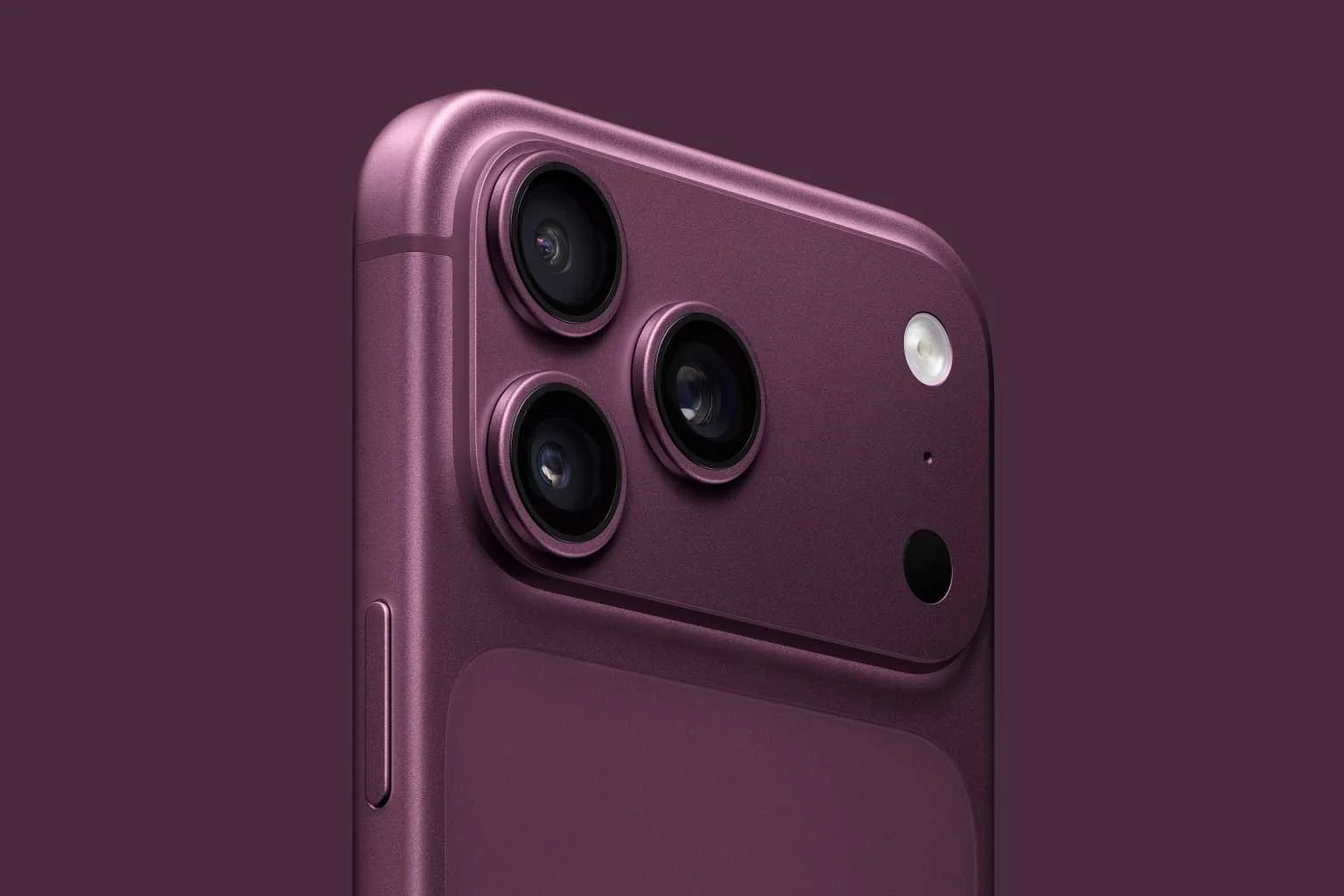
Dark Cherry, the new signature color replacing Cosmic Orange
Every year, Apple chooses a hero color to push the Pro lineup, and since the switch to the 17 Pro’s aluminum chassis, those colors have become more saturated. In 2025 it was Cosmic Orange, which exploded in China: consumers nicknamed it “Hermès orange,” and according to the Financial Times, it was one of the factors behind the 17 Pro’s 38% sales jump over the 16 Pro.
For the 18 Pro, the bet is Dark Cherry: a deep wine red, closer to burgundy than classic red. The goal is to offer something distinctive, but less loud than the 17 Pro’s orange.
Light Blue, Dark Gray, and Silver complete the palette
Light Blue (Pantone 2121) recalls the Mist Blue of the standard iPhone 17, but with more saturation. Silver remains the classic option and, according to market data, the best long-term seller in the Pro lineup. Dark Gray is the most controversial of the four and deserves separate treatment.
Is black coming back? Leakers don’t agree
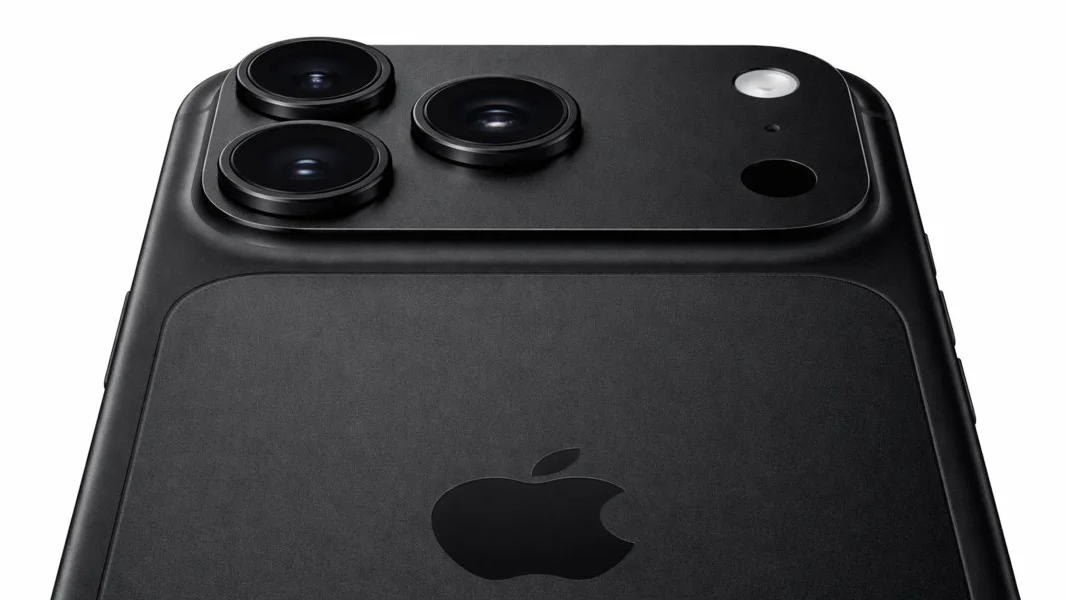
There is tension between sources. A few weeks ago, Instant Digital — a Weibo leaker with a strong track record on Apple rumors — claimed that the 18 Pro would not include black, for the second year in a row. Macworld says it will, but with a nuance: they call it Dark Gray, not Black.
Pantone 426C is a very dark charcoal gray, but it is not the classic Space Black many have been asking for since the 17 Pro. If Macworld is right, fans of pure black will be left halfway satisfied. Apple still has room to make adjustments until midyear.
Variable-aperture camera: production has already started
This is where things move from rumor to confirmation. According to ETNews, picked up by MacRumors, 9to5Mac, and AppleInsider, Sunny Optical has started manufacturing the actuators that move the mechanical iris in the new camera. LG Innotek, Apple’s main partner for optical modules, will begin full assembly between June and July at its plant in Gumi, South Korea.
No iPhone has ever had a true variable aperture before, and the schedule lines up with the expected September launch.
What variable aperture is and why it matters
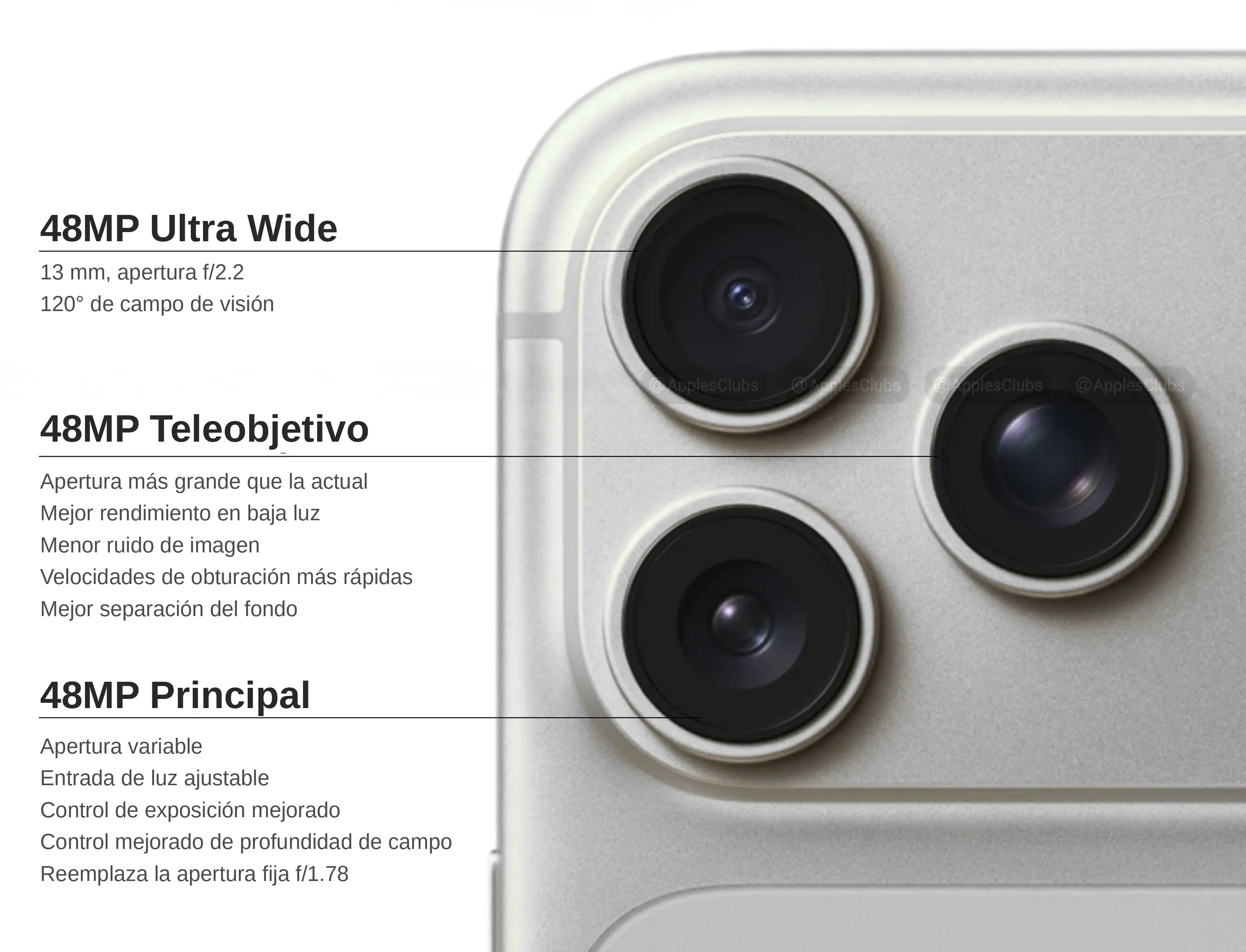
From the iPhone 14 Pro through the 17 Pro, the main camera has used a fixed ƒ/1.78 aperture: the lens is always fully open. On the 18 Pro, a mechanical iris would open and close depending on the scene, with rumors pointing to a ƒ/1.4 to ƒ/2.8 range (unconfirmed).
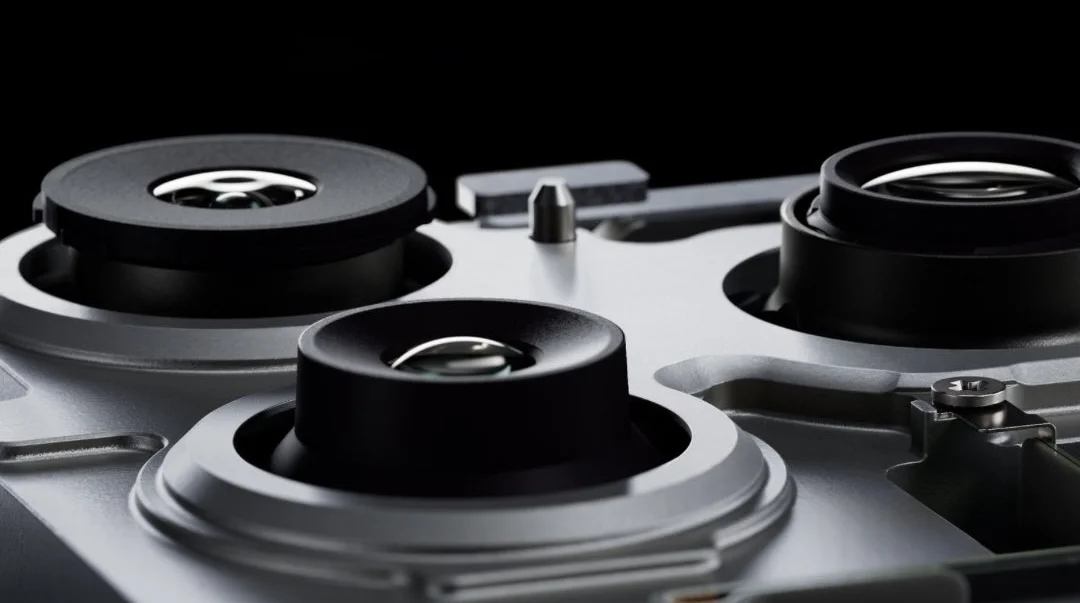
What does that deliver in practice?
- Real optical bokeh. Today’s Portrait mode relies on machine learning to decide what should be in focus. With variable aperture, the blur is physical, like on a real camera. Fewer errors around hair, glasses, and complex objects.
- Better handling of bright scenes. Closing the iris helps prevent blown-out skies and harsh highlights, something the electronic shutter does not always solve well today.
- More control in video. Closing the aperture allows longer shutter speeds per frame, enabling cinematic motion blur without external ND filters.
The honest caveat: the iPhone sensor is still small. Do not expect full-frame depth of field no matter how much aperture you have. This is a jump in quality and control, not a reinvention of physics.
Apple is late, but it is taking it seriously
Apple did not invent variable aperture in smartphones: Samsung introduced it in the Galaxy S9 in 2018 with two stops (ƒ/1.5 and ƒ/2.4) and then let it die. What sets Apple’s system apart is the mechanics: it would use nitinol, a shape-memory alloy, instead of a traditional micromotor. More compact, more precise, and with fewer rigid parts.
What is under the hood: A20 Pro, C2, N2, and a cleaner display
Colors sell units, but what changes the real experience is inside. In this generation Apple is refreshing the processor, modem, wireless connectivity chip, and redistributing components behind the front display.
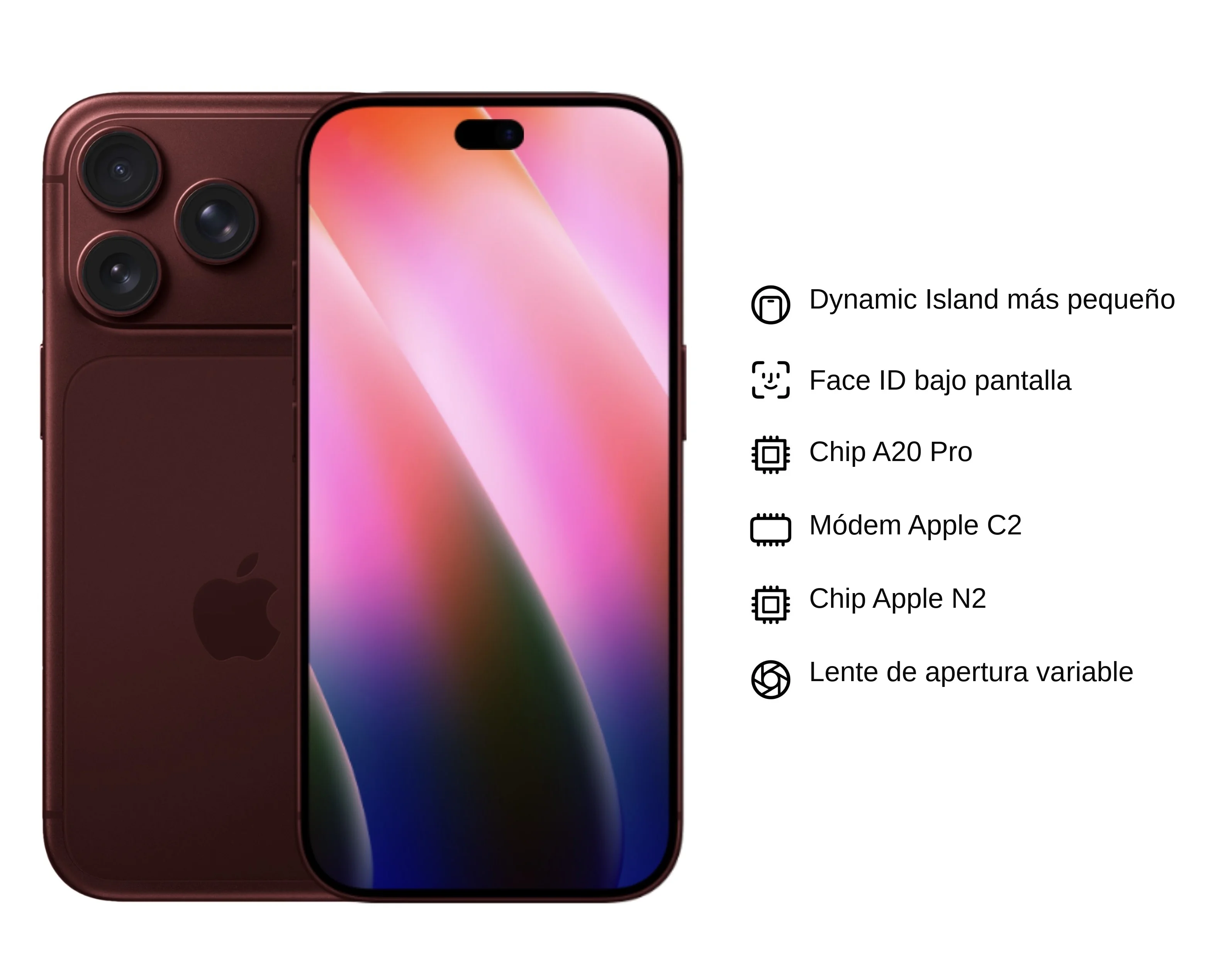
A20 Pro chip: the first 2-nanometer SoC
The A20 Pro, manufactured on TSMC’s N2 (2nm) process, would be the first smartphone chip to use that lithography. It is estimated to deliver 15% more performance and 30% greater efficiency than the A19 Pro in the 17 Pro, which still uses 3nm.
The less visible change is in the packaging. Apple would move to WMCM (Wafer-Level Multi-Chip Module), which integrates RAM on the same wafer as the CPU, GPU, and Neural Engine instead of connecting it through a silicon interposer. The result: lower latency for Apple Intelligence, faster on-device AI, and a more compact chip. Rumors point to 12 GB of RAM across the entire Pro lineup.
C2 modem and N2 chip: Apple becomes less dependent on third parties
The C2, successor to the C1 in the iPhone 16e, is Apple’s in-house 5G modem replacing Qualcomm in the Pro lineup. The key leap is support for mmWave 5G, which enables much higher speeds on compatible networks.
The N2 succeeds the N1 in the iPhone 17 and continues to integrate Wi-Fi 7, Bluetooth 6, and Thread into a single package. Apple has not previewed what changes, but the N1 pattern points to improvements in efficiency and in features such as Personal Hotspot and AirDrop.
With both chips in-house, Apple takes another step away from Broadcom and Qualcomm: full control of the stack and optimizations other manufacturers cannot replicate.
Smaller Dynamic Island and Face ID partially under the display
Leaked CAD files show a 35% smaller Dynamic Island (from about 20.7 mm to about 13.5 mm wide), because Apple managed to place at least one Face ID component beneath the panel.
This is where some caution is needed: early rumors talked about fully under-display Face ID and a front camera in a side punch-hole. More recent reports (Instant Digital, MacRumors in April 2026) correct that — only the infrared emitter is moving under the panel, while the front camera stays in place. Smaller Dynamic Island, not no Dynamic Island. The 18 Pro is still not the promised all-screen iPhone.
Materials and repairability: two hardware readings
Colors and anodizing
The 17 Pro debuted hot-forged aluminum, and with it came “scratchgate”: units with scratches that exposed the bare aluminum, something common in official service channels, especially on Cosmic Orange. A dark color like Dark Cherry may hide certain damage, but it can also create more contrast when the base aluminum shows through. If Apple has refined the process, it will show in the first few months: stronger anodizing = fewer premature wear complaints and fewer warranty replacements.
Variable aperture and repairability
The mechanical iris with a nitinol actuator adds a moving part to the camera module. More moving parts = more points of failure, and replacing the main module is already one of the most expensive iPhone repairs; with this system, the cost goes up. The upside: the complexity pushes repair into the official ecosystem (AASPs and Self Service Repair), where iris calibration and firmware are integrated through the service tool, reducing the margin for error compared with generic parts. For someone who upgrades every year, it is not a major issue; for 3–4 years of use, it is worth adding AppleCare+ or factoring it into the budget.
The other leaks
The iPhone Ultra, Apple’s foldable, would come in Silver, White, and Indigo — a more neutral palette than the Pro models — and would measure 4.7 mm unfolded, thinner than the iPhone Air. The launch of all three devices is expected in September 2026, although some analysts believe the foldable could arrive later.
Conclusion
There are two layers to the leak. The superficial one: Dark Cherry and a new palette. The one that matters: variable aperture has moved into an active supply chain, and the 18 Pro is bringing a major internal refresh (2nm A20 Pro, C2, N2, new memory architecture). The generational leap is real, not cosmetic.
The 18 Pro will be more interesting to people who use the iPhone as a camera and work tool than to those who use it as a fashion accessory. If you are on the 17 Pro in Cosmic Orange, do not upgrade just for aesthetics. If you work with photo or video, or rely heavily on Apple Intelligence, variable aperture + A20 Pro are enough to justify the jump.
iPhone 18 Pro
Apple’s next flagship, expected to launch in September 2026. It debuts variable aperture on the main camera, a 2nm A20 Pro chip, and a new palette led by Dark Cherry. The price is estimated based on projections from Ming-Chi Kuo, who anticipates pricing in line with the iPhone 17 Pro.
Pros
- First iPhone with true variable aperture on the main camera, with physical optical bokeh.
- 2nm A20 Pro chip with ~15% more performance and ~30% greater efficiency than the A19 Pro.
- New WMCM architecture with RAM integrated into the wafer to accelerate Apple Intelligence.
- In-house C2 modem with mmWave 5G support.
- Dynamic Island ~35% smaller, freeing up usable display area.
Cons
- No classic black for the second year: Dark Gray is charcoal gray, not Space Black.
- Face ID is only partially under the display; it is still not the all-screen iPhone.
- It inherits the 17 Pro’s aluminum chassis and its scratchgate track record.
- The mechanical iris adds a moving part to the camera module, making repairs more expensive.
Author
Alexis PaezComments
Share article
You might also like
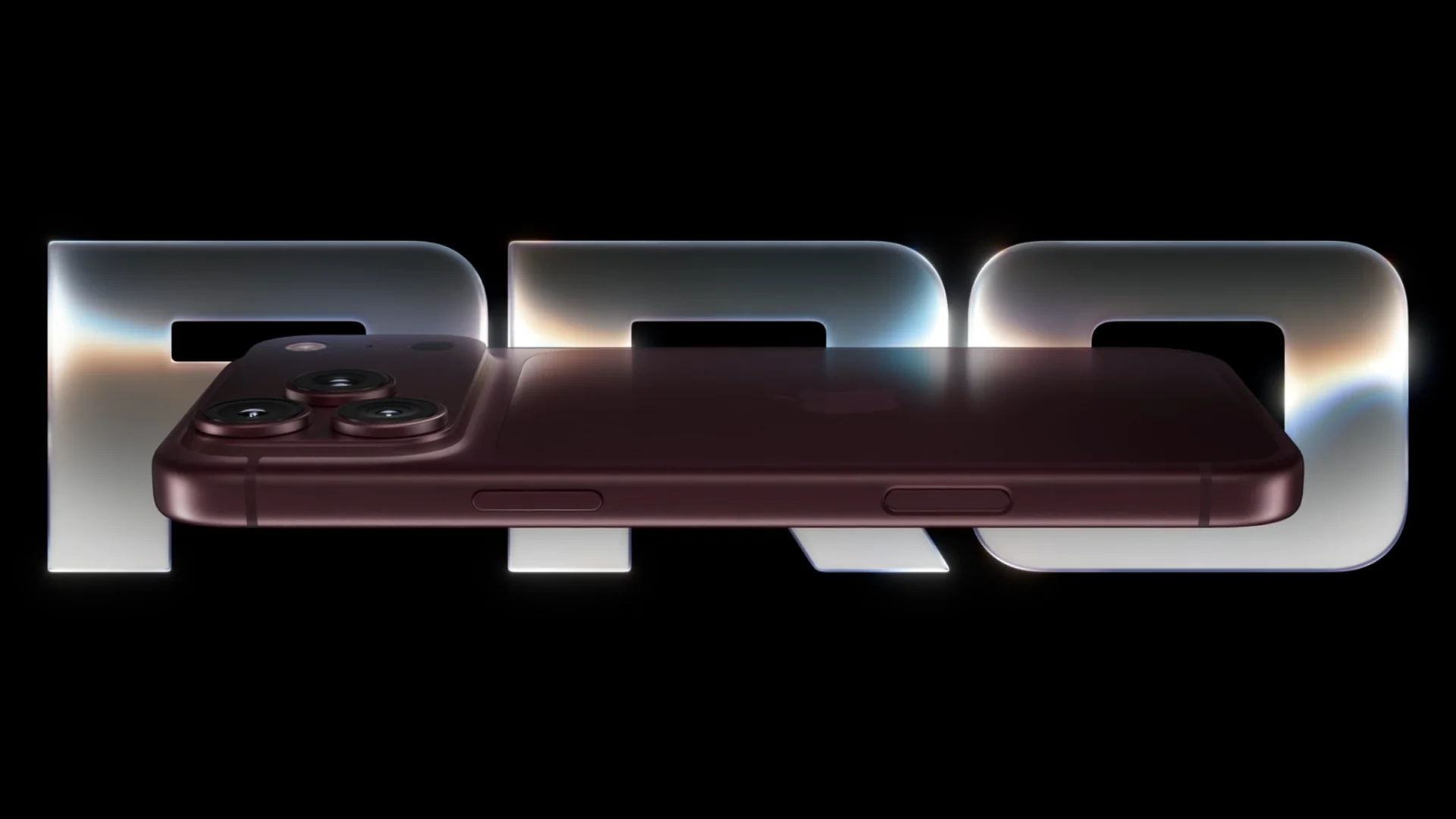
iPhone 18 Pro and Pro Max: variable aperture, A20 Pro, and the longest battery life in an iPhone
The iPhone 18 Pro debuts a four-step variable aperture, the A20 Pro chip, and the longest battery life in the lineup. Price, specs, and why Apple lists two different battery figures.

iPhone 18 Pro and Pro Max: what changes, what doesn't, and why there's no iPhone 18 in 2026
The iPhone 18 Pro and Pro Max arrive in September without an iPhone 18 alongside them. What really changes, what stays the same, and why the Pro Max gets everything.
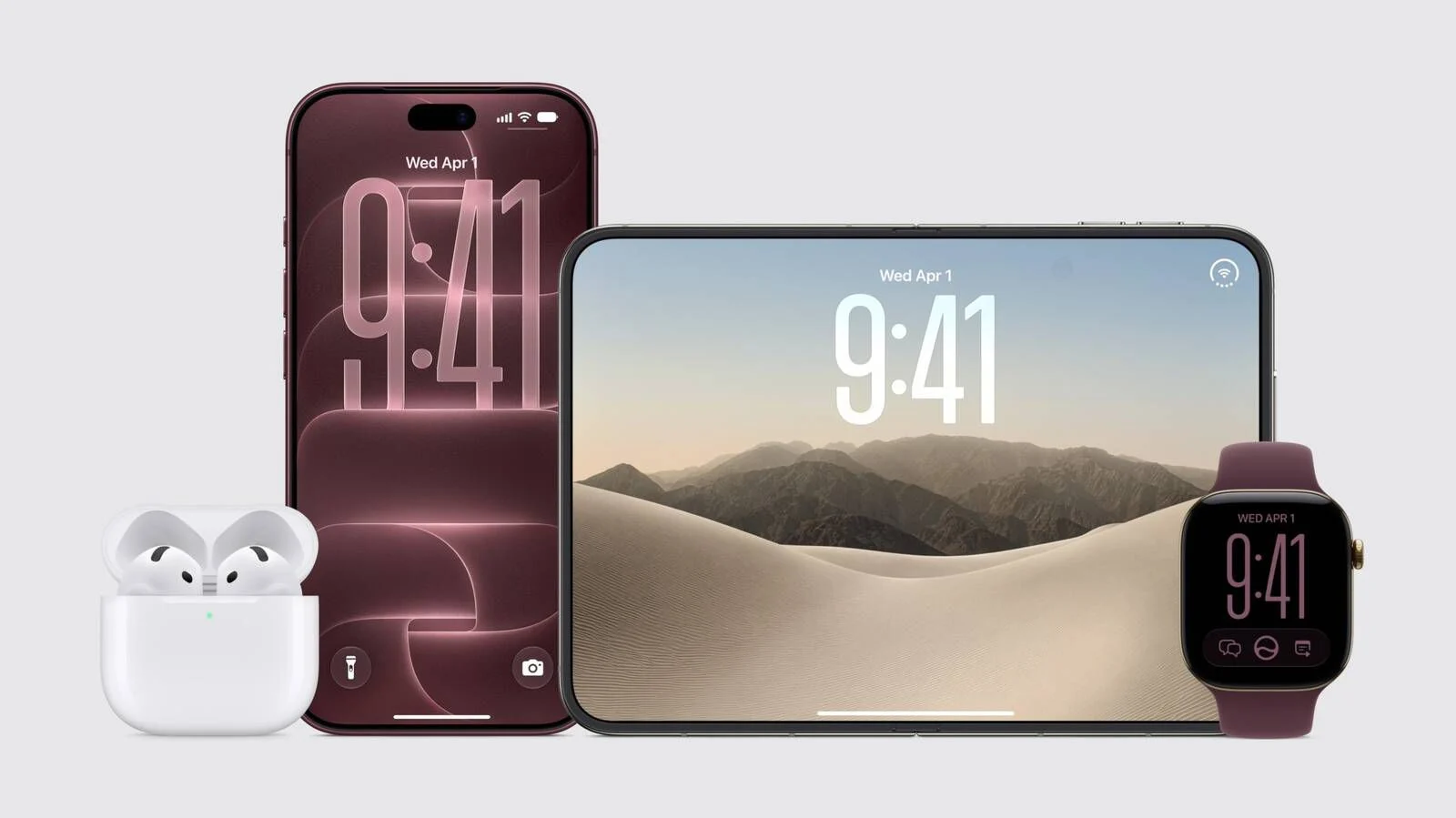

Surprise and Shine: Apple confirmed September 9 for the iPhone 18 Pro and the foldable iPhone Ultra
Apple confirmed its Surprise and Shine event for September 9. iPhone 18 Pro, Pro Max, the first foldable, Apple Watch, and AirPods 5: what arrives that day and what comes later.