Leaked foldable iPhone Ultra price: start saving, because it’s set to break records

Index
The idea of a foldable iPhone has been floating around the rumor mill for years, but the picture is finally starting to come into focus. That it would be a premium device was never a secret; however, the latest industry leaks—backed by analysts like Mark Gurman and Ming-Chi Kuo—confirm what many of us feared: the price is going to break every record for the brand.
If you were saving up to make the jump to Apple’s flexible-screen format, you may need to adjust your budget, because the hit is going to be substantial.
"Ultra": The surname that justifies the excess
Forget the name "iPhone Fold." According to patent filings and supply-chain moves, Apple would go with the iPhone Ultra naming. In Apple’s ecosystem, that means only one thing: the highest-end, most exclusive, and most expensive product in the lineup (like the Apple Watch Ultra).
Gurman says the starting point for this device would begin at $2,000, but higher-capacity versions could climb to $2,500, far surpassing the price of a current iPhone 17 Pro Max.
Why all the secrecy? The "crease" problem
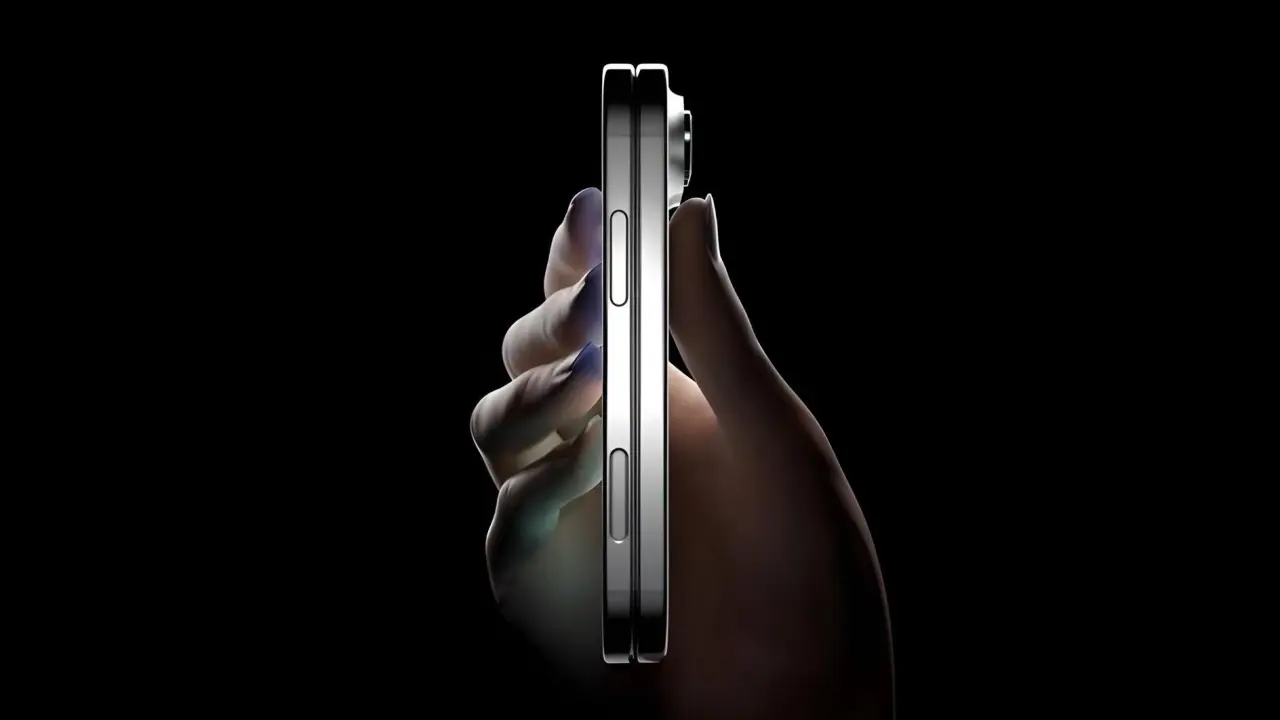
Many are wondering why Apple is arriving so late to the foldables party when Samsung is already on its seventh generation. The answer lies in Cupertino’s obsession with perfection: they don’t want the display to show a crease.
It leaked that Apple is working on an advanced polymer material, similar to what it has used in the coating of its cases for years, but taken to a nanotechnology level. This display would be "self-healing," capable of filling in small micro-fractures caused by daily use so the central fold is invisible both to the touch and to the eye. This level of engineering is, in large part, what is driving up the final product cost.
Confirmed hardware: A beast in your pocket
To justify the price of a 14" MacBook Pro in a phone, the specs have to be brutal:
-
Dual display: A 5.49-inch OLED outer panel for quick use and a 7.8-inch inner "tablet" when you unfold it.
-
Unlimited power: It would be powered by the future A20 Pro chip, built on a 2nm process, and a generous minimum of 12 GB of RAM to run Apple’s AI.
-
Massive storage: Versions are rumored to go up to 2 TB, something necessary if you plan to record ProRes video with its triple 48MP camera system.
-
Build: Grade 5 titanium chassis to keep weight under control, since foldables are often heavy bricks.
When will we actually see it?
This is where things get bitter. Although it was initially expected for 2026, sources close to the supply chain in Asia (such as 20 Minutos and Applesfera) suggest that Apple may have pushed the mass launch back to the first quarter of 2027.
It seems Apple would rather "sacrifice" the iPhone 18 hype so the iPhone Ultra launch can become the tech event of the decade.
Conclusion: The ultimate aspirational device
The foldable iPhone Ultra is not designed for the average user. It’s a device for early adopters, collectors, and enthusiasts who want the latest of the latest. Apple is not going to compete on price with the Galaxy Z Fold; it is going to compete on who offers the most refined and durable experience.
Would you sell your current PC or MacBook to have an iPhone that turns into an iPad? The (long) countdown has already begun.
iPhone Ultra
Apple’s first foldable, which according to Gurman and Kuo would adopt the Ultra name and arrive in 2027. A 7.8″ internal display, A20 Pro chip, up to 2 TB, and a self-healing display that would partly explain its soaring price.
Pros
- Apple’s first foldable, with a 7.8″ internal display that turns it into a mini tablet.
- A20 Pro chip at 2nm and up to 2 TB of storage, true flagship specs.
- Nanotechnology-based polymer material aimed at making the fold invisible to both touch and sight.
- Grade 5 titanium chassis to control weight, the Achilles’ heel of foldables.
Cons
- Estimated starting price of USD 2,000, rising to USD 2,500 for the highest-capacity version.
- Launch pushed to 2027, arriving years after Samsung’s seventh generation.
- All information comes from leaks (Gurman, Kuo); nothing has been officially confirmed.
- The self-healing display is the riskiest bet in the package, with no commercial precedent.
Author
Alexis PaezComments
Share article
You might also like

Surprise and Shine: Apple confirmed September 9 for the iPhone 18 Pro and the foldable iPhone Ultra
Apple confirmed its Surprise and Shine event for September 9. iPhone 18 Pro, Pro Max, the first foldable, Apple Watch, and AirPods 5: what arrives that day and what comes later.

iPhone Duo: Apple enters foldables with two screens and US$1,999
The iPhone Duo opens to 7.6 inches, weighs 254 grams, and starts at US$1,999. Specs, materials, and the details of the inner display that change how you care for the device.

iPhone 18 Pro and Pro Max: variable aperture, A20 Pro, and the longest battery life in an iPhone
The iPhone 18 Pro debuts a four-step variable aperture, the A20 Pro chip, and the longest battery life in the lineup. Price, specs, and why Apple lists two different battery figures.