Sony celebrates 10 years of the 1000X series with The Collexion: the brand’s most expensive headphones, better materials than the XM6 but the same ANC

Index
Sony announced the 1000X The Collexion on Monday, May 19, a new premium line within the 1000X series that celebrates ten years since the original MDR-1000X from 2016. It does not replace the WH-1000XM6: it sits above it, with a US$649 (€630 / £550) price that places these headphones in AirPods Max 2 and Bowers & Wilkins Px8 S2 territory. The interesting part is that you pay US$200 more than the XM6 without getting better noise cancellation or longer battery life. What justifies the jump is the materials, the design, and a more mature tuning.

What 1000X The Collexion is and why it does not replace the WH-1000XM6
Sony was explicit in its announcement: these headphones are not the successor to the WH-1000XM6, but a parallel line. The XM6 remains the lineup’s reference point for anyone seeking the best noise cancellation in pure terms. The Collexion redirects the conversation toward design, materials, and the experience of extended use. The split recalls moves by other brands that separate pure functionality from status-driven positioning: AirPods vs AirPods Max, Bose QC Ultra vs more prestige-oriented lines.
Available in Black and Platinum, they hit the market immediately through Sony Store, Best Buy, and Amazon. That same day, Sony added a new Sandstone color to the WH-1000XM6, reinforcing the coexistence of both lines.
Design and materials: from plastic to metal and faux leather
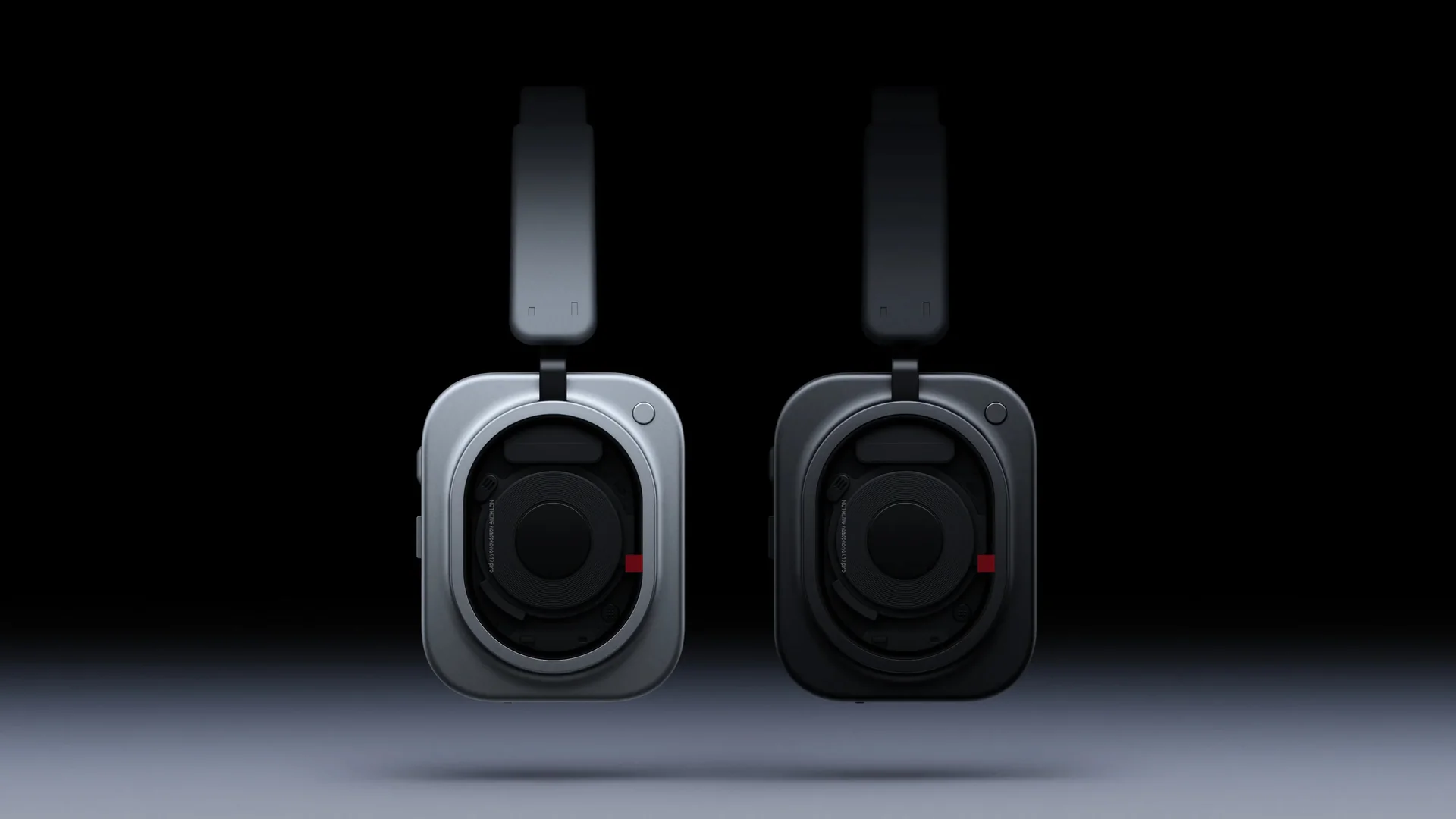
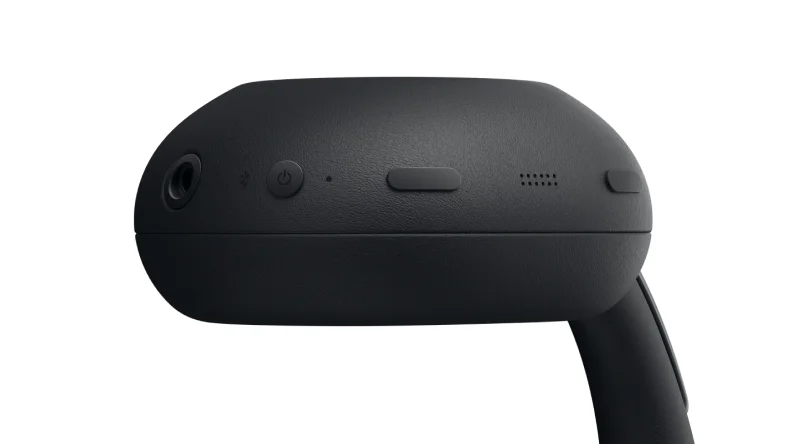
The central change versus the WH-1000XM6 is that plastic disappears from the visible areas. The headband is now hand-polished metal, with a sandblasted matte texture contrasting with glossy details. The side buttons and microphone openings are integrated into the body as metal pieces, with no visible screws. The exterior of the earcups and the headband are wrapped in a synthetic leather that Sony says it spent two years developing.


One concrete point: according to an OnLeaks report picked up by MacRumors before launch, the arms connecting the headband to the earcups were redesigned as a single piece of polished metal to address durability complaints that have followed the XM6. It is a structural change, not a cosmetic one. The ear cushions are replaceable, and the body incorporates approximately 25% recycled plastic, with plastic-free packaging except for varnishes and adhesives.
The tricky side: faux leather shows marks from daily use faster than the XM6’s matte plastic. That is the cost of moving up to a more premium materials tier.
Bespoke driver, DSEE Ultimate, and 360 Reality Audio Upmix
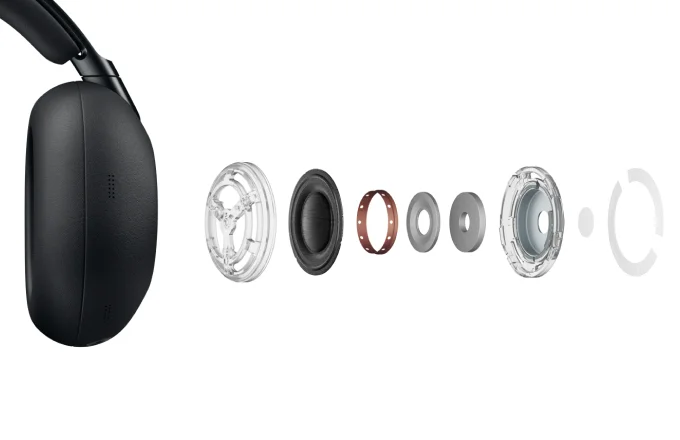
The sound core is a custom-made 30 mm driver, with a high-rigidity dome made from unidirectional carbon composite and a soft edge. According to the official announcement, the tuning was refined by Grammy-winning mastering engineers at Battery Studios. Above the driver, there are three technical additions:
- First implementation of DSEE Ultimate in Sony headphones: local AI processing (Edge-AI) that reconstructs lost detail in compressed files in real time.
- 360 Reality Audio Upmix with three modes: Music, Cinema, and Game. It converts stereo into adjustable spatialization depending on the content.
- Improved circuitry: 1.5 times more copper foil than the XM6, solder with gold content, and a crystal oscillator with low phase noise. Changes aimed at signal-to-noise ratio, not marketing.
Codecs: SBC, AAC, and LDAC, with Bluetooth 6.0 and LE Audio.
ANC and connectivity: the XM6’s DNA, with no leap forward
Here, Sony did not move the needle. The processing chip is the same QN3 used by the WH-1000XM6, with 12 microphones and the Adaptive NC Optimizer. Cancellation performs at reference level for the category, but — as What Hi-Fi points out in its review — the XM6 remains slightly better at suppressing the most difficult frequencies.
For calls, there are six beamforming microphones with structural wind-noise reduction. Speak-to-Chat (which lowers the volume when you speak) is inherited and keeps its long-standing weakness: it tends to confuse voice with wind outdoors. Battery life: 24 hours with ANC, 32 without. Below the XM6’s 30 hours in that area.
Case, accessibility, and sustainability
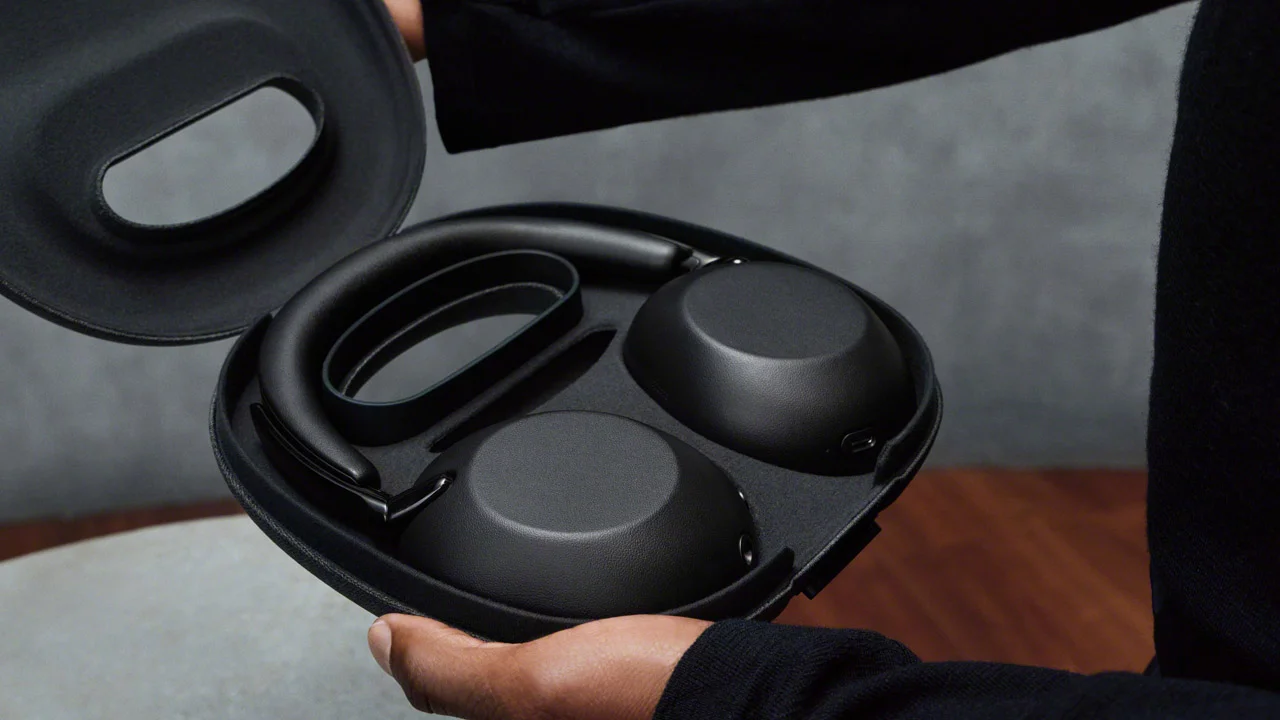
The case changes shape compared with the XM6: it drops the flat, rigid shell and adopts a bag-like format with a hollow handle, magnetic closure, and fabric body. The decision is functional — designed for users with limited mobility or low vision — and is accompanied by high-contrast L/R markings, tactile buttons, and QR-accessible setup guides. A significant detail: these headphones do not fold. They lie flat when stored, but they are not ideal for a small backpack.
How they stack up against premium competitors
Sony places the Collexion where products with clear identities compete: Apple with an ecosystem focus, Sonos with a connected-home proposition, and Bowers & Wilkins and Focal with a focus on pure HiFi. The table below compares the most direct rivals.
Three takeaways: the Collexion is the most expensive, the second lightest, with more premium materials than the AirPods Max and better direct battery life. The Sonos Ace, at US$200 less, is the most direct rival in terms of premium materials plus comfort. And if the priority is maximum battery life and Sony’s best cancellation, the XM6 remains the rational choice.
What early reviews are already saying
What Hi-Fi’s review rates the Collexion 4 out of 5 for sound and build, and 5 out of 5 for features. The conclusion is direct: they are "built to impress rather than entertain." The new carbon driver gains detail, soundstage, and instrument separation, but sacrifices some of the XM6’s sonic personality. Compared with the Sennheiser HDB 630 and Bowers & Wilkins Px8 S2, the Sony headphones are technically impressive, but more emotionally distant.
Other verifiable caveats: faux leather shows marks with daily use, some testers noticed the earcups wobbling while walking, and the XM6’s cancellation remains the ceiling within Sony’s own range.

Price, availability, and a new Sandstone for the WH-1000XM6
The 1000X The Collexion has been available since May 19, 2026, at US$649 (€630, £550) in Black and Platinum. The box includes the case with handle and a 3.5 mm to 3.5 mm cable. In parallel, Sony added the Sandstone color to the WH-1000XM6, which remains at US$449 (€379, £349). It is the fifth color in the XM6 lineup.

Conclusion
The Collexion are headphones for someone who already had the XM6 and wants something different, not something better in an absolute sense. The metal and faux leather are noticeable to the touch, and 24-hour battery life with ANC remains competitive. But cancellation does not improve, battery life drops compared with the XM6, and the leatherette finish is more sensitive to cosmetic wear. These are lateral changes, not vertical ones. If what you want is material refinement and a less visually generic proposition, there is a case for making the jump. If ANC and battery life are the priority, the XM6 remains the more rational bet.
Sony 1000X The Collexion
Premium anniversary line of the 1000X series celebrating ten years of the MDR-1000X. It does not replace the WH-1000XM6: it moves up a tier with a hand-polished metal headband, synthetic leather, and a new carbon driver, in exchange for US$649. Cancellation and battery life do not improve over the XM6; what changes are the materials, the design, and a more mature tuning.
Pros
- Polished metal and synthetic leather construction far above the XM6.
- New carbon driver with more detail, soundstage, and separation.
- Redesigned one-piece metal arms that address the XM6’s durability concerns.
- Bag-style case and design with a real focus on accessibility.
- Competitive 24 h battery life with ANC.
Cons
- US$200 more expensive than the XM6 with no better ANC or longer battery life.
- Noise cancellation does not surpass the XM6’s.
- Faux leather wears faster with daily use.
- It does not fold, and some testers noticed earcup wobble.
- Battery life with ANC is below the XM6’s 30 h.
Author
Alexis PaezReport based on official announcements and verified public sources at the time of publishing.