Bose redesigns its soundbar after a decade and builds a modular collection to take on Sonos

Index
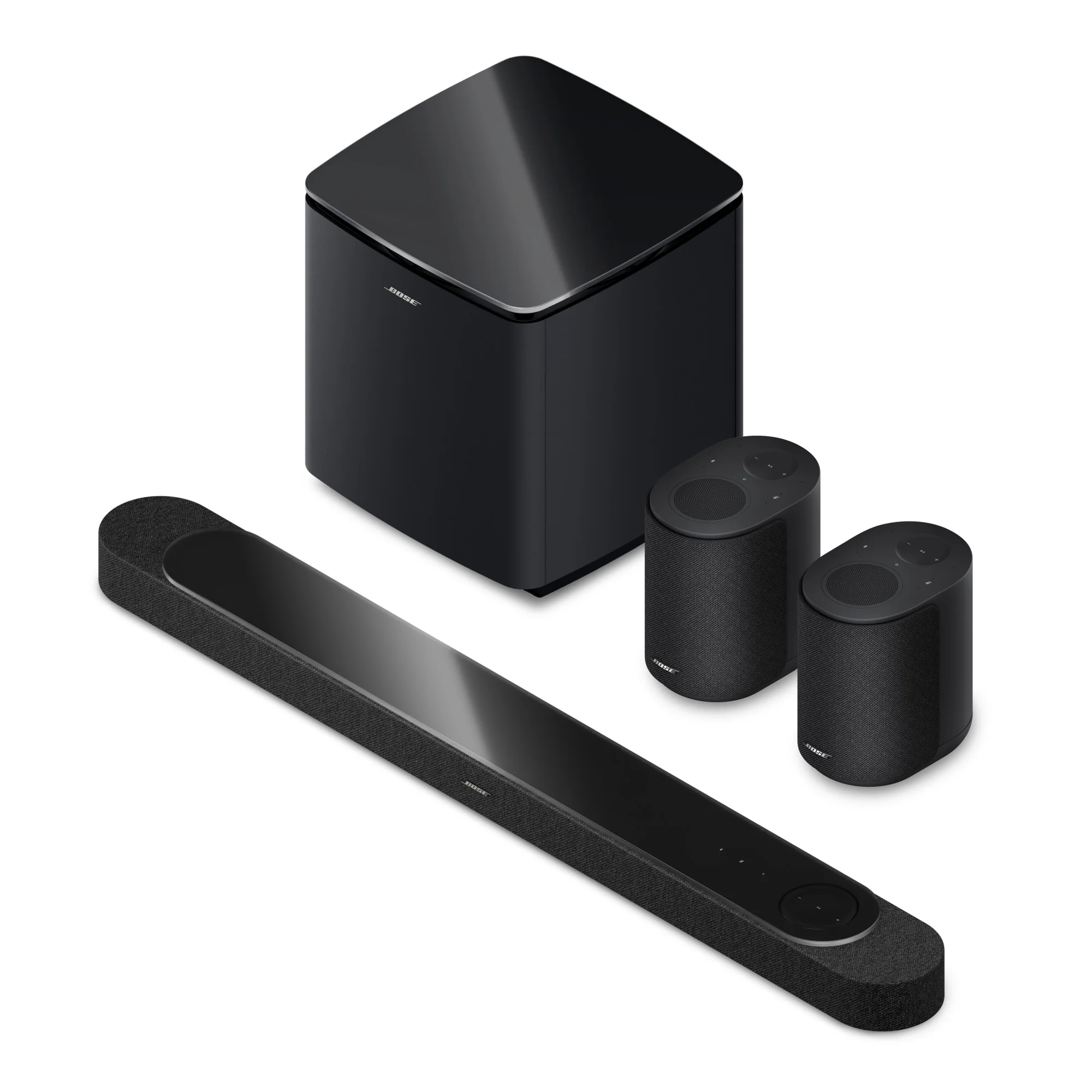
The last time Bose thoroughly redesigned its soundbar, Sonos had not yet launched the original Beam. The Framingham brand announced the Lifestyle Collection on May 5 — available starting the 15th — and for the first time in more than ten years, it is changing the internal architecture of its soundbars. There are three products designed to fit together: a compact speaker, a Dolby Atmos soundbar, and a wireless subwoofer. They work on their own or can be combined into a 7.1.4 system without running a single surround cable. The move targets Sonos with surgical precision: product-by-product price alignment, a revamped app, and an exclusive agreement with Amazon that Sonos does not have.
What the Lifestyle Collection is
The philosophy is modularity. You start with a Lifestyle Ultra Speaker (USD 299), add another for a stereo pair, bring in the soundbar when you set up the living room, complete the system with the subwoofer, and eventually turn the two initial speakers into rear surrounds. The progression from 1.0 → 2.0 → 5.0.2 → 5.1.2 → 7.1.4 is handled entirely from the Bose app, without replacing anything along the way.
Connectivity is where things get interesting. Wi-Fi 6, Bluetooth 5.3, AirPlay, Google Cast, Spotify Connect, and a 3.5mm AUX input on the speaker. Tidal Connect arrives later via firmware. The difference versus Sonos’ closed ecosystem: the collection can group with AirPlay/Cast speakers from any brand for multi-room audio.
Design: furniture before electronics
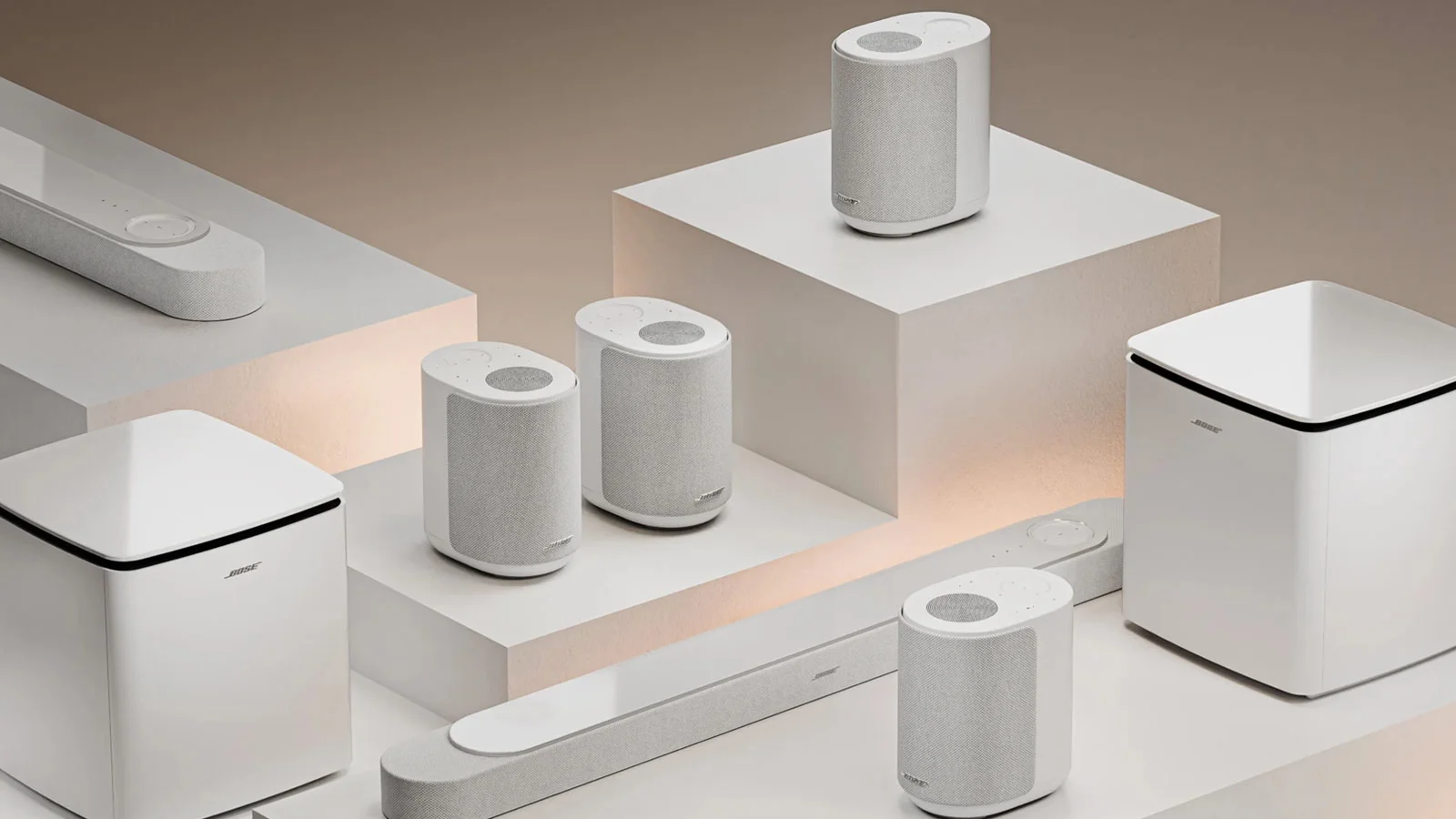
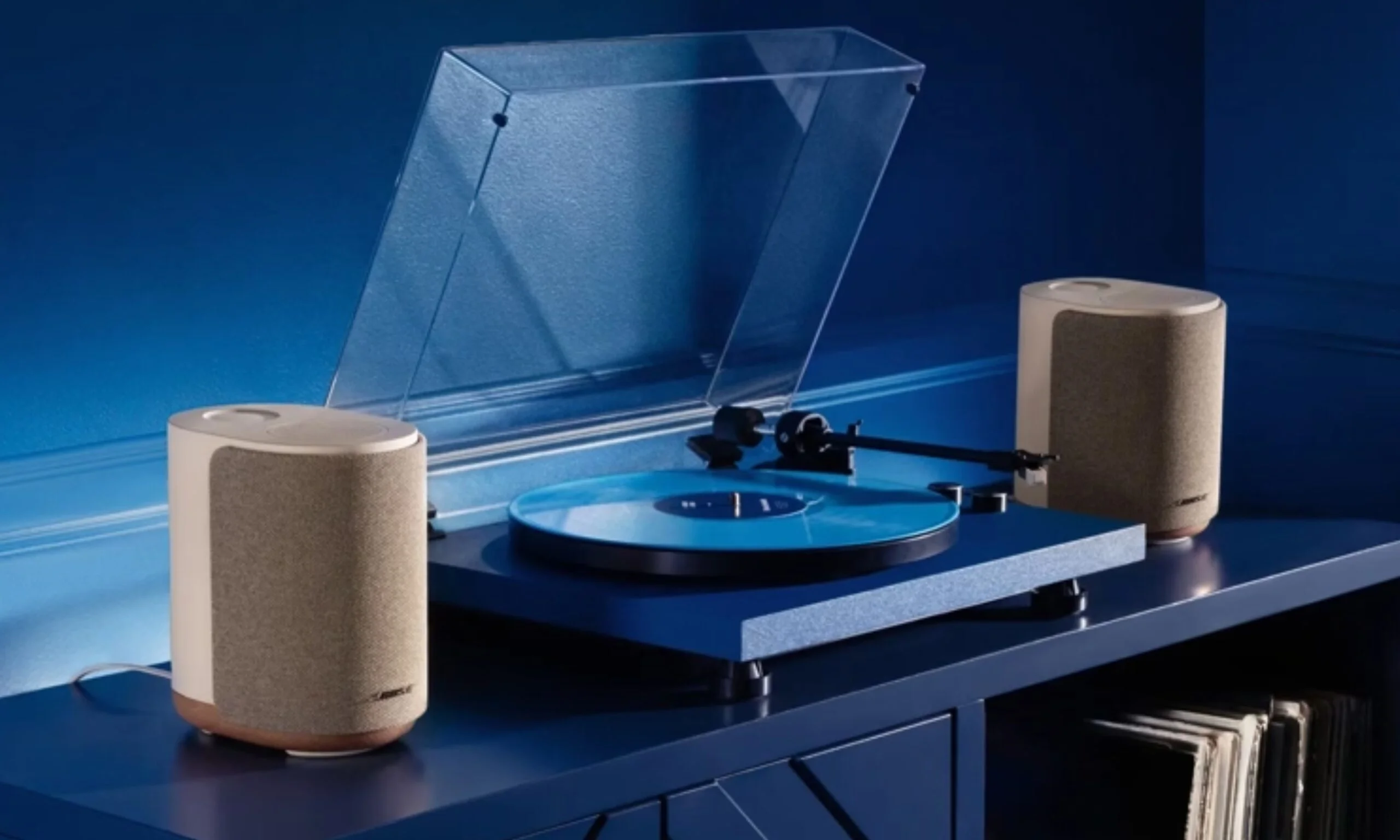
Textured woven fabric across the entire front face, sculpted silhouettes with rounded edges, and premium glass panels on the top of the soundbar and subwoofer. The aesthetic is deliberate: these products are meant to blend into the living room as pieces of furniture, not as tech gadgets.
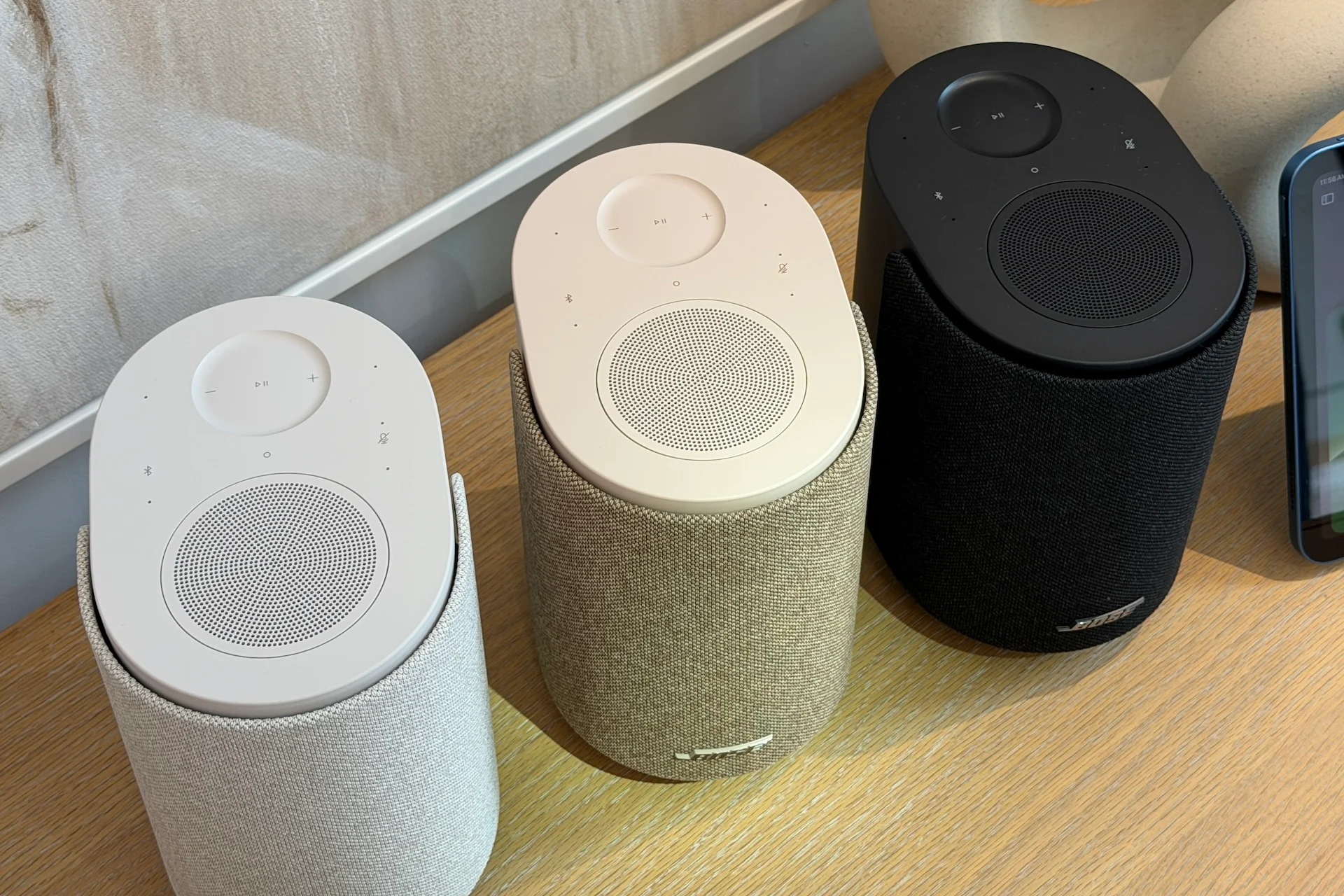
There are three available finishes. Black and White Smoke cover the full lineup. Driftwood Sand is a limited edition exclusive to the speaker — a solid white oak base, beige fabric, and a finish designed to age with use. It inherits the design idea of the original Wave radio, which back in the eighties already bet on audio that did not look like audio.
Lifestyle Ultra Speaker: the entry point
The Lifestyle Ultra Speaker costs USD 299 (the Driftwood Sand edition is USD 349) and measures 4.8 × 7.3 × 6.6 inches. Inside are three drivers: a front-facing 3-inch woofer, a tweeter, and an up-firing driver. That configuration is the key difference versus the Sonos Era 100, which has a front-facing driver and a tweeter but no physical height driver.
Bose uses an updated version of its Direct/Reflecting technology plus TrueSpatial processing — DSP that positions sound spatially by taking advantage of ceiling and wall reflections. The up-firing driver does not turn the speaker into a native Atmos unit, but it does create a real sense of height, especially when two are used as a stereo pair or when they operate as rear surrounds.
The most interesting detail: it is the world’s first third-party speaker to support Alexa+, Amazon’s generative AI assistant. While Sonos spent the last year apologizing for its app, Bose secured an exclusive agreement with Amazon to arrive first in the new generation of conversational assistants.
Lifestyle Ultra Soundbar: the first major redesign in a decade
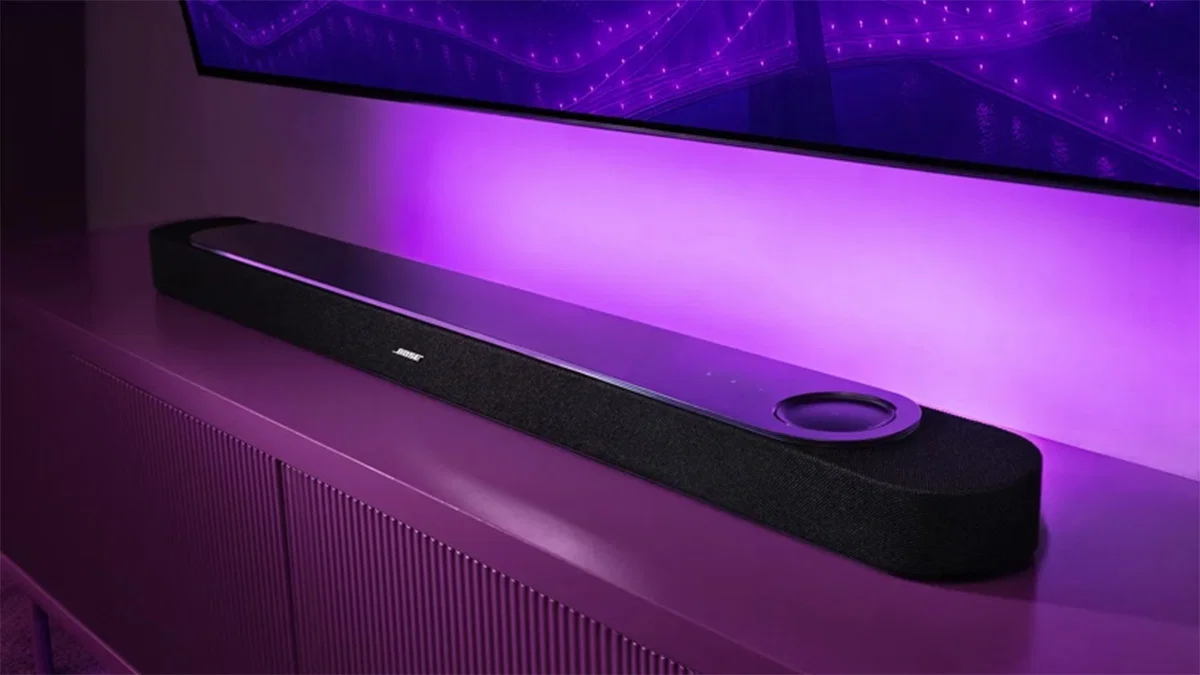
The centerpiece costs USD 1,099 and delivers a 5.0.2 configuration with nine drivers: four front-facing full-range drivers, two up-firing drivers for Atmos height, a dedicated center tweeter, and two proprietary PhaseGuide drivers. PhaseGuide is the interesting acoustic bet — radiators derived from the thinking behind ribbon tweeters that extend sound laterally without requiring physical drivers on the sides.
It measures 110.6 × 6.7 × 12.6 cm, making it slightly shorter and taller than the Sonos Arc Ultra. The top surface is mirrored glass with capacitive controls. Dolby Atmos runs via HDMI eARC. DTS:X is not supported — a technical caveat we return to below.
Bose explicitly says this is its biggest acoustic redesign in more than ten years. That is not just marketing: the internal architecture has been designed from scratch. Early hands-on impressions from Tom's Guide, What Hi-Fi, and ecoustics highlighted channel separation and dialogue clarity, though they agreed that bass truly shows up once the subwoofer is added.
Lifestyle Ultra Subwoofer: cubic body, 10.5-inch woofer
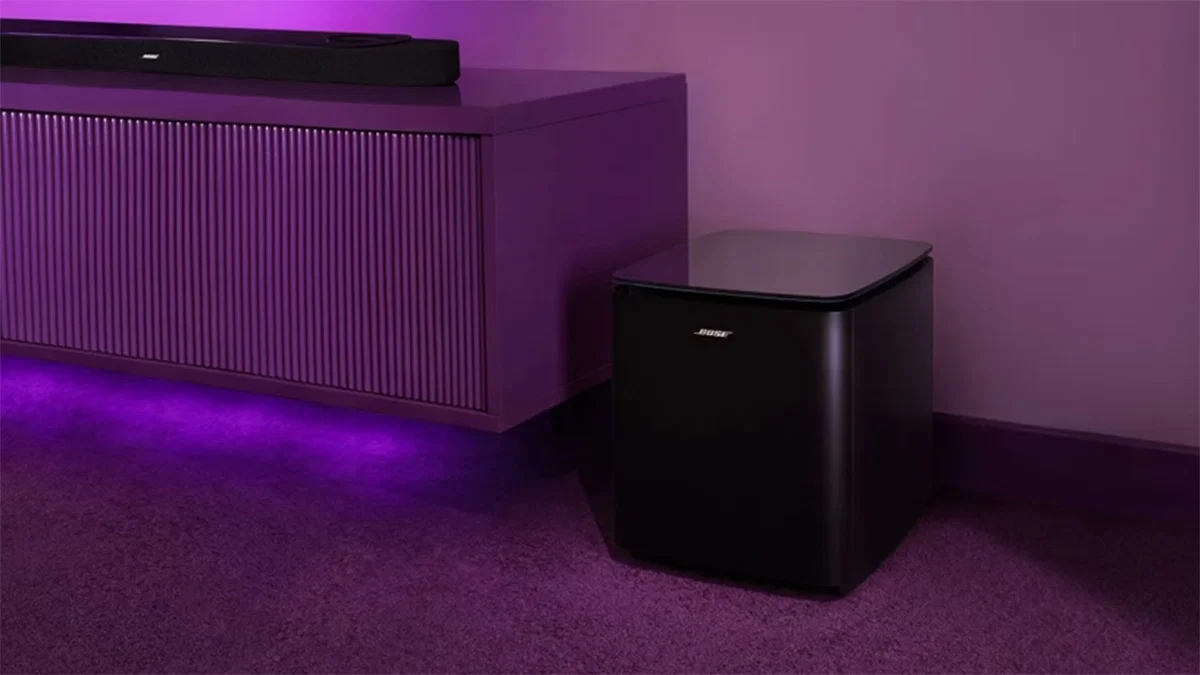
At USD 899, the subwoofer lands at the exact same price as the Sonos Sub 4. The coincidence is not a coincidence. Inside is a 10.5-inch woofer, CleanBass technology, and the QuietPort acoustic opening Bose uses to control resonances. The shape is a box with rounded edges and a glass panel on top — designed to sit next to the TV stand or behind the sofa without shouting "I’m a subwoofer."
It is wireless — it only needs power — and pairs with the soundbar from the app. Once it joins the system, the rest of the setup stops fighting for bass and focuses on mids and highs, which is where the improvement in dialogue clarity and instrument separation becomes noticeable.
The three technologies across the collection
SpeechClarity is dialogue enhancement powered by generative AI, with three adjustable levels. It is the evolution of the previous AI Dialogue Mode — it no longer just raises voices; it isolates them from the background by processing the entire mix.
CustomTune performs acoustic calibration using the phone’s microphone (iOS or Android). The system measures reflections, distances, and furniture placement, then adjusts each driver’s response. It replaces the ADAPTiQ headset Bose used in its previous systems — one less accessory to lose.
TrueSpatial is spatial upmixing for content that does not come in Atmos. It reconstructs a sense of height and dispersion in stereo or 5.1 mixes, allowing a single speaker to generate something Atmos-like even when the content was not recorded that way natively.
How the system is built
The modularity is real:
- 1.0: one Lifestyle Ultra Speaker on its own
- 2.0: stereo pair of two speakers
- 3.0.2: the soundbar on its own (Atmos via up-firing drivers)
- 3.1.2: + subwoofer
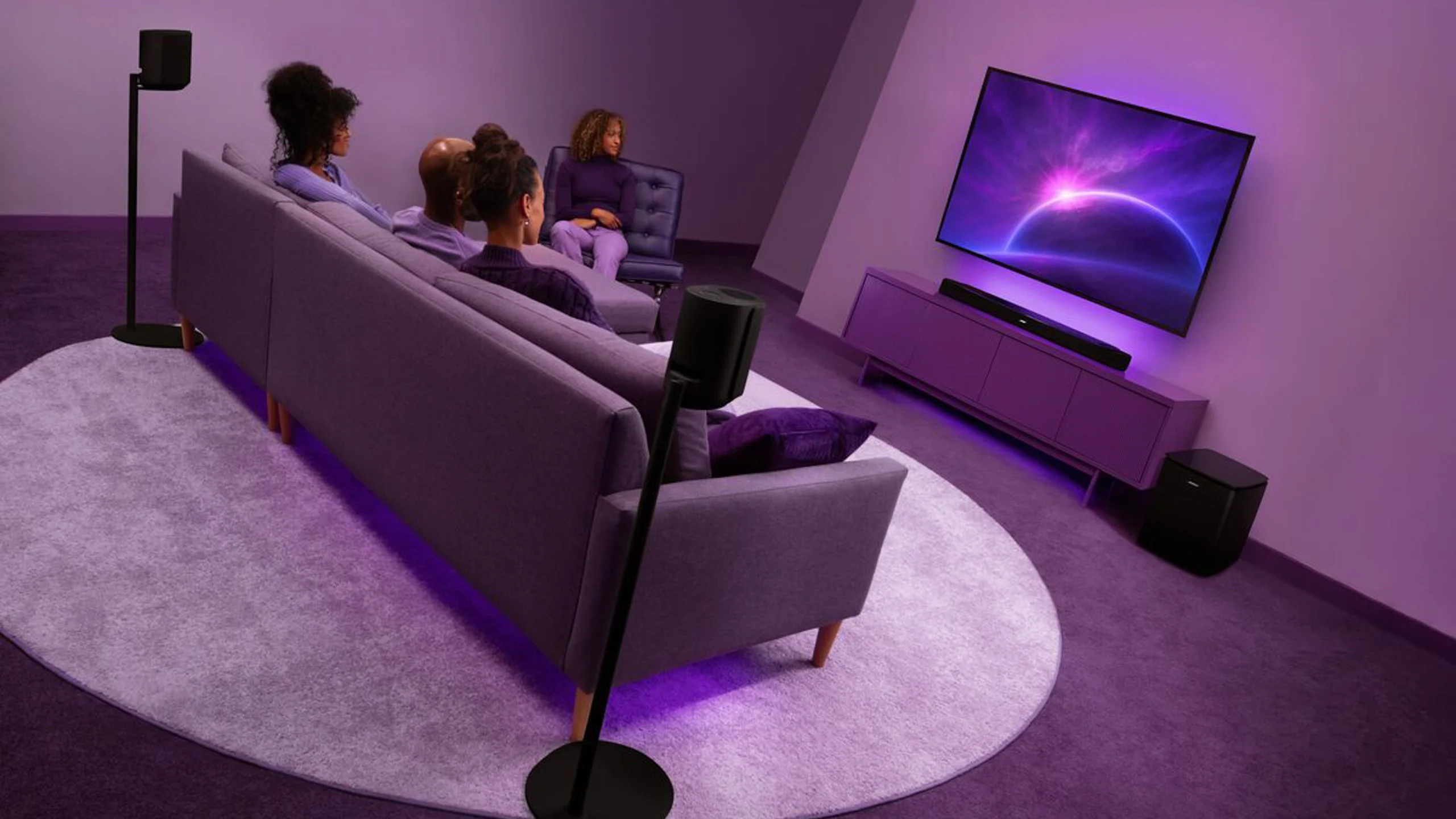
- 5.1.2: + two speakers as rear surrounds
- 7.1.4: maximum configuration with two additional surrounds
All links between components are wireless. The only cables you need are power and HDMI eARC between the soundbar and the TV. For someone building a home theater from scratch, that means no in-wall cable runs, no raceways, and no electricians.
Bose vs Sonos: price and full-system architecture
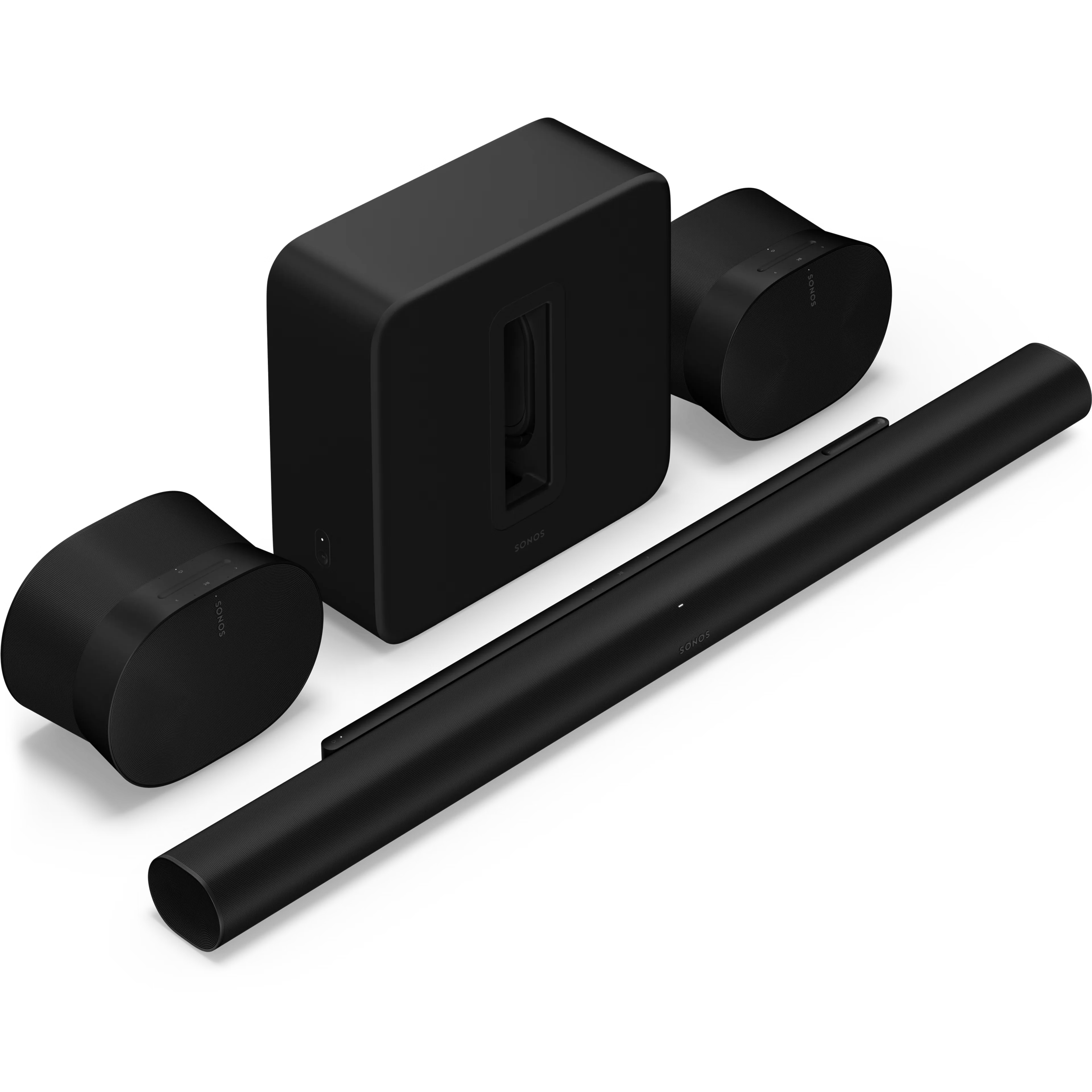
Comparison when building both systems as 5.1.2 home theaters with Atmos surrounds:
A USD 650 difference in Bose’s favor for functionally analogous systems. Sonos makes up for it with multi-room ecosystem maturity — more services supported natively and an app with years of iteration. Bose enters with open streaming, exclusive Alexa+, and a lower-priced pair of surrounds thanks to the up-firing driver built into the Lifestyle Ultra Speaker.
What honest reviews point out
- It does not support DTS:X. The Arc Ultra does not either, but the Sony Bravia Theatre Bar 9 does. If your library includes Blu-rays with DTS-HD Master Audio or DTS:X, this system leaves you out (What Hi-Fi, ecoustics).
- Tidal Connect arrives later via firmware. Bose confirmed it is in the pipeline but did not provide a date. In the meantime, you have to stream Tidal via AirPlay or Cast (What Hi-Fi).
- Atmos from the individual speaker is virtualized. TrueSpatial is DSP, not extra physical drivers. The Era 300, with six real drivers, still wins in pure Atmos scenarios (Pop Sci, ecoustics).
- Hands-on impressions are not measurable tests. RTINGS, TFTCentral, and similar outlets have not published measurements for frequency response, distortion, or compression at maximum volume. What exists today are controlled demos under conditions chosen by Bose.
- The speaker’s up-firing driver limits placement. Under a shelf, it fires into wood and dies. The same limitation applies to the soundbar — open space above is mandatory for Atmos to work (What Hi-Fi).
Conclusion: the first real Arc Ultra rival in years
The Lifestyle Collection is Bose’s first coherent attack on Sonos territory in a long time, and not because of revolutionary hardware. The play is strategic: aggressive pricing on the surround pair, a revamped app arriving right as Sonos is still fixing its own, an exclusive Amazon agreement for Alexa+, and open streaming that Sonos resists as a platform philosophy.
For someone building a home theater from scratch, who values design that blends into the living room and can tolerate the absence of DTS, the Bose collection is the most interesting proposal of the year. For users deeply invested in Sonos multi-room, switching makes no sense. For pure audiophiles, an AVR with passive speakers is still another league and another conversation.
The definitive verdict that it has “dethroned the Arc Ultra” is still premature until RTINGS publishes its measurements. The promise is the strongest we have seen in years. Confirmation will come when it comes.
Bose Lifestyle Ultra Soundbar
The centerpiece of the collection and Bose’s first major soundbar redesign in more than ten years. It delivers a 5.0.2 configuration with nine drivers and PhaseGuide radiators.
Pros
- Bose’s first major acoustic redesign in more than a decade, with a new internal architecture.
- Proprietary PhaseGuide radiators that extend lateral sound without physical drivers on the sides.
- SpeechClarity dialogue enhancement with generative AI, in three adjustable levels.
- CustomTune calibration without an external accessory: it uses the phone’s microphone.
Cons
- No DTS:X support: it leaves out libraries with UHD discs in that format.
- Bass truly shows up only after adding the subwoofer, according to early hands-on impressions.
- Up-firing requires open space above: under a shelf, Atmos is lost.
Bose Lifestyle Ultra Speaker
The entry point to the modular system. Three drivers with up-firing and TrueSpatial, and the first third-party speaker compatible with Alexa+.
Pros
- World’s first third-party speaker compatible with Alexa+, Amazon’s gen-AI assistant.
- Up-firing driver that creates a real sense of height, absent from the Sonos Era 100.
- Open connectivity: Wi-Fi 6, AirPlay, Google Cast, and Spotify Connect, without a closed ecosystem.
- Versatile: starts on its own and ends up as a rear surround in the 7.1.4 system.
Cons
- Atmos from the individual speaker is virtualized by DSP, not extra physical drivers.
- Up-firing limits placement: under a shelf, it fires into wood and dies.
- The Driftwood Sand edition costs USD 50 more (USD 349).
Bose Lifestyle Ultra Subwoofer
A 10.5-inch wireless subwoofer with a cubic body designed to blend into the living room. It adds the bass that hands-on impressions describe as necessary.
Pros
- 10.5-inch woofer with CleanBass and QuietPort to control resonances.
- Truly wireless: it only needs power and pairs from the app.
- Frees the rest of the system from bass duties, improving dialogue clarity and separation.
Cons
- Sold separately and adds USD 899, the exact same price as the Sonos Sub 4.
- Without it, hands-on impressions agree that the system lacks body in the bass.
Author
Alexis Paez