XREAL Aura: the glasses with Android XR and Gemini open reservations, but still without a final price

Index
XREAL introduced the XREAL Aura, its first spatial computing glasses with Android XR and Gemini. It showed them at AWE 2026 and opened reservations, with availability expected in fall 2026. The caveat is that you can reserve them, not buy them: XREAL still has not set the final price —it only clarified that the base model will not exceed US$ 1,500— or an exact shipping date.
The other important detail: the Aura is not standalone. The glasses are the display; the computer is separate, in a puck that connects by cable. Google itself describes them as XREAL's first wired XR glasses.
What the XREAL Aura is
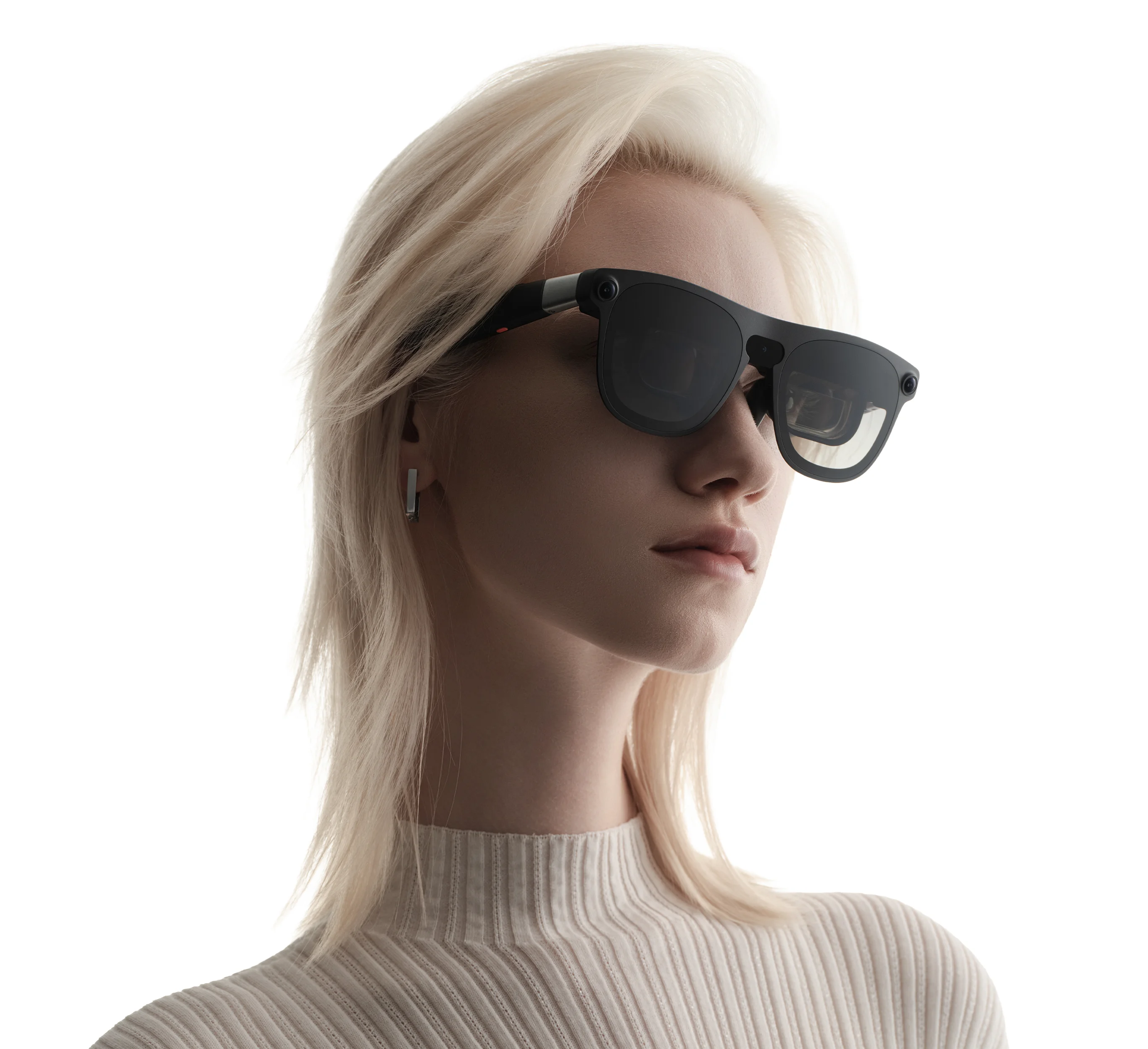
XREAL sums it up with a double negative: neither a headset nor monitor glasses. The brand already sells glasses that project a giant screen, but the Aura is something else: a complete Android XR device, with its own operating system, cameras, and sensors. It runs apps, understands the environment, and adds Gemini.
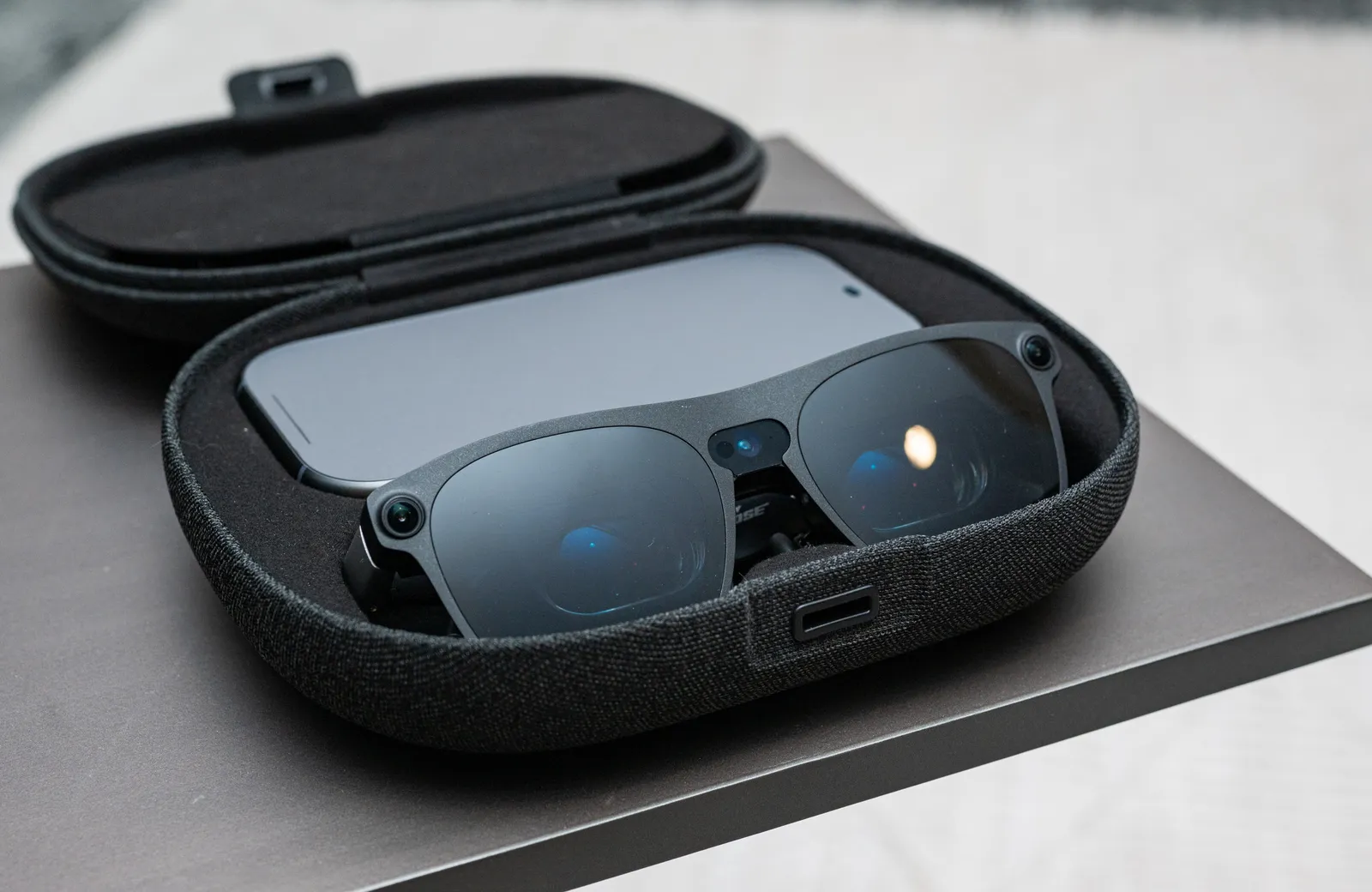
The product comes in two pieces: 91-gram glasses and a phone-sized compute puck, joined by a cable. The glasses contain the optics and sensors; the puck houses the processor and battery. XREAL has been preparing it for some time: it introduced it as "Project Aura" in May 2025, and only now has it given it a name, specs, and reservations.

Design and see-through display
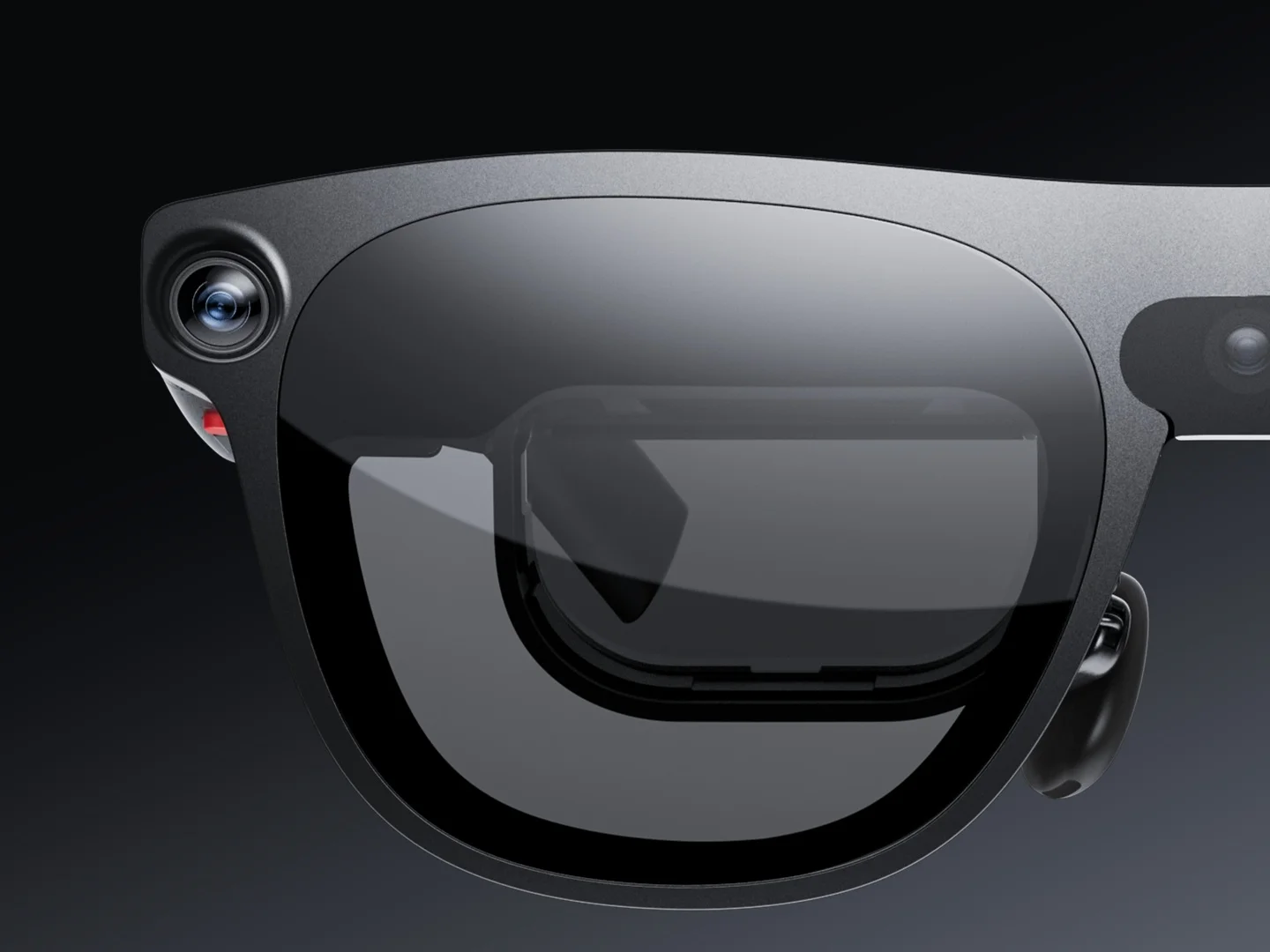
The display is one of its strongest areas. Each eye gets a 1920 × 1200-pixel Sony micro-OLED panel, with a refresh rate of up to 120 Hz, through optics that XREAL calls X Prism and that provide a 70-degree field of view. For AR glasses, that is a wide FOV: most sit well below that, and more degrees mean spatial content fits better into your view.
It is true optical see-through: you see the world directly through the lens, without the delay of a camera-based passthrough system. Five-level electrochromic dimming adjusts how much light passes through, depending on whether you want to focus, watch a movie, or stay aware of your surroundings. And unlike a headset, the glasses let others see your eyes, which helps in face-to-face conversation.
The audio was tuned by Bose, and there are four microphones. It also supports prescription lenses for those who need them.
The puck: the computer is separate
This is the design decision that defines the Aura. Instead of putting everything into the glasses, XREAL separated the compute: a two-chip architecture the brand calls split-compute. The puck runs on Qualcomm's Snapdragon Reality Elite platform; an XREAL X1S spatial coprocessor, in the glasses, handles the low-latency display and sensors.
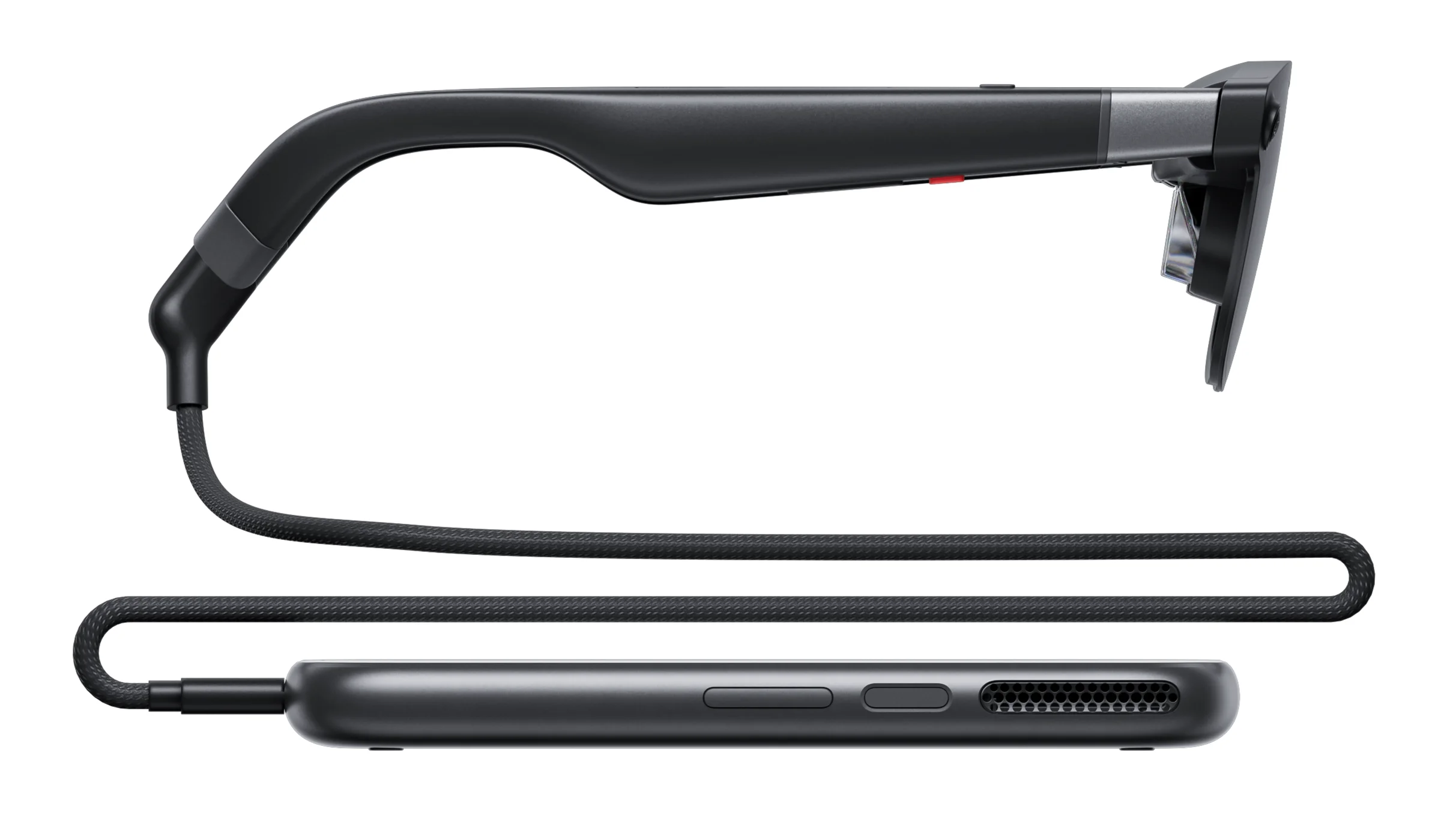
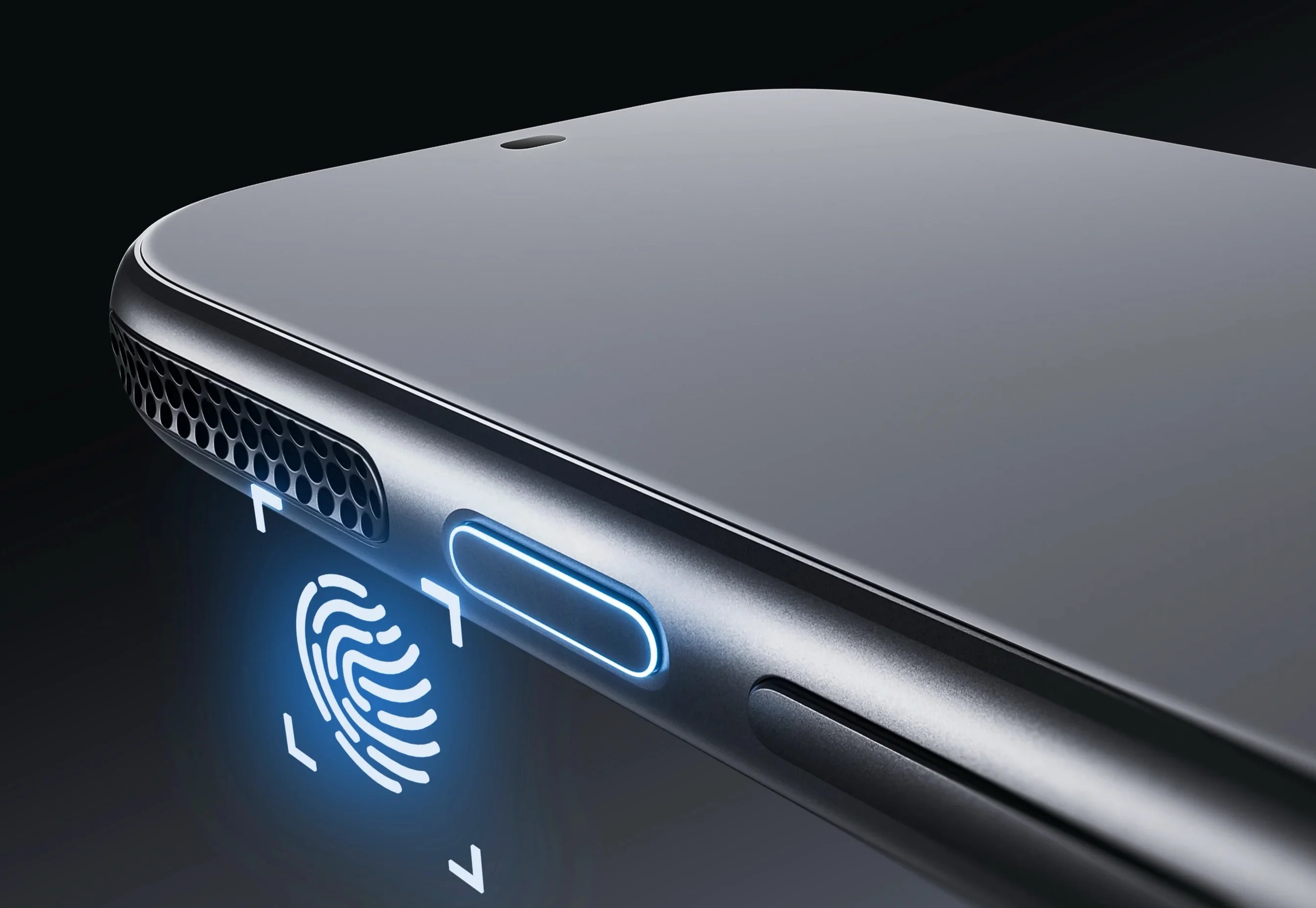
In practice, the puck is the Aura's computer. It brings Android XR, 12 or 16 GB of RAM depending on the version (with 256 or 512 GB of storage), a 4,455 mAh battery, and a button with a fingerprint reader that powers on and locks the device. It adds two USB-C ports —one for the glasses and another for charging or video input via DP-in— so it can also serve as a display for a PC, a laptop, or a handheld console.
Splitting the compute has its logic: lighter glasses, better heat dissipation, and longer battery life. The cost is the cable and one more device in your pocket.
Android XR: Google enters glasses
The software is where the Aura separates itself from the AR glasses that already exist. It runs Android XR, Google's extended reality platform, and that means the full Play Store from day one: Maps, YouTube, Chrome, Photos, and thousands of other apps, plus around a hundred made specifically for XR. It is not an accessory that depends on a phone, but a device with its own ecosystem.
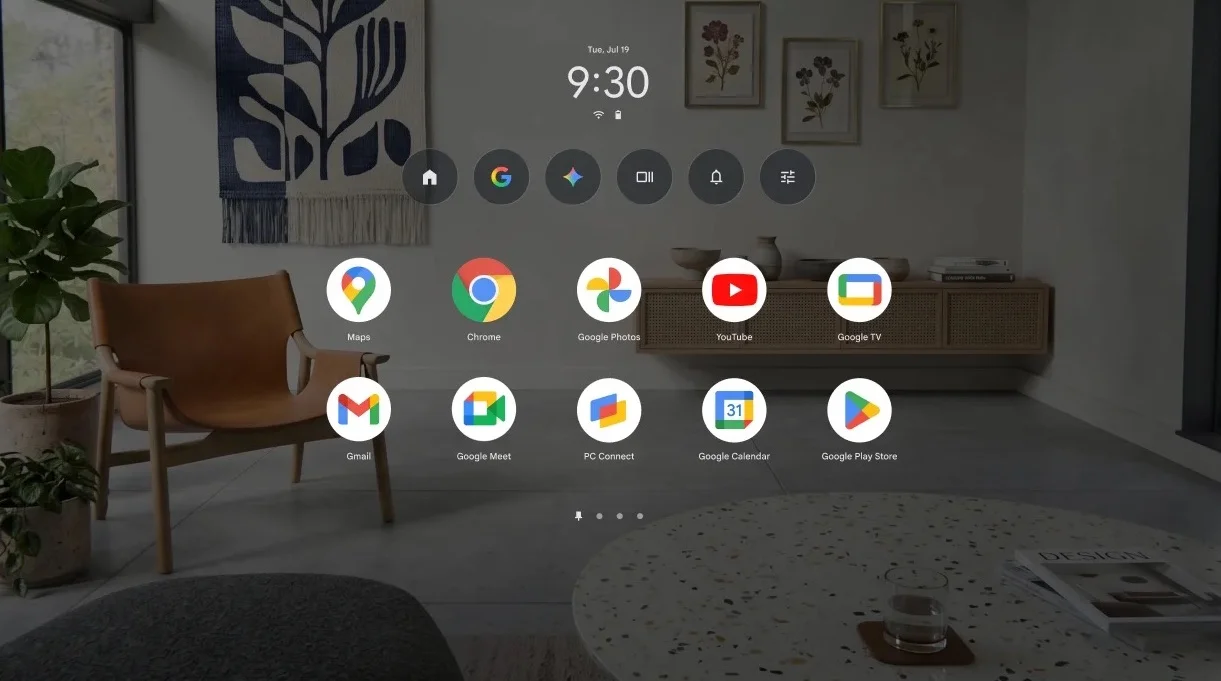
All of that runs on the Snapdragon Reality Elite in the puck, the chip that powers the system and spatial workloads. It is what allows a glasses-sized setup to run full applications, floating in the space around you.
Gemini that understands what you see
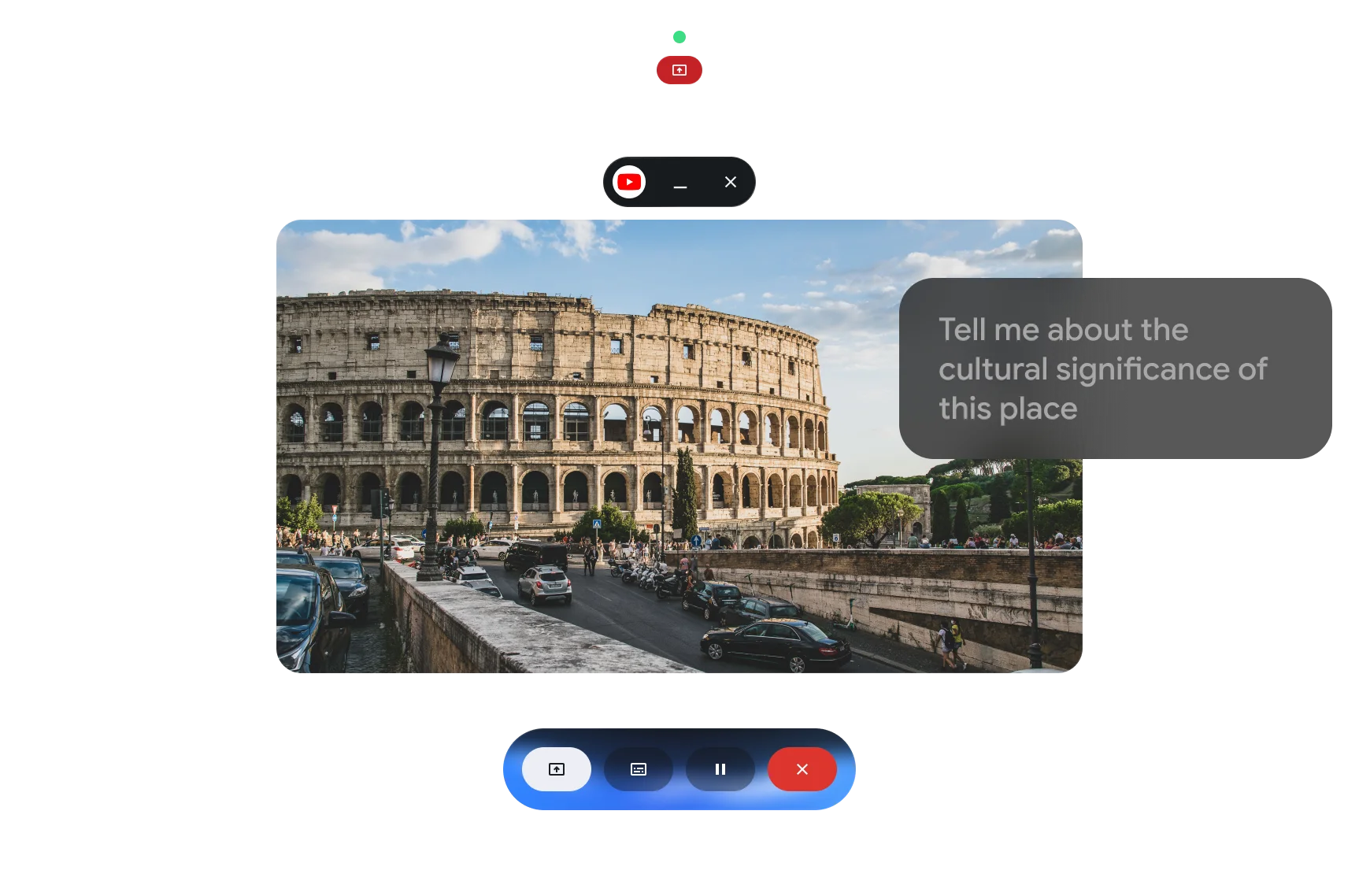
The other half of the software is Gemini, integrated into Android XR as an assistant. With your permission, it can see what is on your screen and what is around you, and respond by voice. You look at the Colosseum and ask about its history; you have a document open and ask for a summary. Gemini also opens apps, navigates the system, and gives you context about what you are doing, without you touching anything.
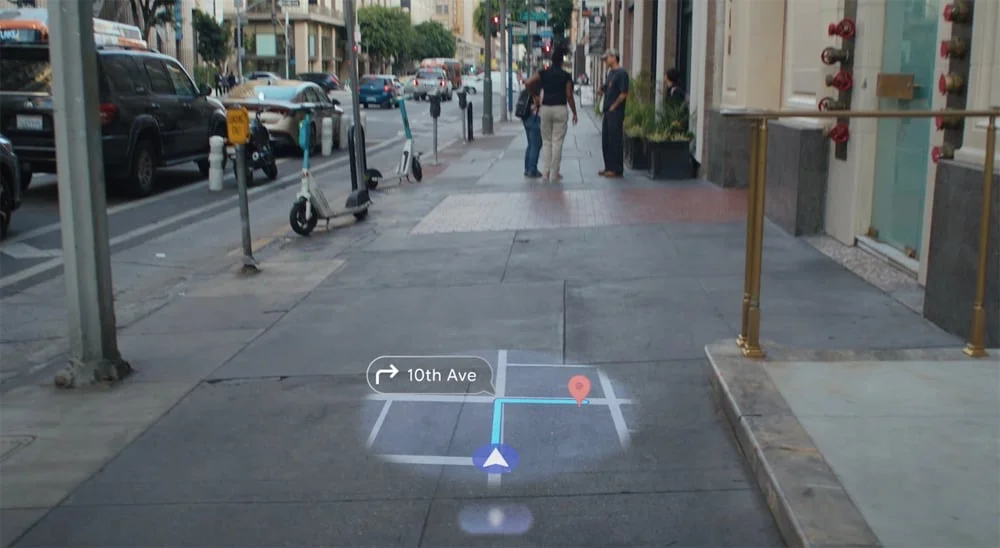
That understanding of the environment is what enables features like navigation: Android XR can project Maps directions onto the street, in your field of view. The idea is for information to appear where you need it, not on a separate screen.
What it is for
XREAL proposes four use cases. The first is the private screen: turning any place into a personal theater for watching video, playing games, or following a match on a giant screen that travels with you. The second is work: extending a laptop into a space with multiple floating windows, reviewing documents, or joining a video call without a physical monitor.
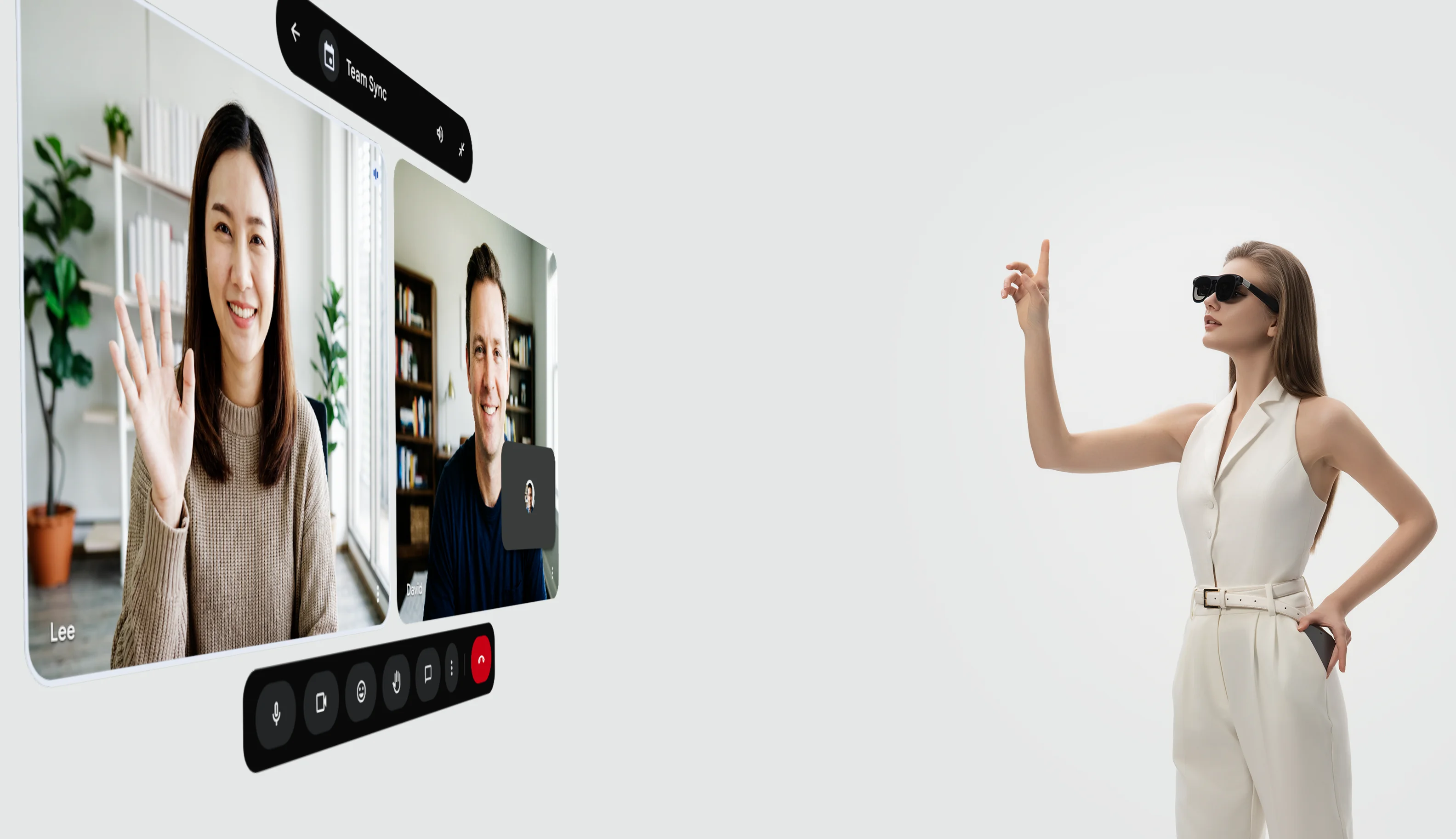
The other two are exploring —maps, places, and digital content with the help of Gemini— and creating, with Android XR and WebXR apps for building and prototyping in three dimensions. It is the same pitch AR glasses have always made, but with a full operating system behind it instead of a phone-mirroring app.
Price, reservations, and availability
XREAL has not published the final price. The only firm detail is the ceiling: the base model will not exceed US$ 1,500 before taxes. For now, it can be reserved in two ways: a US$ 99 Launch Credit that becomes US$ 199 in purchase credit, or a US$ 299 Founder Pass, limited to 2,000 numbered units, with delivery in the first batch. Both are refundable, and XREAL clarifies that this is not a preorder: pricing, configurations, and shipping will be confirmed closer to launch.
Availability is expected in fall 2026 in the United States, the United Kingdom, Japan, South Korea, and much of the European Union, including Spain. There are no LATAM countries on the official list. Anyone interested can leave their email on the website to be notified when availability expands.
Conclusion
On paper, the XREAL Aura is the most ambitious Android XR device in glasses form: a good-resolution micro-OLED display, wide FOV, the full Play Store, and Gemini reading the environment. For a developer or XR enthusiast who wants to get into Google's platform early, it is one of the most interesting options available, provided they live in a market where it will be sold.
For everyone else, it is better to wait. It is expensive (up to US$ 1,500), it depends on a cable-tethered puck when several rivals are already standalone, and it is still a reservation: no locked-in price or exact date. The real leap is not just XREAL's hardware, but the fact that Android XR is finally coming to glasses with Google's store and assistant built in. Whether that is enough to justify the cable and the price is something that can only be answered once the Aura stops being a reservation and can actually be used.
XREAL Aura
Spatial computing glasses with Android XR and Gemini, connected by cable to a compute puck with Snapdragon Reality Elite. Available for reservation; arriving in fall 2026.
Pros
- Sony micro-OLED display with 1920 × 1200 per eye, 120 Hz, and a 70° FOV, wide for AR glasses.
- Android XR with the full Play Store from day one and integrated multimodal Gemini.
- True see-through optics: you see the world directly, without camera passthrough delay.
- Lightweight glasses (91 g) because the heavy compute is in the puck, with audio tuned by Bose.
- Supports prescription lenses and electrochromic dimming to adjust immersion.
Cons
- It is not standalone: it depends on a cable-tethered puck, unlike rivals such as the Meta Ray-Ban Display.
- It is still a reservation, not a preorder: XREAL has not confirmed the final price or exact shipping date.
- High price: the base model will not exceed US$ 1,500, aimed at enthusiasts and developers.
- It arrives only in fall 2026 and without any LATAM market on the launch list.
Author
Alexis PaezComments
Share article
You might also like


VITURE Pro 2: 63 grams, US$299, and the dial the competition doesn’t have
The VITURE Pro 2 weigh 63 grams and cost US$299, but what separates them from their rivals isn’t the weight: it’s the built-in myopia dials.
Meta VR Glasses: 100 grams, 5K display, and a puck to take weight off your face
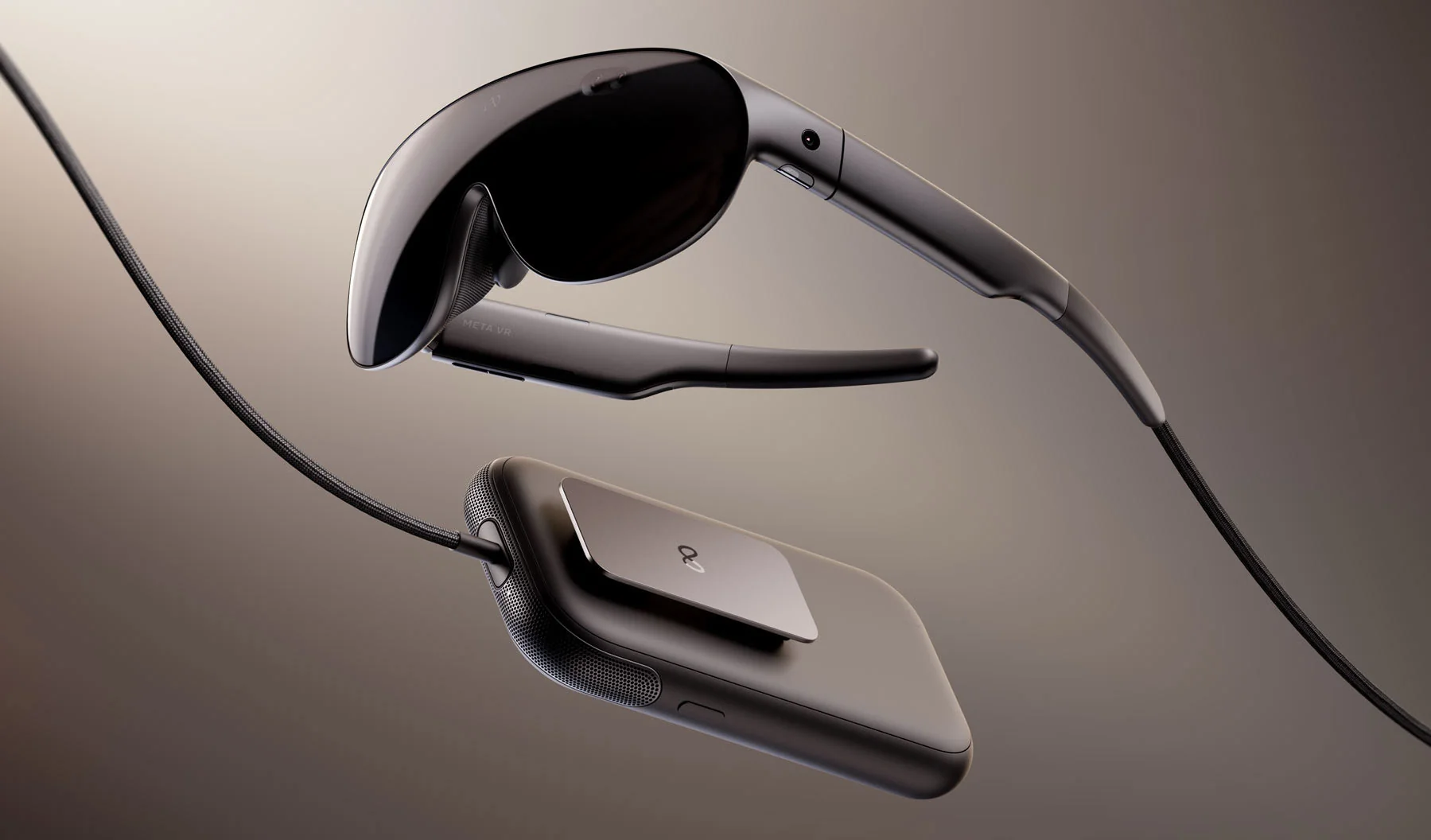
Meta VR Glasses weigh 100 grams, use 5K micro-OLED displays, and move the battery and compute to a puck. Price, date, and trade-offs.