iPhone Air: the revolution in lightness

Index
Apple has done it again. Just when we thought the iPhone had already reached a turning point, the iPhone Air arrives: a model that takes the idea of design, lightness, and battery life to an entirely different level. More than a phone, it is a statement about where Apple’s future is headed.
Lightweight and durable design
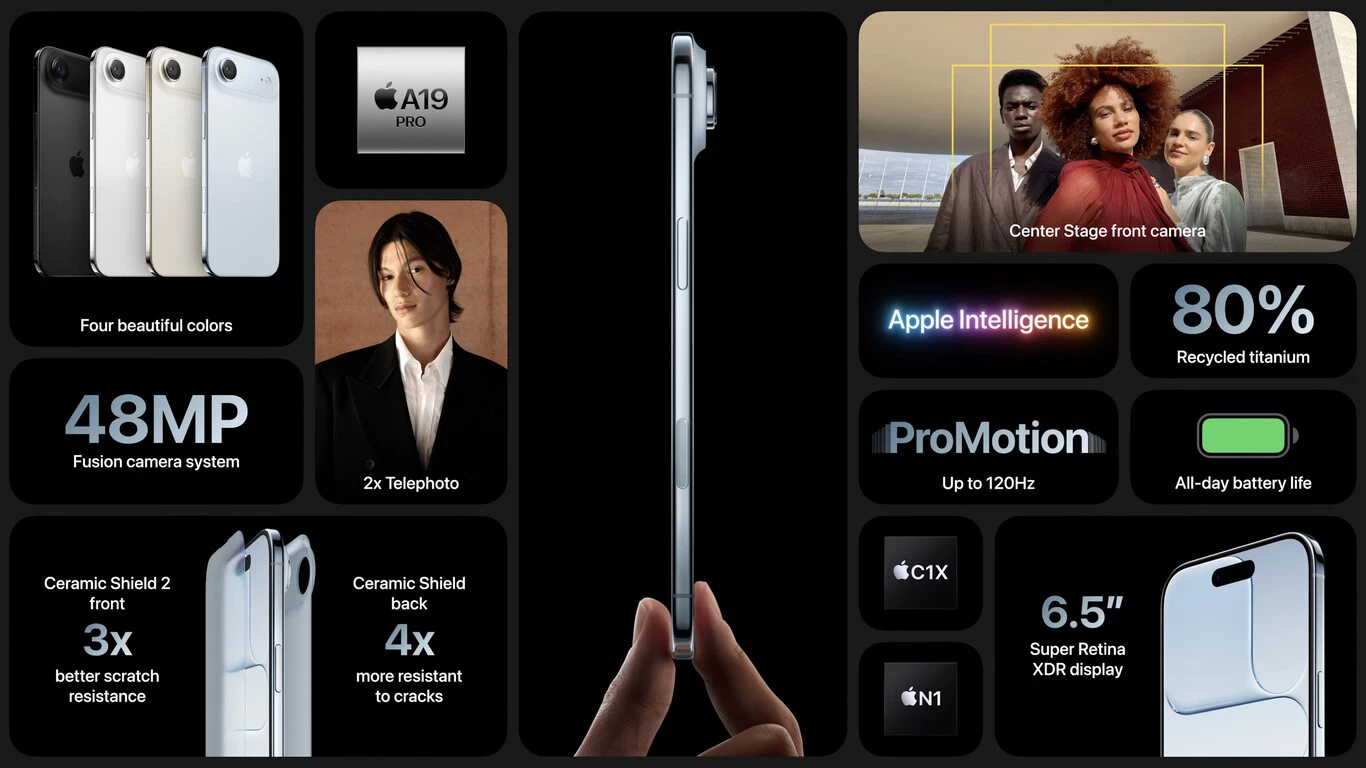
The iPhone Air is built with aerospace-grade aluminum with graphene, a combination that delivers strength and durability at a surprisingly low weight. The feeling when holding it is unique: an iPhone so light that it redefines what comfort means in everyday use. All of this comes with a thinner profile that preserves the brand’s signature elegance.
Apple offers it in three colors designed to emphasize that sense of lightness: Silver Air, Midnight Air, and Sky Blue. Each shade conveys a different personality, but all share the same balance between minimalism and sophistication.
Ceramic Shield
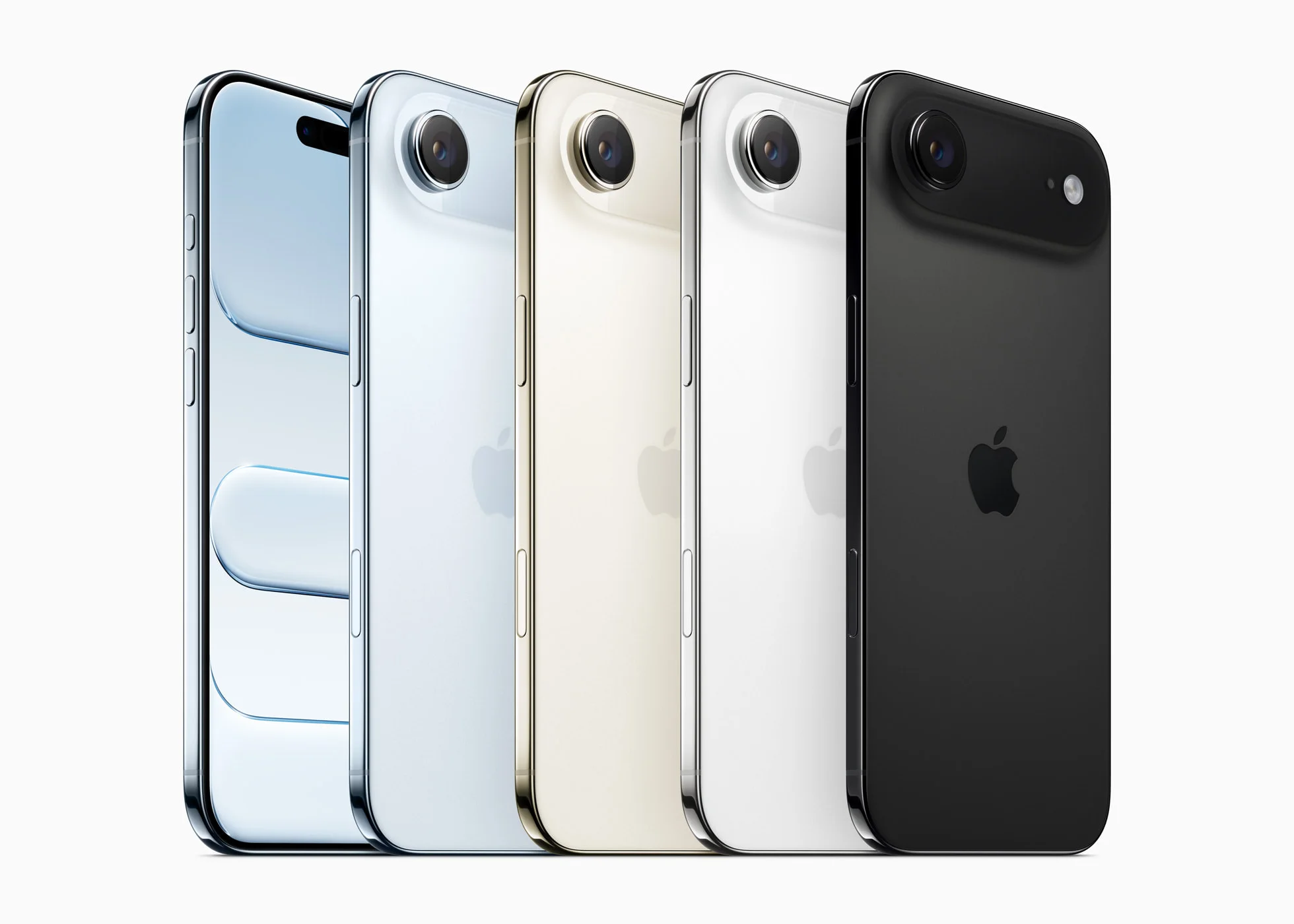
The display now features the new Ceramic Shield, an evolution of the material Apple had already positioned as a benchmark for protection. Thinner, yet stronger, it withstands drops and scratches without sacrificing transparency or brightness. It is the same level of confidence as always, now adapted to an even lighter design.
A display that impresses
The OLED Super Retina XDR does more than show images: it brings them to life. With deeper blacks, brightness that adjusts automatically, and more accurate colors, the viewing experience feels immersive at all times. Whether you are watching movies, editing photos, or gaming, the display makes every detail stand out like never before.
Performance that breathes
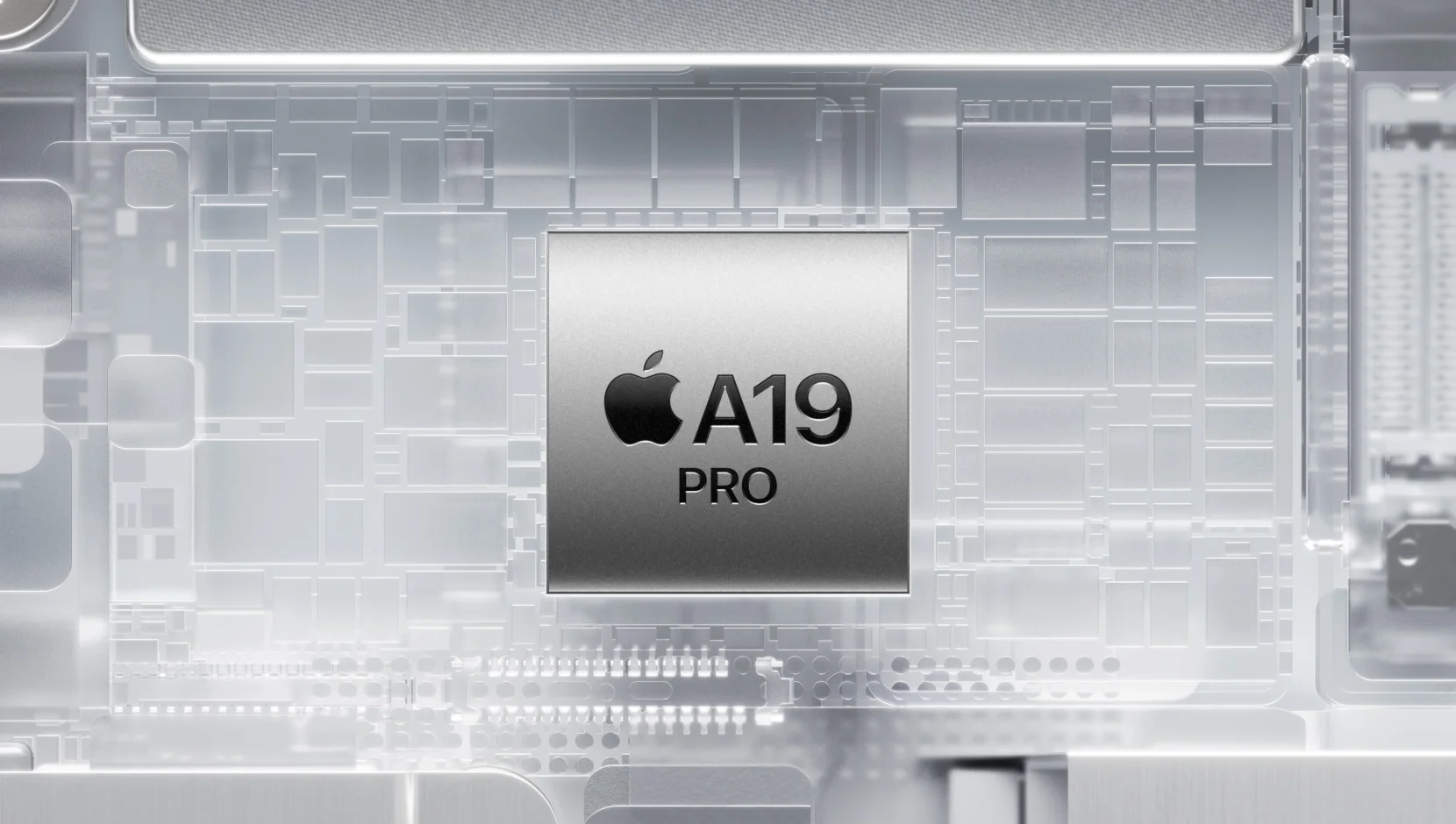
At the heart of the iPhone Air is the A19 Pro, built on a 3nm architecture. This chip combines power and efficiency to deliver fast, stable performance across any task, from gaming to advanced content editing. It is the key component driving everything that makes this model special.
Hardware concentrated in the camera module
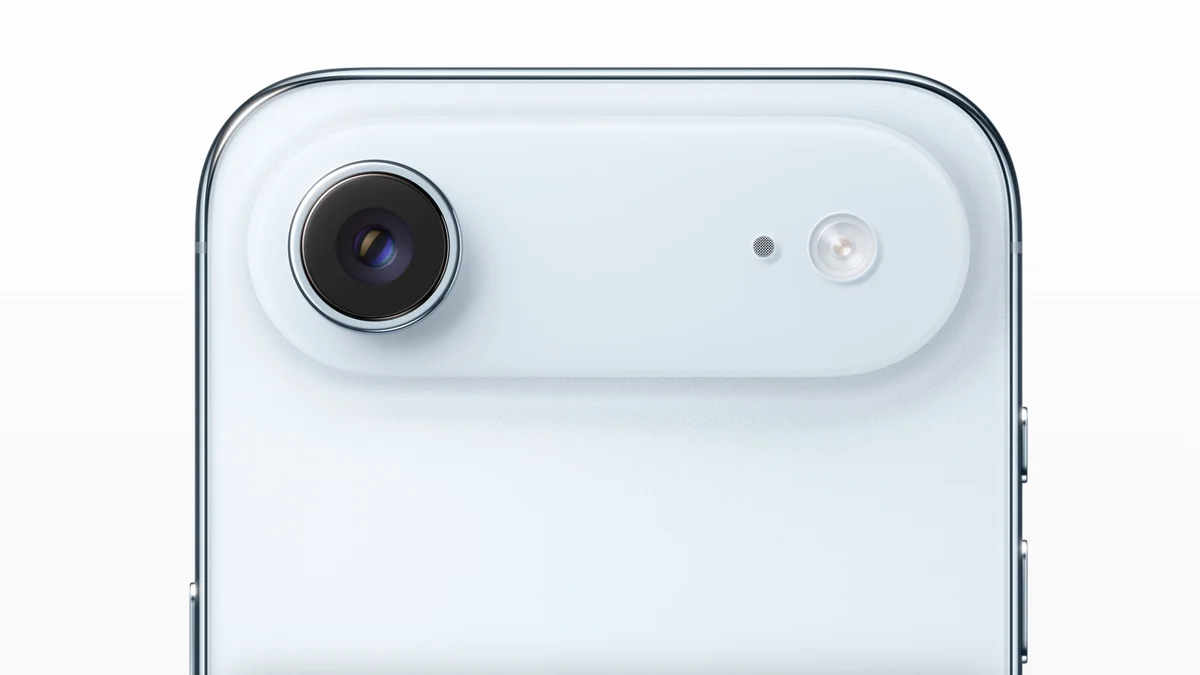
Beyond the chip, Apple redesigned the inside of the iPhone Air in a surprising way. Most of the main components are now located in the rear camera module, freeing up space for a larger battery and enabling a much thinner design.
Thanks to this reorganization, the battery reaches up to 27 hours of real-world use, changing the way users interact with their iPhone.
A camera that levitates
The camera system introduces sensors with advanced stabilization that minimize any vibration. Thanks to the new SkyShot mode, capturing night landscapes or starry skies becomes both simple and impressive. The detail and clarity in every photo mark a before and after in mobile photography.
Next-level connectivity
The iPhone Air introduces 5G technology (sub-6 GHz), taking connection speeds to an instant level. Browsing, playing online, or working from anywhere feels natural and uninterrupted. It also includes global dual eSIM, simplifying life for people who travel and need to stay connected at all times.
New accessories
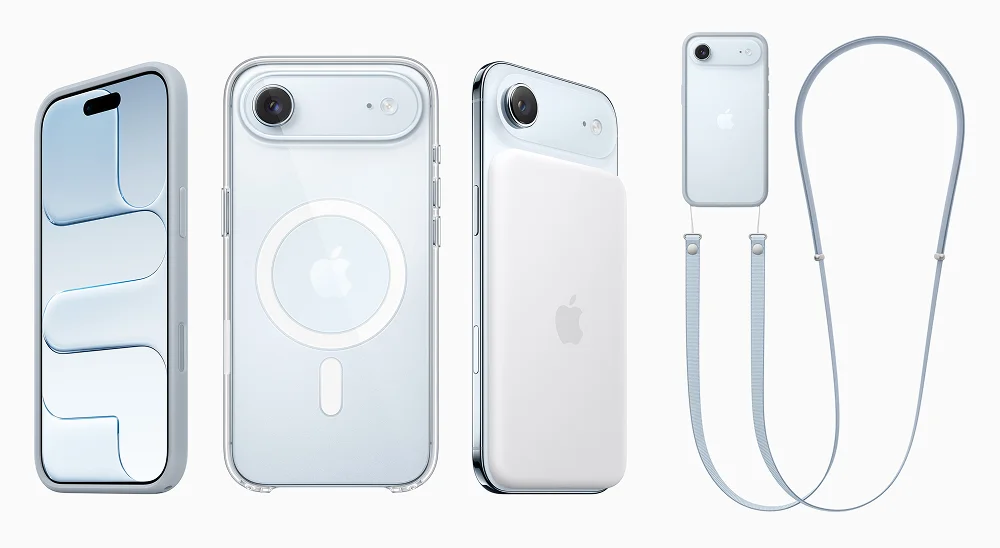
Apple has created an accessory ecosystem that complements the revolutionary design of the iPhone Air:
-
Case with MagSafe: available in frost and shadow colors, it has a translucent and ultrathin design, a slightly matte interior, a glossy exterior, and a reinforced polycarbonate structure that protects against scratches and drops.
-
Bumper Case: thin and lightweight, available in four matching finishes, it enhances the design and provides extra edge protection with reinforced polycarbonate.
-
MagSafe Battery: a thin and lightweight design that attaches perfectly to the device, charges quickly, and maximizes battery life, offering up to 40 hours of video playback.
-
Crossbody Strap: made from 100% recycled yarn, very comfortable, with flexible magnets and stainless steel sliding mechanisms to adjust the length. Available in ten colors: black, light gray, blue, light blue, purple, sienna, green, neon yellow, cinnamon, and orange.
Price and availability
The base iPhone Air starts at $1,099 USD for the 256 GB version, increasing based on storage capacity. Compared with the iPhone 17 Pro, it offers most of the key innovations in a lighter and more versatile format, ideal for those looking for a balance between design, performance, and portability.
Features
iPhone Air
Apple’s lightest and thinnest iPhone to date, with the A19 Pro chip, a 3,000-nit OLED display, and an internal reorganization that prioritizes battery life and portability over a multi-camera system.
Pros
- Ultralight and thin design, the thinnest iPhone to date.
- 3,000-nit peak OLED display, on par with the Pro models.
- The same A19 Pro chip as the Pro lineup in a lighter body.
- Internal reorganization that concentrates components in the camera module to make room for a larger battery.
Cons
- Only one rear camera, with no telephoto or ultra-wide lens.
- High entry price starting at USD 1,099.
- 27 h battery life is below the Pro Max, and it relies on the MagSafe battery to stand out.
Author
Alexis PaezInformación basada en especificaciones oficiales de Apple. El autor no tuvo acceso físico al producto para este reporte.
Comments
Share article
You might also like

iPhone 17 Air: the thinnest model in Apple history
Everything about the iPhone 17 Air: the replacement for the Plus model, focused on an ultra-thin design, a 6.6-inch display, and the A19 chip.

iPhone 17: the evolution everyone was waiting for
We review the iPhone 17. The 120Hz ProMotion display finally comes to the base model, alongside the A19 Bionic chip and new 48MP cameras.

iPhone 17 Pro and Pro Max: Unlimited Power
We take an in-depth look at the new iPhone 17 Pro. Unibody design, A19 Pro chip, 48 MP cameras with 8x zoom, and the largest battery in Apple history.
iPhone 18 Pro and Pro Max: variable aperture, A20 Pro, and the longest battery life in an iPhone
The iPhone 18 Pro debuts a four-step variable aperture, the A20 Pro chip, and the longest battery life in the lineup. Price, specs, and why Apple lists two different battery figures.