Full backward compatibility in Project Helix: the problem was never the hardware

Index
Microsoft has publicly committed to keeping games from four Xbox generations playable for years. An internal document accessed by The Verge goes further: it describes first-party emulators for all four consoles, running on Project Helix, on the computers Microsoft calls "Xbox PCs," and on handhelds.
The interesting part is something else. Running a 2001 game on a 2028 processor stopped being a technical challenge a long time ago, and Microsoft has been proving it publicly. What has held Xbox backward compatibility back since 2021 was not power: it was permissions.
Will Project Helix run every Xbox game?
Not automatically. Project Helix is designed to run titles from the previous four Xbox generations, but each publisher has to authorize its old games one by one. Microsoft provides the emulator, certification, and support; whether a title appears or not is up to whoever holds the rights.
The commitment came at the 2026 Game Developers Conference: Jason Ronald, vice president of Next Generation at Xbox, wrote that the company wants to keep four generations playable for years. Those are the four that already exist, and Helix would be the fifth. The interpretation of "every Xbox game ever" that circulated in several outlets is an extrapolation from the leaked document, not something Microsoft said.
The problem was never the hardware
Much of the coverage explains the difficulty the same way: the original Xbox and the 360 were not x86, so they need to be emulated. Half of that sentence is false, and knowing which half changes the entire analysis.
Two consoles, two different problems
The 2001 Xbox used an Intel Pentium III at 733 MHz: the same x86 architecture that runs today on any PC and on every Xbox since 2013. A modern processor understands that code without translating anything. The hard part is the GPU: the NV2A is derived from the GeForce3, with a fixed-function pipeline, register combiners, and proprietary APIs that no current driver implements.
With the 360, the argument does hold up. Xenon is three PowerPC cores at 3.2 GHz running in big-endian: they store bytes in the opposite order from x86, so every memory access an emulator translates means flipping them around. That is why Xenia, the community emulator, took years to become usable, while emulating the original Xbox was never the hobby’s bottleneck.
An emulator inside another emulator
Here is the proof. In July, Microsoft published four original Xbox games on PC, and within hours dataminers opened the packages. Inside, there is no new emulator written for Windows: there is XeO3, the same Xbox 360 emulator that has been running on Xbox One and Series for years. And the original Xbox games do not run directly on that either: they go through XeFu, the original Xbox emulator that the 360 itself used.
The result is a nesting doll: a 2001 x86 game, executed by software written for a PowerPC machine, which in turn runs on modern x86. And it works well. If silicon were the obstacle, none of those stacked layers would add up.
Four Xbox generations, compared
Each generation presents a different problem, and only two of the four need real emulation.
Xbox One and Series share the x86-64 architecture and AMD GPU lineage with what Project Helix is expected to be: there, compatibility is a certification problem, not an engineering one.
What happened in 2021
In November 2021, with the 20th anniversary batch, Microsoft closed the backward compatibility program at 595 games. Peggy Lo, then in charge, explained that they had reached the limit due to licensing, legal, and technical constraints. The order matters: licenses come first. And the same Jason Ronald who said back then that each wave began with lists of hundreds of candidates without knowing whether they would secure five or twenty titles is the one leading the return today. What changed in between was not the hardware.
Microsoft provides the emulator, publishers provide the catalog
According to the leaked document, Microsoft handles everything: engineering, the custom emulator, title-by-title certification, store placement, and player support. Publishers keep their rights, set prices, and decide whether the game enters Game Pass or is sold standalone.
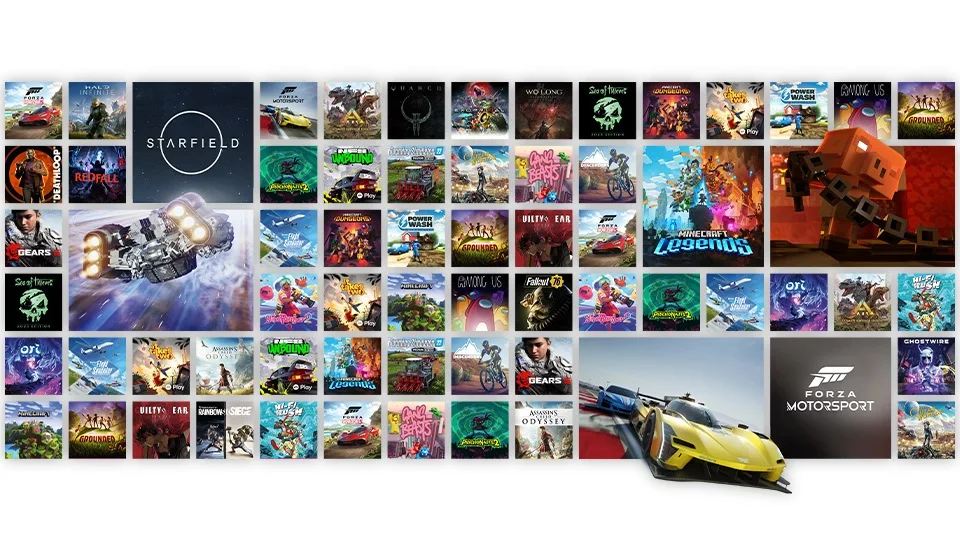
The presentation is titled "Why Publishers Win": zero engineering, a dormant catalog that starts generating revenue again, classics that behave like 2026 games rather than 2006 games.
That model change is the real news. In 2021, Microsoft paid for the engineering and ran into the permission wall; now it has turned permission into a commercial proposal. The risk has not moved: if the publisher does not sign, the game does not exist. And there is a band of titles—closed studios, soundtracks licensed for a limited time, expired sports agreements—that will not come back just because someone writes better code.
What happens to your discs
The same document describes a disc-to-digital program: you insert an Xbox One or Series disc into a console with a drive, and Microsoft grants a digital license tied to the disc and to your account, valid on any Xbox device. The detail is in that link, because the license remains welded to the disc: if you sell it, the license goes with it. The beta for Xbox Insiders was planned for July and slipped, and it is still not defined whether Helix will have a disc drive.
When each piece arrives
Xbox Backward Compatibility on PC is already in early release with four titles: BLiNX: The Time Sweeper, Conker: Live and Reloaded, Crimson Skies: High Road to Revenge, and Fuzion Frenzy. They are included with any Game Pass plan and work on Windows 11 and Windows handhelds. The full launch arrives in October, and Xbox 360 games will arrive gradually between 2027 and 2028.
For Helix, the only confirmed detail is that alpha development kits go out to studios in 2027, so a commercial launch before 2028 would be optimistic. Beyond the GDC announcement and the PC launch, the rest comes from a document Microsoft has not confirmed on the record.
The hard part has already been built
If your library is digital and from Xbox One or Series, this is already solved: same architecture, same store, same account. If you kept Xbox 360 or original Xbox discs, the answer does not depend on Helix’s power or the quality of the emulator: it depends on someone at a publisher signing a piece of paper, and that someone does not work at Microsoft.
The promise of running the entire catalog is honest in the part Microsoft controls and empty in the part it does not. No other platform has built infrastructure like this for its old catalog and then sat down to do sales work. That matters. But the question that defines whether Helix will be the most backward-compatible console in history is not an engineering question: it is how many publishers say yes.
Frequently asked questions
Will Project Helix run every Xbox game ever?
Technically it can, but it is not guaranteed. Microsoft develops the emulators and certifies each title, but each publisher has to authorize its games. Those with expired or disputed rights will probably be left out.
Will my Xbox One and Xbox Series discs work on Project Helix?
It is not yet confirmed whether Helix will have a disc drive. Microsoft is working on a program that converts an Xbox One or Series disc into a digital license tied to your account and to the disc, valid on any Xbox device.
When is Project Helix coming out?
There is no official date. Alpha development kits reach studios in 2027, so a commercial launch in late 2027 is the optimistic scenario and 2028 is the realistic one.
Author
Alexis PaezBasado en anuncios oficiales de Xbox y en un documento interno filtrado a The Verge, no confirmado por Microsoft.