Xiaomi Smart Storage: Xiaomi’s first NAS arrives with dual bays and an aggressive price

Index
Xiaomi introduced the Xiaomi Smart Storage, its first NAS, and with it enters a space that for years has been dominated by Synology, QNAP, Ugreen, and Huawei. The proposal arrives with an aggressive entry price — starting at around $338 after conversion — and a dual-bay format designed to pull phone photos and family files out of paid cloud storage.
But there is another angle, and it is the one that often gets skipped. Xiaomi showed the price and design, not a complete spec sheet: the processor, RAM, and details on how it manages drives are still missing. And from what can be seen so far, this is a plug-and-play consumer NAS tied to its app and the HyperOS ecosystem, not an open machine for enthusiasts.
What is the Xiaomi Smart Storage?
A NAS (Network Attached Storage) is a drive connected to your network: you store everything there — photos, documents, movies, backups — and access it from your phone, tablet, or computer, at home or remotely, without paying a monthly subscription or running into the limits of iCloud or Google Drive.
The Smart Storage is Xiaomi’s first attempt in this category, and its origin was almost accidental. In May 2025, a promotional image for its 10G network switches unintentionally showed a diagram with a "NAS 10G". The comment triggered so much demand that Chen Bo, manager of Xiaomi’s ecosystem, confirmed that the company would build it. About thirteen months later, it now has a date.
Design and configurations
The device uses a compact vertical format, with a titanium-gray body and a mirrored front where the Xiaomi logo and a status LED appear. The aesthetic is clean consumer electronics, closer to a design speaker than to a server-room device.
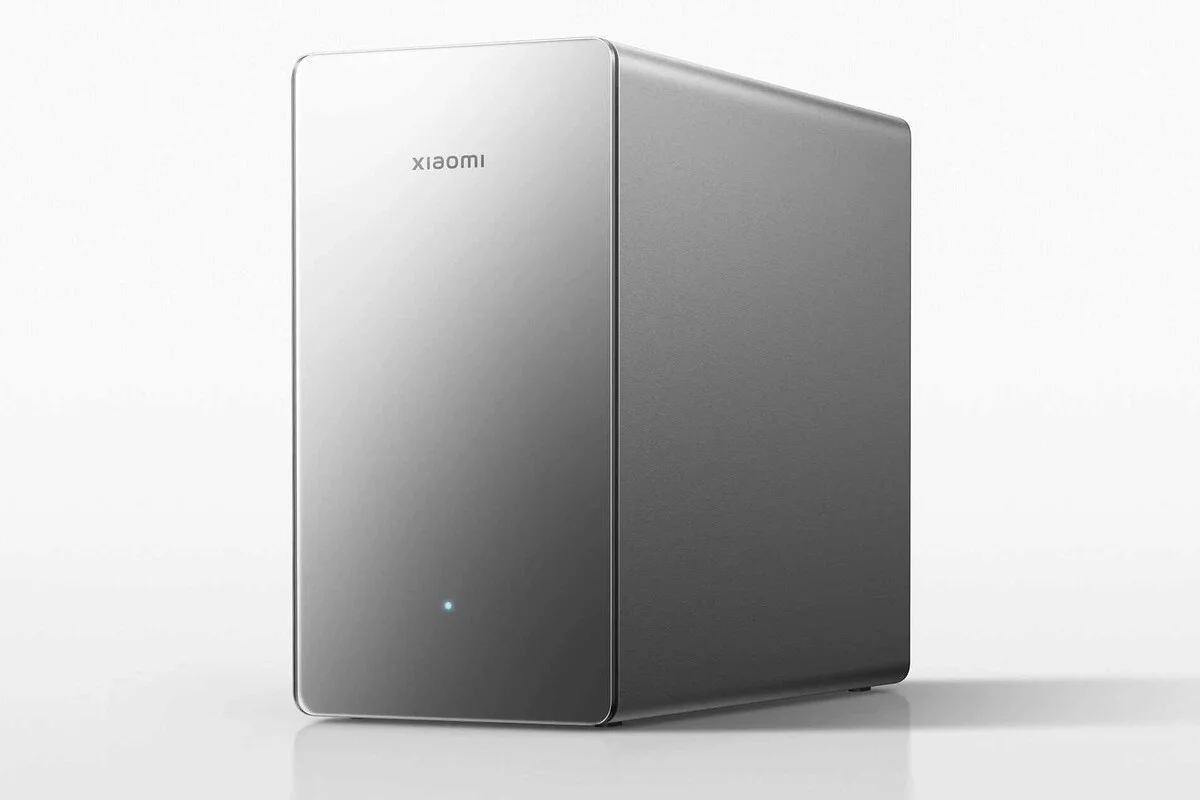
It is offered in three configurations, all dual-bay, and sales begin through crowdfunding between July 1 and July 8 in China, with mass production tied to reaching the funding goal. These are the prices (approximate conversion from yuan to U.S. dollars):
The difference between the campaign price and the retail price is real: on the entry-level version, it is about 1,200 yuan (around $175) less for those who support the project early.
Connectivity and drives
This is where the most important storage detail appears, and Xiaomi did confirm it: the two bays accept 2.5-inch and 3.5-inch SATA drives, replaceable by the user. That is not a minor detail. The drive is the component most likely to fail in a device that runs 24 hours a day, and having a standard, non-proprietary format makes the difference between replacing a part when it dies and throwing away the entire device. It also leaves the door open to expanding capacity later.
For connectivity, the confirmed hardware includes a 2.5G Ethernet port — enough for fast backups and uncompressed video playback — USB 3.0, and HDMI. The upper half of the chassis is perforated for ventilation, with active cooling: under continuous use, drive temperature determines how long it lasts, so a dedicated fan matters more than it may seem.
The Xiaomi Smart Storage app
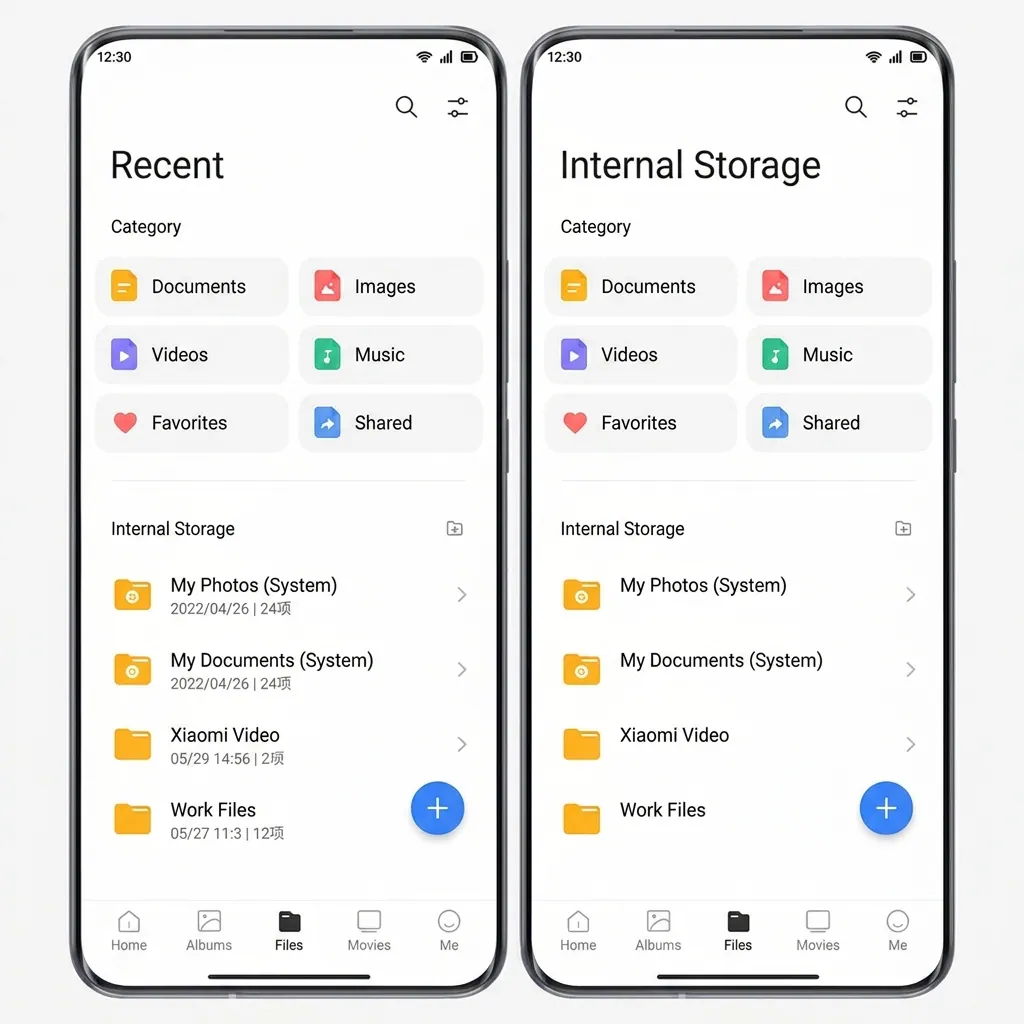
The app that controls everything, with the same name as the device, is already available on the App Store and Google Play, and in fact arrived before the NAS itself. It is compatible with Android, iOS, Windows, macOS, and Linux, and is built around three pillars: automatic phone backups, family file management, and remote access from anywhere.
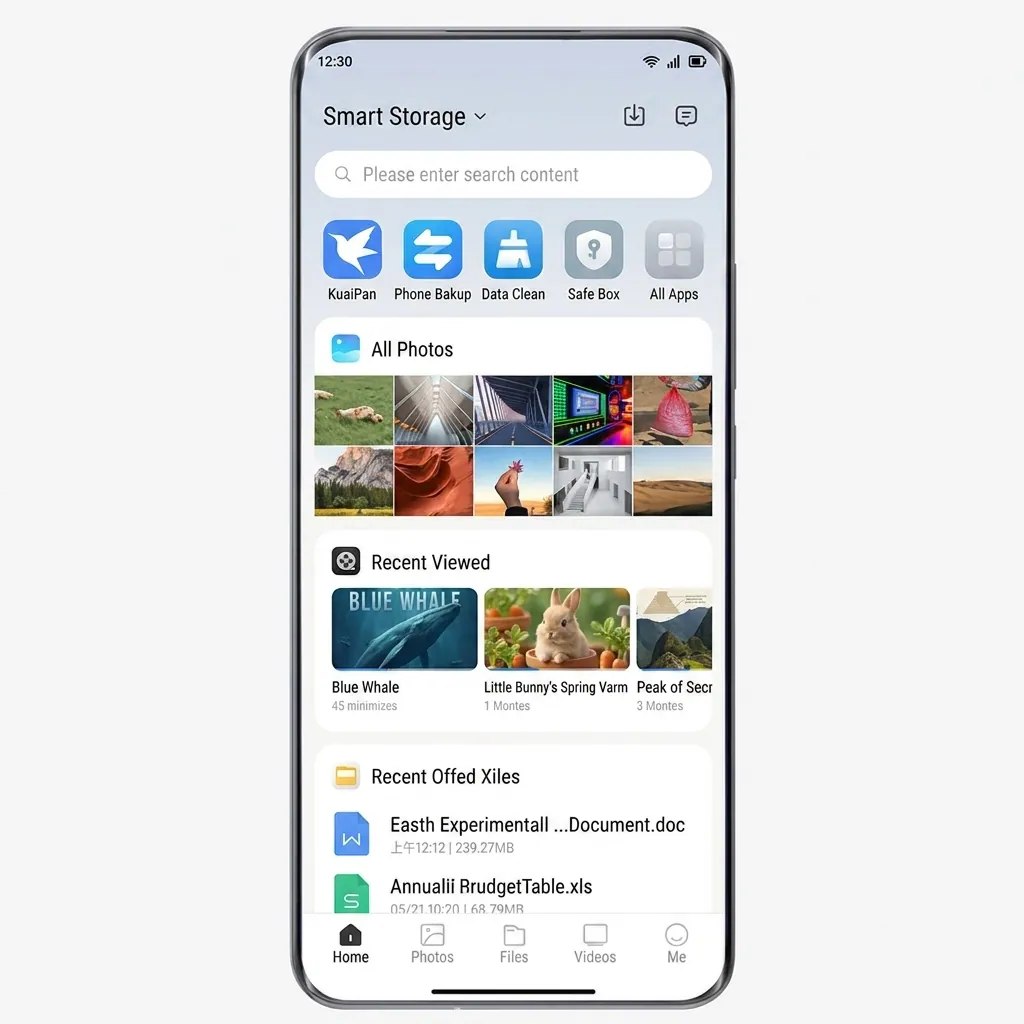
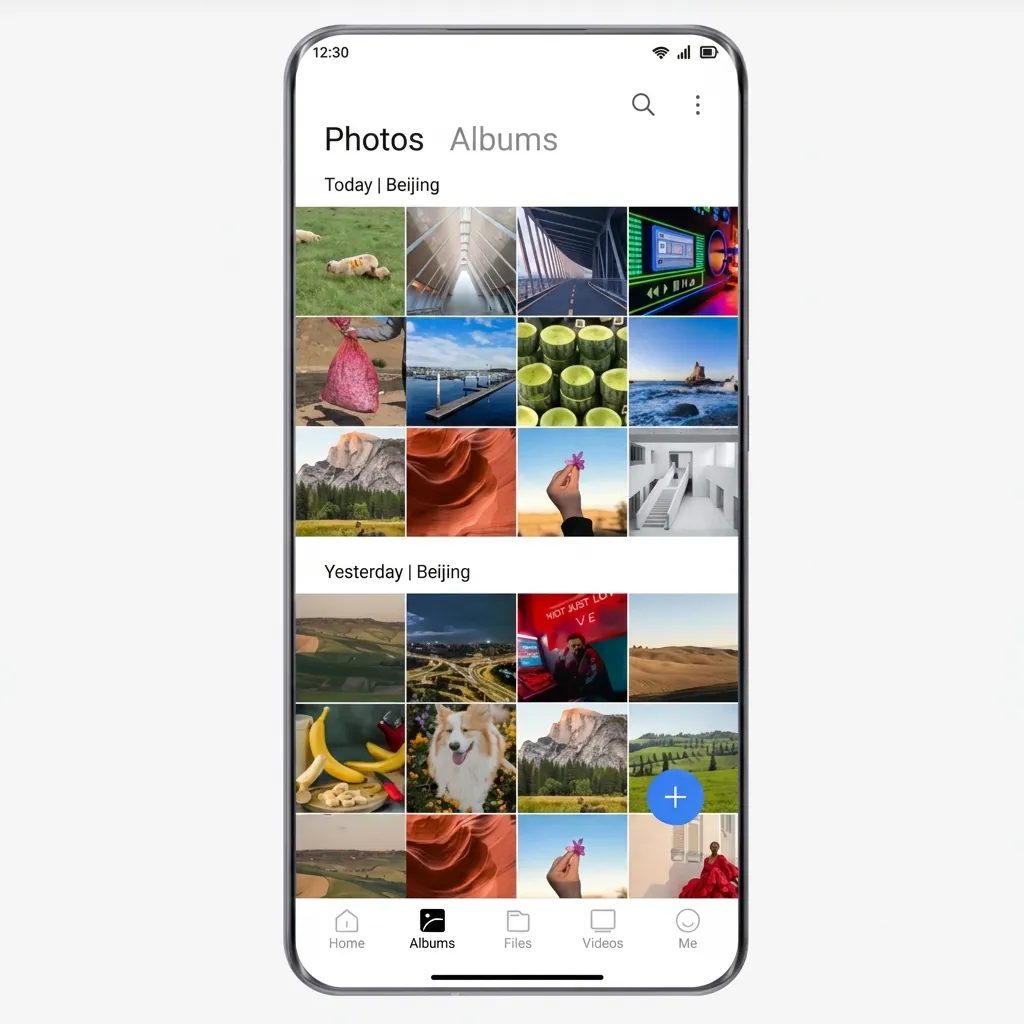
On top of that foundation, it adds an AI layer: it automatically creates photo albums and organizes movies with their cover art, like a private cinema. Everything is designed to coexist with the HyperOS ecosystem — TVs, tablets, security cameras that record to the local network — in one place.
Against Synology, QNAP, and Huawei
The entry price puts the Smart Storage below a large part of the home market: it starts about 100 yuan below Huawei’s cheapest home NAS, in a segment projected to grow from 712 million yuan in 2023 to nearly 9.6 billion in 2030.
What is worth looking at is what kind of NAS it is. There is no confirmed Docker support, and the focus is plug-and-play: designed for someone who lives in the Xiaomi ecosystem and wants backups and a family library without administering a server. Anyone looking for containers, Plex or Jellyfin, virtual machines, or self-hosting is still looking at Synology, QNAP, or Ugreen. Add to that what Xiaomi has still not shown: processor, RAM, RAID support, the type of drive included in the preconfigured versions, and whether it will be sold outside China. The company promises to provide those details before the crowdfunding campaign.
Conclusion
The Smart Storage is a smart move: it brings a simple, inexpensive NAS into a segment that often demands technical knowledge or costly hardware. For someone already living in HyperOS who wants automatic phone backup and a family photo library without a monthly fee, it makes complete sense. For the enthusiast who builds their own server, this is not the right machine: it lacks the openness offered by its rivals.
The underlying question remains open, and it is what defines a NAS more than price: the software layer. How it manages RAID and remote access, whether data passes through Xiaomi’s cloud, and what hardware powers it. Until Xiaomi shows that, the Smart Storage is an announcement with a very attractive price tag. If the software lives up to the price, only then will we know.
Xiaomi Smart Storage
Xiaomi’s first NAS: a dual-bay home-oriented device with automatic backup, AI albums, and integration with the HyperOS ecosystem.
Pros
- The 2.5" and 3.5" SATA bays are user-replaceable and expandable.
- Broad compatibility: Android, iOS, Windows, macOS, and Linux.
- Built-in 2.5G Ethernet for backups and streaming without bottlenecks.
- Aggressive entry price compared with Synology, QNAP, and Huawei.
- Active cooling, essential for drives under continuous use.
Cons
- No confirmed Docker support: consumer-focused, not for enthusiasts.
- Tied to Xiaomi’s app and HyperOS ecosystem.
- Incomplete spec sheet: processor, RAM, and RAID are unconfirmed.
- For now, China only, with no global launch date.
Author
Alexis PaezComments
Share article
You might also like
Xiaomi 18 Fold: the first foldable with an in-house chip arrives two days before Apple’s
Xiaomi introduced the 18 Fold with its in-house XRING O3 chip, 6,000 mAh in 5.02 millimeters, and a 200 MP Leica triple camera. Price, full specs, and how it compares with other wide-format foldables.
Samsung 9100 PRO: twice as fast as the 990 PRO, but only if your PC has PCIe 5.0
Samsung 9100 PRO review: up to 14,800 MB/s on PCIe 5.0 and up to 8 TB. What is behind the 49% efficiency claim, when it needs a heatsink, and where it does not perform at full speed.
Apple Home Collection: cameras, locks, thermostats, and prices
Apple Home Collection brings together accessories from LG and Schneider starting at US$39.95. Cameras, lock, thermostats, requirements, and launch markets.