Huawei Watch Fit 5 Pro: titanium, sapphire, and battery life Apple and Samsung can't match

Index
The Huawei Watch Fit 5 Pro is the fifth generation of a line that started as an inexpensive fitness band and is now a sports watch with a titanium bezel, sapphire crystal, and a 3000-nit LTPO display. For under 300 euros, it offers materials that other brands reserve for 500-euro watches, plus multi-day battery life that neither Apple nor Samsung comes close to matching. The downside sits on the other side: this is a watch that lives inside Huawei’s ecosystem, with no cellular connectivity version and a limited app store.
What it is and who it’s for
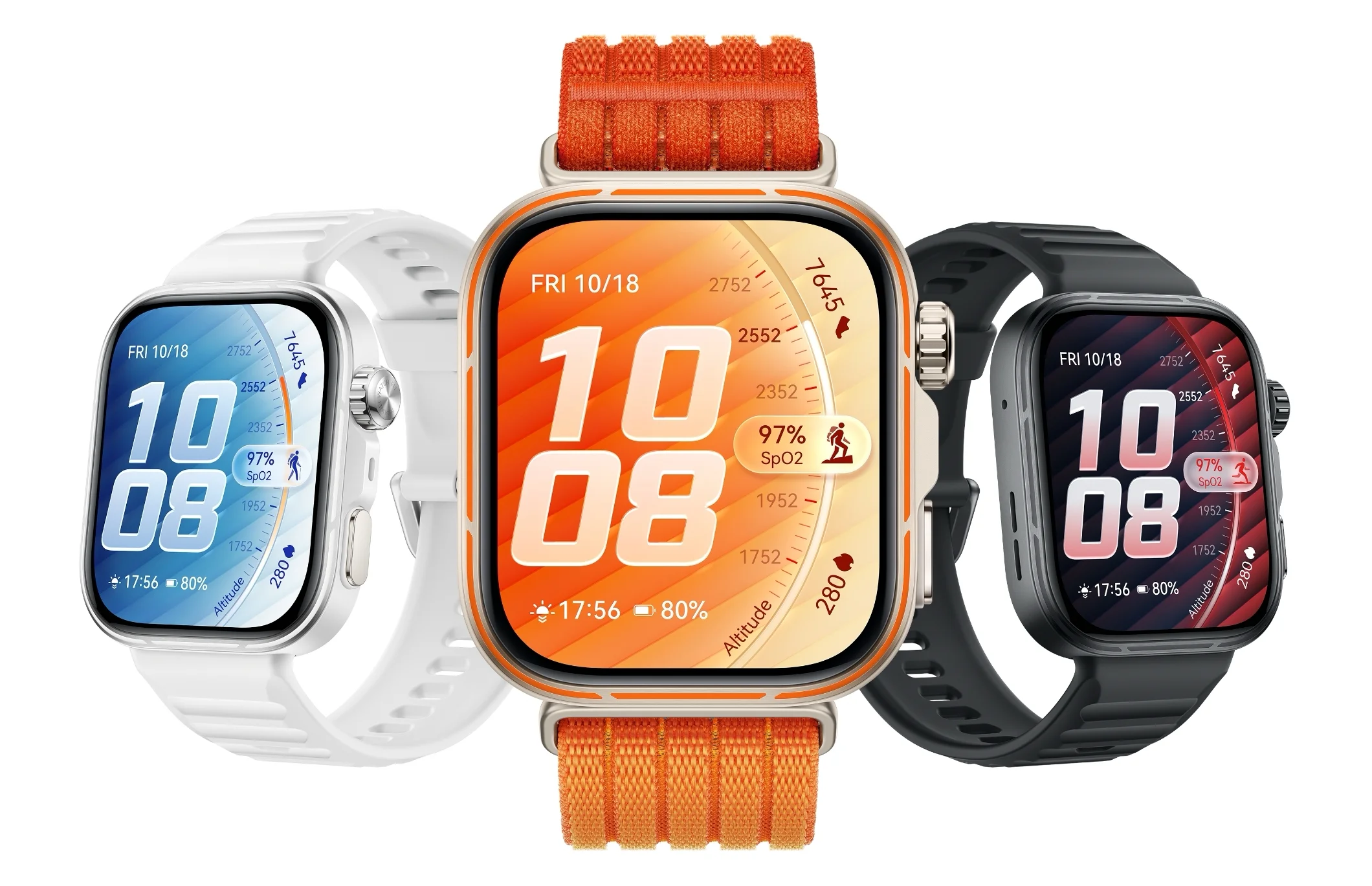
The Watch Fit series launched in 2020 as a lower-cost alternative to the Huawei Watch GT. Five generations later, the Pro model has stopped being a large-screen fitness band and has become a full sports watch. It competes directly with the Apple Watch, the Galaxy Watch, and mid-range Garmin models, with a clear argument: deliver 90% of what those watches do, with much longer battery life and at a lower price.
It targets anyone who wants serious health and sports tracking — running, cycling, sleep, ECG — without spending 400 euros or charging the watch every night. It comes in three colors: Danxia orange, Glacier white, and Yardang black.
Display
The display is the first thing that stands out. It’s a 1.92-inch LTPO AMOLED panel, with 3000 nits of peak brightness and a variable 1 to 60 Hz refresh rate, protected by 2.5D curved sapphire crystal. Sapphire matters: it is one of the most scratch-resistant materials available, far above the Gorilla Glass used by several rivals. The 1.8 mm bezels deliver an 83% screen-to-body ratio, the highest in the Fit line. That translates into a front that is readable in direct sunlight and almost bezel-free.
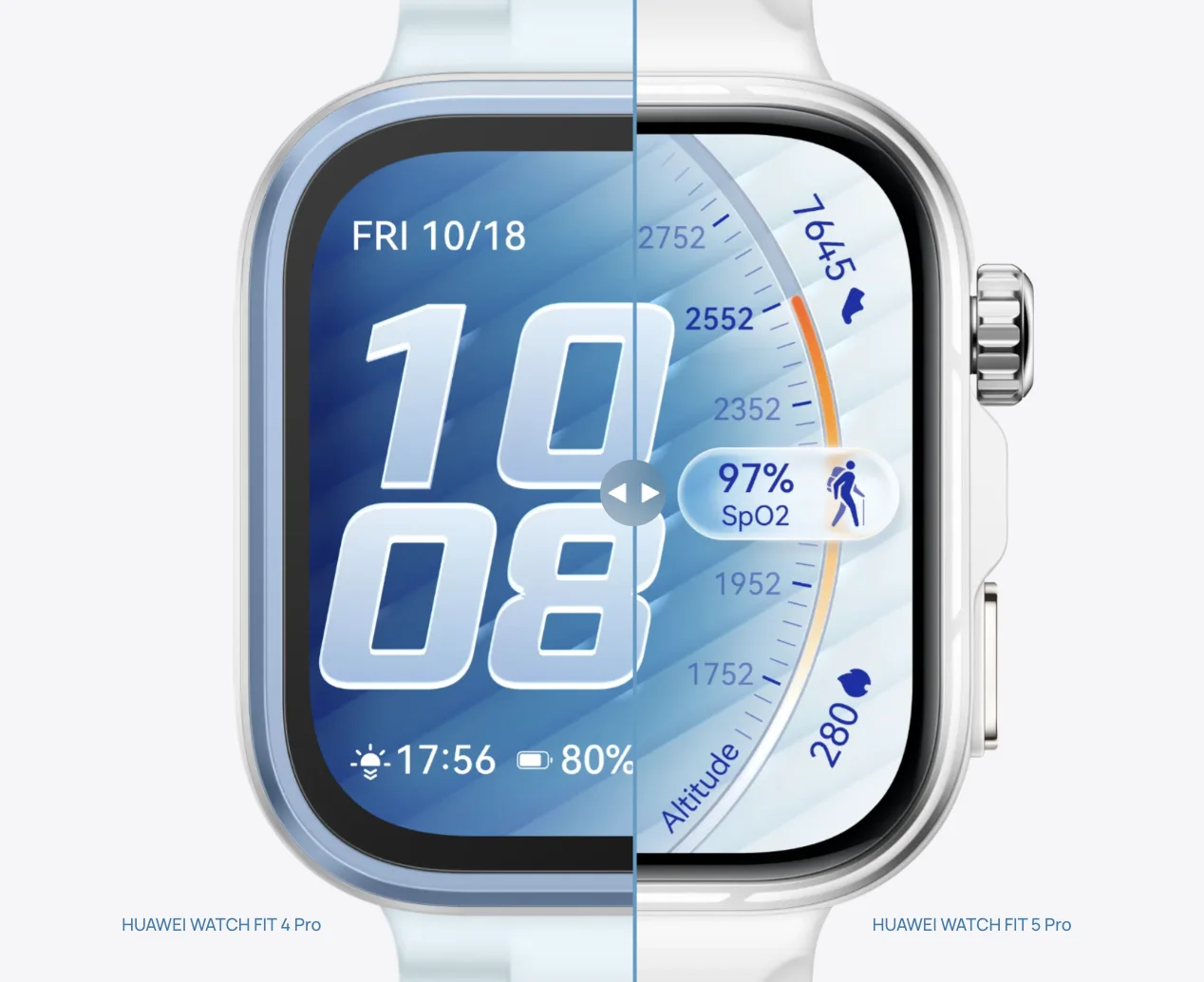
Compared with the Fit 4 Pro, the jump is in size (from 1.82 to 1.92 inches), the 2.5D curve of the sapphire — previously flat — and the LTPO panel, which lowers the refresh rate to save battery.
Design and materials
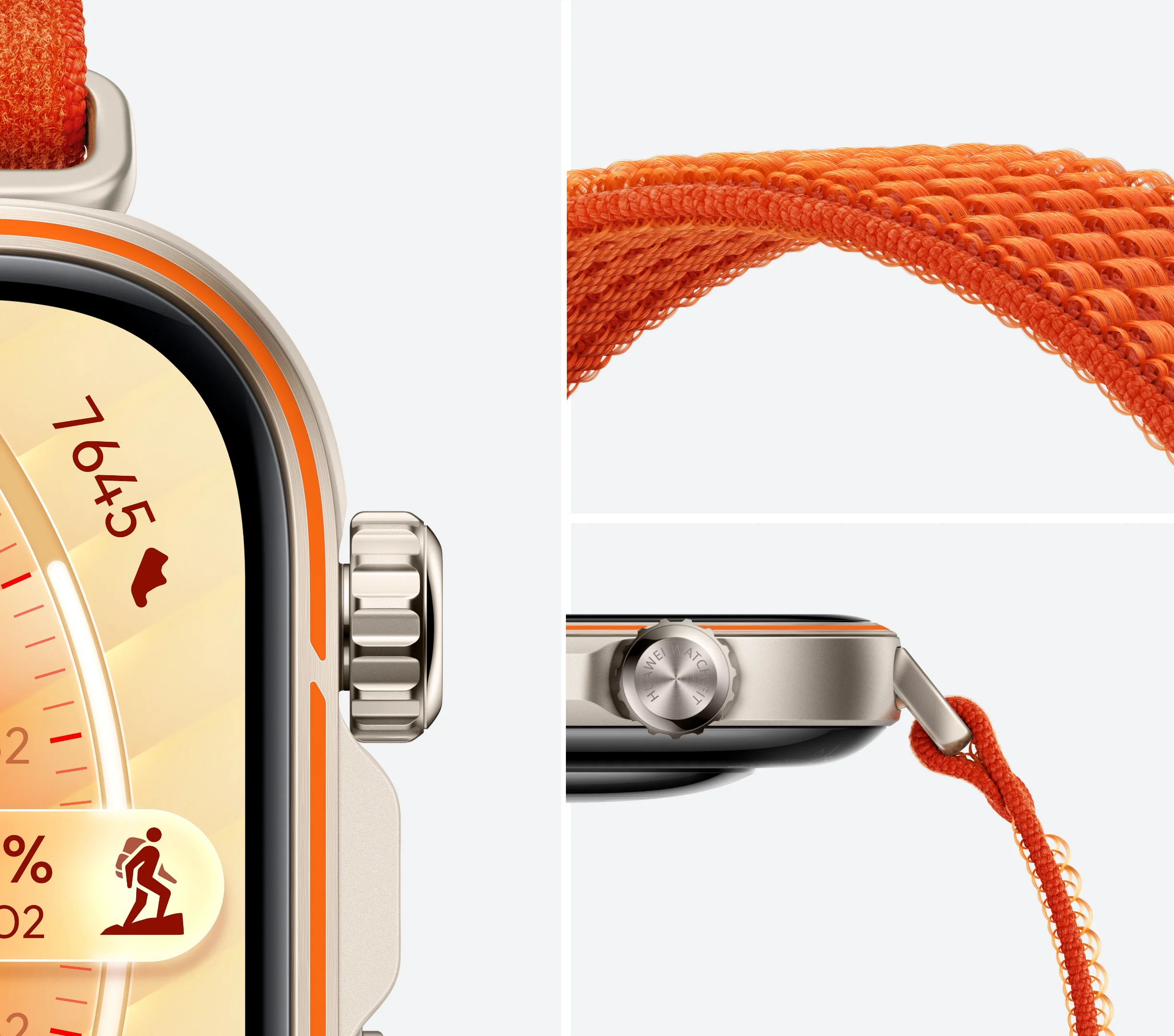
The body combines a titanium alloy bezel, an aluminum frame, and a fiber composite back cover. The white model adds an aerospace-grade nanoceramic finish that is more resistant to wear. At 9.5 mm thick and 30.4 grams without the strap, it is one of the thinnest and lightest serious sports watches on the market. The combination of titanium and sapphire is what gives it a premium feel its price does not suggest.
There is one detail to keep in mind: the straps use a proprietary system. They can be swapped between Huawei Fit models, but they do not use a standard lug, so you won’t be able to fit generic 22 mm straps. The charger is also proprietary — a wireless magnetic puck — and the cable ends in USB-A, a standard that already feels old in 2026.
Health
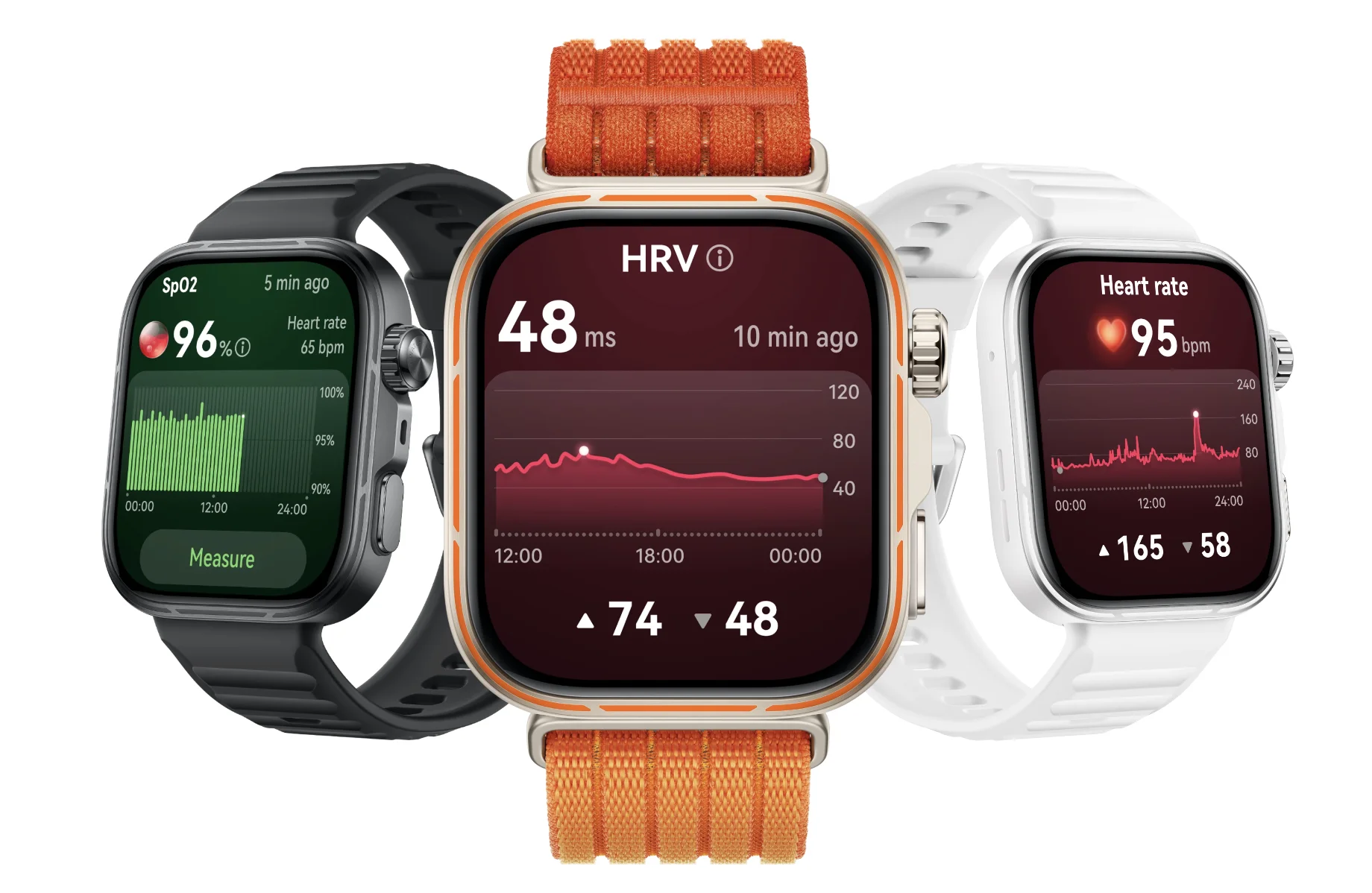
The health suite is one of the most complete in this price range. The TruSense optical sensor uses 6 LEDs and 6 photodiodes, and the heart rate it measures is surprisingly accurate: several reviews put it on par with a chest strap during demanding workouts, something rare at this price. It adds SpO2, skin temperature, ECG with arrhythmia detection, and an arterial stiffness measurement that is exclusive to Huawei watches.
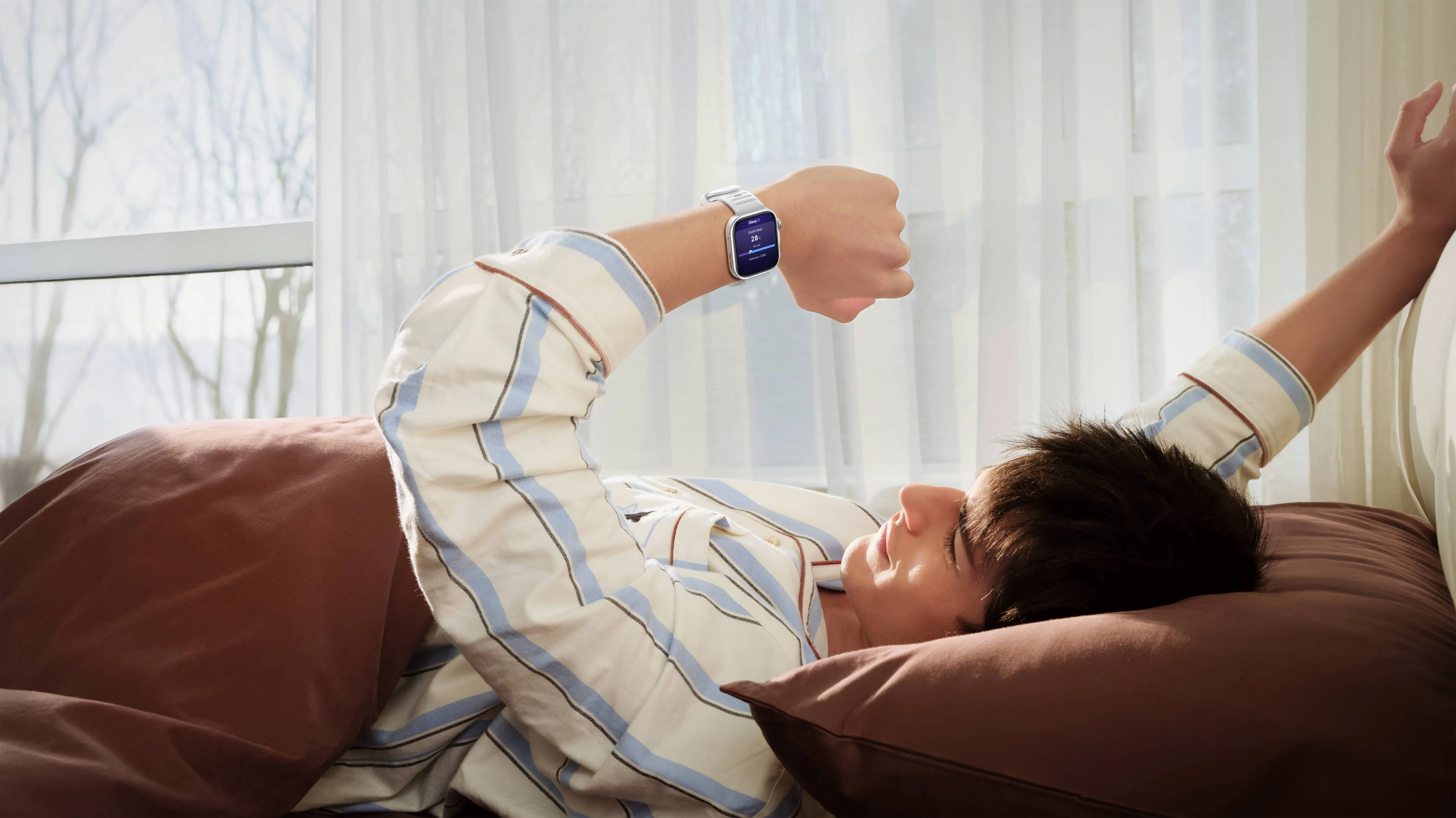
Sleep is covered by TruSleep 5.0, which separates REM, light, and deep sleep stages, plus a new breathing awareness feature that acts as an early warning for apnea, along with automatic nap detection.
There is one point Huawei communicates in a confusing way, and it is worth clarifying. The watch includes a "diabetes risk study," and on its own website it talks about "keeping your glucose under control." But the Fit 5 Pro does not measure glucose and does not provide a blood glucose value: it analyzes signals such as PPG, heart rate variability, and sleep over 3 to 14 days, then returns a risk estimate (low, medium, or high). It is a screening tool, not a meter, and Huawei’s own documentation clarifies that it is for reference only and not for medical use. There is also menstrual cycle tracking with the temperature sensor.
Sports, GPS, and training
In sports, the differentiator is GPS. The Fit 5 Pro debuts the dual-band Sunflower system (L1+L5), with an antenna that adjusts reception to wrist movement. The promise is 20% better accuracy, and in review testing the track comes out more consistent in dense areas or under trees. The honest read: it is a very good GPS for daily use — distance, pace, a map that looks good — but a dedicated running watch still wins in street-by-street accuracy.
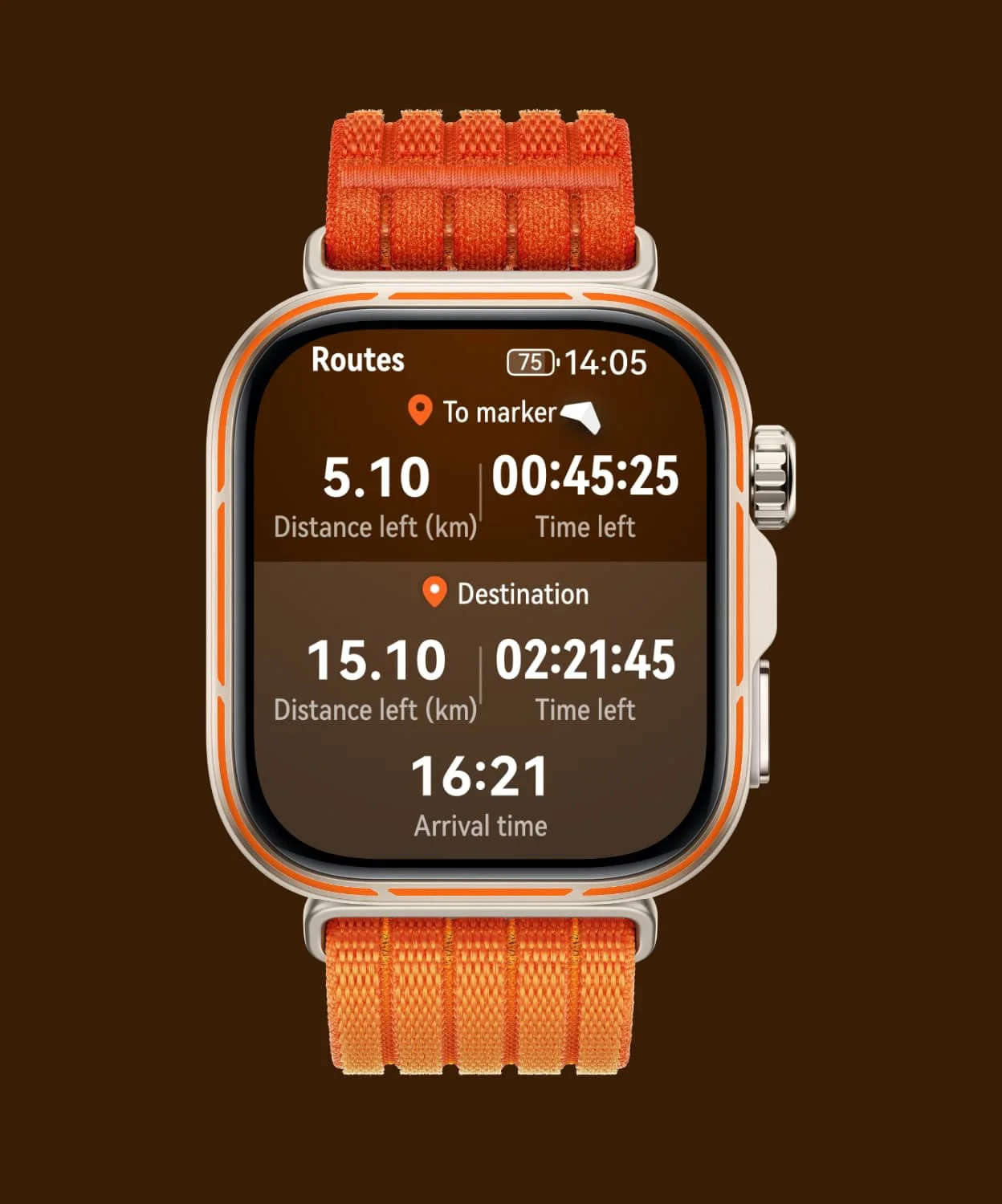
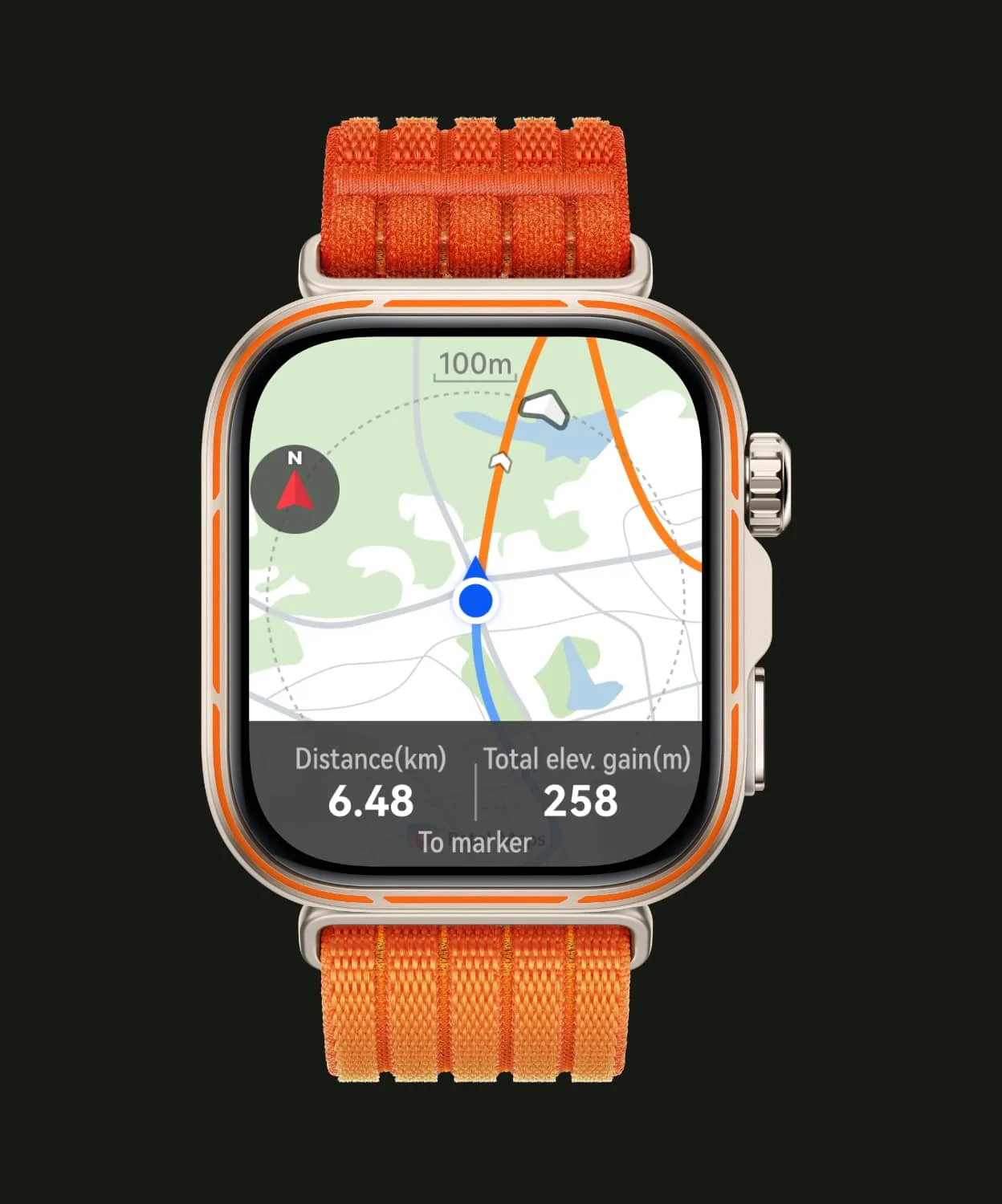
Trail Run mode lasts 25 hours with GPS active and adds route navigation, elevation trends, and estimated time of arrival. There is a golf mode with maps for 17,000 courses, diving down to 40 meters, and cycling metrics such as real-time power and cadence, which are algorithmic estimates and do not replace a real power meter. In total, there are more than 100 sports modes.
For everyday use, there is Mini-Workout: a watch face with an animated panda that guides short routines, from 30 seconds to a few minutes, with step-by-step movements for different parts of the body.
Battery and charging
This is where the Fit 5 Pro plays in another league. The battery is 471 mAh, 18% larger than the previous generation, and delivers 7 days with typical use, up to 10 with light use, and around 25 hours with trail GPS. With the always-on display enabled permanently, it drops to about 4 days. In reviews, with mixed real-world use, the figure lands between 5 and 8 days.
For context: an Apple Watch Ultra 3 manages about two days of active use, and a Galaxy Watch is around one or two days. The Fit 5 Pro is not one step above; it is in a different expectation category.
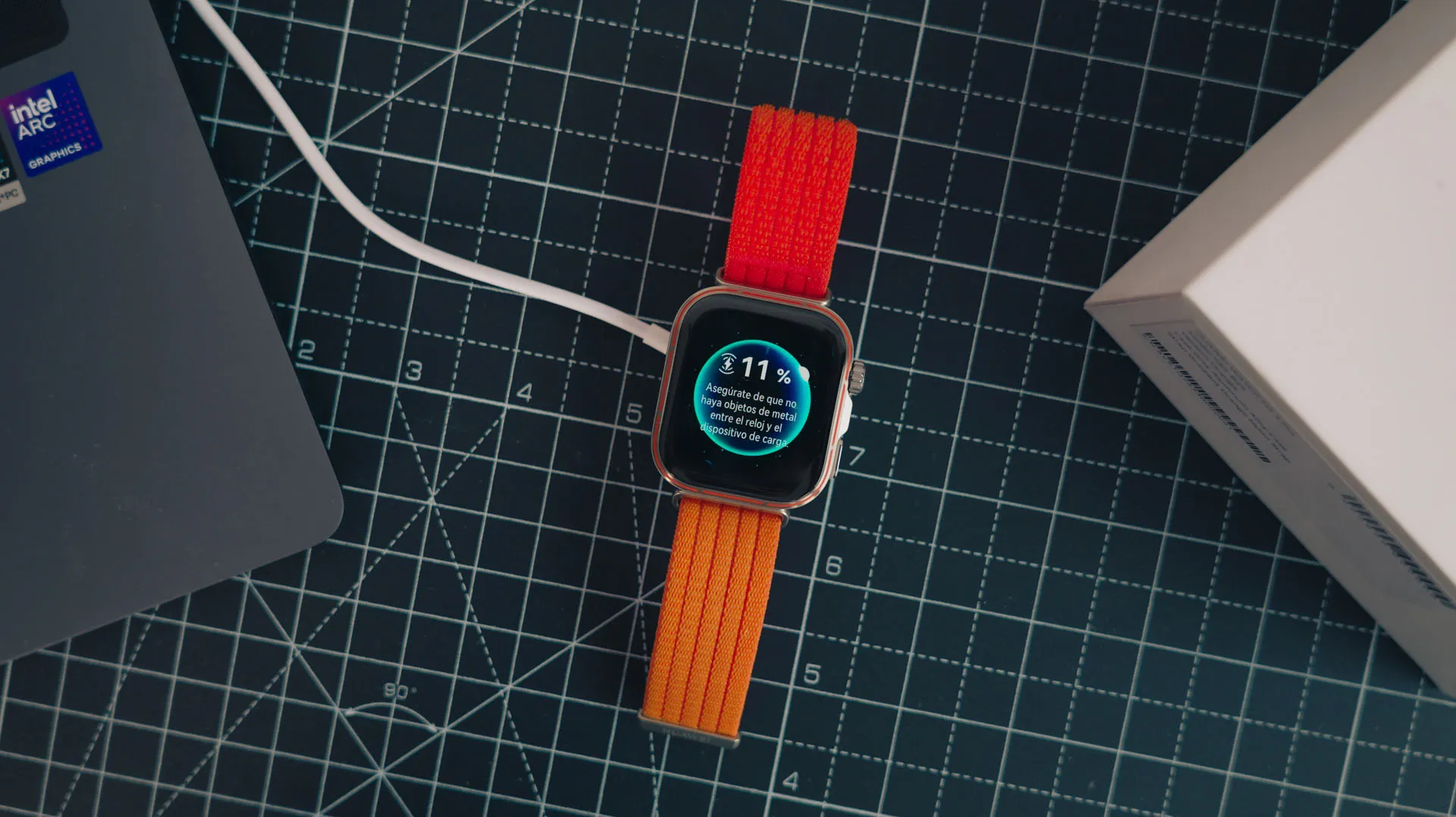
Charging is wireless and fast: from nearly empty to full in about 60 minutes, and 10 minutes gives you enough for a full day.
How it compares
Against the Apple Watch SE 3, Google Pixel Watch 4, and Samsung Galaxy Watch 8, the Fit 5 Pro clearly wins on battery life and price-to-materials ratio, and loses on connectivity and ecosystem:
These are reference launch prices (the Fit 5 Pro is sold in euros; the others in US dollars in the U.S.), and they vary by market. None is "the best" in the abstract: if you want battery life and do not mind the closed ecosystem, choose the Huawei; if you need standalone cellular, apps, or integration with your phone, any of the other three has the advantage.
What reviews point out
The biggest limitation is that there is no version with cellular connectivity: you depend on your phone for calls and data, something the Apple Watch, Pixel Watch, and Galaxy Watch do offer. The app ecosystem is limited — it lives in Huawei’s AppGallery, with no Spotify or Google Maps — and on iPhone it is more restricted: you cannot reply to messages from the watch, and some features do not work.
In sports, The Gadgeteer noted that the GPS is reliable for daily use, but falls behind a dedicated running watch, and that heart rate drops off during pool swimming. GSMArena added two hardware drawbacks: the non-standard straps and the charger’s USB-A cable. And NFC payments, via the Curve app, have availability that varies by region. None of this is serious on its own, but together they define who this watch is for and who it is not for.
Conclusion
The Huawei Watch Fit 5 Pro is one of the most complete sports watches you can buy for under 300 euros. The titanium and sapphire construction, the display, and the health suite are on the level of much more expensive watches, and its battery life has no direct rival in its range.
For anyone using Android, prioritizing battery life and health tracking, and not bothered by Huawei’s closed ecosystem, it is an easy buy. For anyone who needs standalone cellular connectivity, a complete app store, or deep integration with the iPhone, the Apple Watch, Pixel Watch, or Galaxy Watch justify paying more. The real question is not whether the Fit 5 Pro is a good watch — it is — but how much you value the freedom to leave your phone at home, because that is the one thing it cannot give you.
Huawei Watch Fit 5 Pro
Huawei sports watch with titanium and sapphire construction, multi-day battery life, and a very complete health suite for under 300 euros, tied to a closed ecosystem and with no cellular option.
Pros
- Real 5- to 8-day battery life, far ahead of Apple and Samsung.
- 1.92" LTPO display with 3000 nits and sapphire crystal, excellent in sunlight.
- Premium construction with a titanium bezel at a mid-range price.
- Chest-strap-level heart rate and a very complete health suite with ECG.
- Works with Android and iPhone, without locking you into a phone from the brand.
Cons
- No version with cellular connectivity: you depend on the phone.
- Proprietary straps and charger, with an outdated USB-A cable.
- Limited app ecosystem, with no Spotify or Google Maps, and restricted on iPhone.
- The GPS is reliable for daily use, but below a dedicated running watch.
- The diabetes risk study does not measure glucose: it is an estimate, not medical data.
Author
Alexis PaezAnalysis based on the manufacturer's official specifications. The author did not physically test the product.