ThinkBook Plus Gen 7 Auto Twist: Lenovo makes it global, but the Arc B390 is not available in every configuration

Index
Lenovo confirmed that the ThinkBook Plus Gen 7 Auto Twist will be sold worldwide, not just in the United States. The 14-inch laptop’s PSREF listing now includes regional variants for North America, Europe, Asia, Australia, Africa, and the Middle East. What the company still has not said is when you will be able to buy it: the date announced at CES 2026 was June 2026, and that came and went without the machine reaching any store.
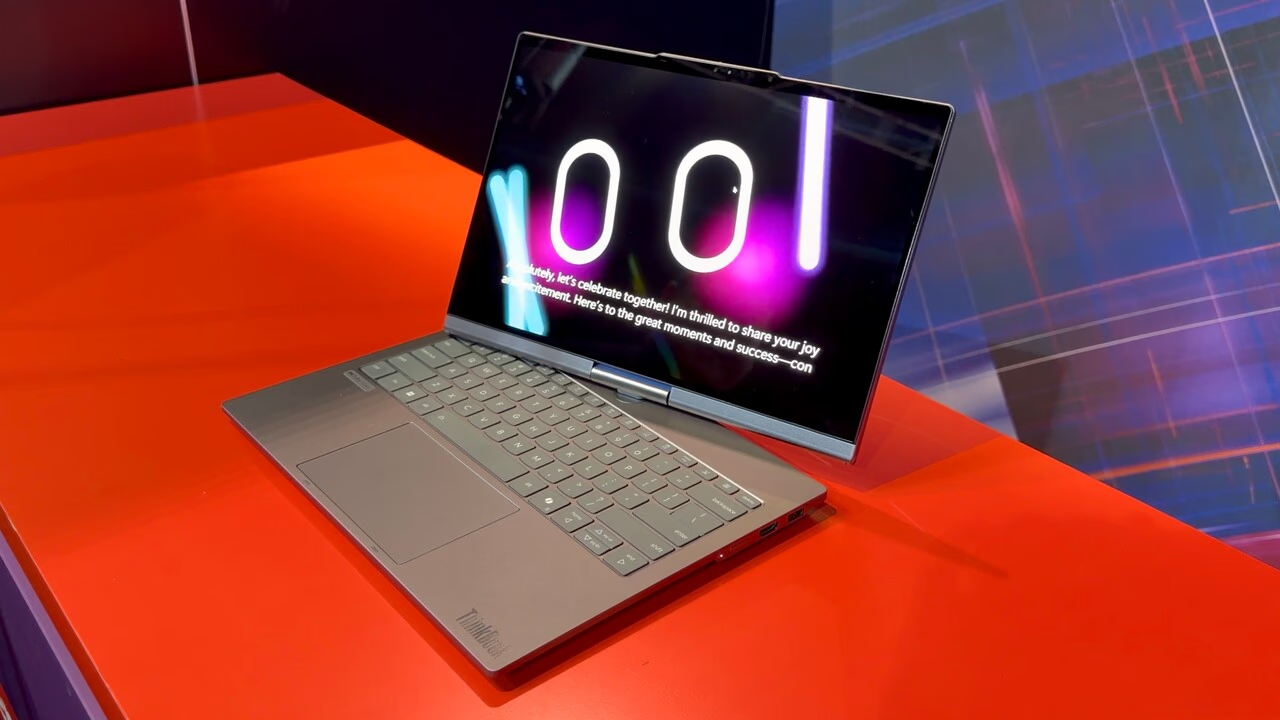
The specifications are serious: 2,880 × 1,800 OLED with 1,100-nit peaks, Intel Panther Lake platform, 75 Wh battery, and a claimed battery life of more than 21 hours. Two of those numbers depend on the configuration or the measurement method.
What the ThinkBook Plus Gen 7 Auto Twist is
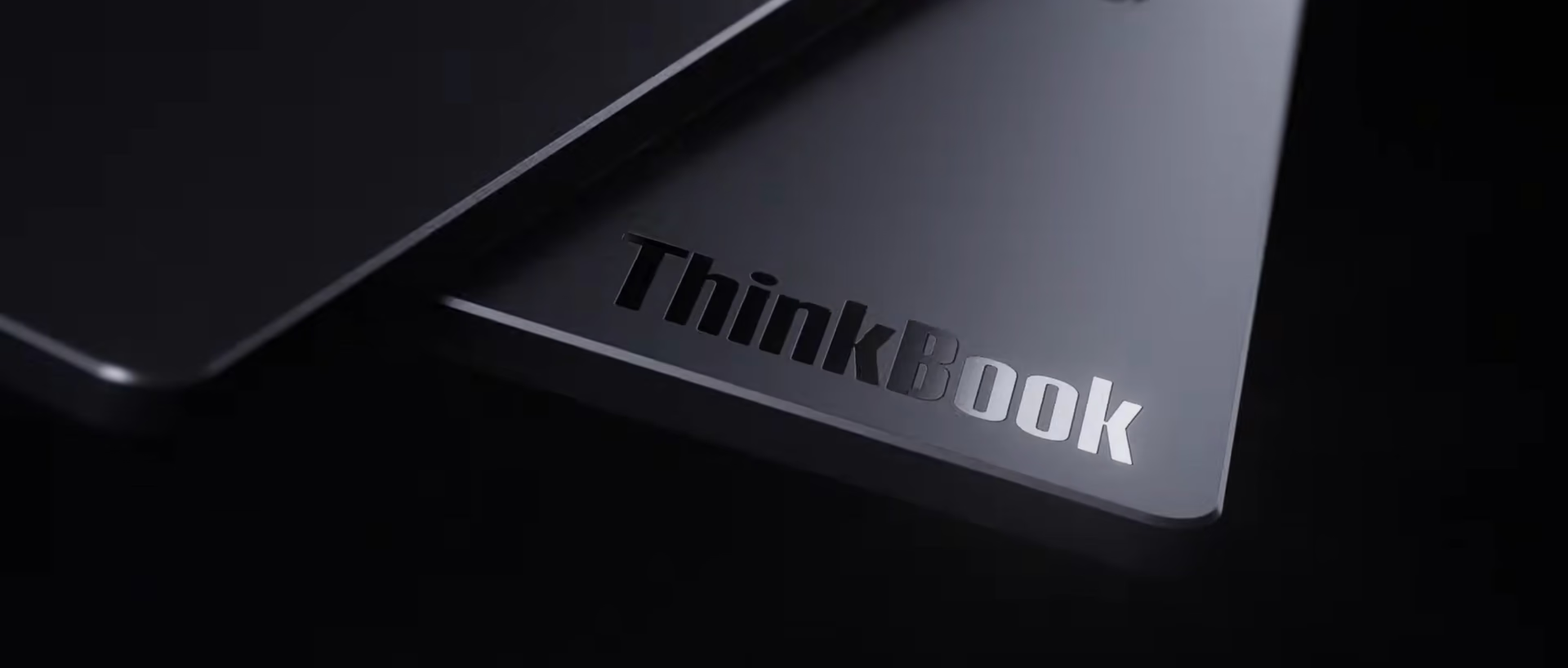
Closed, it looks like any other ThinkBook. The difference is in the hinge: a single cylindrical piece in the center of the chassis, instead of the usual two at the ends. Inside, there is a motor that rotates and tilts the touchscreen without you touching it.
The system uses the camera and sensors to track the position of your face: if you move to one side of the desk, the screen follows. It also turns toward the person sitting across from you, or rotates vertically for tablet mode. Sam Rutherford, who tested it at CES for Engadget, found another trick: tap the lid twice, and the laptop opens by itself. The speakers are mounted on the edges of the panel, so they rotate with it.
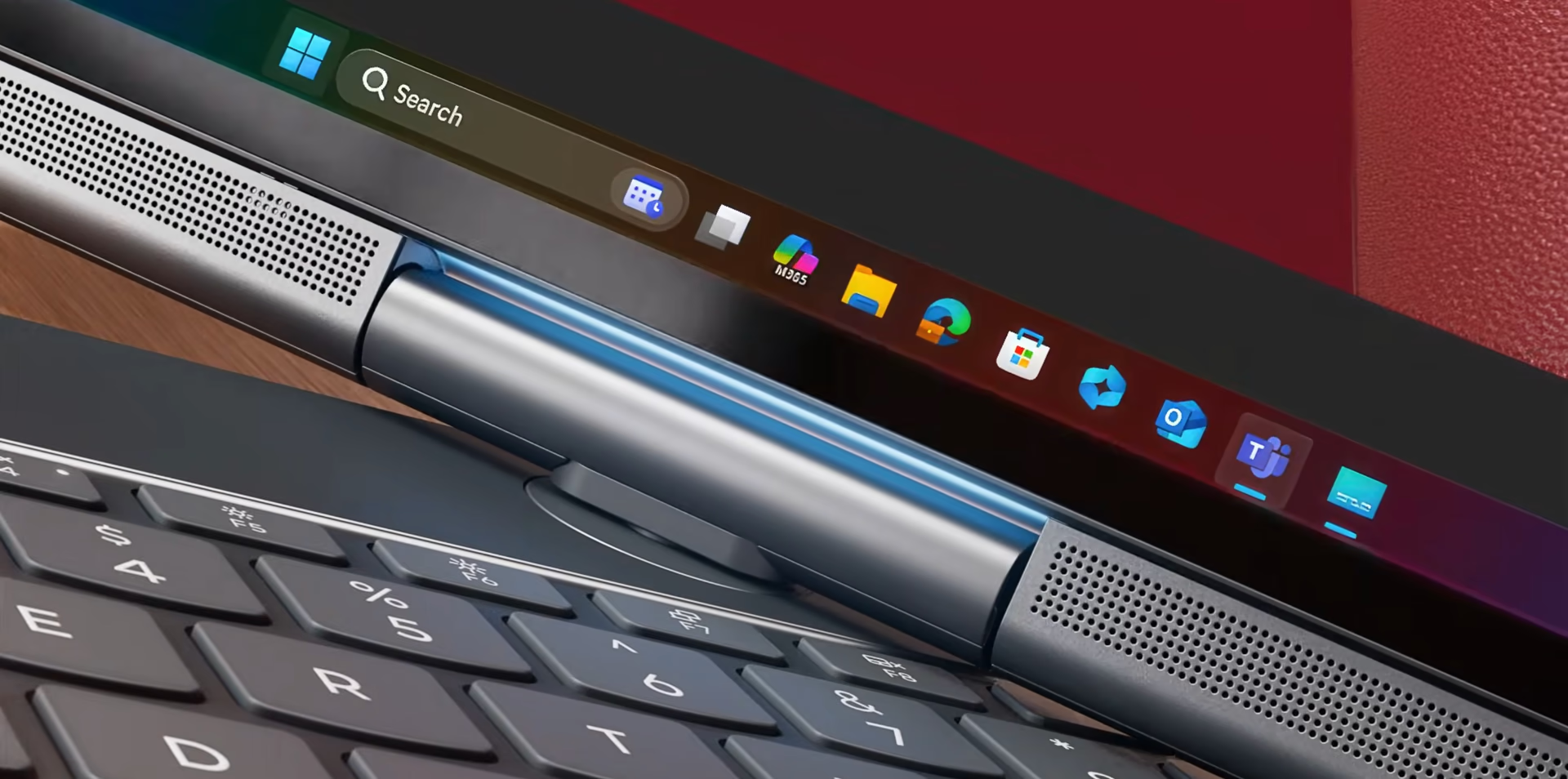
The mechanism was shown at IFA 2024 as the ThinkBook Auto Twist Concept, a prototype with no price or launch date, and Lenovo says it has worked since then on rotation speed, motor noise, and durability. The lineage goes further back: the 2012 ThinkPad Twist did something similar manually.
Display, ports, and weight
The panel is a 14-inch OLED with 2,880 × 1,800 resolution, touch input, a 30 to 120 Hz variable refresh rate, and 100% coverage of the DCI-P3 color space. It delivers 500 nits in SDR content and climbs to 1,100 nits in HDR.
The ports are above average for the category: two Thunderbolt 4, two USB-A 3.2 Gen 2, full-size HDMI 2.1, and a 3.5 mm jack. The list is rounded out by Wi-Fi 7, Bluetooth 5.4, four speakers, four microphones, a 10 MP camera with an infrared sensor, a fingerprint reader in the power button, dTPM 2.0, and an electronic privacy shutter.

It weighs 1.4 kg, a notable figure for a machine carrying a motor and a dual-rotation mechanism. The Zenbook A14 weighs less, but it does not move anything.
The Arc B390 is not available in every configuration
Panther Lake is the platform Intel is using to defend the premium segment, just as Microsoft has moved to an NVIDIA chip for its flagship model. In the Auto Twist, it arrives in two very different versions.
Lenovo confirmed two processors: Core Ultra 5 325 and Core Ultra X7 358H. The headlines mention Intel Arc B390 graphics, and that is true, but only for the latter. The X7 358H is a 16-core SoC with a 12-core Xe3 Arc B390 iGPU. The Ultra 5 325 has 8 cores and a 4-core Xe3 iGPU that Intel does not even sell under the Arc brand: it is called Intel Graphics 4 Xe3. In Notebookcheck’s comparisons, the Arc B390 more than doubles its gaming performance. Memory follows the same pattern: the 9,600 MT/s listed in the spec sheets corresponds to the X7, while the Ultra 5 tops out at 7,467.
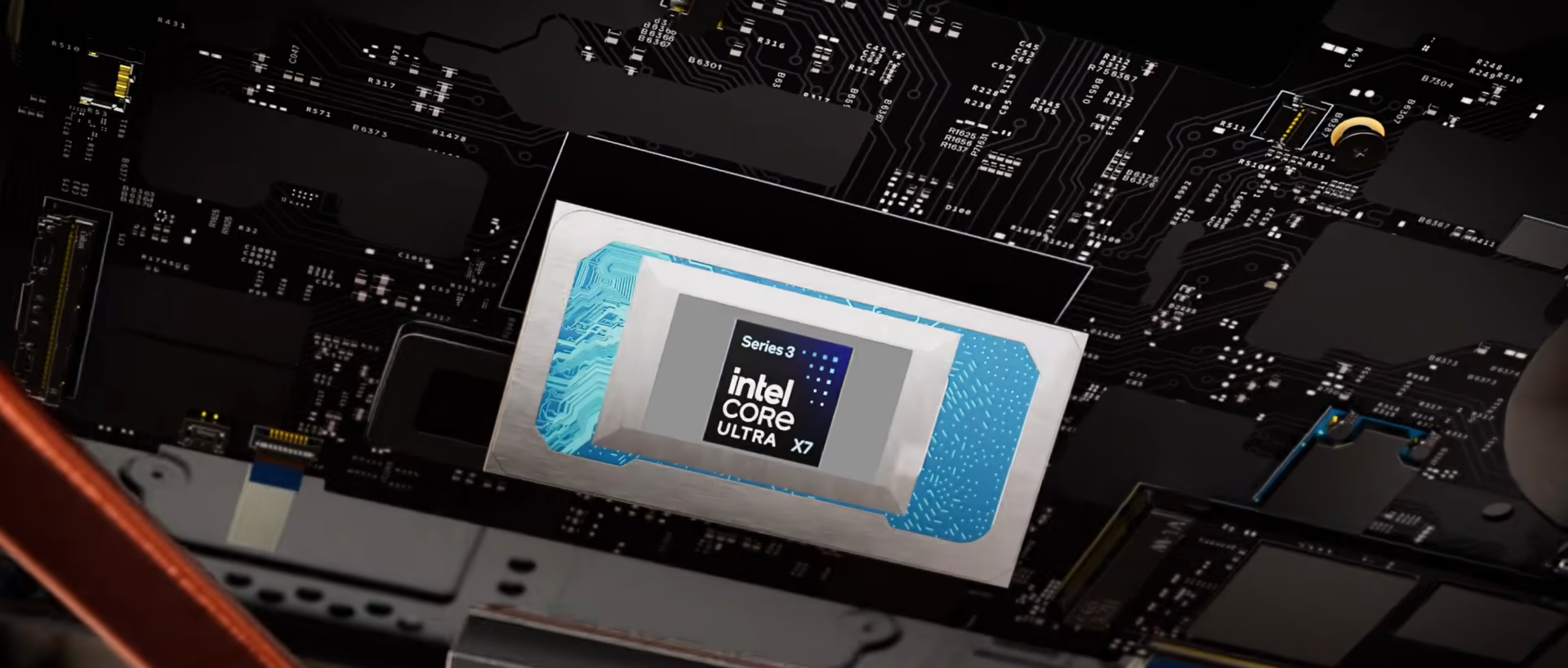
The $1,649 entry price almost certainly applies to the Ultra 5 325. If the graphics are what interest you, the configuration that includes them is not the one tied to the announced price, and Lenovo has not published how much it costs.
Where the 21 hours come from
Lenovo claims more than 21 hours from the 75 Wh battery, measured with JEITA-BAT 3.0. That Japanese standard reports two separate times, video playback and idle, with the screen calibrated at around 150 nits. It does not simulate office work, it does not account for high brightness, and in this specific case, it also does not account for a motor moving the screen several times per hour.
The figure is not fantasy: other laptops with the same chip have been posting high battery life in independent tests. But a JEITA result and a workday are different things, and it is worth waiting for third-party measurements before counting those 21 hours as an advantage.
The cost of a moving part
In any laptop, the hinge is one of the components most likely to fail: it accumulates opening cycles, concentrates mechanical stress, and carries the panel wiring. Here, that same part also includes a motor, sensors, and a second axis of rotation. Lenovo says it has improved durability versus the prototype, but it has not published a cycle rating or clarified how the warranty covers the mechanism. Those are the two questions to answer before approving a corporate purchase of multiple units.
On the other hand, there is a detail almost nobody mentioned: the storage slot is full-size M.2 2280, even though Lenovo installs shorter M.2 2242 drives from the factory. There is enough physical room to replace the SSD with a standard, larger, cheaper one without adapters. Memory, however, is soldered LPDDR5X: what you choose when buying is what you will have. In a market where several manufacturers have started using repairability as a selling point, half the equation is well solved and the other half is not.
Price and availability
The entry price announced at CES 2026 is $1,649. Lenovo promised it would go on sale in June 2026, and it is not being sold in any market; the only update is that PSREF went from listing variants only for the United States to listing them for six regions, with no new date.
There is precedent. The ThinkBook Plus Gen 6, the one with the rollable panel, was announced at CES 2025 for the first quarter of that year and finally went on sale in June at $3,499. Lenovo does take these experiments into real production, but it also misses the calendar it announces.
Conclusion
Take away the hinge and what remains is a well-rounded 14-inch laptop: high-end OLED, a complete port selection, 1.4 kg, and a reasonable entry price. That is the Auto Twist’s strongest argument and also its most uncomfortable one, because the mechanism is what raises the price and adds risk.
For someone who often presents to another person—sales, consulting, customer service—turning the screen by voice or letting it follow your face in a video call solves something software cannot. For someone who works eight hours in front of the same screen, it is a motor they will not use, mounted on the part you least want to complicate. And for anyone looking at it for the graphics, the configuration with Arc B390 is not the one at the headline price.
The most important details are still missing: Lenovo needs to say when it will be sold and how much each version will cost. Until then, the most interesting laptop in its catalog still cannot be bought.
ThinkBook Plus Gen 7 Auto Twist
A 14-inch laptop with a dual-rotation motorized hinge that automatically rotates and tilts the OLED display. It runs on the Intel Panther Lake platform and was announced starting at $1,649.
Pros
- The motorized hinge solves something software cannot: moving the screen toward whoever is looking at it.
- Complete port selection, with two Thunderbolt 4, two USB-A, and full-size HDMI 2.1.
- 2.8K OLED panel with 120 Hz and 1,100-nit peaks in HDR.
- It weighs 1.4 kg despite carrying a motor and a dual-rotation mechanism.
- The M.2 2280 slot leaves real room to replace the SSD.
Cons
- The Arc B390 applies only to the configuration with Core Ultra X7 358H.
- Lenovo has not published hinge durability cycles or detailed warranty coverage for the mechanism.
- The 21 hours are measured with JEITA-BAT 3.0, a standard that does not simulate real work.
- Memory is soldered: the purchase configuration is final.
- Promised for June 2026, it still has no sale date.
Author
Alexis PaezReport based on official announcements and verified public sources at the time of publishing.
Comments
Share article
You might also like



Xiaomi 18 Fold: the first foldable with an in-house chip arrives two days before Apple’s
Xiaomi introduced the 18 Fold with its in-house XRING O3 chip, 6,000 mAh in 5.02 millimeters, and a 200 MP Leica triple camera. Price, full specs, and how it compares with other wide-format foldables.

Huawei Pura X Max: the market’s first wide foldable arrives April 20
The Huawei Pura X Max debuts on April 20 as the market’s first wide foldable. Date, colors, specs, and how it beats Samsung and Apple.

Surface Laptop Ultra: Microsoft breaks with Intel and AMD and debuts the NVIDIA RTX Spark chip
Microsoft introduced the Surface Laptop Ultra, its most powerful laptop and the first with NVIDIA RTX Spark silicon: 128GB of unified memory, a Blackwell GPU, and a 2,000-nit mini-LED display to take on the MacBook Pro M5 Max.