Predator Atlas 8: Acer's handheld with Intel, a 120 Hz display, and adjustable triggers
Index
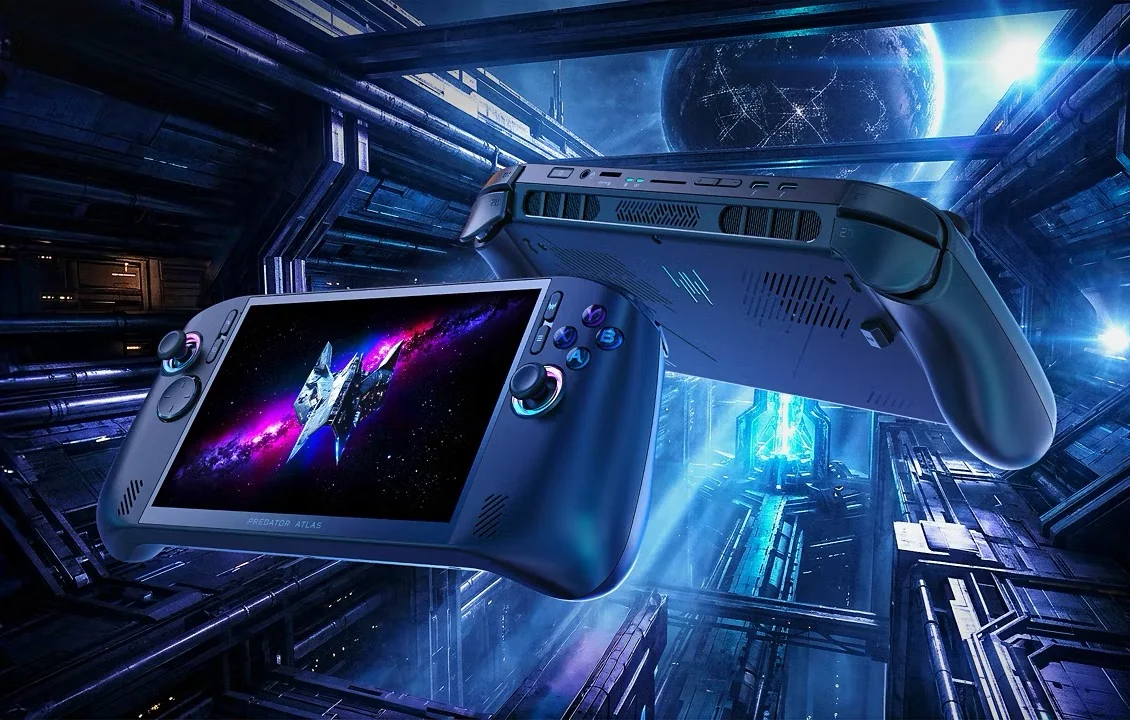
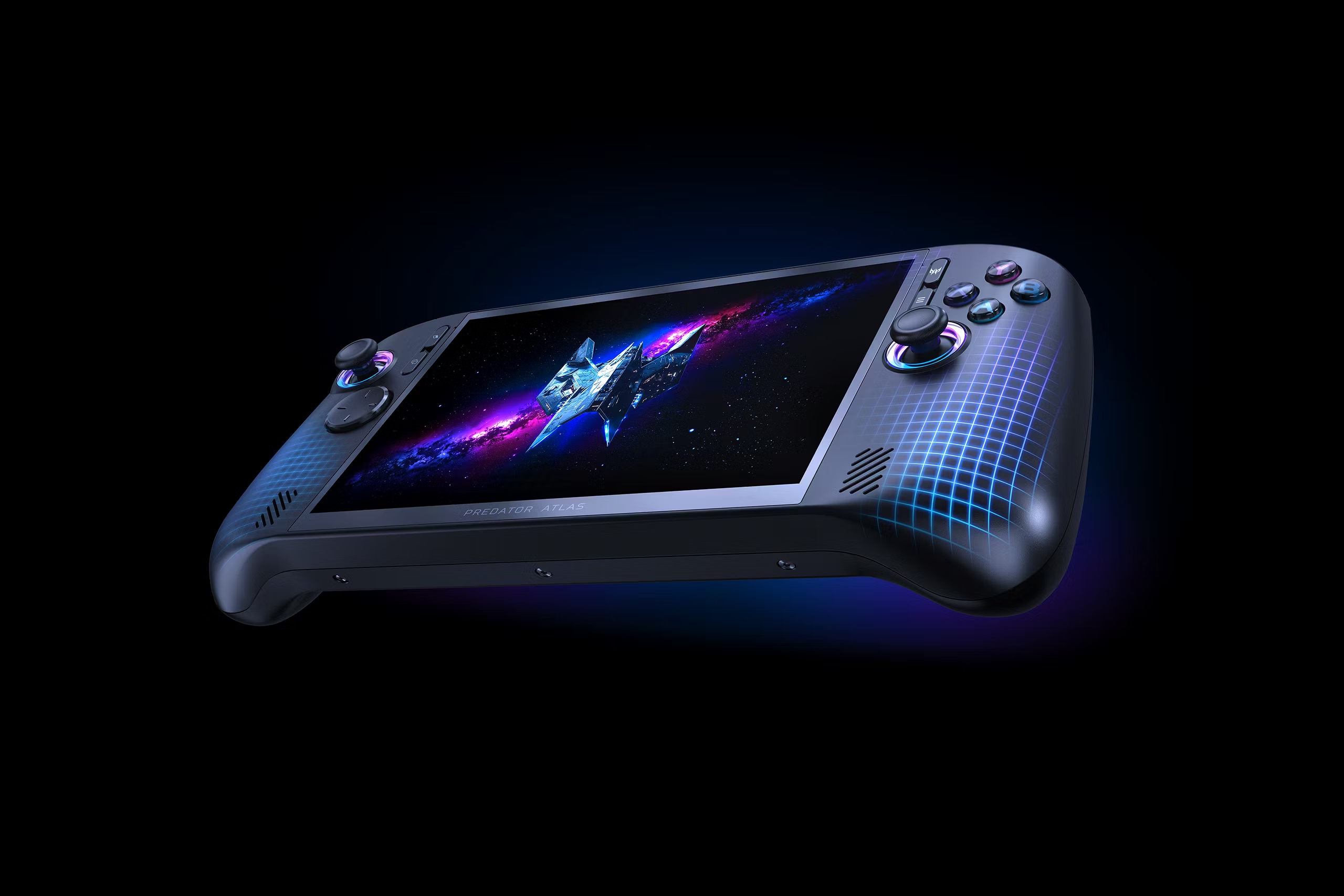
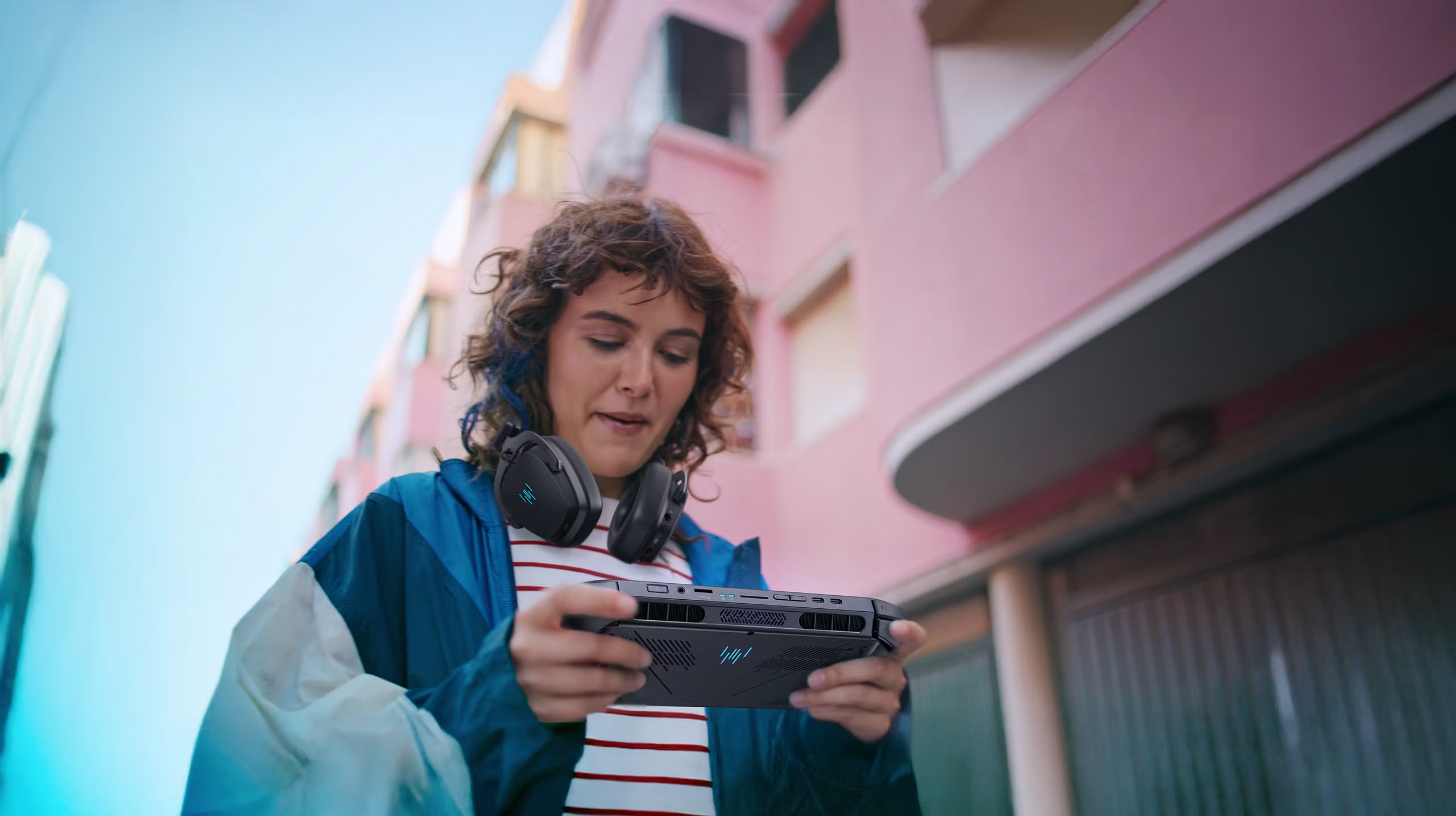
The Predator Atlas 8 brings Acer's PC gaming proposition to a handheld form factor with Windows 11. Its combination of an 8-inch display, Intel platform, and configurable controls aims to cover both quick sessions and games that require more precise movements.
Introduced on May 28, 2026, it was the first handheld announced under the Predator brand. Its standout features include dual-mode triggers, cooling with a metal fan, and a battery of up to 80 Wh. Its proposition brings together tools to adjust how you play and how the system operates.
Intel Arc and Windows 11 for gaming in a handheld format
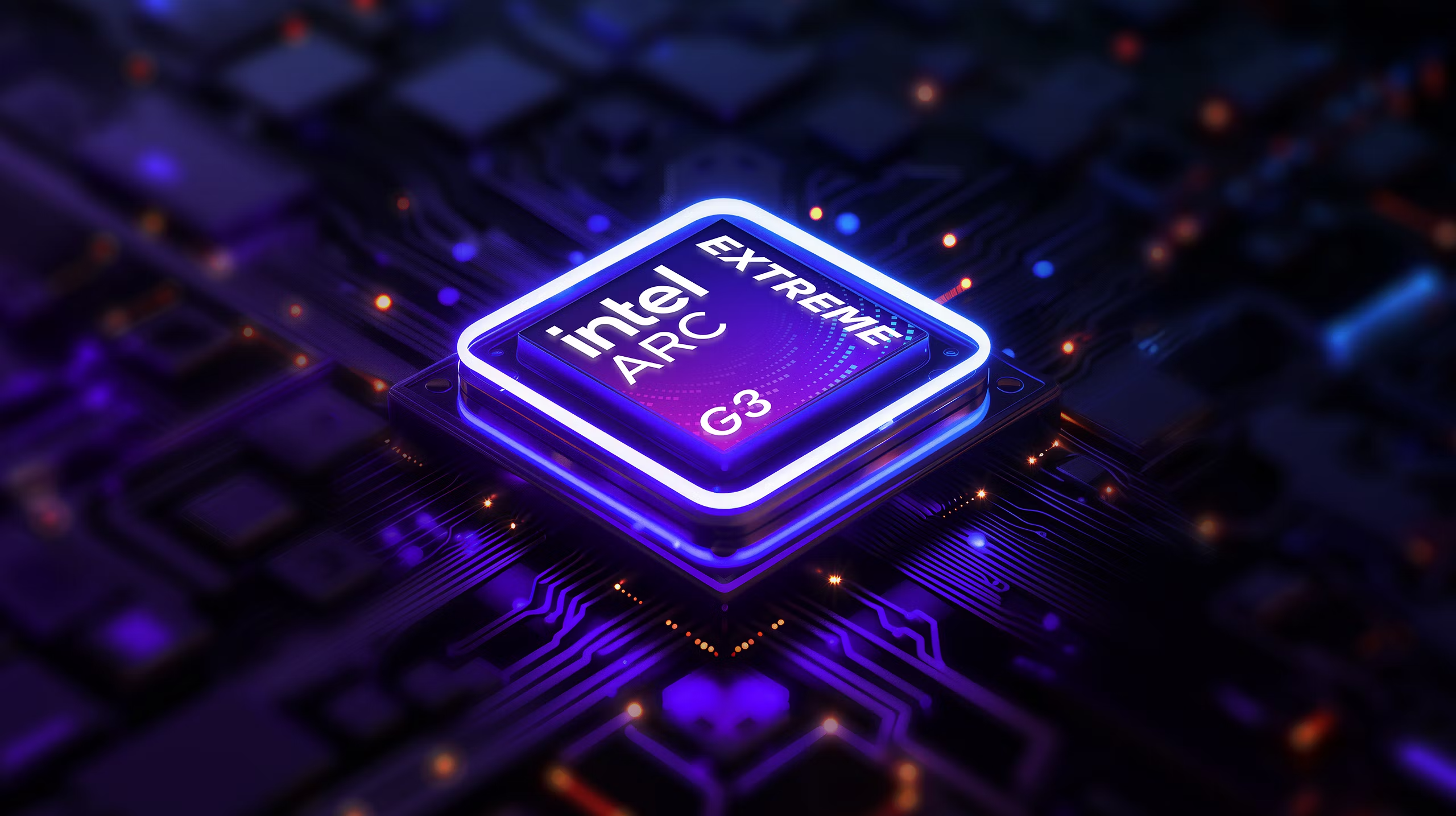
The family includes Intel Arc G3 and Arc G3 Extreme processors, with graphics up to Arc B390. This platform is based on the Core Ultra Series 3 architecture, known as Panther Lake, adapted to the power consumption and needs of handheld PCs.
B390 graphics use Xe3 architecture and support ray tracing. They are also compatible with XeSS 3, which combines AI-based upscaling, frame generation, and a technology to reduce latency. Upscaling reconstructs the image from a lower resolution; frame generation adds interpolated images to improve visual fluidity. Their benefits depend on each game's implementation.
The distinction matters: a high frame rate figure with interpolation is not equivalent to the same native performance, nor does it guarantee identical control response.
Windows 11 Home lets you use PC stores and launchers. That expands the options, although compatibility still depends on each title's requirements, drivers, and anti-cheat systems.
PredatorSense adds a dedicated button for checking the system and changing performance, cooling, and RGB lighting profiles.

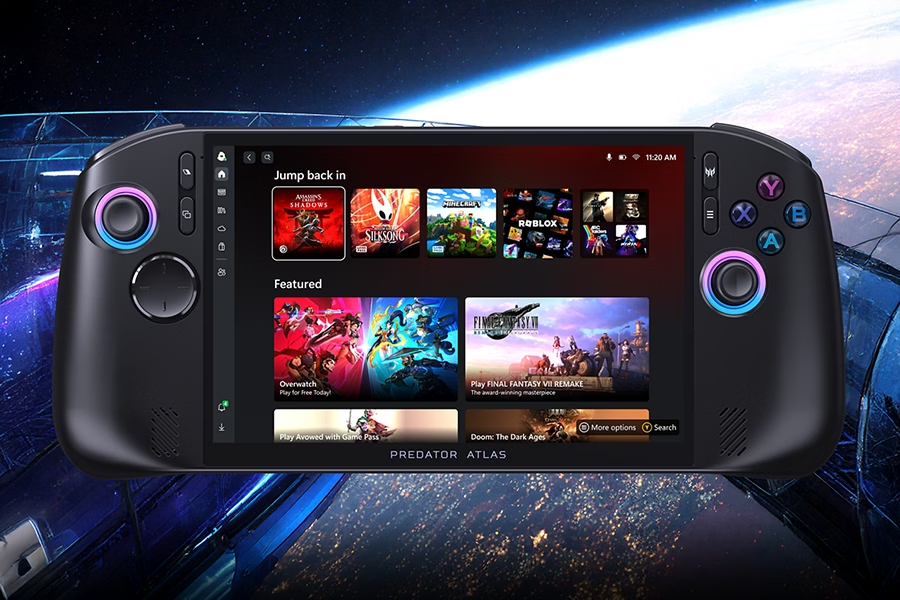
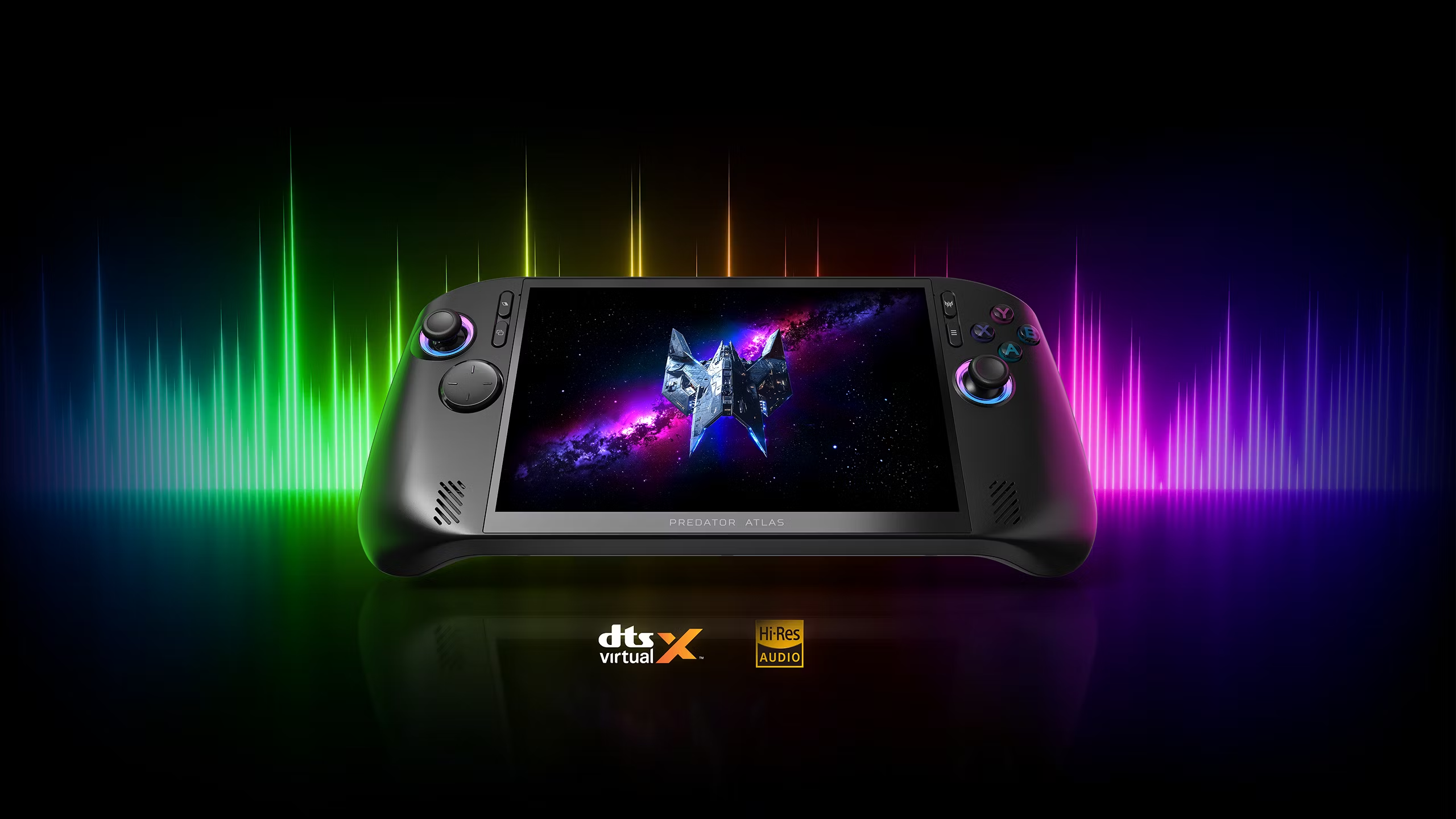
8-inch display with 120 Hz and VRR
The Atlas 8 features a 1920 × 1200-pixel IPS touchscreen panel, a 16:10 aspect ratio, and a 120 Hz refresh rate. It also offers VRR, brightness of up to 500 nits, and 100% coverage of the sRGB color space.
Variable refresh rate allows the display to synchronize with frame delivery within the supported range. It is a useful feature in a handheld, where performance can change depending on the game and the selected power profile. The 120 Hz figure indicates the panel's capability: it does not mean every title will run at 120 fps.
The surface supports ten touch points and incorporates Gorilla Glass Victus with DXC to reduce reflections. Touch control also makes it possible to navigate Windows menus and apps without relying exclusively on the buttons.
Triggers that adapt to the game
The adjustable triggers are one of its most interesting elements. A switch lets you choose between a microswitch press and full analog travel with Hall effect sensors.
The first mode is aimed at quick actions, such as shooting. The second lets you modulate the input, which is especially useful when accelerating or braking in a racing game. This way, the same control can adapt to different needs.
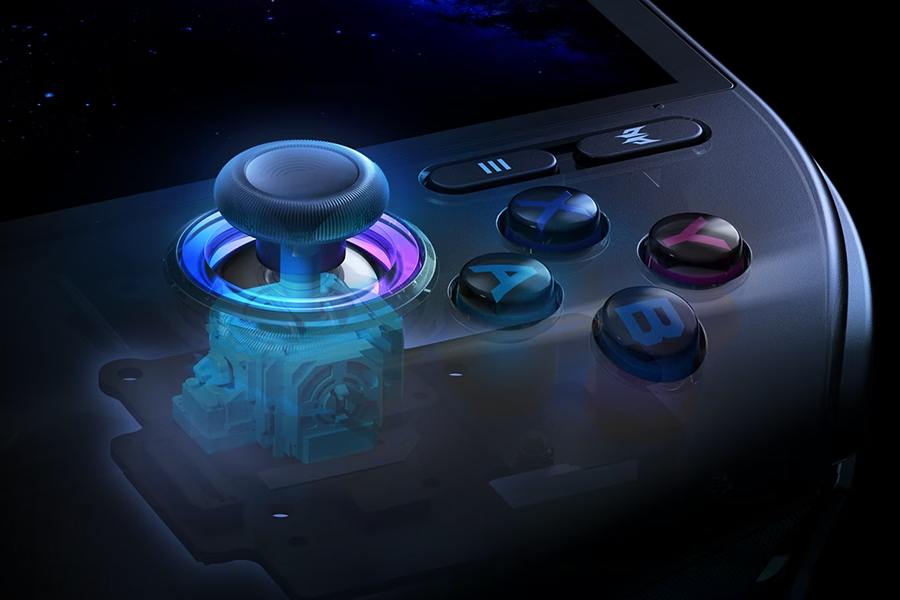
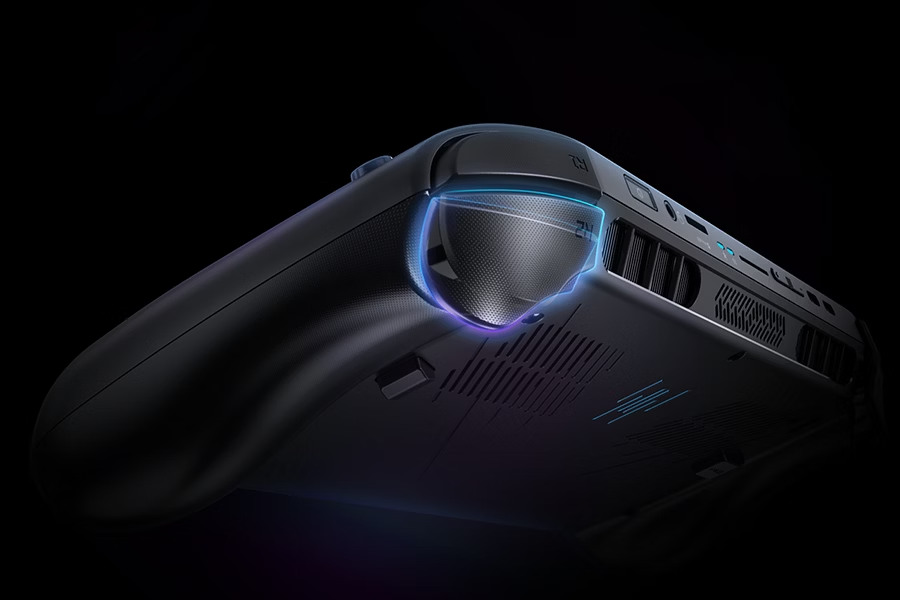
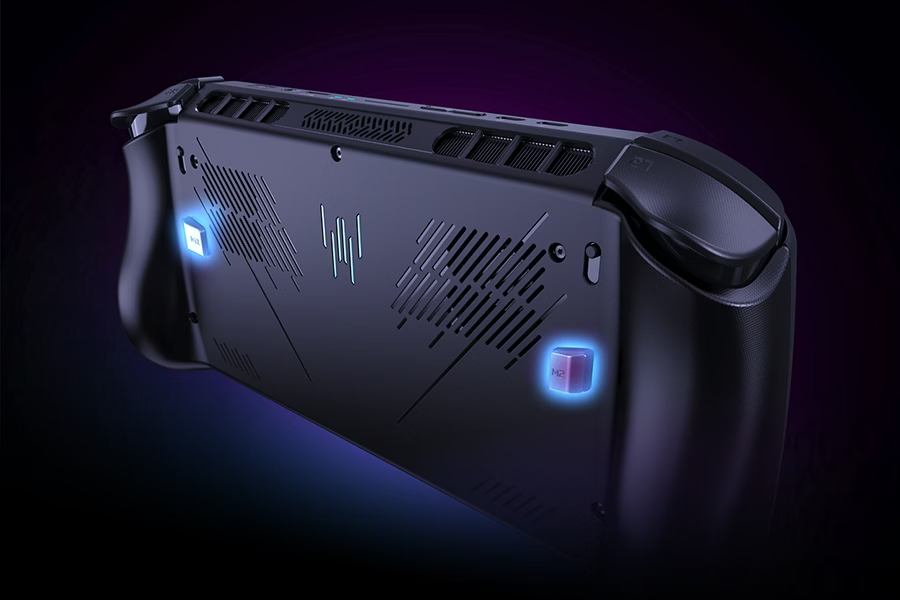
The current Acer spec sheet specifies full-size TMR sticks, which use magnetic detection. The brand presents them as resistant to wear and drift, although that does not constitute a guarantee of immunity against every possible failure.
There are also rear buttons for macros and contoured grips with an anti-slip texture. The rear controls allow actions to be assigned without taking your thumbs off the sticks, while comfort during long sessions will depend on each person's grip.
AeroBlade cooling and battery up to 80 Wh
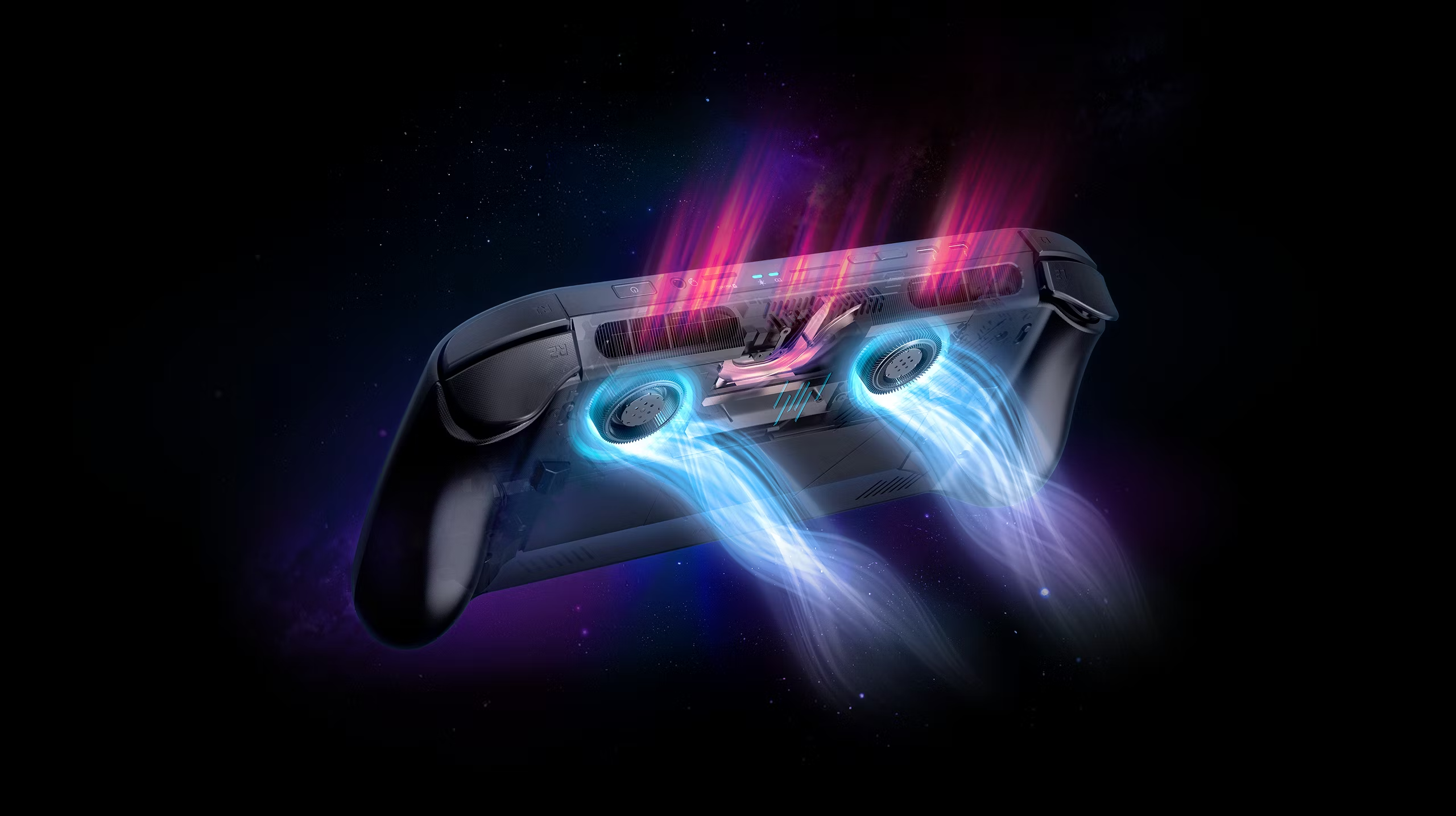
The thermal system combines two fans: a conventional plastic one and a metal Predator AeroBlade, with 89 blades that are 0.1 mm thick. Vortex Flow directs air through the interior to help heat escape.
Acer claims up to 10% more airflow for the metal fan versus the plastic one in its internal testing. That improvement describes air movement; by itself, it does not make it possible to determine how much fps increase or how much noise the system produces.
The battery reaches 80 Wh, although 60 Wh configurations also exist. Capacity must be distinguished from battery life: play time will depend on power consumption, brightness, and the settings used. The documentation reviewed does not make it possible to assign a representative runtime to all games.
Connectivity, configurations, and price
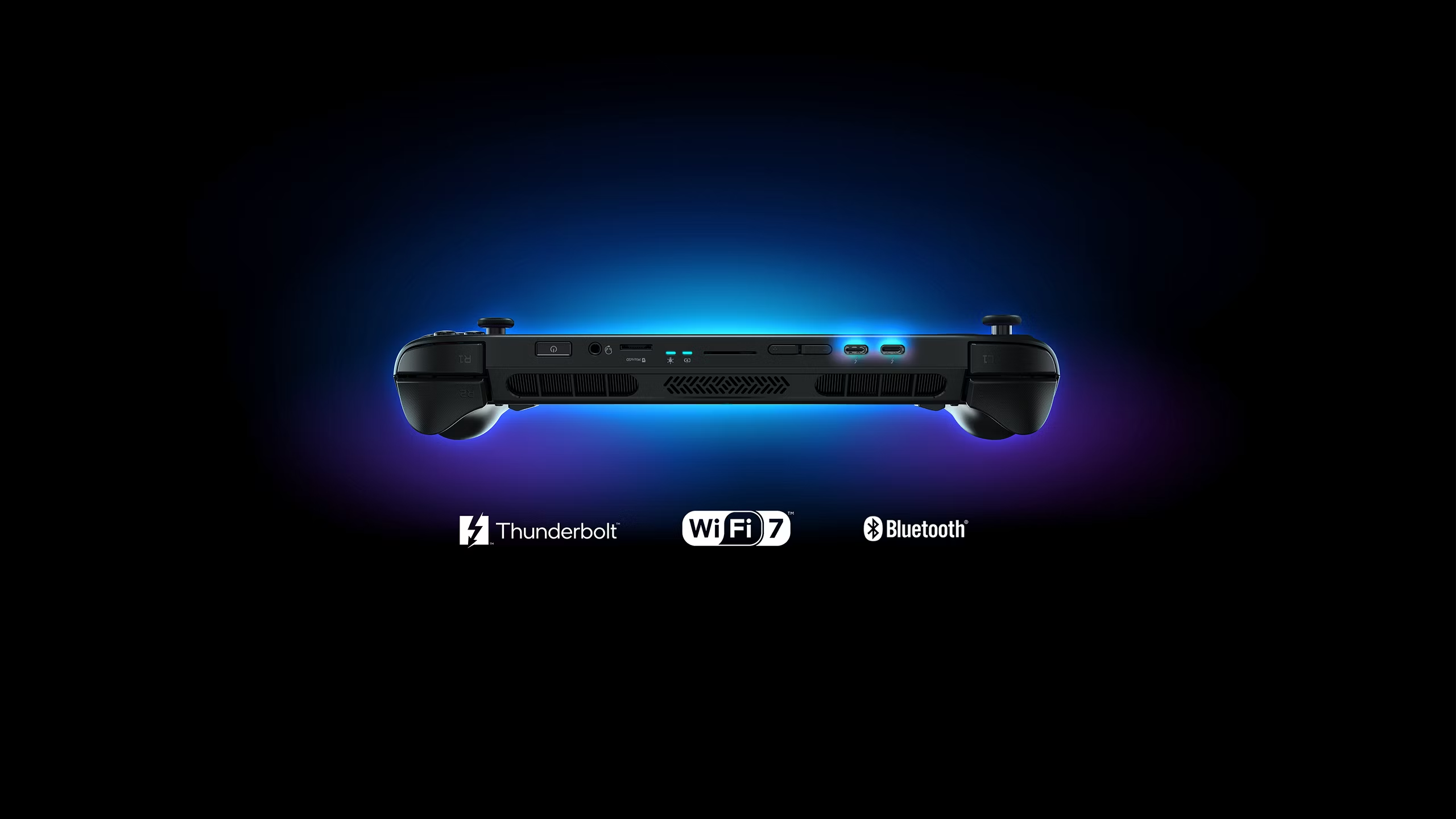
Connectivity includes two Thunderbolt 4 ports, a microSD UHS-II reader, a 3.5 mm audio jack, Wi-Fi 7, and Bluetooth 5.4. This makes it possible to expand storage and connect displays or peripherals to switch between handheld and desktop use.
The current website advertises up to 32 GB of LPDDR5x memory at 7467 MT/s and a 1 TB PCIe 4.0 SSD for the family. These are maximums subject to configuration and market.
As a concrete reference, Best Buy lists the PA08-I51-G9Y7 model in the United States, with Arc G3 Extreme, B390 graphics, 24 GB of RAM and a 512 GB SSD, for US$1,299.99 at the time of consultation. That price corresponds to that variant and that market.
The Atlas 8 therefore combines a display with VRR, adaptable controls, and connectivity to also use it on a desk. To assess its balance between power and portability, it remains to be verified how those specifications translate into sustained performance, noise, and battery life during gameplay.
Predator Atlas 8 PA08-I51-G9Y7 (EE. UU.)
U.S. configuration with Arc G3 Extreme, 24 GB of RAM, and a 512 GB SSD. Reference price checked at Best Buy on November 3, 2026.
Author
Alexis PaezReport based on official announcements and verified public sources at the time of publishing.
Comments
Share article
You might also like

The New Era of Handheld Gaming: ROG Ally, Steam Deck, and Switch 2
Handheld gaming is having its best moment yet. We analyze and compare the three queens of the market: ASUS ROG Ally, Steam Deck, and the new Nintendo Switch 2.

Surface Laptop Ultra: Microsoft breaks with Intel and AMD and debuts the NVIDIA RTX Spark chip
Microsoft introduced the Surface Laptop Ultra, its most powerful laptop and the first with NVIDIA RTX Spark silicon: 128GB of unified memory, a Blackwell GPU, and a 2,000-nit mini-LED display to take on the MacBook Pro M5 Max.