Sonos Ace Ultra: $449, double the ANC, and headphones that join the system like another speaker

Index
Sonos introduced the Sonos Ace Ultra, the second generation of its headphones, at $449 with shipments starting September 29. The spec sheet improves in every expected way — a redesigned driver, ten microphones, five more hours of battery life — but what really changes is something else: for the first time, headphones join the Sonos system as if they were another speaker.
That feature is called Headphone Linking. It is the only argument these headphones have that no rival can copy, and it is also the one that arrives with the most conditions.
What the Sonos Ace Ultra is
The original Ace launched in 2024 and was the first Sonos product that did not take advantage of Sonos at all. It sounded good and was well built, but it did nothing other headphones could not do, and it drew criticism for unstable connections and noise cancellation that did not reach the level of the category leaders.
The Ultra targets exactly that point. The previous model is still on sale at $399, so the interesting comparison is not against the competition but against the Ace itself.
Headphone Linking: the feature that justifies them
The Sonos Ace Ultra connects directly to the system over Wi-Fi, with no phone in the middle. One press moves whatever is playing on a speaker to the headphones, and another sends it back. If you move to another room, the handoff in reverse comes out through the nearest speaker.
Inside is a combination of chip and software that Sonos calls Headphone Engine 2. With the soundbar the brand announced the same day and with the rest of its models, it adds TrueCinema, which adapts the sound to the room’s acoustics, and TV Audio Swap, which sends TV audio to your head.
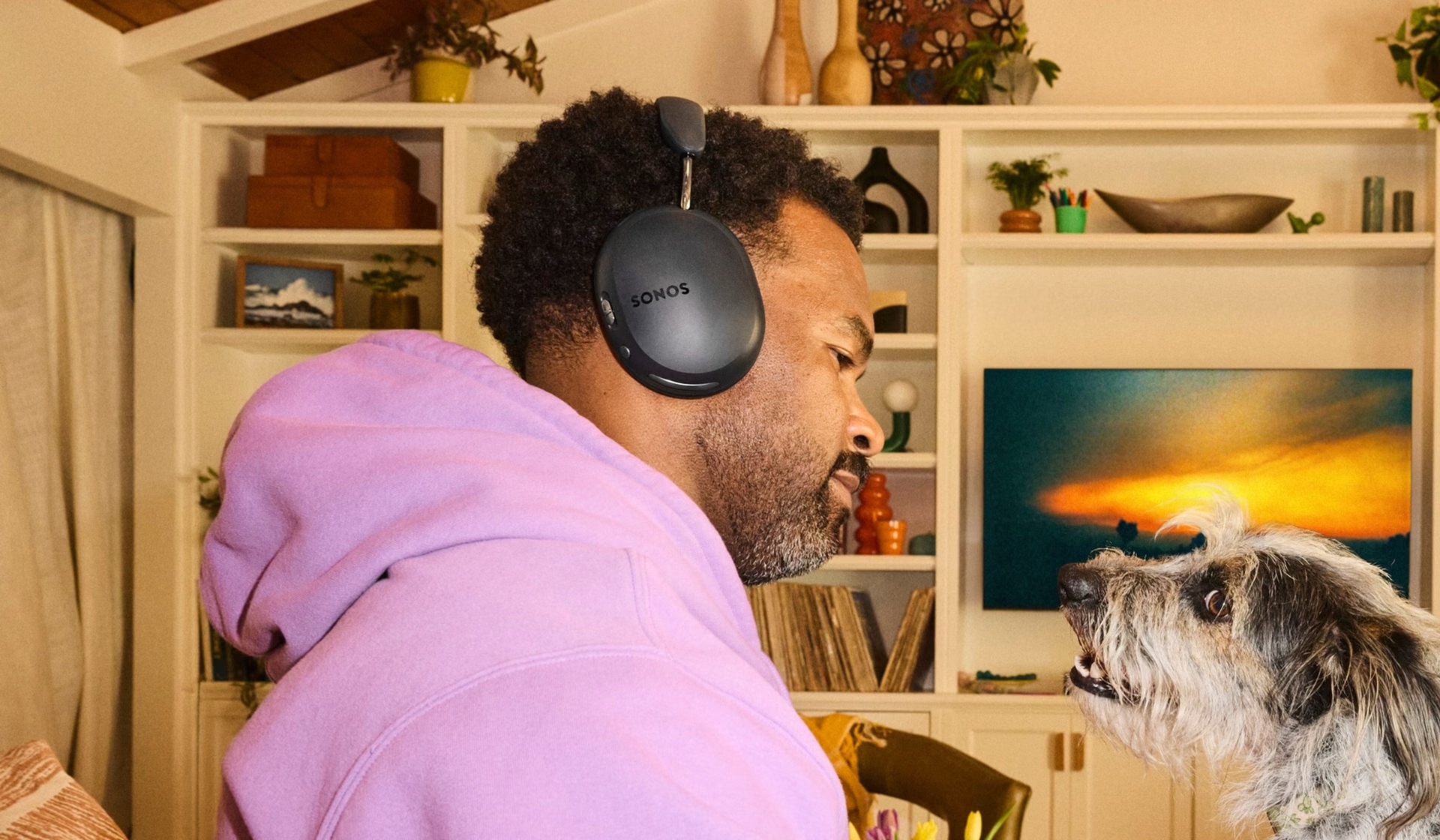
Two conditions. The first is that you need at least one Sonos speaker or soundbar on the network. Without that, the Ace Ultra is an expensive pair of Bluetooth headphones. The entry price for the feature that justifies the product is not $449: it is $449 plus the equipment you already have, or the equipment you need to buy.
The second is that it launches in early access and with manual activation, on the same day the product arrives in homes: the core promise is still in testing.
40-millimeter driver and ANC with ten microphones
The driver is 40 millimeters, designed by Sonos and reworked from the previous one. The microphones went from eight to ten, and that is the basis for the jump in noise cancellation.
“Double the ANC” was the headline, but that number only means something when the frequency is included. Sonos claims up to 2.2 times more reduction at 65 hertz and 1.8 times at 120. That is the range of a bus engine, an airplane cabin, and office air conditioning. With voices and treble, the improvement is much smaller, because there the work was never really done by ANC but by the seal of the ear cushion. In the press demo, Engadget noted that it completely blocked out the murmur of a crowded room.
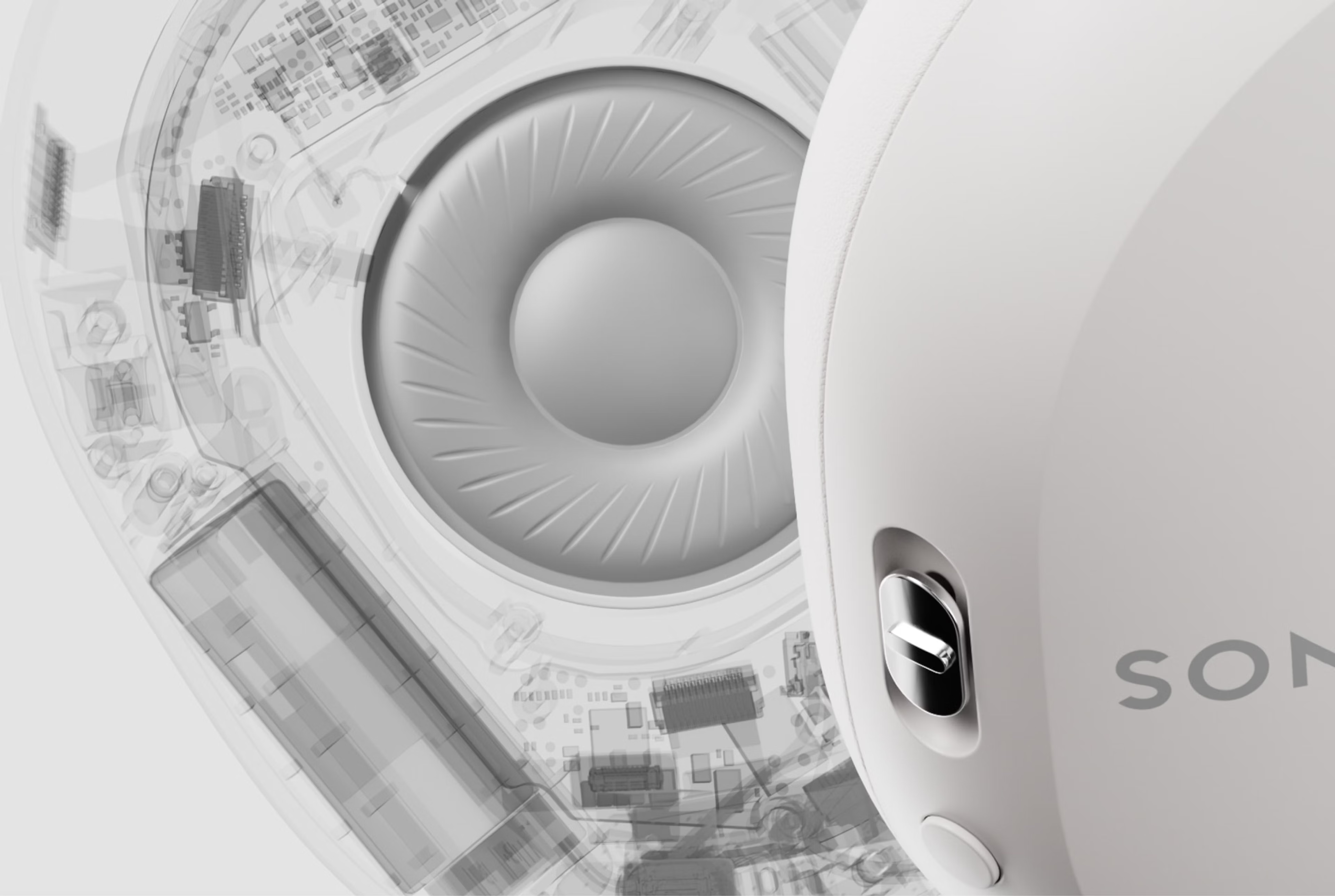
On top of that sits Adaptive EQ, which measures how that seal turned out and compensates for what escapes around eyeglass temples, hair, or a worn cushion. Aware mode lets the outside world through.
Battery, connectivity, and materials
Sonos claims up to 35 hours with ANC on, five more than the previous model, from a 1,060 mAh battery. Three minutes of charging delivers three hours of playback.
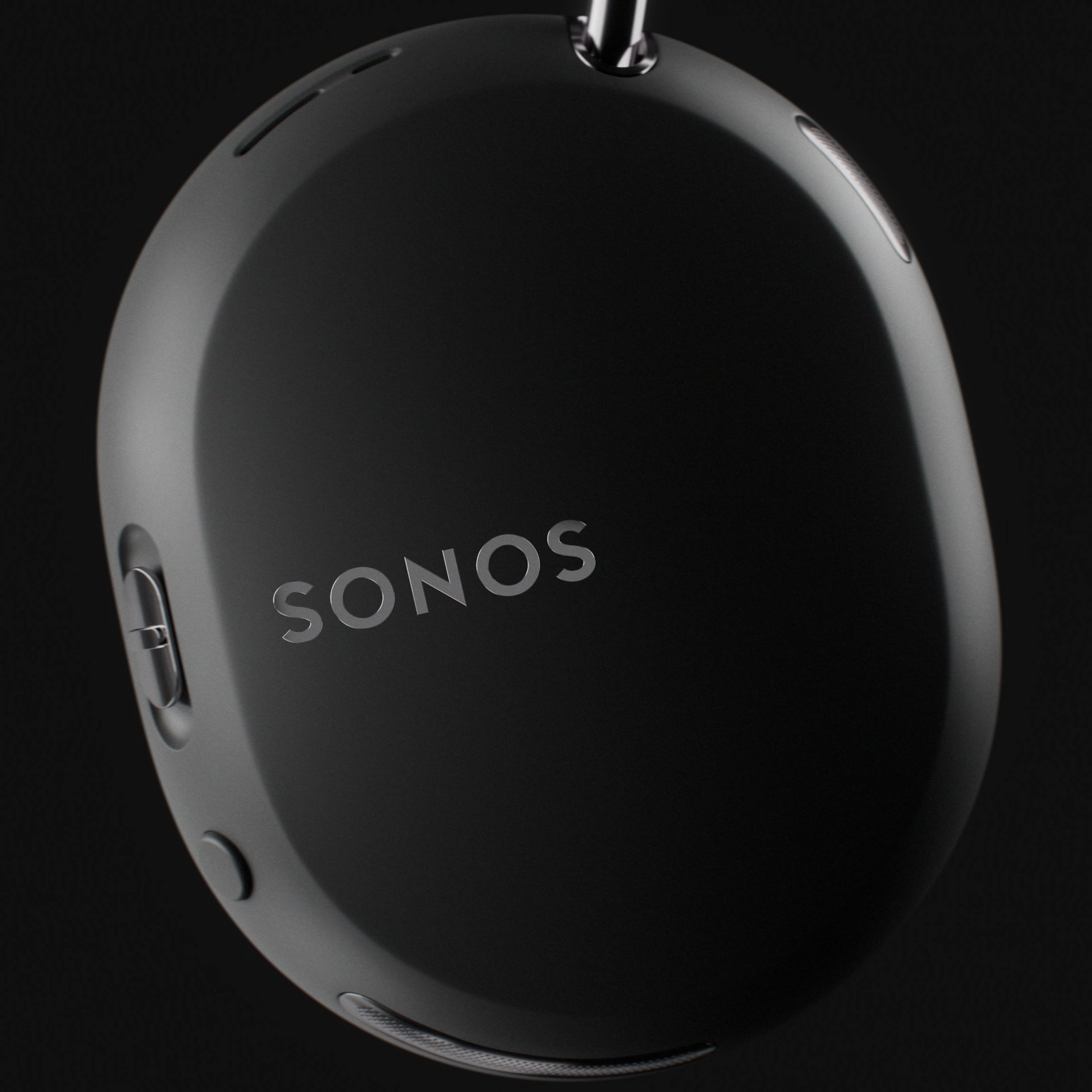
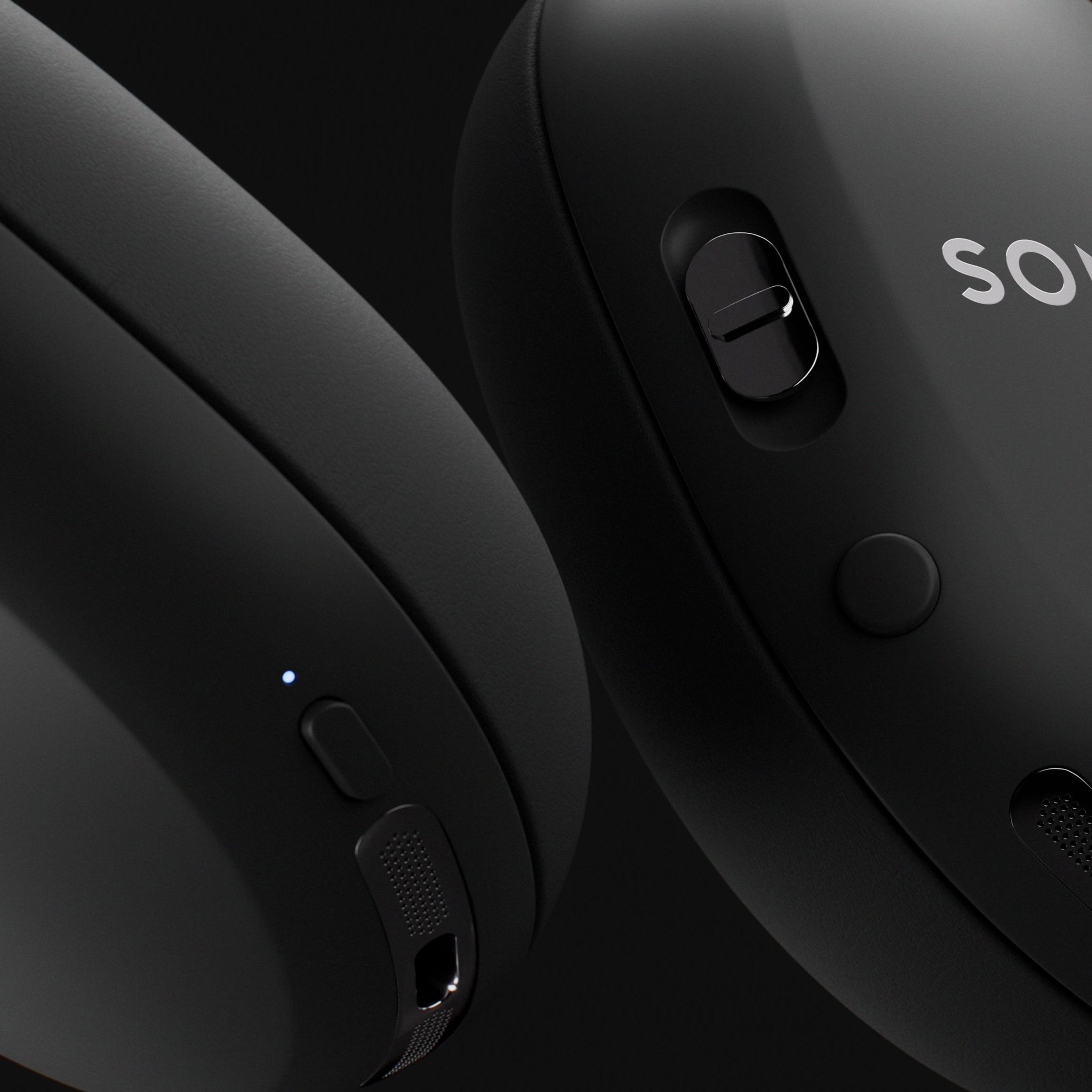
The connection is Bluetooth 6.0 with aptX Lossless, the same standard introduced by the Nothing Ear (3a), plus Wi-Fi for the system link, audio over USB-C, and a 3.5 mm cable in the box. They weigh 322 grams, ten more than the Ace, and come in black, white, sand, and agave.
Repairability: what we know and what is still missing
Sonos says the battery and ear cushions are replaceable. In a category where sealed batteries are the norm, that matters: the cushions and the battery are, in that order, the two parts that wear out with daily use.
The teardown iFixit performed on the original Ace was titled “repairable with some effort,” and the unanswered questions in its repair guide all point to the same place: how to remove the upper plate of the headband, which uses stainless steel.
For reference, on iFixit’s repairability scale for wireless headphones, the WH-1000XM6 scored 6 out of 10, with a modular internal design but no manuals or spare parts published by Sony. The Ace does not appear in that table, and the Ace Ultra has not yet been torn down by anyone. Sonos’s statement is promising; verification is still pending.
Ace or Ace Ultra: both are still on sale
Fifty dollars separate the two columns. Everything that changes is incremental except one row, and that row defines the purchase.
Which one makes sense for your profile
You already have Sonos speakers at home. The Ace Ultra, without hesitation. Headphone Linking is exactly what the ecosystem was missing, and the extra $50 is the cheapest part of that equation.
You have Sonos but do not want to debut a feature that is still in testing. The Ace at $399. The link arrives in early access, and the previous model is not leaving the lineup.
You do not own anything from Sonos. Neither. Without the rest of the system, the argument falls apart, leaving you with solid headphones against rivals with more experience in ANC, such as Sony’s WH-1000XM6.
The original Ace failed because it did not have a reason of its own. The Ultra has one, clear and well thought out, and it is launching it in a test version. If that feature performs as it did in the demo, Sonos finally has headphones no one else can replicate.
Frequently asked questions
Do I need a Sonos speaker to use the Sonos Ace Ultra?
For Headphone Linking, yes: you need at least one Sonos speaker or soundbar on the same network. Without that, they work over Bluetooth like any headphones, with ANC, Adaptive EQ, and 35 hours of battery life, but you lose what makes them different.
Are they worth the extra $50 over the Sonos Ace?
If you have Sonos gear, yes, and not because of the driver or the battery, but because of the system link. If you do not, the Ace at $399 does almost the same thing: the difference across the rest of the spec sheet is one of degree, not kind.
Can the battery be replaced in the Sonos Ace Ultra?
Sonos says yes, and the cushions as well. That is an advantage over most premium headphones, where the battery is sealed. Independent verification is still missing: no one has torn down the Ace Ultra yet, and on the previous model the difficult part was the headband.
Sonos Ace Ultra
The second generation of Sonos headphones, with a 40-millimeter driver, ten microphones, and 35 hours of battery life. Their distinguishing feature is Headphone Linking, which adds them to the Sonos system like another speaker.
Pros
- Headphone Linking adds them to the Sonos system over Wi-Fi, with no phone in the middle.
- Battery and ear cushions are stated as replaceable.
- Five more hours of battery life than the previous model.
- Four finishes instead of two.
Cons
- Headphone Linking requires at least one Sonos speaker.
- That feature launches in early access and with manual activation.
- The cancellation improvement is concentrated in low frequencies.
- Ten grams heavier than the original Ace.
Author
Alexis PaezReport based on official announcements and verified public sources at the time of publishing.