Sonos Beam Ultra: nine drivers, true Dolby Atmos 7.1.2, and $200 more than the Beam Gen 2

Index
Sonos introduced the Beam Ultra, the third generation of its compact soundbar, at $699, with shipments starting September 29. Inside are nine drivers, two of which point toward the ceiling: it is the first Beam to build Dolby Atmos height channels with real speakers instead of calculating them in software.
That leap comes at a price. The Beam Gen 2 remains in the lineup at $499, so the decision is not about which one sounds better, but whether that $200 difference buys something you can actually notice in a typical living room.
What the Beam Ultra is and where it fits
Sonos arranges its soundbars in three tiers: the Ray as the entry-level model, the Beam in the middle, and the Arc Ultra at the top, at $1,099. The Beam has been the best seller because it fits under almost any TV and does not force you to add a subwoofer.
The Ultra does not replace the Gen 2: both remain in the catalog. Sonos introduced it in the same announcement as the Ace Ultra headphones, in the brand's biggest launch since the 2024 app disaster, the episode that ended with its CEO stepping down.
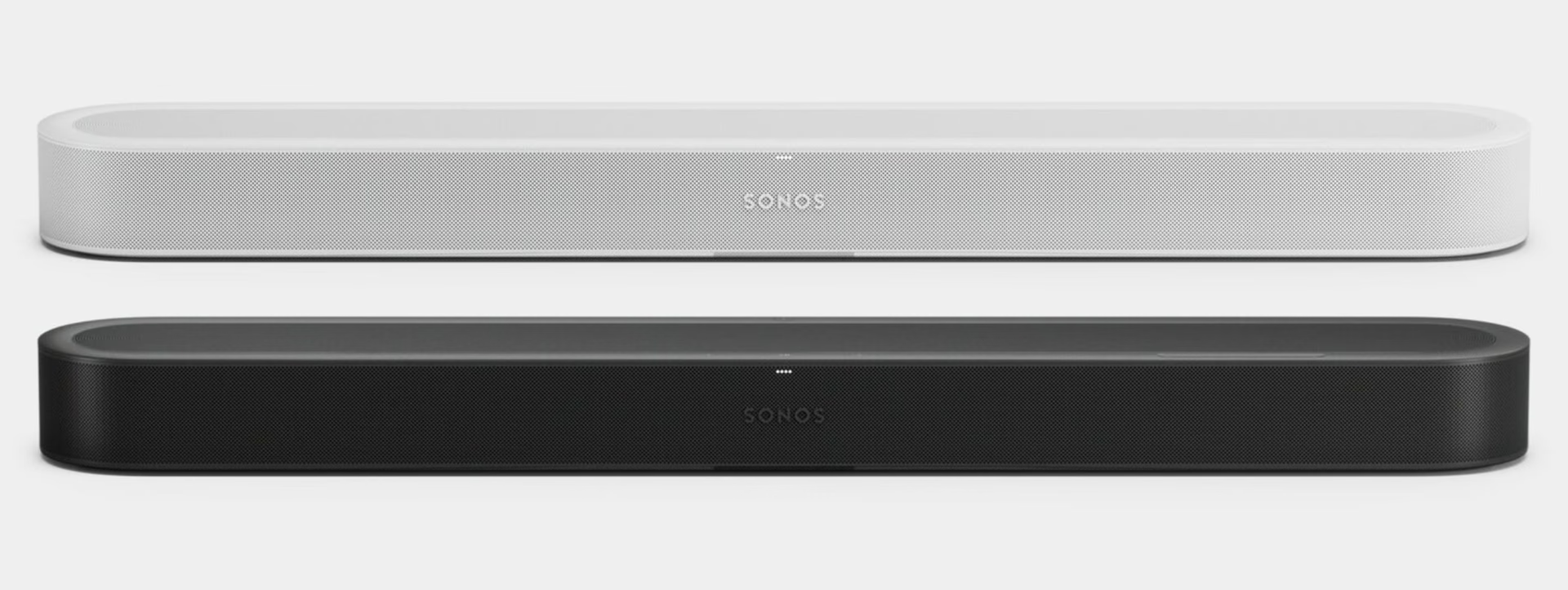
Nine drivers for Dolby Atmos 7.1.2
The Beam Ultra has five tweeters and four low-profile woofers, each with its own Class D amplifier. One tweeter faces forward and handles the center channel, the one for dialogue. Two fire out to the sides to widen the stereo image. The remaining two point toward the ceiling.
Those two are the fundamental difference. The Beam Gen 2 also claims Dolby Atmos, but it achieves it with five drivers, none facing upward, and software-processed height channels. The Ultra bounces sound off the ceiling, which is how the format was intended to work. Sonos lists it as 7.1.2.
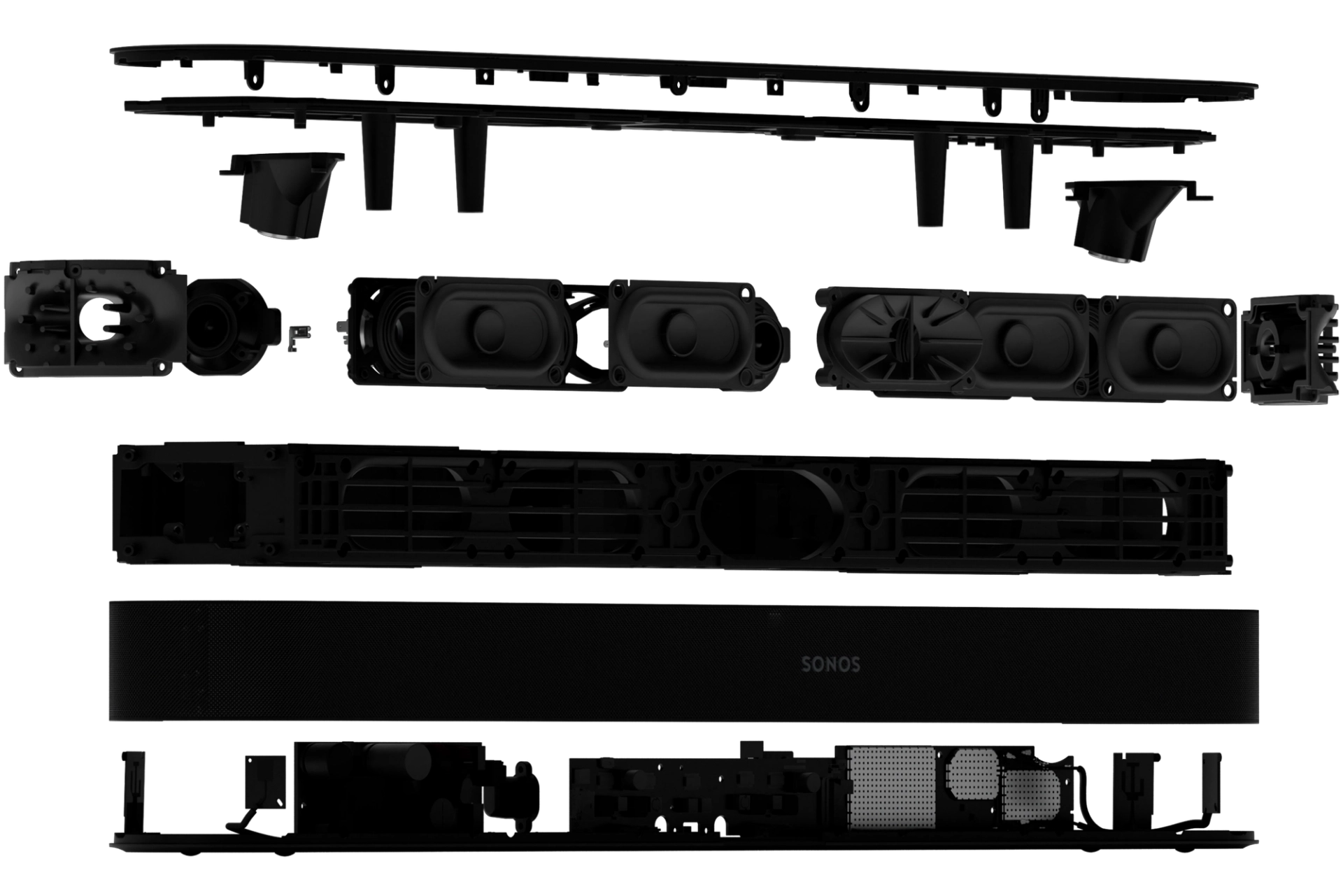
Around that are two features that address long-standing complaints. Speech Enhancement has gone from a toggle to four levels of dialogue boost, and Night Sound compresses the dynamic range so you can watch something late at night without waking the house. Trueplay still calibrates the room using the phone's microphone, on both iOS and Android.
Design and dimensions
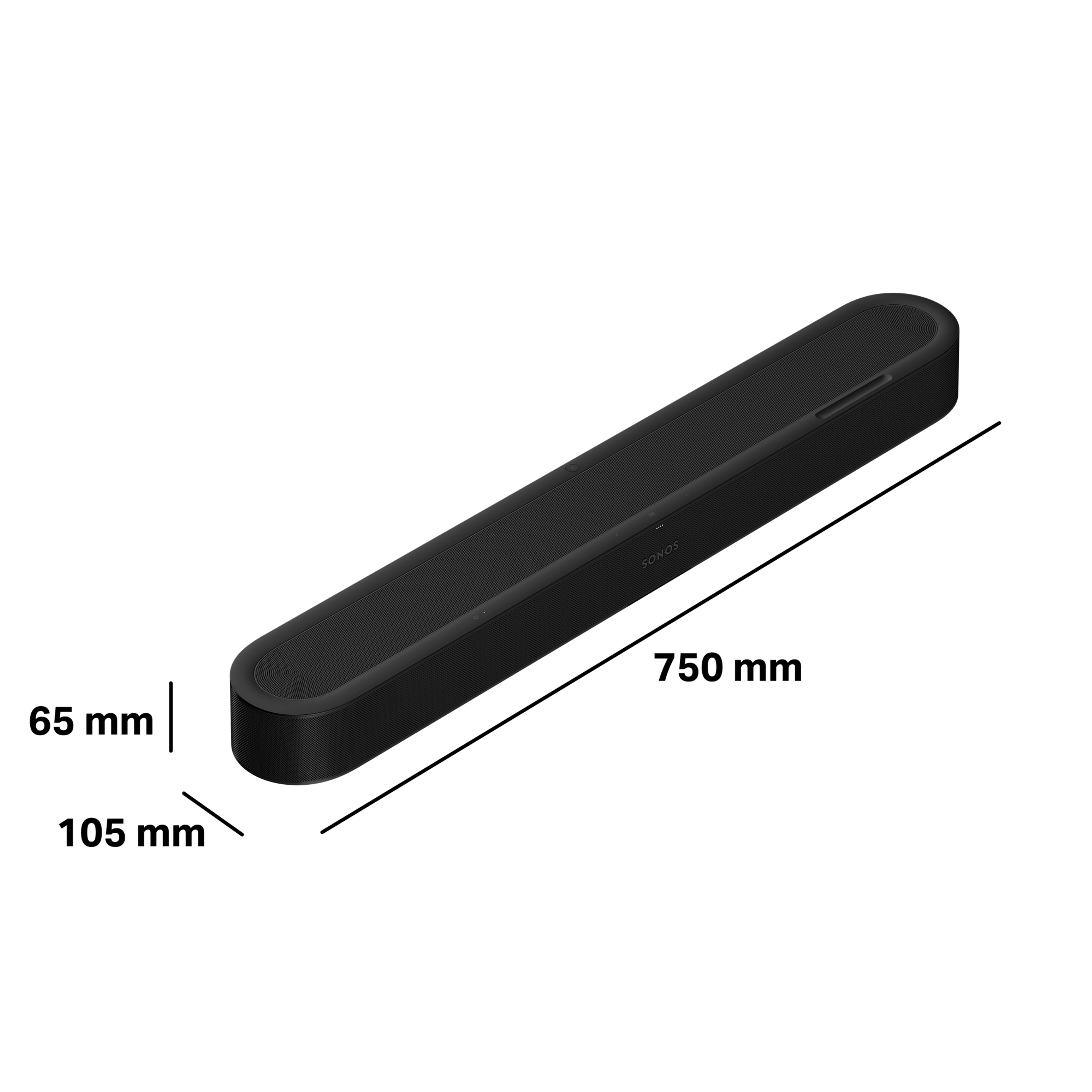
The bar measures 750 millimeters wide, 63 high, and 105 deep, and weighs 2.88 kilograms. It is ten centimeters wider than the Gen 2 while packing four more drivers inside, and it is still low enough not to block the bottom edge of the TV screen.
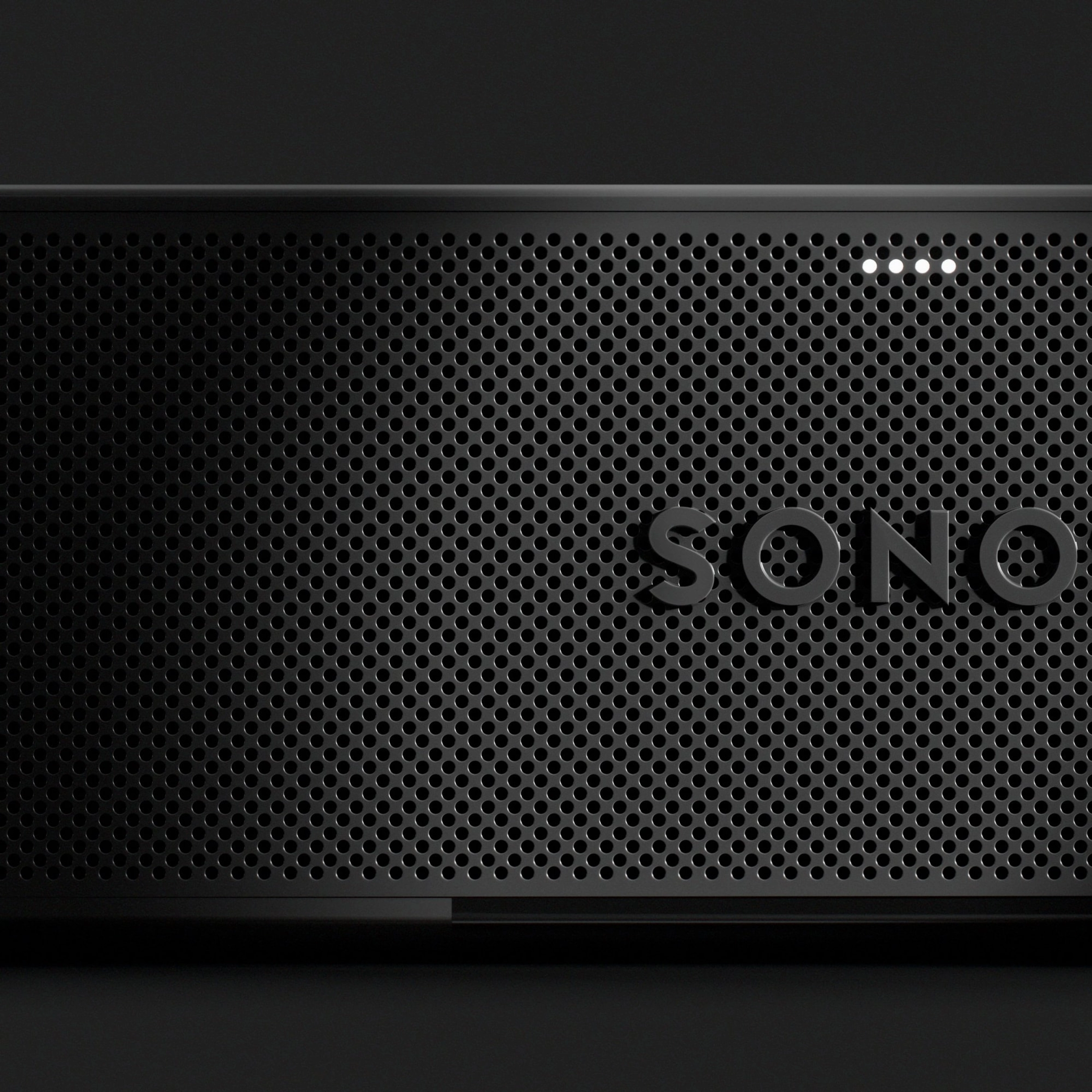
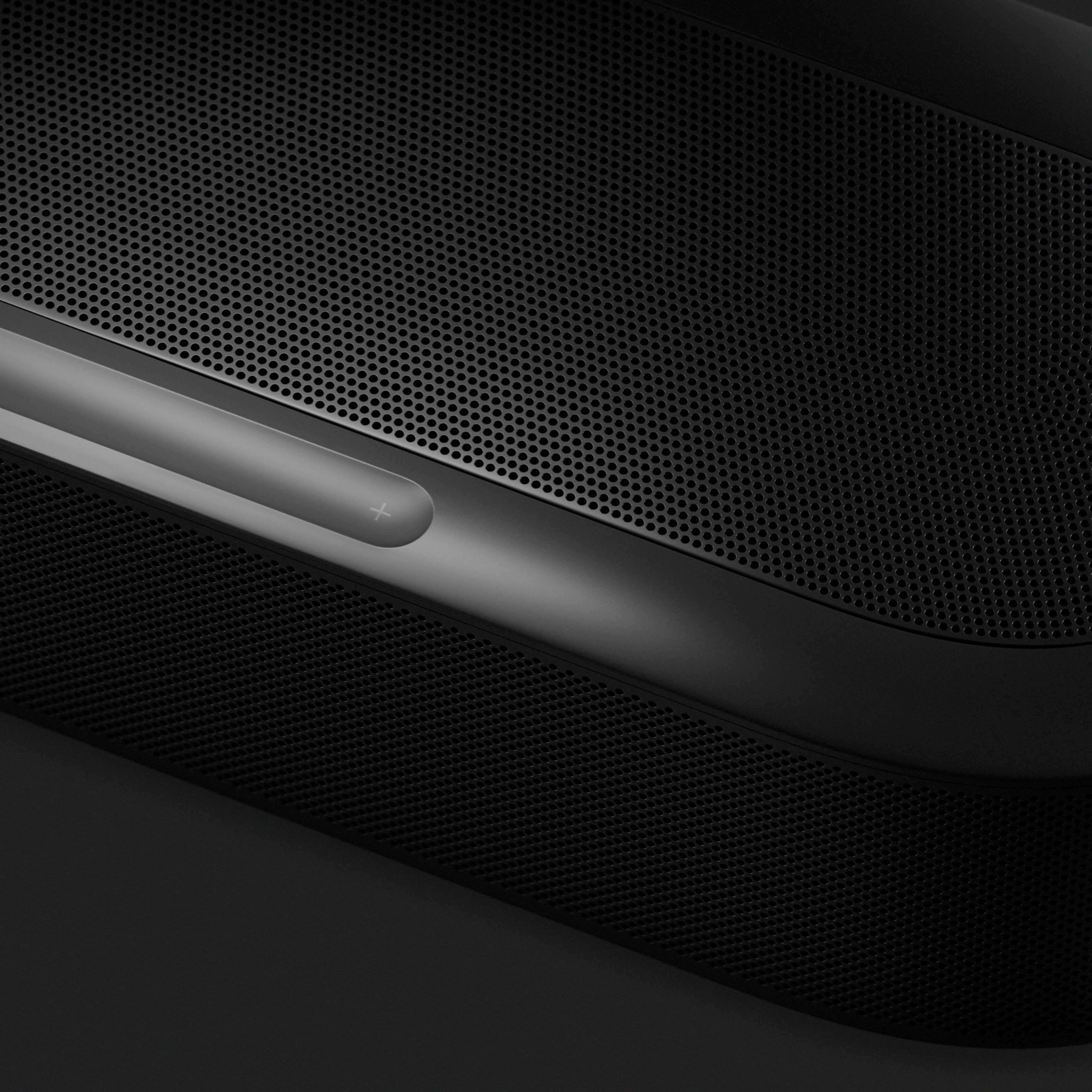
The wraparound perforated grille follows the same familiar idea, with the logo on the front and touch controls along the top edge.
Connectivity: a single HDMI and no DTS:X
This is where the two caveats appear. The Beam Ultra has a single HDMI eARC port and no passthrough, so a console outputting 4K at 120 Hz connects to the TV, with audio returning from there. With a TV that has only one truly fast port, the math gets complicated.
The second is DTS:X. The bar plays Dolby Atmos via Dolby Digital Plus and TrueHD, plus Dolby Digital, multichannel PCM, and DTS Digital Surround, but not DTS's spatial format. For streaming, it makes no difference, because platforms use Atmos. For physical discs, it does: a large share of UHD Blu-ray uses DTS:X, and the bar will fall back to the backup track. What Hi-Fi flagged both points as soon as the product was announced.

The rest is well covered: Wi-Fi 6, Bluetooth 5.3, AirPlay 2, and a USB-C port that accepts adapters for analog input or Ethernet, sold separately.
Portable speakers as surrounds
The new feature that changes the equation the most is not in the bar, but in the software. With Sonos Fabric, the system detects where each speaker is placed, and a Move 2 or Roam 2 sitting behind the couch becomes a rear channel. When you pick it up, it goes back to being a standalone speaker. Engadget tried it in the demo and clearly noticed the panning.
Until now, building a 5.1 setup with Sonos meant buying two fixed speakers to leave behind you. It is the same modular logic pushed by LG's home theater with Dolby Atmos FlexConnect and the collection Bose launched to compete with it: making the speakers already in the house work for home cinema.
How the soundbar lineup looks now
The three models that coexist, with current prices.
The biggest price jump in the lineup is between the Beam Ultra and the Arc Ultra, while the biggest technical jump is between the Gen 2 and the Ultra. They do not line up, which is why the decision cannot be settled just by looking at the price list.
Which one makes sense for your setup
Small TV and tight budget. The Beam Gen 2 at $499. Height channels work best in rooms with a flat ceiling at a reasonable height; if yours is sloped, very high, or has beams, the bounce will not work properly and you would be paying for two drivers that will not deliver.
Living room with a flat ceiling and Atmos content. The Beam Ultra. It is the purchase that changes the most versus what came before without taking up more space, and it lets you add a Sub and surrounds later.
Dedicated room or large TV. The Arc Ultra. Nine channels, four height channels, and the Sound Motion woofer. The $400 difference buys a different scale, not just a refinement.
What remains unanswered is how much of that 7.1.2 survives in a bar that is 75 centimeters wide. The drivers are there and the channels are there; your ceiling decides the rest.
Frequently asked questions
Is the Beam Ultra worth it over the Beam Gen 2, which is still on sale?
Yes, as long as you have a flat ceiling at a normal height. The two upward-firing drivers are the whole difference, and they need a surface to bounce off. With a sloped ceiling, exposed beams, or a very high ceiling, the Gen 2 does practically the same thing for $200 less.
Does it work if I have a console that outputs 4K at 120 Hz?
Yes, but the console connects to the TV, not to the bar: the Beam Ultra has a single HDMI eARC port and no passthrough. If your TV has two ports capable of 4K at 120 Hz, there is no problem. If it has only one and that same port is the one you need for eARC, you will have to choose.
Can I use portable Sonos speakers as surrounds?
Yes. With Sonos Fabric, a Move 2 or Roam 2 placed behind the sofa works as a rear channel, and the system automatically recognizes where it is located. It is the cheapest way to get to 5.1 if you already have a portable speaker at home.
Beam Ultra
The third generation of Sonos's compact soundbar, with nine drivers and Dolby Atmos 7.1.2 with real height channels. It coexists in the lineup with the Beam Gen 2, which costs $200 less.
Pros
- Two drivers pointing toward the ceiling for real height channels.
- Nine drivers in a chassis only ten centimeters wider than the Gen 2.
- Supports Sub, fixed surrounds, and portable speakers as rears.
- Speech Enhancement went from a toggle to four levels.
Cons
- A single HDMI eARC port and no passthrough.
- Does not play DTS:X, which is present on much of UHD Blu-ray.
- Costs $200 more than the Beam Gen 2, which remains in the lineup.
- Analog input and Ethernet adapters are sold separately.
Author
Alexis PaezReport based on official announcements and verified public sources at the time of publishing.