Huawei Pura X Max vs iPhone Duo: what changes beyond the foldable screen
Index
The Huawei Pura X Max and the iPhone Duo are more similar than their presentations suggest: both turn a short, wide phone into a pocketable display close to eight inches. The important difference appears when you ask which apps you will open, how much zoom you need, and where you might be able to repair the device.
Huawei combines lower weight with a dedicated telephoto camera. Apple offers its app ecosystem with an interface adapted to the format. The choice depends as much on what you do with the screen as on the hardware around it.
The Pura X Max presentation and the analysis of the iPhone Duo announcement explain their original proposals. For this comparison, the references are the current official specifications, not pre-launch leaks.
Design: almost the same space, different weight
When open, their dimensions are very close: the Huawei measures 166.5 × 120 mm and the iPhone, 164.6 × 117.8 mm. Both list a thickness of 5.2 mm. When closed, the figures are 120 × 85 × 11.2 mm and 117.8 × 84.1 × 11.3 mm, respectively.
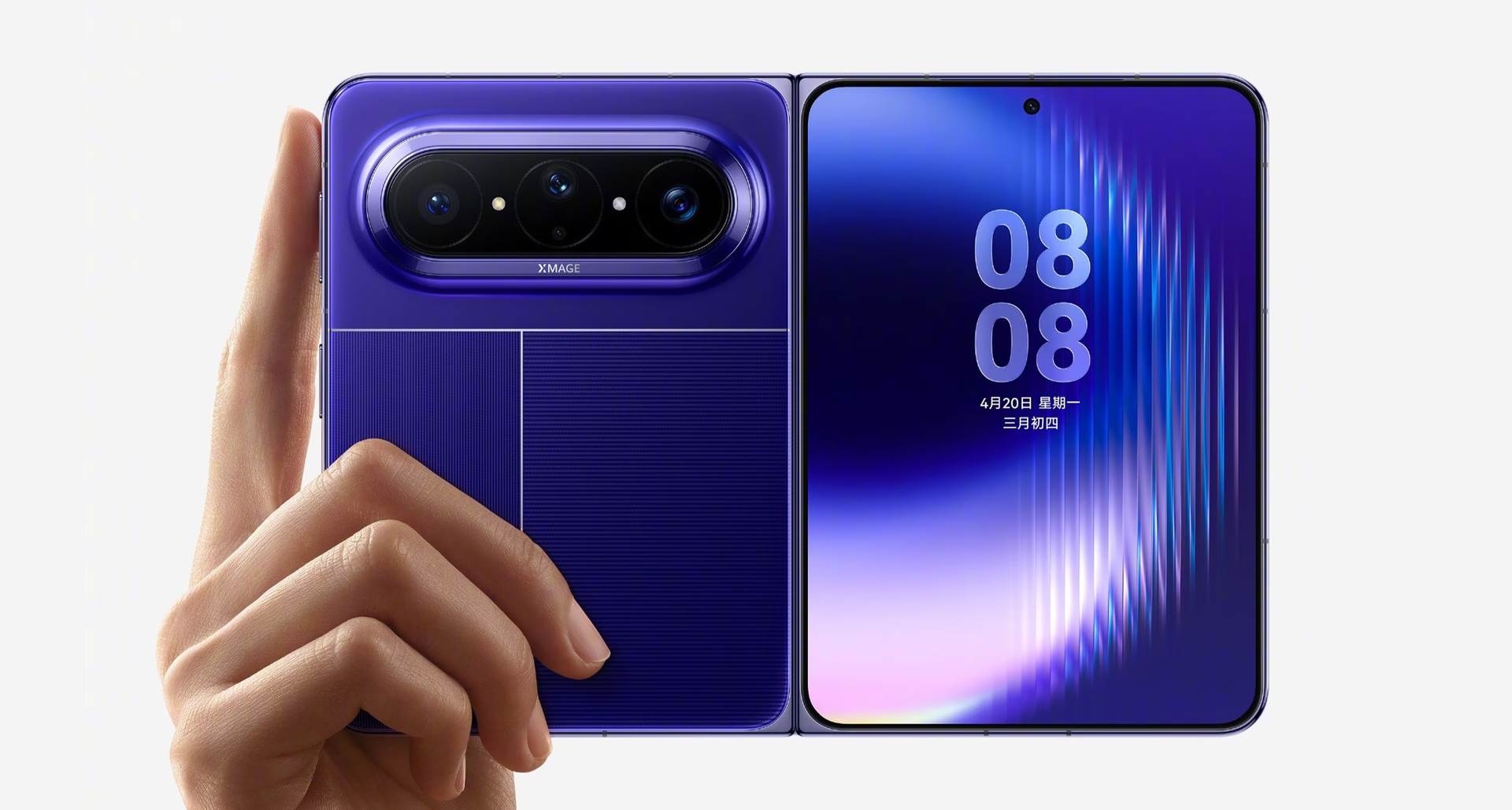
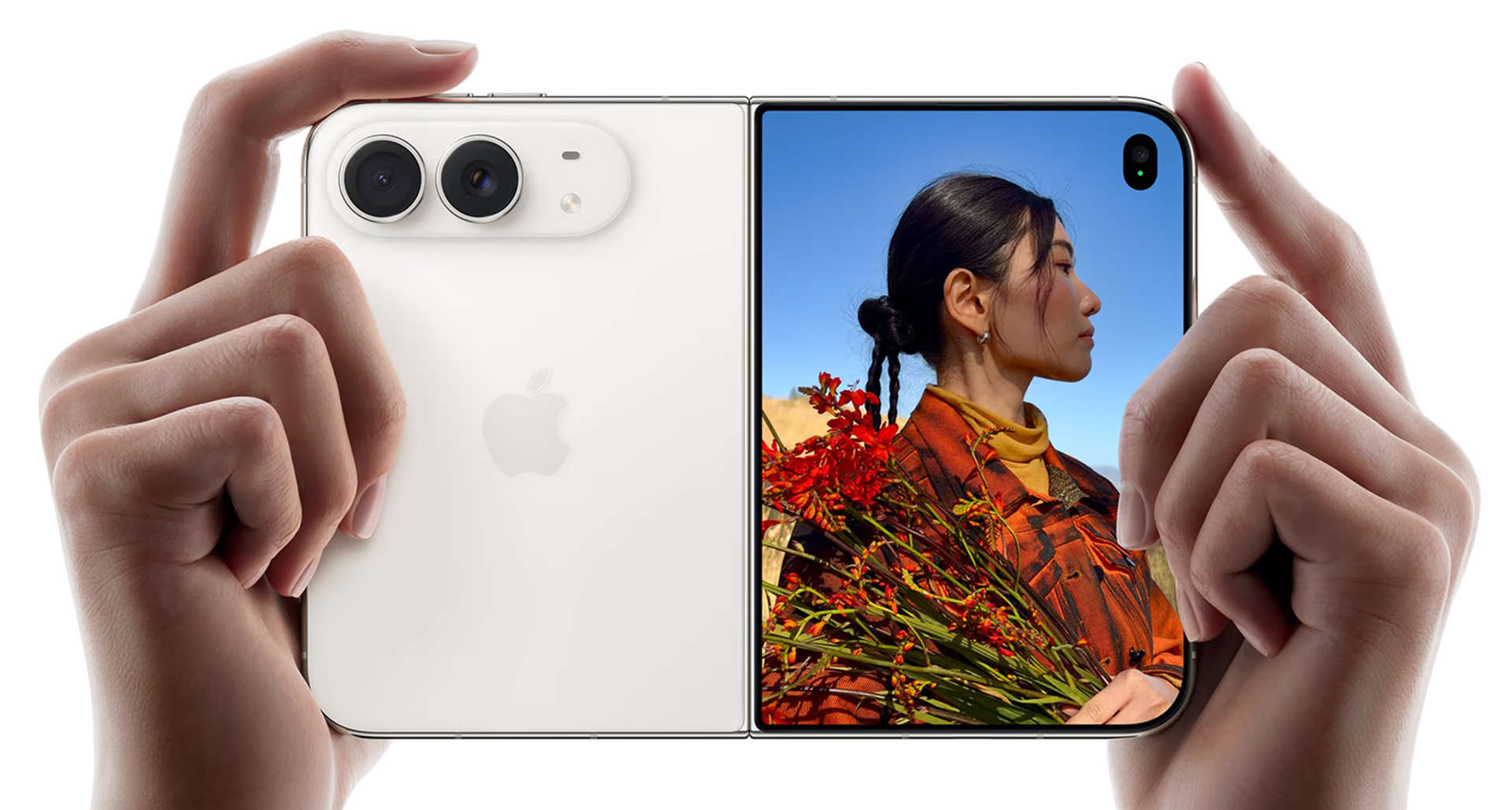
The clearest separation is in the stated weight: about 229 grams versus 254. That is a 25-gram advantage for the Huawei, although its spec sheet clarifies that the measurement excludes the exterior film and the inner surface layer. It is useful as a reference, without turning it into our own measurement of comfort.
Huawei’s specifications indicate IP58 and IP59; Apple lists IP68. These are different protection tests. None of them proves on its own how many years a hinge will last or how much it will cost to replace a screen.
Displays: the diagonal does not define the experience
The Pura X Max has a 7.7-inch inner display, while the Duo has a 7.6-inch one. The outer displays match at 5.4 inches. Both offer OLED with adaptive refresh rates of up to 120 Hz. That tenth of an inch on the inside is unlikely to be the central reason to choose one.
In the iPhone Duo specifications, Apple highlights the nanotexture finish of the inner display. Huawei describes a flexible display with ultra-thin glass and second-generation Kunlun protection on the outer display. Anti-reflective treatment and protection are different aspects: both are worth evaluating.
The large screen also supports opposite decisions: dedicating it entirely to content or splitting it between tasks. The Duo images show that choice between playback and video accompanied by messages.
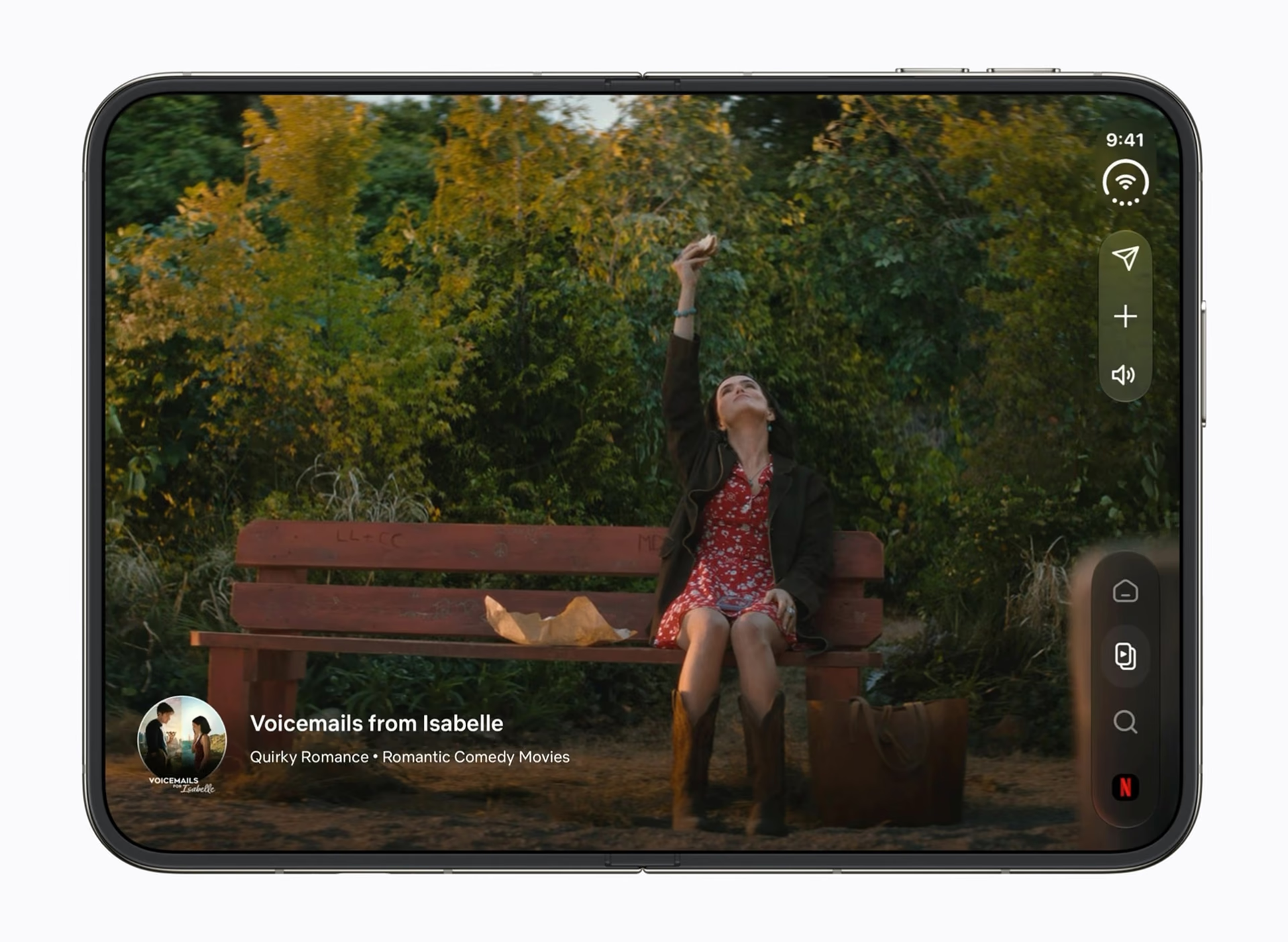
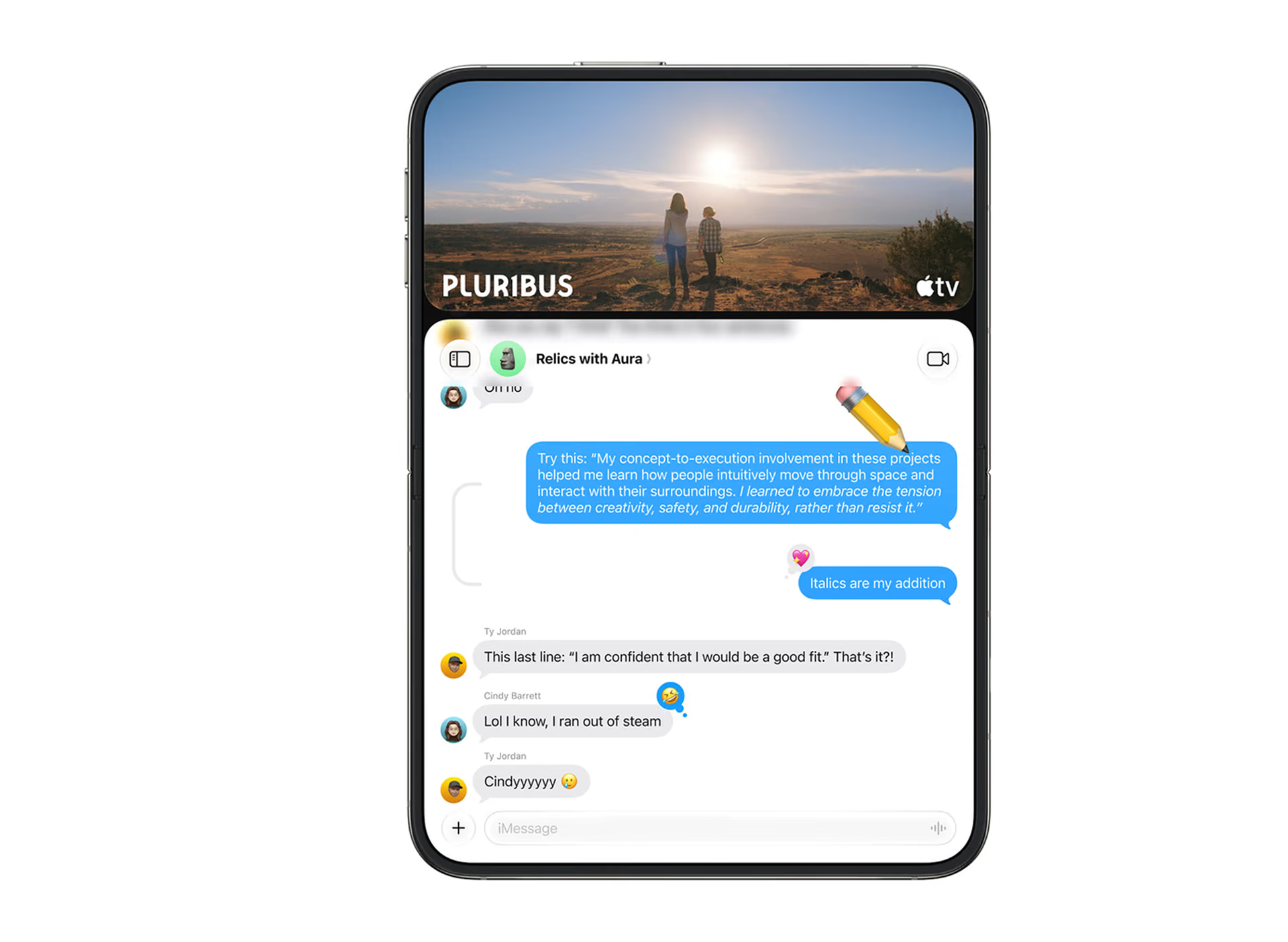
A foldable screen still has physical limits: the video format determines the unused bands, and the keyboard takes up part of the space. Opening the device does not guarantee that every app will use its full surface.
Multitasking: the size matters if your apps take advantage of it
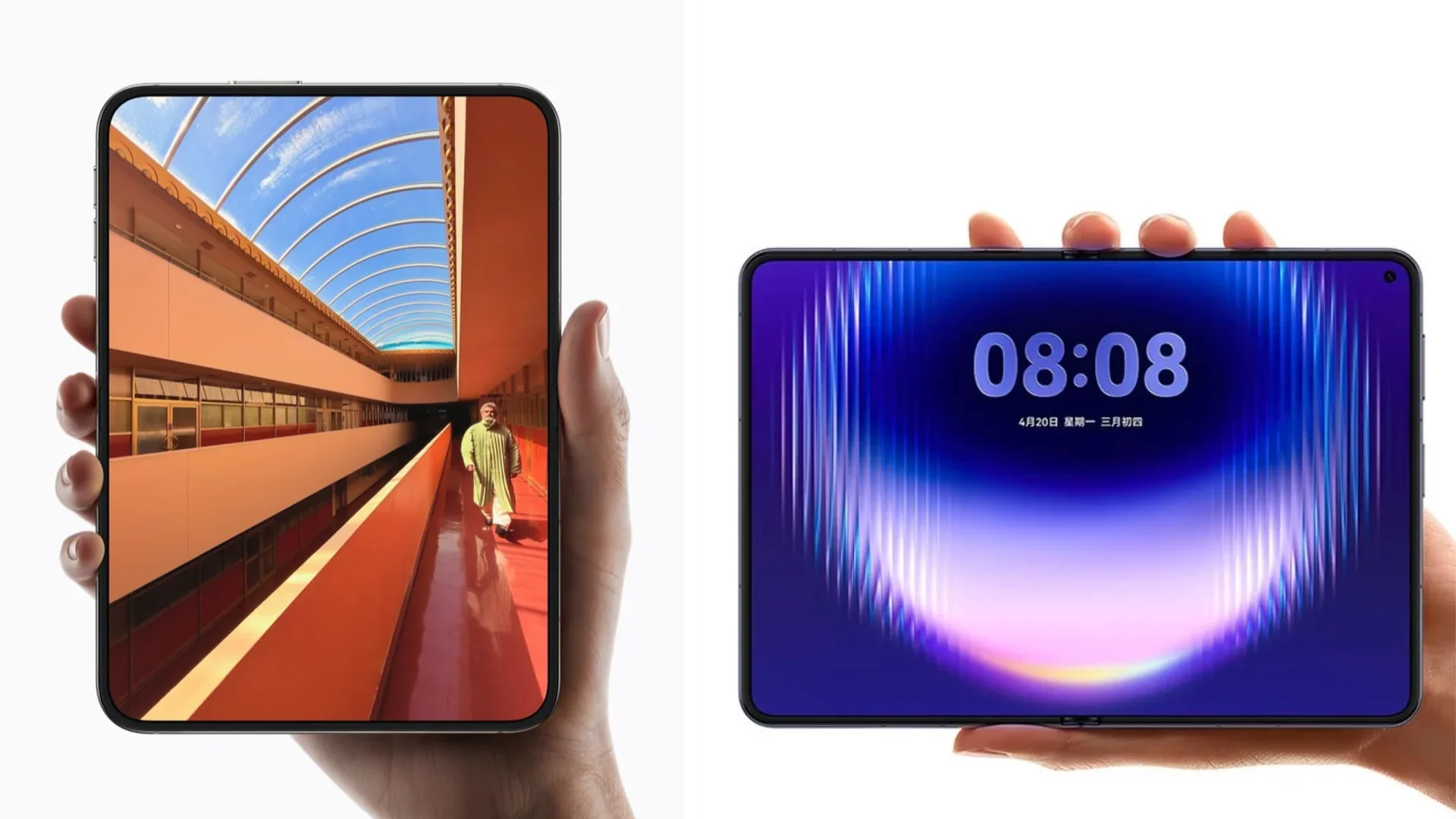
Having two visible tasks avoids constant switching: reading a document while replying, checking a reference, or reviewing content without closing a conversation. The Huawei screenshot shows two app areas; the iPhone screenshot shows the home screen next to the browser.
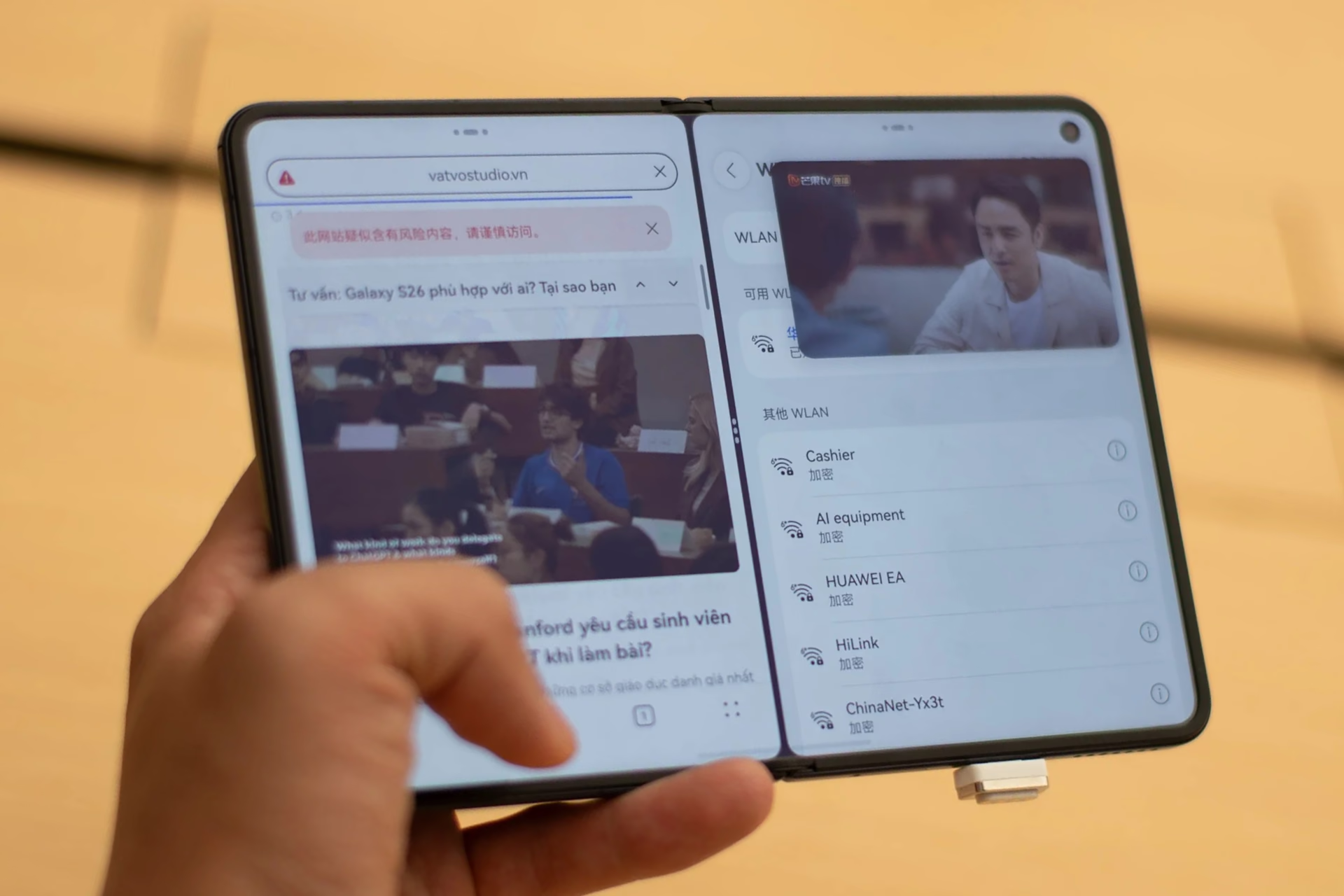
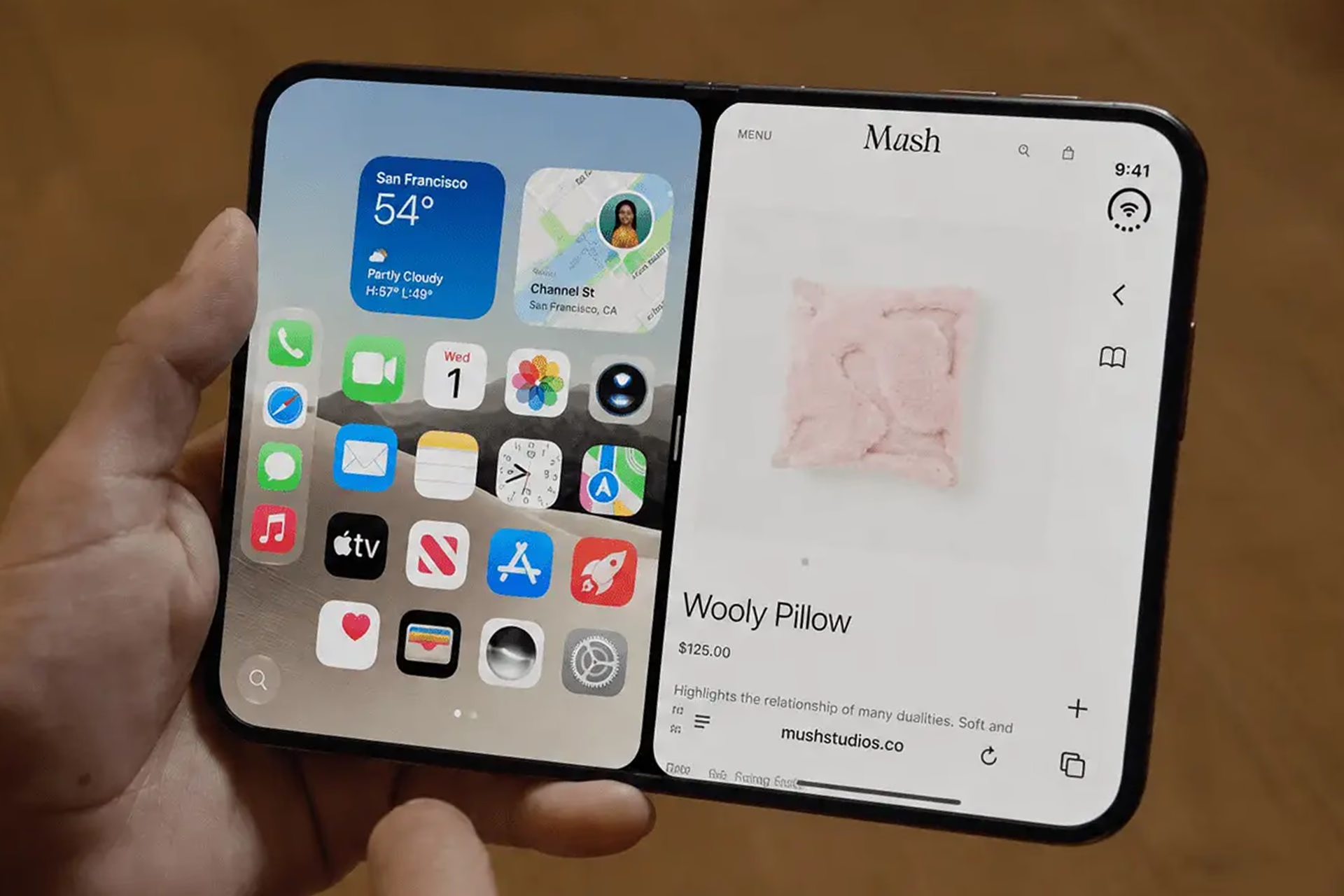
Apple describes Split View for compatible apps and two windows from the same app. It also presented adaptations of Zoom, Slack, and Netflix. Huawei highlights document reading, creative tools, and apps on its platform.
The decisive test is your app list. Two windows are useful if you can sign in, open your files, and complete the task you need. A demonstration with different services does not allow you to conclude that both will handle your work in the same way.
The Pura X Max is listed with HarmonyOS 7 on the Chinese spec sheet; the Duo uses iOS 27, with iOS 27.1 indicated for its market launch.
Styluses: two proposals with different conditions
Huawei offers the M-Pen 3 Mini for writing, annotating, and working with its creative tools. The case bundle lets you store and charge it. The brand also specifies connection conditions and regional availability for some voice and artificial intelligence features.
Apple announced compatibility with Apple Pencil USB-C on both Duo displays, planned before the end of 2026. An announcement of future compatibility is not the same as availability at launch. The image illustrates the annotation proposal.
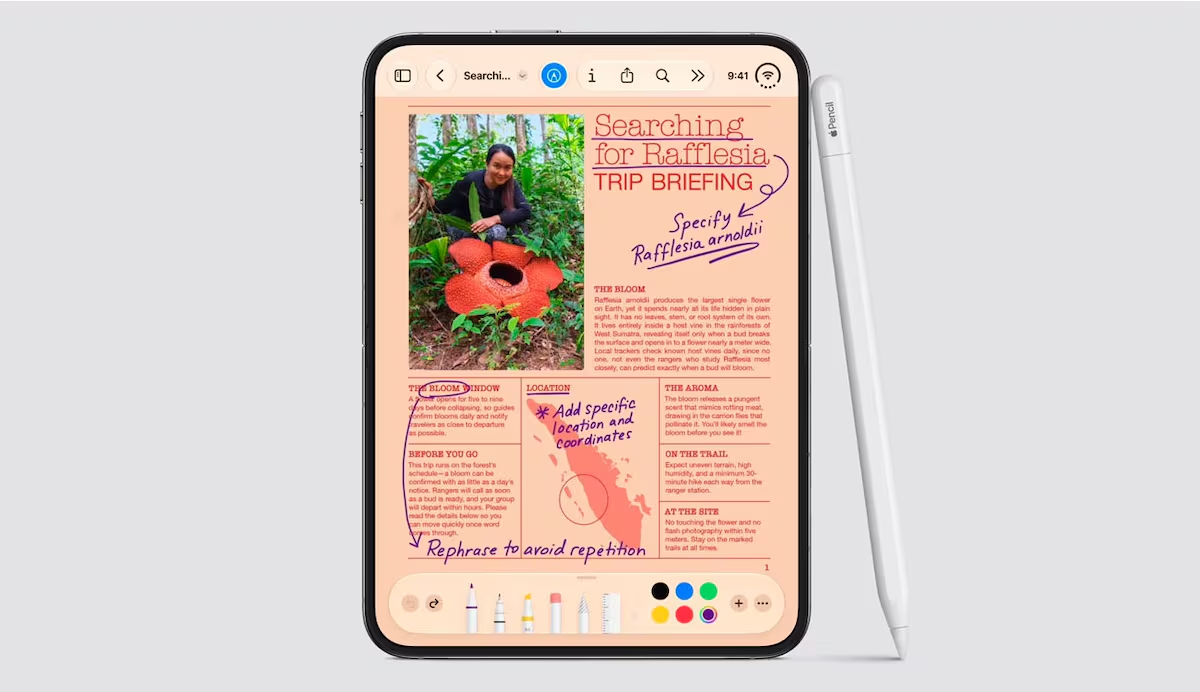
The M-Pen 3 Mini and its case are sold separately, as is the Apple Pencil.
Cameras: Huawei has the dedicated telephoto lens
The Pura X Max combines a 50 MP main camera with variable aperture, a 12.5 MP ultra-wide camera, and a 50 MP periscope telephoto camera with approximately 3.5x optical magnification. The Duo has 48 MP main and ultra-wide cameras; the 2x framing uses the main sensor, without adding a third rear camera.
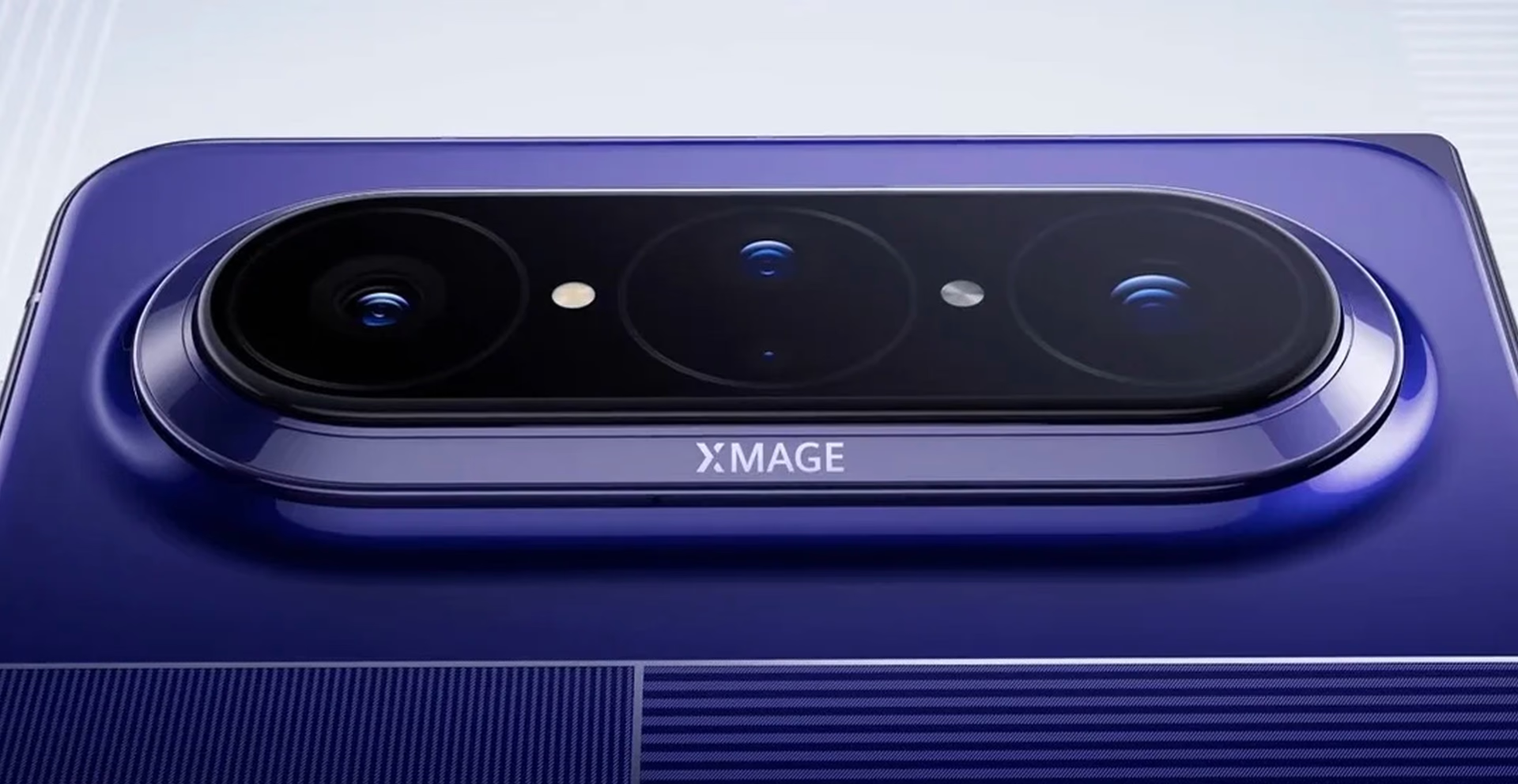
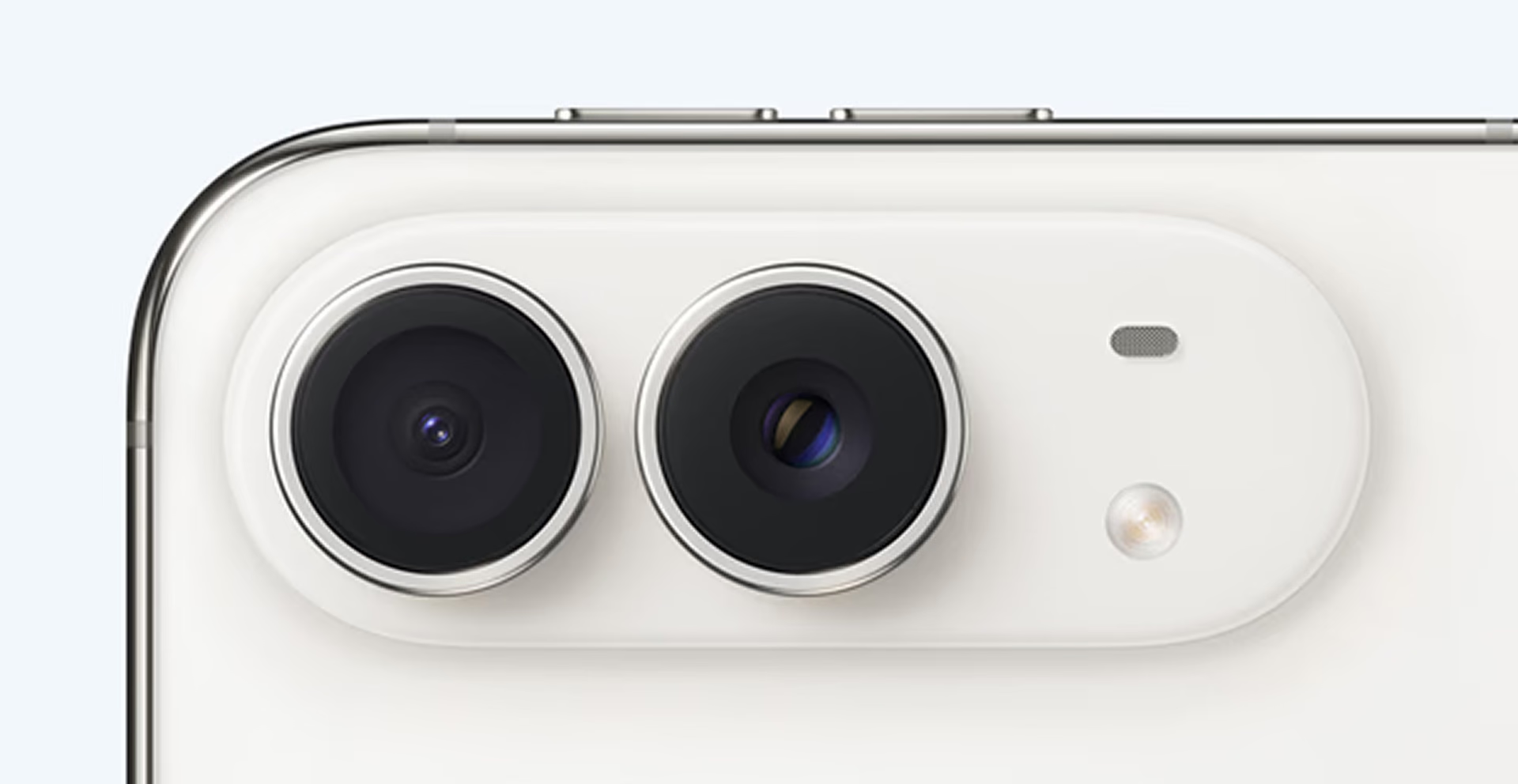
If you photograph distant subjects, the Huawei offers an optical tool the iPhone does not have. That does not prove overall image superiority: color, motion, night shots, and processing need comparable samples.
Apple specifies 4K Dolby Vision recording at up to 120 frames per second with the main camera and features such as Duo Preview, which shows the framing to the person being photographed. These are concrete arguments for video and assisted portraits. The megapixel count does not replace the choice between reach, capture, and editing workflow.
Performance: two chips, no measured winner
Huawei equips the Kirin 9030 Pro and Apple, the A20 Pro. Both manufacturers describe cooling systems for sustained loads. Their improvement percentages use their own references and do not constitute a comparison between these phones.
For gaming, editing, or demanding apps, sustained performance and software availability matter. Without equivalent testing, awarding victory based on the chip name would be inventing a result. The recommendation can rely on verified features without pretending there is a benchmark.
Battery and charging: capacity and battery life are not equivalent
Huawei publishes 5,300 mAh and maximum charging of 66 W wired or 50 W wireless, with compatible accessories. Apple announces up to 31 hours of playback on the inner display and 44 on the outer display, plus approximately 50% charge in 20 minutes under its test conditions.
mAh describes capacity; hours depend on the test. They do not allow the battery life of both devices to be ranked. Nor does maximum power guarantee that it will be maintained throughout the entire charging session.
The Duo’s wireless charging supports MagSafe and Qi2 at up to 25 W. Huawei lists a higher maximum wireless power, but requires its own accessory combination.
Price and availability: two reference markets
Huawei shows a price starting at 10,999 yuan on its Chinese page. Apple announced the Duo from US$1,999 in the United States, with availability starting October 23, 2026. These are different currencies, markets, and conditions: the distance between those numbers should not be presented as a direct saving.
The Apple announcement includes several Latin American markets, including Brazil, Colombia, and Mexico. That does not guarantee identical availability or coverage in any other country.
When buying outside the market of origin, compare final price, connectivity, apps, and local repair. The Duo uses eSIM; for the Huawei, verify the variant and carrier. An interesting import becomes less appealing if the main phone does not cover your everyday services or if a repair requires sending it abroad.
Comparison table
These are the verifiable differences that most affect the decision. Battery life figures retain the conditions stated by each manufacturer.
Which one suits you based on your profile
The Huawei makes more sense if you prioritize lower weight and a telephoto lens, and you have confirmed that its apps, accessories, and support fit your use. Its hardware advantages are concrete; the purchase depends on whether you can take advantage of them in your market.
The Duo is a better fit if you want to bring your Apple apps and services to a foldable screen, value its video features, and accept the weight. If the Pencil is essential, its enablement deserves a separate check.
For those looking to work, the decision starts with opening their files and completing their tasks. For those looking to take photos, it starts with deciding how much they need the telephoto lens. And for those who want to keep it for several years, it starts with finding out who replaces the screen and under what conditions.
Huawei Pura X Max
Wide foldable with a dedicated telephoto lens and HarmonyOS 7. Reference price for the Chinese market.
Pros
- Lower stated weight than the iPhone Duo.
- Dedicated periscope telephoto lens at approximately 3.5x.
- M-Pen 3 Mini compatible, available separately.
Cons
- App and service compatibility must be verified by market.
- The highest charging power levels require compatible accessories.
iPhone Duo
Apple foldable with an adapted interface and dual Fusion camera. Reference price for the United States.
Pros
- Apple apps adapted to the foldable format.
- 4K Dolby Vision recording at up to 120 fps with the main camera.
- MagSafe and Qi2 compatibility up to 25 W.
Cons
- Higher stated weight than the Huawei.
- No dedicated rear telephoto lens.
- Apple Pencil USB-C announced for before the end of 2026.
Author
Alexis PaezAnalysis based on the manufacturer's official specifications. The author did not physically test the product.
Comments
Share article
You might also like

iPhone Duo: Apple enters foldables with two screens and US$1,999
The iPhone Duo opens to 7.6 inches, weighs 254 grams, and starts at US$1,999. Specs, materials, and the details of the inner display that change how you care for the device.

Huawei Pura X Max: the market’s first wide foldable arrives April 20
The Huawei Pura X Max debuts on April 20 as the market’s first wide foldable. Date, colors, specs, and how it beats Samsung and Apple.
iPhone 18 Pro and Pro Max: variable aperture, A20 Pro, and the longest battery life in an iPhone
The iPhone 18 Pro debuts a four-step variable aperture, the A20 Pro chip, and the longest battery life in the lineup. Price, specs, and why Apple lists two different battery figures.

Recent articles
DJI Osmo Pocket 4P: 17 stops on the wide-angle and a telephoto that doesn't measure up
Review of the DJI Osmo Pocket 4P: 1-inch LOFIC sensor with up to 17 stops, 60 mm telephoto, what changed with the August firmware, and how it compares with the Pocket 4.