Huawei Pura X View: the first wide-format rigid phone debuts HarmonyOS 7 with 7,000 mAh in 6.68 millimeters

Index
Huawei introduced the Pura X View, the first rigid-body phone with a wide-format display. The aspect ratio is 16:9.5 instead of the tall and narrow 20:9 the market has become used to, and the 6.39-inch panel covers 96.1% of the front with identical 1.05-millimeter bezels on all four sides.
The second headline is inside: it is the first device to ship from the factory with HarmonyOS 7. Reservations opened on August 20, and the in-store experience began on the 28th. Pricing has not been announced yet.
What the Pura X View is
The Pura X family began with a foldable that opened horizontally instead of vertically, designed for watching video and reading without rotating the phone. The Pura X Max brought that format to a large foldable earlier in 2026. The View takes the same idea and puts it into a one-piece chassis, with no hinge and no crease line.
The result is a phone that feels shorter and wider in the hand than almost any other. Huawei claims 114.27 square centimeters of usable area, comparable to a conventional 6.9-inch panel, in a considerably more compact body. For video, the benefit is immediate: a 16:9 movie fills almost the entire front instead of leaving two black bars.
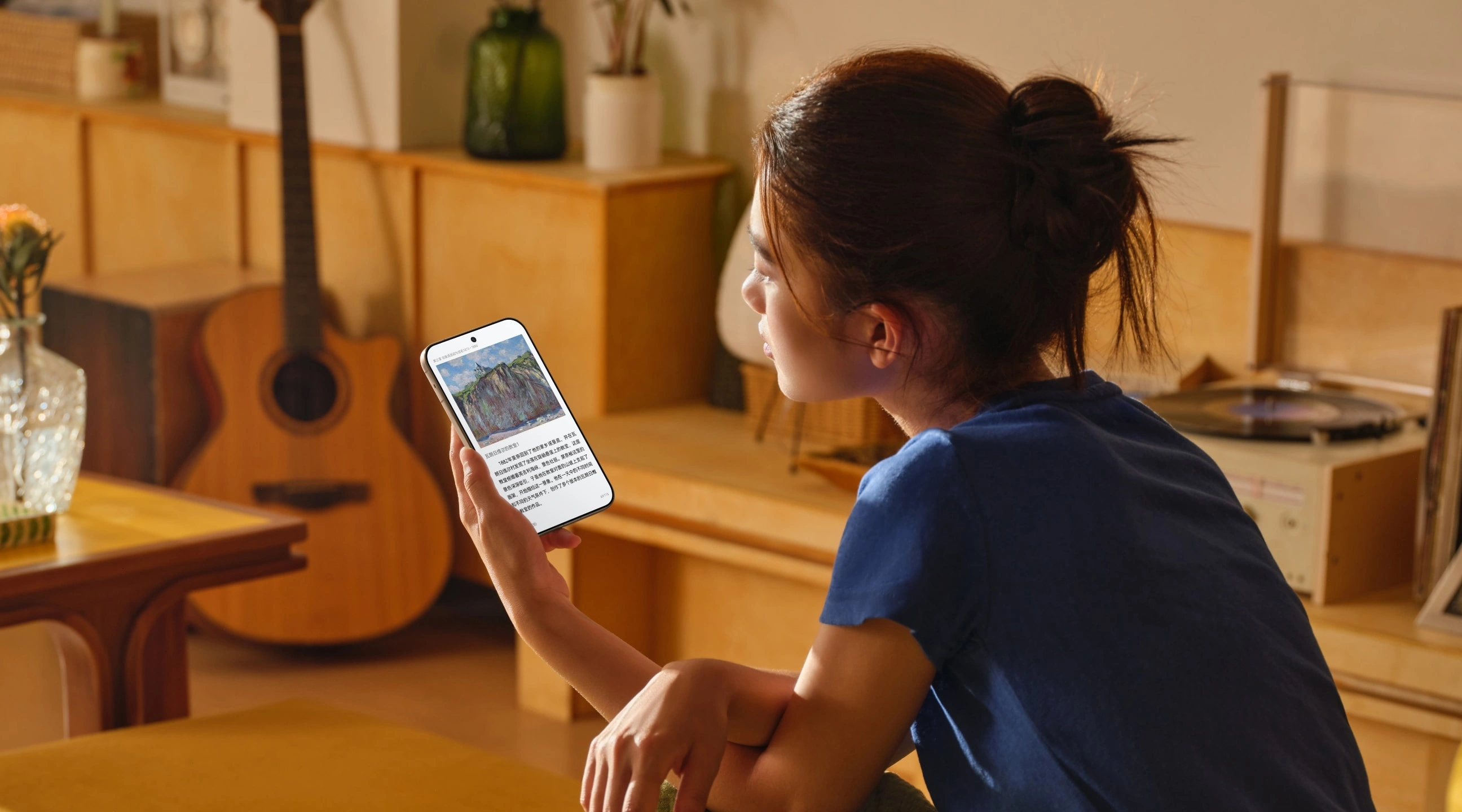
16:9.5 display: 6,500 nits and 1.05-millimeter bezels
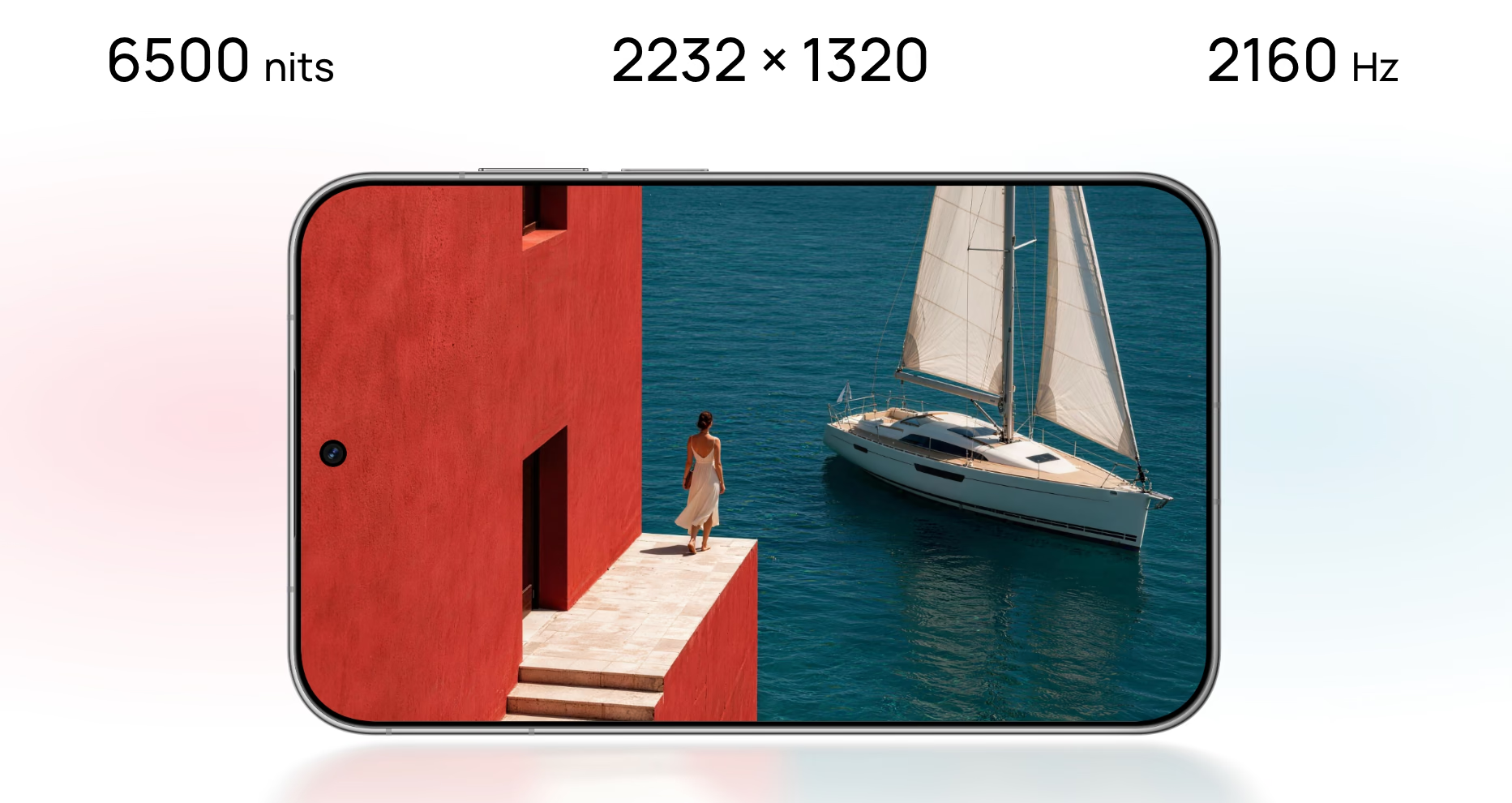
The OLED panel runs at 2232 × 1320 pixels with 6,500 nits of peak brightness and 2160 Hz PWM dimming, the number that matters for anyone who experiences eye strain with low-frequency OLED panels.
The hard part is not any one of those standalone numbers, but the bezel: an even 1.05 millimeters at the top, bottom, and sides. Phones usually have a thicker bottom bezel because that is where the panel flex cable bends toward the board, and hiding it in just over a millimeter requires folding that sheet back onto itself inside a 6.68-millimeter chassis.
The downside of the format. Everything gained in video is paid for in vertical use. An app designed for 20:9 that does not adapt its interface to the extra width distributes elements with more empty space than intended, and videos shot in 9:16 — meaning most of what people consume on social networks — end up with black bars on the sides instead of at the top and bottom. Huawei claims 21% more area for vertical reading, and that is where the format does pay off.
7,000 mAh in 6.68 millimeters
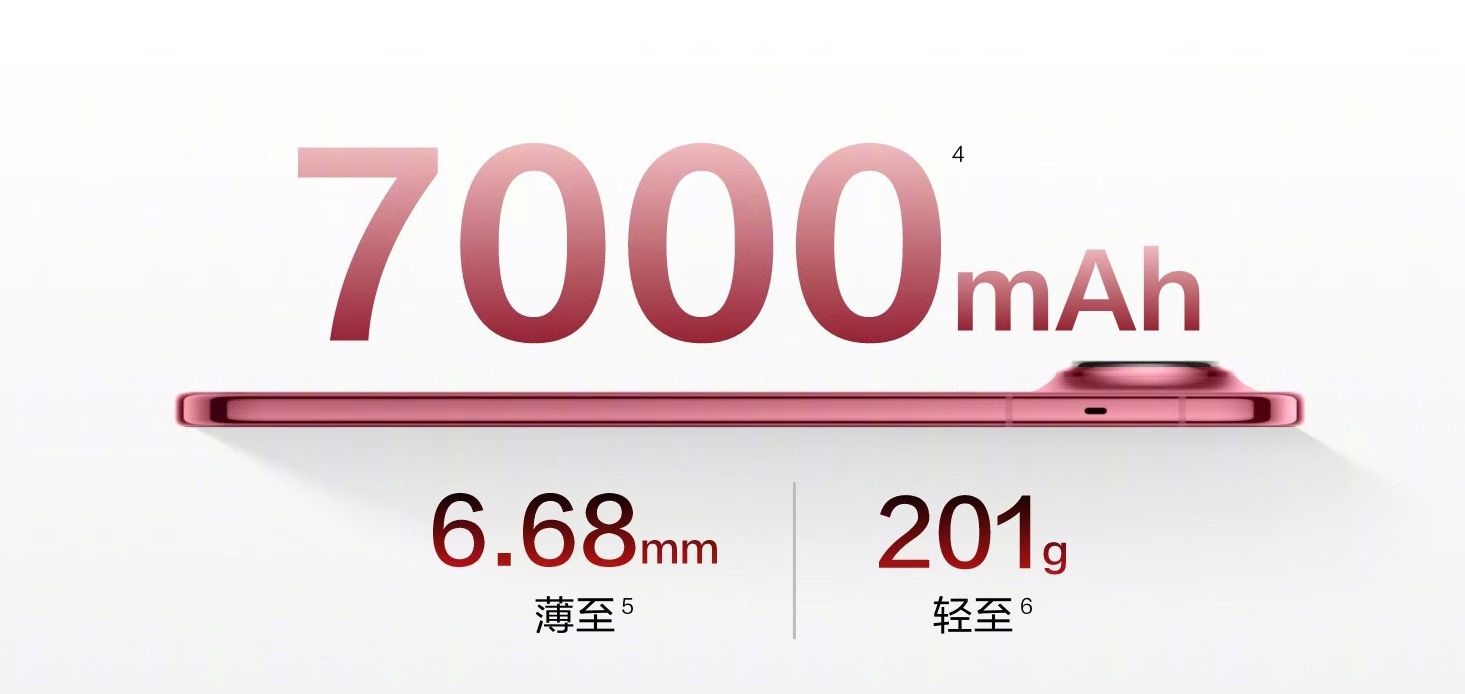
The typical battery capacity is 7,000 mAh, and the phone weighs 201 grams with a thickness of 6.68 millimeters. For context: the Galaxy Z Fold 8 weighs the same 201 grams despite being a foldable, and the 7,500 mAh battery in the Find X9 Pro comes in a considerably thicker body.
Putting that capacity into that volume can only be explained by silicon-carbon cells, which store more energy per cubic millimeter than traditional graphite. Huawei did not detail the chemistry, so this remains the most likely explanation rather than an official spec-sheet item.
There is a downside that spec sheets never mention and that is often seen at the repair counter. A high-density cell in a thin chassis leaves less air around it: when a battery like this swells due to age or a bad thermal cycle, it has nowhere to expand and pushes the panel from the inside. And with a 1.05-millimeter bezel, the screen lacks that small aluminum lip that, on a conventional phone, absorbs a corner impact before it reaches the glass. These are two direct consequences of the design, not defects: they change how the device should be handled, not whether it is worthwhile.
Design and colors
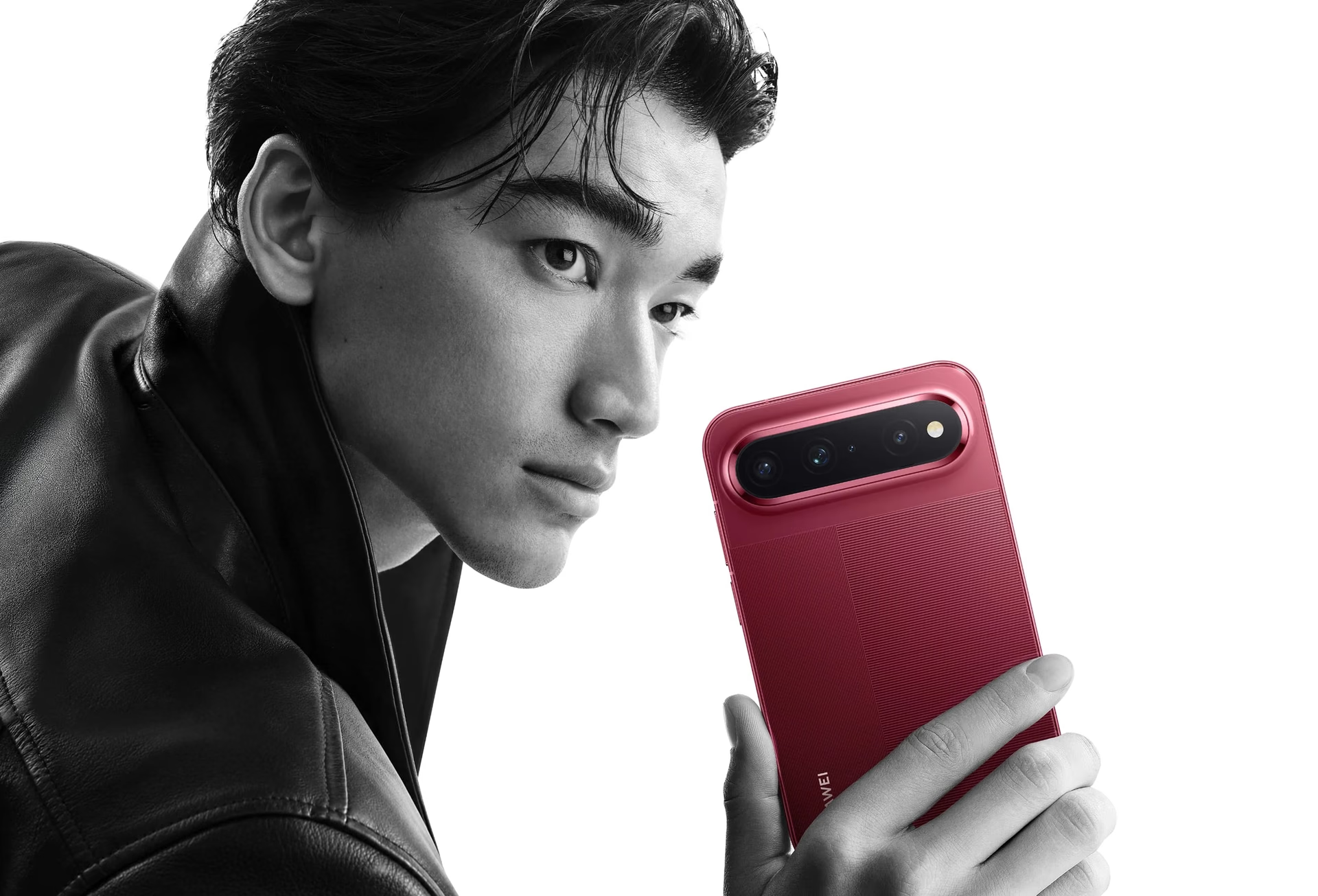
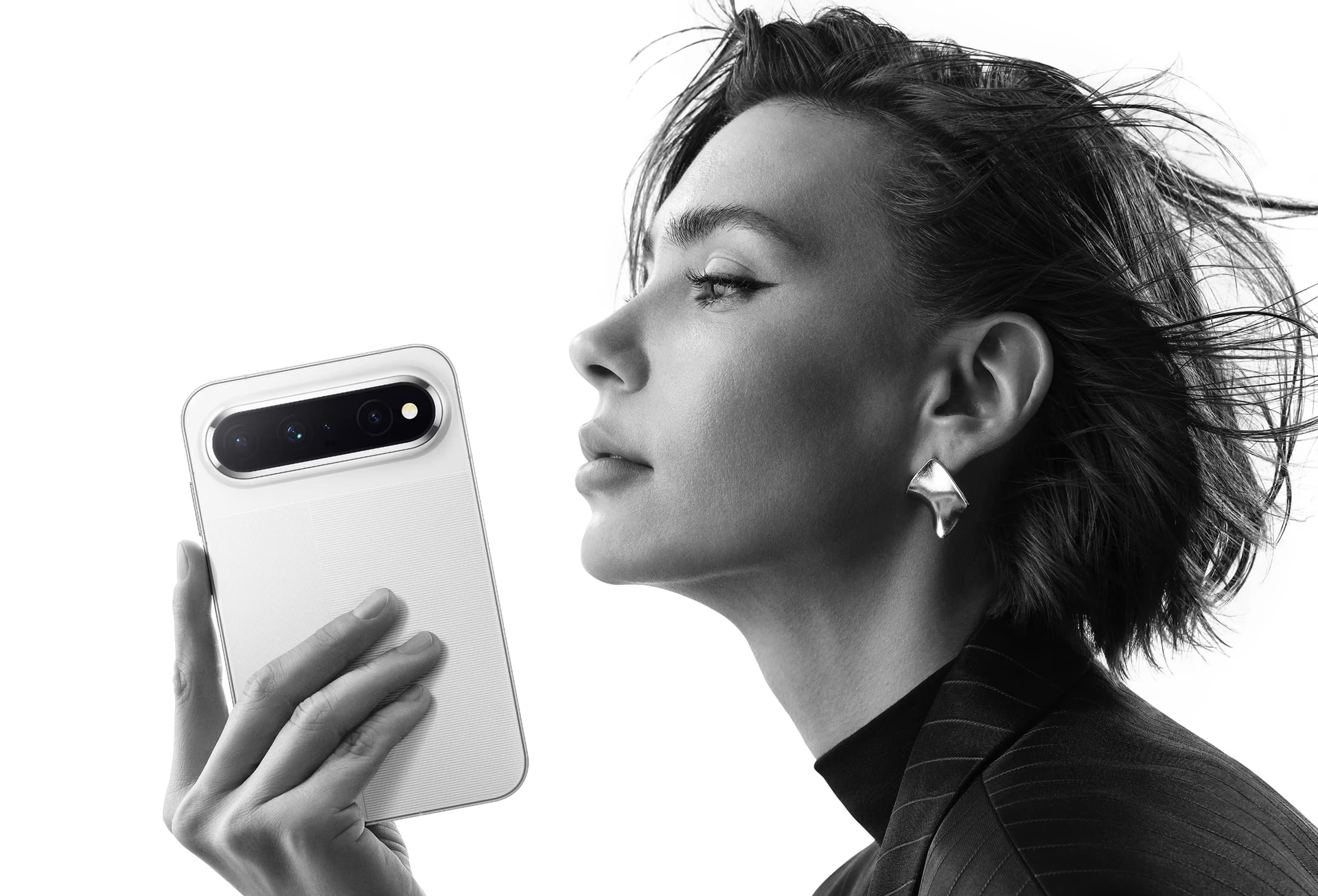
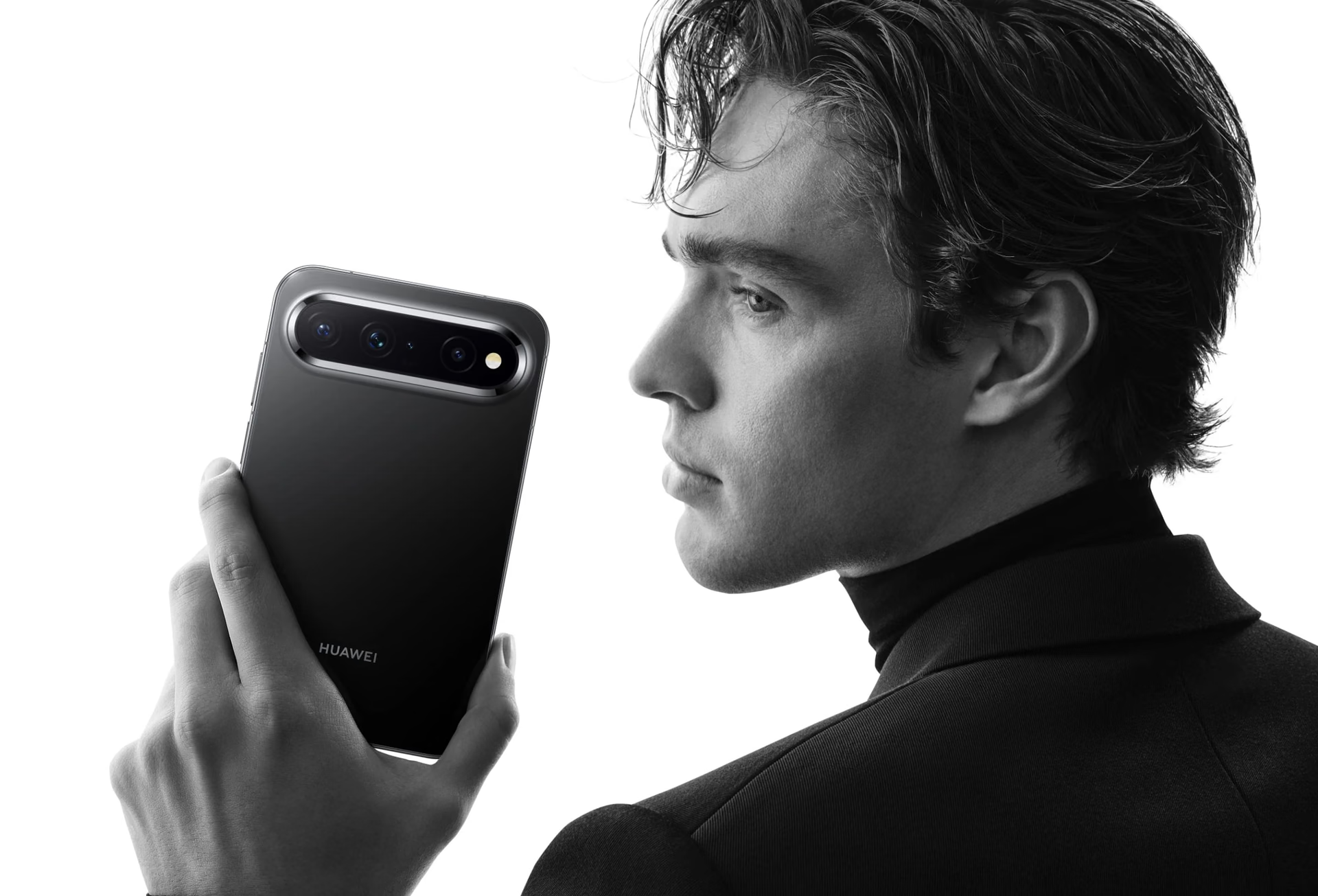
On the back, the camera module is a horizontal pill that stretches across almost the entire width, with the three lenses and flash aligned. The cover combines two striped textures in different orientations, a design choice that breaks up the color block without adding another piece to the assembly.
There are four finishes: intense red, linen gray, white, and black. The two lighter versions use a matte texture; the red and black play with the module’s gloss against the body.

HarmonyOS 7 debuts on this phone
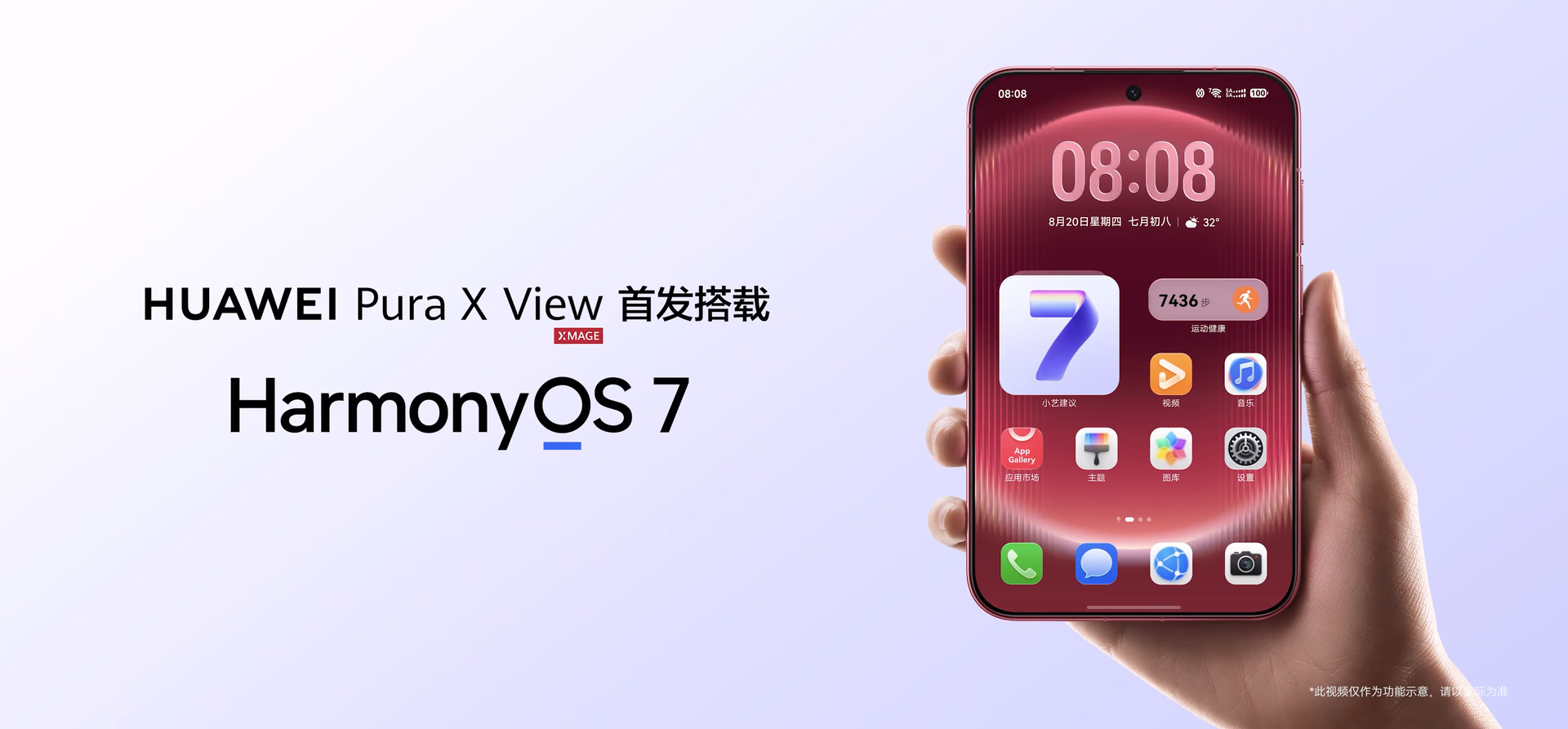
HarmonyOS 7 was introduced in June, and this is the first device to ship with it installed from the factory. The two major underlying changes are performance — Huawei claims a 15% improvement over the previous version — and the system’s reorganization around agents: Xiaoyi stops being an assistant you talk to and becomes a layer that other apps can invoke to complete tasks.
On a panel with this aspect ratio, the system has room to show two things at once without either one looking squeezed, which is exactly the scenario where the wide format stops being a curiosity. The question is not that: on the brand’s tablets, software is what holds back excellent hardware, and no new version solves the absence of Google services outside China on its own.
What Huawei confirmed and what is still a leak
Much of the coverage publishes the processor, cameras, and charging as if they were on the official spec sheet. They are not. Here is the separation:
The most cited leak is an August 21 post on Weibo signed by 骆智慧, a verified account in the sector. It may end up being accurate; until Huawei publishes the full spec sheet, it remains a post.
Price, dates, and availability
Reservations opened on August 20 on VMall and JD.com with three configurations, all with 12 GB of RAM. Demo units arrived in stores on August 28. Huawei has not yet provided a price or a general sale date, and the figures circulating in Chinese media are projections, not announcements.
The launch is for China. Huawei maintains a presence in several international markets, but its phones still ship without Google services, and that is why its recent high-end launches have not reached Latin America through official channels.
Conclusion: who a wide phone makes sense for
If you watch video, read a lot, or work with two apps side by side, 16:9.5 is not a catalog oddity: it is the first time this format arrives without paying the premium, weight, and hinge penalty of a foldable. In that sense, the Pura X View solves a real problem.
If your phone is mainly for vertical social media, the camera, and messaging, the format works against you for most of the day, and no spec can compensate for that. And if you are outside China, the conversation ends sooner: the device is not designed for that market, and the app ecosystem remains the barrier, not the hardware.
The most important decision factors are still pending: with no confirmed processor, no published cameras, and no price, what can be evaluated today is the chassis and the display.
Frequently asked questions
Is the Pura X View sold outside China?
No. The launch and reservations are for the Chinese market. Huawei often brings some models to international markets months later, but its phones ship without Google services, and for that reason its recent high-end lineup has not reached Latin America through official channels.
Pura X View
The first rigid-body phone with a 16:9.5 wide-format display, 1.05-millimeter bezels on all four sides, and a 7,000 mAh battery in a 6.68-millimeter chassis. It debuts HarmonyOS 7.
Pros
- It is the first hinge-free 16:9.5 format: the foldable’s video advantage without its weight or price.
- Identical 1.05-millimeter bezels on all four sides, with 96.1% front utilization.
- 7,000 mAh in a 6.68-millimeter, 201-gram body.
- It debuts HarmonyOS 7 out of the box, with Xiaoyi integrated into the system.
Cons
- Huawei has not published the processor, cameras, or price.
- Vertical social media content appears with black bars on the sides.
- Launch limited to the Chinese market.
- No Google services, with the app limitations that implies.
Author
Alexis PaezReport based on official announcements and verified public sources at the time of publishing.
Comments
Share article
You might also like

Huawei Pura X Max: the market’s first wide foldable arrives April 20
The Huawei Pura X Max debuts on April 20 as the market’s first wide foldable. Date, colors, specs, and how it beats Samsung and Apple.

Xiaomi 18 Fold: the first foldable with an in-house chip arrives two days before Apple’s
Xiaomi introduced the 18 Fold with its in-house XRING O3 chip, 6,000 mAh in 5.02 millimeters, and a 200 MP Leica triple camera. Price, full specs, and how it compares with other wide-format foldables.