iPhone 18 Pro and Pro Max: variable aperture, A20 Pro, and the longest battery life in an iPhone
Index
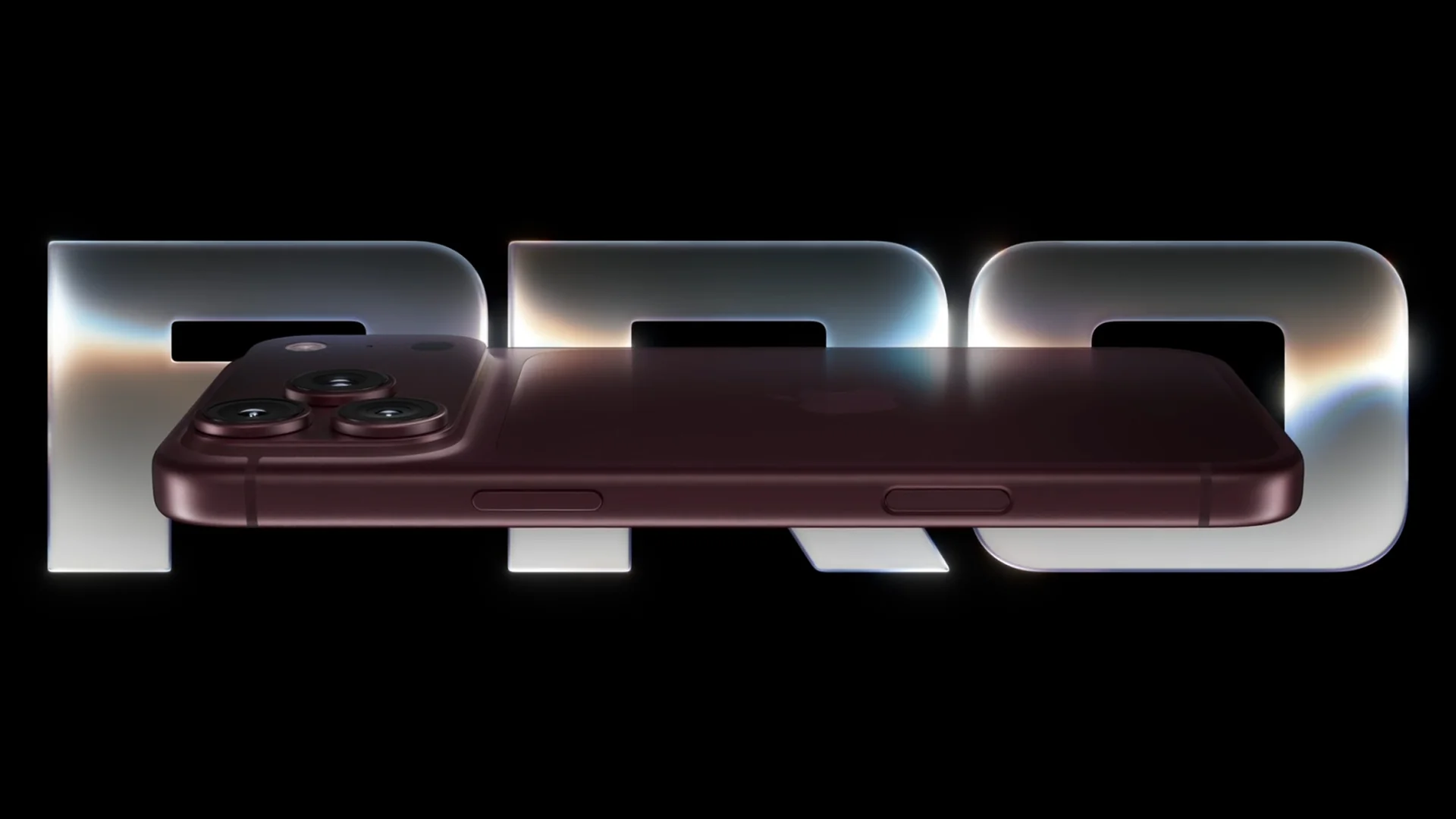
Apple introduced the iPhone 18 Pro and iPhone 18 Pro Max with three changes you can feel in everyday use: a main camera that opens and closes its diaphragm like an SLR, an A20 Pro chip that physically rearranges memory to avoid being choked by heat, and the longest battery life ever in an iPhone. Pricing starts at US$1,199 and preorders open on September 12, as part of an event that also brought the brand’s first foldable, two watches, and new headphones.
What changes in the iPhone 18 Pro
Apple focused its work on four fronts: intelligence, performance, battery, and camera. The rest carries over from the iPhone 17 Pro: the same aluminum, Ceramic Shield 2 on the front and Ceramic Shield on the back, IP68 to a depth of 6 meters for 30 minutes.
Design and colors
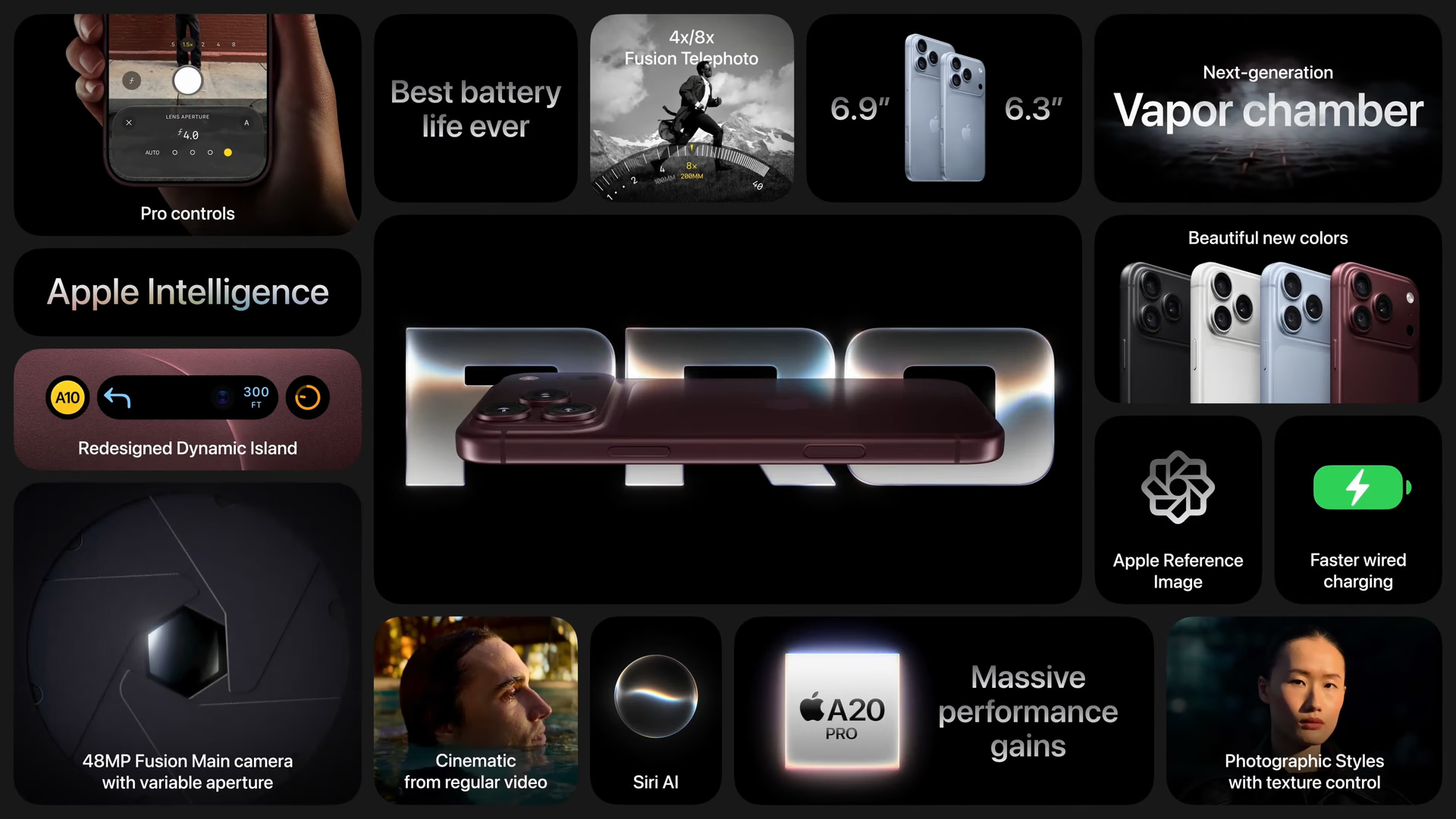
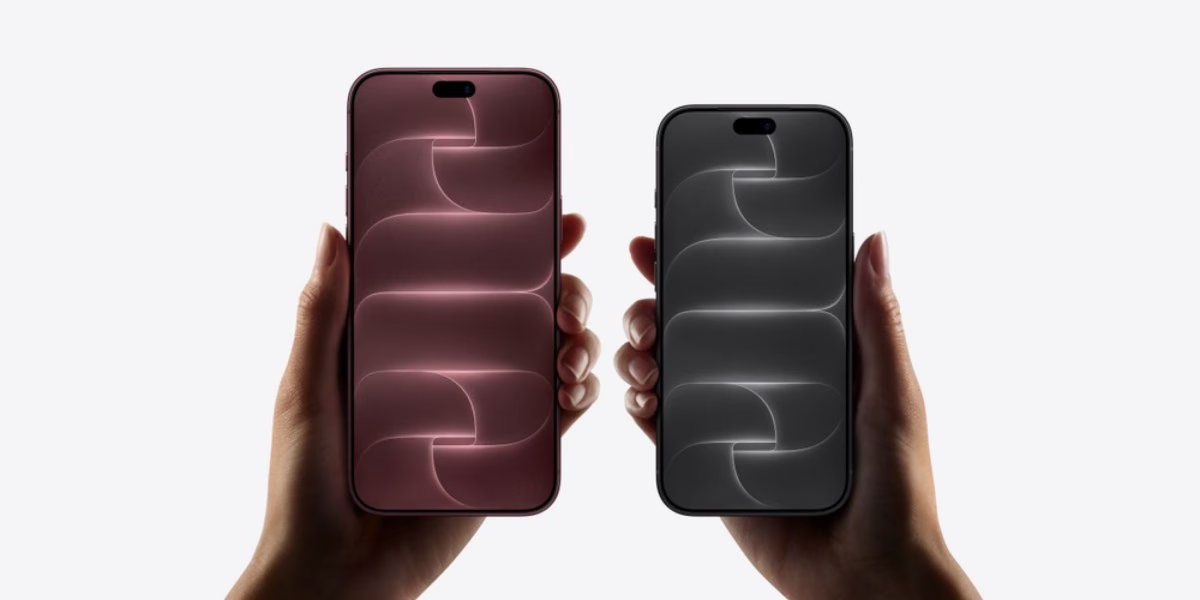
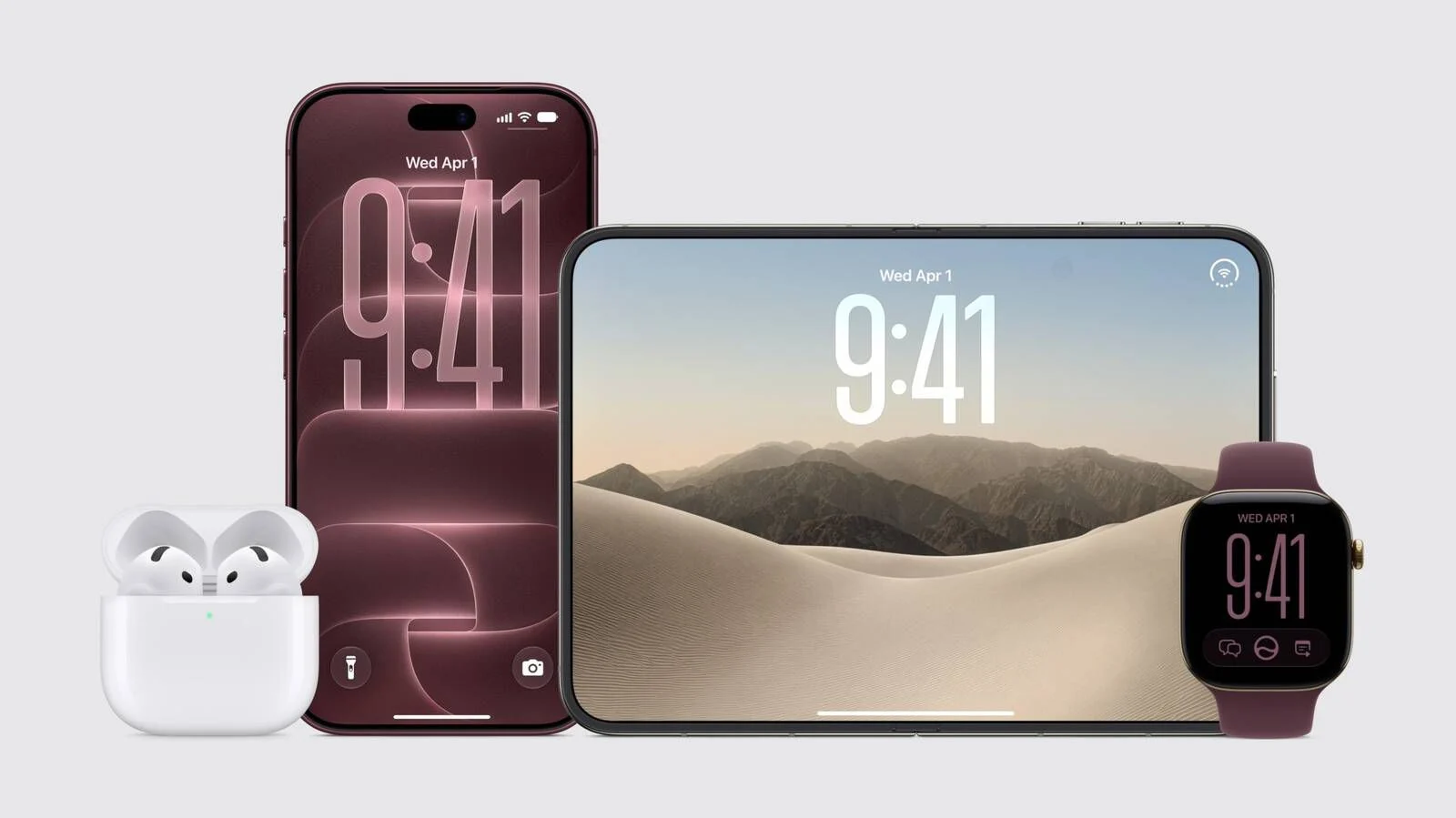
The aluminum and rear glass now come in the same color, so the device reads as a single piece rather than a frame with a cover attached to it. The four finishes are Black, Silver, Glacier, and a new Burgundy.
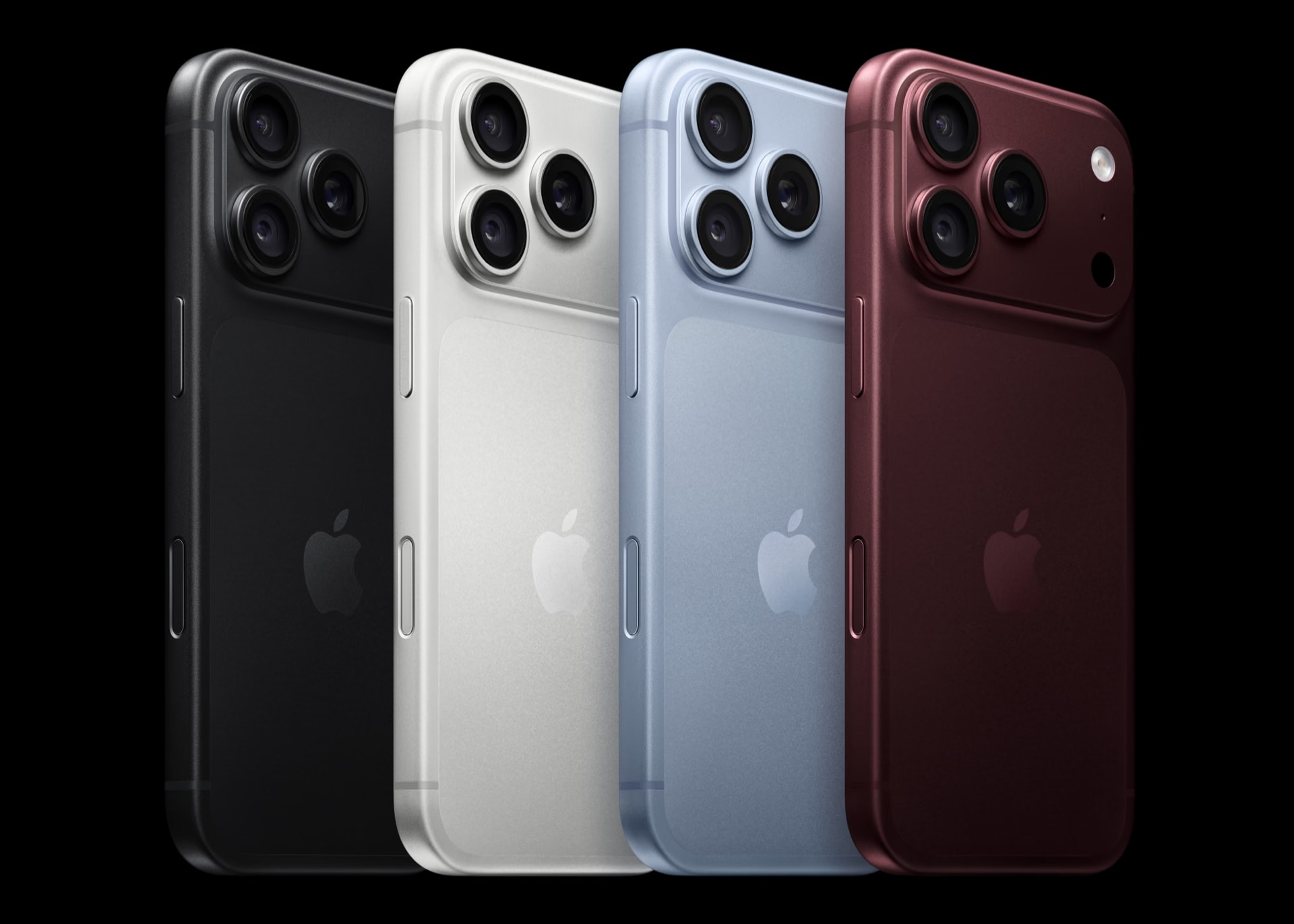
According to the technical specifications, both models share an 8.75 mm thickness. The Pro measures 71.9 × 150.0 mm and weighs 211 grams; the Pro Max measures 78.0 × 163.4 mm and weighs 249 grams. The displays remain 6.3 and 6.9 inches, with 2622 × 1206 and 2868 × 1320 pixels at 460 ppi, and 3,000 nits of peak brightness.
Action Button and Camera Control
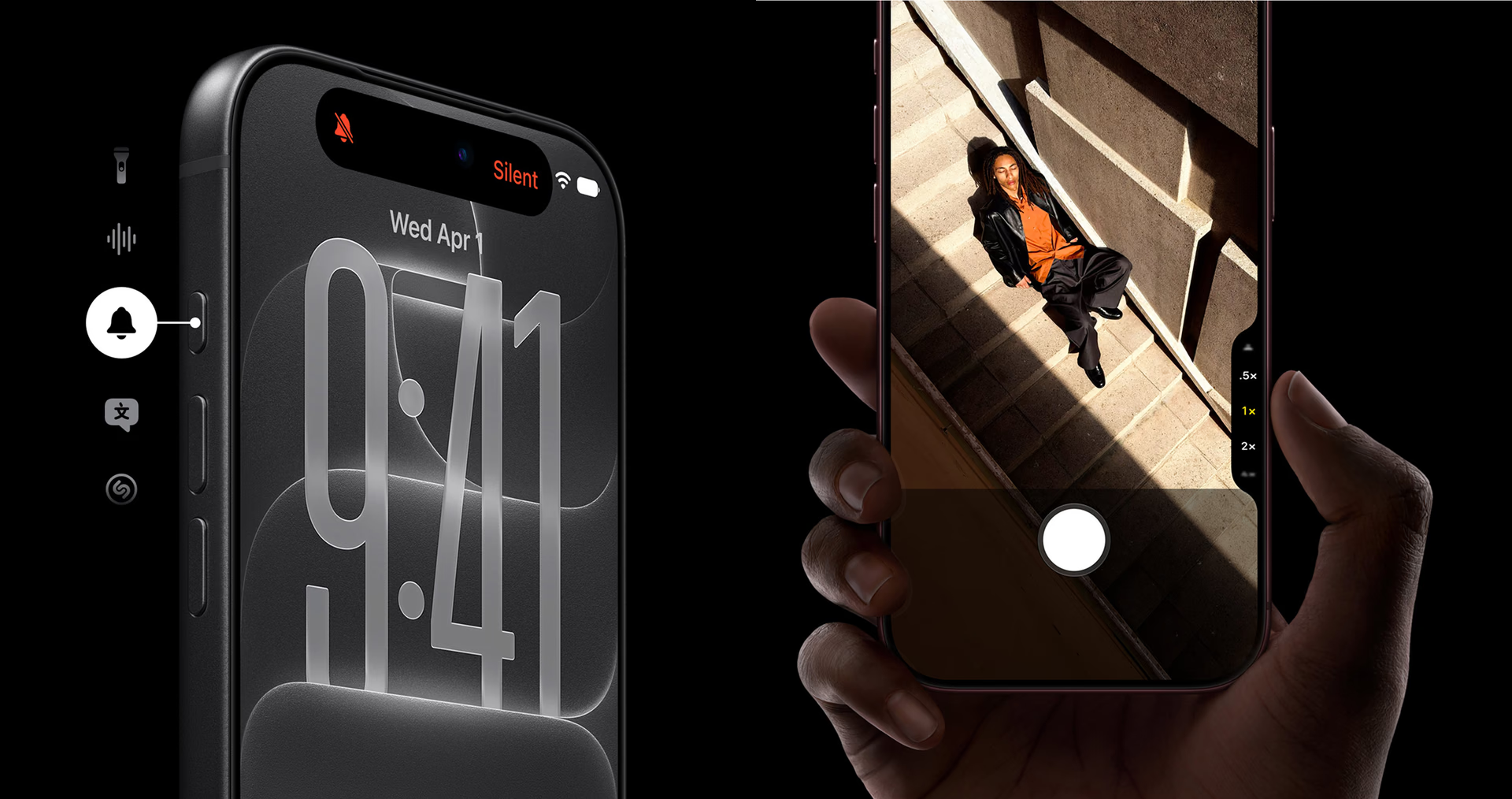
The two physical controls remain in place and unchanged. The Action Button triggers the shortcut you assign to it; Camera Control opens the app, adjusts framing with a slide, and takes the shot with a press.
The Dynamic Island now shows three activities
It has been made smaller and reorganized to show three Live Activities at the same time: flight status in Flighty, Maps navigation, and a timer all coexisting at the top, without opening any app.
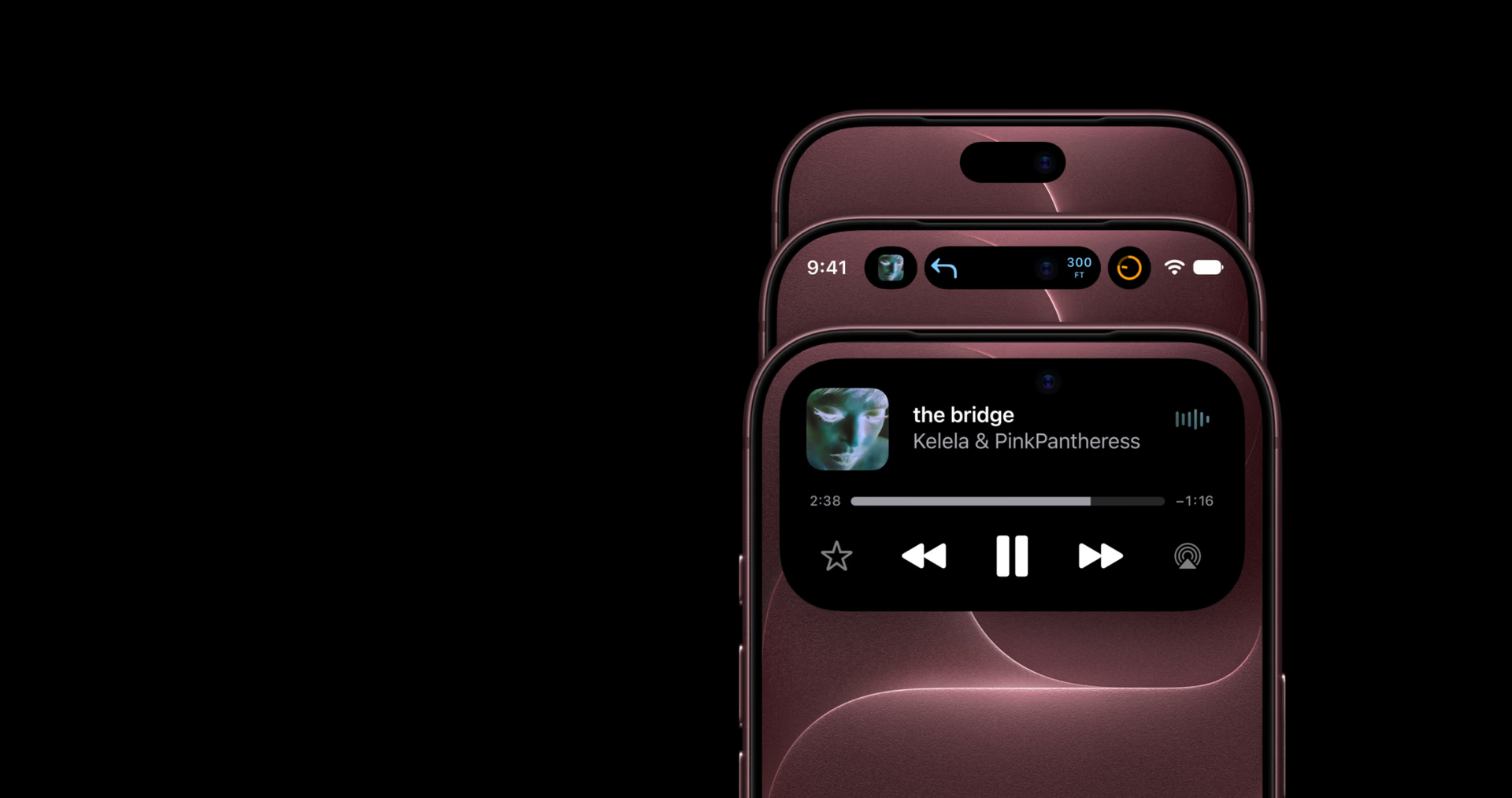
The redesign also changed how those activities expand and contract when you tap one.
A20 Pro: the leap is in the packaging
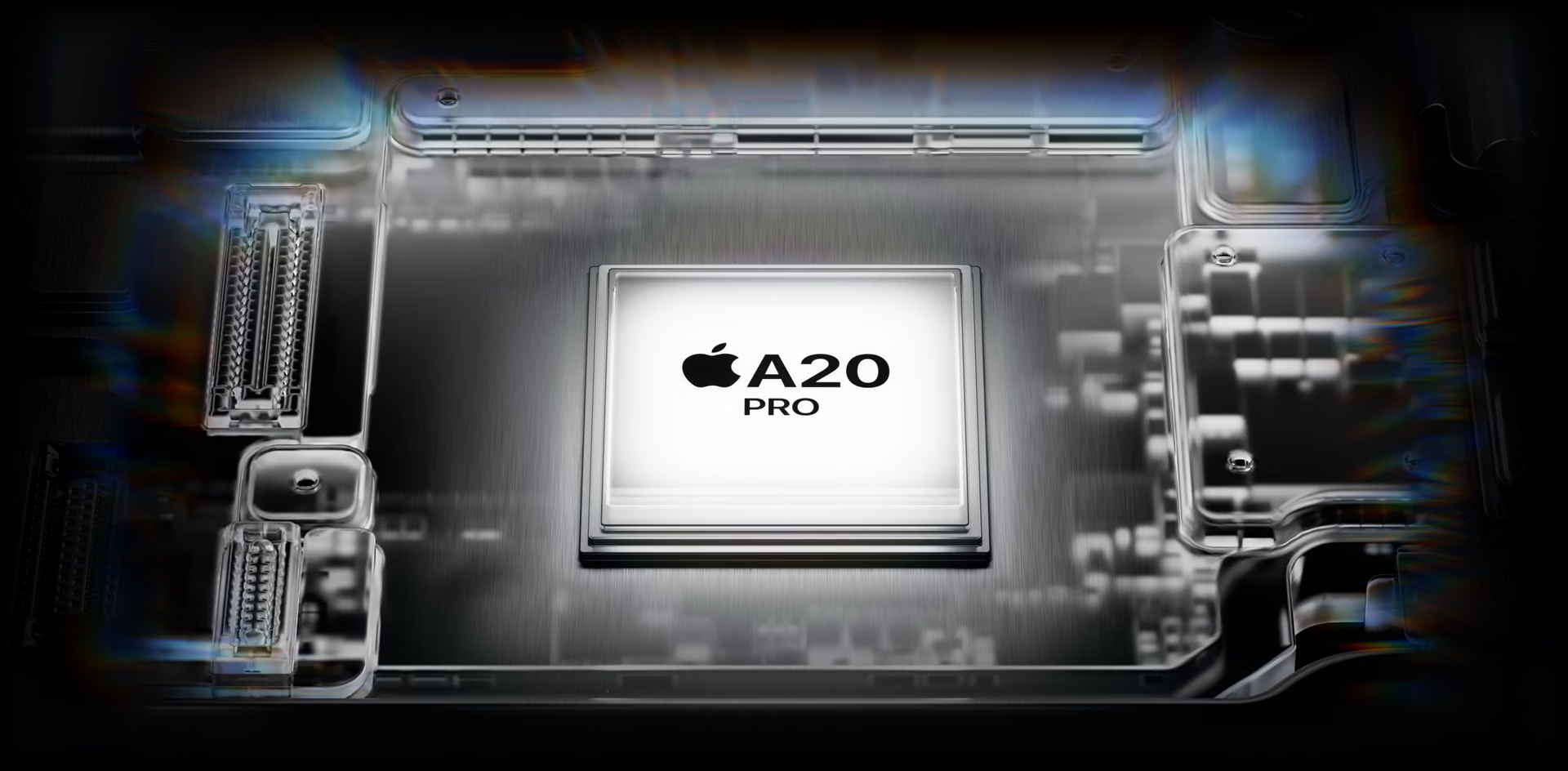
The A20 Pro is manufactured on a 2-nanometer process. It brings a six-core CPU with two super cores up to 20% faster and four efficiency cores, a seven-core GPU with up to 40% more performance, a second Neural Engine that brings the total to 32 cores and double the compute, and 50% more memory bandwidth.
The interesting part is not any of those numbers, but how Apple made them possible. Apple redesigned the silicon package by taking an idea from the M-series chips: the die sits next to the memory instead of underneath it. That removes memory from the thermal path and allows the silicon to connect directly to the vapor chamber. A chip that dissipates heat better can sustain higher frequencies for longer, and that is where real performance appears: not at the peak of a benchmark, but twenty minutes into a game.
A vapor chamber with triple the surface area
The vapor chamber has three times the surface area of the one in the iPhone 17 Pro. It circulates deionized water, is made with 80% recycled stainless steel, and is combined with more conductive graphite and a material Apple calls nanotwinned copper, which draws heat away from the display and adds rigidity.
The stated result is up to 40% more sustained performance than the iPhone 17 Pro and up to double compared with the iPhone 16 Pro and earlier.
Battery: the longest battery life in the lineup, with two different figures
The supply-chain reports ahead of the announcement assumed the smaller model would barely move the needle. The opposite happened: the iPhone 18 Pro delivers the same all-day battery life the 17 Pro Max had, in a smaller body, while the Pro Max gets the biggest battery increase in iPhone history.
This is worth looking at closely, because Apple publishes two different numbers for the same thing. In the keynote, it mentioned 36 hours of video playback on the Pro and 45 on the Pro Max, clarifying that those figures apply to the eSIM-only models. The technical specifications list 34 and 43. Both are official: the higher numbers apply to versions without a SIM tray, which gain internal space.
Apple also added a per-charge usage model measured from real-world data: 24 hours on the Pro and 30 on the Pro Max. Wired charging reaches 50% in about 15 minutes, and five minutes plugged in provide roughly six hours of video.
Variable aperture: six blades thinner than a hair
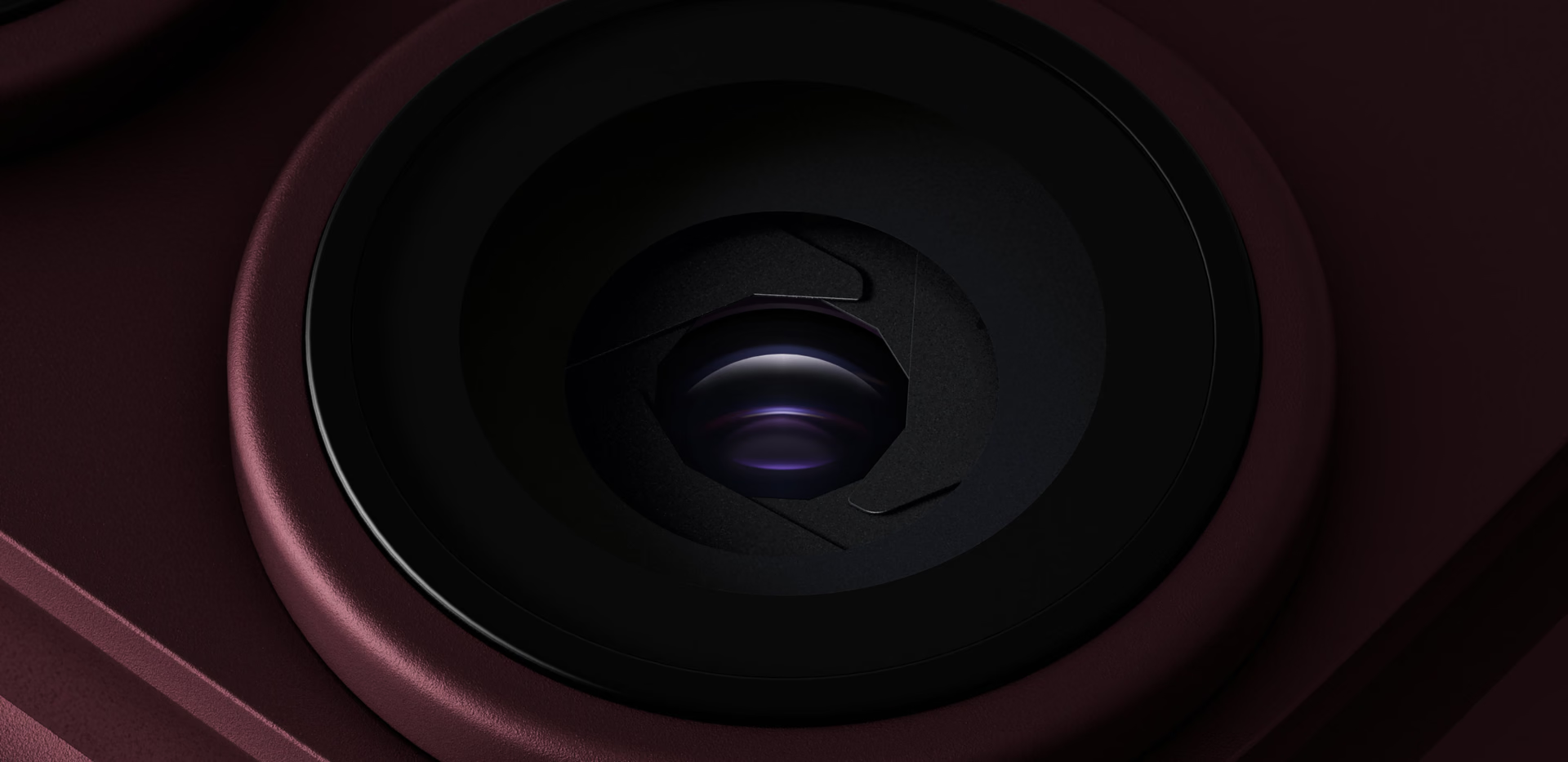
The 48 MP main Fusion camera is the first in an iPhone with a real variable aperture. This is not a software effect: inside are six laser-cut blades, each thinner than a hair, made from a polymer composite, with a new rotor mechanism and a custom-designed lens to maintain quality across every aperture.
The system adjusts the aperture automatically based on the scene. In dark environments, it opens up and lets in about 50% more light, which speeds up Night mode captures. When more depth of field is needed, it stops down, and group photos gain sharpness in the back rows.
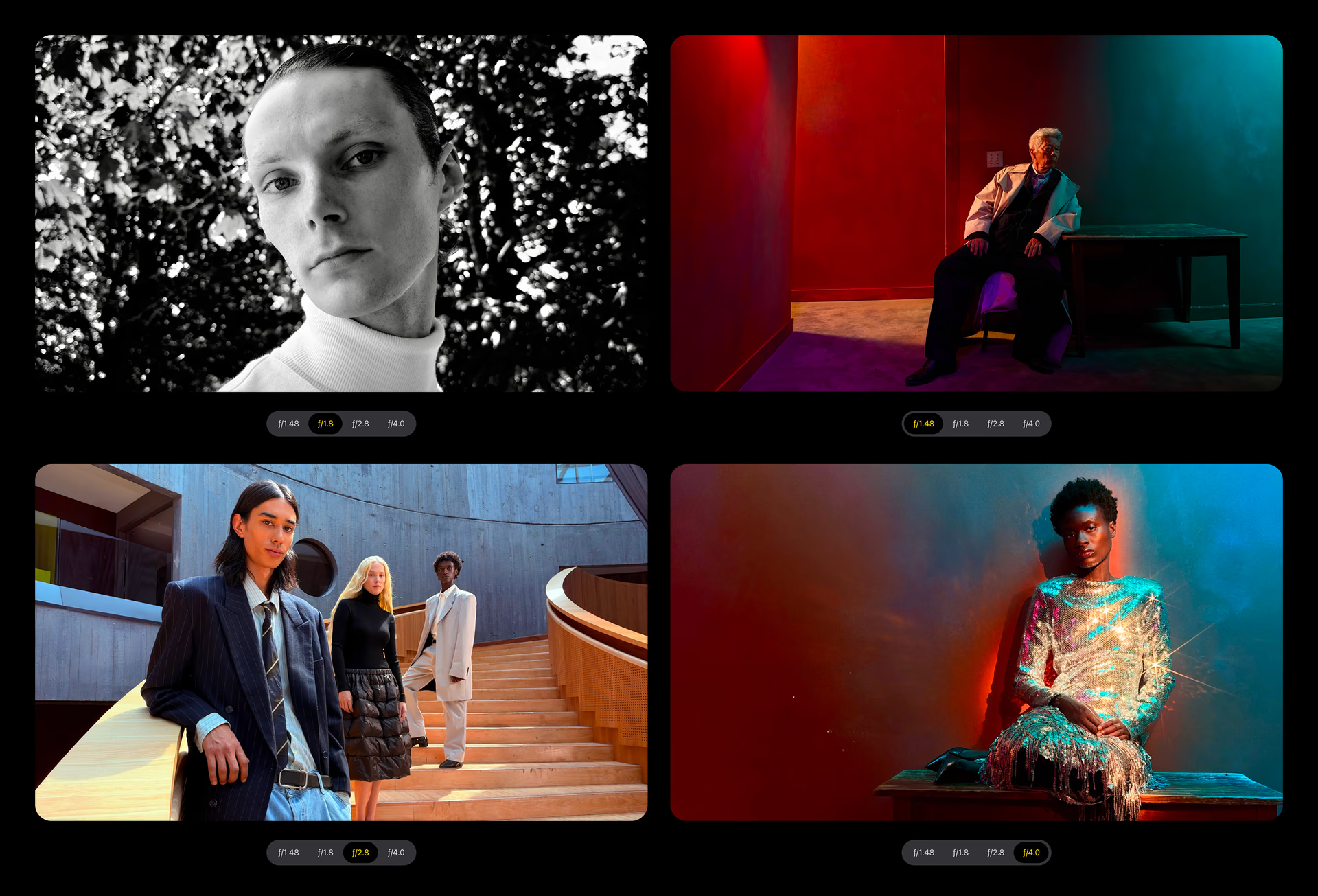
Manually, you can choose among four steps: ƒ/1.48, ƒ/1.8, ƒ/2.8, and ƒ/4.0. Apple optimized ƒ/1.8 as the balance point between light and depth of field, and it is the default in difficult scenes.
The system is completed by a 48 MP ultra-wide at ƒ/2.2 and a 48 MP telephoto with 4x at ƒ/2.8, enabling 2x and 8x optical-quality options and a total 16x range.
Pro controls: the iPhone handles like a camera
Pro controls reorganize the Camera app and add manual settings that did not exist before: locking white balance, checking exposure with a histogram, choosing the aperture among the four options, and adjusting shutter speed.
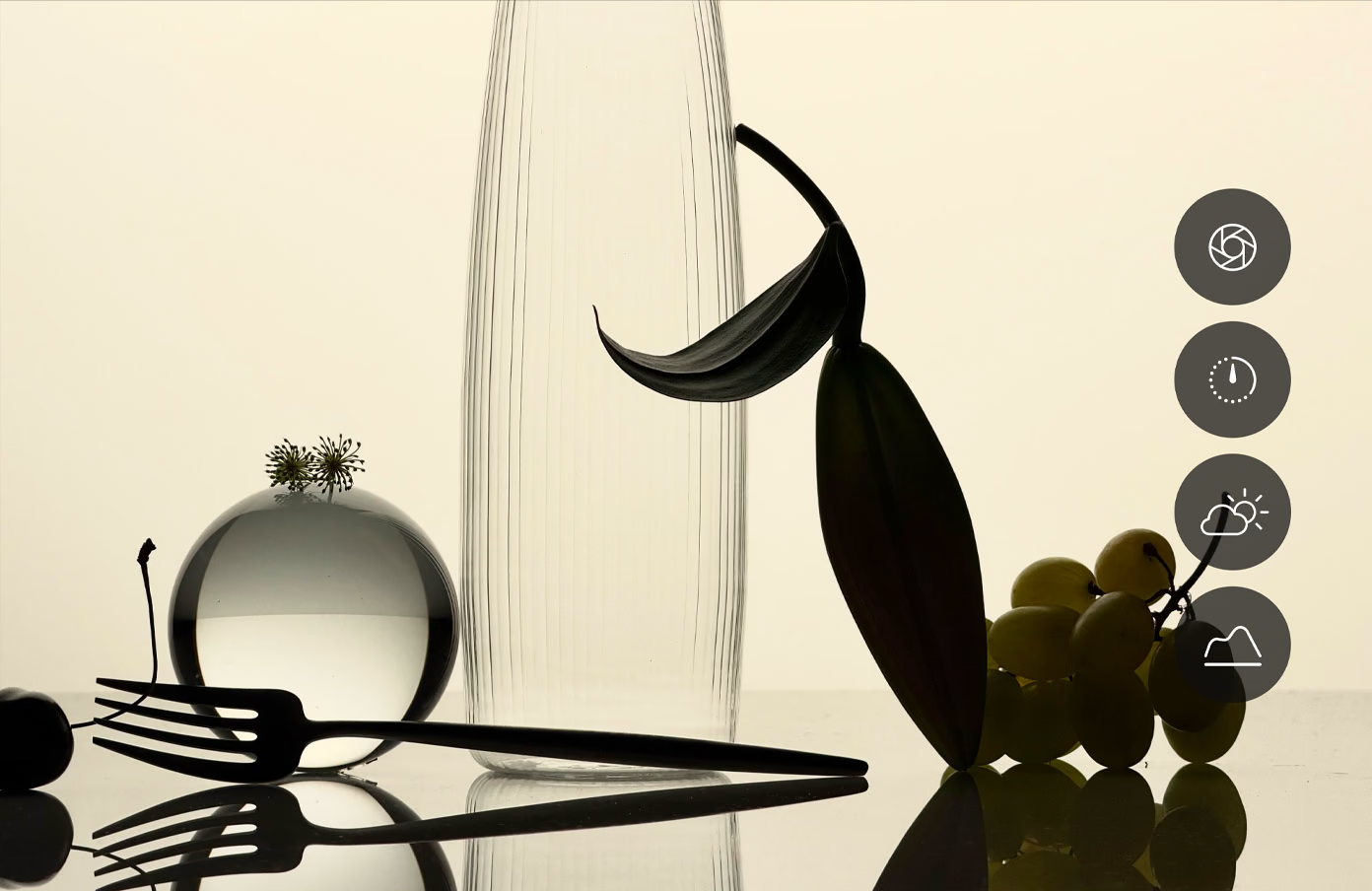

Shutter speed is what changes the shot the most: with longer exposures you get motion blur, while shorter exposures freeze the moment. And because the aperture blades have their own shape, point lights turn into flares with this lens’s signature. The controls work the same way in video, which is what makes the device usable on a set.
Photographic Styles add texture and grain control. You can adjust skin texture, balance it against color, and revert it whenever you want, because it is not baked into the file.
Video, Dual Capture, and Center Stage
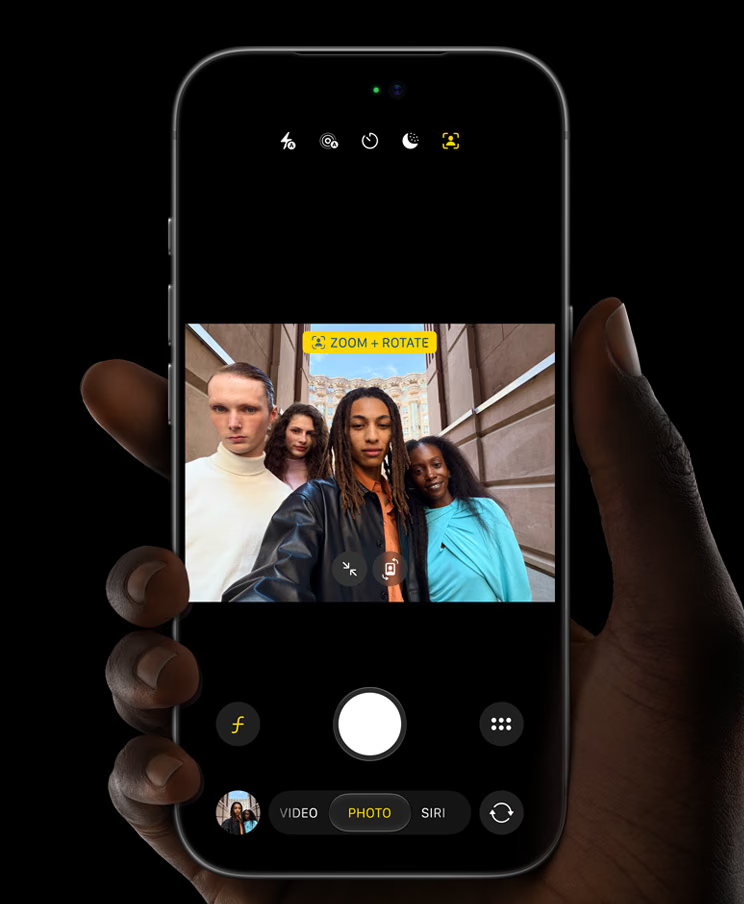
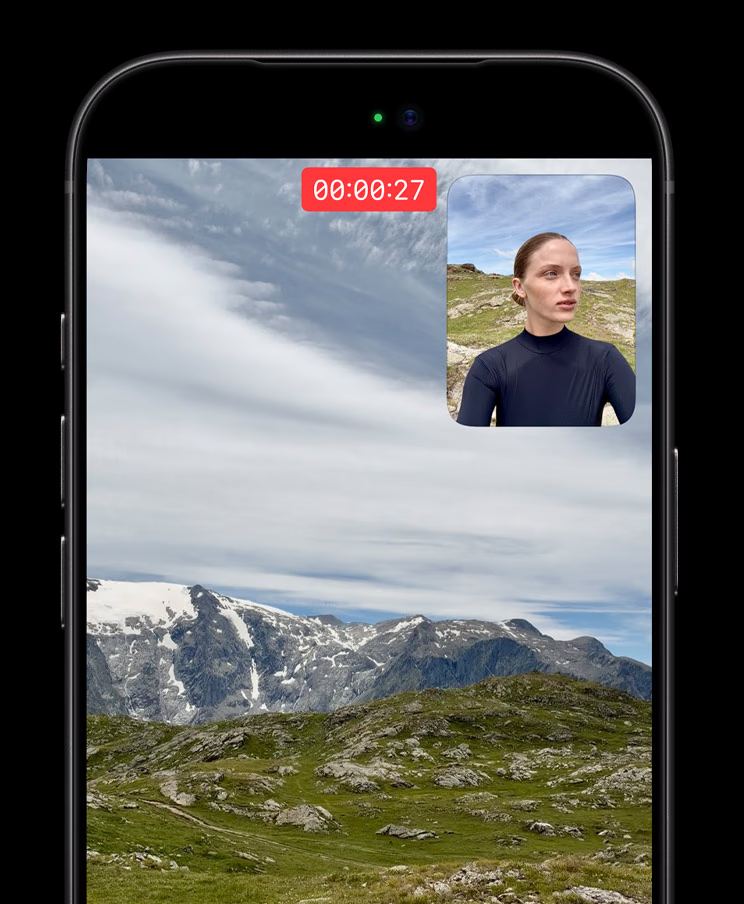
Cinematic mode can now be applied to regular video after recording it and supports 60 frames per second for the half-speed effect. Time lapse moves to 4K in Dolby Vision HDR. The Center Stage front camera frames automatically in any orientation, without rotating the phone, and Dual Capture records the front and back at the same time.
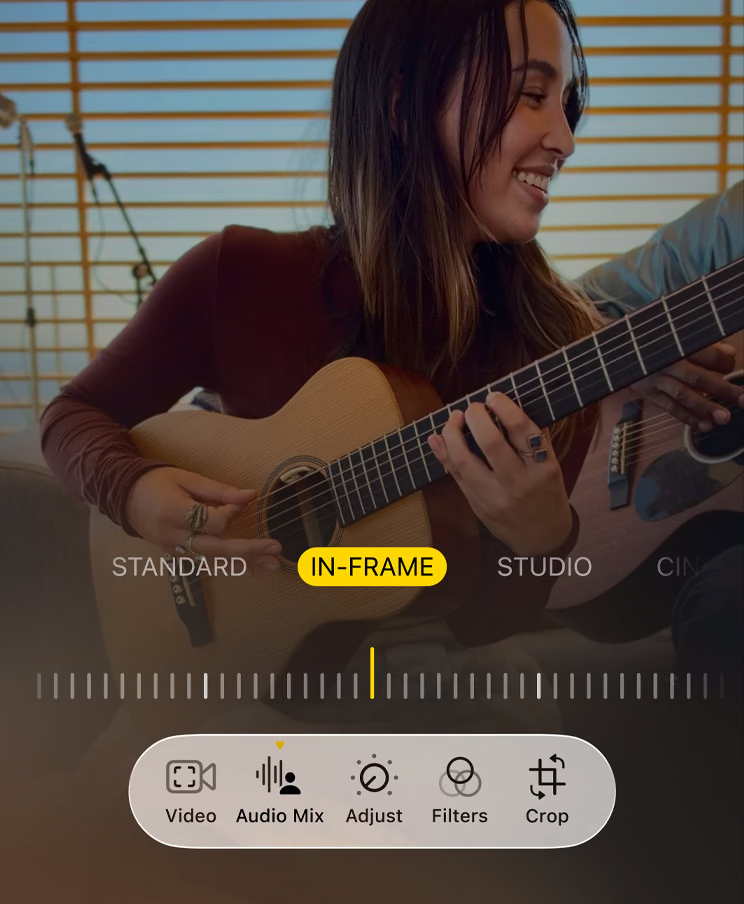
Editing in Photos and Audio Mix
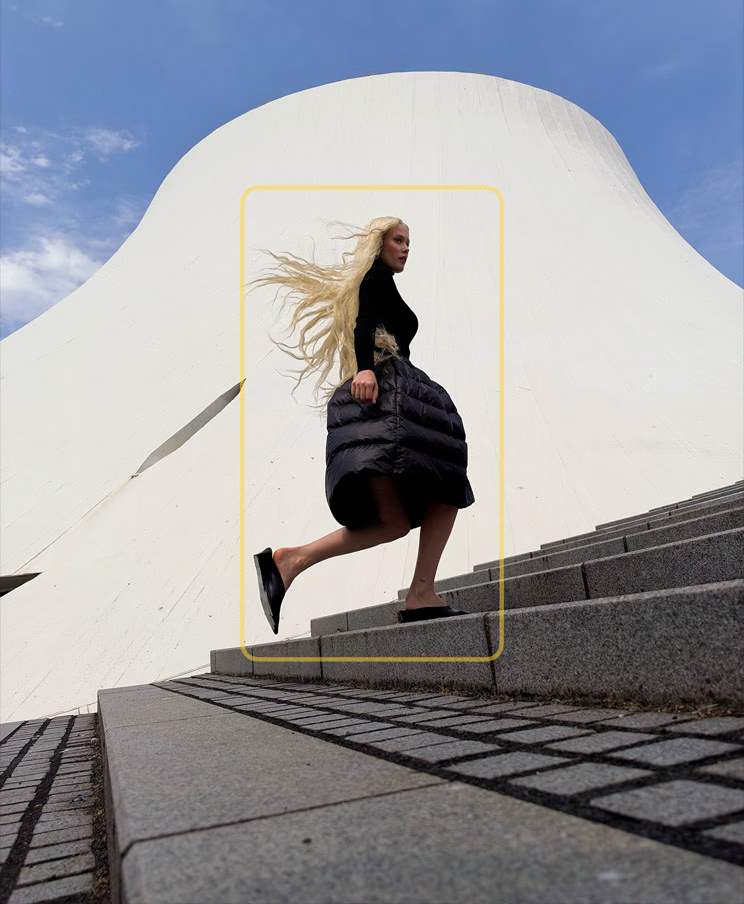
Audio Mix updated its algorithms to record voice at higher quality and now also processes music. Intelligent Focus Tracking uses on-device models to lock onto a subject and not let go, even if the subject changes distance or leaves the frame and returns.
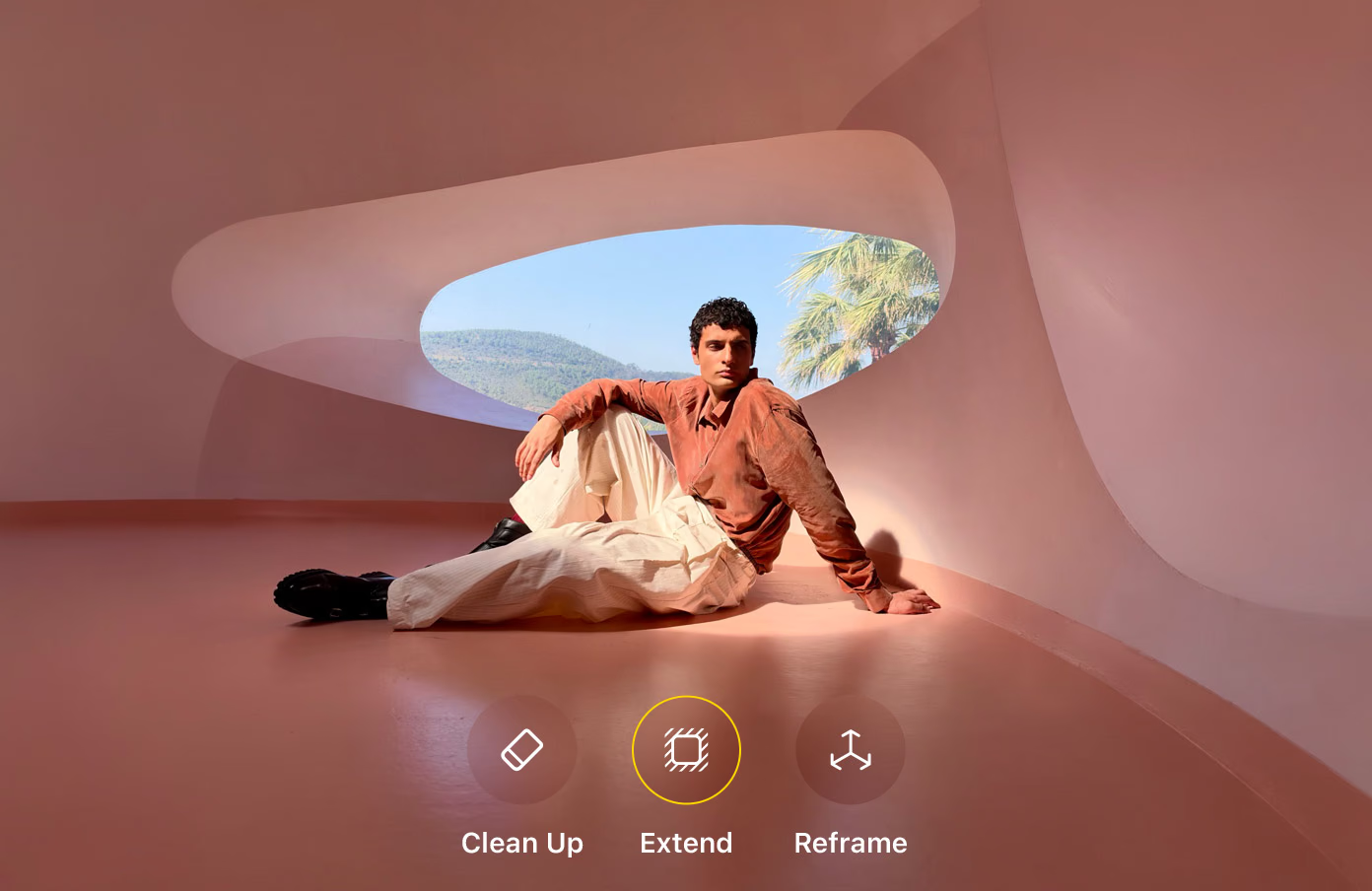
In the Photos app, Clean Up improves fill in complex scenes, Extend enlarges the image to give the subject more breathing room, and Spatial Reframe lets you move the point of view after taking the photo.
Apple Reference Image: proving the photo is real
This is the change with the biggest long-term consequences and the one that drew the fewest headlines. Apple will support the SynthID standard for identifying AI-generated images, but it decided to go further in the opposite direction: instead of only labeling what is synthetic, it wants to be able to prove what is authentic.
Apple Reference Image starts in the hardest place to fake: the sensor. The main camera signs the photo data at the pixel level at the moment of capture, and Private Cloud Compute reveals it in an unalterable image that you open from the Photos app. That reference photo coexists with the editable version.
The parallel is the negative: you have the copy you work on and the original you use to prove what was in the scene. For photojournalism and any documentation with evidentiary value, that changes the job more than any sharpness improvement.
Gaming performance
The seven-core GPU enables the case Apple showed on stage: Monster Hunter Outlanders, from Tencent Games and Capcom, with iOS-exclusive cinematic graphics, up to 120 frames per second, Metal FX upscaling, and spatial audio.
iOS 27 and Handoff on the iPhone
iOS 27 brings child safety features that give parents more control over what children see and who they talk to, customizable Liquid Glass, better search in apps like Mail, and AirDrop up to 80% faster. The connectivity highlight is Handoff on the iPhone: the same number working on two devices, active the instant you pick it up. It starts with T-Mobile and Telekom; Verizon and EE add support before the end of the year.
Apple Intelligence arrives in 16 languages with the September releases and is not available in China. Siri AI launches in beta in English only; Spanish, along with French, Japanese, Korean, and Portuguese, arrives in October. Some features have usage limits because they depend on models running on servers, and expanded access comes with most iCloud+ plans.
Price and availability
The iPhone 18 Pro starts at US$1,199 and the Pro Max at US$1,299, both starting at 256 GB, with a new 2 TB option. Preorders open Saturday, September 12, and sales begin on the 18th.
In the United States, it adds Apple Upgrade, a 12- or 24-month lease with a device swap at the end, up to US$1,200 for trading in an iPhone 14 or newer, and Apple Care One Family. Accessories arrive alongside it with an updated clear case and new TechWoven and silicone colors.
Conclusion
If you are coming from an iPhone 17 Pro, the variable aperture is the only compelling reason to upgrade, and only if you take photos with intent: it is the first time an iPhone lets you decide depth of field when shooting instead of simulating it afterward. The rest of the improvements are real but incremental.
If you are coming from an iPhone 15 Pro or earlier, the change is on another scale: double the sustained performance, battery life that gets through the day with room to spare, and a camera system with no equivalent in the generation you are using.
And if you care about photography as a record more than as aesthetics, keep an eye on Apple Reference Image. No one knows yet how newsrooms or courts will adopt it, but this is the first time a mass-market phone signs its photos at the sensor.
Frequently asked questions
What is the real difference between the iPhone 18 Pro and the Pro Max?
Size and battery. They share the chip, cameras, materials, and 8.75 mm thickness. The Pro Max adds a 6.9-inch display versus 6.3 inches and significantly longer battery life: 30 hours of use per charge versus 24. The price difference is US$100.
Why does Apple provide two different video playback figures?
Because they measure different configurations. The 36 and 45 hours from the keynote correspond to the eSIM-only models, which use the space from the SIM tray for more battery. The technical specifications publish 34 and 43, which are the general figures. Neither is an error: you need to check which version you are buying.
Is it worth upgrading from an iPhone 17 Pro?
For most people, no. The jump in sustained performance and battery life is real but incremental compared with a generation that was already good. The exception is anyone who shoots with intent and will use the variable aperture and Pro controls, because the 17 Pro simply does not have that in any form.
iPhone 18 Pro
6.3-inch Pro model with the A20 Pro chip and a variable-aperture main camera. It measures 71.9 x 150.0 x 8.75 mm and weighs 211 grams.
iPhone 18 Pro Max
6.9-inch Pro Max model with the biggest battery increase in iPhone history. It measures 78.0 x 163.4 x 8.75 mm and weighs 249 grams.
Author
Alexis PaezReport based on official announcements and verified public sources at the time of publishing.
Comments
Share article
You might also like

Surprise and Shine: Apple confirmed September 9 for the iPhone 18 Pro and the foldable iPhone Ultra
Apple confirmed its Surprise and Shine event for September 9. iPhone 18 Pro, Pro Max, the first foldable, Apple Watch, and AirPods 5: what arrives that day and what comes later.

iPhone 18 Pro and Pro Max: what changes, what doesn't, and why there's no iPhone 18 in 2026
The iPhone 18 Pro and Pro Max arrive in September without an iPhone 18 alongside them. What really changes, what stays the same, and why the Pro Max gets everything.

iPhone 17 Pro and Pro Max: Unlimited Power
We take an in-depth look at the new iPhone 17 Pro. Unibody design, A19 Pro chip, 48 MP cameras with 8x zoom, and the largest battery in Apple history.

Recent articles
Huawei Pura X Max vs iPhone Duo: what changes beyond the foldable screen
Huawei Pura X Max vs iPhone Duo: size, multitasking, cameras, styluses, and charging. What changes in use and which one better fits your priorities.