DJI Osmo Pocket 4P: 17 stops on the wide-angle and a telephoto that doesn't measure up
Index
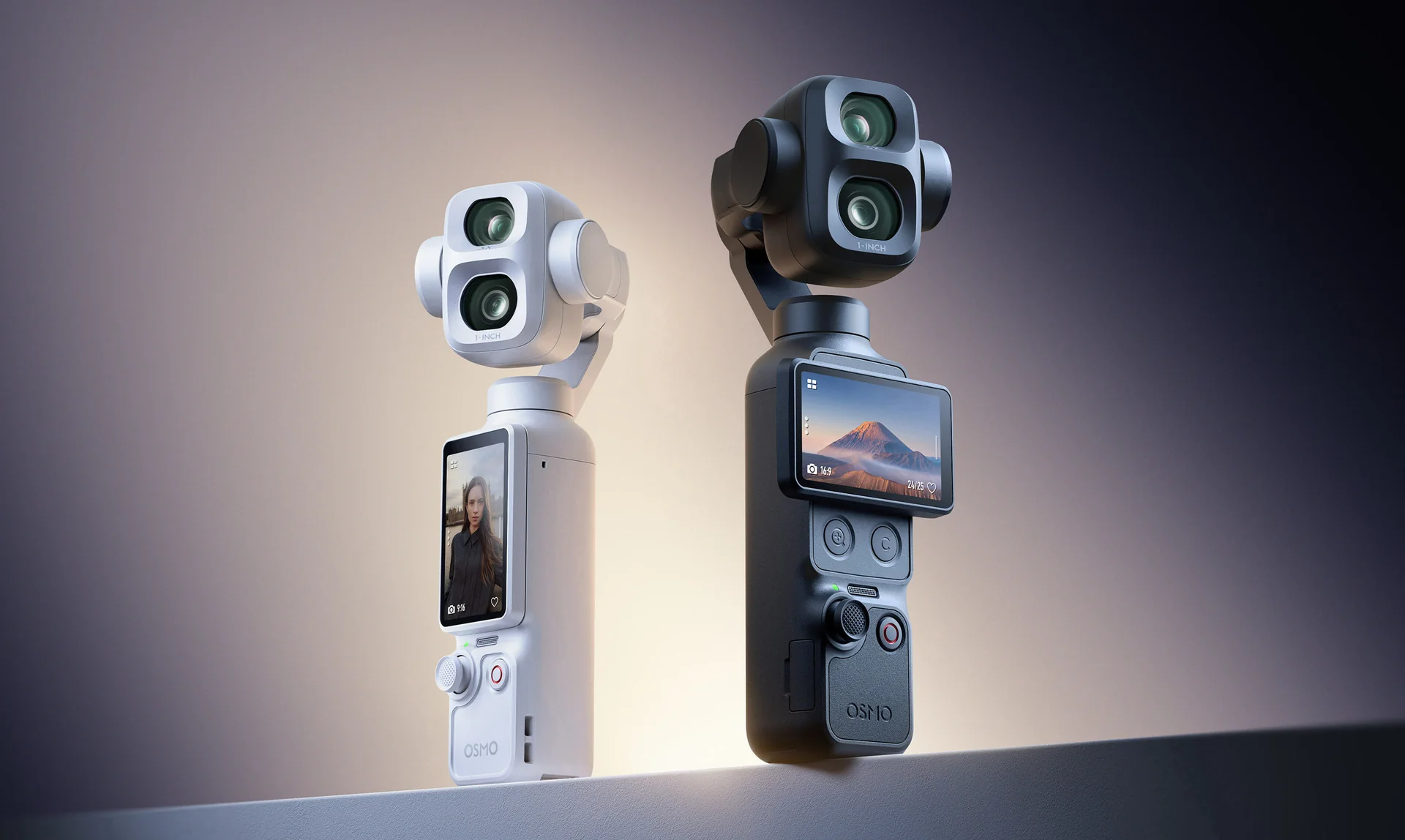
The DJI Osmo Pocket 4P is the first Pocket with two cameras: a 1-inch wide-angle with a LOFIC sensor and a 60 mm telephoto, both mounted on the same 3-axis gimbal. DJI launched it globally on July 30, 2026, and the Standard Pack costs €599 in its official store. What the spec sheet does not separate is that the two cameras do not play in the same league, and that several criticisms from the first reviews no longer apply after the August firmware.
The Pocket 4P is the best pocket camera for recording with the wide-angle; the 3x telephoto adds framing options, but it is not on the same level as the main sensor.
What the DJI Osmo Pocket 4P is and where it fits
It is the upper-tier version of the fourth generation. The Osmo Pocket 4 came out on April 16, 2026 with a single 1-inch camera, and DJI unveiled the 4P at the Cannes Film Festival on May 14, without pricing or a spec sheet, before the global launch in late July. The lineup is tiered in the DJI Spain store: the standalone Pocket 3 at €288, the Pocket 4 Essential Pack at €479, and the 4P Standard Pack at €599.
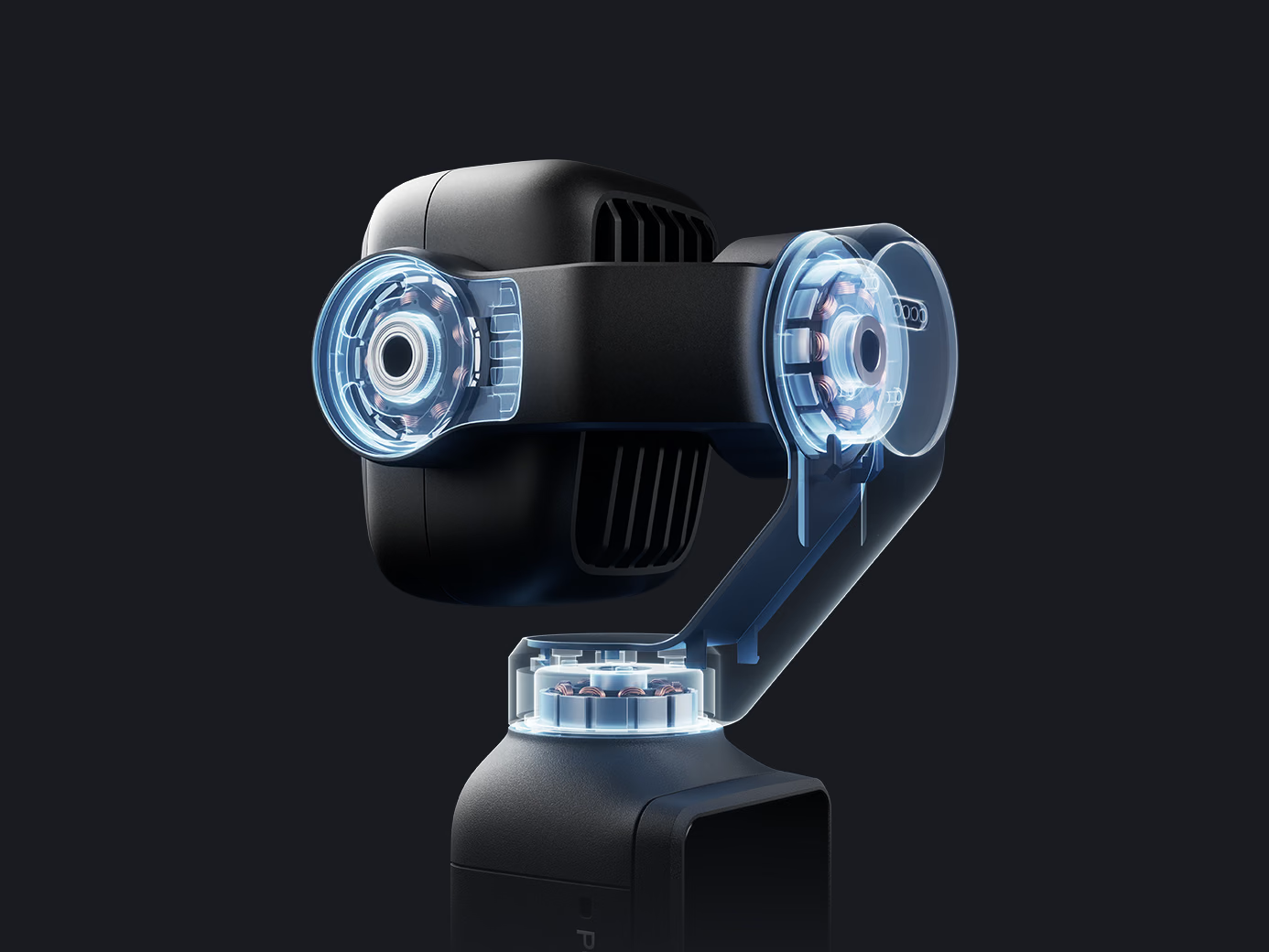
The format is the usual one: a handle with a rotating screen, a mechanical 3-axis gimbal on top, and the camera at the tip. The difference is in the head, which now carries two modules and weighs more. The 4P weighs 230 g and comes in Classic Black; the Pearl White version was not available at launch, according to DJI's own store.
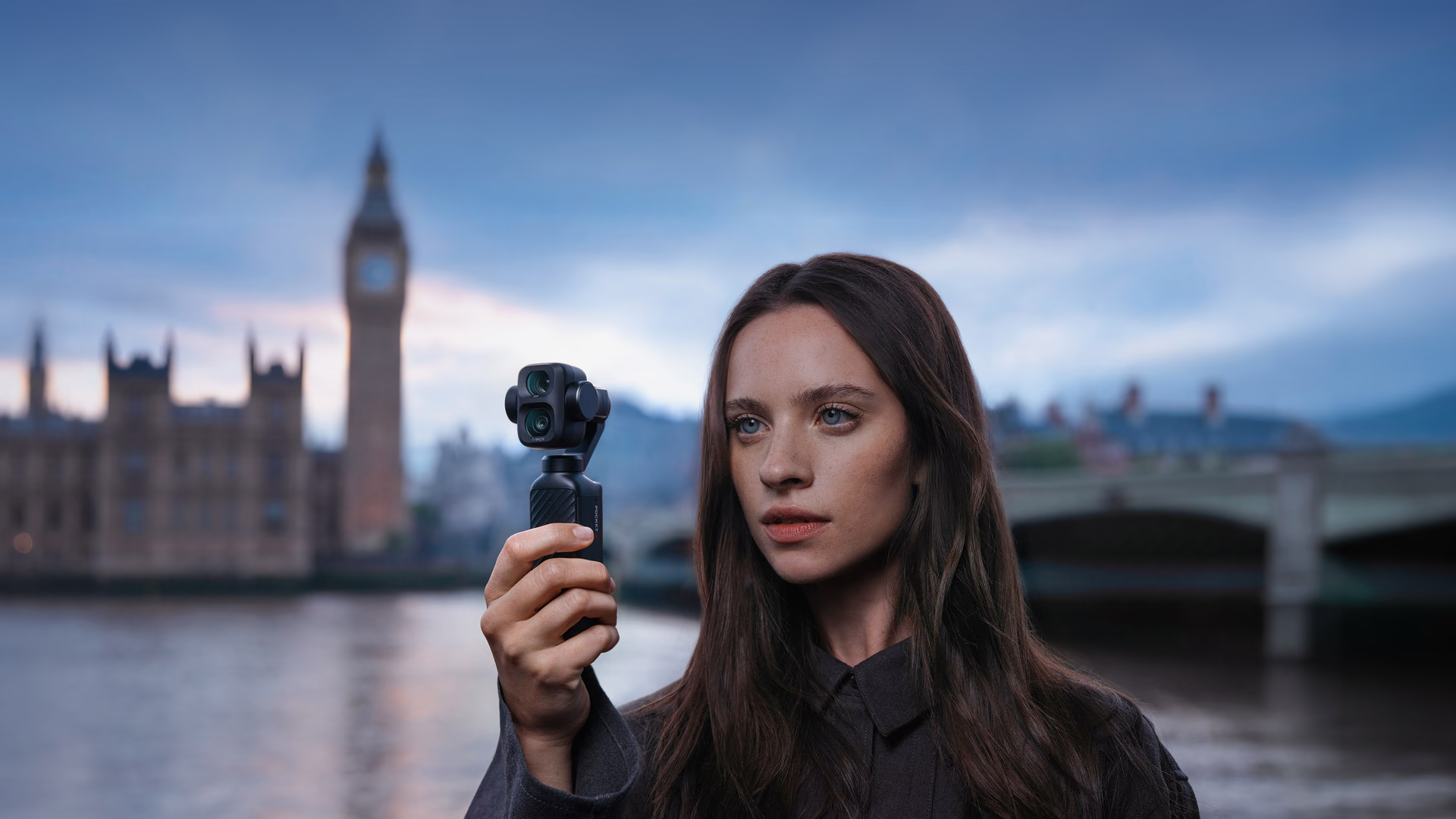
Two cameras that are not the same: LOFIC and 60 mm telephoto
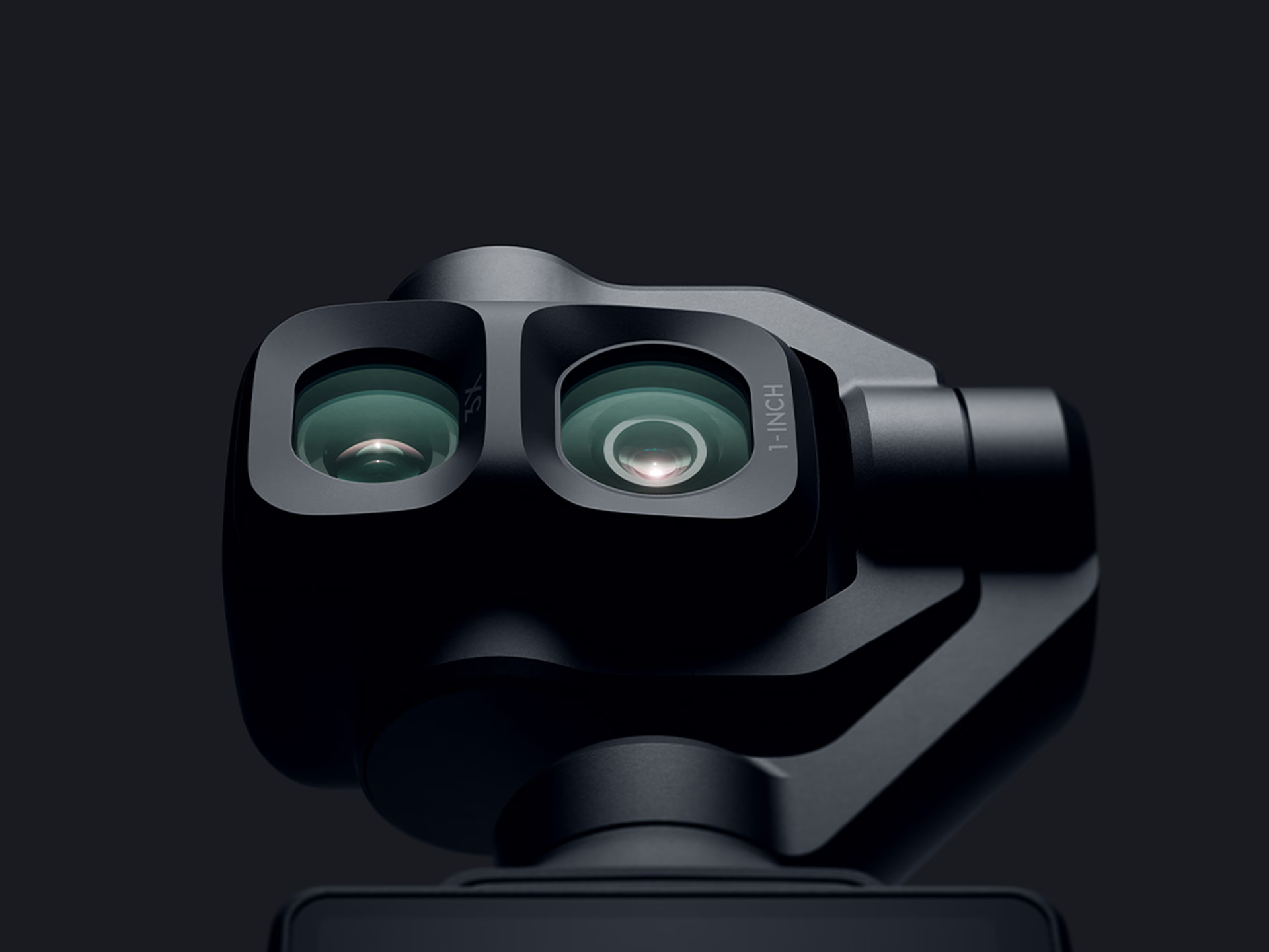
DJI markets the 4P as a dual-lens camera, but the two cameras have different sensor sizes and perform differently. Separating them is the key to understanding what buyers get when they pay the difference over the Pocket 4.
The 1-inch wide-angle with LOFIC
The main camera has a 1-inch CMOS sensor, equivalent to 20 mm, with an f/2.0 aperture. The new feature is LOFIC (lateral overflow integration capacitor): each pixel has an extra capacitor that stores the charge that overflows when there is too much light, instead of clipping it. That means more information in the highlights, which is exactly where a small sensor blows out first.
That is where DJI's headline figure comes from: up to 17 stops of dynamic range, with the 10-bit D-Log 2 profile. The Pocket 4, with the same sensor size but without LOFIC, claims 14.
The 60 mm telephoto
The second camera has a 1/1.28-inch sensor, equivalent to 60 mm, with an f/1.8 aperture. It is a real 3x optical zoom, not a crop from the main camera. From there, the zoom button jumps to 6x and video goes up to 12x, now with digital zoom. DJI clarifies in its spec sheet that 12x is not available in Photo, Low-Light, Slow Motion, or Timelapse.
The telephoto sensor is considerably smaller than the 1-inch sensor, and that costs it dynamic range. The numbers are below.
Key specifications of the Osmo Pocket 4P
All data comes from the DJI spec sheet and its launch announcement.
Design and use
The rotating screen is still the switch: rotate it, and the camera turns on and is ready to record. DJI adds gestures to activate ActiveTrack or start recording without touching the screen. The Standard Pack includes the fill light, a handle with a 1/4" thread, wrist strap, case, and USB-C 3.1 cable.
The cost of the second camera is felt in the hand. TechRadar and Fstoppers agree that the 4P is more top-heavy than previous generations, and both found it more comfortable with the handle or mini tripod during long takes.
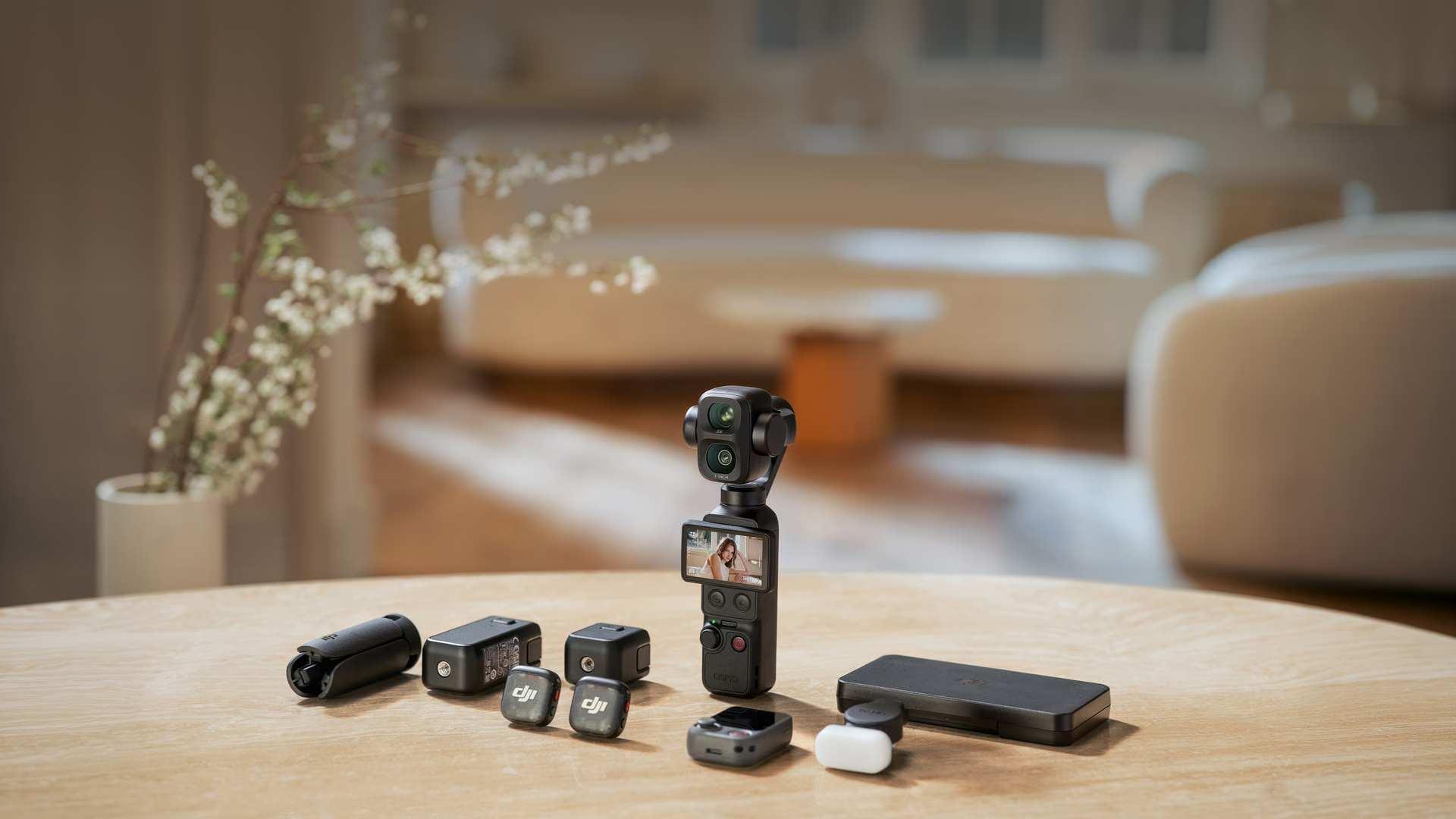
The accessory ecosystem is what turns it into more than a travel camera. There is a Black Mist filter and a set of ND filters, a wide-angle lens, a battery handle, and microphones from the DJI Mic line, and DJI shows it connected to a laptop as a webcam. The Vlog Pack adds a DJI Mic Mini 2, mini tripod, and the Osmo FrameTap remote, and is listed at €689 according to DroneXL and Maison du Drone; the DJI Spain store does not publish it on the product page.
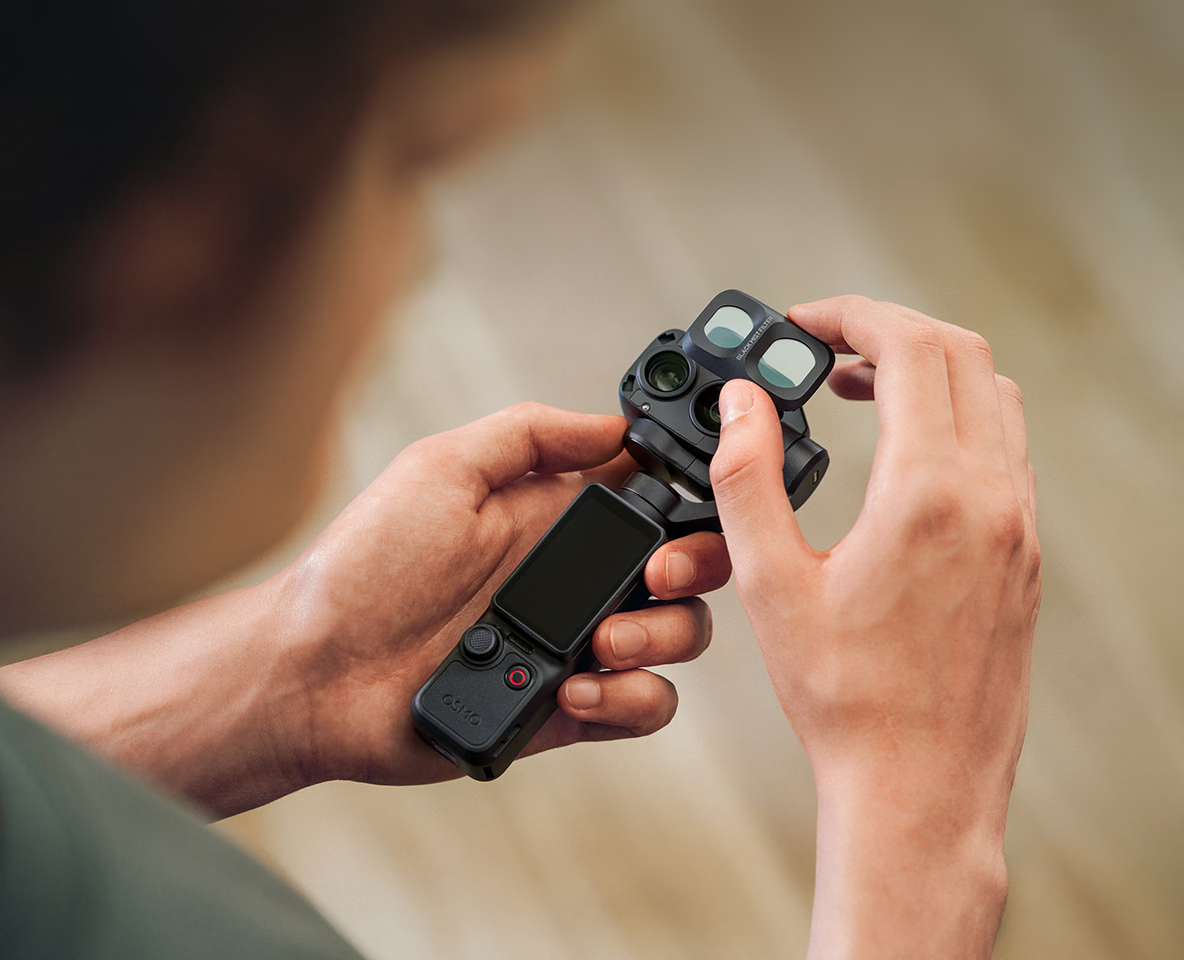
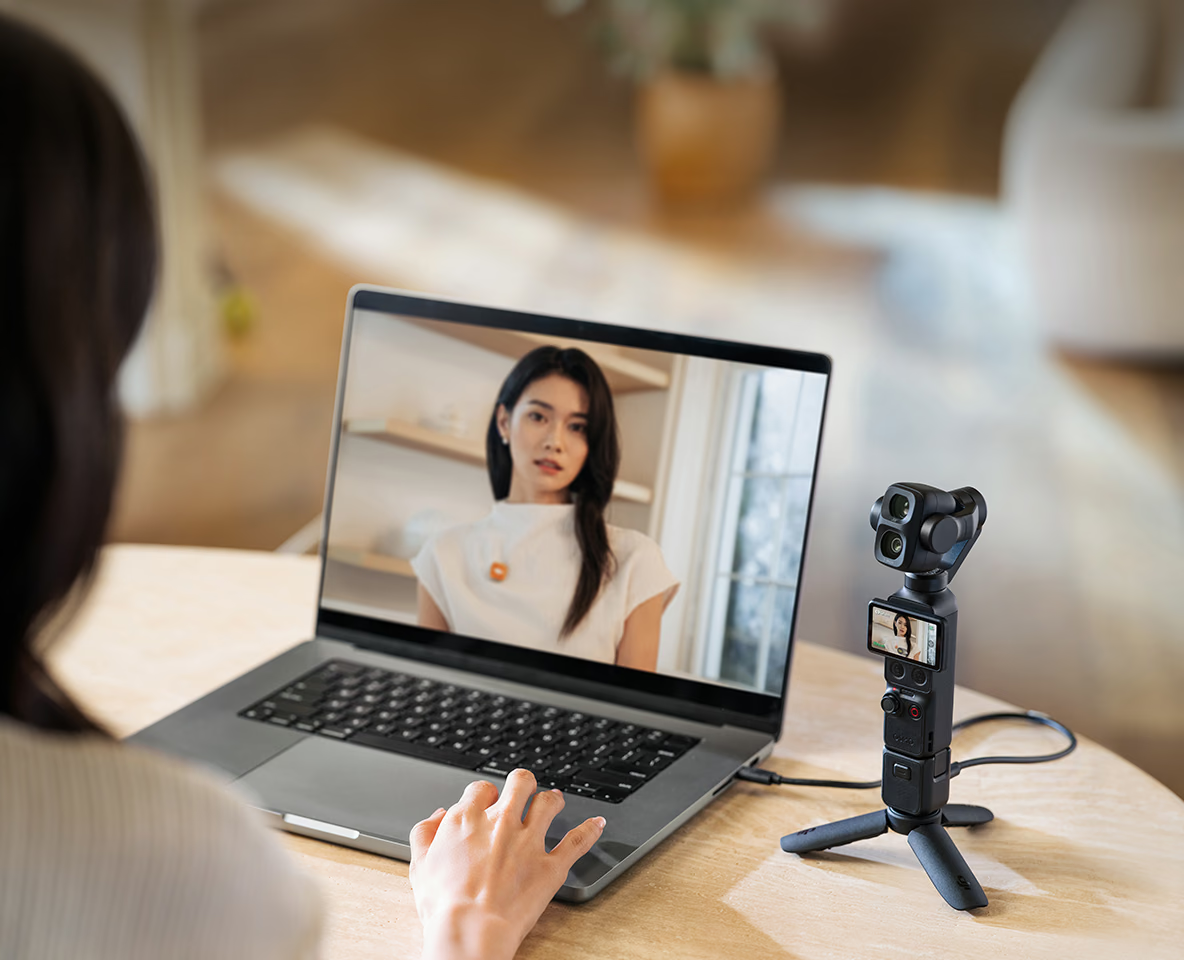
Image quality: what CineD measured
The best way to separate the two cameras is the CineD lab, which measured each one with a Xyla21 chart and Imatest. These are measurements from a media outlet using its own method, not DJI data.
The wide-angle confirms what DJI promises: at SNR = 1 it exceeds 17 stops, and CineD placed it above the ARRI Alexa 35 in that dynamic range test. In exposure latitude, however, the Alexa 35 remains ahead, with 12 stops versus 10.
The telephoto sits more than 4 stops lower. PetaPixel saw it in the footage: highlights blow out sooner and skin with heavy contrast takes on a waxy look. The telephoto is useful for changing the shot without moving, not for high-contrast scenes.
Low light and fill light
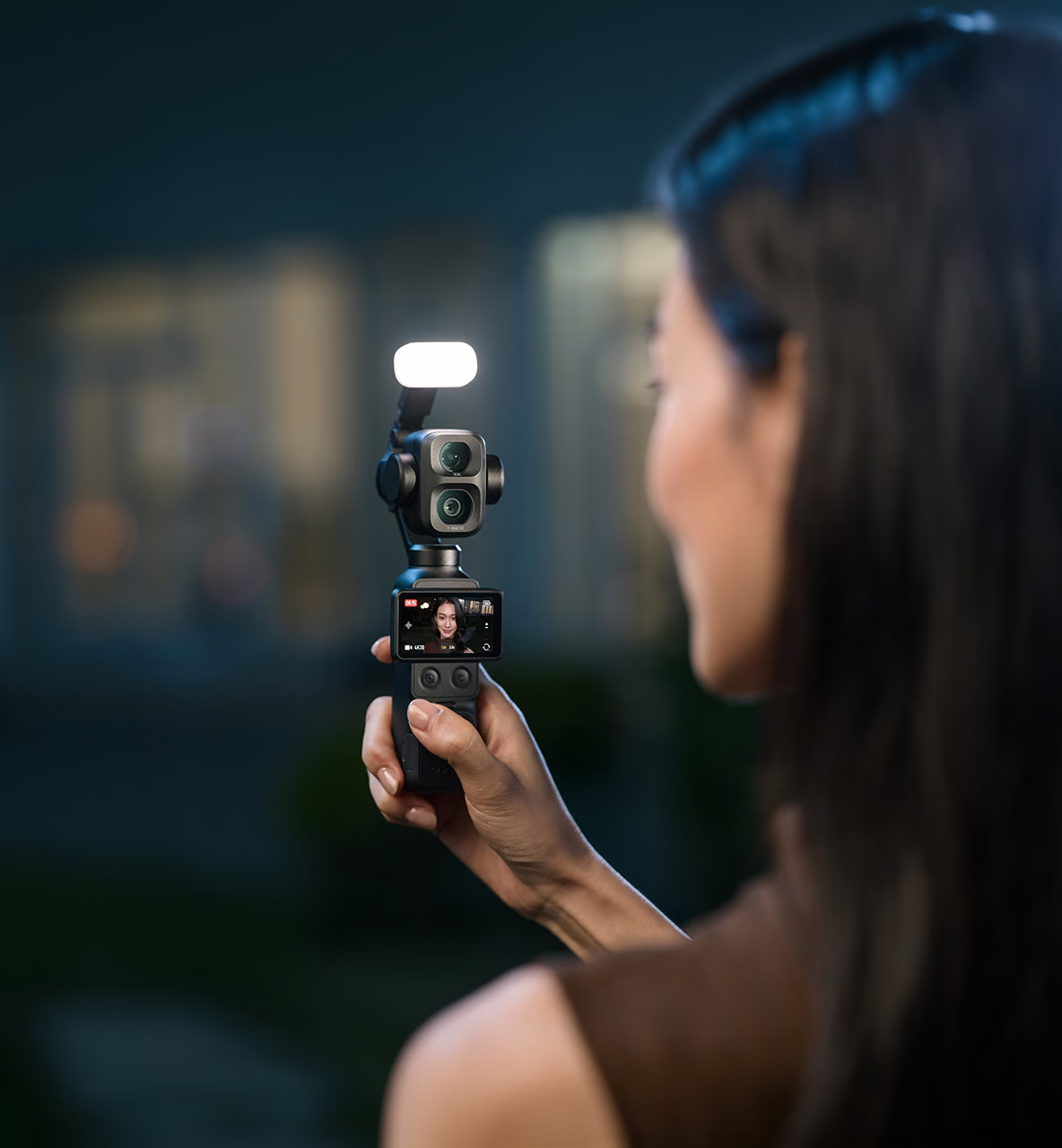
The wide-angle performs better in low light than the Pocket 4's, according to PetaPixel. For the face of the person recording at night, the Standard Pack includes a fill light with three brightness levels (12, 25, and 40 lux) and three color temperatures (2,800, 4,000, and 5,500 K). TechRadar considers it decisive indoors and in low light, and almost irrelevant in full sun.
Tracking, Live Photo, and modes
ActiveTrack 8.0 tracks up to eight people in the frame and can frame either one subject or several. It is the feature most praised by reviews, with one nuance from Fstoppers: when the subject leaves the frame, it sometimes does not reacquire it. TechRadar describes something similar with fast subjects, which the camera sometimes chases instead of keeping centered.
Live Photo records in 4K one and a half seconds before and after each photo, and photos go up to 37 MP. There is also a video mode with slow shutter for light trails and motion blur, plus three lapse modes: Hyperlapse, Timelapse, and Motionlapse.
What you can record with each camera
This is the table the launch reviews do not have, because firmware 01.01.71.20 from August 19, 2026 changed part of it. According to the roundup of DJI notes published by Newsshooter, that version added 10-bit D-Log in slow motion. D-Log 2 is still not available in slow motion.
If you read that the 4P does not record in log in slow motion, that was true until August. What remains true is that the 17-stop profile lives only on the wide-angle, so mixing shots from both cameras in the same scene still requires matching two different profiles in the edit.
Battery, storage, and connectivity
The battery is 1,545 mAh and built in: you cannot replace it at home, and for more runtime there is the battery handle. DJI claims up to 210 minutes and an 80% charge in 18 minutes. That is 30 minutes less than the Pocket 4's 240 minutes, which DJI measures at 1080p at 24 fps without the fill light.
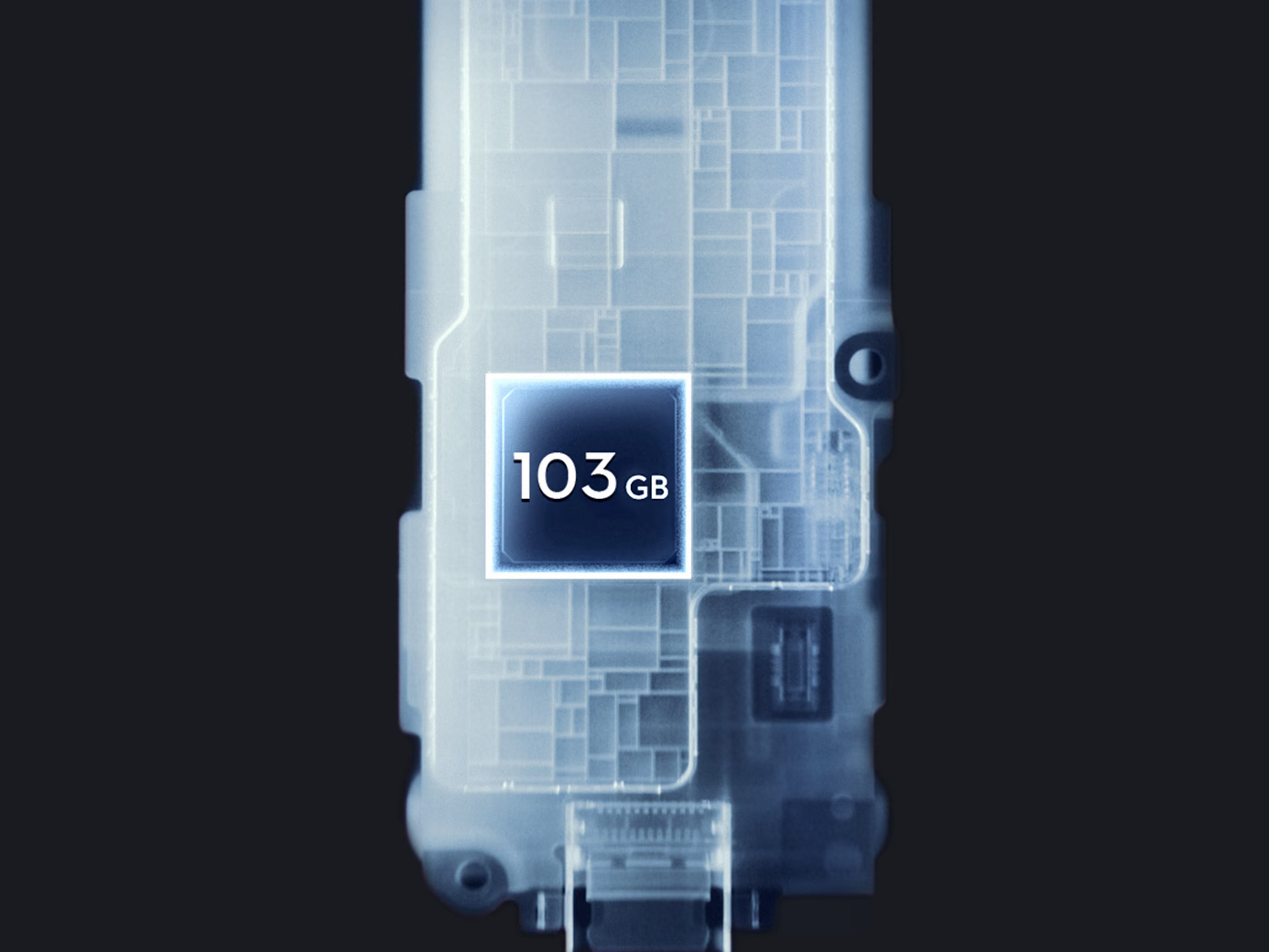
Internal storage is 103 GB, in addition to the microSD slot. It is convenient for heading out without a card, but it has a practical consequence: whatever you record there stays inside the camera until you transfer it. For an important shoot, it is better to record to the microSD, which can be removed and copied anywhere.
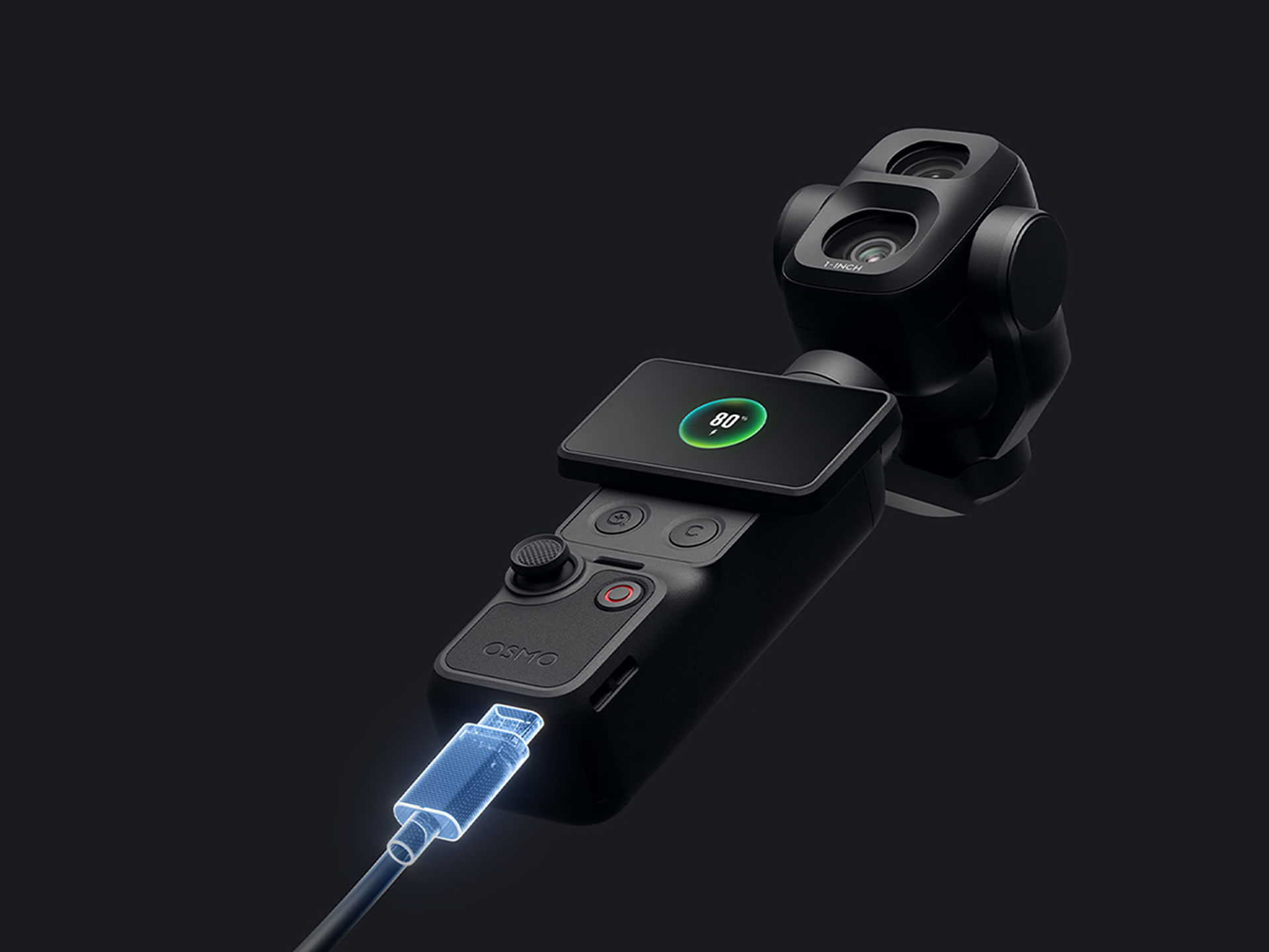
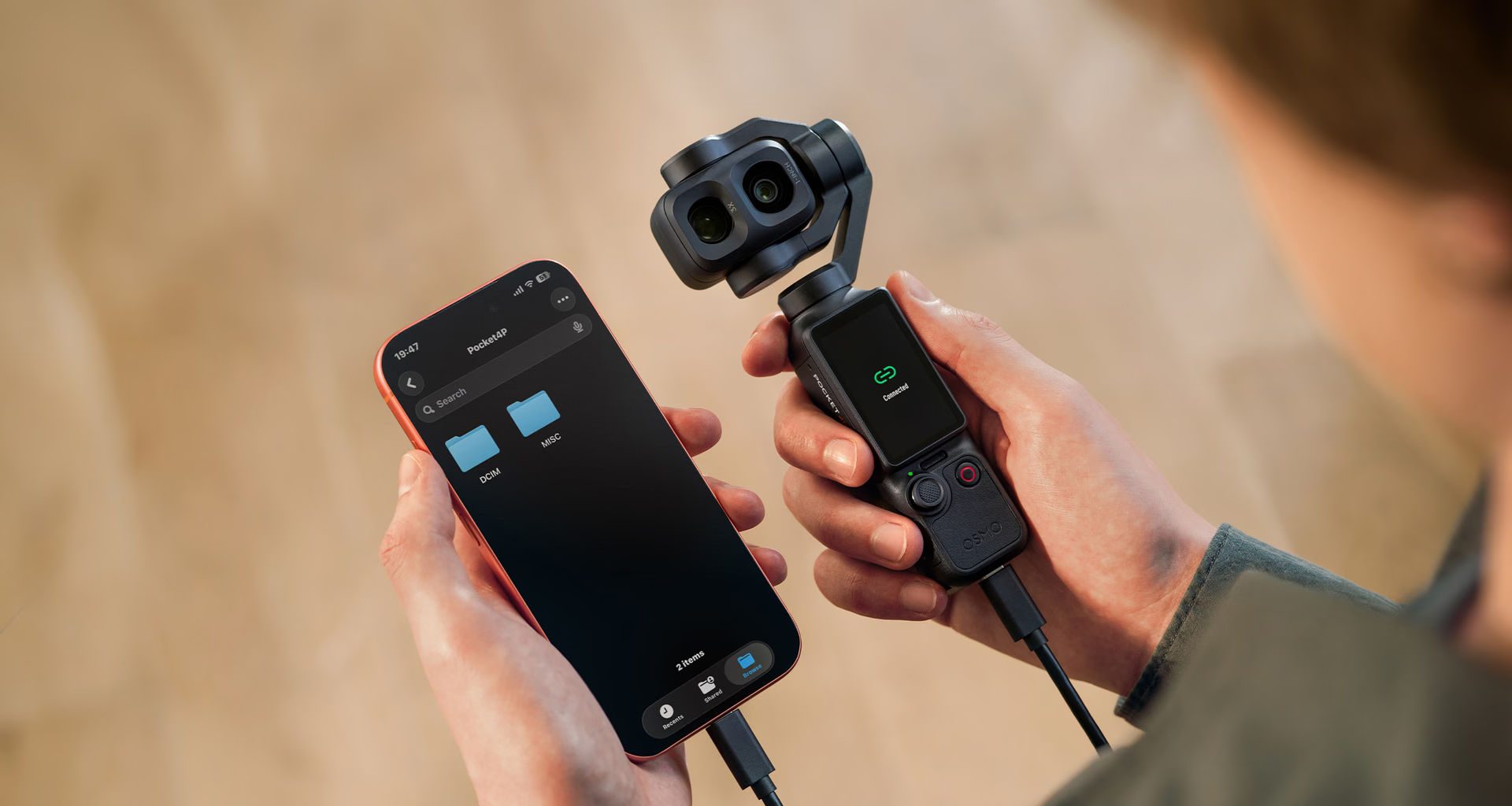
Over cable, the USB 3.1 port transfers up to 800 MB/s to a computer or phone, and the camera appears as a drive with its folders. DJI also adds Auto Media Transfer, which on iPhone requires an iPhone 12 or later with iOS 26.4.1. Since the August firmware, it also uploads files directly to Google Drive, OneDrive, or a NAS, with services varying by country.
How it compares with the Pocket 4 and Pocket 3
The real question is whether the second camera and LOFIC are worth €120 more than the Pocket 4. The table comes from the DJI Spain store spec sheets.
The dashes mark data that DJI does not publish on that store's spec sheet. The entry packs do not include the same accessories, so the price difference does not compare standalone cameras.
The direct rival outside DJI is the Insta360 Luna Ultra, which also combines 1 inch with a 60 mm telephoto (1/1.3", f/2.0) and, according to its announcement, records up to 8K at 30 fps. According to the Insta360 manual, it weighs 233 g in black, has 47 GB internal storage, and offers 240 minutes of battery life at 1080p. It is the option if you want 8K; the 4P wins in measured dynamic range and internal storage.
What honest reviews point out
- The telephoto does not inherit the 1-inch sensor. CineD measured 4.4 fewer stops of dynamic range, and PetaPixel describes highlights that blow out sooner and skin with a waxy look.
- D-Log 2 only at 1x. When switching to the telephoto with that profile, the camera warns that D-Log 2 only works at 1x. Fstoppers sums it up as an underused telephoto.
- Manual exposure is cumbersome. PetaPixel says the camera should remember exposure for each camera when switching, and notes that proper metering requires the app: the screen shows neither histogram nor waveform.
- The gimbal does not correct vertical bounce. The 3-axis system does not compensate for the up-and-down motion of footsteps, according to PetaPixel.
- The internal microphone struggles with wind. PetaPixel found it metallic and sensitive to wind; for voice outdoors, a DJI Mic is still the solution.
- It gets warm during prolonged use and charging, though neither TechRadar nor Fstoppers reported overheating warnings.
- It is not sold in the United States. DJI did not launch it in that market, and DroneXL links the absence to DJI's inclusion on the FCC Covered List.
Conclusion: who the Pocket 4P is for
For people who record vlogs or travel videos and already have a Pocket 3, the 4P is the big jump: more dynamic range, D-Log 2, internal storage, better tracking, and a second focal length without changing gear.
For someone just starting out who will not use the telephoto, the Pocket 4 does almost all the same things with 14 stops, 30 more minutes of battery life, and a lower price.
For someone who wants it as a B camera in a professional kit, the 4P's wide-angle has the lab numbers to keep up, as long as the shooting plan does not depend on the telephoto in high-contrast scenes.
For anyone who needs 8K, the Luna Ultra is the alternative.
Frequently asked questions
Is it worth upgrading from the Pocket 3 to the Pocket 4P?
Yes, if you record often and color grade your footage. You move from D-Log M to D-Log 2 with up to 17 stops, from 4K/120 to 4K/240 fps, and you add 103 GB of internal storage, ActiveTrack 8.0, and a 60 mm telephoto. If you only record social clips without editing, the Pocket 4 covers the upgrade for less.
What is the difference between the Pocket 4 and the Pocket 4P?
The 4P adds the LOFIC sensor in the main camera (17 stops versus 14), the D-Log 2 profile, a 60 mm telephoto with 3x optical zoom, and ActiveTrack 8.0. The Pocket 4 claims 30 more minutes of battery life and costs €120 less in the DJI Spain store.
Does the Pocket 4P record in D-Log 2 with the telephoto?
No. D-Log 2 works only with the main camera at 1x. The telephoto records in 10-bit D-Log, also in slow motion since the August 2026 firmware, up to 4K/200 fps.
Can its battery be replaced?
No. The 1,545 mAh battery is built in. To extend runtime, DJI sells an optional battery handle.
Osmo Pocket 4P
Pocket camera with a 3-axis gimbal and two cameras: a 1-inch wide-angle with a LOFIC sensor and a 60 mm telephoto with 3x optical zoom.
Pros
- The 1-inch wide-angle measured 16 stops (SNR = 2) in CineD's lab.
- Second 60 mm camera with real 3x optical zoom, without changing gear.
- 10-bit D-Log also in slow motion since the August 2026 firmware.
- 103 GB internal storage and wired transfer up to 800 MB/s.
- ActiveTrack 8.0 tracks up to eight people.
Cons
- The telephoto measured 4.4 fewer stops of dynamic range than the main camera.
- D-Log 2 works only with the main camera at 1x.
- More top-heavy than previous Pocket models, with a built-in battery.
- Cumbersome manual exposure and metering that requires the app, according to PetaPixel.
- 30 minutes less claimed battery life than the Pocket 4.
Author
Alexis PaezAnalysis based on the manufacturer's official specifications. The author did not physically test the product.
Comments
Share article
You might also like


Camera Looks, Creator Suite, and Magic Capture: what actually helps people filming with the Pixel 11
Film simulations, teleprompter, project folders, and Magic Capture. What each Pixel 11 camera feature solves and where the asterisks are.

Pixel 11: 30x zoom and fast wireless charging come to the base model, but it misses out on HiLight
The Pixel 11 inherits the Pro models’ 5x telephoto and 30x Super Zoom for $899. Full specs, price, sale date, and what it gives up versus the Pro models.

Nothing Phone (4a) Pro: 3.5x periscope and aluminum for USD 499, with three caveats
Review of the Nothing Phone (4a) Pro: 3.5x periscope, aluminum unibody, and 144 Hz for USD 499. What it gains, what it gives up, and who it competes against.