IBM Nighthawk: the 120-qubit chip IBM is using to target fault-tolerant quantum computing in 2029

Index
IBM introduced Nighthawk, its most advanced quantum processor: 120 qubits designed to run the most complex calculations the company has attempted so far. It is the piece anchoring its plan toward 2029, when it promises to have the world's first large-scale, fault-tolerant quantum computer.
The news has two sides. Nighthawk's progress is real and measurable. But the goal that justifies it, so-called quantum advantage, has still not been proven, and IBM itself is submitting it to independent verification.
What is a quantum computer?
A quantum computer does not replace a classical one: it complements it for specific problems. Instead of bits that are either 0 or 1, it uses qubits, which can be in multiple states at once (superposition) and become entangled with one another. That allows it to explore an enormous number of combinations in parallel.
The problem is that qubits are fragile. Heat, a vibration, or even a cosmic ray can alter their state and cause errors. Taming those errors is the entire industry's biggest bottleneck, and it is exactly what IBM is trying to solve.
Nighthawk: 120 qubits in a square lattice
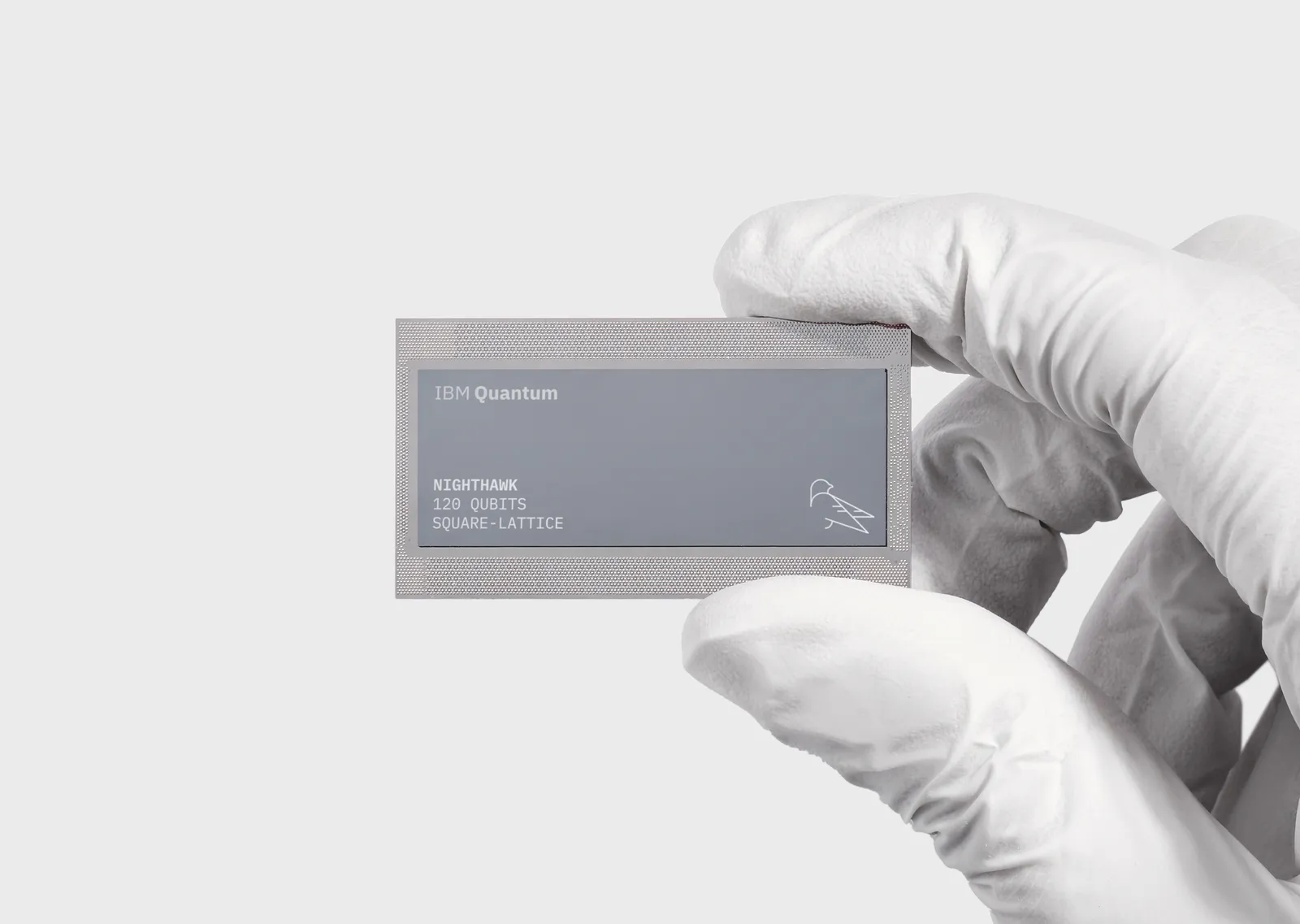
Nighthawk is a 120-qubit chip arranged in a square lattice, where each qubit connects to its four nearest neighbors through 218 tunable couplers. That is 20% more connections than Heron, its predecessor.
That extra connectivity is the real leap. It enables circuits that are 30% more complex while keeping the error rate low, with up to 5,000 two-qubit gates, the operations that create entanglement. The number that matters is not the qubit count, but the circuit depth the chip can handle without losing coherence.
IBM has already deployed the first processor with this architecture, IBM_Miami, available to customers from early 2026.
How it is manufactured
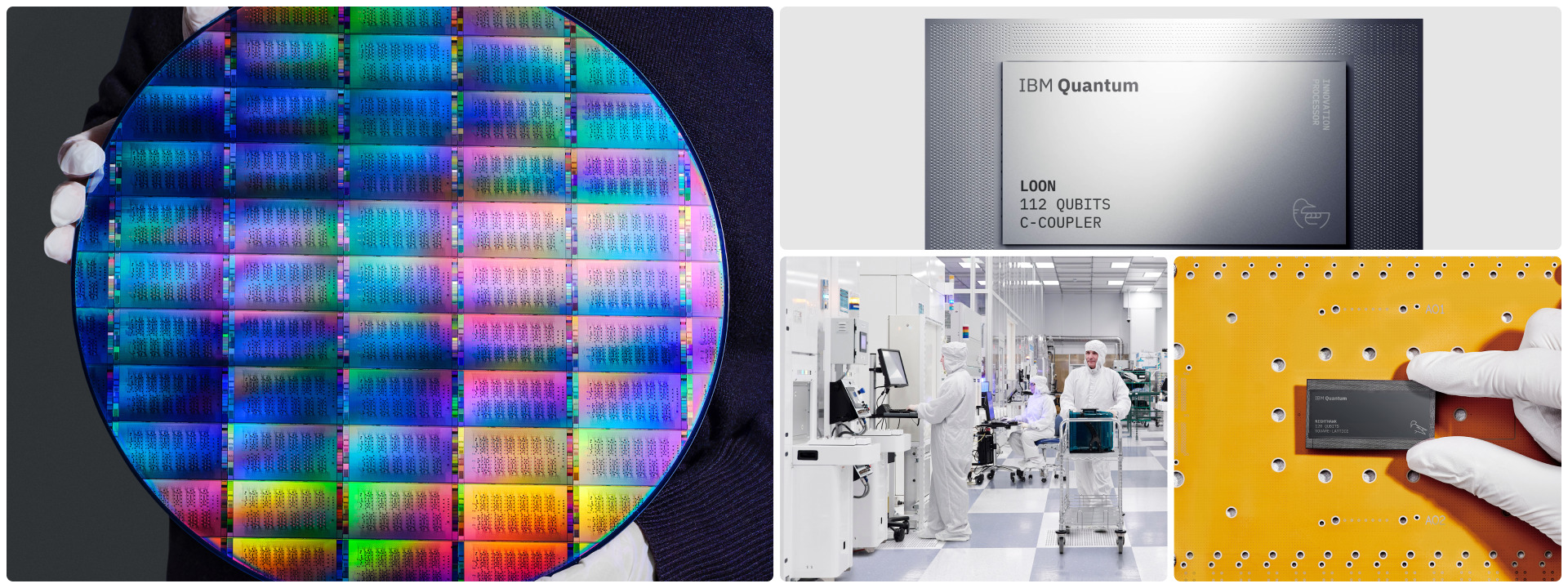
Behind the chip is a manufacturing shift. IBM moved the main production of its quantum wafers to a 300-millimeter facility at the Albany NanoTech complex in New York. The move from 200- to 300-millimeter wafers doubled development speed and increased by tenfold the complexity it can pattern onto each chip.
That manufacturing capability is also the bet behind the $2 billion investment the United States allocated to quantum computing, with IBM building its own wafer fab.
Loon and error correction
In parallel with Nighthawk, IBM introduced Loon, an experimental 112-qubit chip designed not for raw power, but to validate the building blocks of error correction. Its novelty is c-couplers, long-range connections that link qubits beyond their immediate neighbors and enable up to six degrees of connectivity.
That is required for IBM's qLDPC codes, which reduce by up to 90% the number of physical qubits needed for each logical qubit compared with the traditional method. IBM also showed a decoder that processes errors in less than 480 nanoseconds, within the margin required for real-time correction.
The 2029 plan: Starling
Nighthawk and Loon are steps on a long roadmap. IBM plans to take Nighthawk to 7,500 gates in 2026, 10,000 in 2027, and 15,000 in 2028, adding modules until it exceeds 1,000 connected qubits.
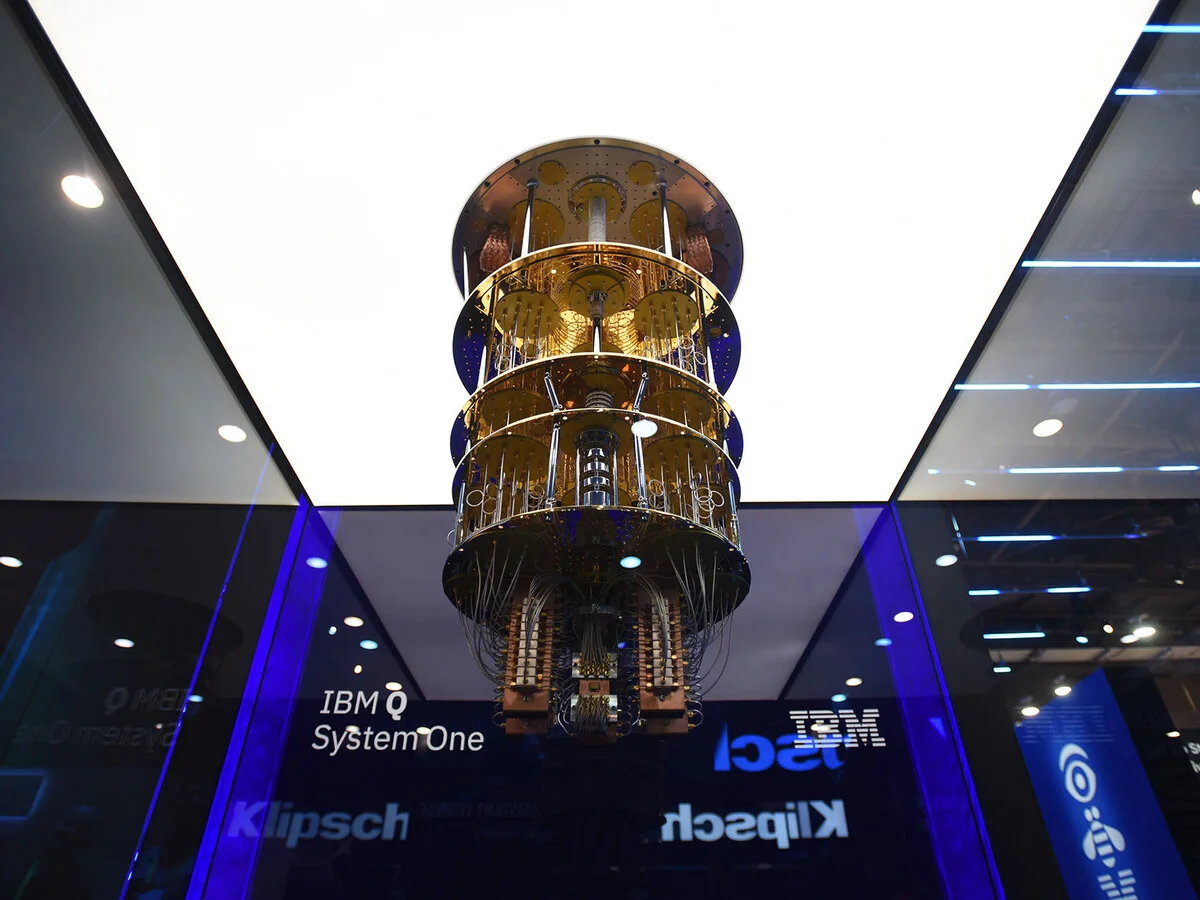
The destination is Starling, the first large-scale fault-tolerant quantum computer, planned for 2029 with 200 logical qubits capable of running 100 million operations. Blue Jay would come next, with 2,000 logical qubits, around 2033. IBM is building both at its historic plant in Poughkeepsie, New York.
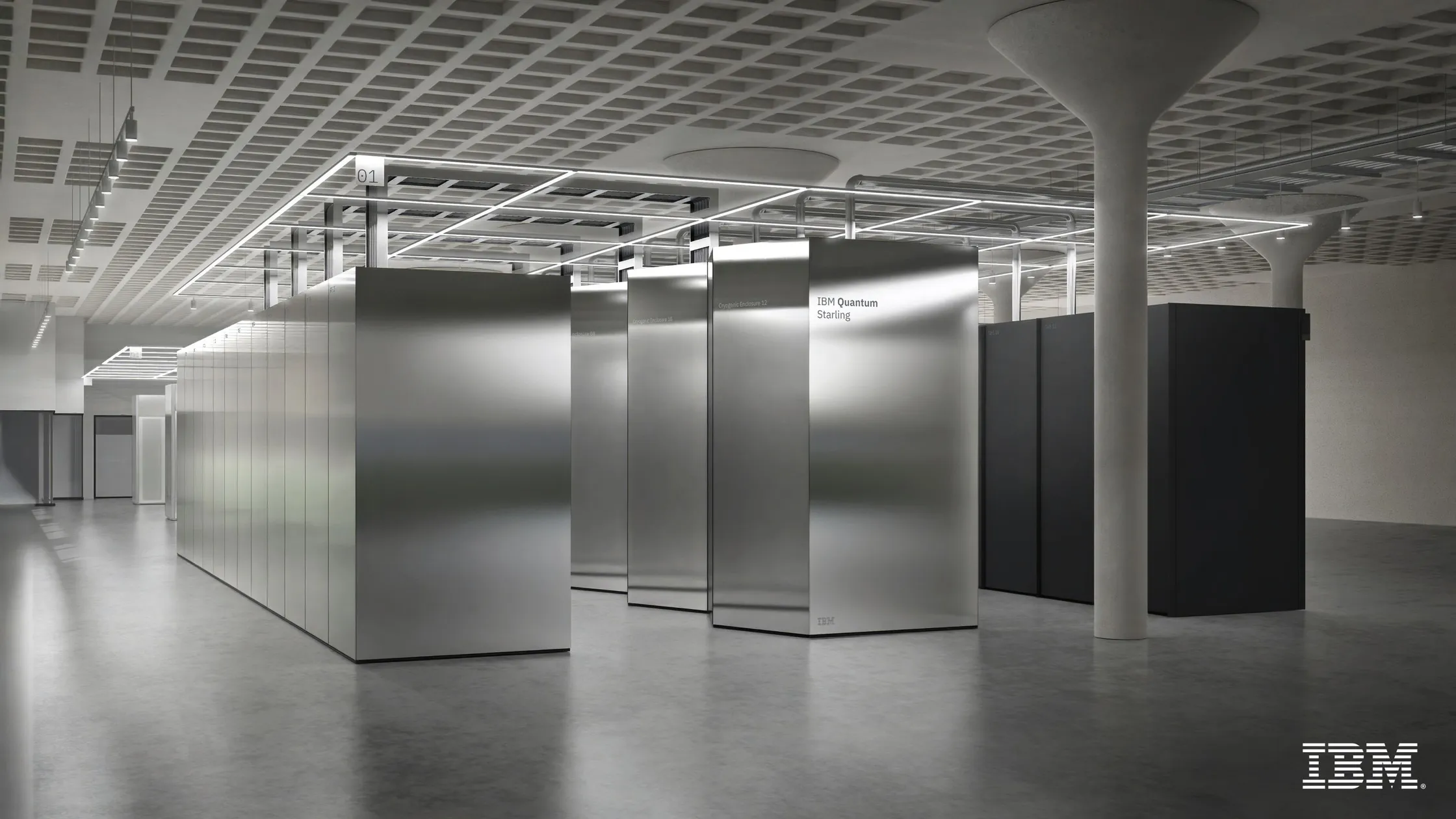
How it compares with the competition
IBM is not alone in the race, but its approach is different. While others have shown a specific chip, IBM is betting on an end-to-end roadmap: design, manufacturing, software, and error correction under a single plan. These are its direct rivals.
Google opened the round with Willow in December 2024: 105 superconducting qubits that managed to reduce errors as more qubits were added, what the field calls being "below threshold." It is the advance most comparable to IBM's, because both use the same family of qubits.
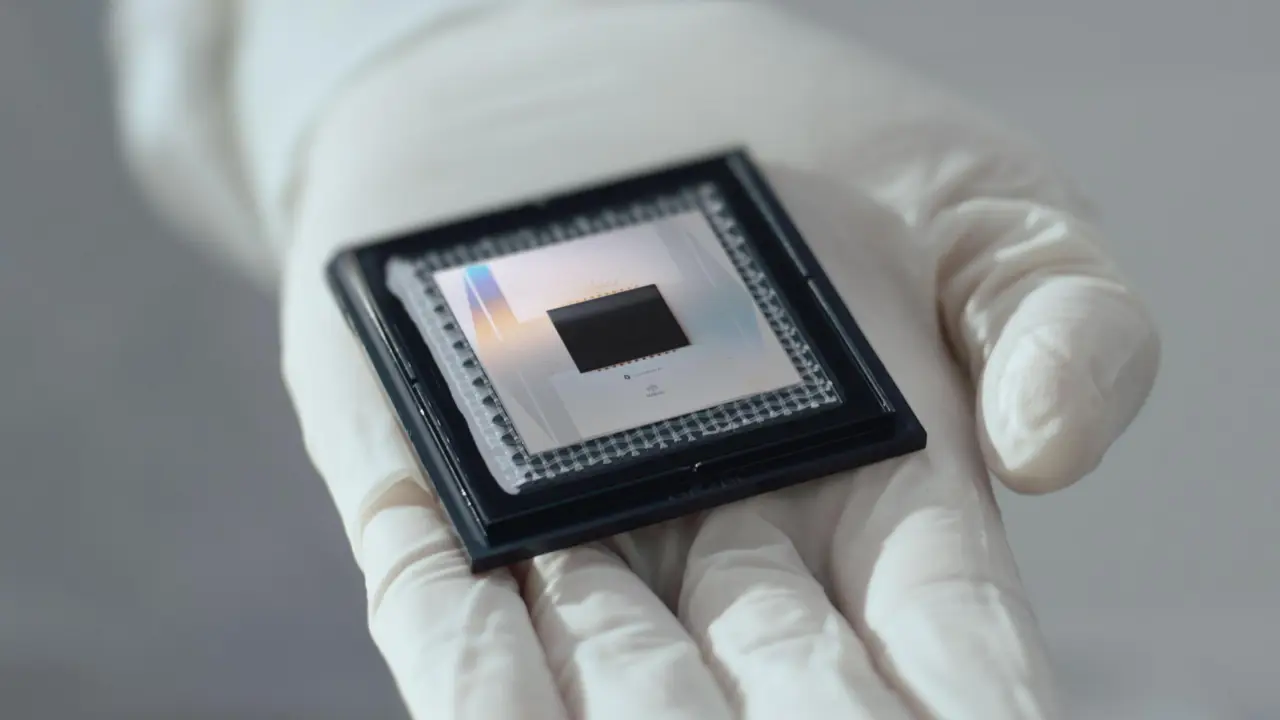
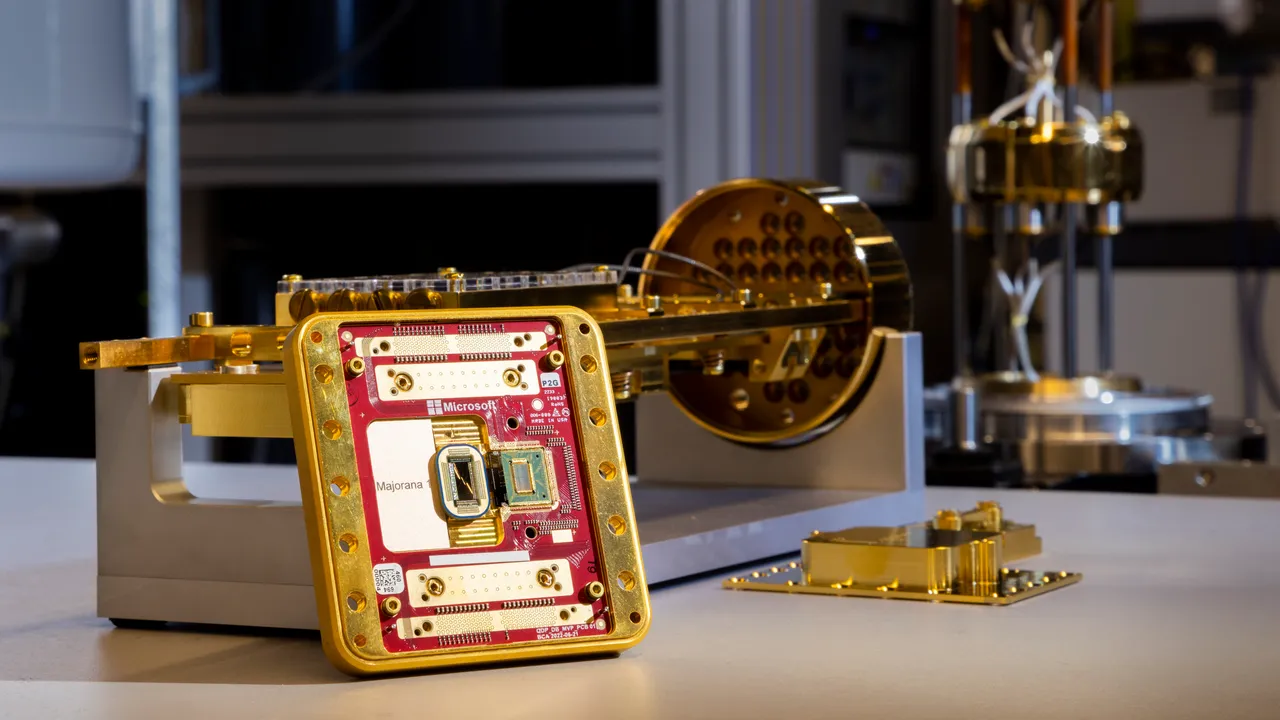
Microsoft took another path with Majorana 1, in February 2025: topological qubits based on a new material, with the promise of being resistant to errors through physics, not correction. The bet is bold, but the result remains disputed: part of the scientific community questions whether the chip has truly demonstrated what Microsoft claims.
Amazon closed the sequence with Ocelot, also in February 2025: it uses "cat qubits" to suppress certain errors at the source and claims to reduce the cost of correction by up to 90%. It is a small prototype, focused on efficiency more than qubit count.
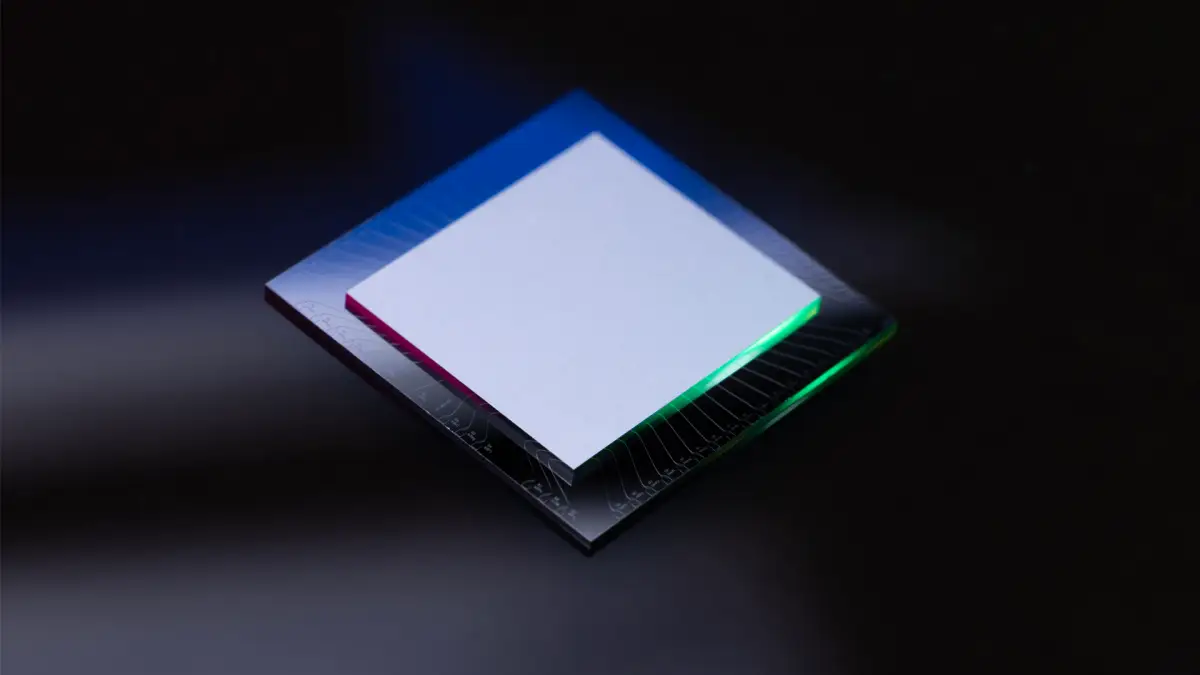
No one has "won" yet. Each architecture is trying to solve the same problem, error, through a different path, and it remains to be seen which one scales first.
Conclusion
IBM reaches this stage with the industry's most complete roadmap and with real manufacturing to back it up. That is its differentiator: not an isolated chip, but the entire chain under control.
What is missing is the most important part. The quantum advantage IBM promises for 2026 has still not been independently verified, and the company itself is submitting it to an open registry so the community can validate it.
For the developer or company already working with qubits, Nighthawk is the most capable platform available today. For anyone watching from the outside, it is worth separating the concrete advance from the promise: the chip is real, the 2029 date is a target, and quantum advantage remains the unknown that will determine whether this entire race was worth it.
Frequently asked questions
What is a quantum computer for?
It is not useful for everyday tasks and does not replace a normal computer. Its strength is in specific problems with a huge number of possible combinations: simulating molecules to develop drugs or materials, optimizing logistics chains, or modeling chemical systems. For everything else, a classical computer is still better.
When will there be a useful quantum computer?
IBM aims to demonstrate quantum advantage, a case where it surpasses classical computing, toward the end of 2026, although still without independent verification. The first large-scale fault-tolerant machine, Starling, is planned for 2029. Only then would the door open to broad industrial applications.
What is a qubit?
It is the basic unit of a quantum computer, the equivalent of the classical bit. The difference is that a bit is either 0 or 1, while a qubit can be in both states at once thanks to superposition. That property is what multiplies its computing capacity, but also what makes it fragile and prone to errors.
Is IBM winning the quantum race?
It depends on how you measure it. IBM has the most detailed roadmap, the largest fleet of quantum computers, and the most widely used software in the field. But Google has shown strong advances in error correction, and Microsoft is betting on a technology that, if it works, could skip stages. There is no defined winner: the race will play out over the next few years.
IBM Quantum Nighthawk
IBM's most advanced quantum processor, designed to explore quantum advantage before the arrival of fault-tolerant systems.
Author
Alexis PaezReport based on official announcements and verified public sources at the time of publishing.