Meta VR Glasses: 100 grams, 5K display, and a puck to take weight off your face
Index
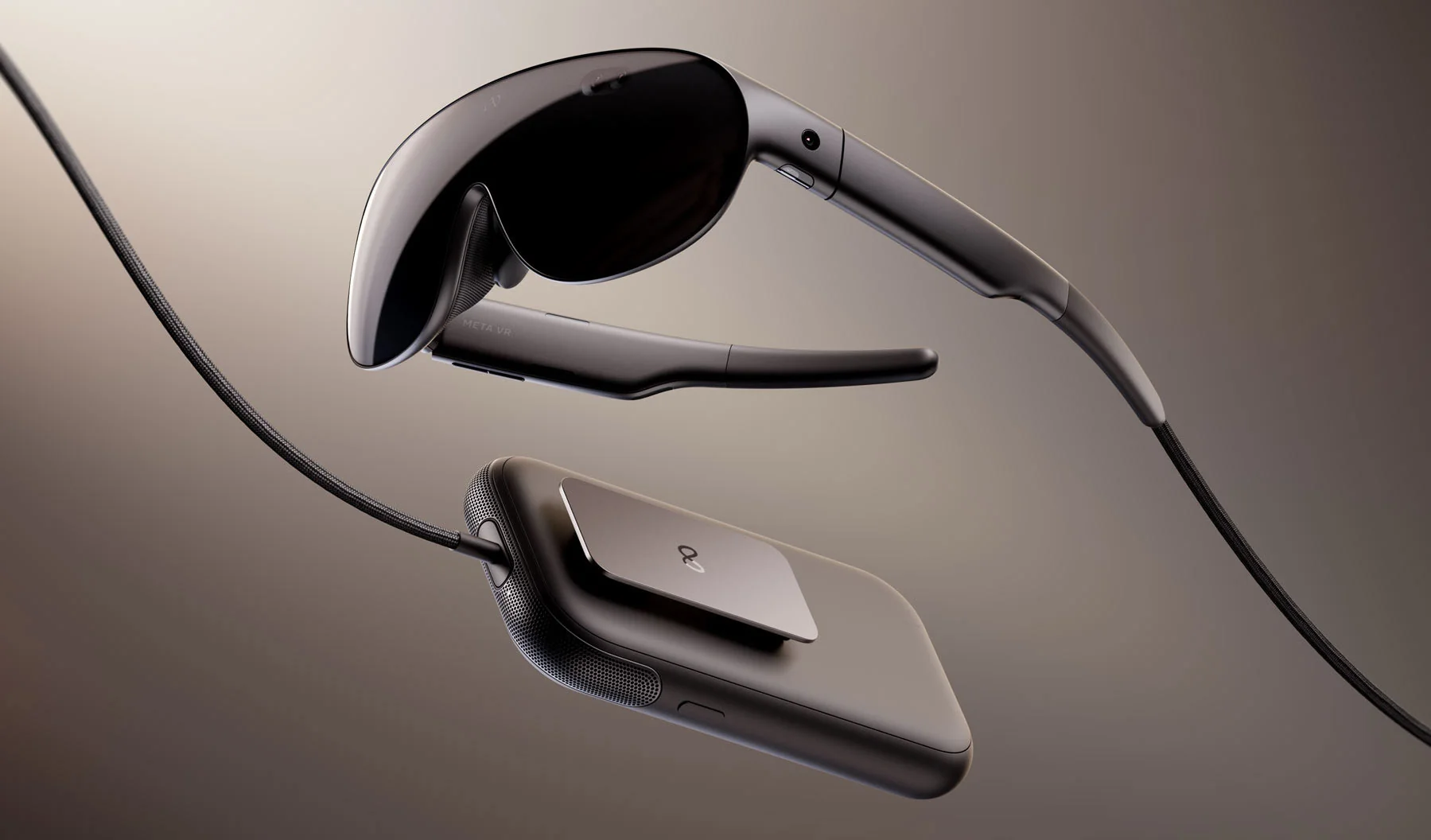
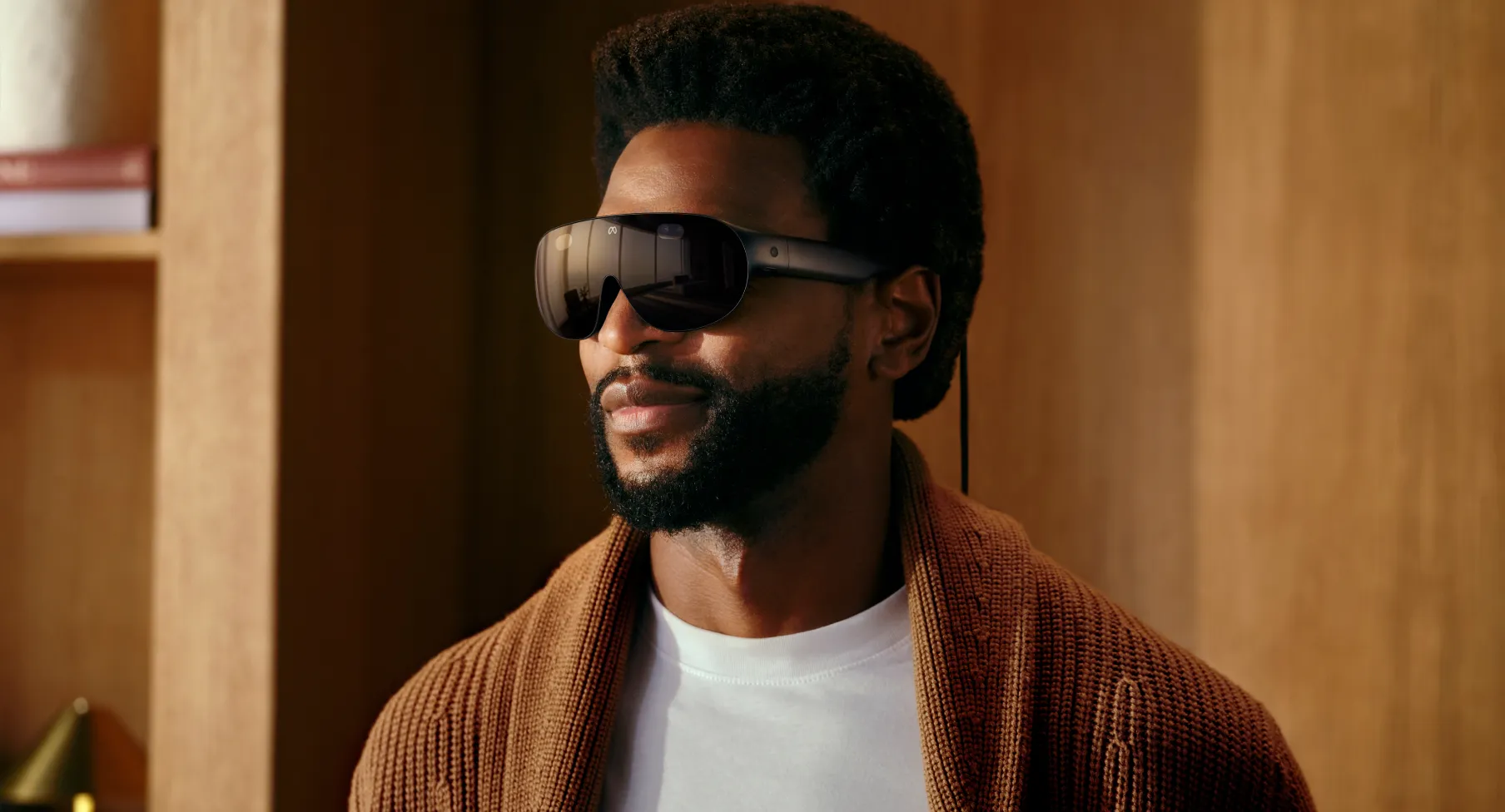
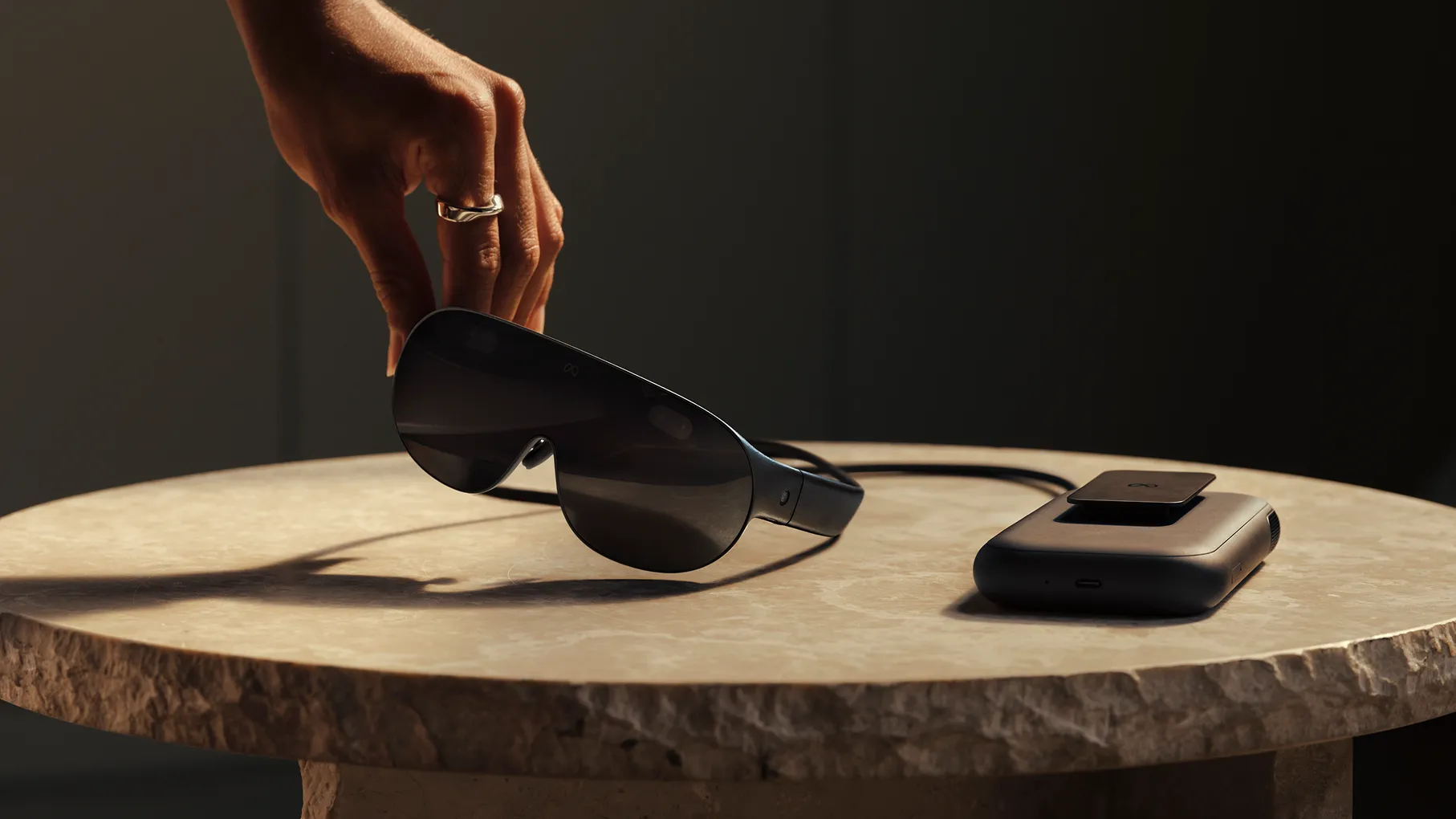
Meta introduced Meta VR Glasses as a new category within its ecosystem: they are not AI glasses and they do not replace Meta Quest, but rather a full virtual reality headset that reduces the weight resting on the face to around 100 grams. The key is a two-piece design. The displays and sensors stay in the glasses; the processor, battery, and storage move to a puck connected by an optical cable.
That distribution makes it possible to use micro-OLED panels with 37 pixels per degree while keeping a much lighter form factor than Quest 3. It also comes with trade-offs: the external module weighs around 300 grams, the field of view is narrower, and the price will be US$1,299.99. Among all the announcements from Meta Connect 2026, this product clearly shows where Meta wants to take virtual reality.
What Meta VR Glasses are and why Meta separated the compute
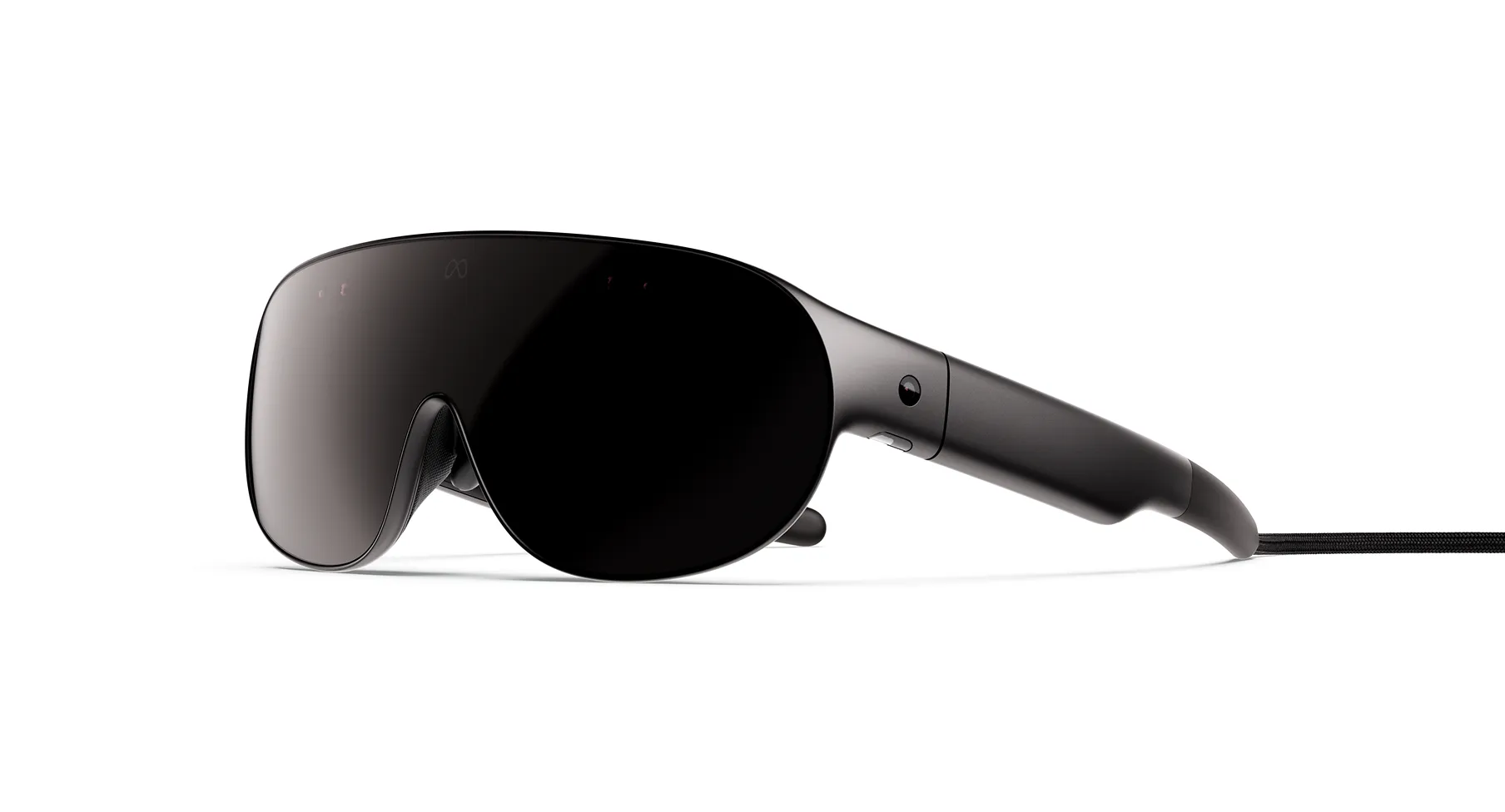
Meta VR Glasses run Horizon OS, share the Quest store, and offer 6DoF tracking. The open temples replace the strap, and the color passthrough cameras let you see your surroundings. Meta positions them as a complement to Quest, aimed at movies, productivity, and forward-facing experiences, not as its replacement.
The official Meta VR Glasses announcement explains the architecture: optics and sensors remain in the headset. The processor, battery, and storage move to a puck connected by optical cable. The module can be clipped to a pocket, belt, or bag, and it includes USB-C and DisplayPort to receive video from a PC, Mac, console, or handheld device.
One hundred grams on your face and a puck in your pocket
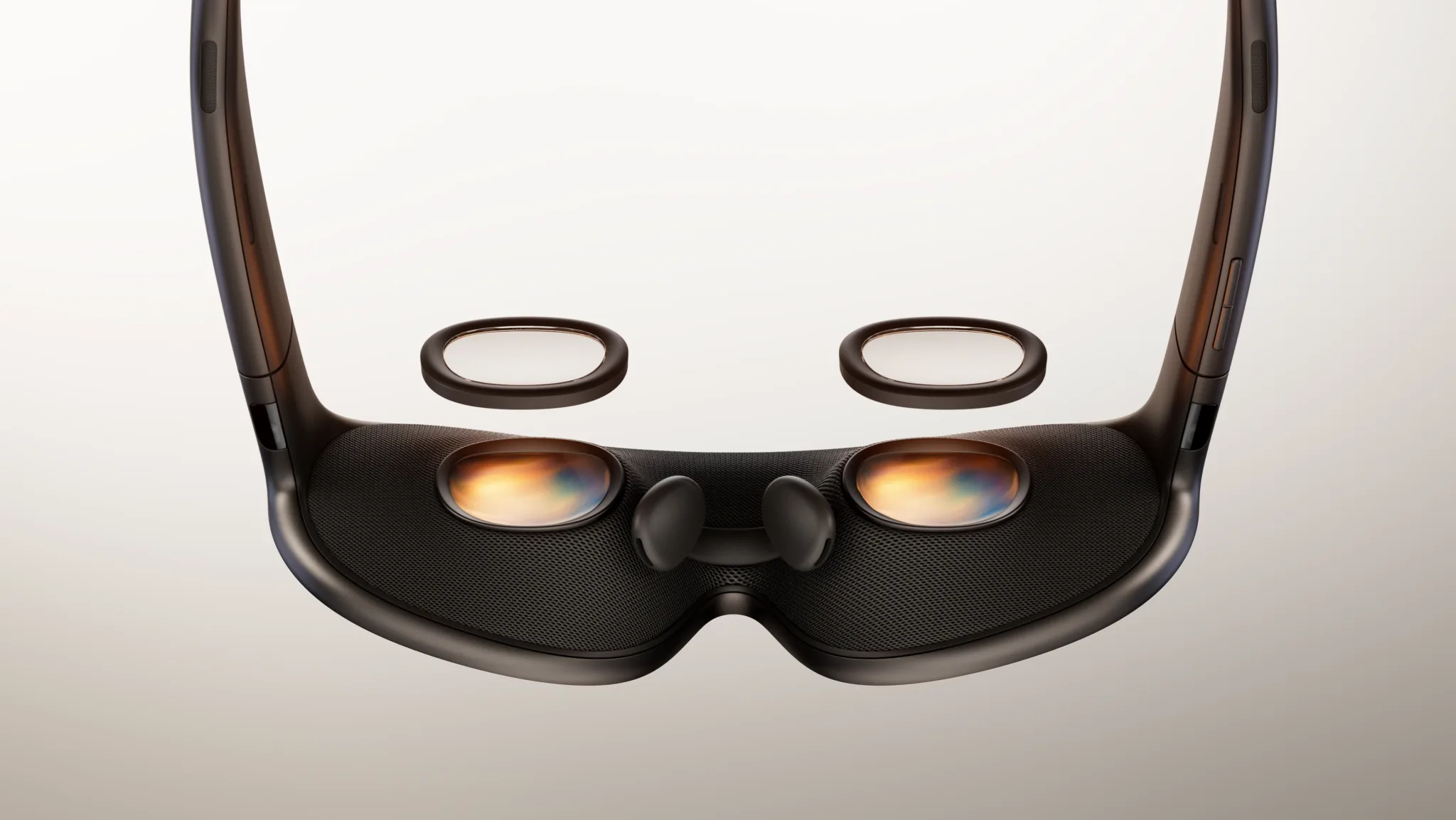
The glasses weigh around 100 grams, about one-fifth of Quest 3. The product page adds that the frame uses a magnesium alloy and that S/M and M/L sizes will be available, with different nose pads. It supports prescription inserts sold separately.
The puck weighs around 300 grams. It does not rest on your face, but it is still part of the setup and remains connected: the comfort comes from moving weight to your pocket, not from eliminating it.
5K micro-OLED displays, 37 PPD, and a 70 × 66 field of view
Meta calls the two-panel micro-OLED system, with 2,412 × 2,288 pixels per eye, a 5K Infinite Display. It reaches 37 PPD versus 25 on Quest 3, runs at up to 120 Hz, and supports Dolby Vision, HDR10, and HLG. The pancake lenses reduce thickness and allow interpupillary distance adjustment between 56 and 70 millimeters.
The sharpness depends on concentrating those pixels within a 70° × 66° field of view, compared with 110° × 96° on Quest 3, according to the official device comparison. Text gains definition and the optics become more compact, but peripheral vision decreases. Passthrough offers 26 PPD, autofocus, and depth sensing, though it still retains a more noticeable feeling of looking through a window.
Eye tracking, hands, and Horizon OS
Your gaze acts as the pointer and a pinch as selection. The front-facing and downward-facing cameras expand tracking so your hands can remain on your lap or on a table. You can also scroll content by rubbing your thumb and index finger, use Meta AI by voice, and unlock the headset through eye tracking, which also enables foveated rendering.
Horizon OS keeps the Quest store, purchases, and SDK. The headset does not include controllers, though it supports Touch Plus bought separately or reused from Quest 3 and 3S. Games designed for controllers will need hand-tracking adaptations, and the field of view can leave out elements placed near the edges.
Movies, sports, and immersive entertainment
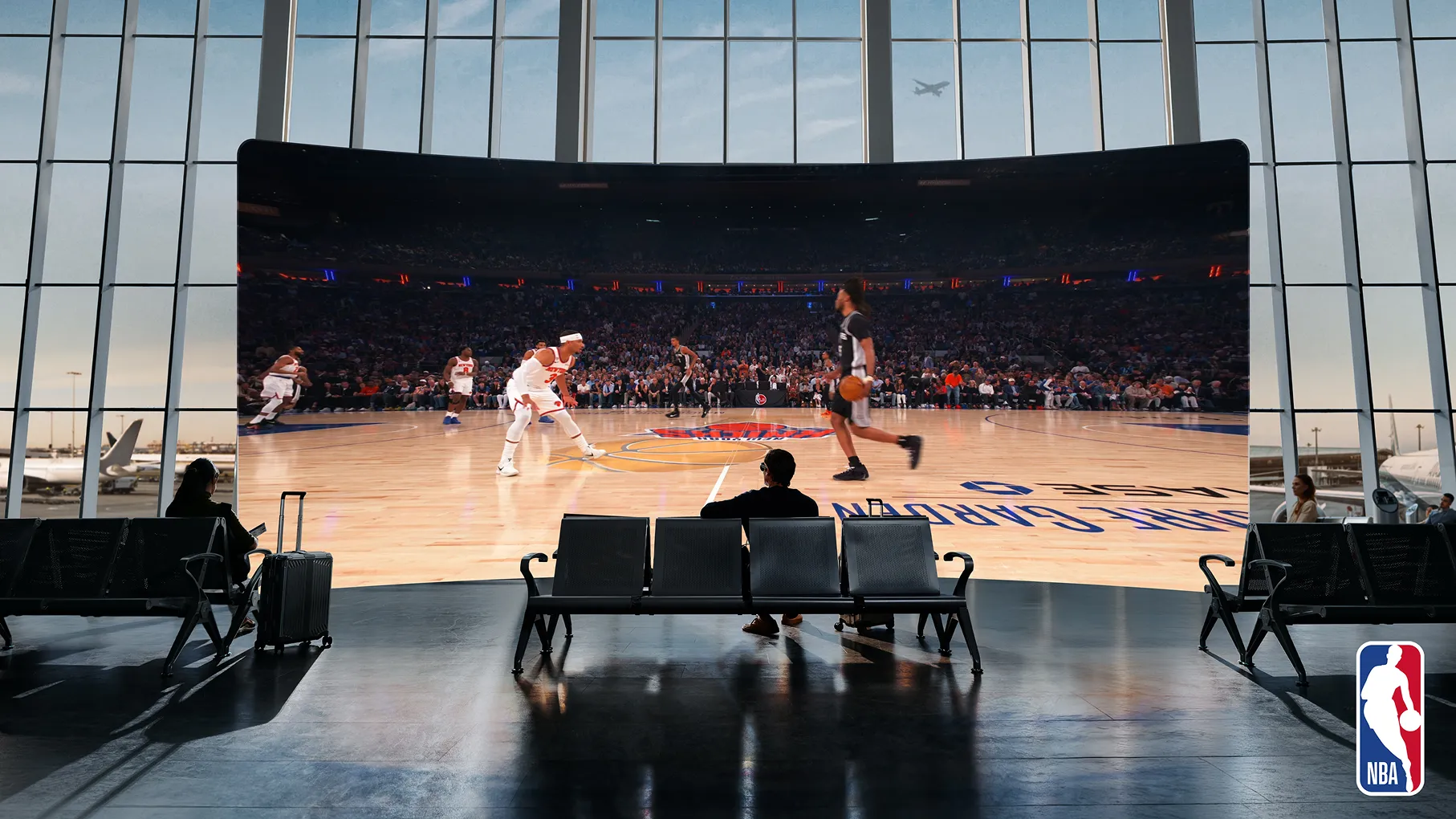
Meta positions the device as the first VR headset with IMAX Enhanced certification. Disney+ will offer 3D movies and themed environments. Prime Video, YouTube, DIRECTV, AMC+, Crunchyroll, Plex, and ESPN will integrate their catalogs. It also promises 8K sports broadcasts in 180° and more than 100 immersive events per year, depending on the country and each subscription.
The open audio keeps the user aware of their surroundings, but it has limits. In its half-hour hands-on, Road to VR described modest bass, sound leakage, and reflections that reduced brightness without the optional light blocker. For a flight, headphones and that accessory seem more sensible than relying only on the built-in speakers.
Productivity and multi-screen desktops
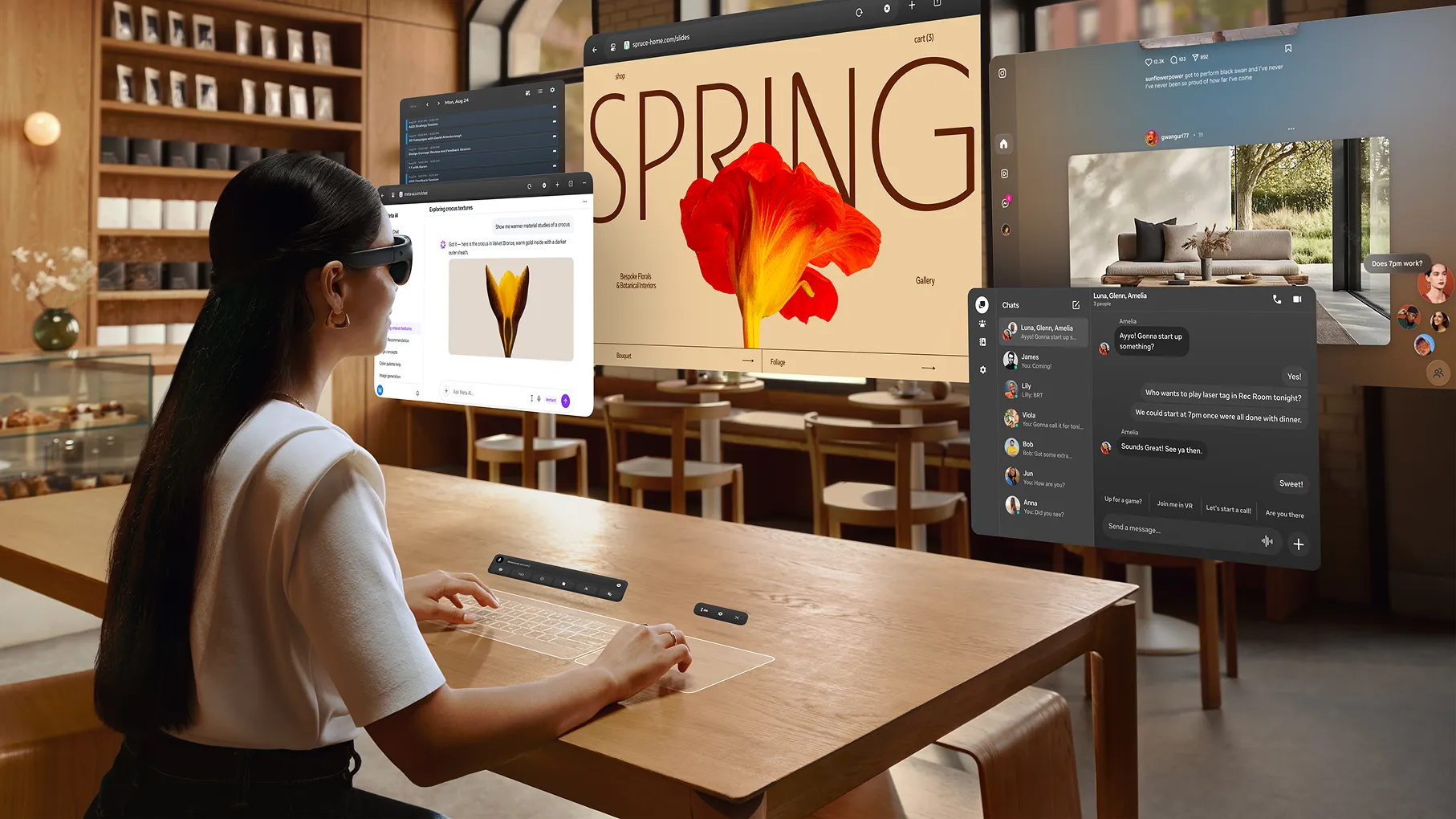
Meta VR Glasses can display multiple windows, receive the image from a Mac or PC, and mirror a phone. The puck’s DisplayPort input lets you connect them directly to a compatible console or handheld.
Surface Keyboard turns a flat surface into a virtual keyboard and touchpad. Passthrough keeps your hands, phone, and desk visible. It is appealing for travel or small spaces, although typing for hours without physical keys still requires extensive testing.
Games and launch compatibility
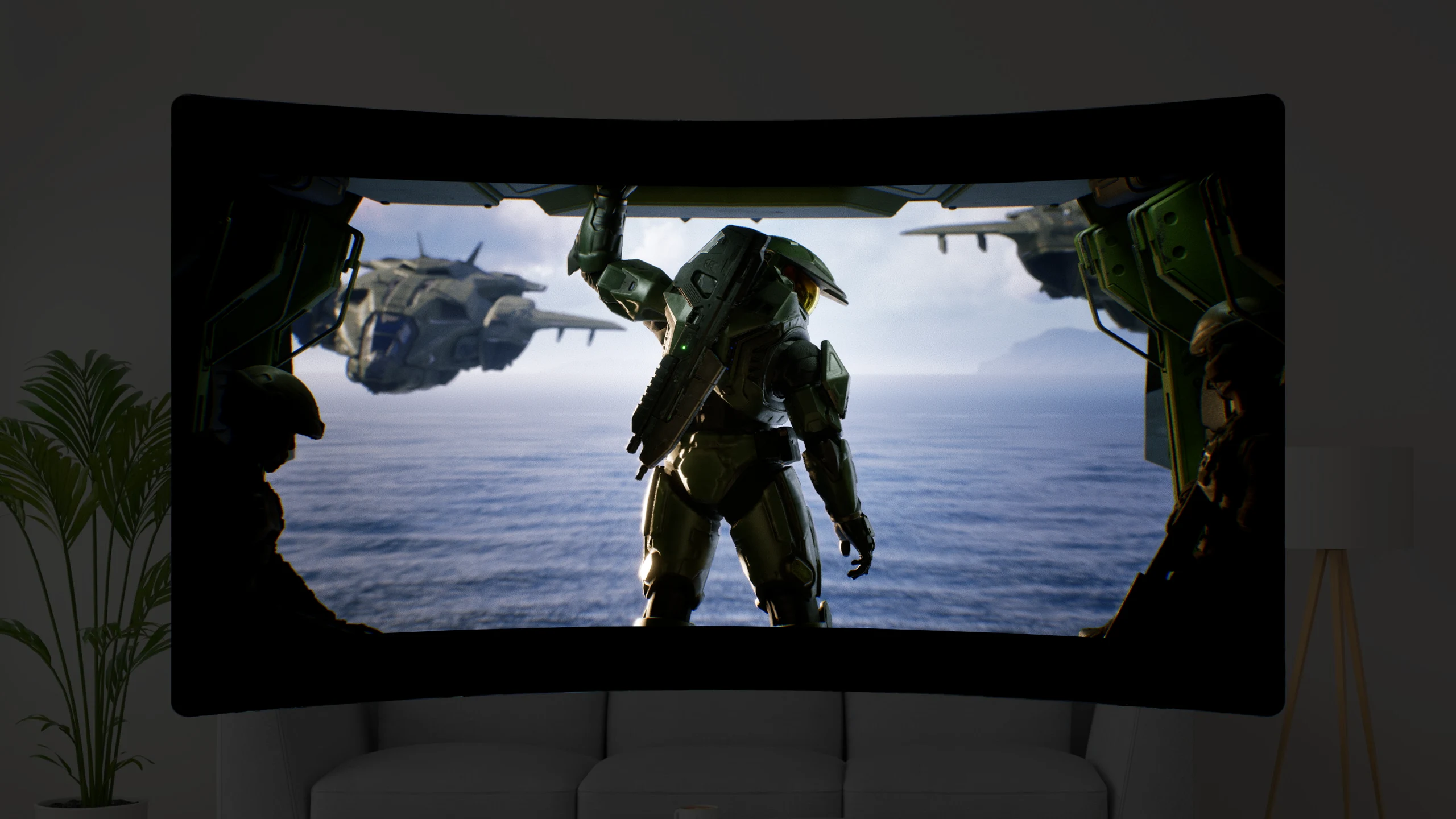
Meta promises more than 75 games ready to use hands only at launch. Users will also be able to stream hundreds of titles through Xbox Cloud Gaming, connect a console to the video input, or use Touch Plus in experiences that require physical controls.
Quest compatibility is a strength, but the design favors forward-facing experiences over sessions with broad movement. The narrow field of view is less noticeable when viewing a virtual screen than when exploring an immersive world. That is why Quest retains its role as the more immersive option.
Battery life, price, and launch date
The puck offers up to three hours of high-resolution media playback and supports 45 W fast charging. It can be used while plugged in, although that adds another cable to a system that already depends on the optical connection between the glasses and the module.
Meta VR Glasses will go on sale in spring 2027 for US$1,299.99. The company previewed broad international availability, but it has not yet published local prices or an exact date. The package does not include Touch Plus controllers, and accessories such as prescription inserts and the light blocker are sold separately.
The trade-offs: cable, puck, field of view, and open audio
Meta reduces the weight on the face without waiting for the battery and processor to fit into a pair of temples. In exchange, the user carries a 300-gram puck connected by cable, accepts a much narrower field of view than Quest 3, and uses speakers that prioritize environmental awareness over isolation. The 37 PPD favor text, movies, and desktops, but they do not make the headset the most immersive option.
Hologram, the calling feature with a photorealistic representation of the user, will arrive with the headset and also appears among the new features of Meta Ray-Ban Display. Its value will depend on avatar quality, latency, and social acceptance, aspects that a controlled demo still does not allow us to evaluate.
Meta VR Glasses do not replace Quest; they open another category
For those who prioritize movies, private screens, and mobile work, moving the weight to the pocket makes more sense than wearing a traditional headset for hours. The combination of micro-OLED, DisplayPort input, and continuity with Horizon OS offers something simple display glasses cannot match.
For gaming, Quest will continue to offer a larger field of view, included controllers, and a design without a wired puck. Meta VR Glasses propose a different equation: pay more to reduce the weight on your face, gain clarity, and carry VR in a bag. Their success will depend on whether those 100 grams make up for the price and everything that remains in the pocket.
Meta VR Glasses
A two-piece VR headset that moves compute and battery to a puck to leave about 100 grams on the face. It prioritizes clarity, entertainment, and productivity over Quest’s wide field of view.
Pros
- Reduces the weight on the face to about 100 grams.
- The micro-OLED display reaches 37 pixels per degree.
- Shares Horizon OS, the store, and apps with Meta Quest.
- Supports direct video over DisplayPort in addition to wireless streaming.
Cons
- The field of view is narrower than Quest 3’s.
- The roughly 300-gram puck remains connected by cable.
- Touch Plus controllers are sold separately.
- Open audio loses bass and leaks sound.
Author
Alexis PaezReport based on official announcements and verified public sources at the time of publishing.
Comments
Share article
You might also like

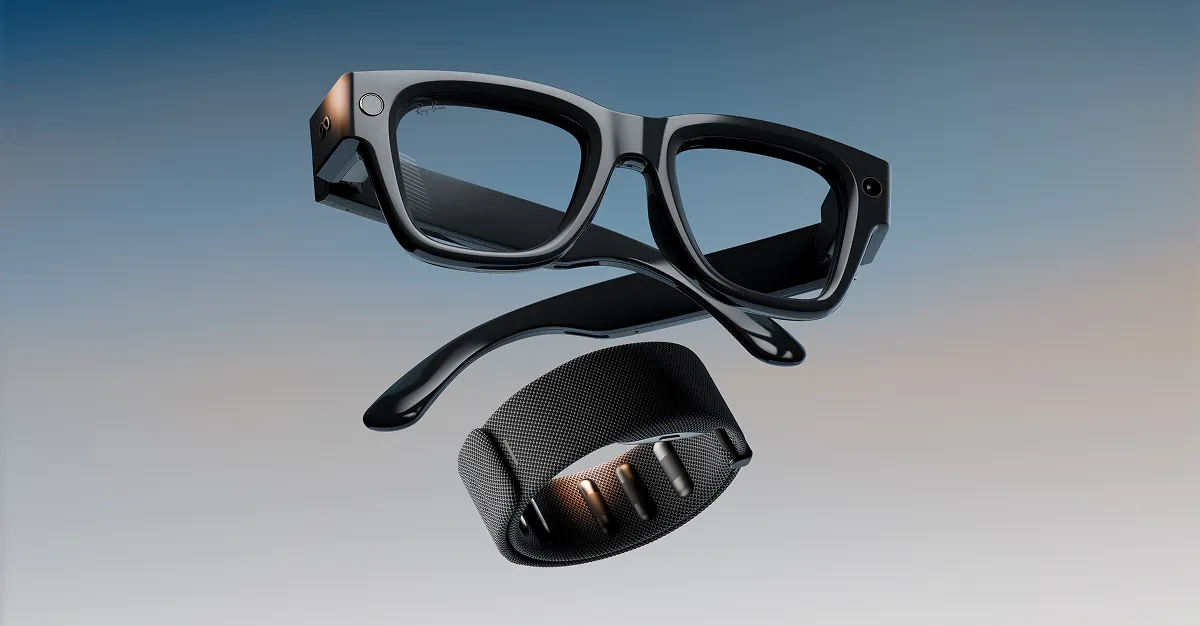
Meta Ray-Ban Display adds Hologram, navigation, and online ordering
Meta Ray-Ban Display adds Hologram, bicycle and public transit navigation, Explore, Dolby Atmos, and online sales in new markets.
Meta Glasses by LISA: two designs, collectible charms, and US$399 price
Meta Glasses by LISA combines Adventurer and Capri with an exclusive case, charms, and photocards. Price, features, and differences in the collection.

Meta Glasses by Kylie adds Ivory: Starfire price and features
Meta Glasses by Kylie adds the Ivory color to Starfire. Price, 3K camera, battery life, Meta AI features, and differences versus the LISA Edition.