Muse comes to Meta's glasses and debuts Charm: the agent leaves the screen
Index
Muse will come to Meta's AI glasses to turn what the user sees into tasks the agent can complete. The promise goes beyond getting an answer: it will be possible to look at a product, ask for a comparison, and let Muse keep working in the background without taking out the phone.
Meta also showed Muse Charm, a pocket device with a screen, camera, and voice and touch interaction. Charm gives the agent its own physical form, but it is still a preview: the company has not published pricing, battery life, or a full spec sheet.
Muse sees what the user sees through the glasses
Meta announced at Connect 2026 that Muse will come to its AI glasses in the coming months. The user will be able to call the agent by name and ask it to act on whatever they are looking at. A product in a store, a brochure, or a school supply list become visual context without having to describe them manually.
The camera provides the scene and the microphones receive the instruction. Muse can search for alternatives, compare prices, or start a related task. The official presentation for Latin America also mentions workout routines, meal logging, nutrition information, appointments, flights, and replacement-parts searches. The glasses still depend on the phone, the connection, the app, and Meta's services; the change is that the intent starts with what the user sees and continues in Muse's infrastructure.
Background tasks versus an assistant's answers
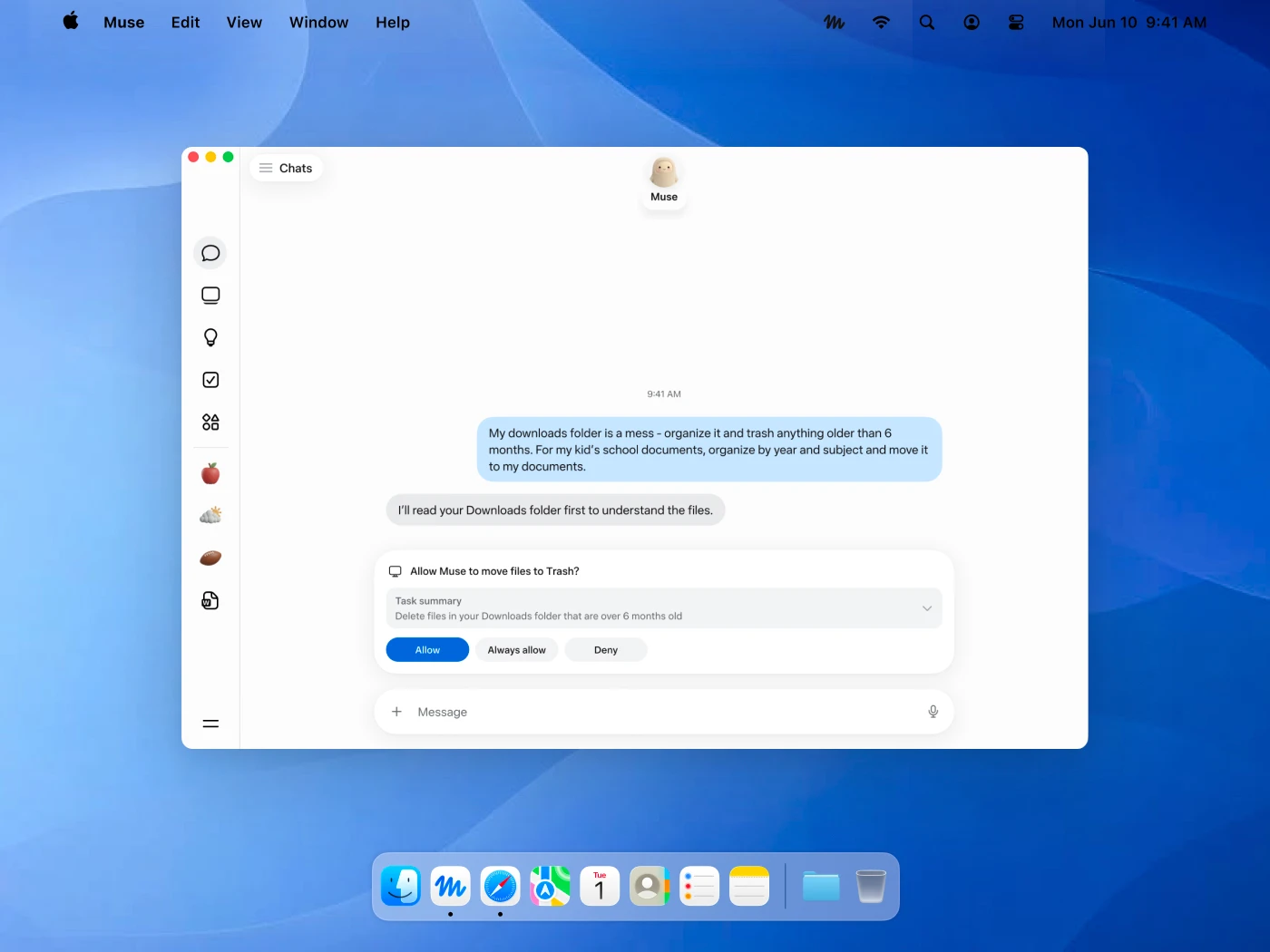
Meta AI answers questions and performs short actions. Muse is presented as an agent: it receives a goal, creates a plan, opens its own browser, and continues even after the application is closed. It can pause when it needs a decision and notify the user when it is done.
The difference matters on glasses. Asking what product is in front of you produces an answer; asking it to find where to buy it, compare options, and notify you when the price drops opens a process. Muse can keep working while the user goes back to walking, cooking, or driving.
Shopping, calendar, travel, health, and connected services
Muse launched on September 8 in the United States for iOS, Android, WhatsApp, and the web. In its initial announcement, Meta explains that the agent can send emails, book travel, fill out forms, and make purchases. The service is free for most uses, with paid plans for those who need more capacity.
Connect expanded the catalog of connectors and announced a dedicated email address for Muse.
Each integration defines what the agent can do. Seeing an item through the glasses does not guarantee that Muse can buy it: the store, payment method, region, and user permissions need to be compatible. The demos show the direction of the product, not identical availability in every market.
Permissions, Secure VM, and action log
Muse runs inside Muse Secure VM, a dedicated virtual computer in the cloud with its own browser. Data and credentials for connected services are stored there. A separate agent, called Sentinel, reviews actions that attempt to go out to the internet and requests authorization when appropriate.
The announced controls focus on four points:
- Muse does not see stored passwords or payment data.
- It asks before sending an email or making a purchase.
- It keeps a record of what it did and plans to do.
- The user can limit services, ask it to forget information, and exclude their interactions from training.
The company says conversations and virtual machine data are not shared with its advertising systems. Later in 2026, it plans to offer Muse Confidential VM, encrypted with a user-controlled key. These are relevant protections, but their effectiveness will need to be assessed once the glasses integration and connectors are available outside demos.
Muse Charm: what it is and how it is activated
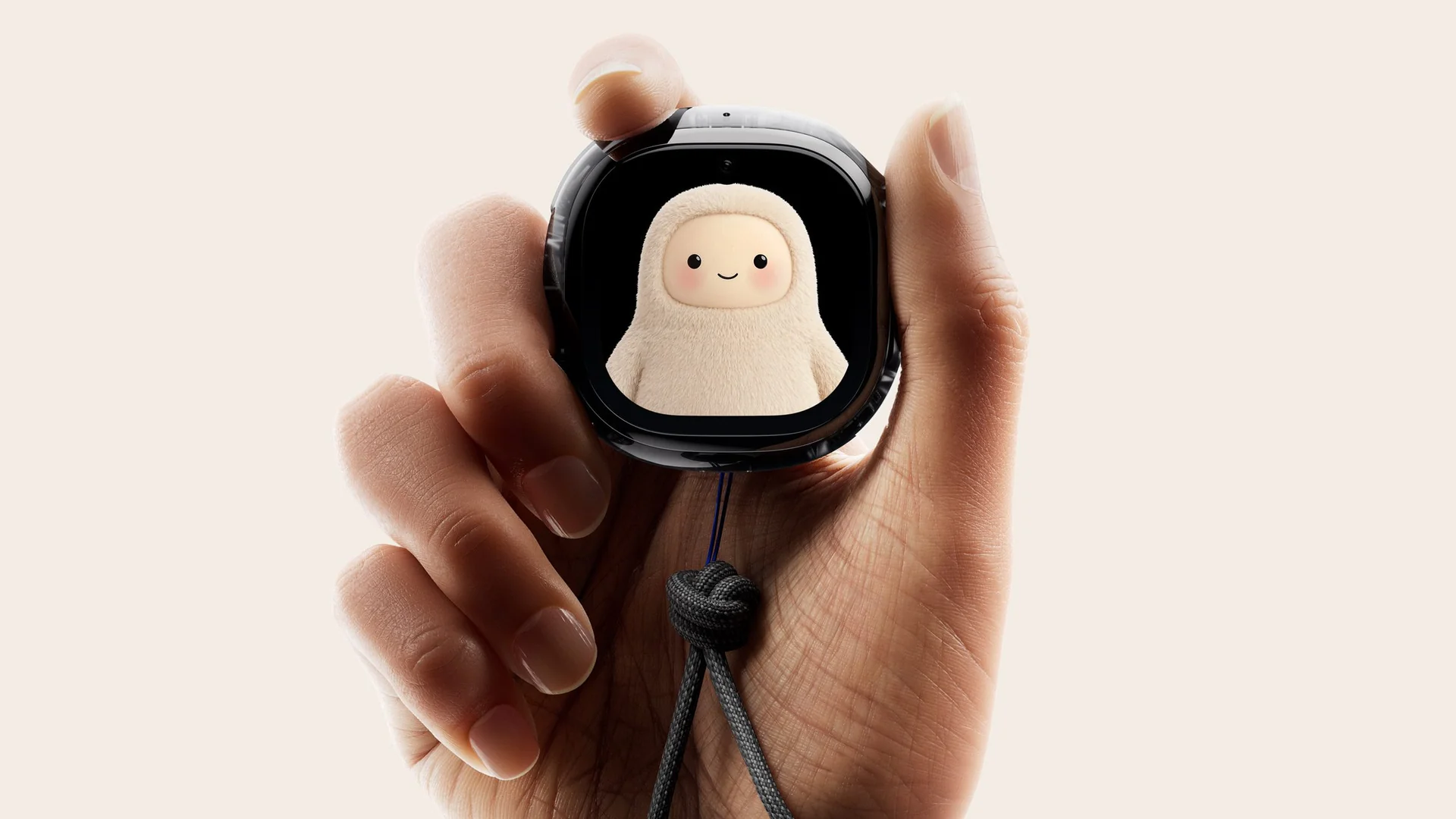
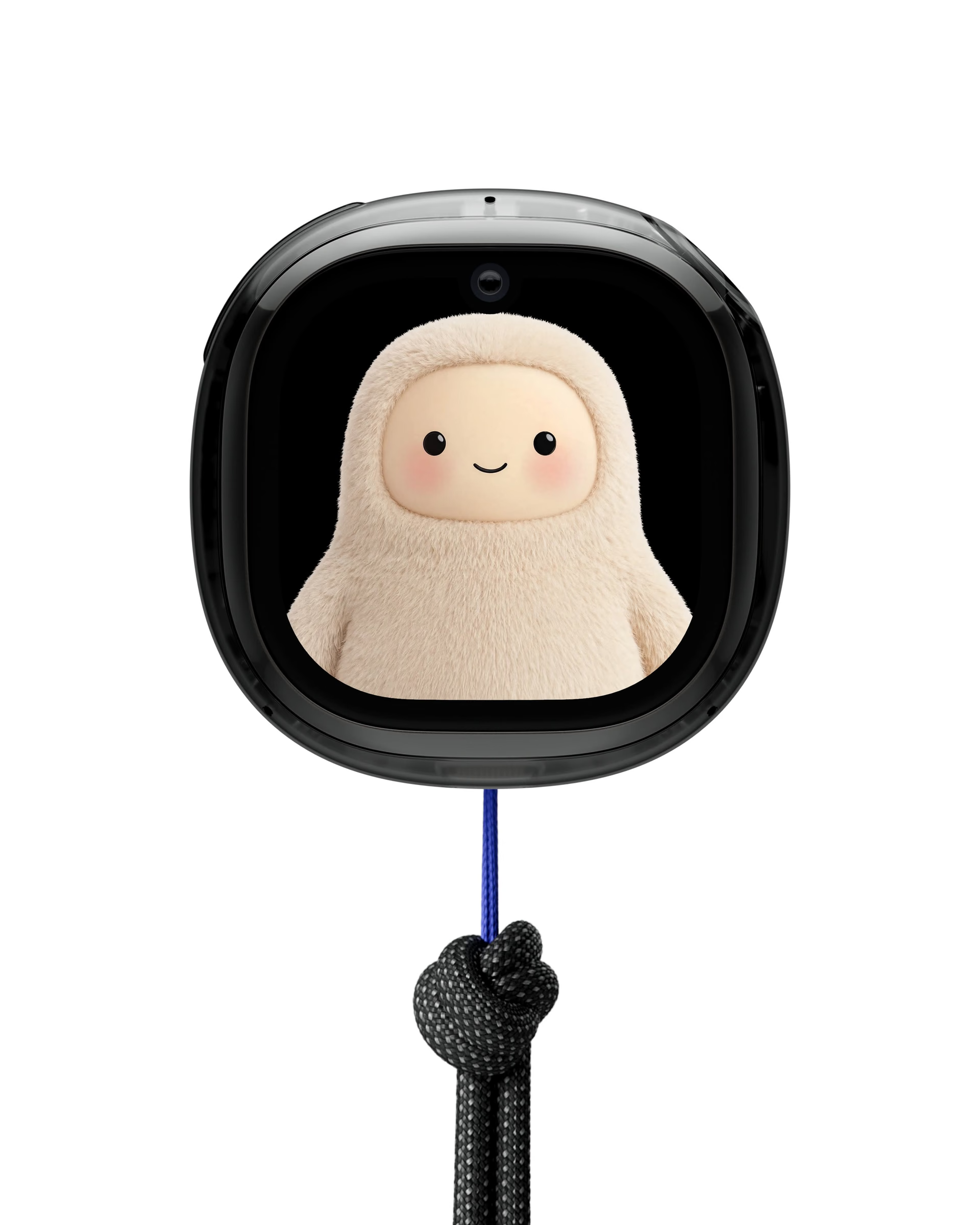
Muse Charm is the first device built specifically for the agent. It has a square body with rounded edges, a screen that represents the personalized Muse, a front-facing camera, and a cord. Meta describes it as a device that fits in your pocket and lets you interact through voice, touch, and camera.
Activation requires signing up for Muse. The real-time voice model enables longer conversations than a conventional command, while the camera can show the agent what is happening around it. Meta did not explain whether Charm needs a nearby phone, Wi-Fi, or cellular connectivity, or how much processing happens on the device.
Charm does not replace the glasses. It serves another role within the same strategy: offering visual and touch access to the agent when the user does not want to wear a frame or open a computer. On the glasses, Muse shares the user's perspective; on Charm, the screen turns the agent into a visible character.
Price, launch, and specifications Meta still has not confirmed
The official Muse Charm page only lets users sign up to receive updates. It does not show a price, preorder option, or sale date. It also does not publish dimensions, weight, screen and camera resolution, memory, battery, water resistance, or included accessories.
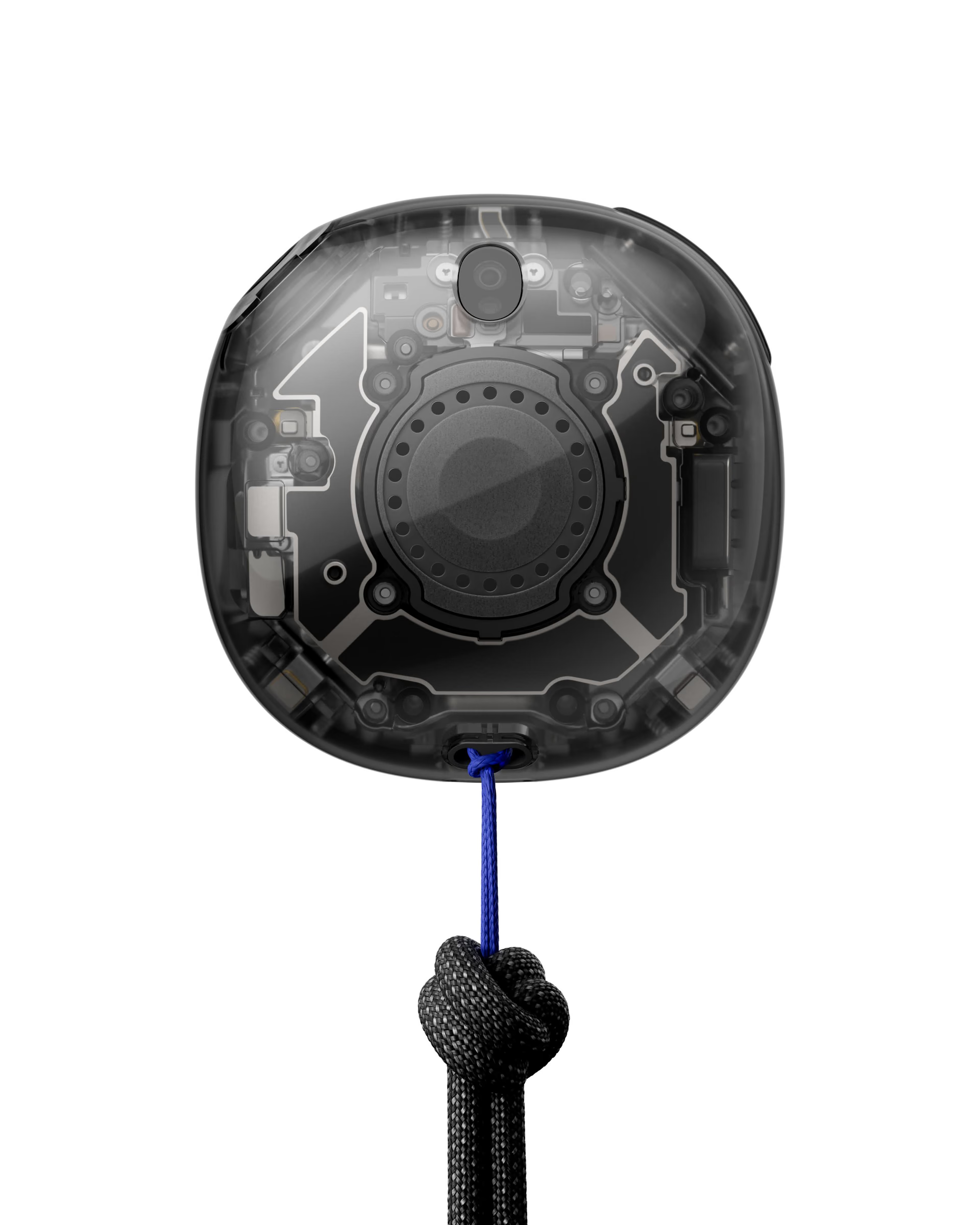
Meta only said it will share more information before the end of 2026. Axios and Associated Press reported from the event that the goal is to put it on sale in December, in time for the holidays. Until the company enables purchases, it is best to treat that month as an expected window rather than a guaranteed date.
The ecosystem limit: each service decides how much the agent can do
Muse's appeal depends on connecting personal information with retailers, calendars, files, and payment methods. That same breadth creates the main limitation. Each partner decides what actions it supports, each permission expands access, and a useful feature in the United States may not yet exist in another country or language.
Meta will also need to prove that the agent handles errors, returns, and context changes without turning automation into extra work. Prior approval reduces risks, but too many interruptions weaken the promise of delegation. Too few, in contrast, raise the cost of a wrong decision.
Two access points to the same Muse
Muse on the glasses and Charm represent two access points to the same system, not two different assistants. Ray-Ban Meta Gen 3 provides a camera and hands-free use; Charm adds a screen and touch in your pocket. Meta Glasses by LISA will use the same AI platform with a different design proposal. On Meta Ray-Ban Display, Muse will share the experience with a visual interface and the new communication features.
Across all the Meta Connect 2026 announcements, Muse is the thread that connects the catalog. The glasses can turn a glance into an instruction, and Charm can keep the agent visible when they are not being used. The idea is more ambitious than a new wearable, but its real value will depend on availability, permissions, and reliability. Until Charm's price and specifications are known, the most concrete announcement remains the agent's arrival on the glasses.
Muse Charm
Pocket device built to interact with the Muse personal agent through voice, touch, camera, and its own screen.
Pros
- Offers direct access to Muse without using glasses, a phone, or a computer.
- Combines voice, touchscreen, and camera in a pocket form factor.
- Uses the same Muse agent and connected services.
- The real-time voice model supports longer conversations.
Cons
- Meta still has not announced the price or a definitive sale date.
- There is no official data on battery, weight, connectivity, or storage.
- Requires a Muse account and depends on the service's regional availability.
- Its usefulness will be constrained by compatible connectors and permissions.
Author
Alexis PaezReport based on official announcements and verified public sources at the time of publishing.
Comments
Share article
You might also like

Meta Ray-Ban Display adds Hologram, navigation, and online ordering
Meta Ray-Ban Display adds Hologram, bicycle and public transit navigation, Explore, Dolby Atmos, and online sales in new markets.
Meta Glasses by LISA: two designs, collectible charms, and US$399 price
Meta Glasses by LISA combines Adventurer and Capri with an exclusive case, charms, and photocards. Price, features, and differences in the collection.
Meta VR Glasses: 100 grams, 5K display, and a puck to take weight off your face
Meta VR Glasses weigh 100 grams, use 5K micro-OLED displays, and move the battery and compute to a puck. Price, date, and trade-offs.