Pixel Tag: what we know about Google’s tracker before the event

Index
Update, 15 August 2026: Google unveiled the Pixel Tag and the tracker does include UWB, contrary to what pre-event leaks suggested. This piece stands as the picture before the announcement; the official details are in our Pixel Tag coverage.
Google will introduce the Pixel Tag on August 12, alongside the Pixel 11 series and the Pixel Watch 5. It is the company’s first item tracker with its own hardware, arriving five and a half years after the AirTag.
The product has already leaked in full: 9to5Google found listings at retailers in Germany and Slovenia with the render, model, and color, while Dealabs reported the European price. None mention UWB, the technology that separates a tracker that gets you to the block from one that gets you to the object.
The wait has been long. In January 2023, researcher Kuba Wojciechowski found a tracker codenamed "Grogu" in Android code, with a speaker and a UWB chip.
What we know about the Pixel Tag
Oblong design, taller than it is wide: it does not look like the AirTag’s disc or the round trackers from Samsung and Motorola. At the bottom it has a slot, the speaker for nearby finding. Model GA12506, color Fog Light.
What is missing is a hole. With no anchor point, attaching it to a key ring requires buying a separate case — the same approach Apple was criticized for over the years. Motorola and Samsung solved it with a hole in the body.
European listings place it at around 35 euros, the same territory as the AirTag and the Moto Tag 2.
There is also no battery information, and that determines useful life. The AirTag and Moto Tag 2 use a CR2032 that you replace yourself, with Motorola claiming more than 500 days. The fact that the listing does not clarify this does not mean it is sealed, but it stands out: when the battery is replaceable, that is advertised.
Does the Pixel Tag have UWB?
Neither the listings nor the marketing copy mention it, and in a category where UWB is the main selling point, that silence usually means it is not there. Google has neither confirmed nor denied it. Until August 12, this is the product’s central unknown.
The difference is concrete. With Bluetooth alone, the app shows the last place where another Android phone saw the tracker and lets you ring the speaker. With UWB, the phone measures distance and direction and guides you with an arrow to within a few centimeters of the object. Finding your keys inside an apartment is a UWB problem.
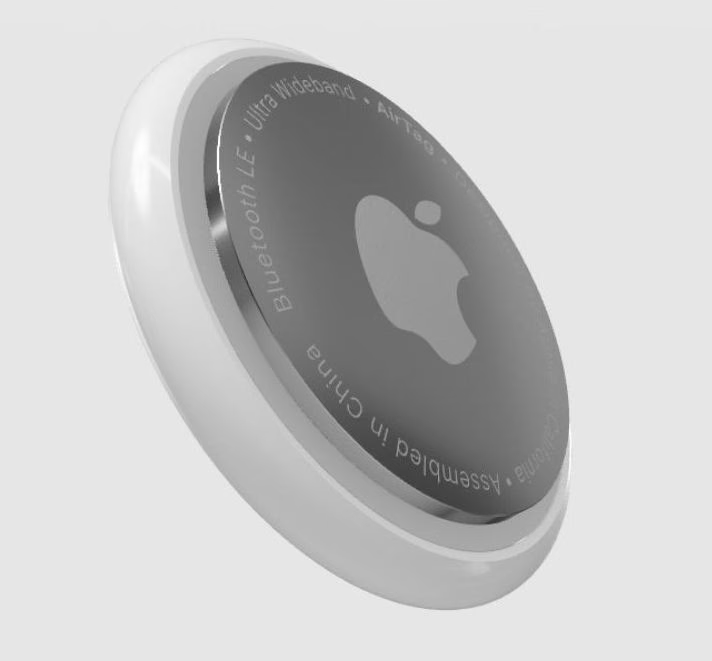
Android’s delay is not a manufacturer oversight. Apple does not give third-party trackers access to the iPhone’s UWB — Tile litigated that point for years without success — so whoever adds the chip can only enable it in half the market while paying for it across the whole product. On the other side, Android hardware is fragmented: the base Pixel 10 does not have UWB, and neither does the Galaxy S25.
That is the uncomfortable detail. According to Singapore’s IMDA certification, the base Pixel 11 will not include it either; the Pro and Pro Fold do appear with UWB. Even if the tracker ships with the chip, the most mainstream phone in the lineup will not be able to use it.
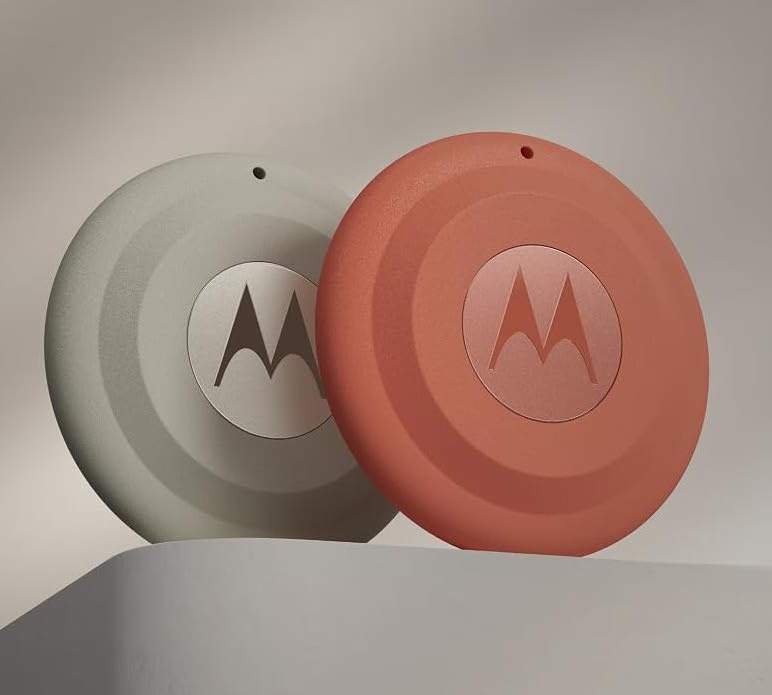
The only Find Hub tracker that currently supports precision finding is the Moto Tag. And even that is not enough for everyone: the feature requires Bluetooth 6.0 and Android 16, meaning Pixel 10, Galaxy S26, and Razr Fold.
Find Hub is the real advantage
Where the Pixel Tag has no rival is the network. Find Hub runs on all Android phones, an installed base no tracker maker can replicate.
It started in April 2024 as Find My Device: every Android that passes near a tracker reports its encrypted location. In 2025, Google renamed it Find Hub. Chipolo, Pebblebee, and Motorola already make compatible trackers.
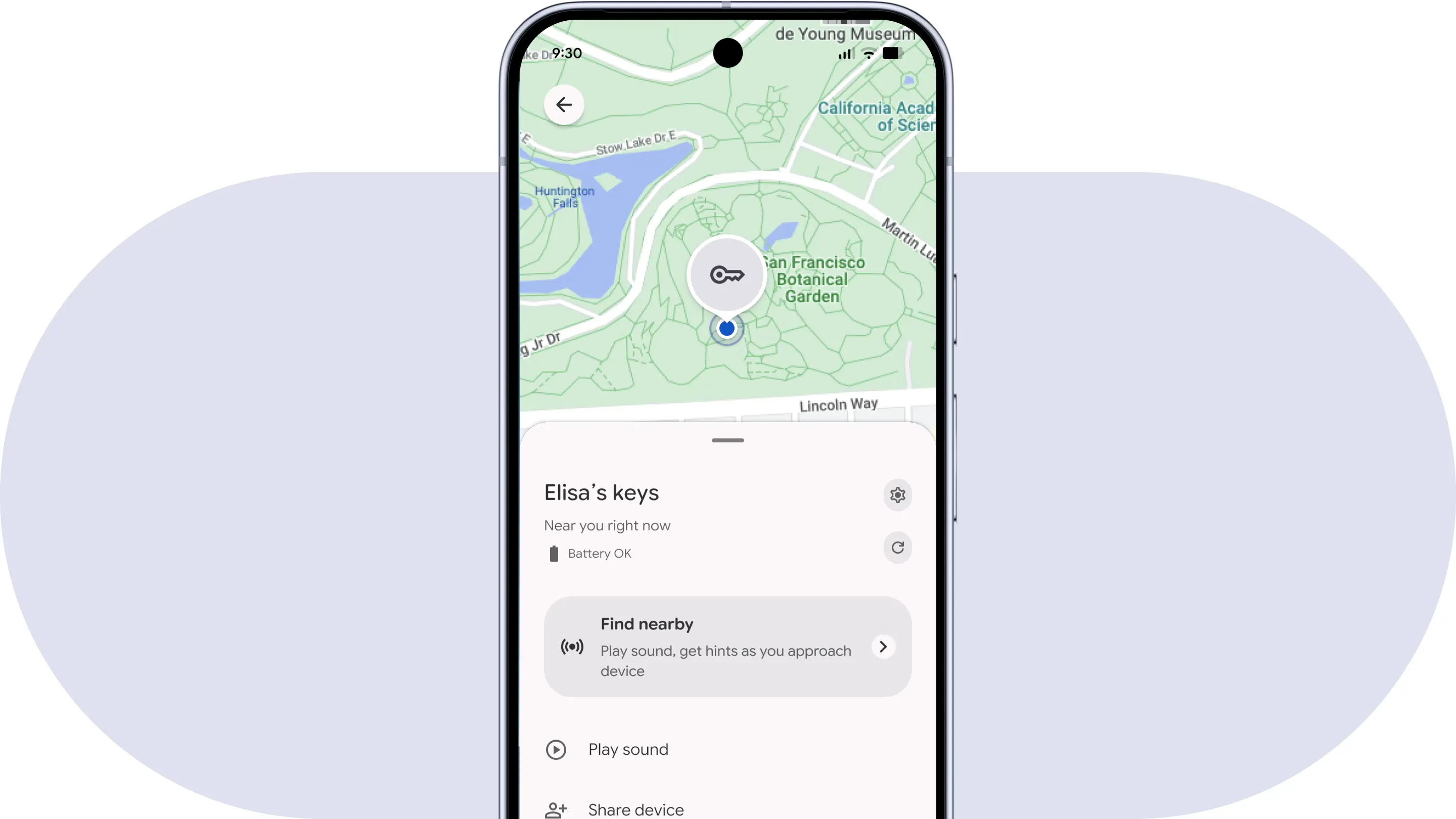
Google making its own changes little on the technical side — the network is the same for everyone — and a lot commercially: a tracker with the Pixel brand on the box is distribution, not technology.
How it compares
The refreshed AirTag from January 2026 is the benchmark: second-generation UWB chip, precision finding 50% farther away, and a speaker that is 50% louder. It also carries an ecosystem no one else has, with shared location support across more than fifty airlines and unwanted tracking alerts that also work on Android.
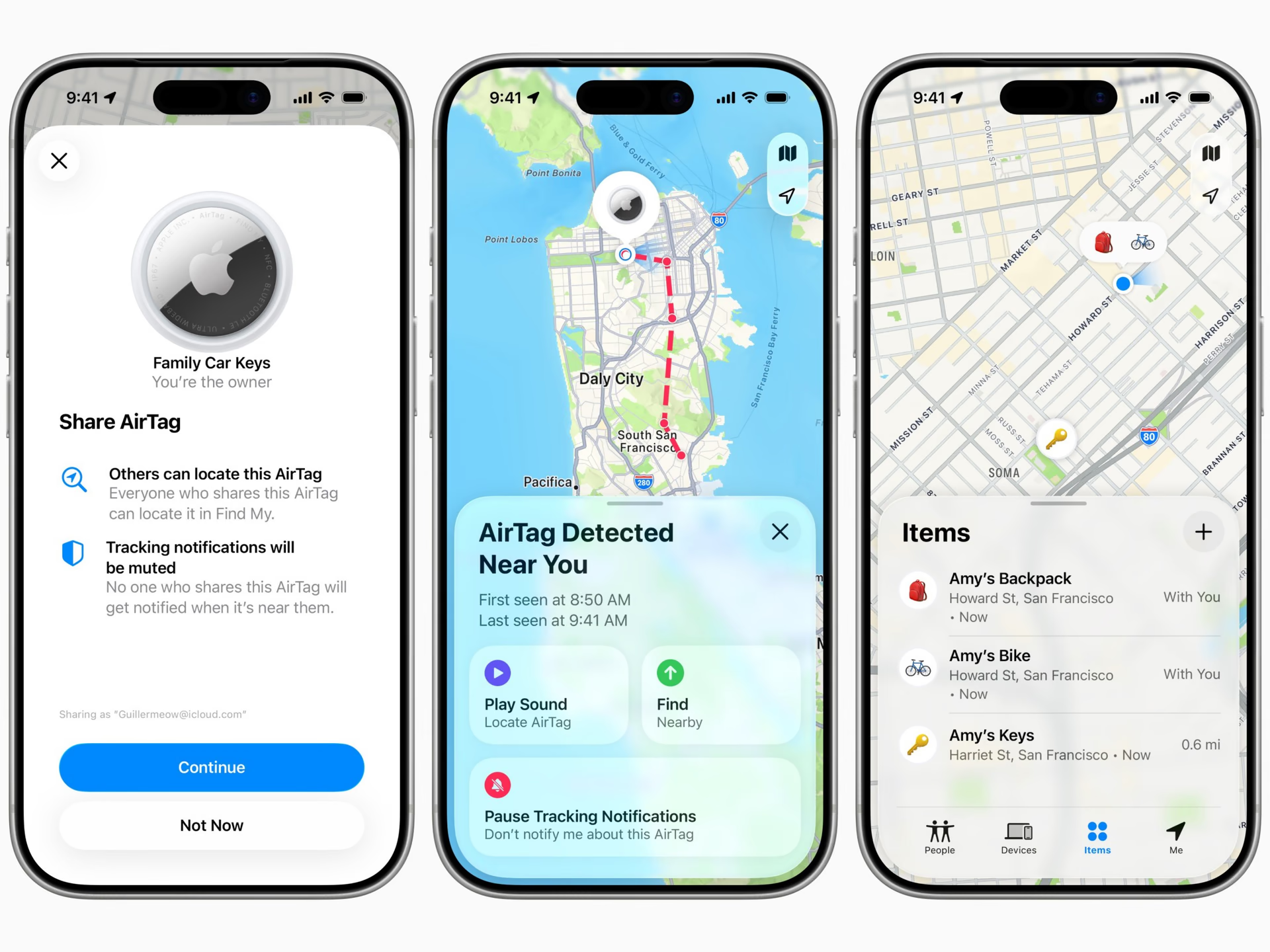
The row that decides the purchase is UWB, and it is the only one Google still has not filled in.
Waiting until August 12 makes sense
If you are on iPhone with AirTags, the Pixel Tag changes nothing for you: it does not work with Find My.
If you are on Android and want UWB, the Moto Tag 2 exists, runs on the same network, and does not depend on Google confirming anything.
And if UWB does not matter to you — most real-world losses are "I left my backpack at a bar," not "it is somewhere in this room" — waiting for the announcement costs nothing and clears up the two unknowns that define the product’s value.
The leak has already shown what Google is thinking, though. An oval tracker with no anchor point, the Pixel brand, and no mention of UWB in the marketing is not going out to fight on specs: it is going out to be in the box, in the store, and in the app on every Android phone. In this category, that has historically been enough.
Frequently asked questions
When will the Pixel Tag be announced?
On August 12, 2026, at the Made by Google event in New York, alongside the Pixel 11 series and the Pixel Watch 5. Google confirmed the event date; the Pixel Tag’s presence comes from retailer listings, not an official announcement.
Does the Pixel Tag work with iPhone?
For tracking, no: it operates on Find Hub, which requires the Android app. An iPhone can detect it if someone uses it to follow you — unwanted tracking alerts are a standard that Apple and Google implemented across both systems.
Do I need a Pixel phone to use it?
No. Find Hub works on any Android phone with Google services. What does depend on the phone is UWB precision finding: it requires a model with that radio, and several high-end Android phones do not have it.
Pixel Tag
Google’s first item tracker with its own hardware. It will be introduced on August 12, 2026 alongside the Pixel 11 series and works on the Find Hub network.
Pros
- Integrates with Find Hub, the tracking network with the largest number of devices.
- Built-in speaker for nearby finding.
- The listed price is in line with the AirTag.
Cons
- It has no key ring hole: it requires a separate case or accessory.
- The listings do not mention UWB, the feature that defines the category.
- There is no information on the battery type or battery life.
Author
Alexis PaezReporte basado en listados de retailers europeos, filtraciones verificadas y especificaciones oficiales de productos ya lanzados. Google no anunció el Pixel Tag al momento de esta publicación.
Comments
Share article
You might also like

Pixel Tag: Google enters the tracker market with UWB, a one-year battery, and a button the AirTag does not have
Google's Pixel Tag costs $29 and arrives with UWB, a one-year CR2032 battery, and IP67. Full specs, price, and why it will not go on sale until November.


Pixel 11: 30x zoom and fast wireless charging come to the base model, but it misses out on HiLight
The Pixel 11 inherits the Pro models’ 5x telephoto and 30x Super Zoom for $899. Full specs, price, sale date, and what it gives up versus the Pro models.