Made by Google 2026: the Watch 5 and the entire Pixel 11 lineup get more expensive, and Google adds its first tracker

Index
Made by Google 2026 brought four phones, a watch, and the brand’s first tracker. The thread running through the entire presentation is price: each Pixel 11 costs $100 more than its previous equivalent and the Pixel Watch 5 goes up between $30 and $50 depending on size. In return, base storage moves to 256 GB across the entire phone lineup, and the 128 GB versions disappear.
The other new development is not a product, but a gap finally being closed. With the Pixel Tag, Google at last has its own tracker, almost five years after the AirTag, and with two arguments its rival does not have: a replaceable coin-cell battery and a four-pack for $99.
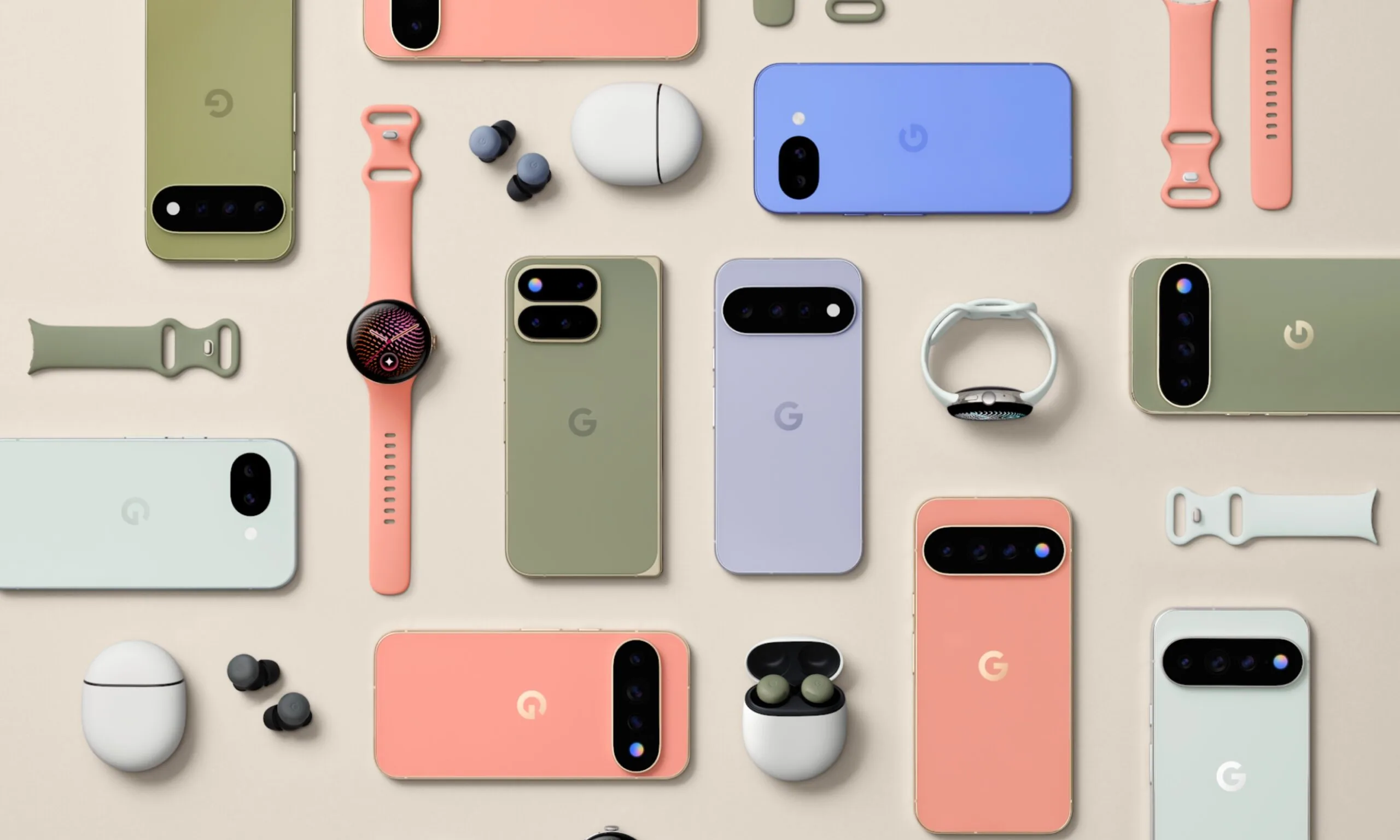
Pixel 11 Pro and Pro XL: a light where the temperature sensor used to be
The most visible change on the Pro models is a ring of LEDs around the flash. Google calls it HiLight, and it takes the place occupied by the temperature sensor for three generations. It shows what the screen cannot when the phone is face down: whether Gemini is listening, thinking, or responding, plus a contact-specific color.
The main wide camera moves up to 50 MP, and the telephoto goes to 48 MP with a larger sensor and 30% more sensitivity: that enables 5x portraits, 120x Pro Zoom, and Night Sight that is 4.5 times faster. The Super Actua display reaches 3,600 nits with double the scratch resistance, and both models add a vapor chamber.
The asterisk is memory. The 256 GB version comes with 12 GB of RAM, four less than in 2025, while 16 GB is reserved for the 512 GB and 1 TB models: a striking cut in phones presented as designed to run Gemini locally, and one that Google justifies with software optimization. The 6.3-inch Pro costs $1,099, and the 6.8-inch Pro XL costs $1,299.
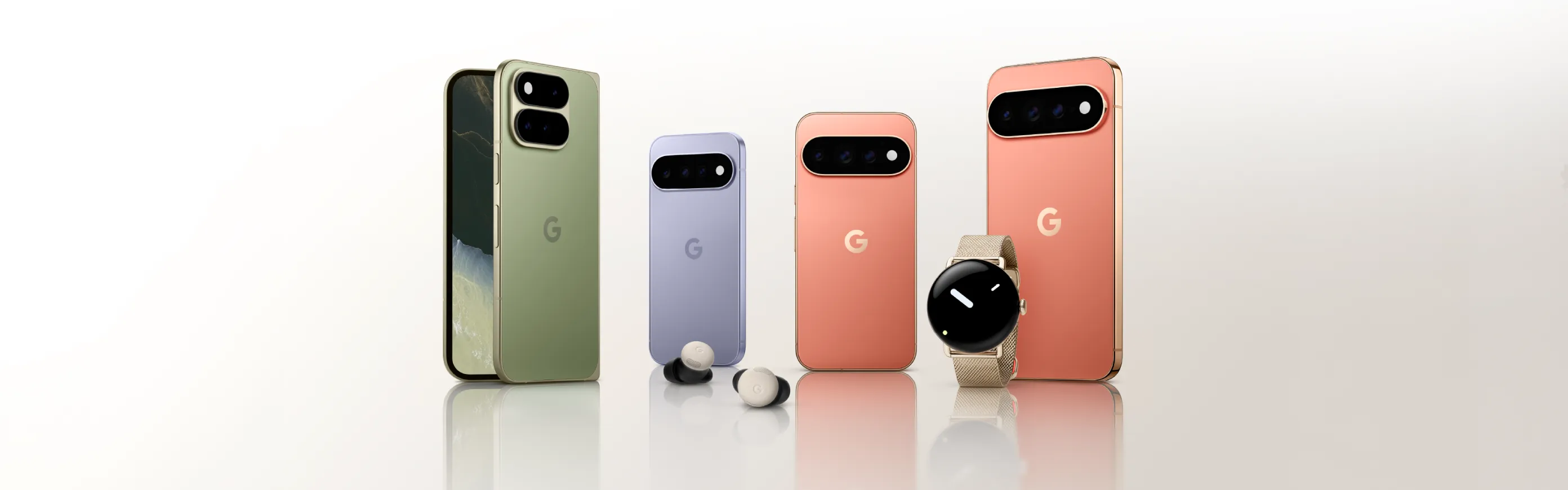
Pixel 11: zoom comes down to the base model
The Pixel 11 debuts a camera bar made entirely of glass, 40% thinner and with much less protrusion. Its 48 MP wide camera captures 56% more light and, together with the Tensor G6 and the 5x telephoto lens, enables the 30x SuperRes Zoom that until now belonged to the Pro models.
Wireless charging is the other jump: from 15 W to Qi2.2’s 25 W. With 12 GB of RAM, 256 GB as standard, and more than 30 hours of claimed battery life, it launches at $899 in Frost, Obsidian, Hibiscus, and Pistachio.
Pixel 11 Pro Fold: 239 grams and a cover Google calls nearly unbreakable
The foldable is where Google focused its durability pitch. It weighs 239 grams, 10% less, is 0.7 millimeters thinner, and the brand says it is three times more resistant thanks to a matte fiberglass composite cover. The hinge protects the internal display during drops, and the ultra-thin glass is thicker, with a dual anti-impact film over the crease.
There is one concession worth watching closely: the battery drops from 5,015 to 4,750 mAh, although Google still claims the same long 24-hour battery life. With 16 GB of RAM, 256 GB, and a 3,600-nit internal display, it costs $1,899.
Pixel Watch 5: the same body, a different brain
Nothing changed on the outside. Inside, it debuts the Snapdragon W5 Gen 2 Accelerated with 12% more CPU performance, moves from 2 to 3 GB of RAM, and adds an M55 coprocessor, with overall responsiveness that is 20% faster.
The figure Google chose to highlight is route tracking, which it says is twice as accurate as before and better than that of the Apple Watch Ultra 3 and Garmin Fenix 8 Pro: a measurement from the manufacturer itself, with no independent verification for now. On the health side, it adds strength training, respiratory emergency detection, and blood pressure and insulin resistance trends. It costs $399 in 41 millimeters and $429 in 45.
Pixel Tag: five years after the AirTag
The tracker has a pill-shaped design and a coin-cell battery that can be replaced without tools. It works on Find Hub, the Android device network, and includes UWB for short-range precision finding, which was the big question before the announcement. It costs $29 per unit or $99 for the four-pack, and it is the only product from the event that does not arrive in August: it launches on November 11.
Tensor G6 and what changes through software
The chip powering the four phones runs Gemini Nano 4 on a TPU with 50% more compute. Google measures local AI as up to 3.5 times faster while consuming 3.5 times less power, with more modest improvements in everyday use: 15% in app opening and 25% in browsing. The Titan M3 security chip adds protection against quantum computing attacks.
The camera gains manual shutter and ISO controls, Camera Looks filters, and Magic Capture, which analyzes around 500 frames to keep the best one, plus a Creator Suite with a teleprompter and storyboard. Gemini chains tasks across apps, makes reservations, and even places phone calls to businesses.
Pricing and availability
Preorders opened on August 12, and almost the entire catalog reaches stores on August 20. The purchase includes six months of Google AI Pro, half of 2025’s twelve.
What did not appear also says something: no first-party Googlebook and no preview of the glasses with Android XR. The Pixel Buds Pro 2 are limited to a new color, Olive, and a software update planned for September.

Conclusion
This is a year of refinement with a bill attached. Google did not reinvent anything: it made the foldable more resistant, the watch faster, the camera more capable, and completed the ecosystem with the tracker it was missing, while charging $100 more for each phone. The 256 GB floor absorbs part of that increase; the RAM cut in the entry-level Pro models and the halved free subscription push in the opposite direction.
If you are coming from a Pixel 9 or earlier, the camera and chip jump justifies the purchase. If you have a Pixel 10 Pro, HiLight and 120x zoom are not enough to change phones after one year. And if you are interested in the foldable, the Pro Fold is the first in the lineup that Google dares to describe in terms of toughness rather than delicacy: we still need to see whether daily use proves it right.
Frequently asked questions
When do the Pixel 11 phones go on sale?
Preorders began on August 12, 2026, and general sales start on August 20 for all four phones, the Pixel Watch 5, and the Pixel Buds Pro 2. The Pixel Tag is the exception: it arrives on November 11.
What is the difference between the Pixel 11 Pro and the Pro XL?
They share the same chip, cameras, HiLight, and memory. What changes are the screen size (6.3 inches versus 6.8), battery life, and charging speed, which is faster on the XL. The price gap is $200.
How much does the Pixel Tag cost, and what makes it different?
It costs $29 per unit or $99 for the four-pack. Compared with the AirTag, it adds a replaceable battery with no tools required and works on Find Hub, Android’s tracking network. It includes UWB for short-range precision finding.
Author
Alexis PaezReport based on official announcements and verified public sources at the time of publishing.
Comments
Share article
You might also like

Pixel 11: 30x zoom and fast wireless charging come to the base model, but it misses out on HiLight
The Pixel 11 inherits the Pro models’ 5x telephoto and 30x Super Zoom for $899. Full specs, price, sale date, and what it gives up versus the Pro models.

Pixel 11 Pro and Pro XL: HiLight, 120x zoom, and the first vapor chamber in a Pixel
The Pixel 11 Pro and Pro XL add HiLight, 120x Pro Zoom, a vapor chamber, and 3,600 nits. Full specs, pricing, and the asterisk around 12 GB of RAM.


Which Pixel 11 to buy: which of the four is right for you and which configuration to choose
The Pixel 11, the Pro, the Pro XL, or the foldable: which one makes sense depending on your use, what really changes between them, and which RAM and storage configuration to choose.