Pixel Watch 5, Galaxy Watch 9, and Apple Watch Ultra 3: which health feature is approved and which is just a trend

Index
The Pixel Watch 5 costs $399, the Galaxy Watch 9 starts at $379.99, and the Apple Watch Ultra 3 costs $799. All three measure heart rate, sleep, and blood oxygen, and all three reach 3,000 nits of brightness. The difference that matters is not in the feature list, but in which of those features went through a regulatory body.
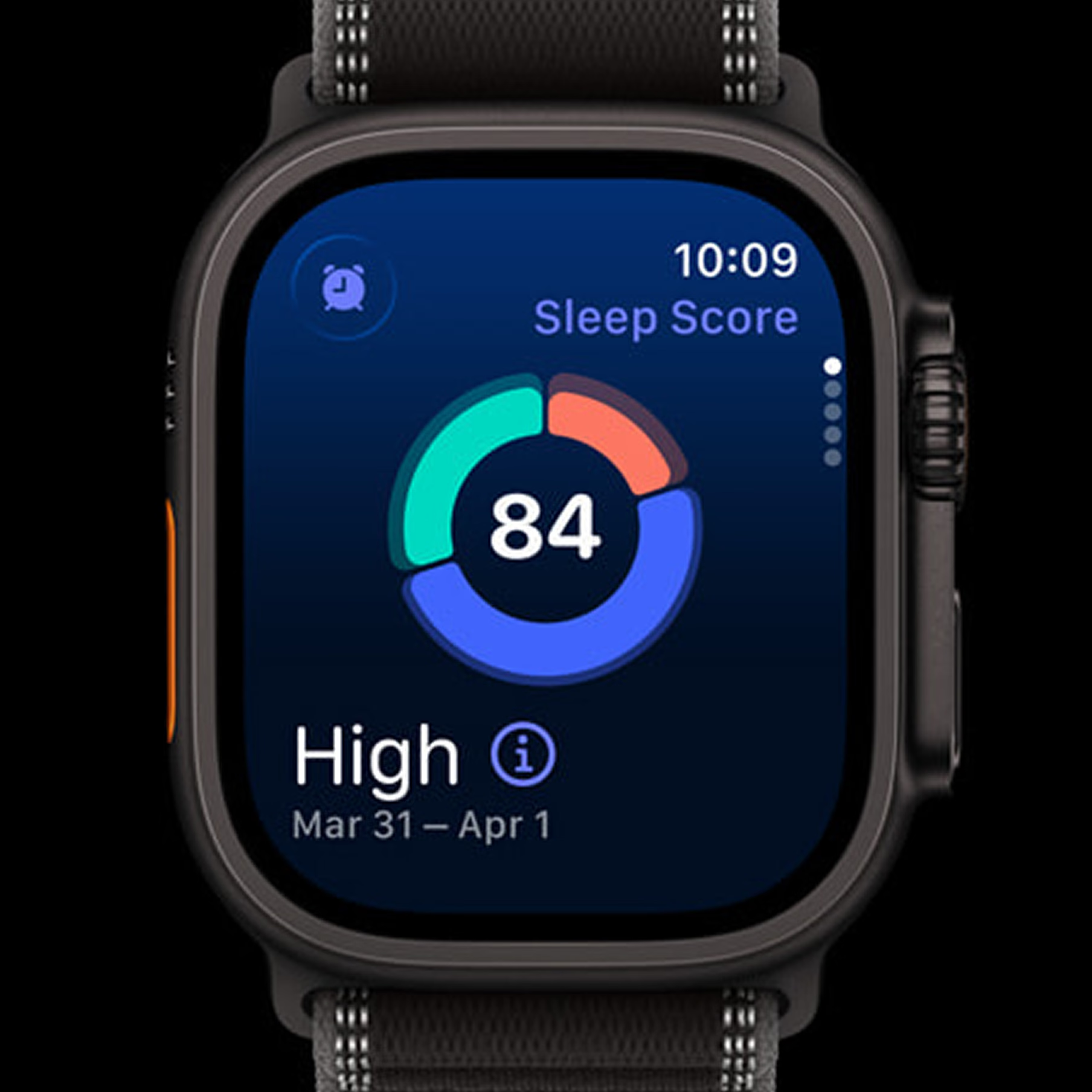
The Ultra 3 and the Watch 9 each have an FDA-cleared health feature. The Pixel Watch 5 arrives with the longest list of new features of the three, and none with that backing.
Health: what is approved and what is a trend
Apple obtained FDA clearance for its hypertension notifications in September 2025. The feature analyzes thirty days of data from the optical sensor and alerts when it finds signs of chronic high blood pressure. It is not intended for people under 22, for people already diagnosed, or during pregnancy: those exclusions are the mark of a regulated product.
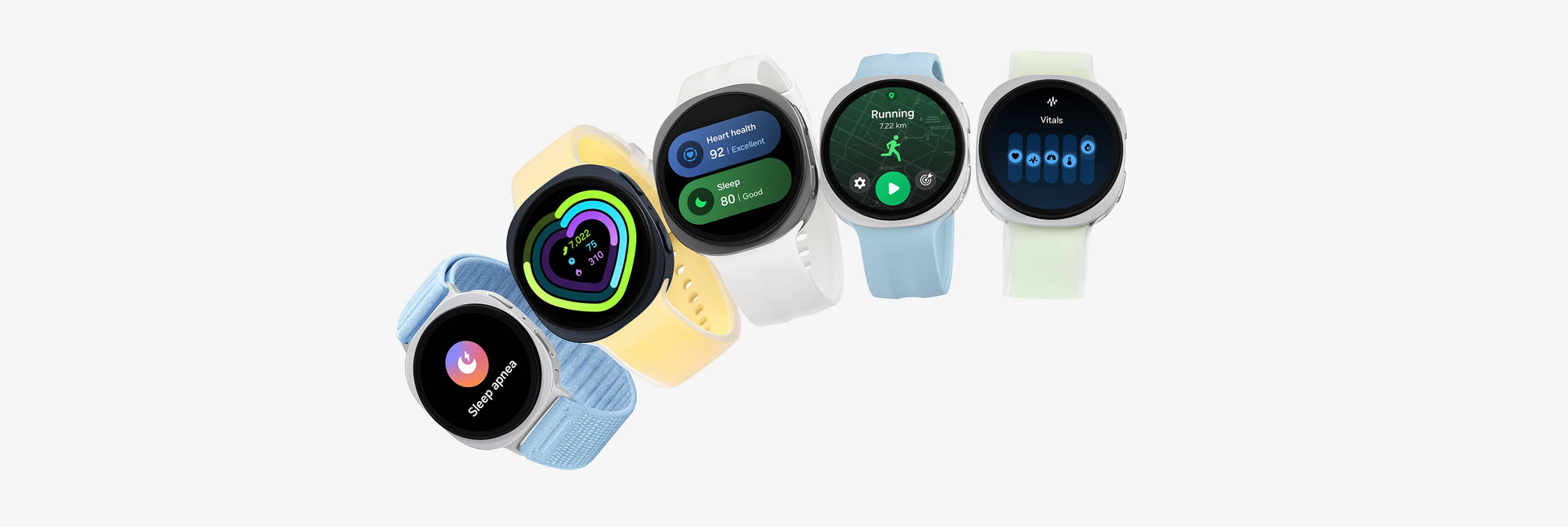
Samsung was the first to reach that territory with sleep. Its apnea detection received FDA De Novo authorization, the first of its kind in a smartwatch, and on the Watch 9 it now also indicates severity level. The asterisk is that it needs a Galaxy phone to work.
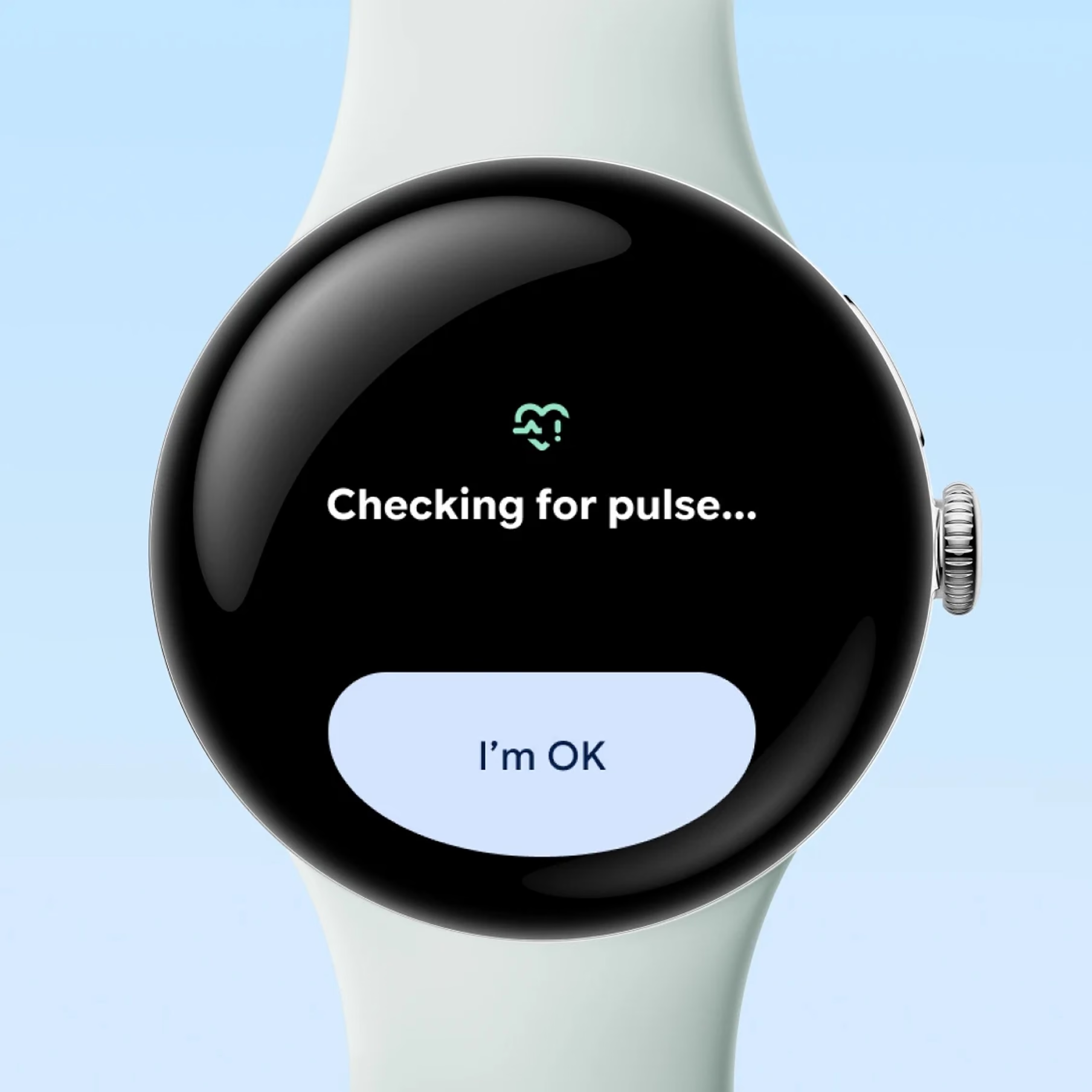
Google arrives with the longest list: blood pressure patterns, signs of insulin resistance, respiratory emergency detection, Readiness Score, and Sleep Breathing Quality. The company is explicit in the language it uses. It talks about patterns and trends, not diagnosis.
That distinction is not a minor detail. A cleared feature went through a clinical study and an external review. A trend is an observation that can help you consult a doctor, and nothing more. All three things can be useful; only two have someone other than the brand standing behind them.
Sensors: the same hardware, different software
All three watches share an uncomfortable trait for marketing: their new generation runs on old sensors.
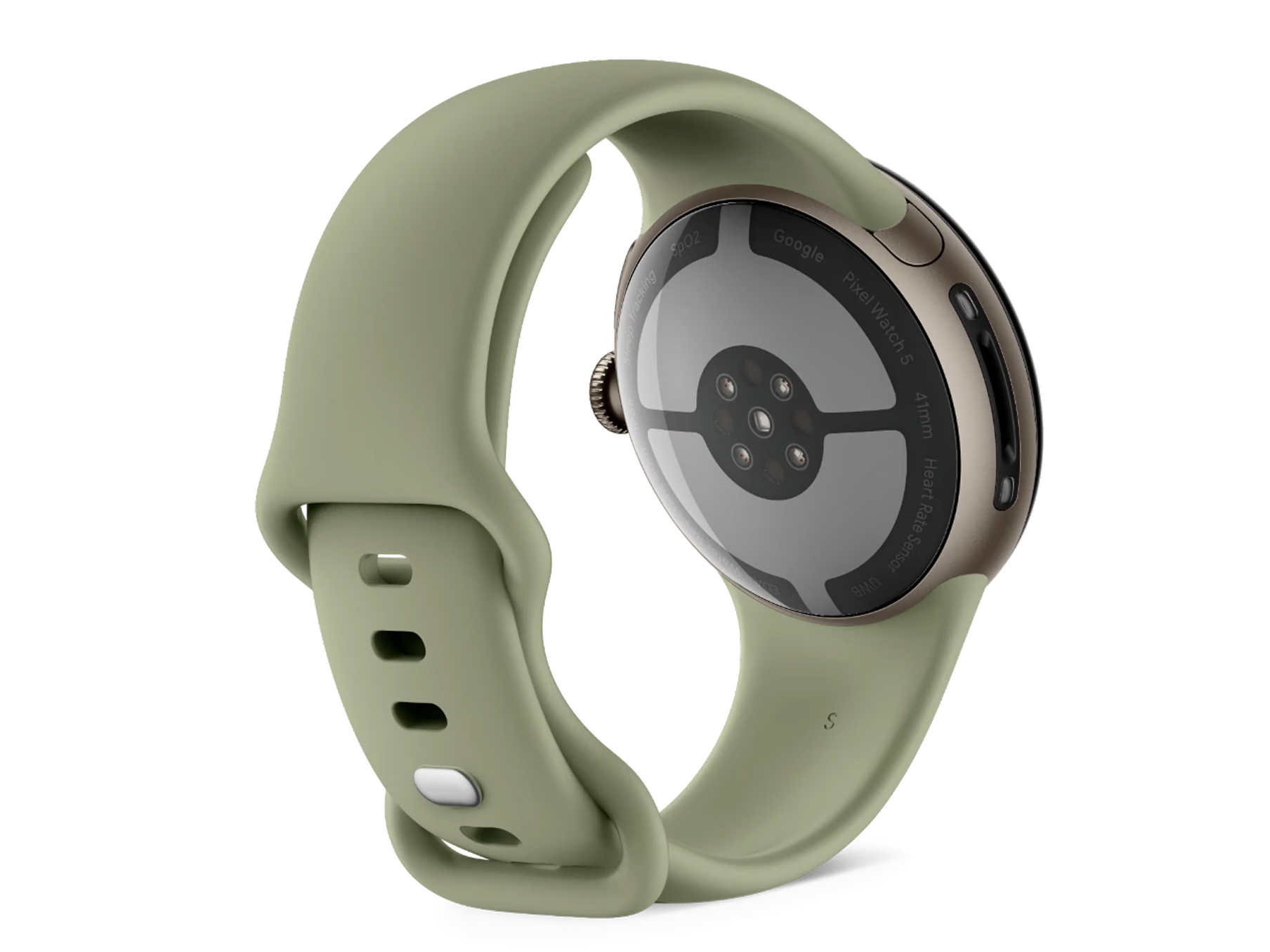
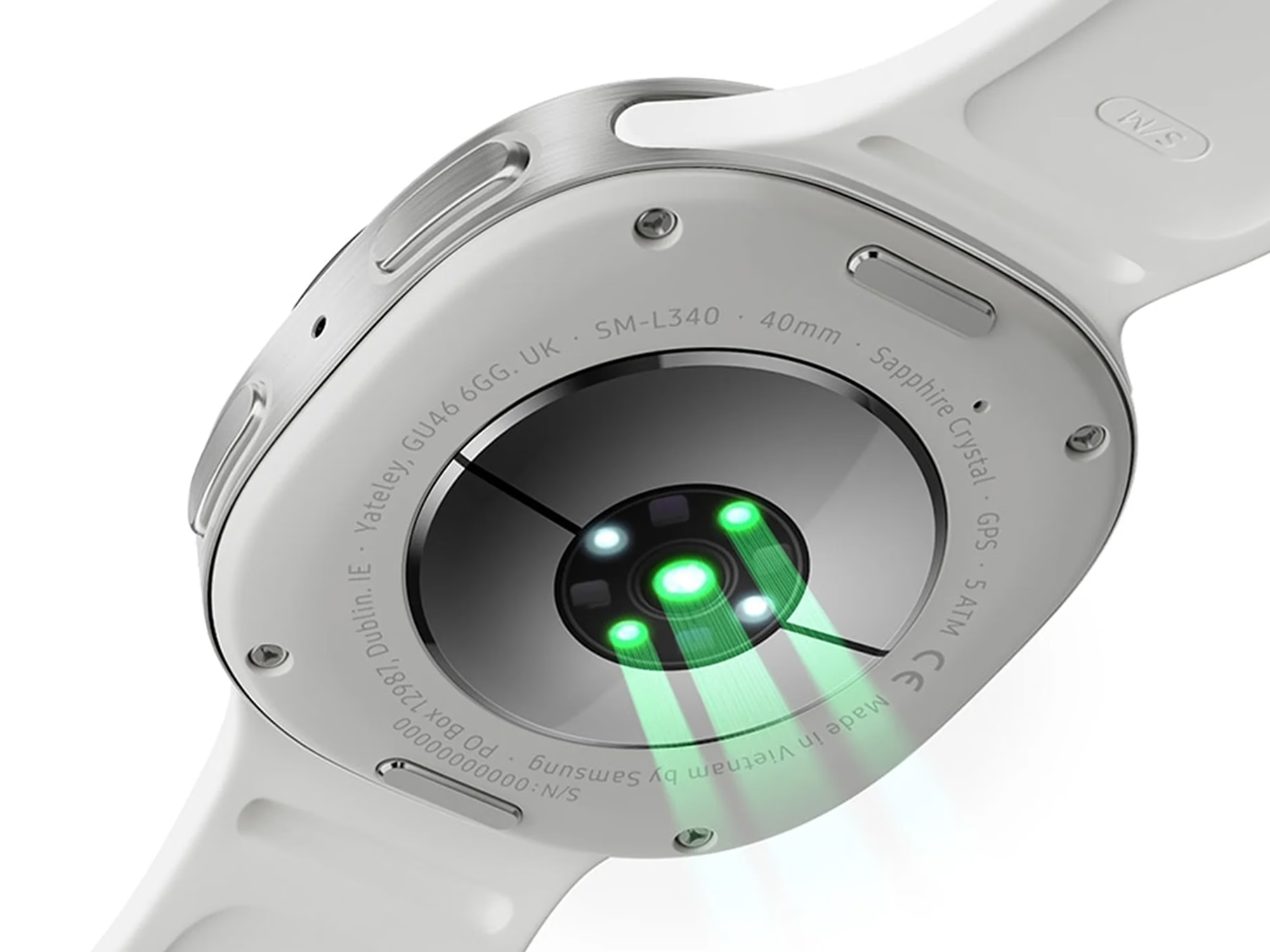
The Pixel Watch 5 uses exactly the same sensor set as the Watch 4: the entire health leap is new processing on familiar readings. The Galaxy Watch 9 carries the same BioActive sensor as the Watch Ultra 2, which costs $320 more, with heart rate, ECG, blood oxygen, skin temperature, and bioimpedance.
There is a positive reading and an uncomfortable one. The positive one is that a better algorithm on the same sensor is real, inexpensive progress. The uncomfortable one is that if new hardware is not necessary, it is also not that clear why a new watch is necessary.
Sports and GPS: the claim that still needs verification
Google made GPS the sports headline of the Pixel Watch 5: it claims to double route accuracy compared with the previous model and to outperform both the Apple Watch Ultra 3 and the Garmin Fenix 8 Pro.
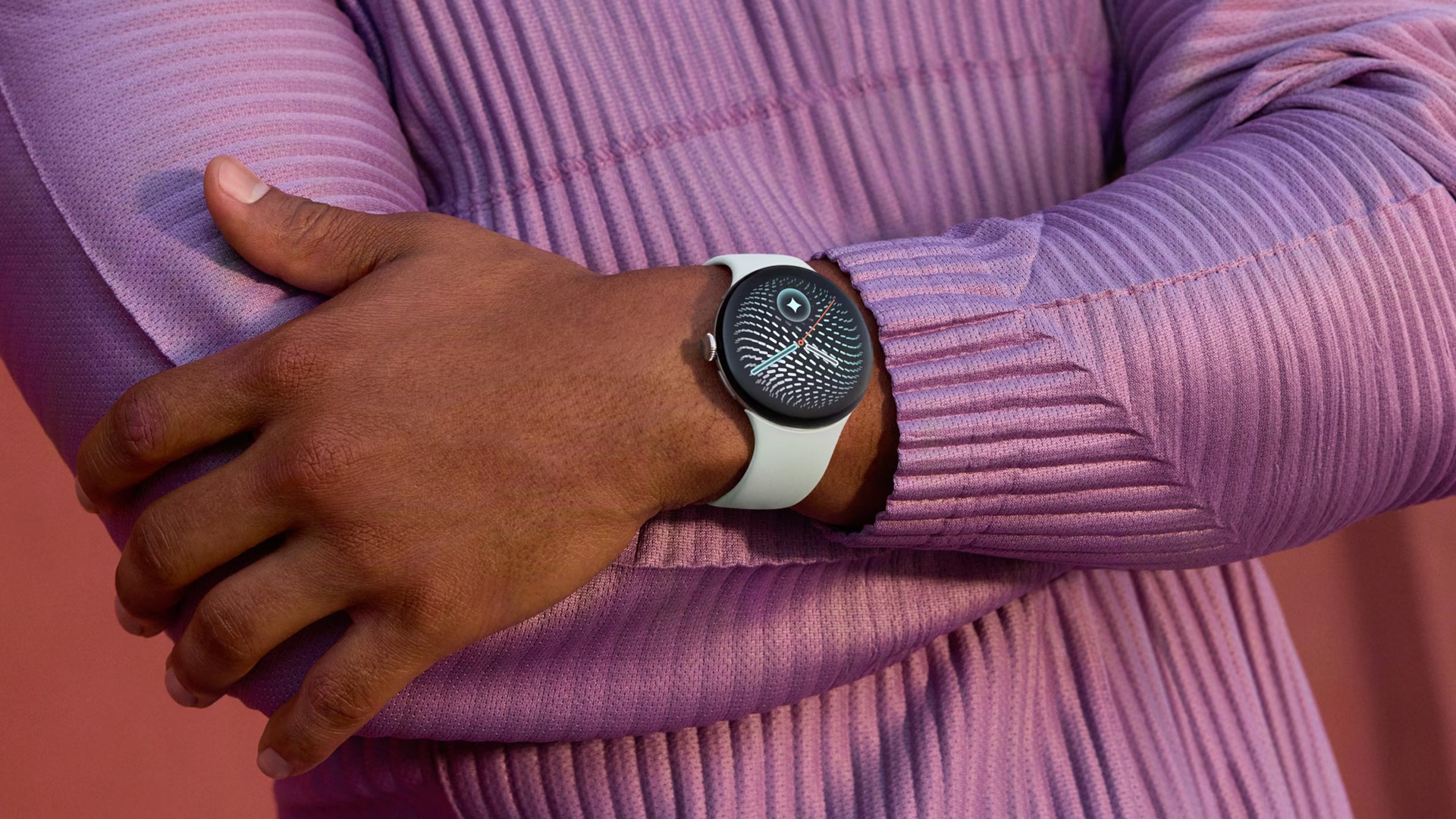
It is the manufacturer’s own measurement, and there is still no independent verification. It is worth keeping in mind because the watch Google chose as its benchmark, the Ultra 3, is the one with dual-frequency GPS and twenty hours of outdoor workout battery life with full tracking. The Watch 9 also uses dual-band GPS, L1 and L5.
On the training side, the Pixel adds set and rep recognition for weight training, Samsung brings Running Coach with plans that adjust on the fly, and Apple remains the benchmark for mountain sports and recreational diving down to 40 meters.
Battery and durability
Apple wins comfortably: 42 hours of normal use, 72 in Low Power Mode, and fast charging that delivers up to twelve hours in fifteen minutes. Samsung claims up to 40 hours with the always-on display disabled, and Google, between 30 and 40 hours depending on size, with the always-on display enabled.
In durability, the gap is even wider. The Ultra 3 is titanium, withstands 100 meters, and works for recreational diving. The other two are aluminum with 5 ATM: enough for swimming, not for diving. The Watch 9 adds sapphire crystal and MIL-STD-810H military certification, uncommon at this price.
Ecosystem: which phone each one works with
This is the variable that, in practice, decides before any other, and it is often left until the end of comparisons.
The Apple Watch Ultra 3 works only with iPhone. If you use Android, the comparison ends here and the watch is out no matter how many features it has.
The Pixel Watch 5 and the Galaxy Watch 9 both run Wear OS 7 and work with any Android, though with asterisks: Samsung’s sleep apnea feature requires a Galaxy phone, and Gemini integration plus Google ecosystem features perform better with a Pixel alongside it.
Head-to-head
Starting prices are not directly comparable, so the table ranks capabilities rather than value.
The row that matters most is the last one, and the second-to-last is the one almost nobody looks at.
Which one should you buy
If you use iPhone and care about preventive health, the Apple Watch Ultra 3. It is twice as expensive, yes, but it is the only one with cleared hypertension notifications, the best battery life, and durability the other two do not try to match.
If you use Android and sleep poorly, the Galaxy Watch 9. Its apnea detection with severity level is the only feature in the trio that was first in its category before the FDA, and at $379.99 it is the cheapest of the three. With the condition that you need a Galaxy phone for that specific feature.
If you are already in the Pixel ecosystem, the Watch 5 is consistent and its health package is the most complete in terms of number of signals. But choose it knowing what you are buying: observations that alert you that something changed, not measurements with clinical backing. For many uses, that is enough; for making a health decision, it is not the same.
Frequently asked questions
Which of the three measures health best?
It depends on what you mean by measure. The Apple Watch Ultra 3 has FDA-cleared hypertension notifications and the Galaxy Watch 9 has sleep apnea detection with De Novo authorization. The Pixel Watch 5 offers more new features, but presents them as patterns and trends.
Does the Apple Watch Ultra 3 work with Android?
No. It requires an iPhone to set up and operate. It is the most important restriction in the comparison: if you use Android, the real choice is between the Pixel Watch 5 and the Galaxy Watch 9.
Which has the longest battery life?
The Apple Watch Ultra 3, with a claimed 42 hours of normal use and 72 in Low Power Mode. The Galaxy Watch 9 reaches 40 hours with the always-on display off, and the Pixel Watch 5 ranges from 30 to 40 hours depending on size, with the display on.
Is any of them suitable for diving?
Only the Apple Watch Ultra 3, with 100-meter water resistance and recreational diving down to 40. The Pixel Watch 5 and Galaxy Watch 9 have 5 ATM, which is enough for swimming and showering, but not for diving.
Pixel Watch 5
Google’s watch for 2026: the broadest health package of the trio, built on the previous generation’s sensors.
Pros
- It adds the most new health signals of the three.
- Charges to 50% in about fifteen minutes, convenient for a watch that tracks sleep.
- Gemini responds to commands offline thanks to on-device processing.
Cons
- None of its health features come with declared regulatory backing.
- It uses the same sensor set as the Pixel Watch 4.
- Its GPS accuracy claim still has no independent verification.
Galaxy Watch 9
Samsung’s everyday watch: the only sleep apnea detection with De Novo authorization, at the lowest price of the trio.
Pros
- Its sleep apnea detection has FDA De Novo authorization.
- It is the cheapest of the three, starting at $379.99.
- It carries the same processor and sensors as the Watch Ultra 2.
- It adds sapphire crystal and MIL-STD-810H certification in an aluminum watch.
Cons
- Sleep apnea detection requires a Galaxy phone.
- The 44-millimeter model adds just 10 mAh over its predecessor.
- Samsung does not publish real-world battery life with GPS, LTE, or overnight tracking.
Apple Watch Ultra 3
Apple’s adventure watch: titanium, satellite, and the longest battery life of the trio, with the restriction that it works only with iPhone.
Pros
- Its hypertension notifications have FDA clearance.
- The 42-hour battery life is the longest of the three.
- It withstands 100 meters and works for recreational diving down to 40.
- Two-way satellite communication has no equivalent in the trio.
Cons
- It costs twice as much as the other two.
- It works only with iPhone.
- Its single 49-millimeter size is not suitable for small wrists.
Author
Alexis PaezComparativa basada en especificaciones oficiales de los tres fabricantes y en documentación regulatoria pública. El autor no realizó una prueba física de los equipos. Ninguna función de salud mencionada reemplaza una consulta médica.