Pixel 11 Pro XL, Galaxy S26 Ultra, and iPhone 17 Pro Max: the three have converged, and something else decides the winner

Index
The Pixel 11 Pro XL starts at $1,299, the Galaxy S26 Ultra launched at $1,299, and the iPhone 17 Pro Max at $1,199. All three come with 12 GB of RAM in their entry-level version, a vapor chamber, a 120 Hz display, and around 5,000 mAh of battery capacity.
What decides the purchase among these three is no longer on the spec sheet: it is the zoom, the charging speed, and, above all, how long each one has been on sale.
The three have converged
The list of what they share is longer than the list of what separates them. 120 Hz LTPO display. IP68 certification. Around 5,000 mAh. And 12 GB of RAM in the entry-level configuration, including the iPhone, where European energy labels and Xcode confirmed the figure that Apple does not publish.
Cooling is the clearest example. Google introduced the Pixel 11 Pro’s vapor chamber as a new feature for this generation, but Apple had already added one to the 17 Pro with laser welding, and Samsung redesigned it in the S26 Ultra by moving the thermal interface material to the sides of the processor.
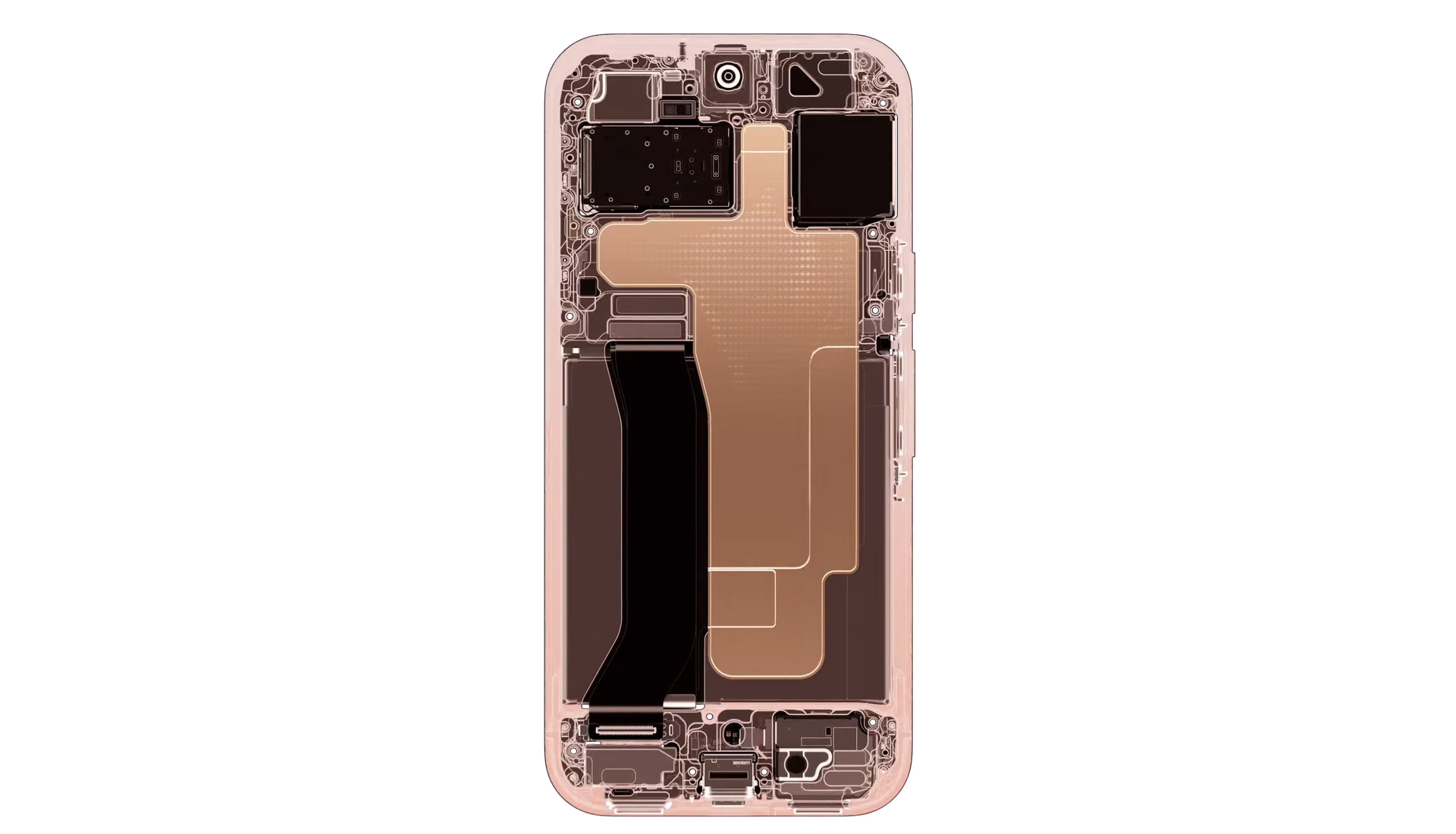
In other words, cooling stopped being a selling point and became the baseline for the category. The same goes for memory: 12 GB does not distinguish any one of the three; it distinguishes all three from the rest of the market.
Display: brightness versus resolution
The Pixel 11 Pro XL wins on brightness with a 3,600-nit peak, above the iPhone’s 3,000 and the Galaxy’s 2,600. On a phone used outdoors, that difference is visible.
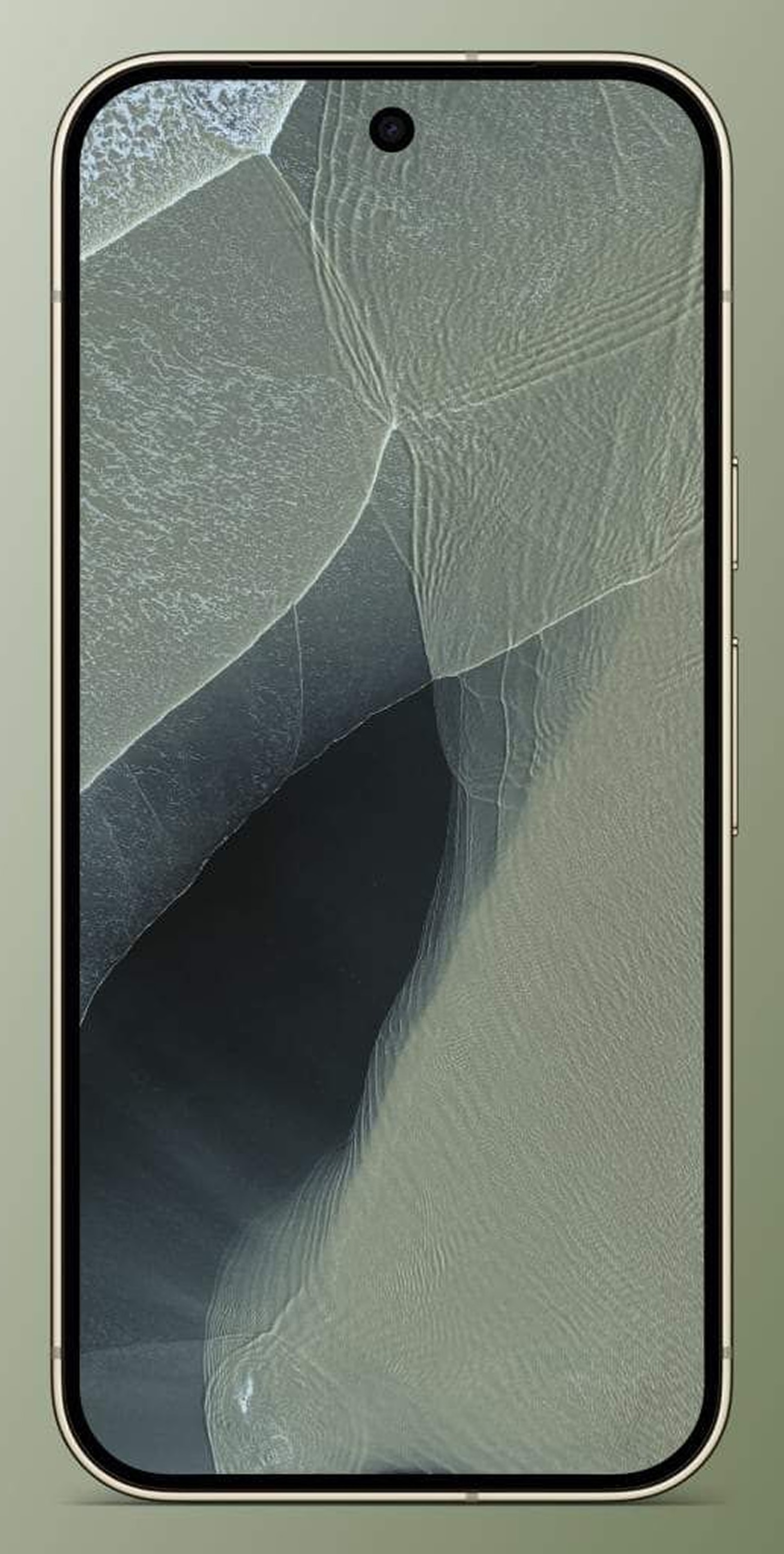
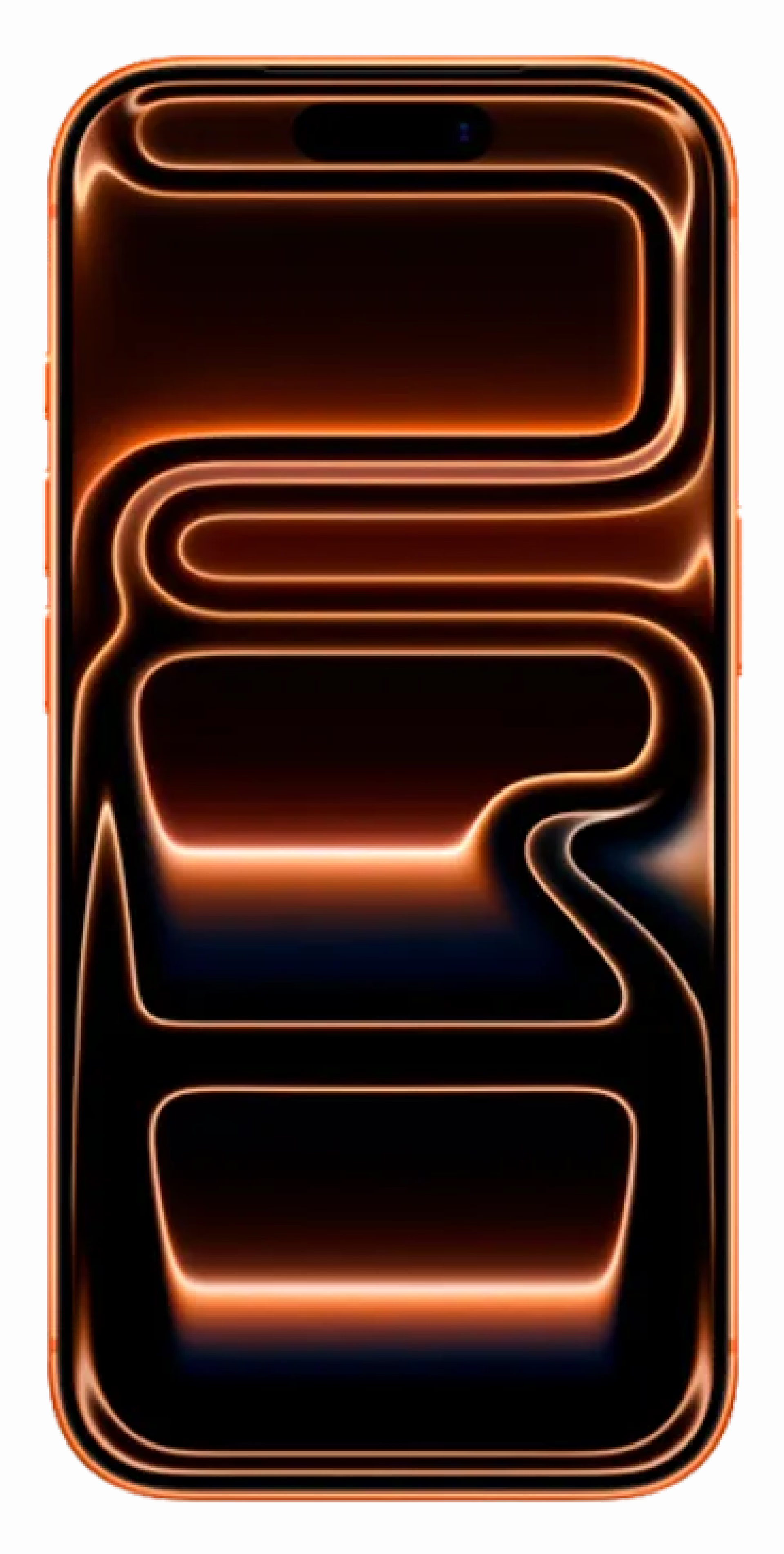
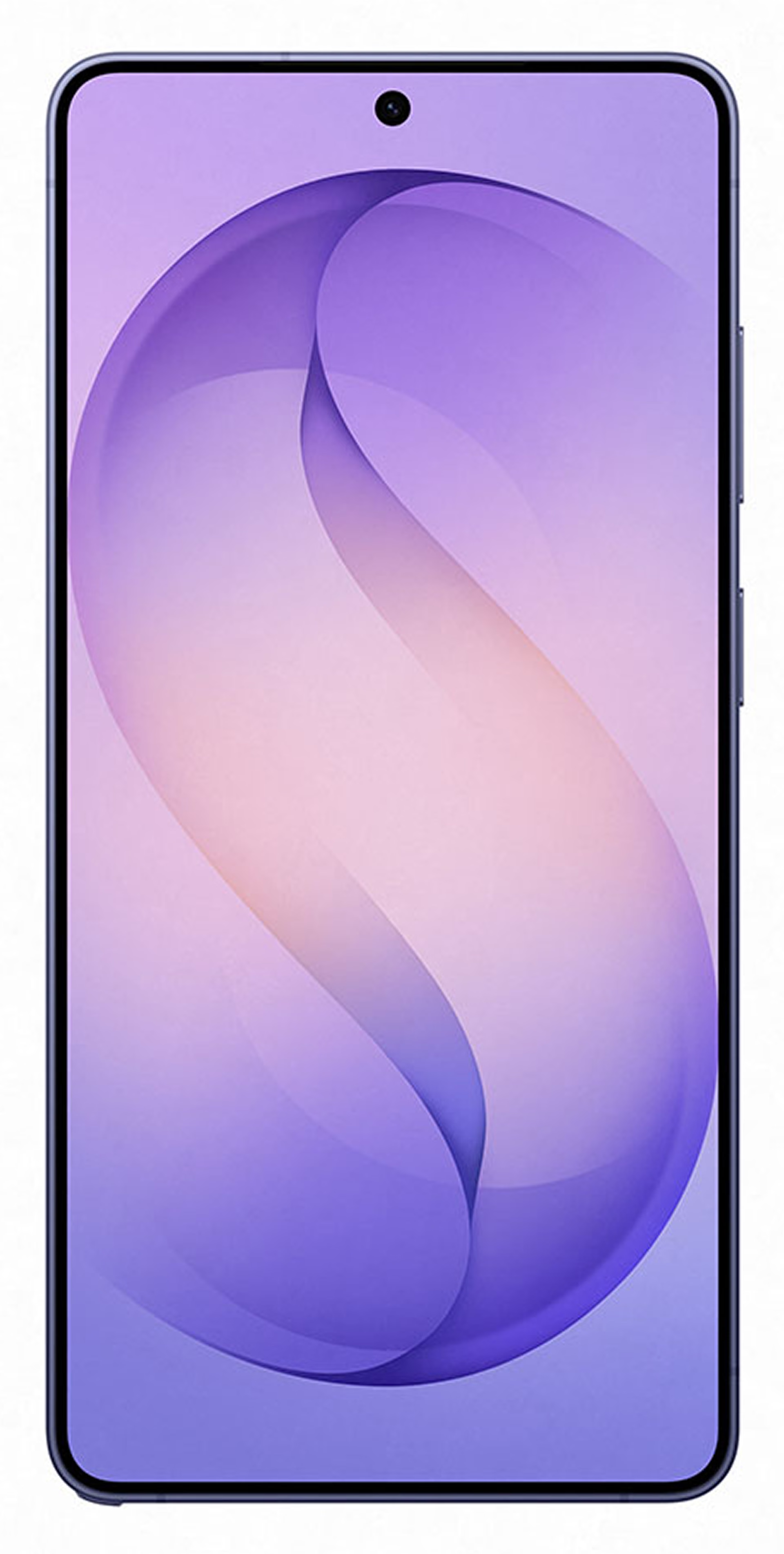
The Galaxy answers with resolution: 1440 by 3120 pixels on 6.9 inches, the highest of the three. The iPhone shares the same 6.9 inches, while the Pixel stays at 6.8, a difference you will not notice in the hand.
All three use 120 Hz LTPO panels that lower the refresh rate when the content does not need it. Choosing by display means choosing between brightness and pixel density, not between good and bad.
Zoom: three different architectures
This is where the real difference in this trio lies, and each brand solved it in its own way.
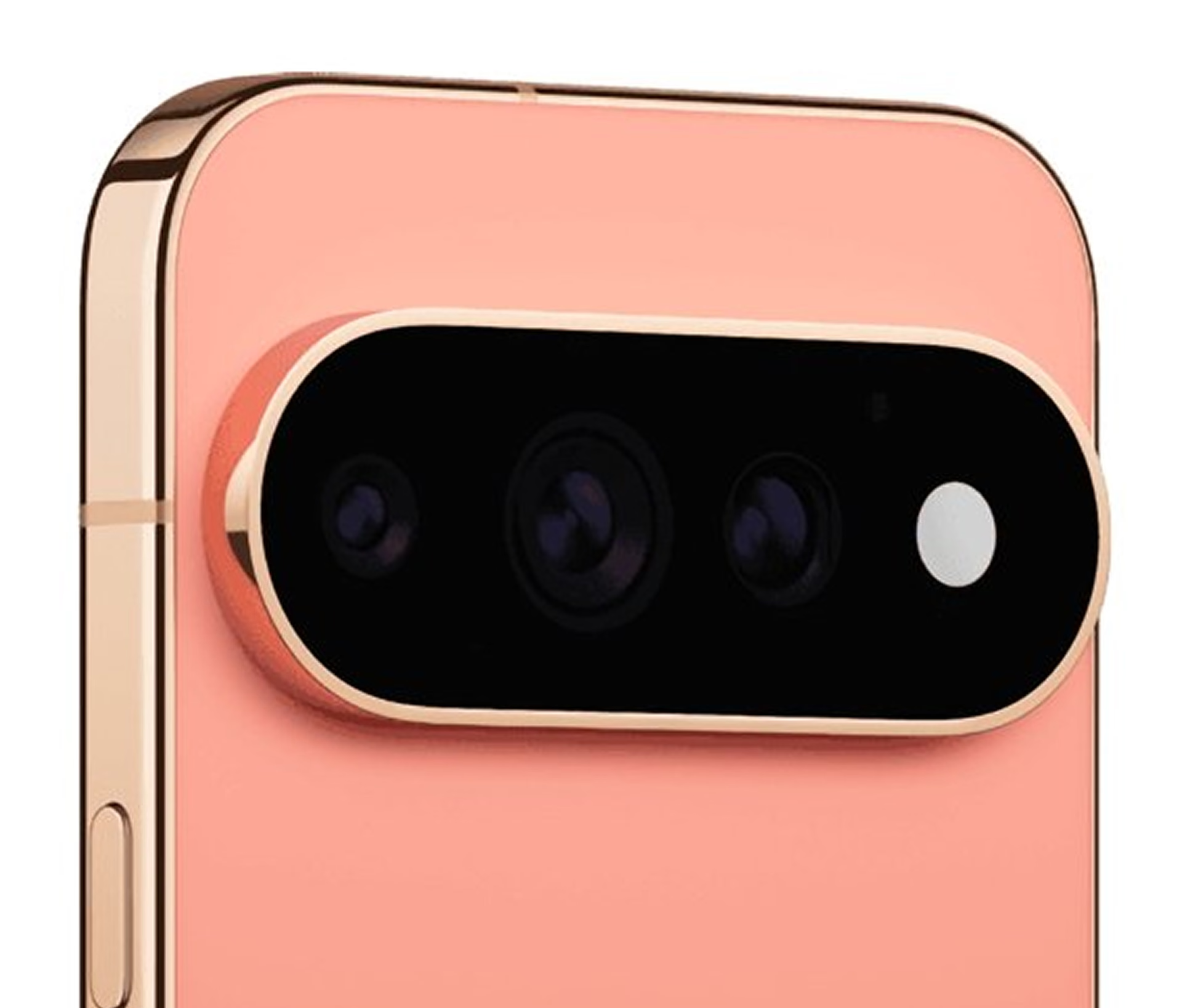
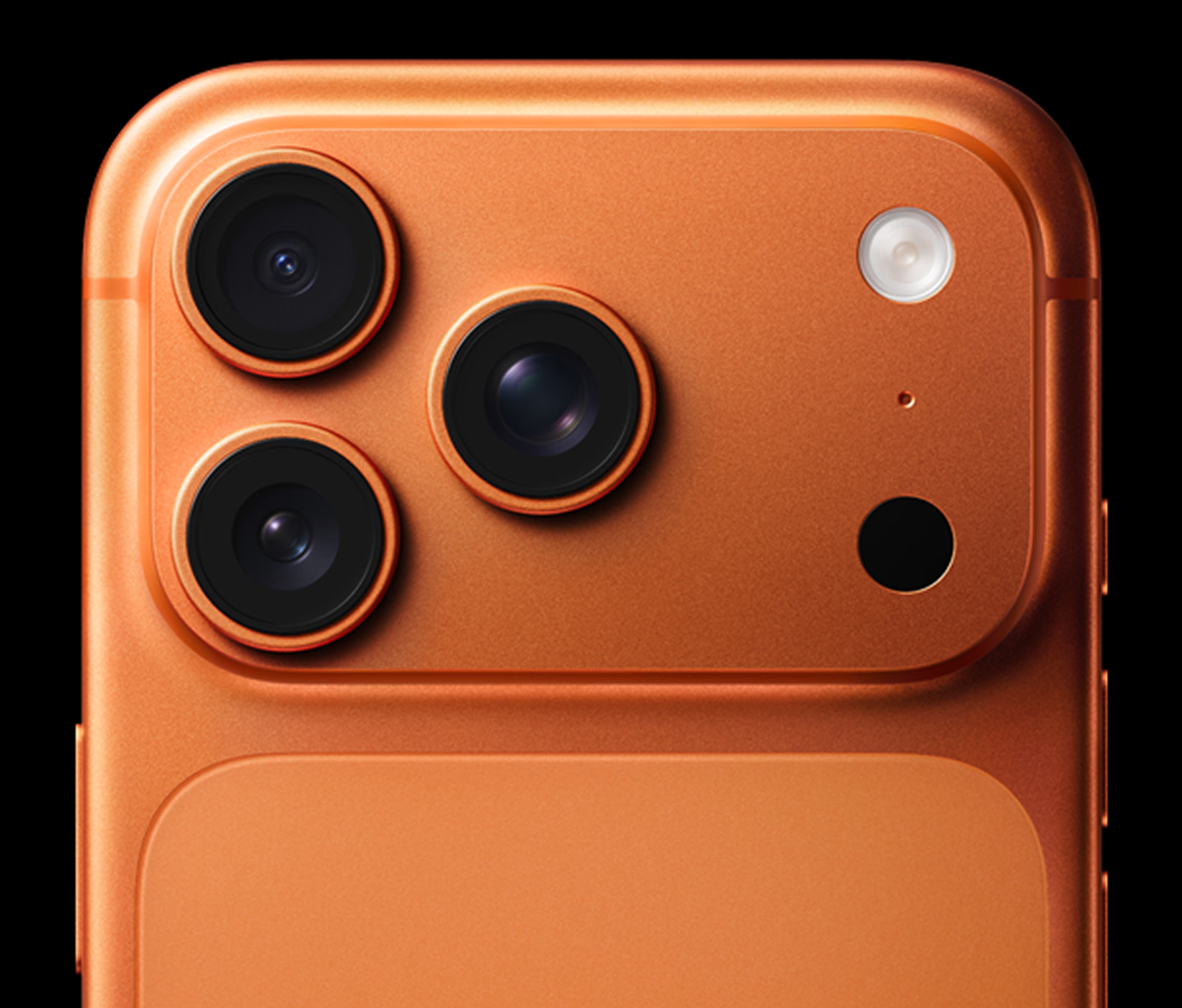
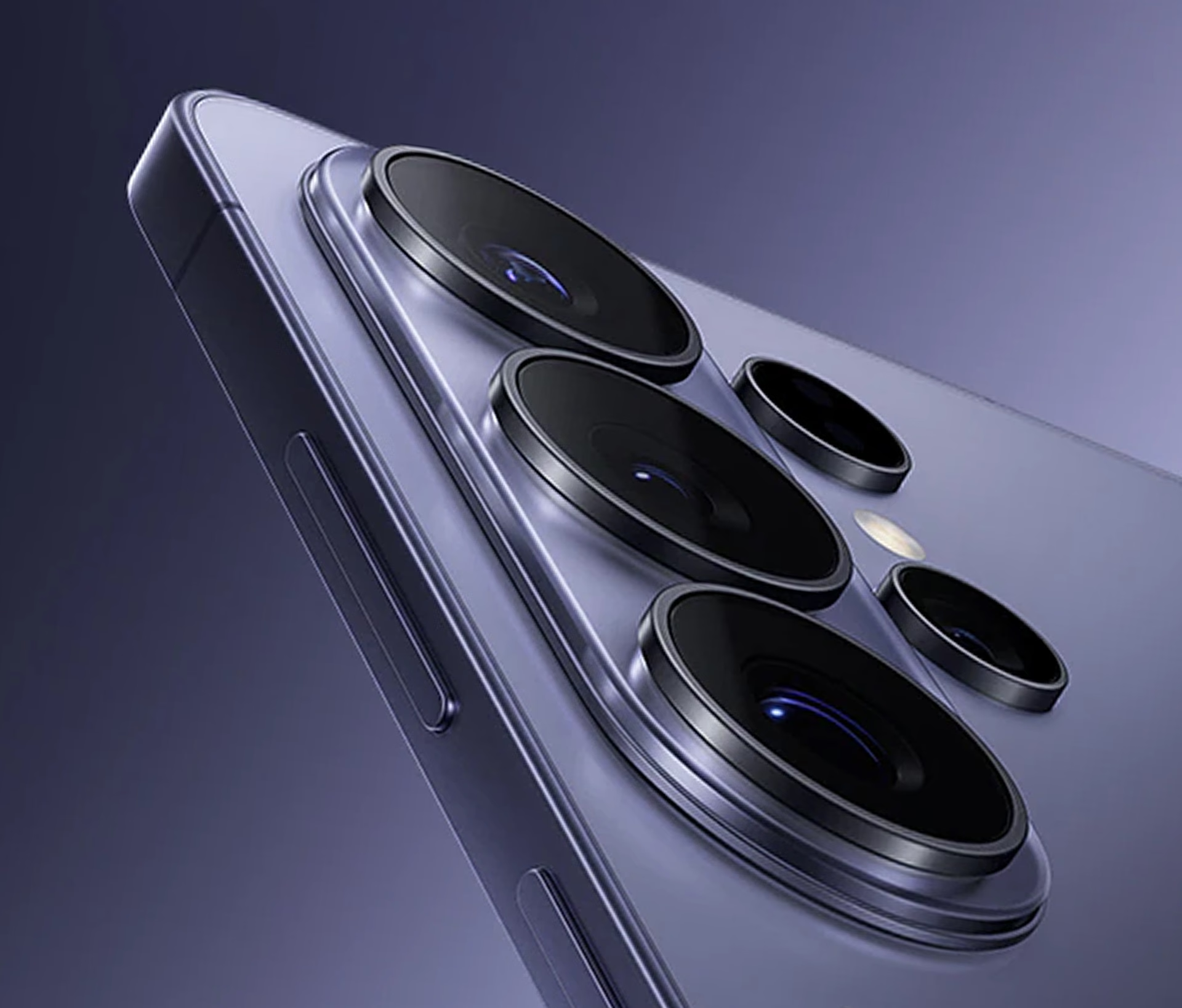
Google goes with a 48 MP telephoto and 5x optical zoom, then stretches the rest through processing up to 120x. Samsung is the only one with two telephotos: a 10 MP unit at 3x and a 50 MP periscope at 5x, plus a 200 MP main sensor with an f/1.4 aperture. Apple uses a 48 MP tetraprism that delivers 4x at 100 millimeters and 8x optical at 200, the longest optical reach of the three.
The practical read: for portraits and mid-range zoom, the Galaxy’s dual telephoto setup covers more real focal lengths. To get truly closer without losing detail, Apple’s 8x. And for long-range zoom with processing, Google, with the asterisk that beyond a certain point what you see is reconstruction rather than capture.
Battery and charging
Capacities sit within a 115 mAh range: 5,115 in the Pixel, 5,088 in the iPhone, and 5,000 in the Galaxy. Nobody wins there.
Charging does separate them. The S26 Ultra reaches 60W wired and hits 75% in half an hour. The Pixel 11 Pro XL does the same with 45W. The iPhone 17 Pro Max stays at 40W, and this is where Apple has been behind Android for years without offering an explanation.
Wireless charging is a technical tie between the Pixel and the Galaxy, both at 25W over Qi2.2.
Software and years of support
Google and Samsung promise seven years of system and security updates. Apple does not state a number, though its support track record falls in that same range.
The real differences are in approach. The Pixel runs Android 17 with Gemini integrated into the system and receives versions on day one. The Galaxy runs One UI on top of Android 16, with more multi-window tools and the largest accessory ecosystem. The iPhone ships with iOS 26 and Apple Intelligence, which remains the most conservative of the three in AI features.
The list price is not the real price
The three are at different points in their sales cycle, and that matters more than any row in the table.
The Pixel 11 Pro XL is just launching, so you will pay the full $1,299. The Galaxy S26 Ultra launched in March at the same price, and it can already be found well below list price. The iPhone 17 Pro Max is from September 2025 and is about to be replaced by its successor, which is when the outgoing model either drops in price or disappears from the catalog.
Buying all three today at sticker price is not the same transaction. It is the variable no spec comparison puts in the table, and the one that moves the most money.
Head to head
The table organizes what actually separates them. Everything they share was covered in the first section.
No column wins from top to bottom, and that is the point: the three are the same phone with three different criteria for where to focus the effort.
Which one is right for you
If you photograph a bit of everything and want to cover the widest range of focal lengths, the Galaxy S26 Ultra. It is the only one with two telephotos, has the largest main sensor, and charges faster than the other two. The fact that it has already been on the market for months also works in favor of the price.
If processing matters more to you than hardware, the Pixel 11 Pro XL. The brightest display, the largest battery, and the best software-handled long-range zoom, with Gemini running in the system rather than as a separate app.
If you are already in the Apple ecosystem, the iPhone 17 Pro Max is still excellent, but wait for the successor. Buying it at list price, with its successor about to be announced, is the worst possible deal of the three.
Frequently asked questions
Which of the three has the best camera?
It depends on the use case. The Galaxy S26 Ultra is the only one with two telephotos and the largest main sensor, at 200 MP. The iPhone has the longest optical reach, with 8x at 200 millimeters. The Pixel handles long-range zoom better through processing.
How much RAM does each one have?
All three come with 12 GB in their entry-level configuration. The Pixel and Galaxy go up to 16 GB in the higher-storage versions; on the iPhone, the figure is not official from Apple, but it is confirmed by European energy labels and by Xcode.
Which one charges the fastest?
The Galaxy S26 Ultra, with 60W wired and 75% in half an hour. The Pixel 11 Pro XL reaches 45W, and the iPhone 17 Pro Max stays at 40W, the slowest charging of the three.
Is it worth waiting for the next iPhone?
If you were looking at the iPhone 17 Pro Max, yes. Apple introduces its new generation in September, and that announcement usually lowers the price of the outgoing model or removes it from the catalog. For the Pixel and the Galaxy, the situation is different, because both are from 2026.
Pixel 11 Pro XL
Google’s 2026 flagship: the brightest display and the largest battery in the trio, with long-range zoom handled through processing.
Pros
- The brightest display of the three, with a 3,600-nit peak.
- The largest battery, at 5,115 mAh.
- Gemini runs integrated into the system and receives Android on day one.
Cons
- A single telephoto compared with the Galaxy’s two.
- 120x zoom is software reconstruction, not optical capture.
- It is just launching, so you pay the full list price.
Galaxy S26 Ultra
Samsung’s 2026 Ultra: the most complete camera system in the trio and the fastest charging, with the least bright display.
Pros
- It is the only one of the three with two telephotos, at 3x and 5x.
- The 200 MP main sensor with an f/1.4 aperture has no equivalent here.
- 60W charging is the fastest in the trio.
- It has been on the market for months, so it can be found below list price.
Cons
- Its display is the least bright of the three, with a 2,600-nit peak.
- It runs Android 16 while the others are already on the next version.
- The 3x telephoto stays at 10 MP.
iPhone 17 Pro Max
Apple’s flagship from the previous cycle: the longest optical zoom and the best video tools, at the end of its commercial life.
Pros
- It has the longest optical reach in the trio, with 8x at 200 millimeters.
- It has the lowest list price, starting at $1,199.
- The professional video tools have no equivalent on Android.
Cons
- 40W charging is the slowest of the three.
- Apple does not state a number of years of updates.
- It is weeks away from being replaced by its successor.
Author
Alexis PaezComparativa basada en especificaciones oficiales de los tres fabricantes y en fichas técnicas independientes. El autor no realizó una prueba física de los equipos. El iPhone 17 Pro Max pertenece al ciclo anterior de Apple y su sucesor se anuncia en septiembre de 2026.
Comments
Share article
You might also like

Which Pixel 11 to buy: which of the four is right for you and which configuration to choose
The Pixel 11, the Pro, the Pro XL, or the foldable: which one makes sense depending on your use, what really changes between them, and which RAM and storage configuration to choose.

Pixel 11 Pro and Pro XL: HiLight, 120x zoom, and the first vapor chamber in a Pixel
The Pixel 11 Pro and Pro XL add HiLight, 120x Pro Zoom, a vapor chamber, and 3,600 nits. Full specs, pricing, and the asterisk around 12 GB of RAM.

Pixel 11: 30x zoom and fast wireless charging come to the base model, but it misses out on HiLight
The Pixel 11 inherits the Pro models’ 5x telephoto and 30x Super Zoom for $899. Full specs, price, sale date, and what it gives up versus the Pro models.

The Pixel 11 Pro drops to 12 GB of RAM: to get 16, you have to pay $120 more and get 512 GB
The 256 GB Pixel 11 Pro drops from 16 to 12 GB of RAM: 16 GB is reserved for the 512 GB and 1 TB models. What that means for local AI and which version makes sense.