SpaceX and Tesla will generate a significant share of the electricity for their chip factory in Texas with their own natural gas power plants and battery systems, instead of buying it from the grid. Riley Trettel, head of energy and data centers at SpaceX, confirmed it at a public meeting in Grimes County: "We are bringing our own power. We’re going to be building gas-fired power plants and very large battery arrays."
The decision says less about Elon Musk than it does about the state of the industry: chip manufacturing is no longer bottlenecked by factories, but by megawatts.
What Terafab is
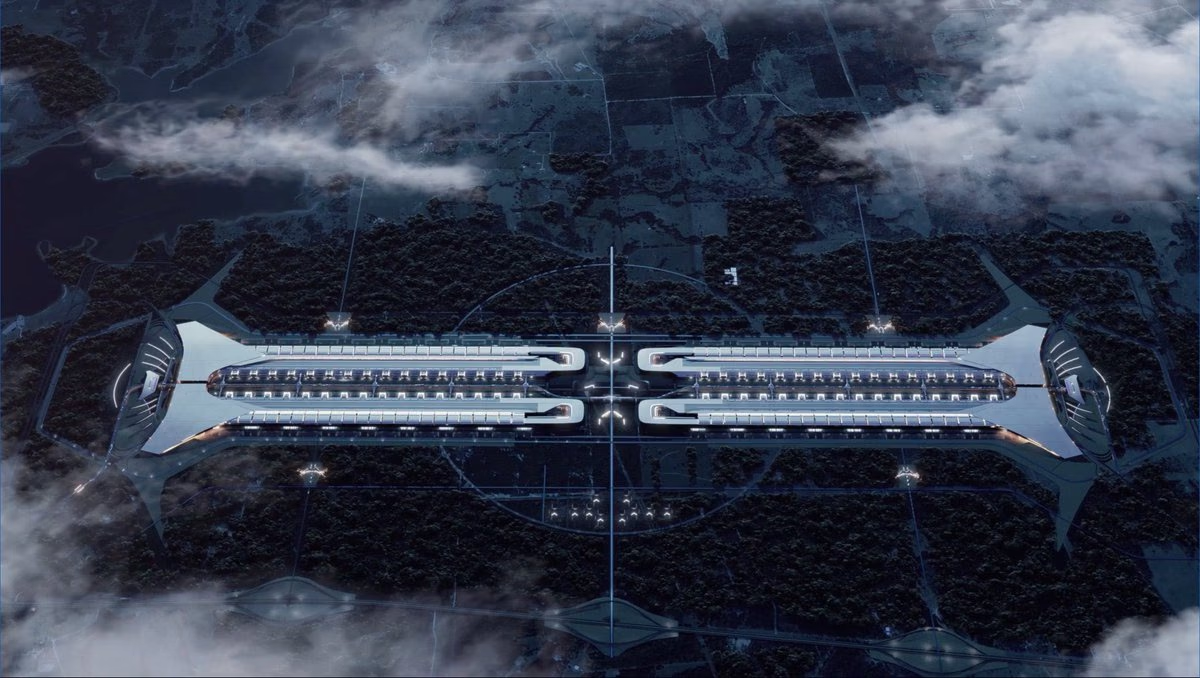
Terafab is the semiconductor plant that SpaceX and Tesla will build in Grimes County, just over an hour northwest of Houston. The first phase costs USD 16.8 billion, creates 3,000 jobs, and receives a USD 30 million state subsidy. Intel joined in April and is contributing the design and packaging expertise that neither of the two companies has.
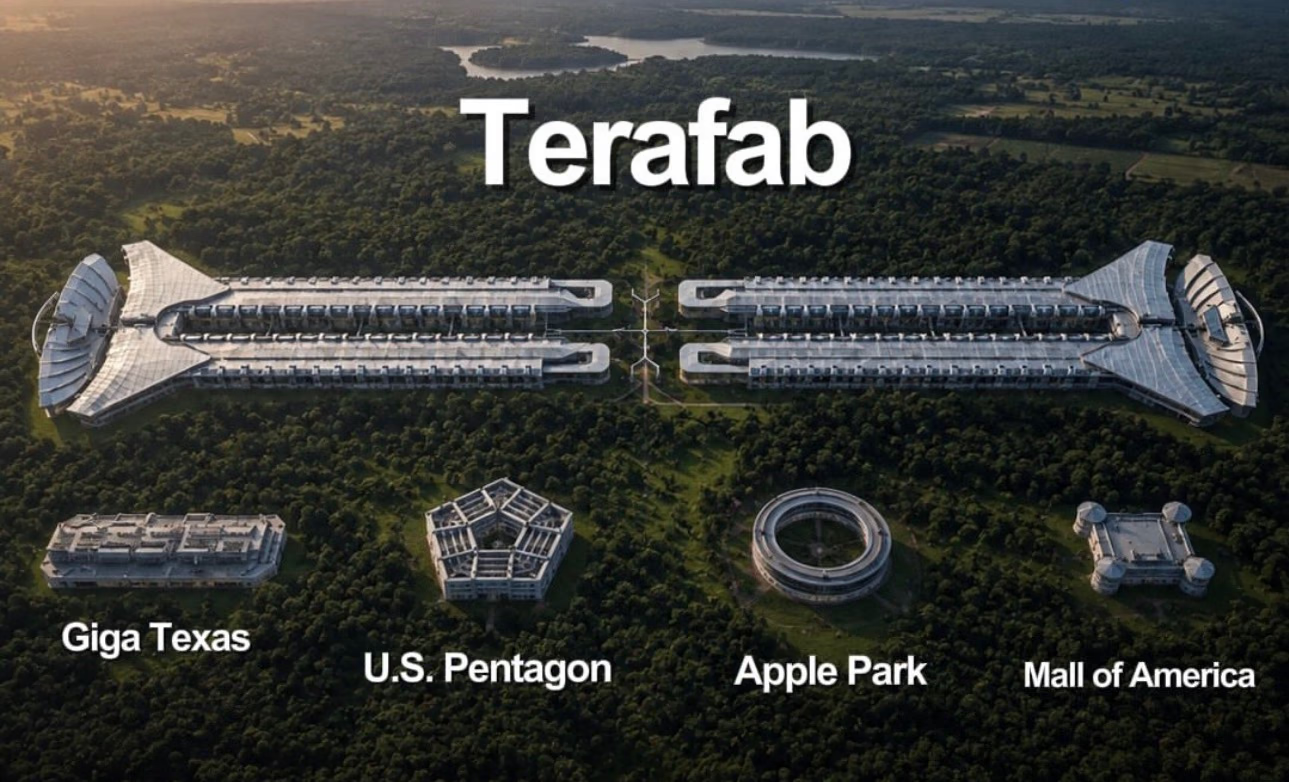
The completed campus would exceed 100 million square feet: 9.3 million square meters.
Building
Area
Times it fits inside Terafab
Terafab (completed project)
100,000,000 ft² · 9,300,000 m²
—
Giga Texas
~15,000,000 ft² · 1,400,000 m²
7
Pentagon
6,500,000 ft² · 604,000 m²
15
Mall of America
5,600,000 ft² · 520,000 m²
18
Apple Park (ring building)
2,800,000 ft² · 260,000 m²
36
With one caveat: those 100 million square feet are the final state of a phased plan, and no intermediate phase has a disclosed footprint.
Image: SpaceX.
It will produce logic and memory chips for two destinations: Tesla’s Optimus robots and Cybercab robotaxis, and the data centers SpaceX wants to put into orbit. The stated goal, "more than 1 terawatt of compute per year," does not measure the plant’s consumption, but the aggregate power of the chips that come out of it. Musk argues that the industry cannot keep up, and TSMC is set to raise chip manufacturing prices by up to 10% in 2027.
"We are bringing our own power"
Trettel was explicit on two points: the plants will run on natural gas with battery arrays, and SpaceX will not draw power from ERCOT —the Texas grid— in a way that raises everyone else’s bills. He also claimed they would be the lowest-emission gas plants per megawatt in the country, a claim the company has not yet backed with data.
What he did not say is how much power: not the capacity in megawatts, not the size of the battery arrays, and not what share of consumption will be covered by on-site generation. Without those numbers, "a significant share" is all that can be stated.
Why not wait for the power grid?
Because it would take too long. Connecting a large industrial load to the Texas grid now takes around seven years, and ERCOT’s request queue has reached 226 GW, nearly twice the entire system’s record demand. Generating power on-site cuts that wait to between 16 and 30 months.
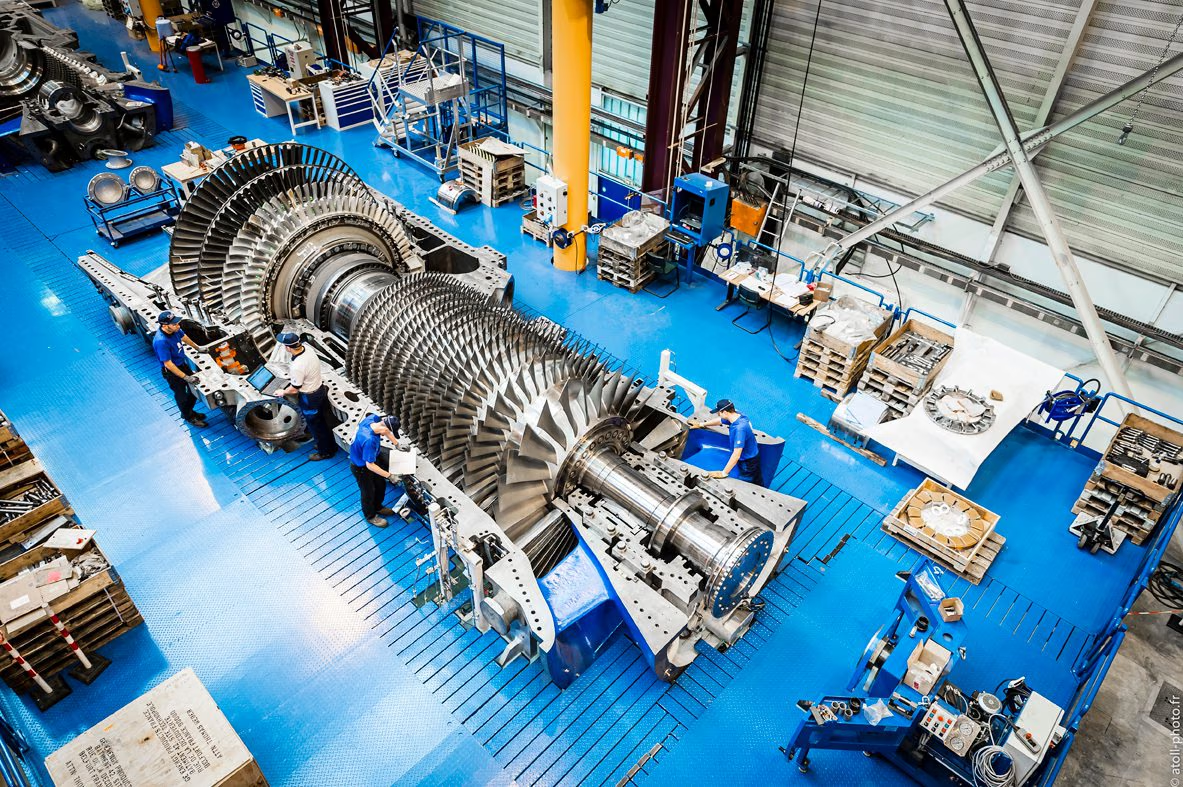
The bottleneck repeats one level upstream: GE Vernova, Siemens Energy, and Mitsubishi Heavy Industries control nearly 90% of the heavy-duty gas turbine market and have fully booked schedules. GE Vernova ended the second quarter of 2026 with 116 GW reserved and is selling deliveries for 2031, while building a gas-fired power plant has become 66% more expensive.
Image: Jpi-photographe.
Musk moved ahead of both queues: he committed more than USD 2.8 billion in turbines in SEC filings and, in May, bought APR Energy, which makes trailer-mounted mobile turbines that can be installed in days.
Path
Time until power is available
The bottleneck
Standard grid connection (ERCOT)
~7 years
226 GW interconnection queue
New factory-built heavy-duty turbine
Deliveries from 2031
Three manufacturers with fully booked schedules
On-site generation
16 to 30 months
Available equipment and permits
Trailer-mounted mobile turbines
Days
Emissions permits
Gas and batteries, not solar panels
The easy reading is that the founder of SolarCity ultimately chose a fossil fuel. That is true, but it is not the technical explanation.
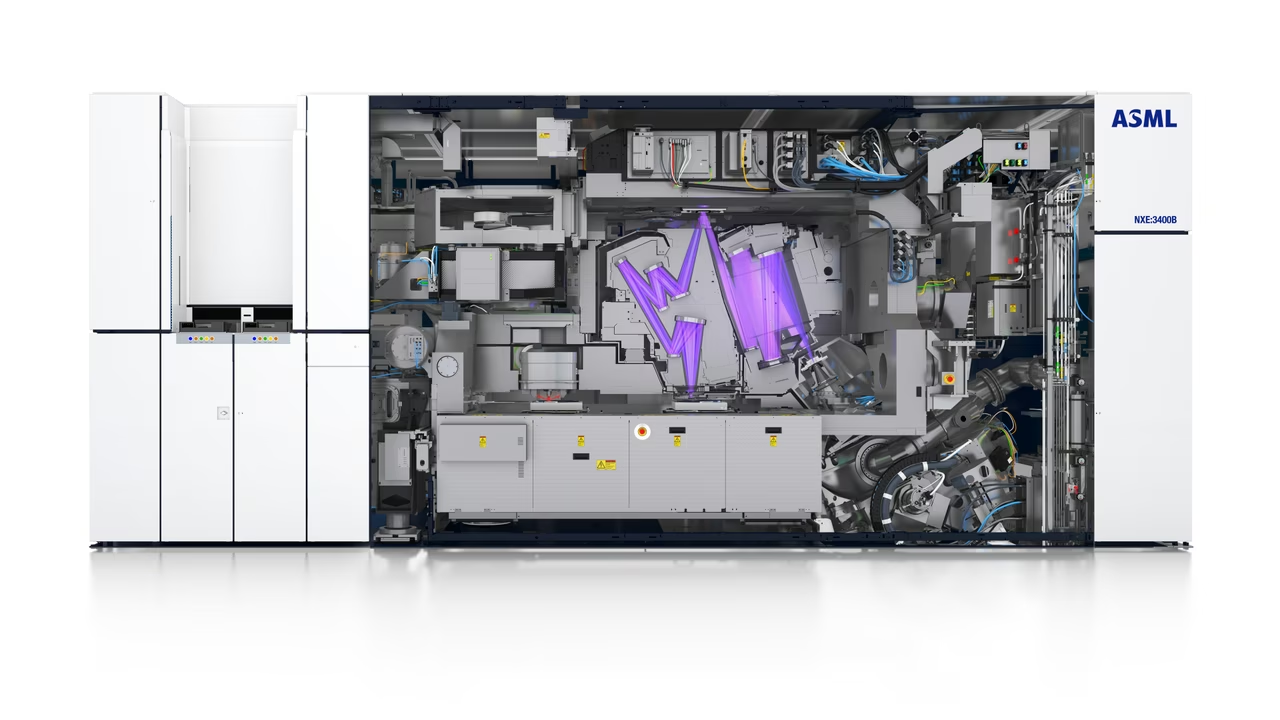
A chip factory does not just need a lot of power: it needs perfect power. A voltage sag of 10 to 20 milliseconds —not even an outage, just a momentary drop— is enough to stop equipment and ruin wafers in process. The SEMI F47 standard exists to define how much each machine can tolerate. A wafer goes through about 85 days and up to 300 operations before becoming a chip, so losing a batch to a flicker costs millions. TSMC has already experienced this, with a 90% voltage drop at one of its advanced-node fabs.
Image: ASML.
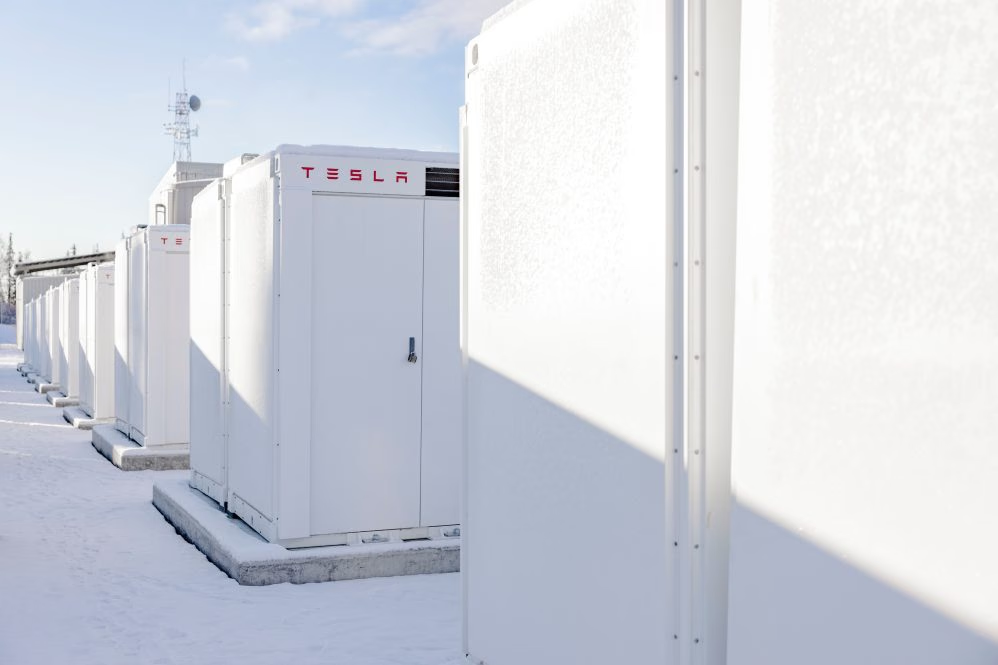
That is why the batteries matter. Here they are not storing renewables: they are a buffer that holds voltage during the milliseconds in which a turbine is still responding, a rack UPS scaled up to plant size. It is also the part Tesla already knows how to build: it manufactures Megapacks and has a plant west of Houston.
Image: Tesla.
Photovoltaic solar delivers variable, non-dispatchable power: it works as a complement, not as the foundation for a line that runs 24 hours a day. None of the announcement communications mention on-site solar generation.
The factory is being built on a shut-down coal power plant
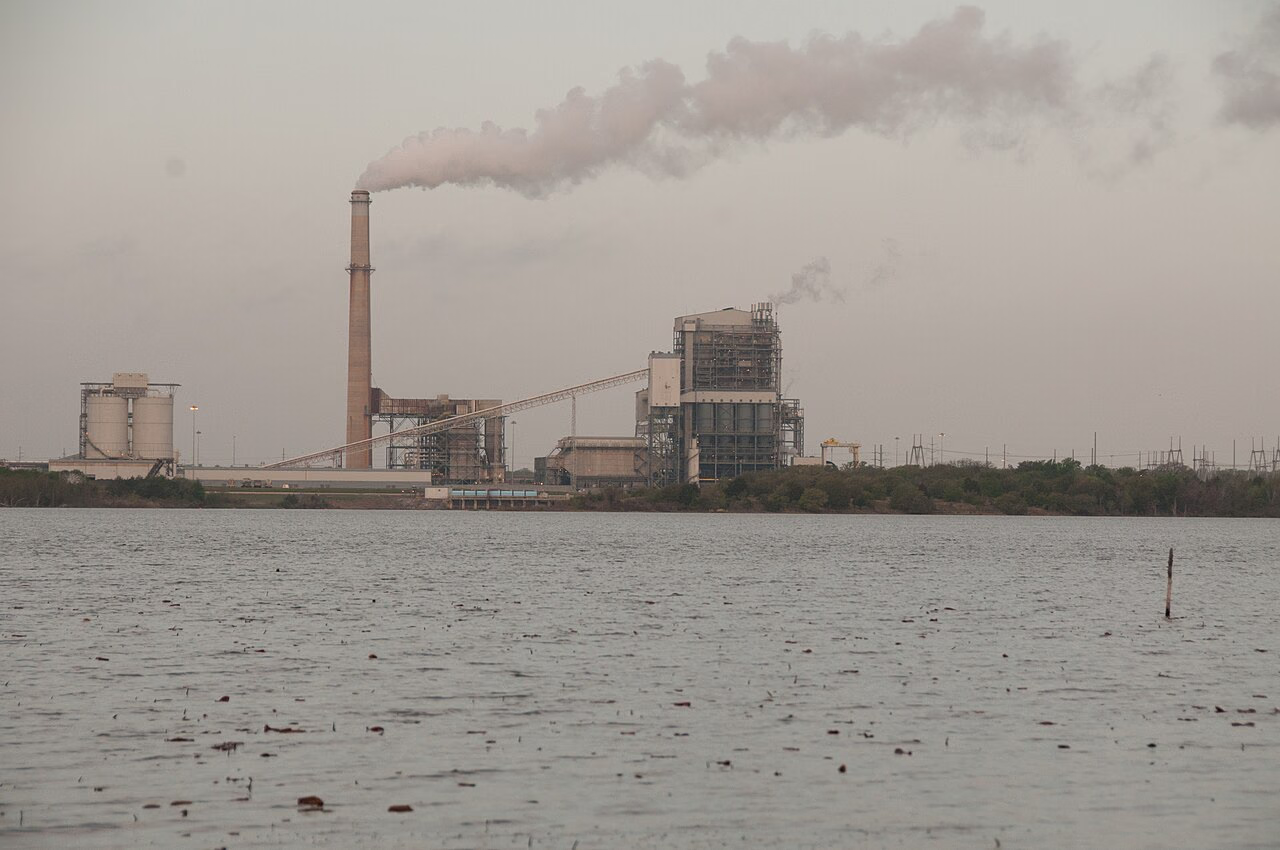
The chosen site is not an empty field. Terafab will occupy the site of the old Gibbons Creek coal plant, which operated from 1982 to 2018 under the Texas Municipal Power Agency and remained remediated industrial land. That brings three things a greenfield site does not have: the reservoir that cooled the plant, from which Terafab will draw water instead of drilling into local aquifers; inherited electrical infrastructure; and a much shorter environmental permitting path.
Image: Wikimedia Commons.
When the scarce resource is time, a site that was already a power plant is worth more than a cheap one.
What does not add up
The capacity was not disclosed. Without stated megawatts, there is no way to verify the promise that Terafab will not increase anyone’s electricity bill, or that these will be the cleanest gas plants per megawatt in the country.
The Memphis precedent matters: xAI’s Colossus data centers —which SpaceX absorbed in February— run almost entirely on gas, and the NAACP together with the Southern Environmental Law Center sued over dozens of turbines operating without permits. SpaceX will not remove them until July 2027, when a permanent 1.2 GW power plant comes online.
The numbers do not line up either: several reports treat a 100% county tax exemption as a done deal, but SpaceX’s attorney corrected it to about 78%, with a fixed payment of USD 20 million per year for 35 years. The project announced in March at USD 25 billion is now a "first phase" of 16.8 billion, while figures between 55 billion and 119 billion circulated during the county approval process for the full plan. And the S-1 describes the agreement with Tesla as a general framework without binding commitments.
The scale does not add up either. Musk said Terafab would be 50 times the size of the Pentagon; 100 million square feet divided by the building’s 6.5 million gives 15, and no version of that official figure gets to 50.
Image: @niccruzpatane.
The limit is no longer the factory
The announcement will be read as an environmental betrayal, and there is material for that. But the important data point is different: when a company fresh off an IPO with USD 87.5 billion in new capital concludes that it is cheaper to build its own power plant than to wait in line to plug in, the grid has stopped being a service and has become a bottleneck.
For anyone following semiconductors, capital is no longer the constraint: the billions are already there; what is missing is firm megawatts and turbines. For the AI business, vertical integration has reached the plug, after already reaching memory and the price of finished products. And for the 30,000 residents of Grimes County, the open question remains: how much it will consume, how much it will emit, and who will audit it.
Frequently asked questions
When will Terafab start production?
Civil works will begin immediately, with full-scale construction in the following months. When the project was presented in March 2026, the goal was to produce the first chips in late 2027 and reach volume in 2028, a timeline the companies did not update when they confirmed the site.
What chips will Terafab manufacture?
Logic and memory chips, two things that are currently manufactured by different companies: Terafab integrates them with advanced packaging and testing on the same site. They will go into Tesla’s Optimus robots and Cybercab robotaxis, and into the data centers SpaceX wants to put into orbit.
Is Terafab disconnecting from the Texas power grid?
Not exactly. SpaceX said it will generate a significant share of its power and will not draw from ERCOT in a way that raises other users’ bills, but it did not announce full isolation: the agreement with the county mentions on-site gas plants, not a disconnection.
TSMC Breaks Records and Adds Another US$100 Billion in the U.S.
TSMC earned about US$22 billion in one quarter (+77%) on demand for AI chips and committed another US$100 billion to its production in the United States.
United States invests US$2 billion in quantum computing and takes stakes in nine companies
The United States is distributing US$2 billion among nine quantum computing companies and taking an equity stake in each one. IBM gets the largest share to build the country's first quantum foundry.
TSMC will raise chipmaking prices by up to 10% in 2027 as Chinese AI grows.
TSMC will raise chipmaking prices by up to 10% starting in 2027, according to Nikkei. Apple and Nvidia foot the bill as Kimi K3 and Qwen gain ground in the U.S.
SK Hynix invests US$38 billion in two new fabs to counter the memory shortage
SK Hynix approves two memory fabs worth US$38 billion. Y2 will focus on HBM and M17 on NAND, but neither will produce a chip before 2029. What happens to RAM.
17,000 tokens per second with a model etched into silicon: AMD buys Taalas
AMD bought Taalas, the Toronto startup that etches an AI model’s weights directly into silicon. Its HC1 chip reaches 16,960 tokens per second, but runs only one model.
Tesla Roadster: what changes between Performance, Thrust, and Rocket
Tesla Roadster introduces Performance, Thrust, and Rocket. What changes in suction and thrusters, how much the reservation requires, and what remains before production.