VITURE Pro 2: 63 grams, US$299, and the dial the competition doesn’t have

Index
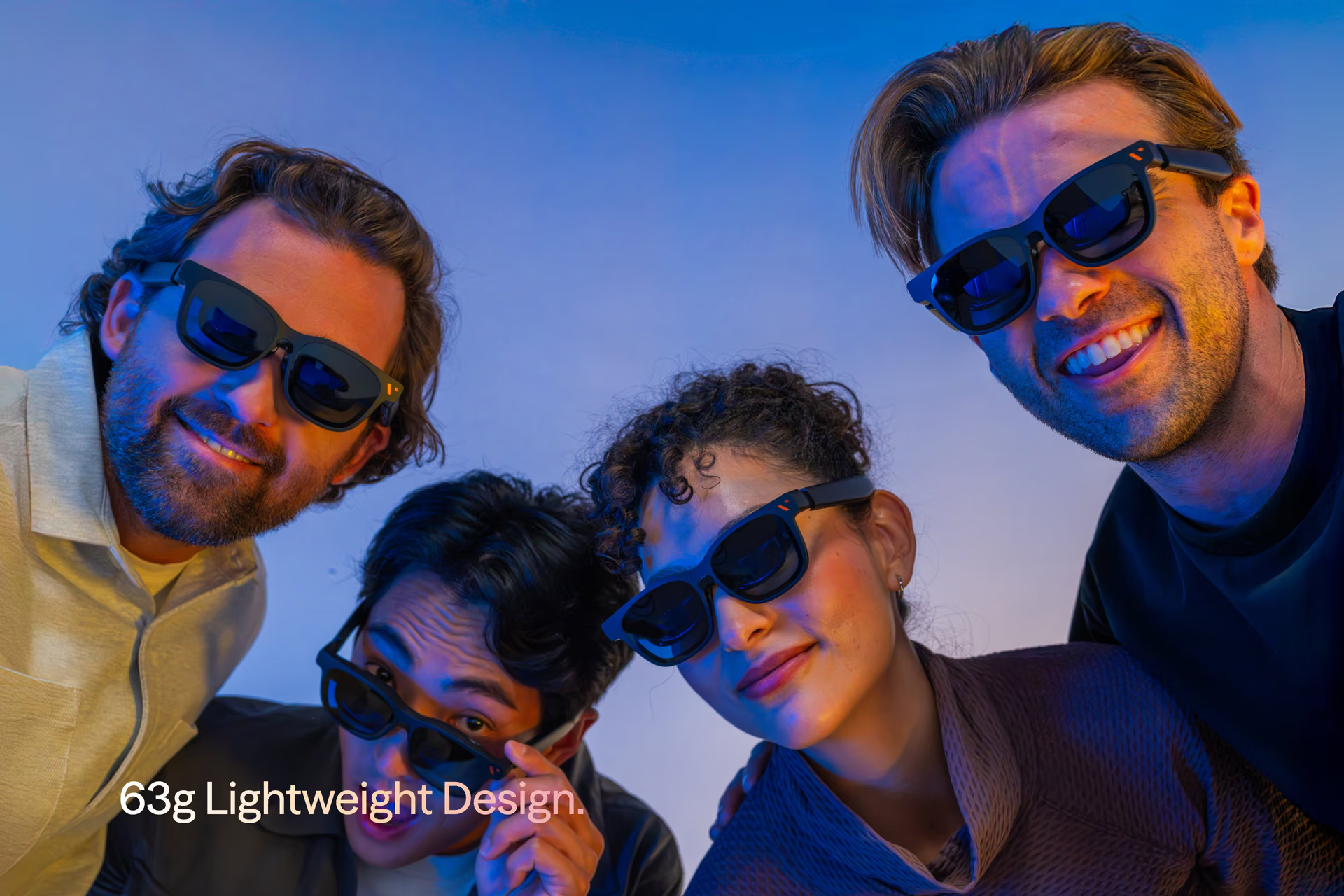
The VITURE Pro 2 weigh 63 grams, cost US$299, and are already on sale: 20% lighter and 16% thinner than the Pro model they replace, and US$160 cheaper. Co-founder Emily Wang framed the question as no longer whether XR glasses work, but whether you can wear them for three hours straight.
The problem with that argument is that at US$299 there are two other glasses that weigh almost the same. The X by XREAL a01+ come in at 62 grams, with the same 50-degree field of view and the same 1,600 nits. In this segment, grams no longer set anyone apart. What does set the Pro 2 apart is a pair of tiny wheels at the top of the frame.
If you’re nearsighted, the Pro 2 are the only US$299 XR glasses that let you put your eyeglasses away; if you’re not, the competition gives you HDR10 and image processing for the same money.
What the VITURE Pro 2 are
They are a monitor you wear on your face. No cameras, no processor, no battery, and no position sensors: a video signal comes in over USB-C and a screen floats in front of your eyes. That keeps them out of the space where Meta, Samsung, and Apple’s 2027 bet operate, which solves a different problem.
The optics are birdbath: a semi-transparent mirror that reflects the panel image toward the eye. It is thicker than a waveguide—which is why they look like robust sunglasses—and in exchange it delivers brightness that no waveguide at this price can match.
Display: 1,600 nits on Sony panels
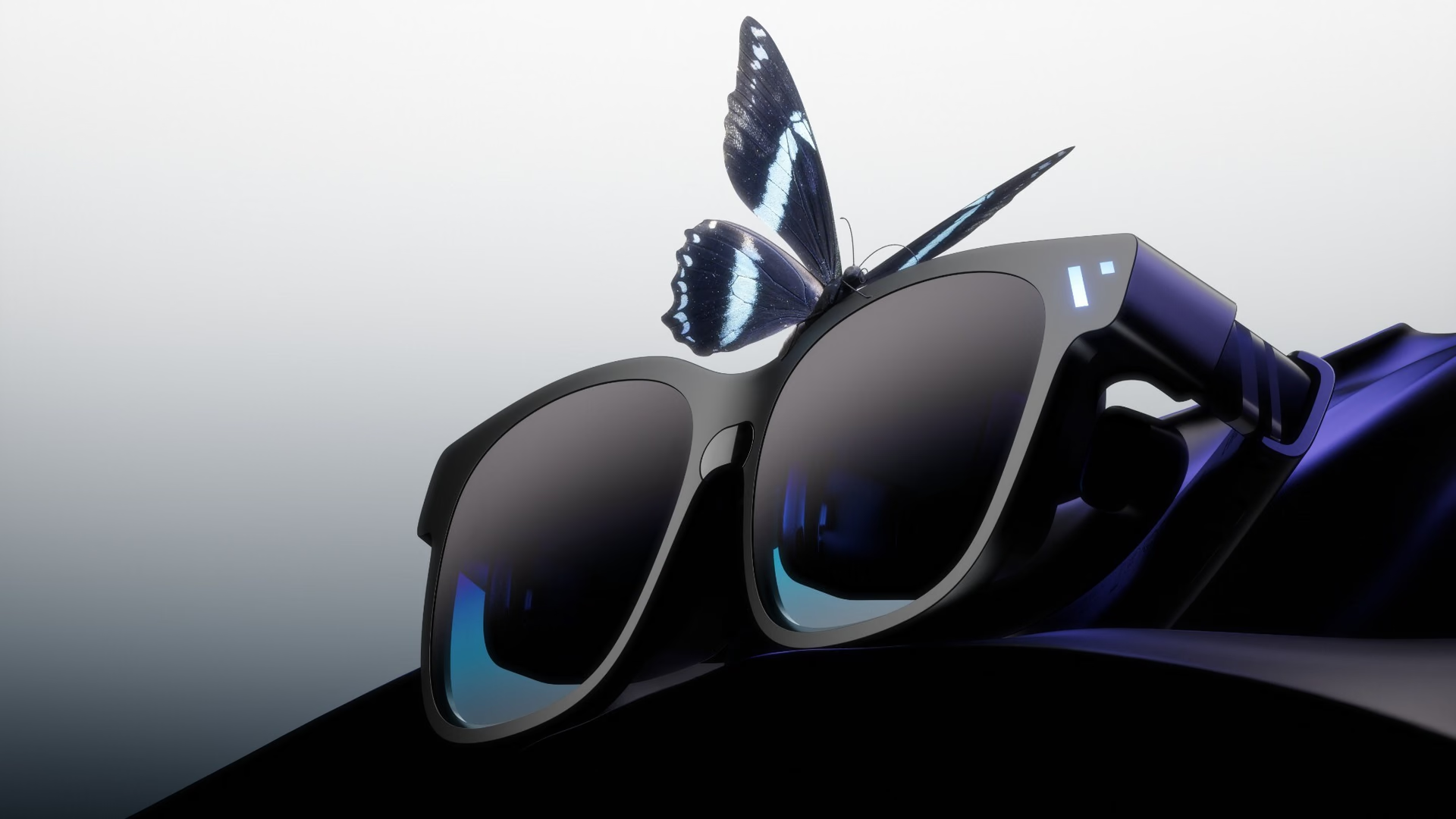
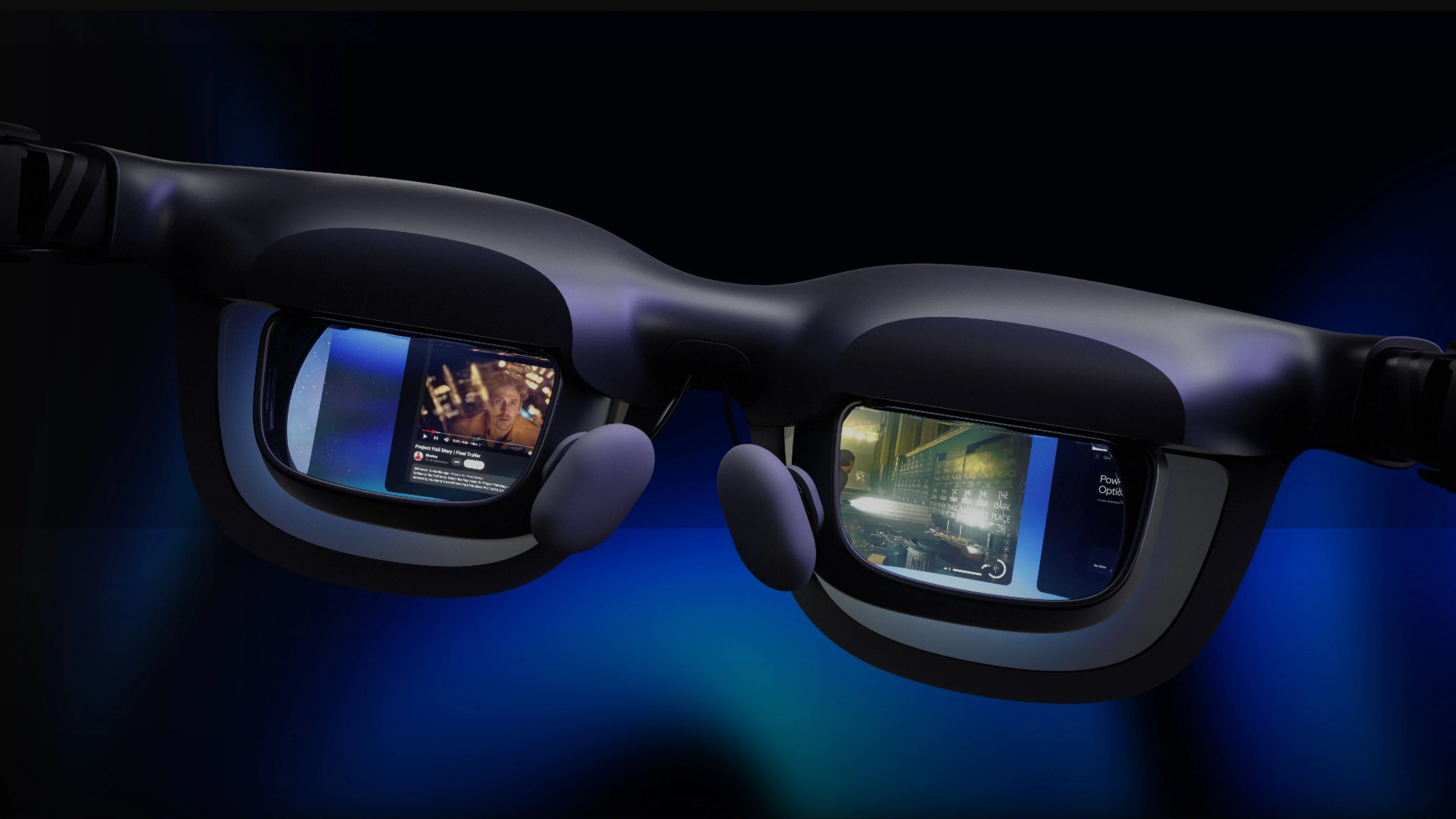
The panels are Sony Micro-OLED, one per eye, at 1,920 x 1,080 and 120 Hz. The resolution has not changed; peak brightness jumped from 1,000 to 1,600 nits, and the field of view went from 46 to 50 degrees, which VITURE translates into a 146-inch virtual screen. Brightness matters more than the spec sheet suggests: these glasses do not block out the environment, and at 1,000 nits, a living room with windows already washed out the blacks.
The new optics, UltraClarity 3.0, address two flaws in the Pro: chromatic aberration at the edges and the distortion that appeared when pushing the diopter dial to its extremes. What you do not get is HDR10, an image-processing chip, or an electrochromic film. On all three points, similarly priced rivals do offer something.
The myopia dials are the real differentiator
At the top of the frame there are two wheels, one per eye, that independently correct from 0 to −5.0 diopters. Most nearsighted people can use them without prescription inserts and without their own glasses, which on other XR glasses either get crushed against the frame or simply do not fit. It is a feature that usually disappears when a manufacturer slims down the frame, and here it survived in the brand’s thinnest model.
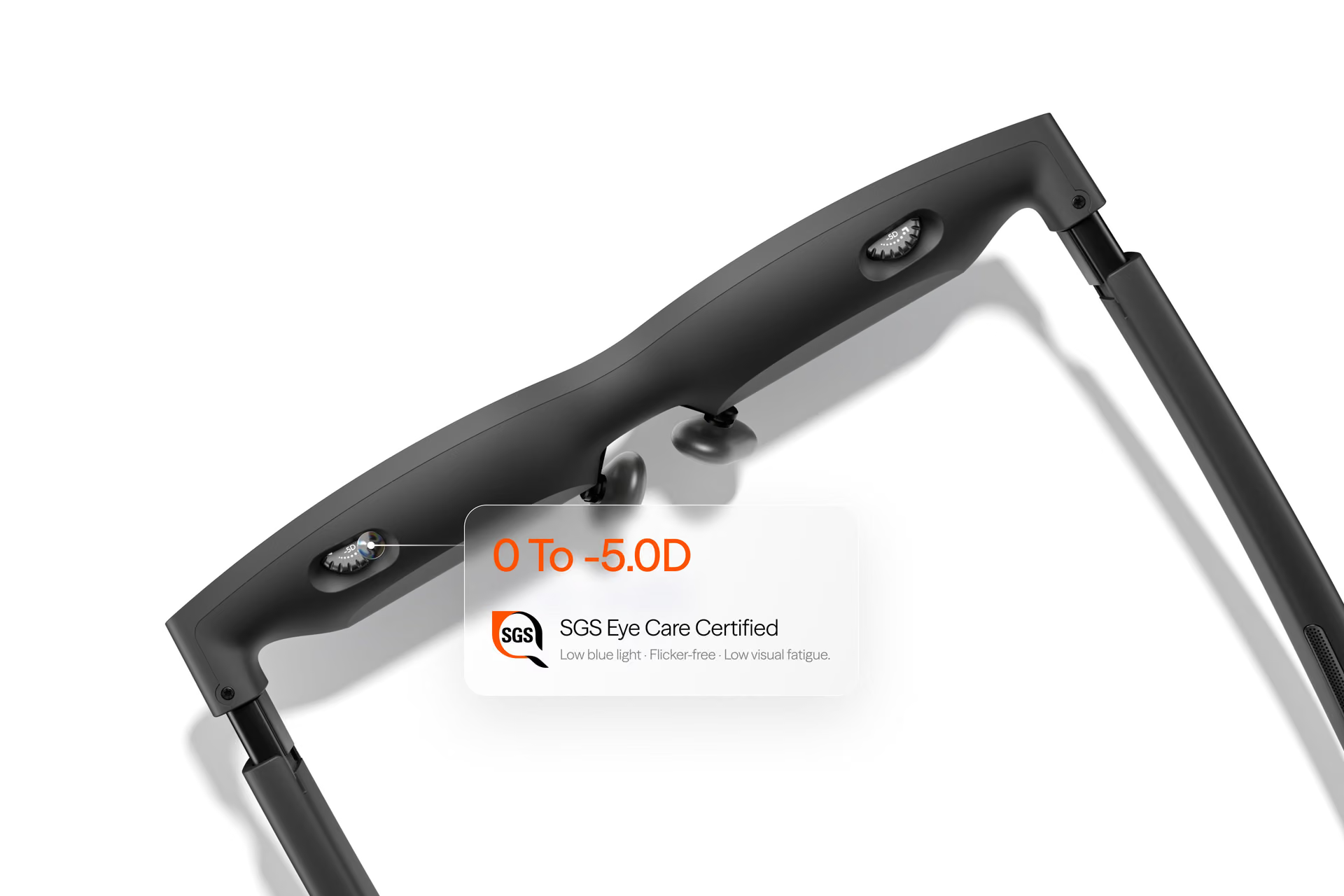
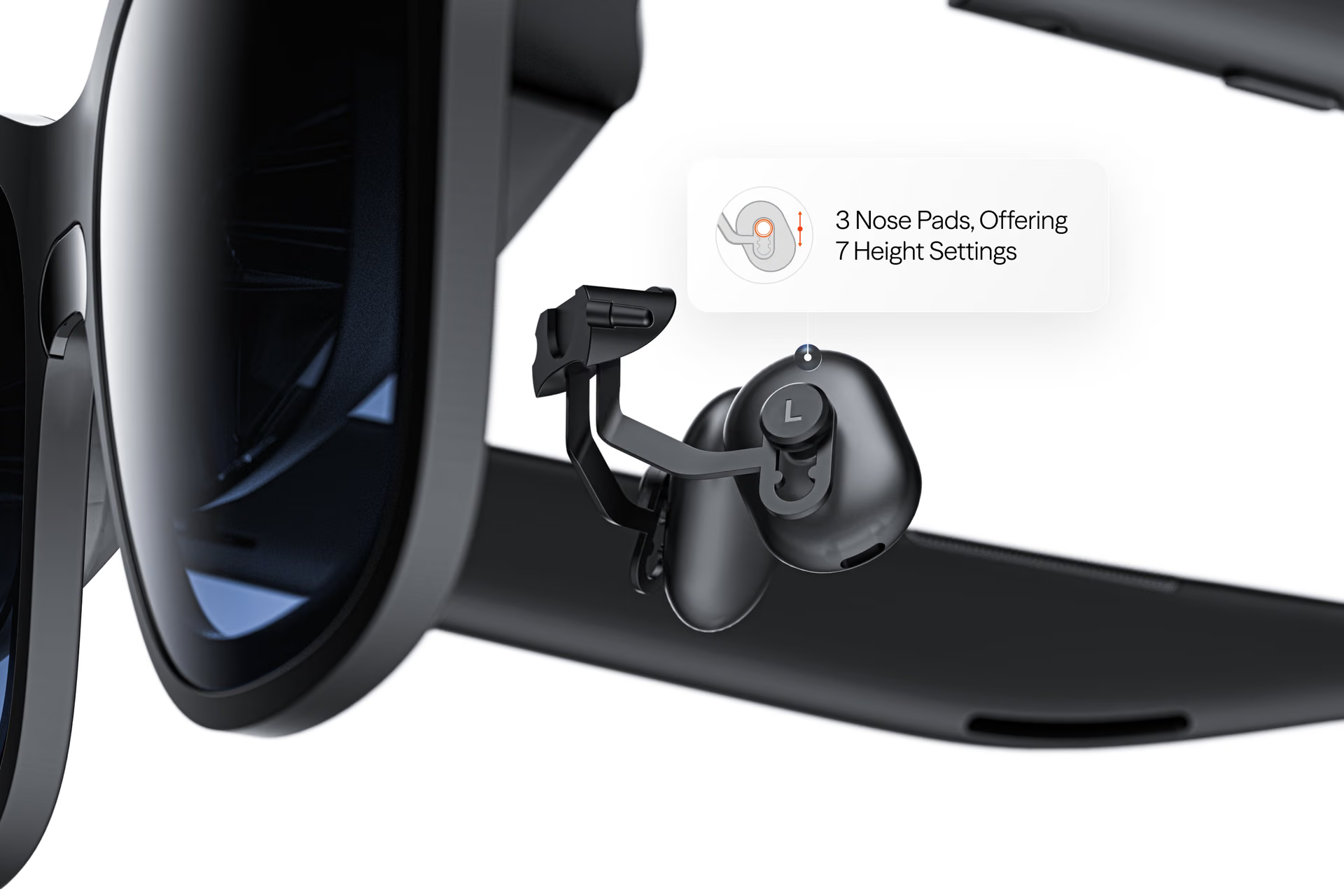
The optical adjustment does not work in isolation: sharpness depends on where the pupil sits relative to the lens axis, and that is determined by fit. They come with three nose pads with seven combined height positions and three temple-tilt levels. The 63 grams help for the same reason: the new temple material distributes pressure differently, and the thinner frame shifts the center of mass backward instead of leaving it hanging from the nose.
Connection, box, and the cable change
They connect via USB-C with DisplayPort Alt Mode: MacBook, Windows laptops, handhelds like Steam Deck and ROG Ally, and Android phones or iPhone models from the 15 onward. Nintendo consoles and HDMI devices require a separate accessory.
The original Pro used a semi-proprietary magnetic cable; the Pro 2 moved to standard USB-C. In a device that is coiled up and bent a thousand times, the cable is the number-one failure point, far ahead of the panel or optics: with a proprietary connector, a broken one means ordering from the factory; with USB-C, it is a replacement you can find in almost any store. The downside is that the port is only on the right temple. And since there is no battery inside, there is also no lithium cell losing autonomy over charge cycles.
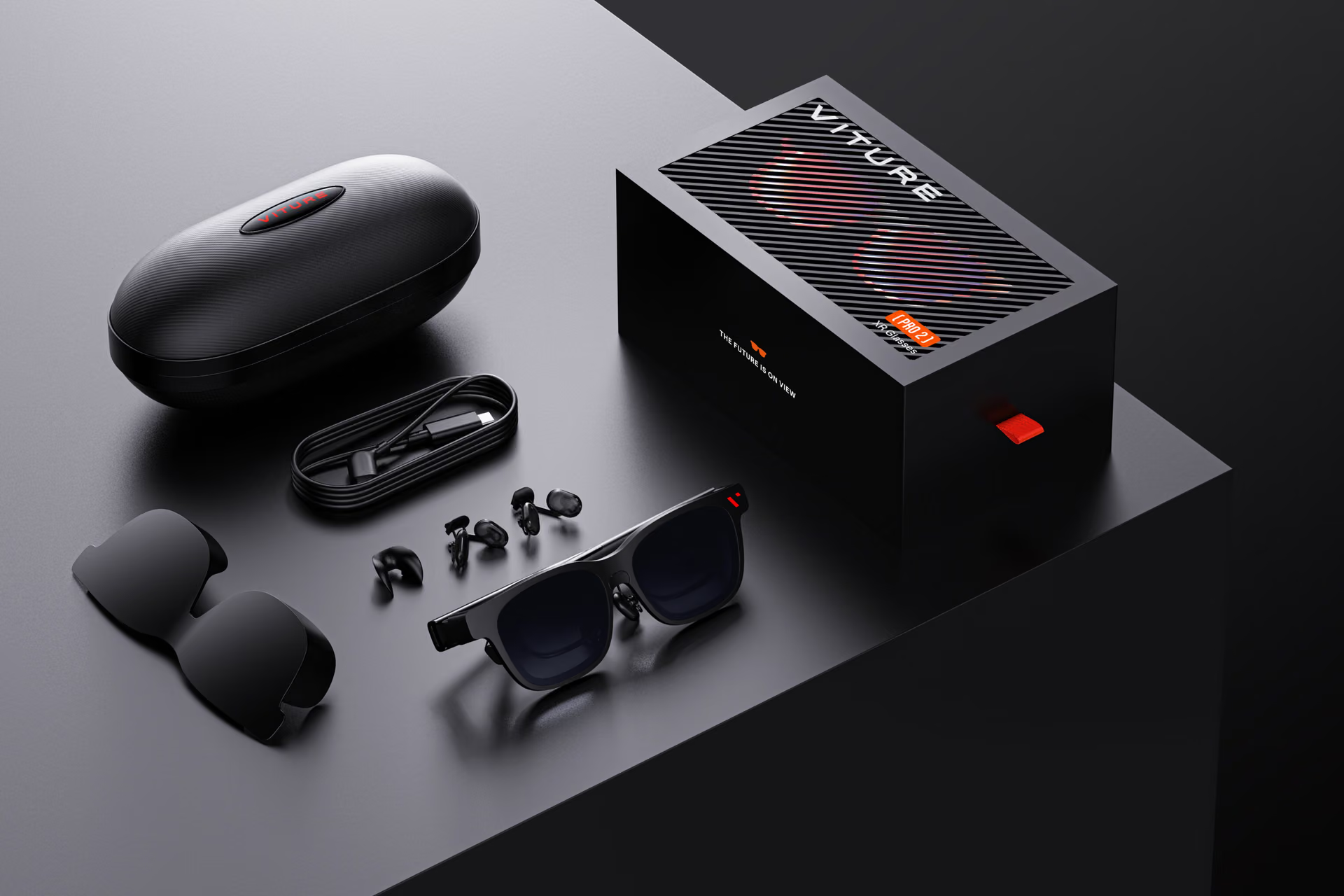
In the box you get the hard case, cable, nose pads, and a clip-on shade. The Mobile Dock Mini is sold separately for US$99: 250 grams, 10,000 mAh, and a clamp that hugs a Switch 2 to power the console and glasses at the same time.
Gaming, work, and travel
The most natural use case is portable gaming: plug the console in via USB-C and the seven-inch screen becomes a 146-inch one without hunching over the device. If you are still choosing between ROG Ally, Steam Deck, and Switch 2, that decision matters more than the glasses.
For work, it is best to lower expectations: they are useful for a large video window, a presentation, or a terminal with generously sized text; for reading small text for several hours, they are not. The free SpaceWalker app adds multiple virtual screens and software-based head tracking, though VITURE acknowledges that the myopia adjustment can interfere with that tracking.
The third scenario, travel, is probably the best: on a plane or in a hotel without a decent TV, a 146-inch screen that fits in your pocket has no substitute.
How the three US$299 XR glasses compare
Three models, the same price, and the differences that matter are not the ones leading the press releases.
Virtual inches are not comparable across brands: each manufacturer declares them at a different distance, and RayNeo’s 201 inches are measured at six meters. Setting that aside, weight, field of view, and brightness are a tie between the Pro 2 and the a01+. RayNeo compensates with HDR10, a dedicated processor, and 3DoF, and pays for it with thirteen extra grams. Neither of the two rivals corrects your vision.
Where they sit within the VITURE lineup
Above the Pro 2, the lineup continues with the US$399 Luma, the US$499 Luma Ultra, the US$549 Beast, and the US$599 Luma Pro. You would expect the best optics to sit higher up, but that is not the case: VITURE acknowledges in its official lineup guide that the Pro 2 optics are a newer generation than the Luma’s and deliver sharper edges. The more expensive models do not buy sharpness; they buy features: electrochromic film on the Luma, hardware-based 3DoF on the Beast, and 6DoF with cameras on the Luma Ultra. If you want the cleanest image and nothing else, the cheaper model is the right one.
What hands-on reviews point out
Audio is the recurring complaint: the speakers are the same as on the Pro and sound tinny and low even with HARMAN tuning, to the point that in Tom's Guide’s review, the reviewer says he would prefer glasses without speakers. Worse: the system detects them as an audio output and takes over sound as soon as you plug them in. And because they are open, the person next to you can hear something.
The other issue is prolonged reading, with corners that remain soft. The rest are the limits of this technology, not an oversight by VITURE: fifty degrees is correct for the segment and modest in absolute terms, direct sunlight ruins the image, and you need a host device that outputs video over USB-C. As VR.org summarizes, these are the structural compromises of birdbath optics: VITURE did not solve them, it stopped charging a premium for them.
Verdict: who they are for and who they are not for
If you wear glasses and had been postponing the purchase because of that, there is no debate: they are the only glasses at this price that remove that problem.
If you have perfect vision, the decision opens up: the a01+ match almost everything and add HDR10, the RayNeo add processing and 3DoF in exchange for weight, and the Pro 2 stop being the obvious choice. None of the three is enough to replace a work monitor: that requires models with hardware tracking that anchor windows in space, such as the XREAL Aura with Android XR.
The most interesting part of the launch is not the product but the signal: the original Pro asked US$459 for a worse spec sheet than this, and the Pro 2 ask US$299 with two rivals at the same price. The category stopped being expensive before it finished becoming good, and newcomers are the ones who benefit.
Frequently asked questions
Do they work if I wear prescription glasses?
Yes, as long as your prescription falls within the range of the built-in dials, which independently correct from 0 to −5.0 diopters per eye. Most nearsighted people are covered without any accessory. With astigmatism or a stronger prescription, you need the prescription lens frame that clips inside.
Do they work with any phone?
No. The phone must output video through the USB-C port via DisplayPort Alt Mode. iPhone models from the 15 onward do, and so do several high-end Android phones, but much of the midrange does not. On iPhone, the full SpaceWalker experience also requires VITURE’s USB-C charging adapter or the Mobile Dock Mini.
Do they have a camera or microphone?
They have neither, nor their own processor or wireless connection. They are a wired display, so they do not record anything you do or anything around you. That is the key difference versus smart glasses with an AI assistant.
VITURE Pro 2
Wired 63-gram XR glasses with Sony Micro-OLED panels, 1,600 nits, and built-in myopia dials. They work as a portable monitor for consoles, phones, and computers, with no cameras or processor of their own.
Pros
- The 0 to −5.0D dials let you use them without glasses or additional prescription lenses.
- 63 grams and seven nose-pad positions make longer sessions viable.
- 1,600 nits on Sony Micro-OLED panels keep the image usable in ambient light.
- The cable moved to standard USB-C: replacements are easy to find anywhere.
- They cost US$160 less than the model they replace.
Cons
- Speaker audio is still tinny and low in volume.
- No HDR10 or image-processing chip, unlike similarly priced rivals.
- Small text looks soft in the corners: they do not replace a work monitor.
- They need a device that outputs video over USB-C, which leaves out many phones.
- No hardware-based head tracking: 3DoF depends on software and is limited.
Author
Alexis PaezAnálisis basado en especificaciones oficiales de VITURE y en reviews con acceso físico de Tom's Guide, Analog Stick Gaming y TheGamer. El autor no realizó una prueba física del producto.
Comments
Share article
You might also like
Meta VR Glasses: 100 grams, 5K display, and a puck to take weight off your face
Meta VR Glasses weigh 100 grams, use 5K micro-OLED displays, and move the battery and compute to a puck. Price, date, and trade-offs.

XREAL Aura: the glasses with Android XR and Gemini open reservations, but still without a final price
XREAL introduced the XREAL Aura, its spatial computing glasses with Android XR and Gemini. Specs, price (up to US$ 1,500), reservations, and why it is not coming to LATAM.