Samsung smart glasses: no screen, with Gemini, and still no name or price

Index
Samsung closed the July 22 Galaxy Unpacked event in London with the hardest product of the entire event to categorize: its first smart glasses, developed with Google and Qualcomm, with frames designed by two eyewear brands, Gentle Monster and Warby Parker.
It was not a launch, but a preview. The company simply calls them Intelligent Eyewear and did not announce a commercial name, price, or availability date. What it did show is enough to understand what kind of product this is and, above all, what it is not.
What they are and what they are not
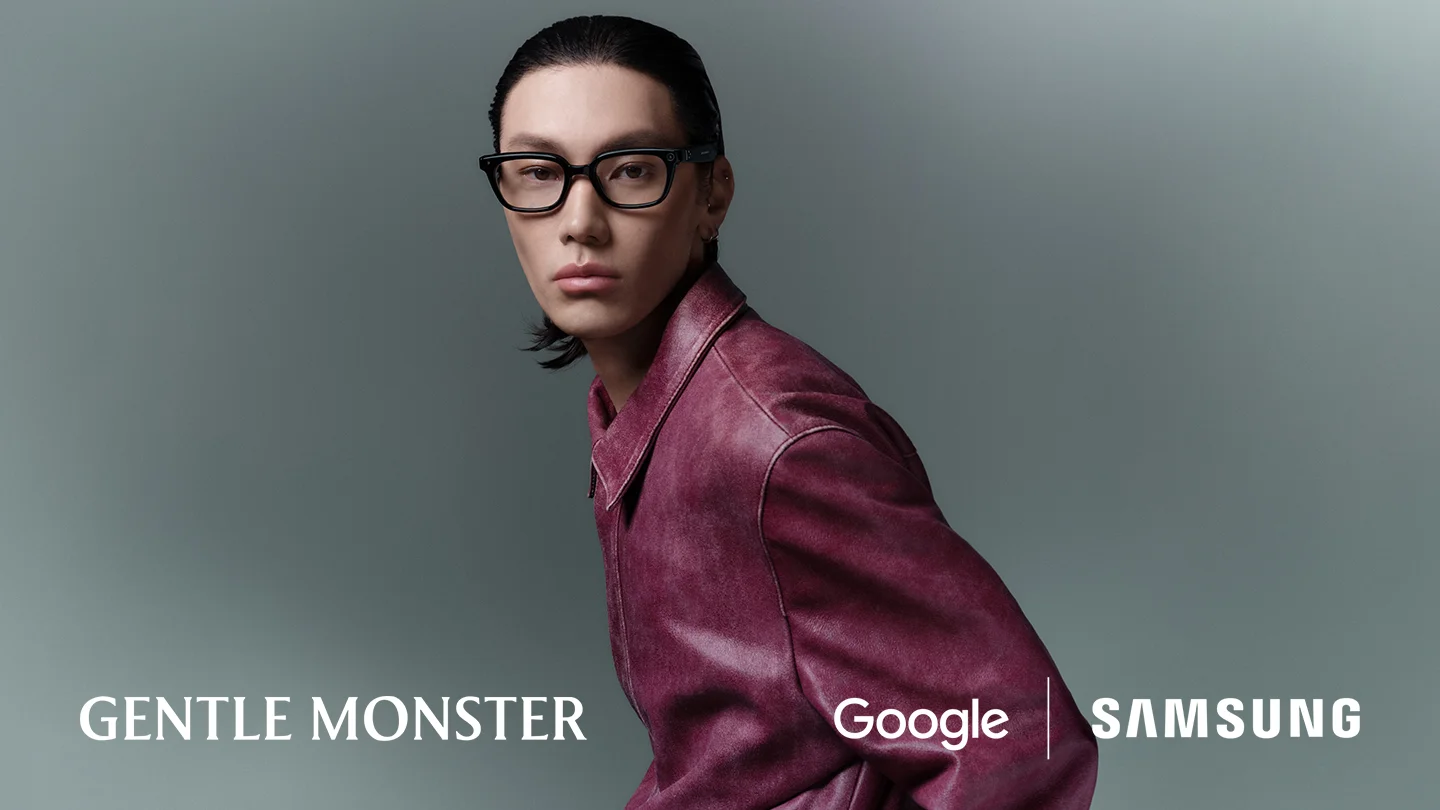
First, because it defines everything else: they do not project anything onto the lens. Samsung decided to omit the screen, so interaction is handled by voice, touch on the temple, and remote gestures. When the assistant responds, it does so through audio. There are no notifications floating in your field of view or directions overlaid on the street.
Second: they are not the Galaxy XR, the headset Samsung launched in October 2025 for $1,800. That is a mixed reality device with displays, used while seated and indoors. These are glasses you put on to go outside, and the right comparison is not with a headset but with Ray-Ban Meta.
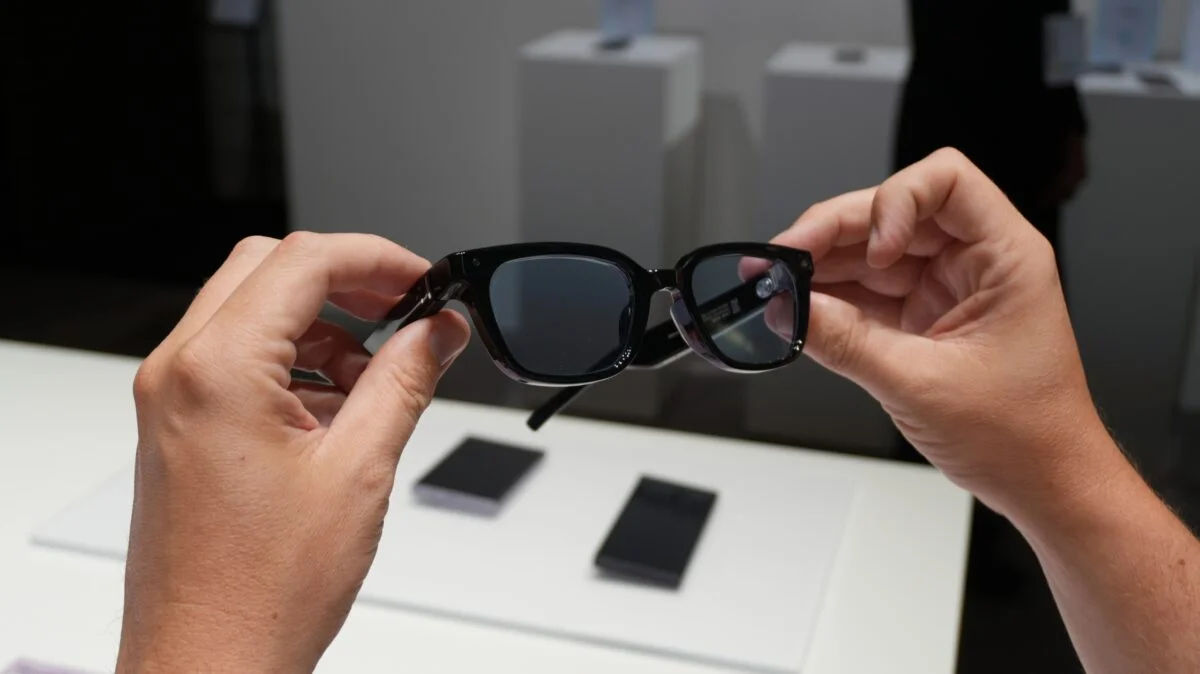
Understanding this matters because it sets both the ceiling and the floor for the product. The ceiling: it will never replace a screen. The floor: by not having a display or projection optics, the frame can be thin, light, and look like a regular pair of glasses, which is exactly where previous attempts in the category failed.
How they work without a screen
The engine is a Snapdragon AR1 Gen 1, chosen to balance power consumption and thermal control inside a slim frame. On top of it runs Android XR with Google Gemini integrated, while the camera gives the assistant visual context for what you are looking at.
With that, it handles real-time conversation translation, navigation directions, summaries of long messages read aloud, and note capture that organizes itself in Samsung Notes. It also lets you share your own view during a video call, so the person on the other end can see what you see.
Control works in three ways: voice commands, taps on the temple, and wrist gestures through a connected Galaxy Watch 9. That third method is the most interesting part of the set, because it turns the watch into a controller for another device and stops treating it as a phone accessory. It also means that anyone who wants the full experience needs two products from the brand, not one.
The two designs: Gentle Monster and Warby Parker
Samsung did not design the frames: it commissioned them. The Gentle Monster edition is a slim black frame, with a straight upper edge and softly rounded lower edges. The Warby Parker version opts for a warm brown with a slightly rising brow line, more classic in style.
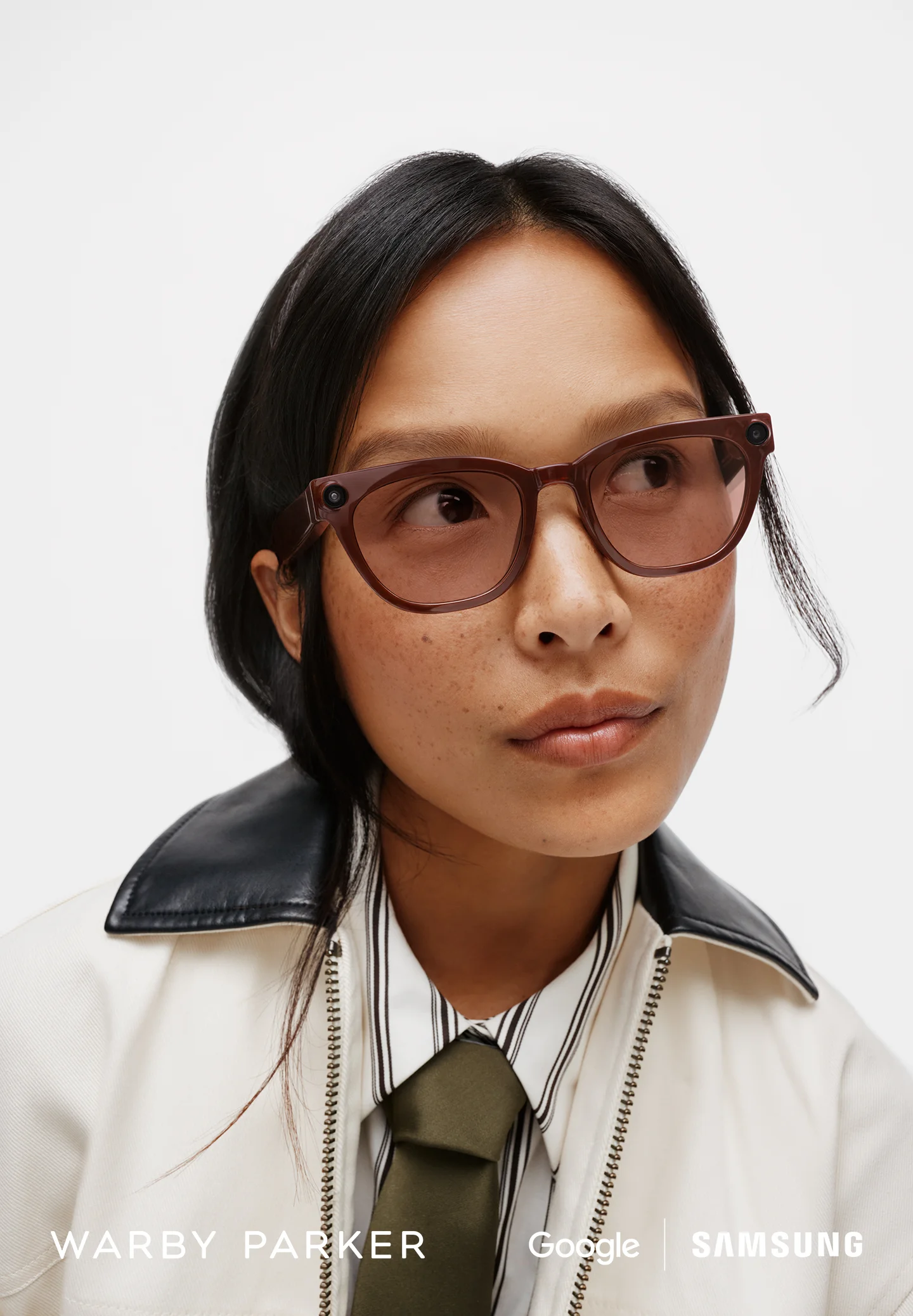
The choice of partners is not aesthetic but commercial, and it is worth reading it that way. Warby Parker has a network of its own stores with optometrists, and that is exactly the weak point for anyone looking to sell prescription smart glasses: prescriptions require in-person measurement. Meta solved that problem by partnering with EssilorLuxottica and Ray-Ban optical stores. Samsung is building its own version of that play, and that is where the category is defined, more than in the chip.
In terms of design, both frames distribute weight between the forehead and the ears, a detail that sounds minor until you think about wearing them for nine hours straight.
Battery, case, and compatibility
The stated battery life is up to nine hours, and the charging case adds up to seven additional full charges. It is an architecture copied from wireless earbuds, and it makes sense: a product used intermittently throughout the day is recharged in gaps, not overnight.
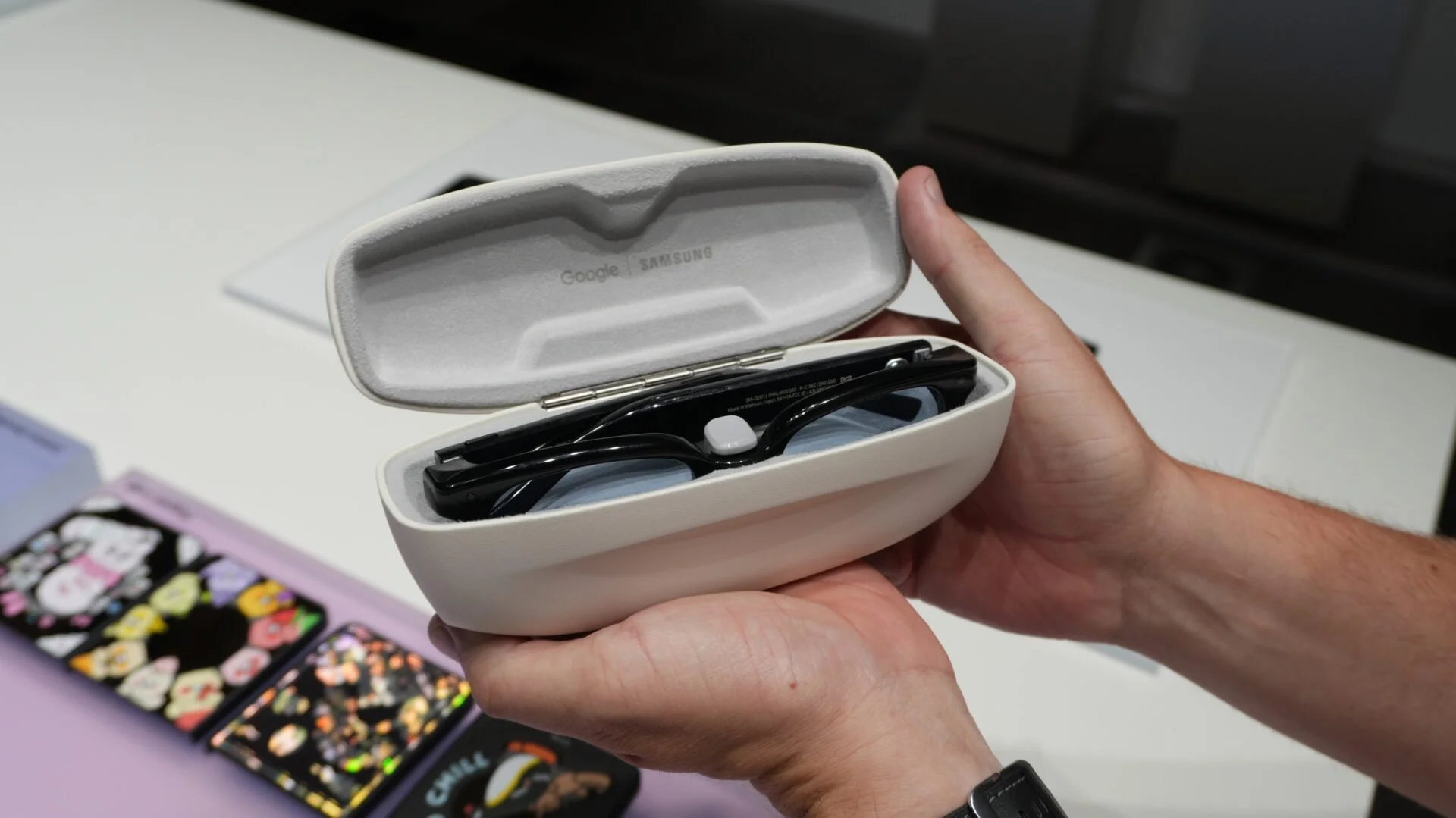
One detail that barely appeared in Spanish-language coverage: they work with both Android phones and iPhone. It is an unusual decision for Samsung, which usually reserves its most interesting features for the Galaxy ecosystem, and it considerably expands the potential market. Gesture control with the Watch 9 does remain on the Galaxy side, so the experience is not identical on both platforms.
Privacy: how you know when they are recording
Any product with a camera on your face carries the same problem, and it is the one that sank Google Glass more than a decade ago. Samsung states that there are visible recording indicators and user-controlled camera settings.
That is the right answer on paper. What will decide whether it works is not the existence of the indicator, but its size and visibility from one meter away, at a café table and under midday light. That can only be assessed with the glasses on, and there are still no units available for that.
What Samsung did not say
The list of what is missing is as relevant as what was announced: there is no commercial name — leaks point to Galaxy Glasses, but the company did not confirm it — no price, no availability date, and no defined markets. Samsung also did not detail the camera resolution or audio performance, which in a product without a screen is half the experience.
That makes this presentation more a statement of intent than a product announcement: Samsung signaling that it will compete in the category, with which partners and with what approach, before having the product it will sell ready.
Conclusion
Samsung's bet is sensible precisely where others got it wrong: no screen, frames that look like real glasses, and partners that know how to sell them. The absence of a display, which sounds like a cutback, is what makes everything else possible.
For anyone expecting augmented reality in the lens, this is not it. For anyone who wants the assistant available without taking out the phone, the proposal is solid and goes straight against Ray-Ban Meta. And for anyone who wants to buy them, there is still nothing to buy: without a price or date, any real evaluation has to wait until units are out in the wild. What did become clear is that the category has stopped being a laboratory experiment and has become a commercial battle between two giants with optical retail networks behind them.
Frequently asked questions
What are Samsung's smart glasses called?
Samsung has not yet confirmed a commercial name and refers to them as Intelligent Eyewear. Leaks ahead of the event suggest they would be called Galaxy Glasses, but that version has not been confirmed by the company.
Do Samsung's smart glasses have a screen?
No. Samsung deliberately omitted the display, so they do not project images or text onto the lens. Interaction is handled by voice, touch on the temple, and gestures with a Galaxy Watch 9, while the assistant's responses come through audio.
How much do they cost and when do they go on sale?
Samsung did not announce a price or availability date, nor did it define which markets they will be sold in first. The Galaxy Unpacked presentation was a product preview, not a commercial launch.
Do Samsung's smart glasses work with iPhone?
Yes, they are compatible with Android and iOS devices. The caveat is wrist gesture control, which requires a connected Galaxy Watch 9 and remains limited to the brand's ecosystem.
Intelligent Eyewear
Samsung's first smart glasses, developed with Google and Qualcomm, with frames by Gentle Monster and Warby Parker. No screen in the lens: interaction is by voice, touch, and gestures, with Gemini and an integrated camera.
Pros
- Up to 9 hours of use, plus 7 full charges from the case.
- They work with Android phones and also with iPhone.
- The frames were designed by Gentle Monster and Warby Parker.
- They include a visible recording indicator and user camera control.
Cons
- Samsung did not announce a commercial name, price, or launch date.
- They do not project images onto the lens: all responses come through audio.
- Gesture control requires a connected Galaxy Watch 9.
- Samsung did not detail the camera resolution or audio performance.
Author
Alexis PaezReport based on official announcements and verified public sources at the time of publishing.
Comments
Share article
You might also like

Samsung Galaxy Unpacked July 2026: the Fold lineup splits in two, the first foldable Ultra, and glasses with Gemini
Fold 8 in a passport-style format, the first foldable Ultra, watches with the same chip, and glasses with Gemini: everything from Galaxy Unpacked July 2026, prices, and dates.

XREAL Aura: the glasses with Android XR and Gemini open reservations, but still without a final price
XREAL introduced the XREAL Aura, its spatial computing glasses with Android XR and Gemini. Specs, price (up to US$ 1,500), reservations, and why it is not coming to LATAM.

Apple Glasses: four designs, acetate, and Apple’s bet to slow Meta down in 2027
Apple Glasses arrives in 2027 with acetate, four styles, and no display. We break down what they are, what they are not, and how they stack up against Meta Ray-Ban Display.


Recent articles
Huawei Pura X Max vs iPhone Duo: what changes beyond the foldable screen
Huawei Pura X Max vs iPhone Duo: size, multitasking, cameras, styluses, and charging. What changes in use and which one better fits your priorities.