Apple Watch Series 12: heart rate every 5 seconds, Readiness, and one detail in the glass

Index
The Apple Watch Series 12 was one of the seven products Apple introduced at its Surprise and Shine event. It keeps the US$399 price and changes what happens under the case: a redesigned sensor system that measures heart rate 60 times more often than the previous generation, and a daily score that turns that data into a concrete decision about whether you should push harder or take it easier.
What changes in the Apple Watch Series 12
Three fronts: new sensors, health features that come from those sensors, and the S11 chip that enables an entire family of audio features. The exterior design is untouched, but the materials used for the front glass do change, and that introduces a difference that affects the buying decision.

The health data logging system
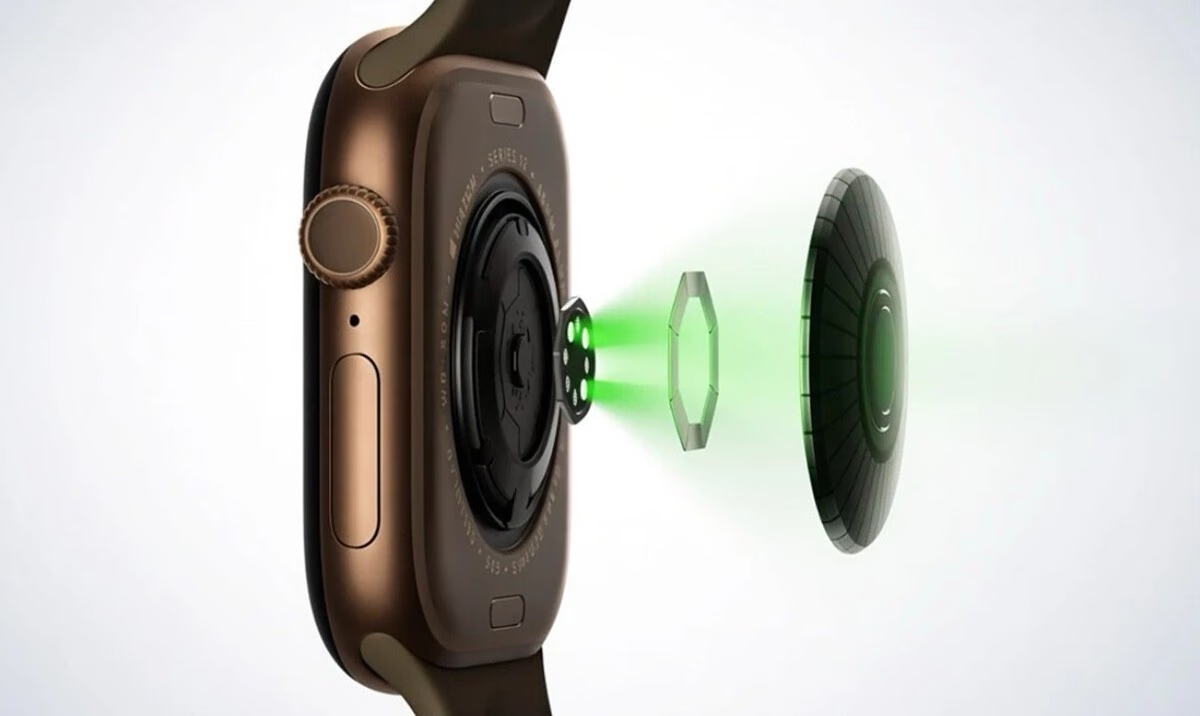
Apple redesigned the sensor array in three areas, all within the same physical space it occupied before. It increased the surface area of the electrodes so skin contact is better during ECG readings. It reorganized the photodiodes into a ring to capture reflected light more efficiently. And it added larger, more power-efficient green LEDs that support all-day heart-rate measurement even while you are moving.
The teardown helps show why the order matters: the green LEDs illuminate the tissue, the light passes through the skin, and the photodiodes measure how much comes back. With the photodiodes distributed in a ring around the emitter, the sensor collects light from multiple angles instead of one, and that is what sustains the reading when your wrist moves.
The accuracy study against other wearables
To back it up, Apple ran a comparative study against other wearables using an ECG chest strap as the reference, with hundreds of participants running, cycling, and doing HIIT. The company’s stated conclusion is that Apple Watch has the most accurate heart-rate measurement of any wearable. It is Apple’s own data, not from an independent third party, but at least it describes the method.

Heart rate every 5 seconds
This is the change you feel most. Background readings are now taken every 5 seconds throughout the day, even while you are moving. That is 60 times more frequent than before. Heart-rate variability, or HRV, is sampled up to every 5 minutes: 24 times more often.
The difference is not resolution; it is the type of data. A measurement every five minutes tells you how you were doing; one every five seconds tells you what happened to you. HRV is also the indicator that reflects how the body responds to stress and recovery, and higher variability is generally associated with better recovery.


HRV is now part of the Vitals app, both in the nighttime view and in a new daytime view designed to detect changes before they show up in sleep metrics. High-frequency heart-rate data appears in the Heart Rate app and in new complications for watch faces.
Readiness: the score that decides the day
On top of that data comes the most concrete new feature. Every morning, the watch analyzes your recent activity, your vitals, and your sleep, then returns a single score with a clear interpretation: Recover, Take It Easy, Ready, or Go All Out. The score updates during the day if things change, and you can check it on the watch or in the Fitness app on iPhone. It arrives with watchOS 27, which is released on September 14.
What is interesting about the design is that it does not give you a number to interpret: it gives you a decision. That is the difference between a data dashboard and a tool.

ECG, and everything ends up in the Health app
The ECG app remains on the watch and benefits from the larger electrode surface area, which improves contact during the reading.


Everything the system measures ends up in the Health app on iPhone, which was completely redesigned. The Overview tab adds a summary generated with Apple Intelligence, Biological Age appears — comparing your key metrics against your actual age — and there is a Longevity tab. That arrives in late 2026 and starts only in U.S. English.
Audio Intelligence
The S11 brings a low-power always-on processor with a secure exclave: a dedicated audio buffer that handles raw sound only for processing. A family of new features runs on that foundation.
Sound Recognition listens for sirens, alarms, doorbells, or a baby crying and notifies you, even without your iPhone nearby. Live Rewind transcribes the last 15 seconds with a double press of the Digital Crown, for when you missed something someone said. Siri Recap takes high-level notes from a conversation, with a title, summary, and key points. And Shazam identifies what is playing.

Privacy is built into the mechanism, not declared at the end: no recordings are created or stored, raw audio is inaccessible even to Apple, the system does not identify or attribute who is speaking, and transcripts and summaries sync with end-to-end encryption. Siri Recap turns on when you want it, with a scheduling option, and turns off from Control Center.
Sound Recognition and Shazam are available from launch. Live Rewind and Siri Recap are different: they require Siri AI, arrive in beta in late 2026, and start in English. Two more conditions from the spec sheet are added to that: those two features are not initially available in the European Union, and the Audio Intelligence features that depend on server models, including Live Rewind and Siri Recap, have daily usage limits.
Aluminum: four colors and the only new glass
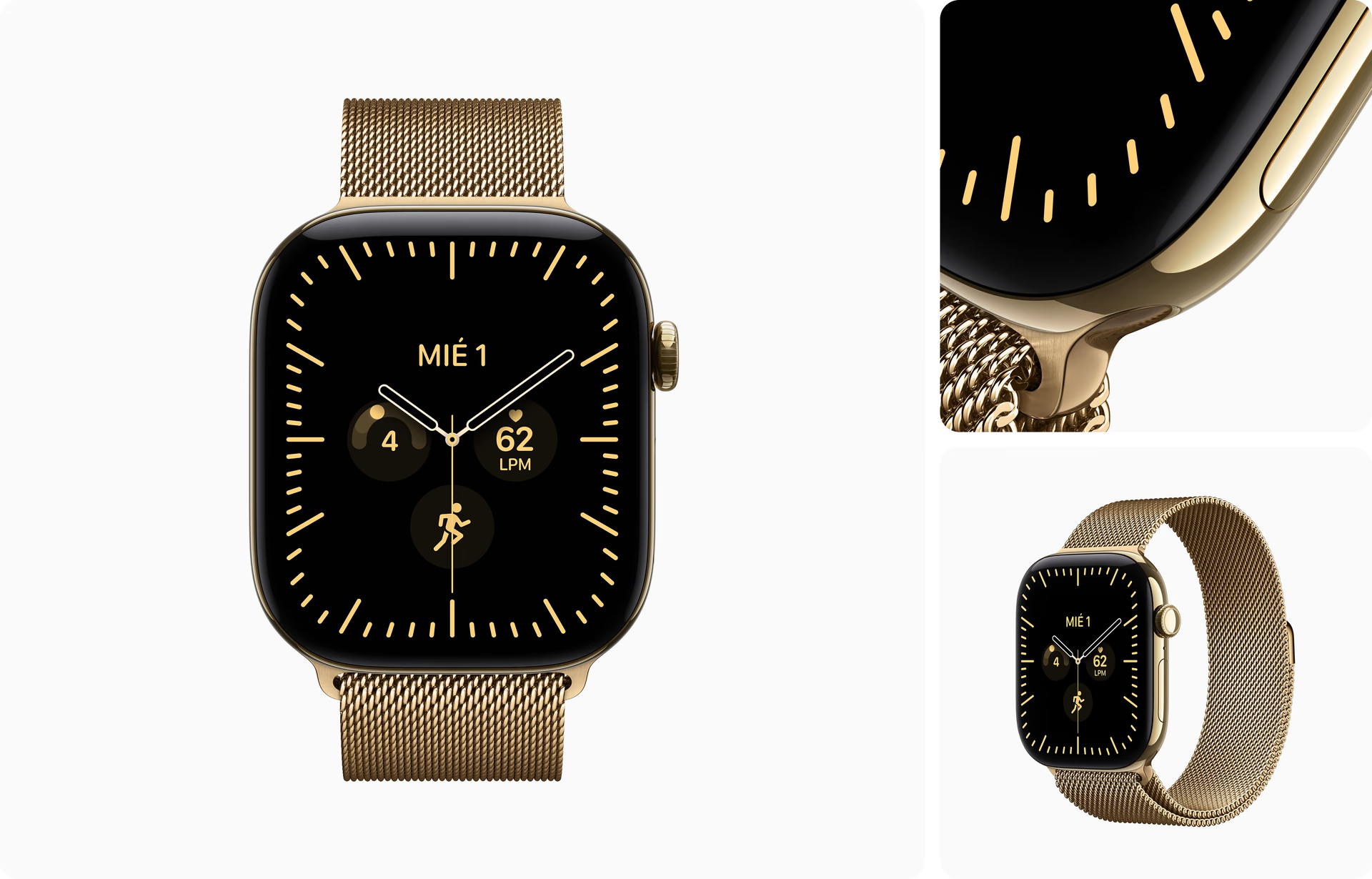
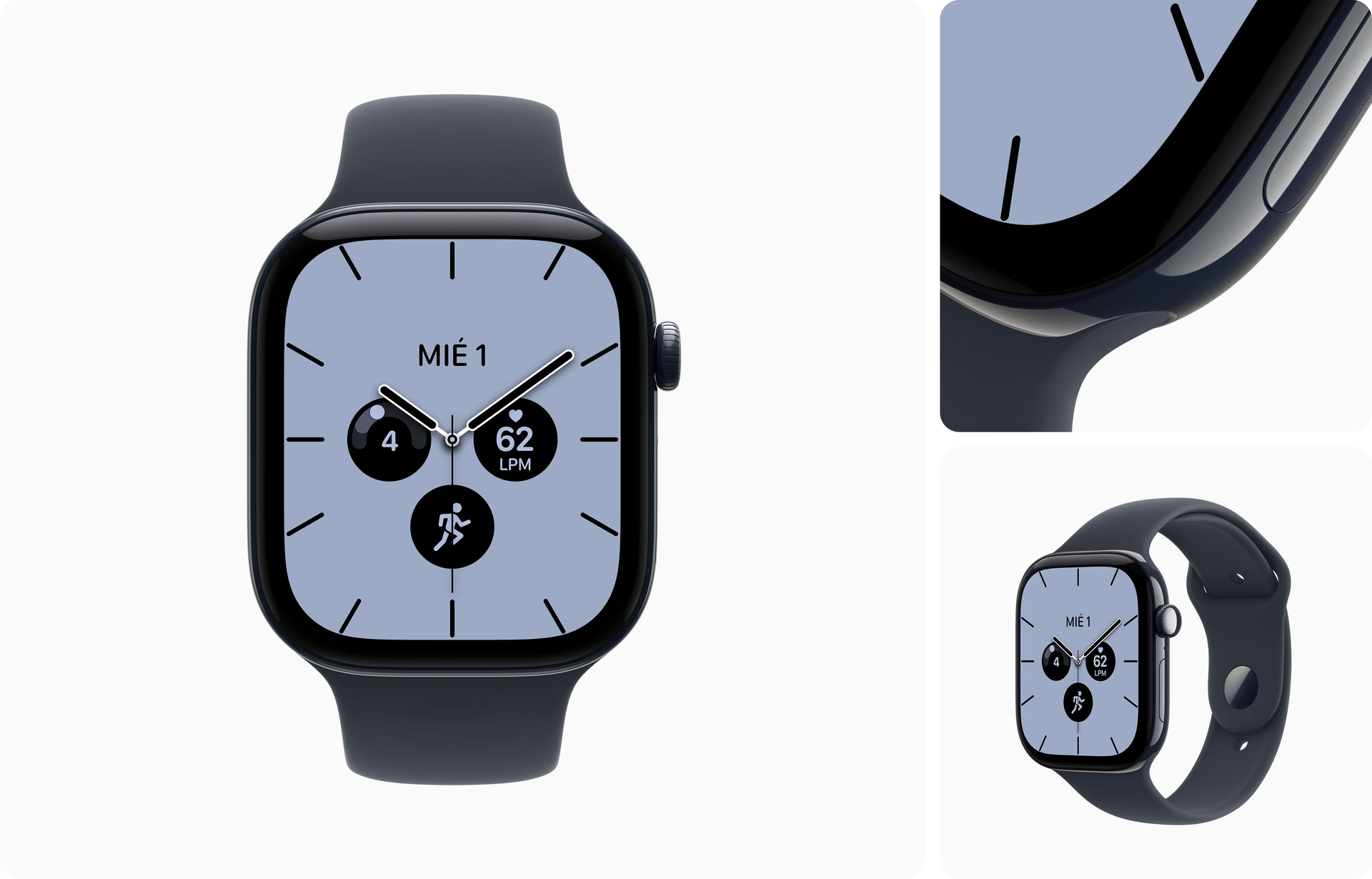
The body does not change, but the finishes do. Aluminum starts with four colors, all made with 100% recycled aluminum. Black and Space Gray are the two neutral options, one deep and the other cool. Light Gold returns as the warm option in the lineup, and Dark Bronze is the color added in this generation.
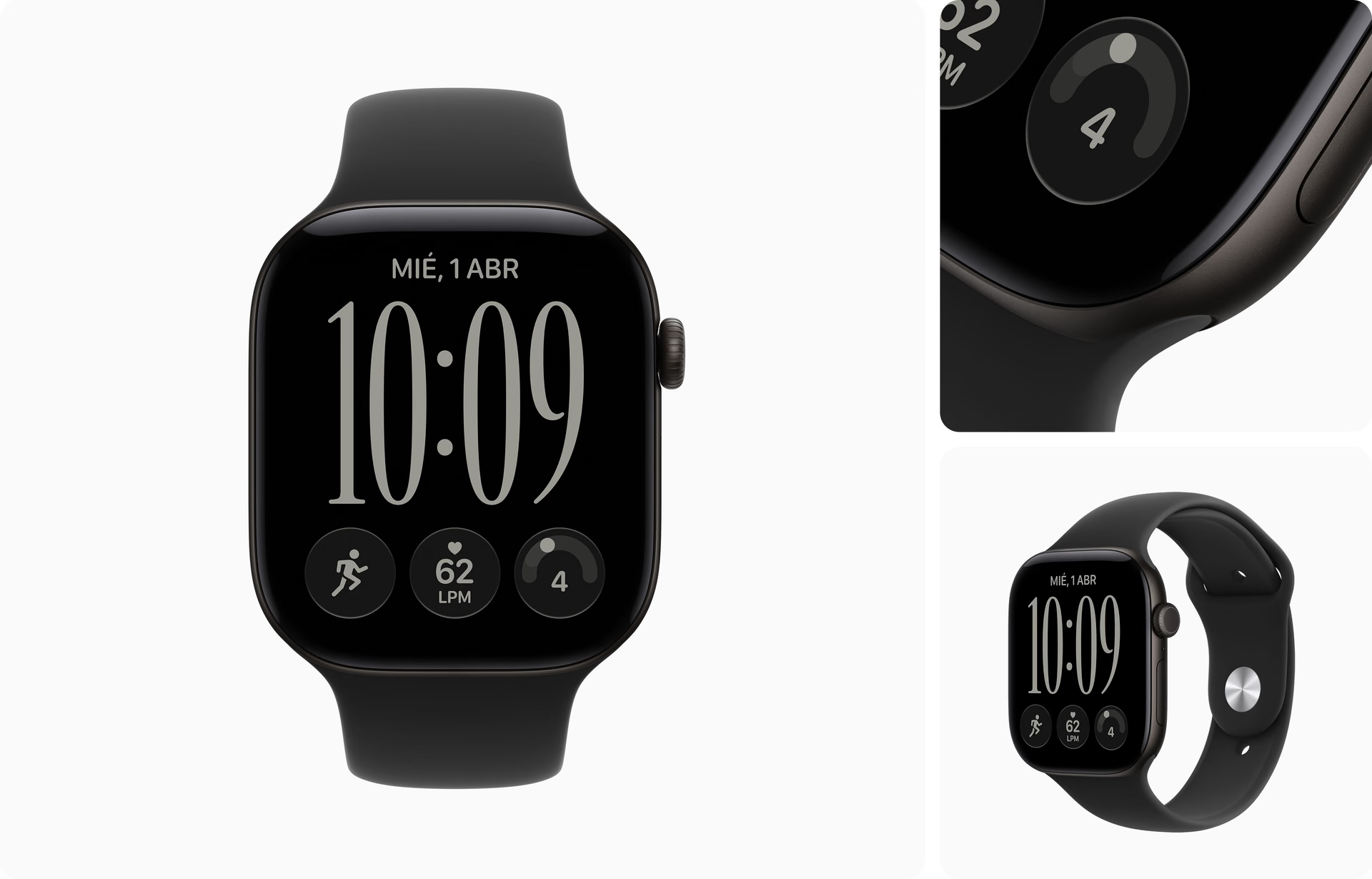
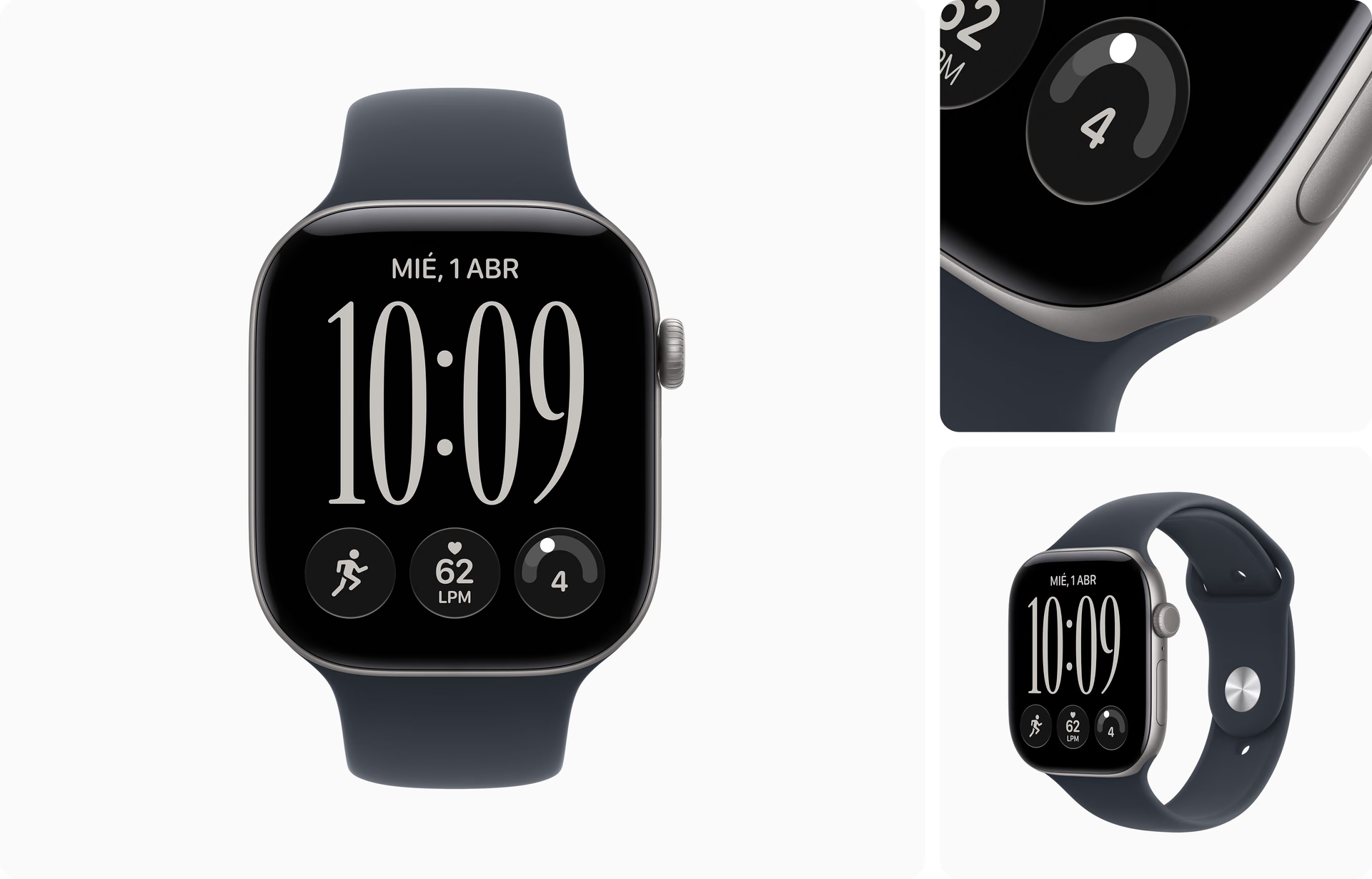
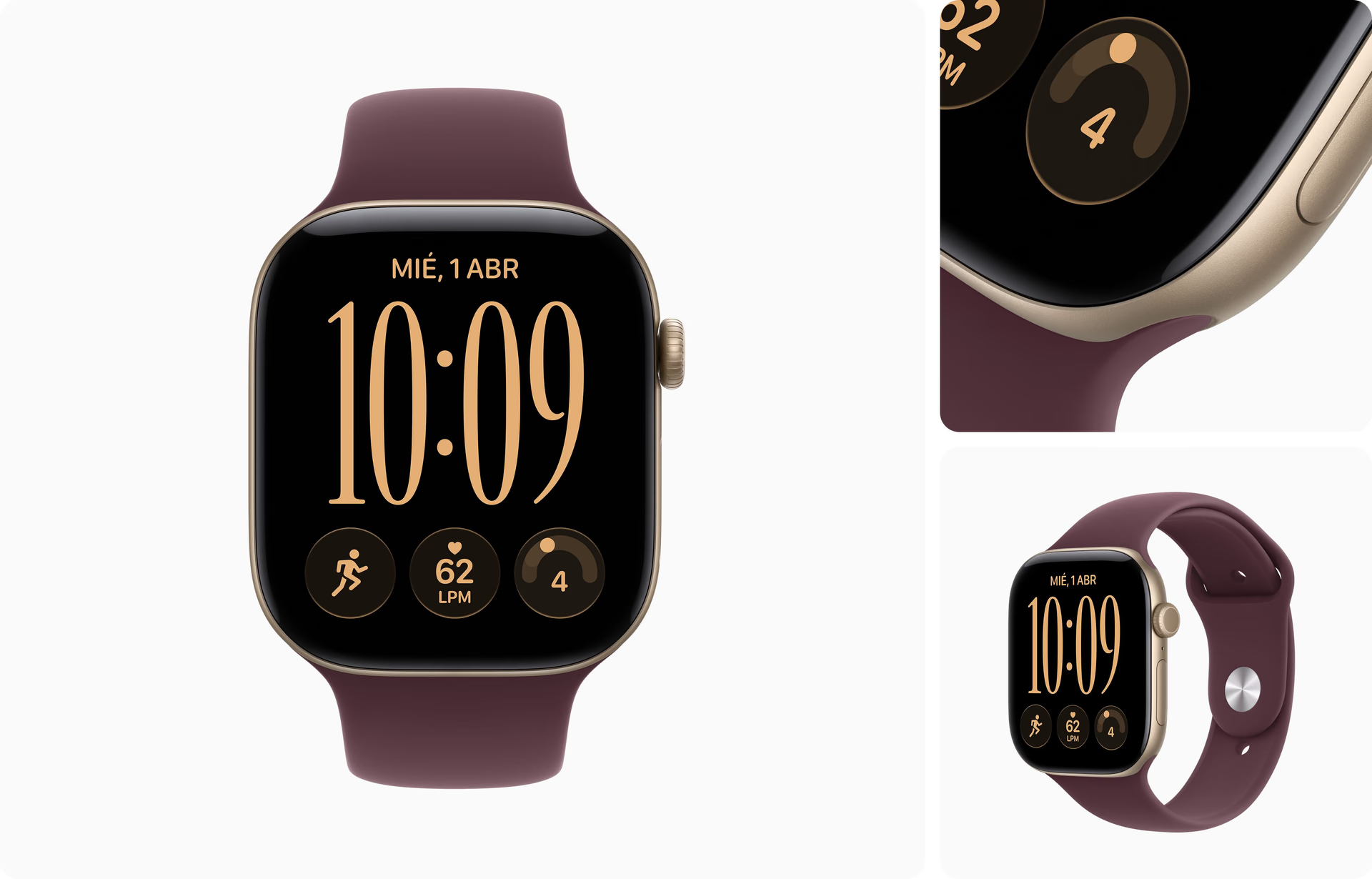
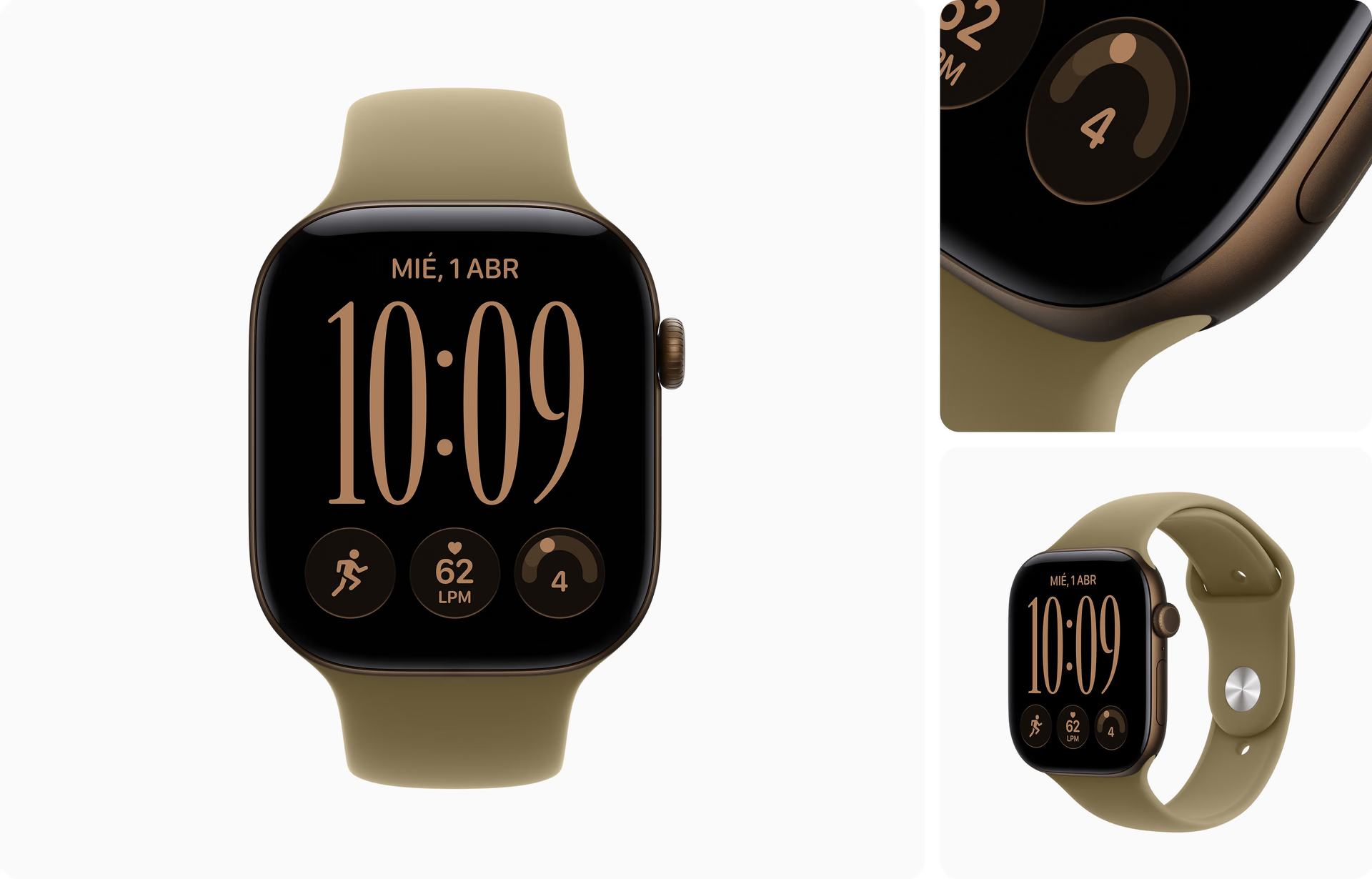
Now for the detail that is not in any headline and changes which model you should buy: Ceramic Shield 2 is only on the aluminum cases, where it replaces the previous Ion-X and makes it 60% more resistant. The titanium and ceramic cases continue to use sapphire crystal, as confirmed by the technical specifications.
It is not that one is strictly better than the other with no nuance: sapphire resists scratches much better, while Ceramic Shield resists impacts. But if you assumed paying more gave you the new glass, that is not the case. Aluminum is the only one that has it.
Titanium and ceramic: sapphire on all four
Above aluminum there are two more materials and four finishes, all on the sapphire side. Titanium is polished, made with 100% recycled titanium, in Natural and Radiant Gold.
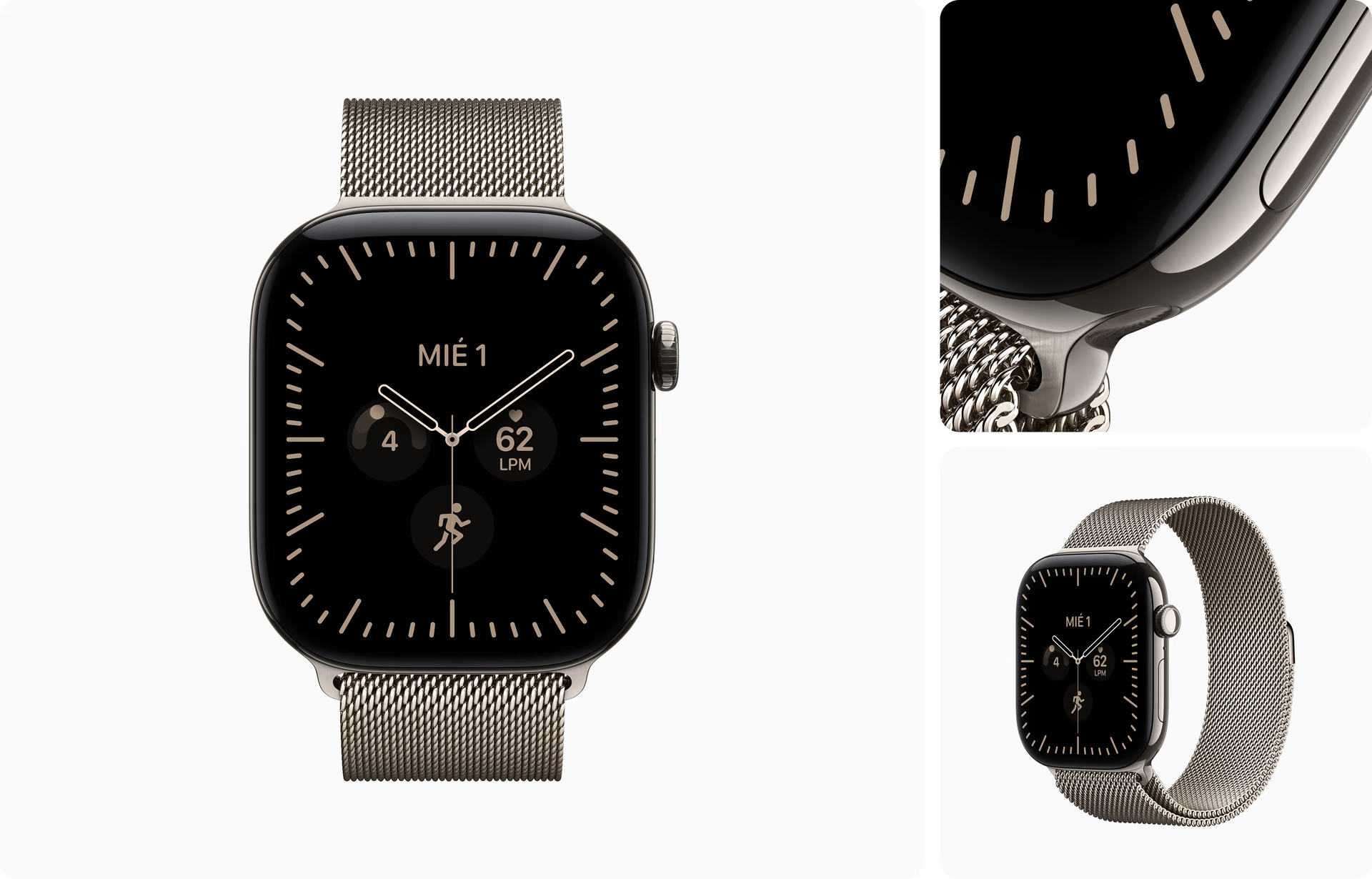
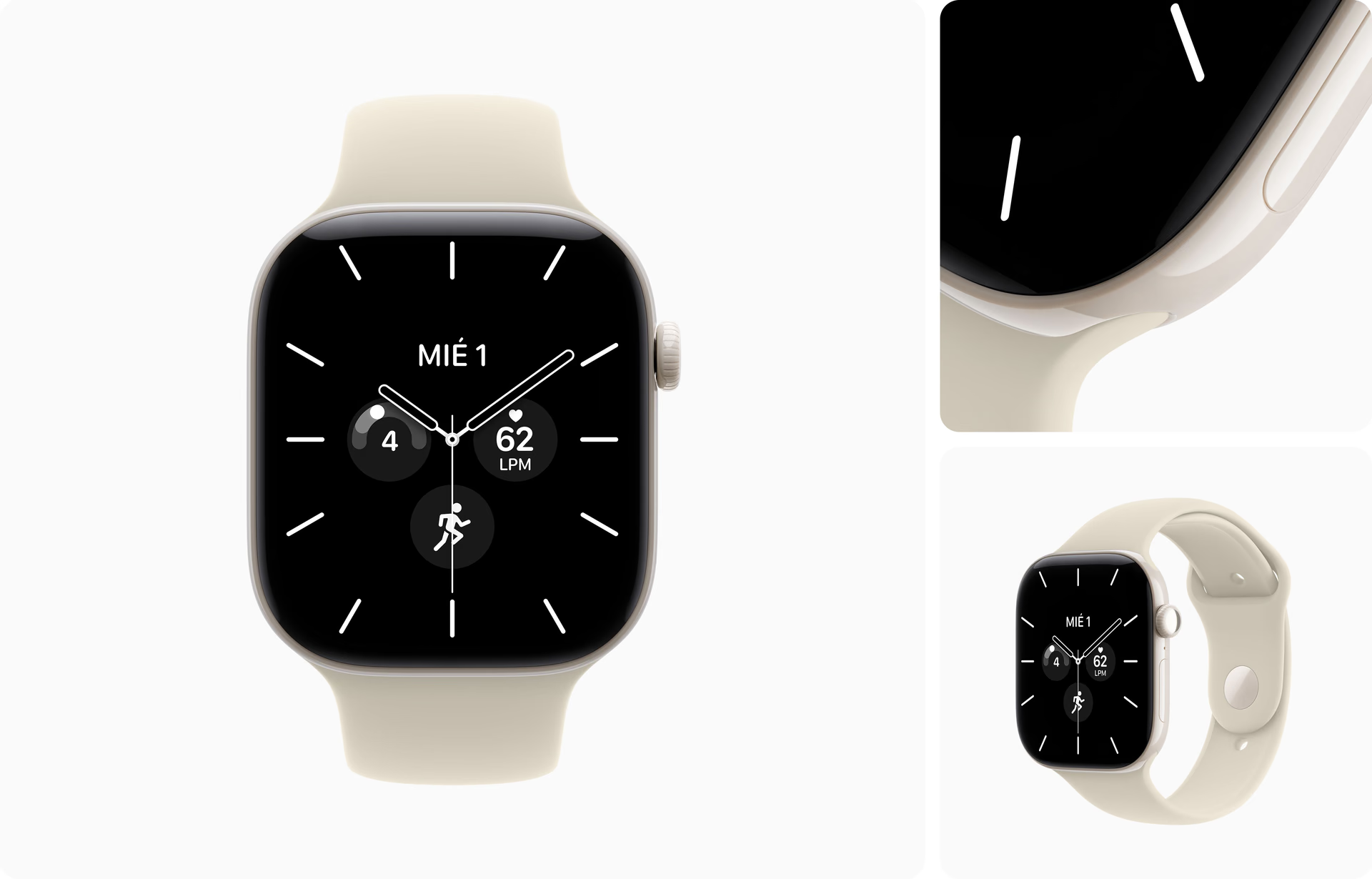
Ceramic enters the Series lineup for the first time, in Pearl White and Night Blue. It is the glossiest finish of the three and the one that looks least like a sports watch.
Price and availability
Apple Watch Series 12 starts at US$399, the same price as the previous generation. Preorders opened on September 9, and sales begin on the 18th. Battery life remains up to 24 hours of normal use, with 38 hours in Low Power Mode and 10 hours of outdoor workouts with GPS and the heart-rate sensor active.
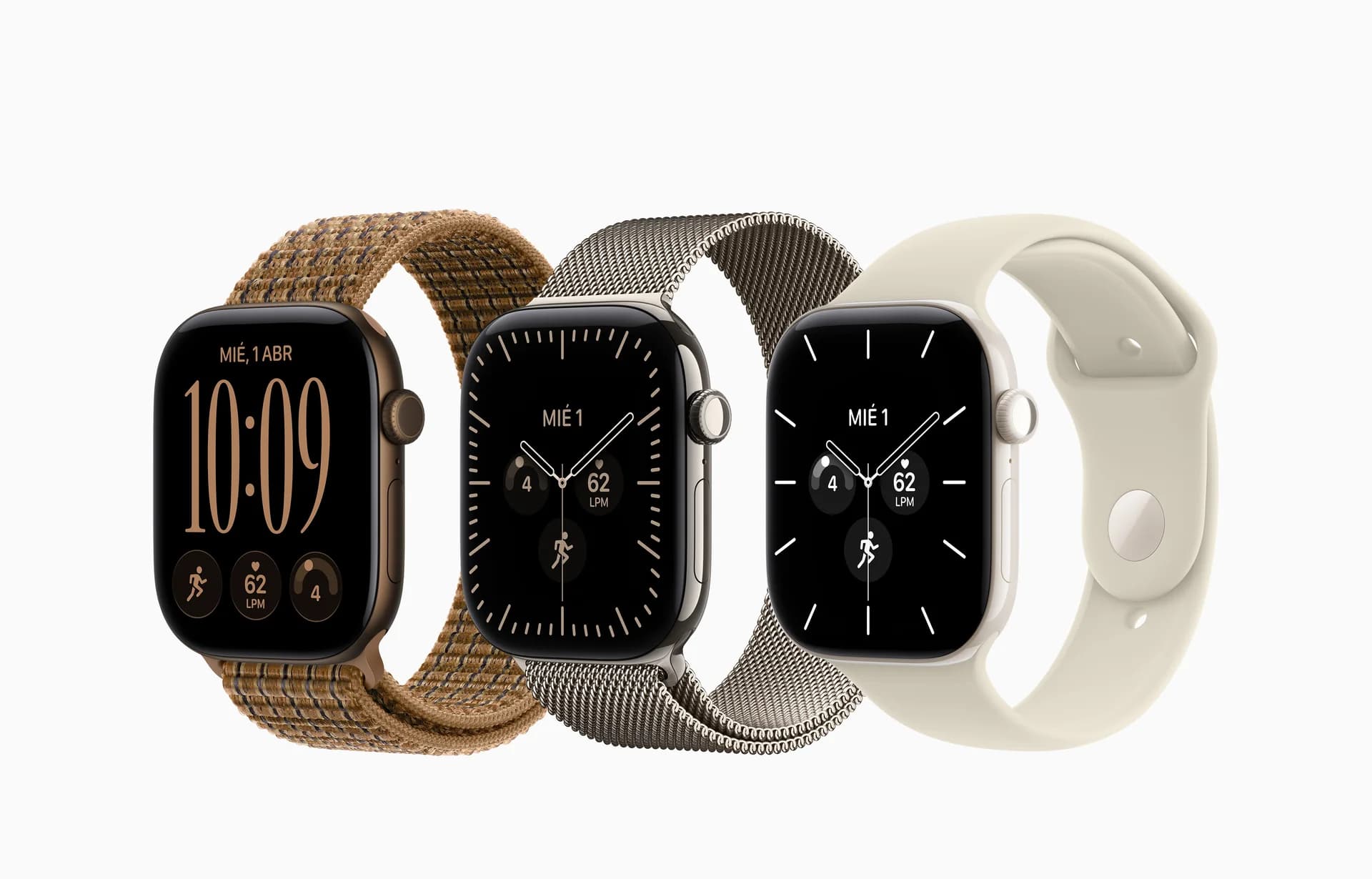
There are new colors across the entire band lineup, including Nike models, and Apple Watch Hermès introduces radiant gold titanium in its Series collection for the first time.
The Apple Watch Ultra 4 shares the same chip and the same sensor system, and sets itself apart through battery life and durability.
Conclusion
If you are coming from a Series 10 or earlier, the jump is real and it is in the data: measuring 60 times more often is not an incremental sensor improvement; it is different material for Readiness and the redesigned Health app to build on.
If you are coming from the Series 11, the case is weaker. The body is the same, battery life does not change, and the most interesting Audio Intelligence features, Live Rewind and Siri Recap, arrive in beta in late 2026. It is worth waiting until Live Rewind and Siri Recap are working in Spanish before deciding.
If you are choosing between this and the Ultra 4, the deciding factor is not price: it is workout battery life and the glass. And if you have already chosen the Series 12 and are deciding on material, the glass is what decides it. Aluminum with Ceramic Shield 2 handles impacts better; titanium and ceramic with sapphire handle scratches better. Which one works for you depends on where the watch ends up when you move, not on how much it costs.
Frequently asked questions
Which Apple Watch Series 12 models have Ceramic Shield 2?
Only the aluminum cases. On titanium and ceramic, the front crystal remains sapphire. On aluminum, Ceramic Shield 2 replaces the previous generation’s Ion-X and makes it 60% more resistant, according to Apple.
When do the Audio Intelligence features arrive?
It depends on which one. Sound Recognition and Shazam are available from launch. Live Rewind and Siri Recap need Siri AI and arrive in beta in late 2026, starting in English.
Is it worth upgrading from the Series 11?
For most people, not yet. The design, size, and battery life are the same, and the best part of the health upgrade depends on features arriving in beta and in English. If the watch you have works well, it is better to wait until the second half of the cycle.
Apple Watch Series 12
The 2026 generation of Apple Watch, with a redesigned sensor system that measures heart rate every 5 seconds and the S11 chip that enables Audio Intelligence.
Author
Alexis PaezReport based on official announcements and verified public sources at the time of publishing.
Comments
Share article
You might also like



Recent articles
Huawei Pura X Max vs iPhone Duo: what changes beyond the foldable screen
Huawei Pura X Max vs iPhone Duo: size, multitasking, cameras, styluses, and charging. What changes in use and which one better fits your priorities.