Nothing Phone (4a) Pro: 3.5x periscope and aluminum for USD 499, with three caveats

Index
The Phone (4a) Pro is Nothing’s most ambitious attempt in the mid-range: a machined aluminum unibody, a 3.5x periscope telephoto lens, and a 137-LED matrix on the back, for USD 499. It is more phone than you usually get at that price, and also the model where Nothing’s decisions to get there are easiest to see.
It is the mid-range phone with the best build and the best zoom you can get for USD 499, as long as you do not need wireless charging.
What the Phone (4a) Pro is and who it competes against
Nothing introduced it on March 5, 2026, in two configurations: USD 499 with 8 GB of RAM and 128 GB of storage, and USD 599 with 12 GB and 256 GB. It is the first time the brand’s "a" line officially reaches the United States, and that price puts it directly against the Pixel 10a and the Galaxy A57.
Compared with the regular Phone (4a), the "Pro" adds three things: the Snapdragon 7 Gen 4 instead of the 7s Gen 4, the metal body instead of plastic, and the Glyph Matrix instead of the 63-segment bar. Both have the periscope lens.
Design: machined aluminum and one weak spot next to the SIM
163.7 x 76.6 x 8 mm and 210 grams. It is heavy for the category —the Pixel 10a comes in at 183— but the stiffness of the unibody is obvious as soon as you pick it up. In JerryRigEverything’s durability test, the screen starts showing marks at level 6 on the Mohs scale and deeper grooves at level 7, as expected from modern glass, and the chassis passed the bend test without giving in: Zack Nelson called it the best-built Nothing to date.
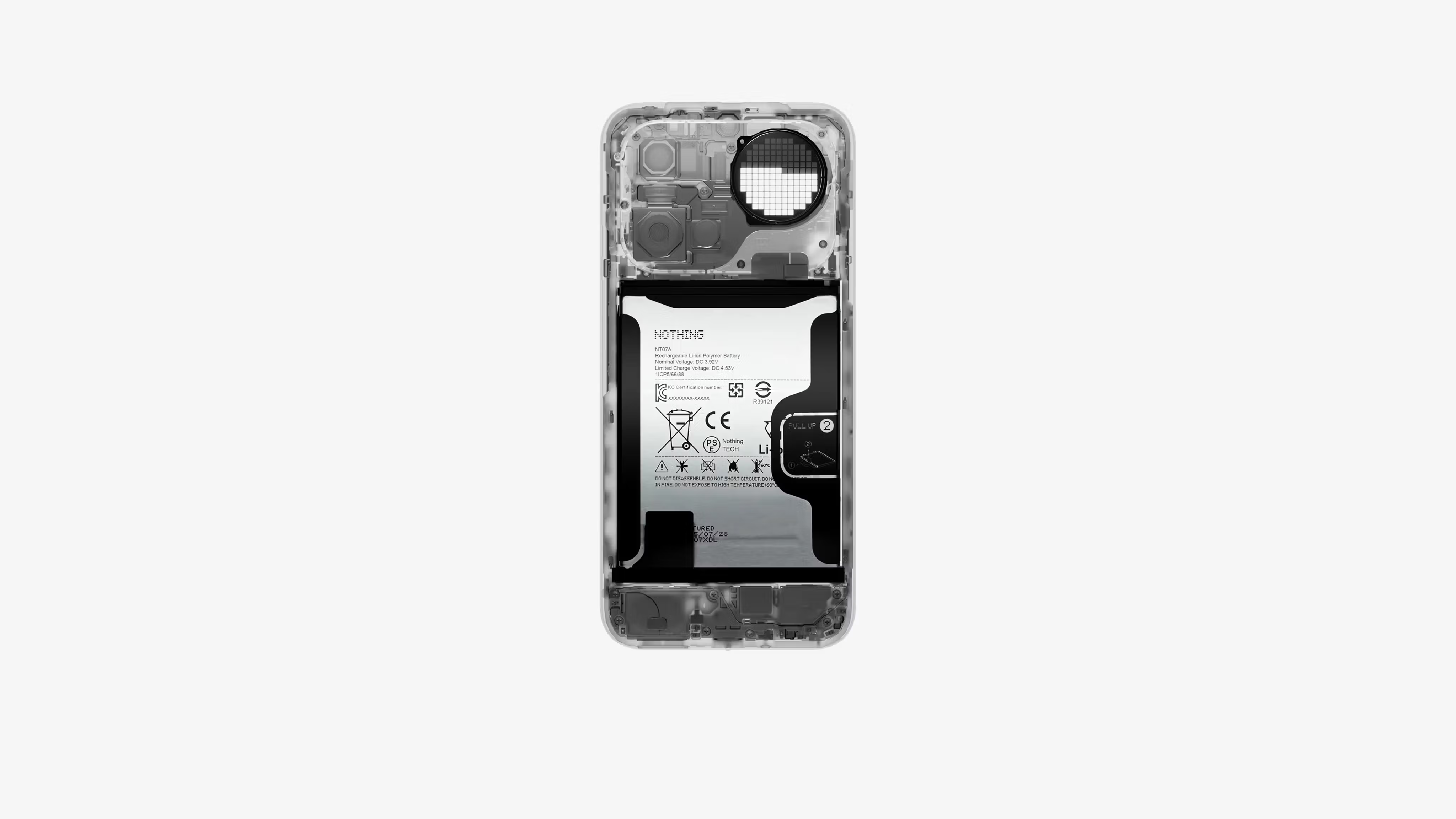
The detail that matters when it comes to servicing appears in the teardown. The microphone hole is right next to the SIM tray, and the mesh sealing that area sits directly behind it. If someone inserts the eject tool into the wrong hole —something that happens often at a service counter— they puncture the first sealing layer and the IP65 rating stops meaning what the spec sheet says. Nothing anticipated the mistake and added a second backup layer, but it is a geometry most rivals avoid.
The other warning is about materials: the rear plateau and the transparent pieces that reveal the screws are plastic, not glass. They do not shatter, but they do scratch. On a phone sold partly on the strength of its back, that is where wear will show first.
Glyph Matrix: 137 LEDs and less to do
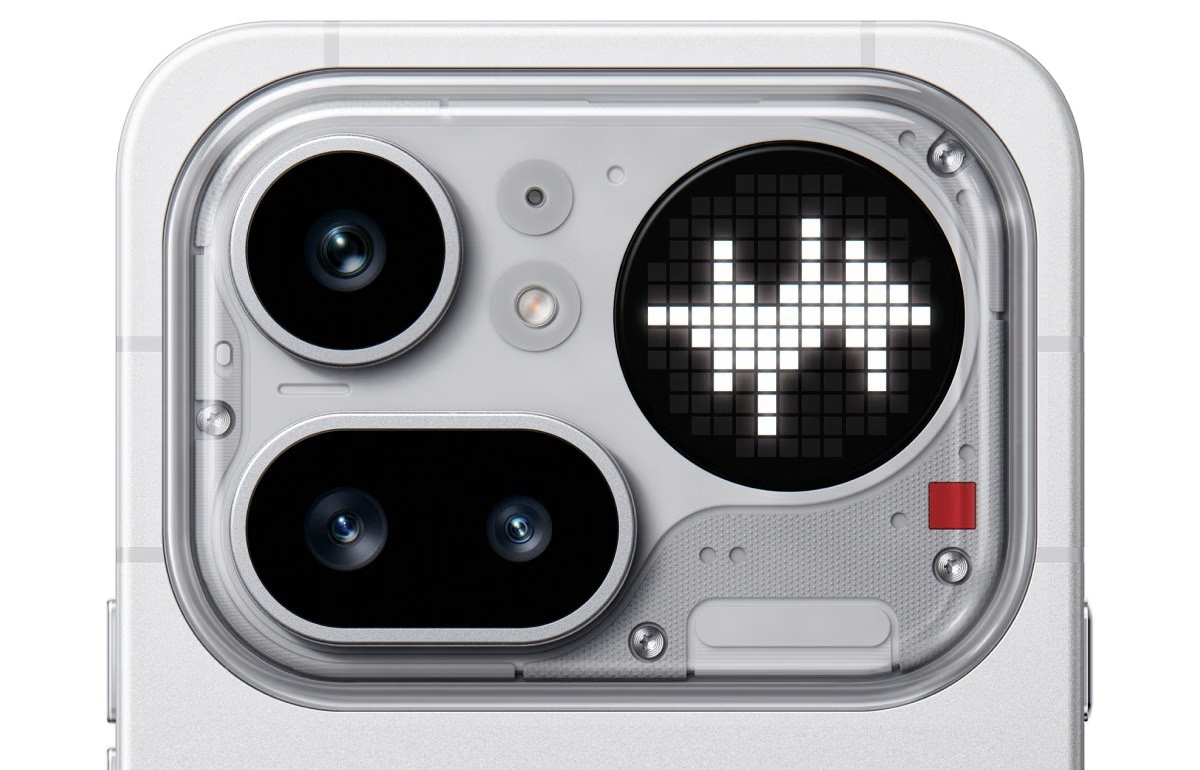
The circular matrix on the back has 137 directional LEDs, versus 489 on the Phone (3): Nothing traded resolution for brightness. It works as a volume indicator, timer, progress bar, and support system for Glyph Toys, the mini-games and clocks published by the brand and the community.
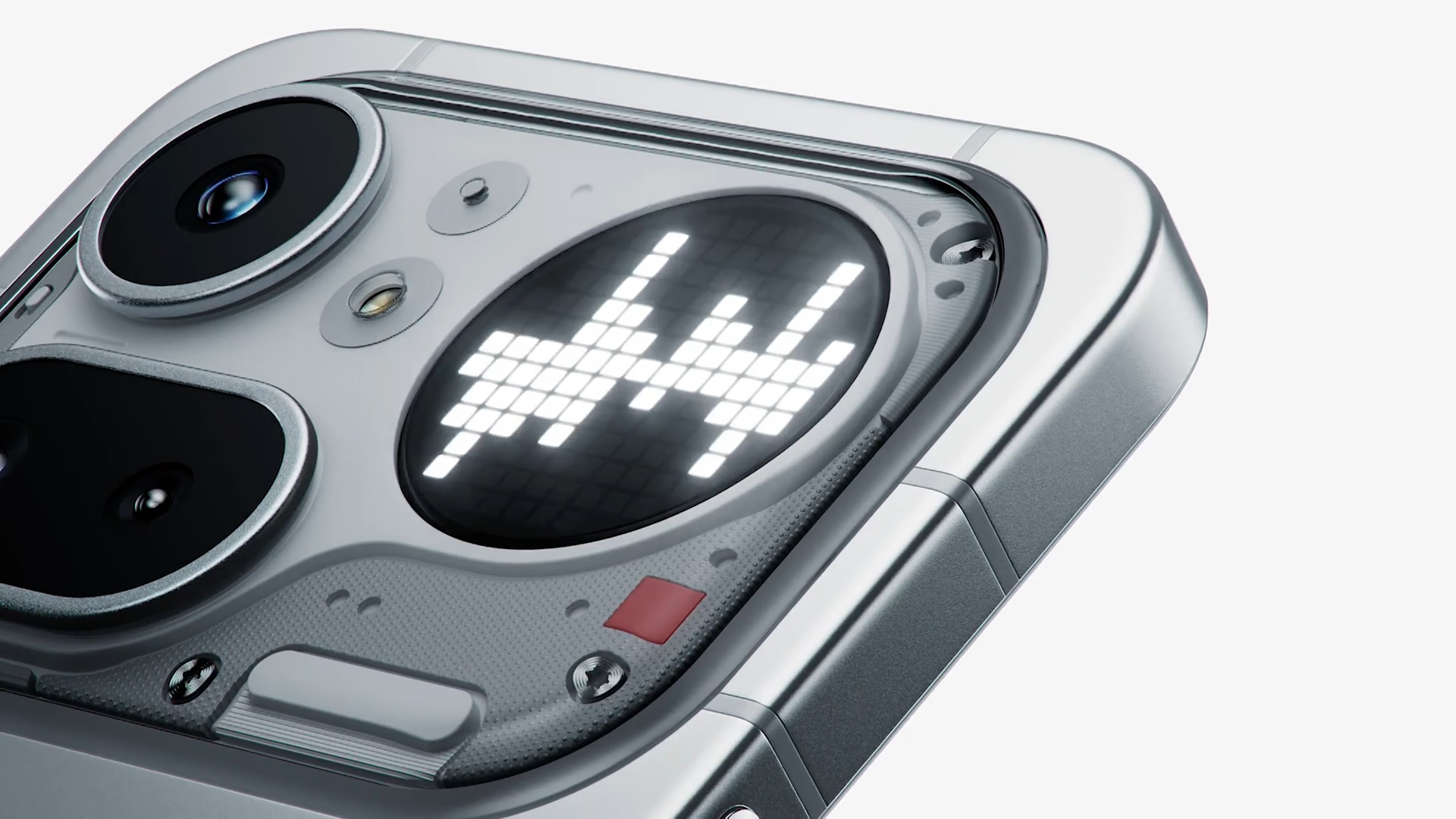
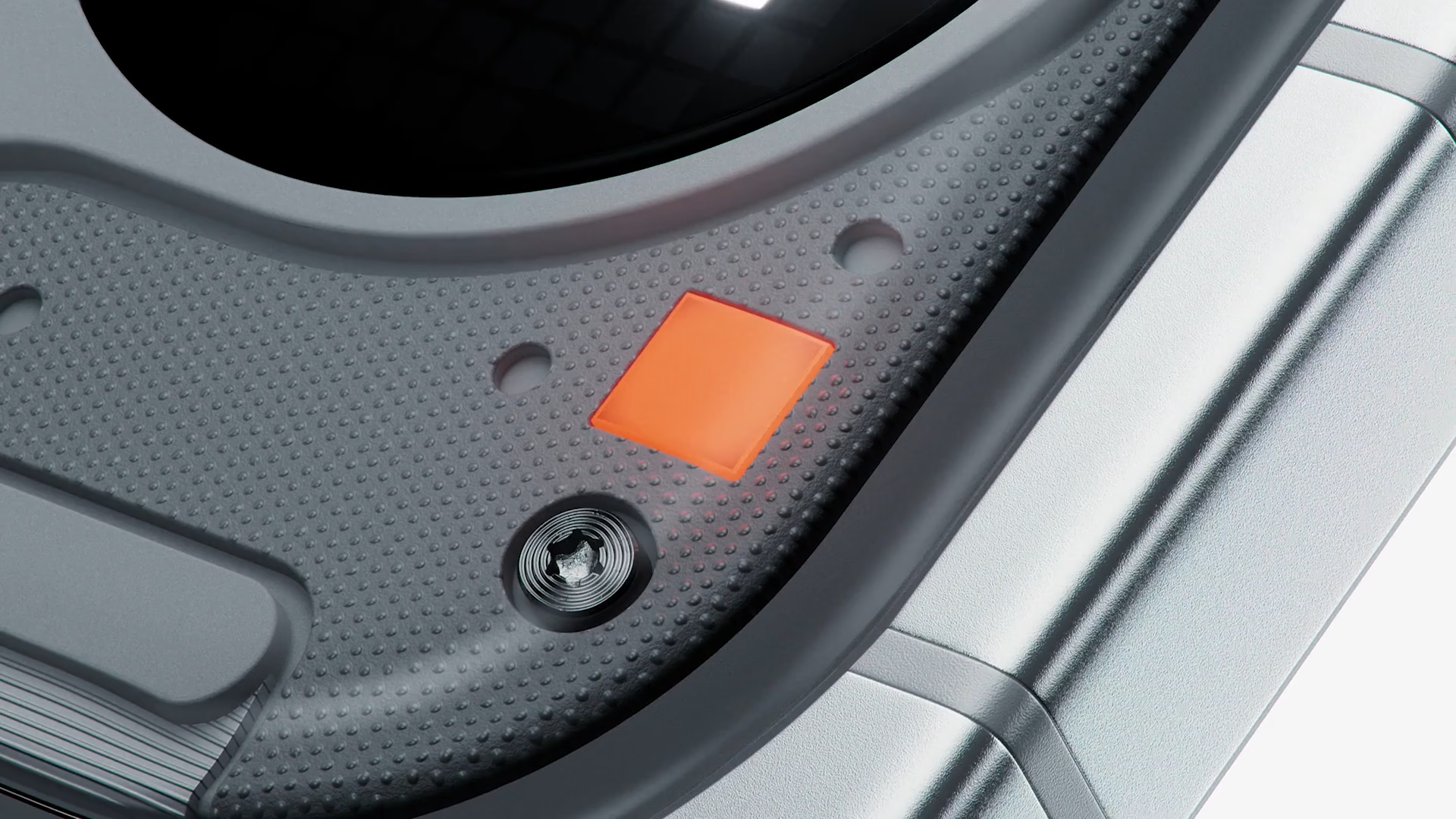
The problem is not the hardware, but what there is to put on top of it. At launch, there were fewer Glyph Toys available than on the Phone (3), and the dedicated rear button used to switch from one to another disappeared: now you have to dig through several menu levels. The feature became prettier and less usable.
Display: 144 Hz, and the gap between the spec sheet and the lab
6.83-inch AMOLED, 2,800 x 1,260 pixels, 144 Hz, Gorilla Glass 7i, and HDR10+: a large, fast panel with no obvious compromises for the price.
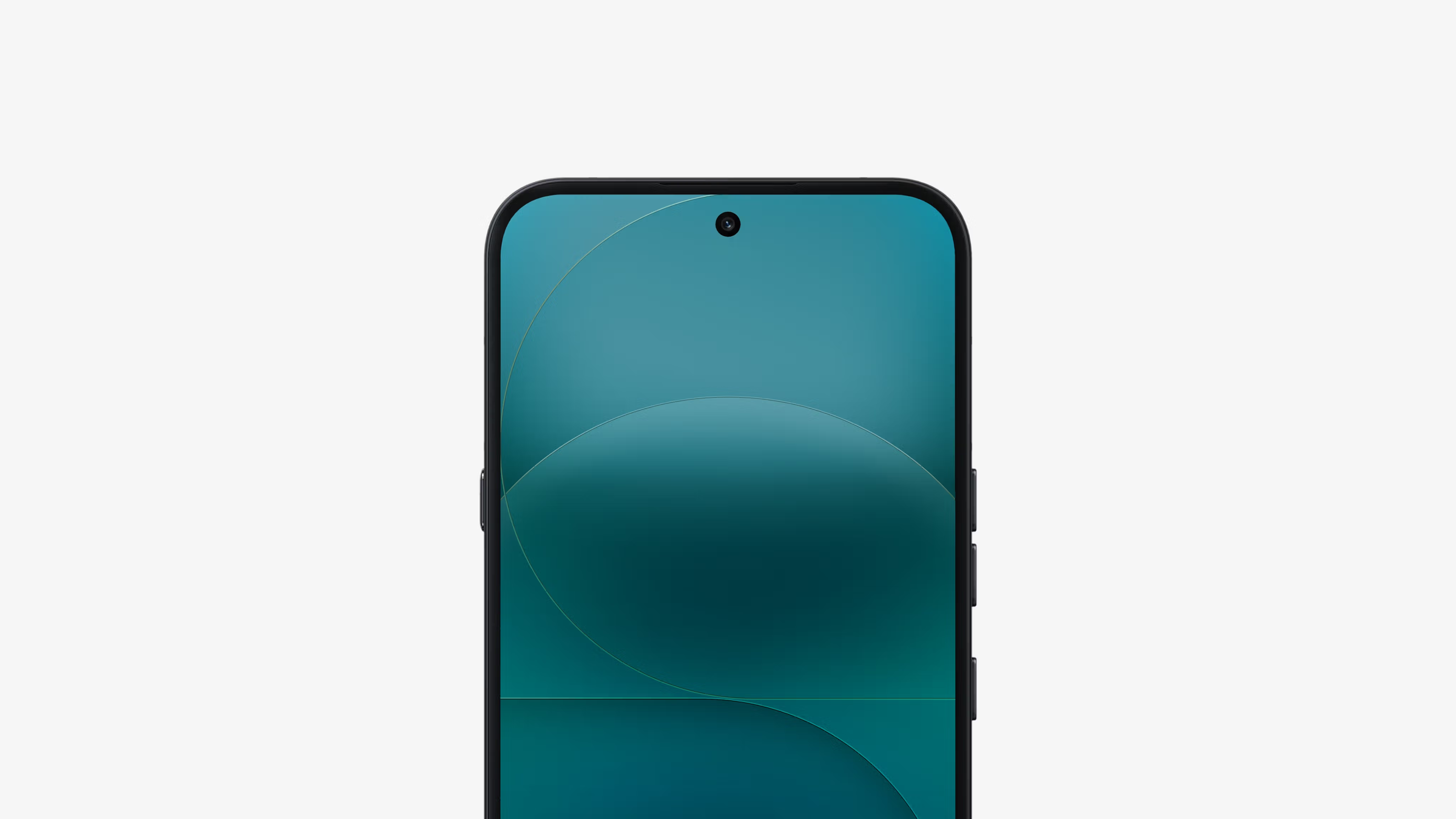
With brightness, it is worth separating the spec sheet from reality. Nothing claims 5,000 nits peak; Notebookcheck’s measurement reached a maximum of 1,596 cd/m² and 1,564 in HDR content. That is still far more than you need to read in the sun, but those 5,000 nits refer to an instantaneous peak over a tiny fraction of the panel, not the brightness you will actually live with.
The other panel detail is flicker. High-frequency dimming works at around 2,170 Hz, but the measured base frequency is 90 Hz.
Performance: Snapdragon 7 Gen 4 and Nothing’s largest vapor chamber
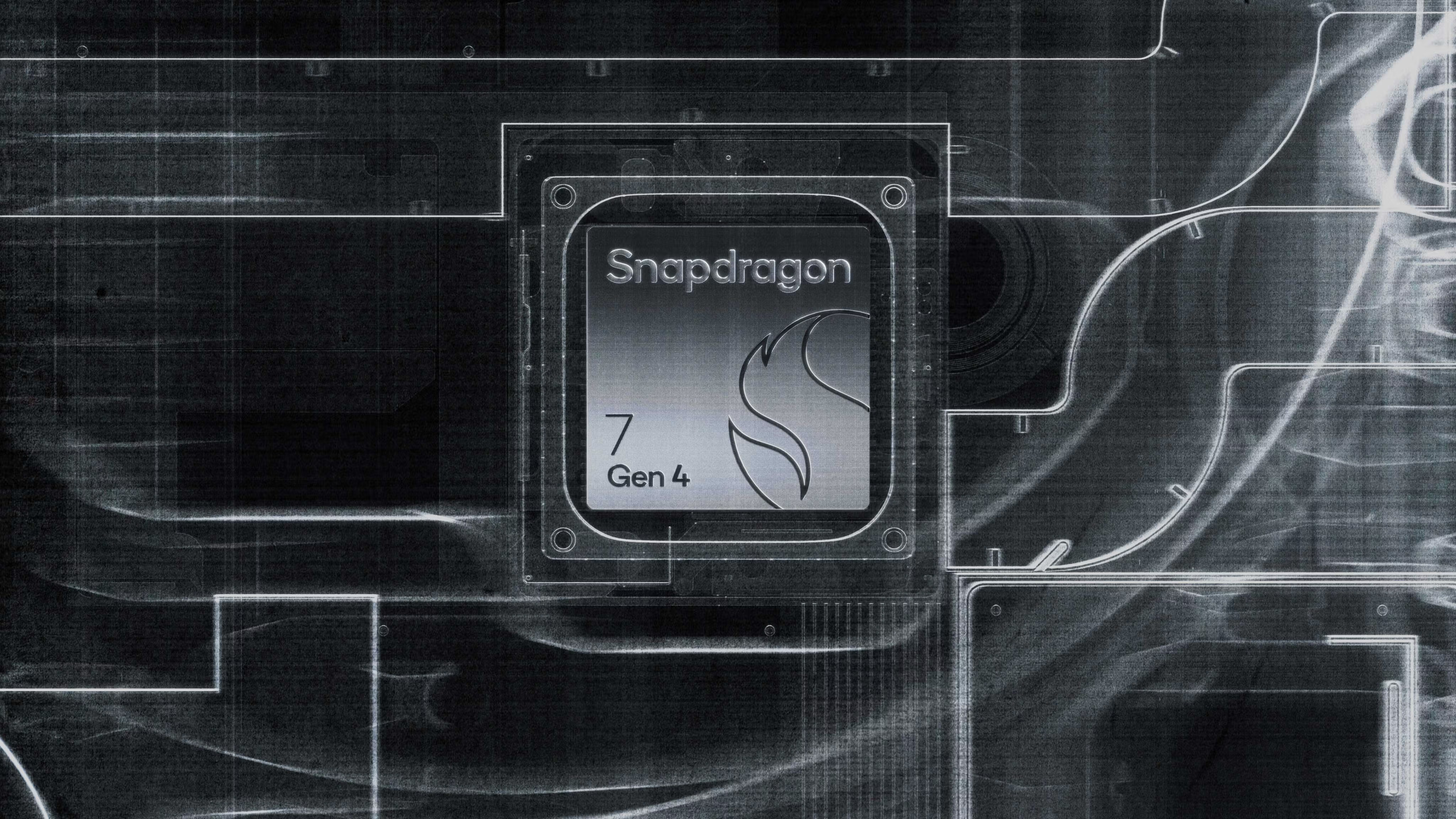
The real jump over the base model is here. The 4 nm Snapdragon 7 Gen 4 with Adreno 722 GPU scores, according to GSMArena’s measurements, 1,334 points in GeekBench 6 single-core and 4,170 in multi-core, and about 1.47 million in AnTuTu. Compared with the Phone (4a), graphics performance is practically doubled.
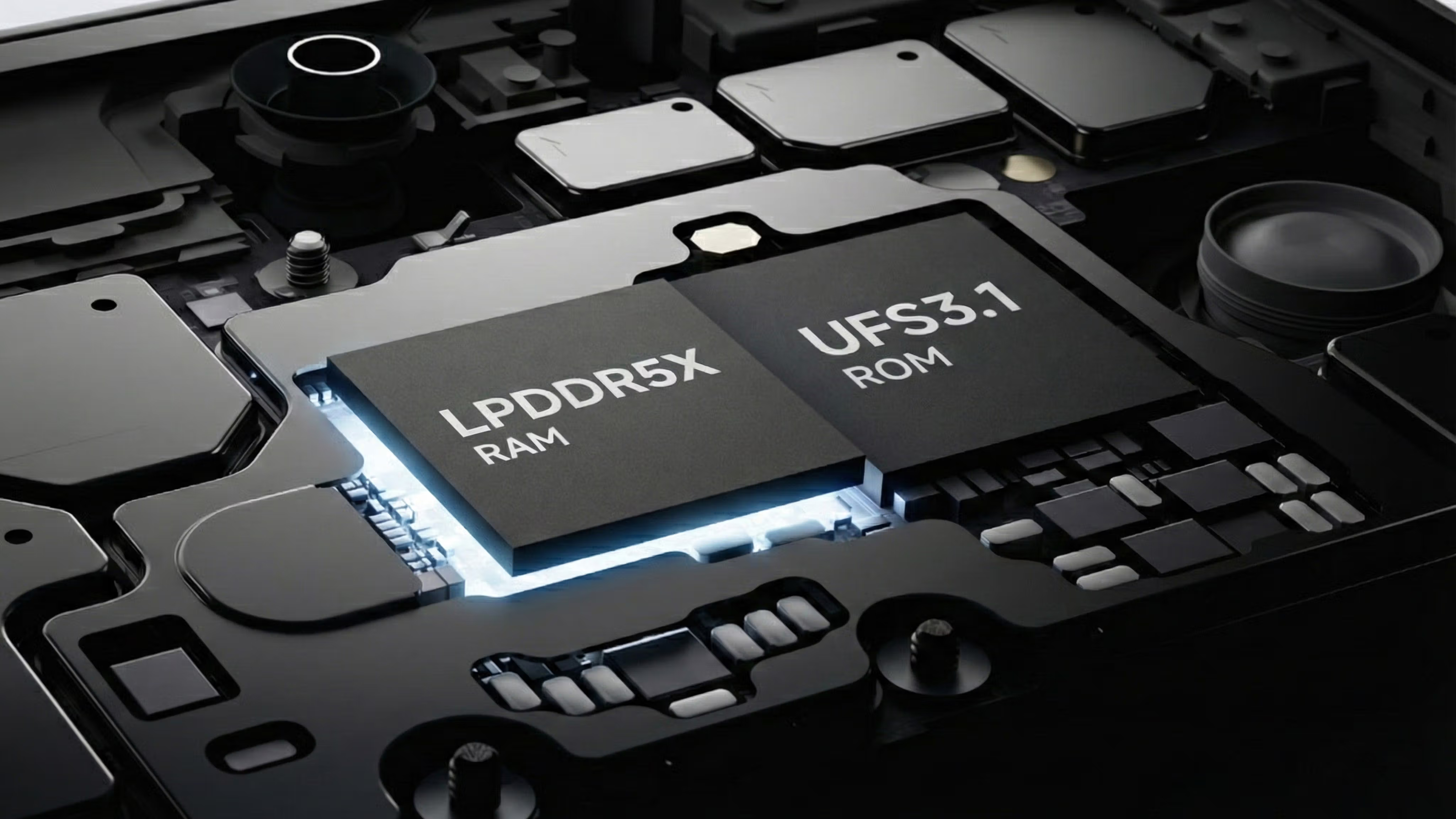
It is paired with LPDDR5X and UFS 3.1 storage, with no expansion slot. Underneath, there is a 5,300 mm² vapor chamber, the largest Nothing has ever put in a phone, and it shows where a one-off benchmark cannot: under sustained load, the chip maintains its frequency with almost no drop.
Cameras: the periscope is the argument
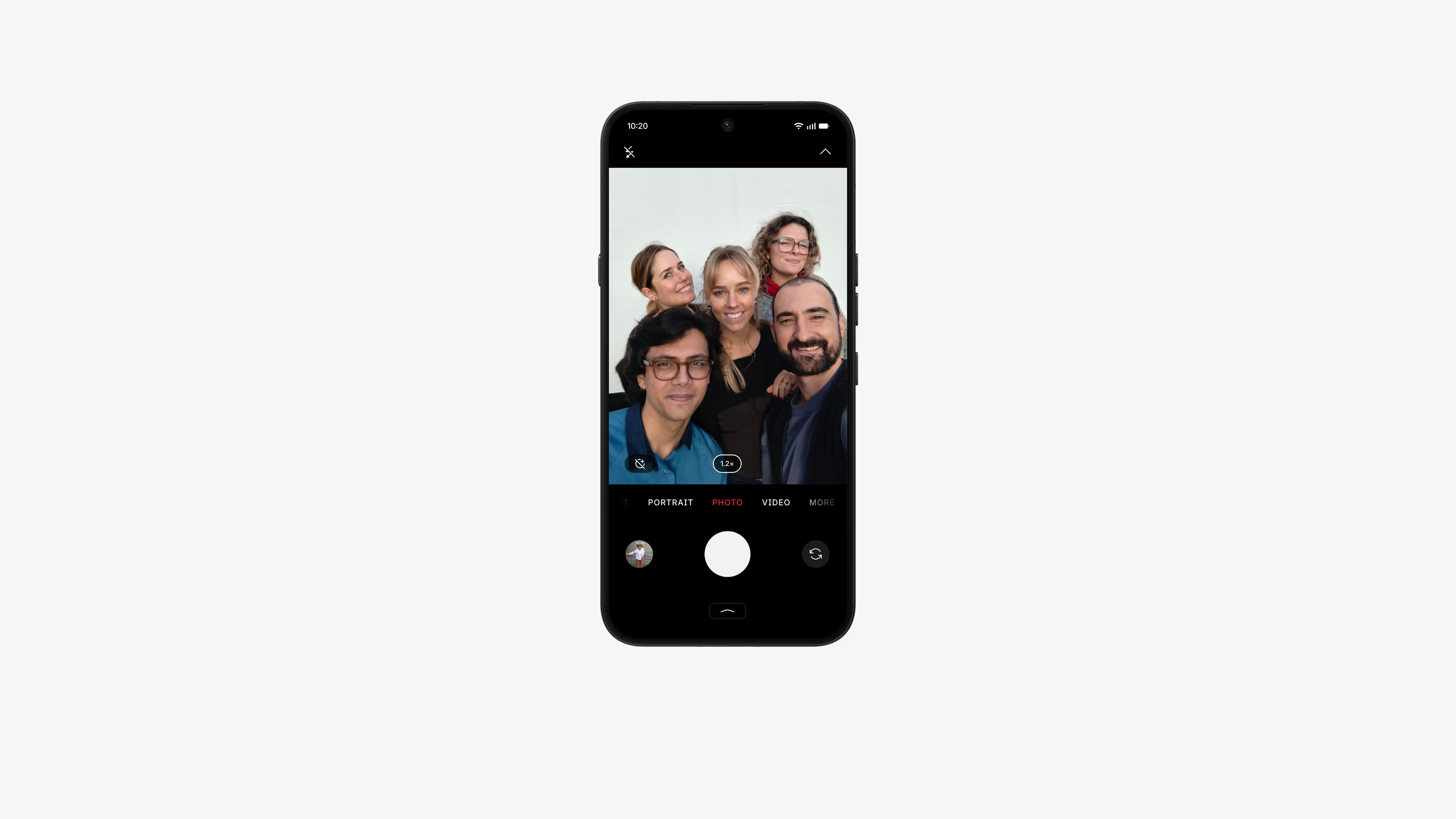
50 MP f/1.9 main camera with optical stabilization and dual-pixel autofocus, 50 MP f/2.9 periscope with 3.5x optical zoom and stabilization, 8 MP f/2.2 ultra-wide, and 32 MP front camera.
The periscope is what almost nobody offers below USD 500, and cropping up to 7x still produces publishable photos. The 140x figure in the marketing is hybrid zoom: useful for framing, not for the final photo. Ultra XDR mode is the best part of the package for dynamic range, and in still photos the phone beats everything competing at its price.
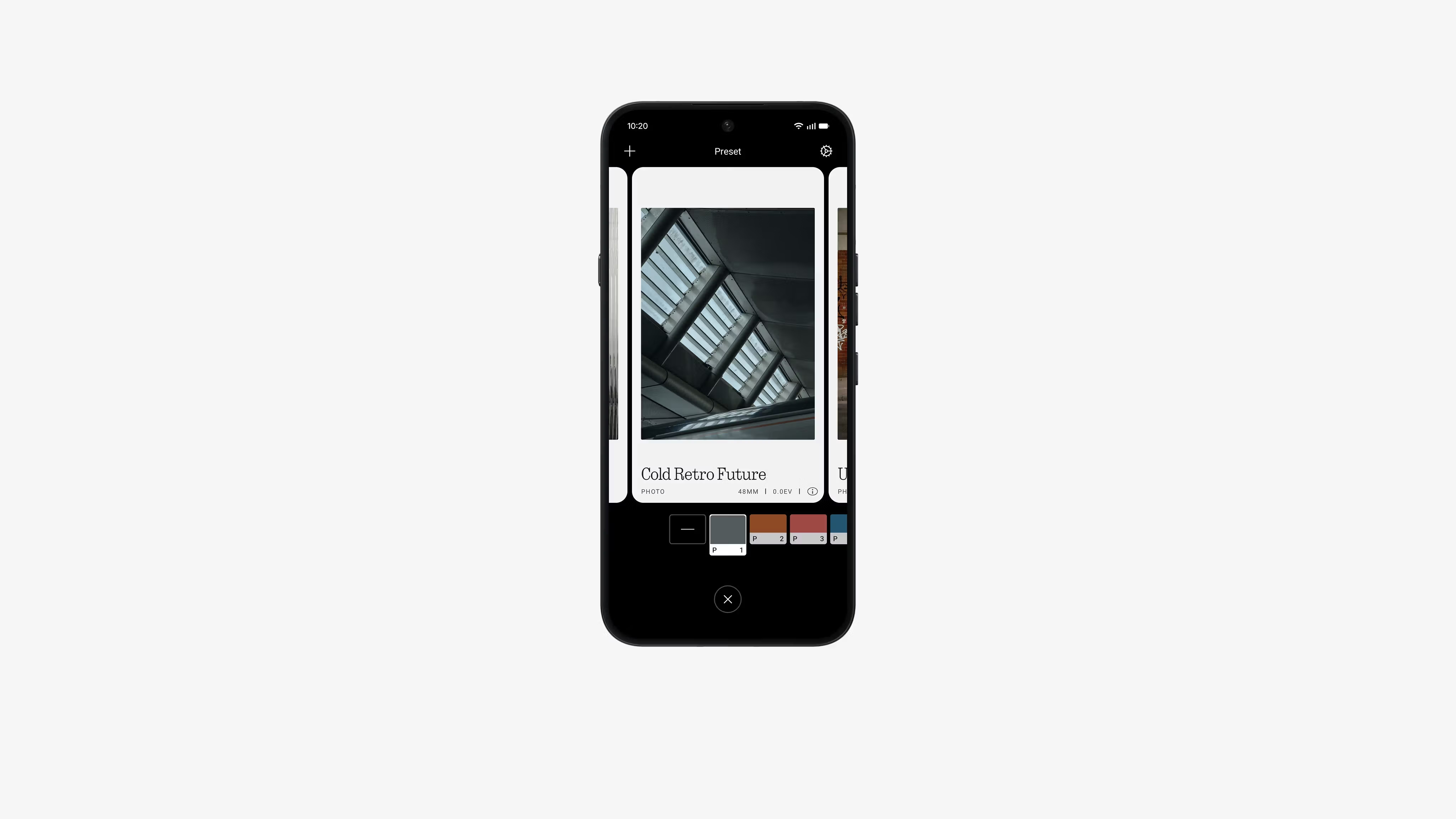
Where the setup falls apart is video. On paper, there is 4K at 30 fps and 1080p at 120 with Dolby Vision, but Engadget’s test describes unstable exposure and a muddy image, and quality degrades as soon as you go beyond the 3.5x optical range. The 8 MP ultra-wide is the other weak link: the Pixel 10a’s is several steps ahead.
Battery and charging
5,080 mAh in the international version and 5,400 in the Indian version. With the 50 W charger, it reaches 50% in 22 minutes, 80% in 38, and completes in 67. Nothing claims 1,400 cycles of useful life for the cell, a figure almost no manufacturer publishes and one that predicts the phone’s real life better than its capacity in mAh.
Battery life is among the best in the range: Engadget measured 24 hours of continuous use, five more than the previous generation. What it does not have is wireless charging.
Nothing OS 4.1 and Playground
Nothing’s skin remains one of Android’s most recognizable: dot-matrix typography, 19 first-party widgets, and animation work that feels more polished in this version. It runs on Android 16, with a commitment to three major updates.
The new feature in this version is Playground: a community repository where users upload and download Glyph Toys and camera presets made by other users. It is Nothing’s answer to the fact that its most distinctive feature depended on the brand itself feeding it with content.

Essential Space: the brand’s AI bet
The Essential button on the side opens Essential Space: the place where the phone gathers screenshots, photos, and voice notes, organizes them on its own, and generates reminders or calendar entries from what you saved. Essential Recorder transcribes conversations inside the same space.
The missing addition arrived with cloud backup: until this generation, resetting the device wiped everything saved there. What remains annoying is that the button cannot be reassigned to another function.
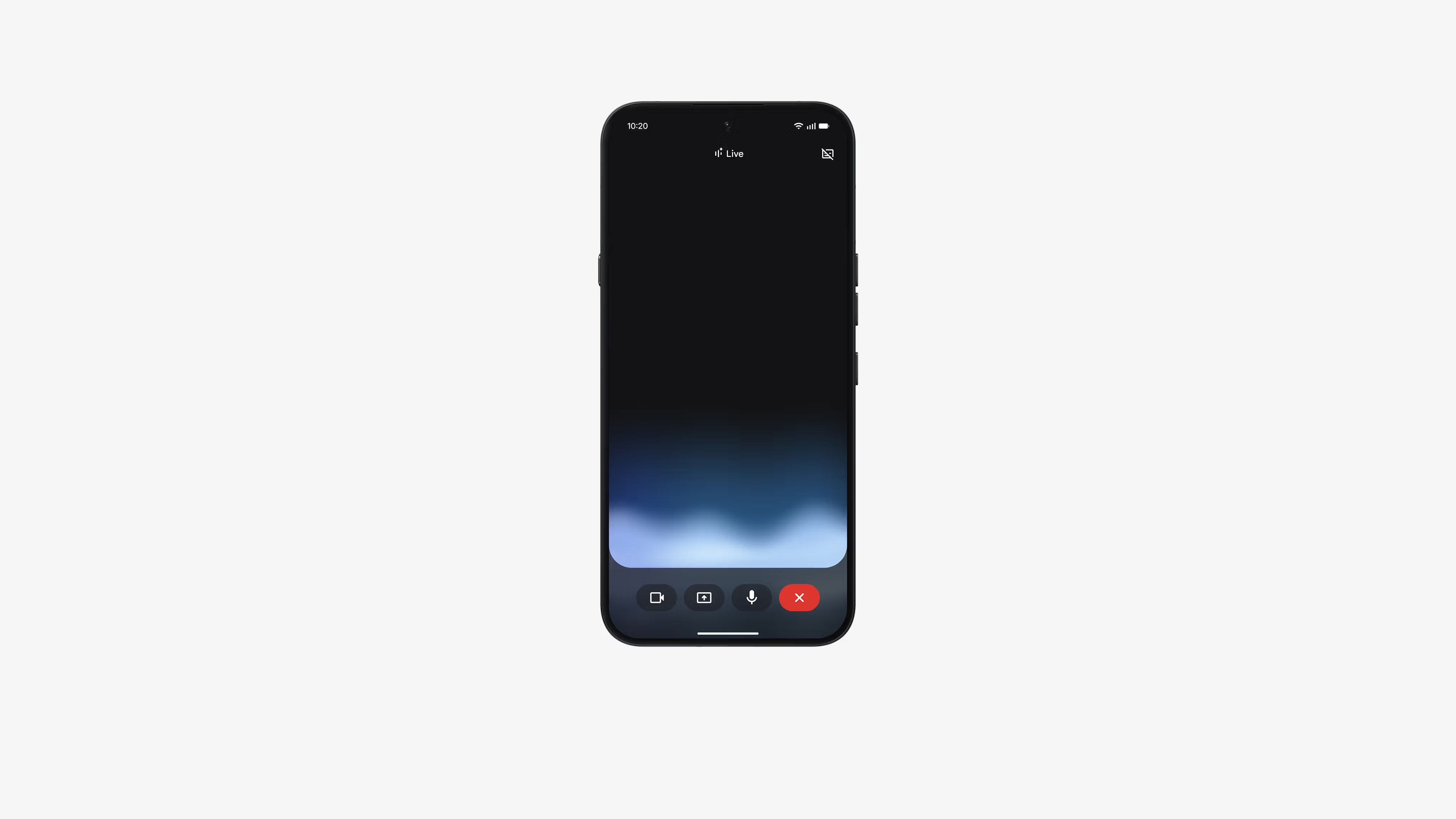
On the assistant side, in addition to Gemini, the system includes ChatGPT integration at the screenshot level, to extract text or edit an image without leaving where you are. Wallpaper Studio generates backgrounds from a single word, and the Essential News widget summarizes news.
How it compares with the competition
The table makes the decision clear: the Nothing wins on camera and build, and pays for it in software support.
Nobody else in the table has a telephoto lens. And nobody in the table falls so short on years of Android support.
What honest reviews point out
The three years of updates are the most expensive difference in the table: Google and Samsung offer seven at the same price, so the Nothing loses support while the other two still have four years ahead.
IP65 is also not the same as the Galaxy A57’s IP68. It resists water jets, not immersion, and Notebookcheck verified it down to 25 centimeters of depth for 20 minutes.
And then there is the Phone (4a) itself: it shares the 3.5x periscope, gives up the metal body and faster chip, and costs quite a bit less. GSMArena considers it the sweet spot of the lineup. It is the most uncomfortable argument against the Pro, and it comes from within.
Conclusion: who should buy it
If you are looking for the best-built phone with the most camera versatility for USD 499, the (4a) Pro is the clear answer: nobody else has the periscope at this price, and the unibody can take whatever you throw at it.
If, on the other hand, you plan to keep it until it stops receiving patches, the Pixel 10a and Galaxy A57 are the sensible buy: they cost the same or a little more, and the support window is more than twice as long.
And if you like Nothing’s design but do not want to pay for the Pro, the Phone (4a) keeps the periscope and delivers almost the same experience for quite a bit less.
Frequently asked questions
Is the Phone (4a) Pro worth it over the Phone (4a)?
The Pro adds the aluminum body, the Snapdragon 7 Gen 4 —with almost twice the graphics performance— and the 137-LED Glyph Matrix. Both have the 3.5x periscope telephoto lens. If you do not game and do not care about the metal finish, the base model delivers almost the same thing for considerably less money.
Is the 140x zoom useful for anything?
Not for the final photo. The 140x figure is hybrid zoom with software reconstruction: it is useful for finding the framing. The reasonable limit for a publishable image is around 7x, which is the digital crop over the periscope’s 3.5x optical zoom.
Does the Nothing Phone (4a) Pro have wireless charging?
No. It only charges by cable at 50 W, which fills the 5,080 mAh battery in 67 minutes and reaches 50% in 22. It is the phone’s most frequently mentioned omission, especially because the Pixel 10a includes it at the same price.
How many years of updates does it get?
Nothing guarantees three major Android updates starting from Android 16. That is less than half of what Google and Samsung offer in the same price range, and it is the phone’s weakest long-term point.
Nothing Phone (4a) Pro
Nothing’s mid-range phone with a machined aluminum unibody, 3.5x periscope telephoto lens, and a 137-LED rear matrix, for USD 499.
Pros
- Aluminum unibody that passed the bend test without giving in.
- 3.5x periscope telephoto lens, something almost unheard of below USD 500.
- 24-hour battery life in continuous-use tests.
- 6.83-inch 144 Hz AMOLED display with nearly 1,600 measured nits.
- Full charge in 67 minutes and 1,400 claimed battery cycles.
Cons
- Only three major Android updates, versus seven from Google and Samsung.
- No wireless charging.
- IP65: resists water jets, not immersion.
- Video lags far behind photos, with unstable exposure.
- The 8 MP ultra-wide is the weak link in the setup.
Author
Alexis PaezAnálisis basado en especificaciones oficiales de Nothing y en las pruebas de Notebookcheck, GSMArena, Engadget y Android Authority. El autor no realizó una prueba física del producto.
Comments
Share article
You might also like

Pixel 11: 30x zoom and fast wireless charging come to the base model, but it misses out on HiLight
The Pixel 11 inherits the Pro models’ 5x telephoto and 30x Super Zoom for $899. Full specs, price, sale date, and what it gives up versus the Pro models.

Pixel 11 Pro and Pro XL: HiLight, 120x zoom, and the first vapor chamber in a Pixel
The Pixel 11 Pro and Pro XL add HiLight, 120x Pro Zoom, a vapor chamber, and 3,600 nits. Full specs, pricing, and the asterisk around 12 GB of RAM.