Galaxy Z Fold 8 vs Fold 8 Ultra: which one makes sense and why the name is confusing

Index
The Galaxy Z Fold 8 and the Galaxy Z Fold 8 Ultra were introduced on the same day, share the same processor, and are separated by a $200 price difference. With those facts, anyone would assume they are two versions of the same phone. They are not: they have different form factors, different cameras, and different audiences, and the naming works against understanding that.
If you need to decide quickly: the Ultra is for those who want the best camera and the largest screen; the Fold 8 is for those who want a foldable that is comfortable to use while closed and would rather save $200.
Why the name is confusing
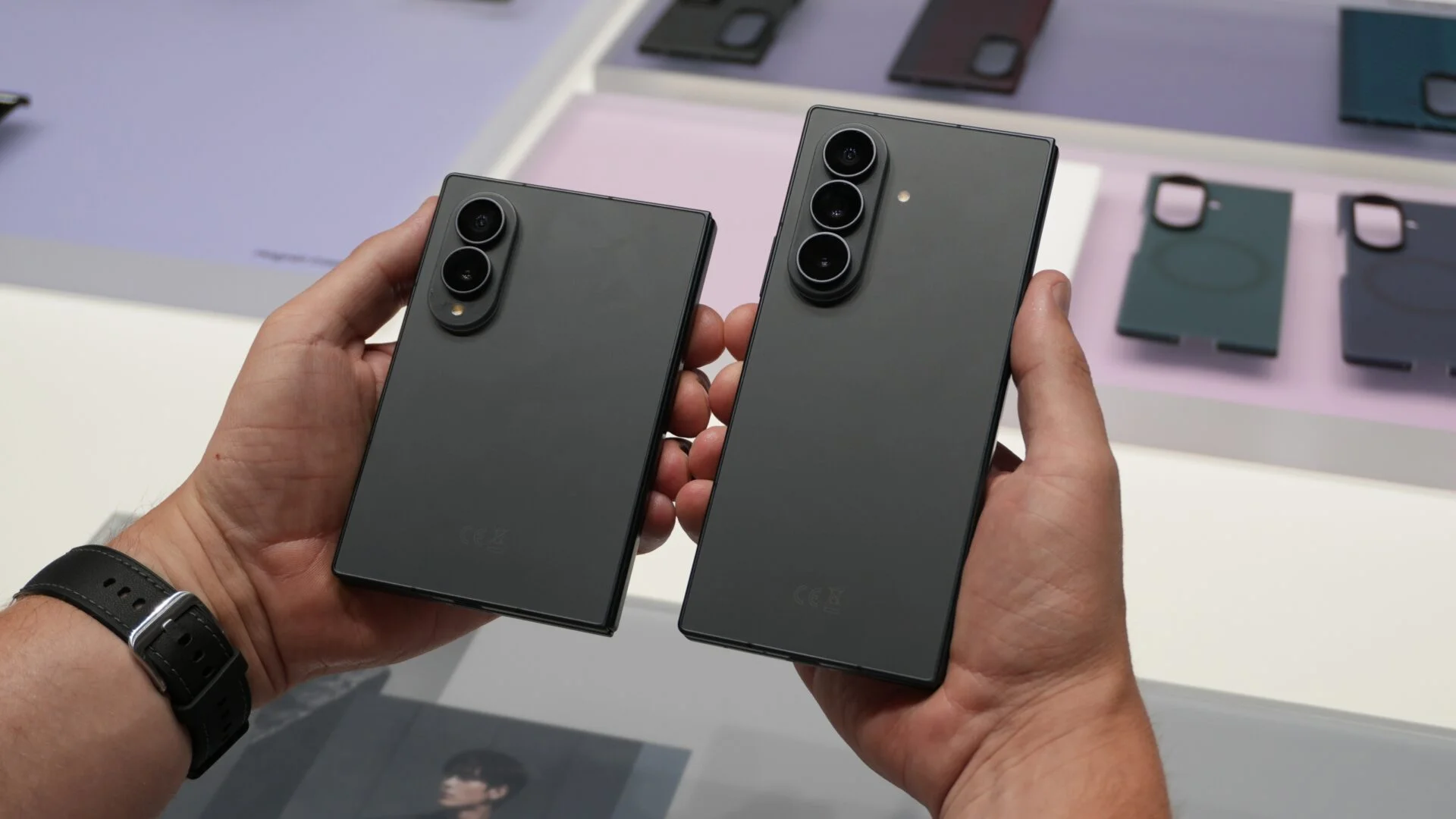
Intuition suggests that the Fold 8 Ultra is an upgraded version of the Fold 8. It is the other way around. Samsung explains it in its own spec sheet: the original Z Fold model evolved into the Galaxy Z Fold 8 Ultra, while the Z Fold 8 was redesigned with an entirely new shape.
In practical terms: if you have a Fold 7 and want the same thing but better, your device is the Ultra. The Fold 8 is not one step below the Ultra within the same design; it is a different product that introduces a new form factor to the lineup. Buying it expecting continuity from the Fold 7 is the most expensive mistake you can make in this generation.
Form factor: wide and short versus narrow and tall
This is the difference you feel most in daily use, and it does not appear on any marketing spec sheet. When closed, the Fold 8 measures 81.9 by 123.9 millimeters and is 9.7 mm thick: it is wide and short, with passport-like proportions. The Ultra measures 72.8 by 158.4 millimeters when closed and is 8.9 mm thick: it is narrow and tall, the classic format of the lineup.
Neither one wins in the abstract. The Fold 8 fits better in a back pocket because it is much shorter, and its 5.5-inch outer screen with a 10:16 aspect ratio feels like a conventional phone display, so the keyboard fits fully. The downside is that 81.9 millimeters of width is a lot to handle with one hand: typing with both thumbs feels more natural than using just one.
The Ultra reverses the problem. It is narrower, so your thumb reaches better from side to side, but it is almost 16 centimeters tall when closed, which you notice both in your hand and in your pocket. It is also thinner in both states and weighs 14 grams more: 215 versus 201.
Displays: 7.6 versus 8 inches
The Fold 8's main display measures 7.6 inches in a horizontal 4:3 aspect ratio, and 3:4 when rotated. It is designed for consuming content: watching video, reading, browsing. The Ultra's display reaches 8 inches with 2K resolution and is aimed at work space, with enough real room for two windows side by side without either becoming unusable.
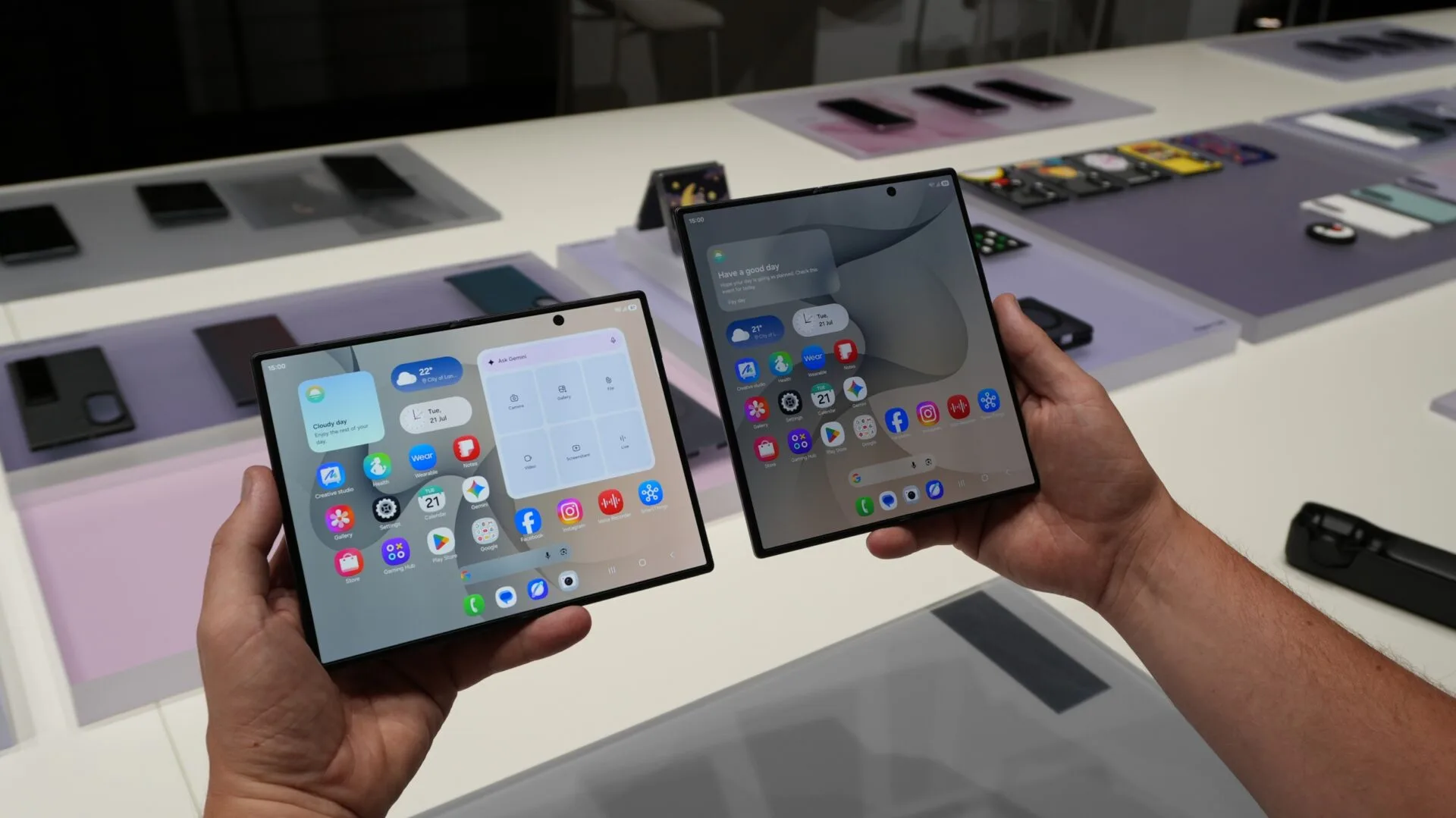
Half an inch sounds minor, but it changes the device's purpose. Combined with the difference in proportions, it defines whether the foldable is a large screen for viewing or a workspace for getting things done. Both are 120 Hz LTPO AMOLED panels with 3,000 nits of peak brightness and an anti-reflective finish, so panel quality is not a deciding factor between them.
Cameras: the biggest difference
This is where the two devices truly separate. The Fold 8 has two 50 MP rear cameras, wide and ultra-wide, and handles zoom by cropping the main sensor up to 2x. The Ultra adds a 200 MP wide camera, keeps the 50 MP ultra-wide, and adds a dedicated 10 MP telephoto camera with 3x optical zoom.
That telephoto camera is the only real zoom lens in Samsung's entire foldable lineup. If you often shoot from a distance, the comparison ends here, and no software feature can make up the difference. If you take photos of people, food, and landscapes, the Fold 8's two 50 MP sensors perform well and the gap narrows quite a bit.
In video, the distance grows: the Ultra records in 8K with the new APV codec and supports Cine LUT profiles to apply color controls directly from the phone. The Fold 8 offers neither. It is a niche feature, but for anyone who edits afterward, it is decisive.
Battery, charging, and battery life
Both introduce silicon-carbon batteries, a first for Samsung that reaches the entire 2026 Z series and enables higher capacity in the same volume. The Ultra has 5,000 mAh and the Fold 8 has 4,800. Wired charging is 45 W on both, and neither includes a charger in the box.
The 200 mAh difference matters less than the number suggests, because the Ultra also has more screen to power. In practice, expect similar battery life, with an advantage for the Fold 8 when used mostly closed and for the Ultra on long days with the large screen open.
What they share
It is worth stating clearly because it changes the decision framework: there is no significant difference in performance. Both use the Snapdragon 8 Elite Gen 5 for Galaxy, start at 12 GB of RAM with 256 or 512 GB, and go up to 16 GB with 1 TB in their maximum configuration. They also share Android 17 with One UI 9, Gemini Nano 4 processing on-device, the Flex Titanium structure under the display, and IP48 certification.
No one should choose between these two devices based on performance. The decision comes down to form factor and camera.
Comparison table
The $200 difference is small compared with the spec gap, especially in the camera system. That pushes anyone already willing to spend $1,899 toward the Ultra, while also making the Fold 8 less attractive as a savings option: it is not a cheap foldable, it is a different foldable.
Which one makes sense for your profile
If you are coming from a Galaxy Z Fold 7, your continuation is the Ultra. You will find the same form factor with more screen, more battery, and a camera system that makes a real leap. Moving to the Fold 8 means changing how you use the device, not upgrading.
If you have never owned a foldable, the Fold 8 is the most comfortable entry point. It behaves like a conventional phone when closed, which is how you will use it most of the time, and it has the lower entry price of the two.
If you work on your phone, choose the Ultra. The 8-inch screen with two windows side by side is a different category of use compared with the 7.6-inch 4:3 panel, which is designed more for viewing than producing.
If you take photos or shoot video seriously, the Ultra is the clear choice: telephoto, 200 MP, and 8K with color profiles. It is the brand's only foldable that competes with a conventional flagship in camera performance.
If what you want is portability, choose the Fold 8. Being 34 millimeters shorter when closed matters more day to day than being 0.8 millimeters thicker, and the 201 grams help.
The core decision is not how much you can spend, but what kind of foldable you want. Samsung has stopped offering a single path with two prices and now offers two different paths, and that is better for buyers even if the naming system does everything it can to hide it.
Frequently asked questions
Is the Galaxy Z Fold 8 Ultra the successor to the Fold 7 or the Fold 8?
To the Fold 7. Samsung states in its own documentation that the original Z Fold model evolved into the Fold 8 Ultra, while the Fold 8 is a redesign with an entirely new shape. The higher number does not indicate continuity for the lineup.
Which is bigger, the Galaxy Z Fold 8 or the Fold 8 Ultra?
It depends on the dimension. The Ultra has the larger main display, 8 inches versus 7.6, and it is taller when closed: 158.4 versus 123.9 millimeters. The Fold 8 is wider, at 81.9 millimeters versus 72.8, and considerably shorter.
Is it worth paying $200 more for the Fold 8 Ultra?
If you use the camera often or work on the large screen, yes: the telephoto lens, 200 MP, and 8K have no equivalent on the Fold 8. If the foldable is mainly for consuming content and carrying around, that $200 does not buy anything you are going to use.
Which of the two fits better in a pocket?
The Galaxy Z Fold 8. When closed, it is 34 millimeters shorter than the Ultra, and that is the dimension that determines whether a foldable sticks out of your pocket. In exchange, it is 9 millimeters wider and 0.8 mm thicker.
Galaxy Z Fold 8
Samsung's new-format foldable, wider and shorter, designed for consuming content and for those entering the category for the first time.
Pros
- It weighs 201 grams, 14 less than the Ultra.
- When closed, it is 34 millimeters shorter, so it fits better in a pocket.
- The 10:16 outer screen is used like a conventional phone display.
- It costs $200 less.
Cons
- It has no telephoto lens or 200 MP camera.
- It does not record in 8K or support Cine LUT profiles.
- At 81.9 millimeters wide, it is difficult to handle with one hand.
- The main display is half an inch smaller.
Galaxy Z Fold 8 Ultra
Samsung's flagship foldable and the direct successor to the Fold 7. It adds an 8-inch display, a 200 MP camera with telephoto, and 8K recording.
Pros
- Samsung's only foldable with a dedicated telephoto lens and 3x optical zoom.
- 200 MP main camera and 8K recording with APV codec.
- The 8-inch main display lets you work with two windows.
- It is thinner and narrower when closed: 8.9 and 72.8 millimeters.
Cons
- It costs $2,099, $200 more than the Fold 8.
- It weighs 215 grams.
- When closed, it is 158.4 millimeters tall, and you notice it in your pocket.
Author
Alexis PaezAnalysis based on the manufacturer's official specifications. The author did not physically test the product.
Comments
Share article
You might also like

Galaxy Z Fold 8 Ultra: Samsung’s first Ultra foldable arrives with 200 MP, telephoto and 5,000 mAh in 4.1 millimeters
Samsung introduced the Galaxy Z Fold 8 Ultra: 4.1 mm, 200 MP camera with telephoto and a 5,000 mAh silicon-carbon battery. Price and full specs.

Galaxy Z Fold 8: the world's lightest foldable debuts a new form factor and drops the telephoto camera
Samsung introduced the Galaxy Z Fold 8 with a wide form factor, 201 grams, and a 10:16 cover display. Price, full specs, and why it does not replace the Fold 7.

Samsung Galaxy Unpacked July 2026: the Fold lineup splits in two, the first foldable Ultra, and glasses with Gemini
Fold 8 in a passport-style format, the first foldable Ultra, watches with the same chip, and glasses with Gemini: everything from Galaxy Unpacked July 2026, prices, and dates.

Pixel 11 Pro Fold vs Galaxy Z Fold 8: same price, and only one is sealed against dust
Both cost $1,899. We compare sealing, crease, cameras, and charging, and why the Pixel’s IP68 rating defines more years of useful life than any spec sheet number.

Recent articles
Huawei Pura X Max vs iPhone Duo: what changes beyond the foldable screen
Huawei Pura X Max vs iPhone Duo: size, multitasking, cameras, styluses, and charging. What changes in use and which one better fits your priorities.