Galaxy Z Fold 8 Ultra: Samsung’s first Ultra foldable arrives with 200 MP, telephoto and 5,000 mAh in 4.1 millimeters

Index
The Galaxy Z Fold 8 Ultra is the flagship Samsung introduced at Galaxy Unpacked on July 22 in London, and the device that brings the Ultra name into the foldable lineup. It measures 4.1 millimeters unfolded, weighs 215 grams and costs $2,099.
It is also the only one of the generation’s three foldables with a telephoto lens, the only one with a 200 MP camera and the one with the largest battery: 5,000 mAh in a body thinner than any previous foldable from the brand.
What the Galaxy Z Fold 8 Ultra is
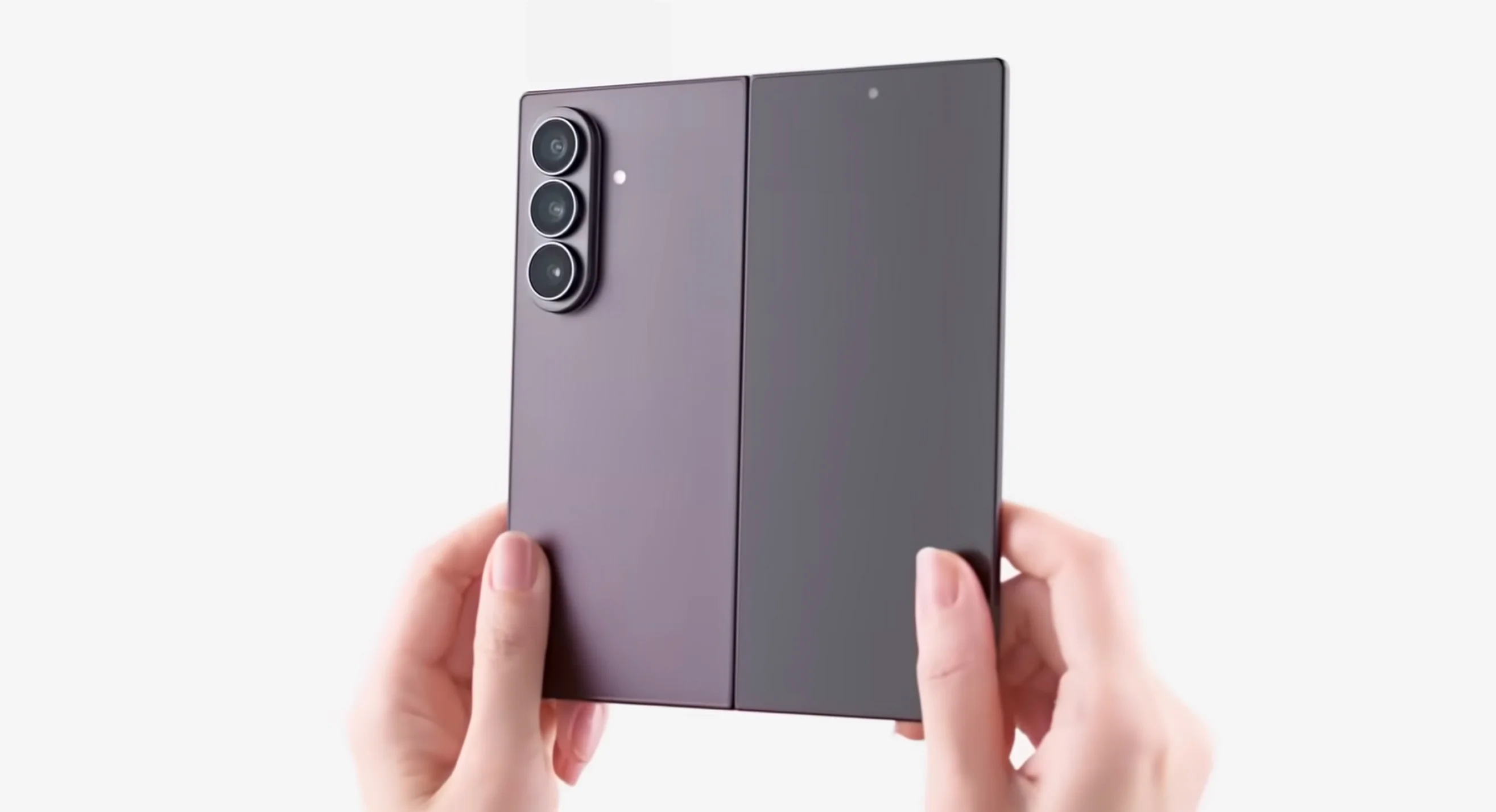
This is the device that continues the classic Fold line, even if the number suggests otherwise. The Fold 8 Ultra keeps the familiar elongated format and increases the main screen to 8 inches; the Galaxy Z Fold 8, by contrast, debuts a wider and shorter format and works as a different alternative, not as a lower-tier version of the same design.
For anyone coming from a Fold 7 who wants the usual experience, but better, this is the path. The word Ultra, which Samsung had been using in the S series and in its watches, enters a foldable for the first time, and it comes with the price that name implies.
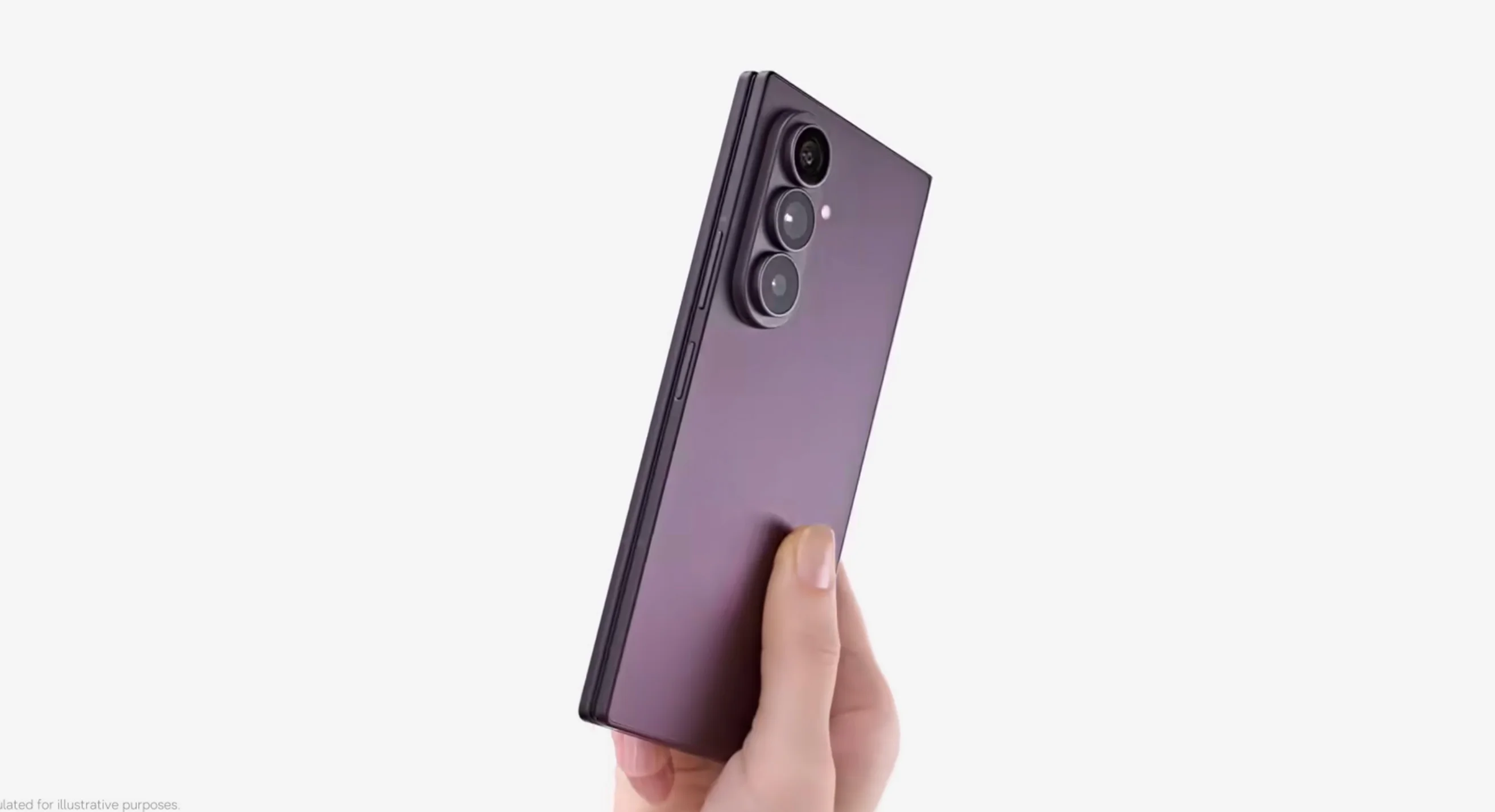
4.1 millimeters unfolded and 8.9 folded
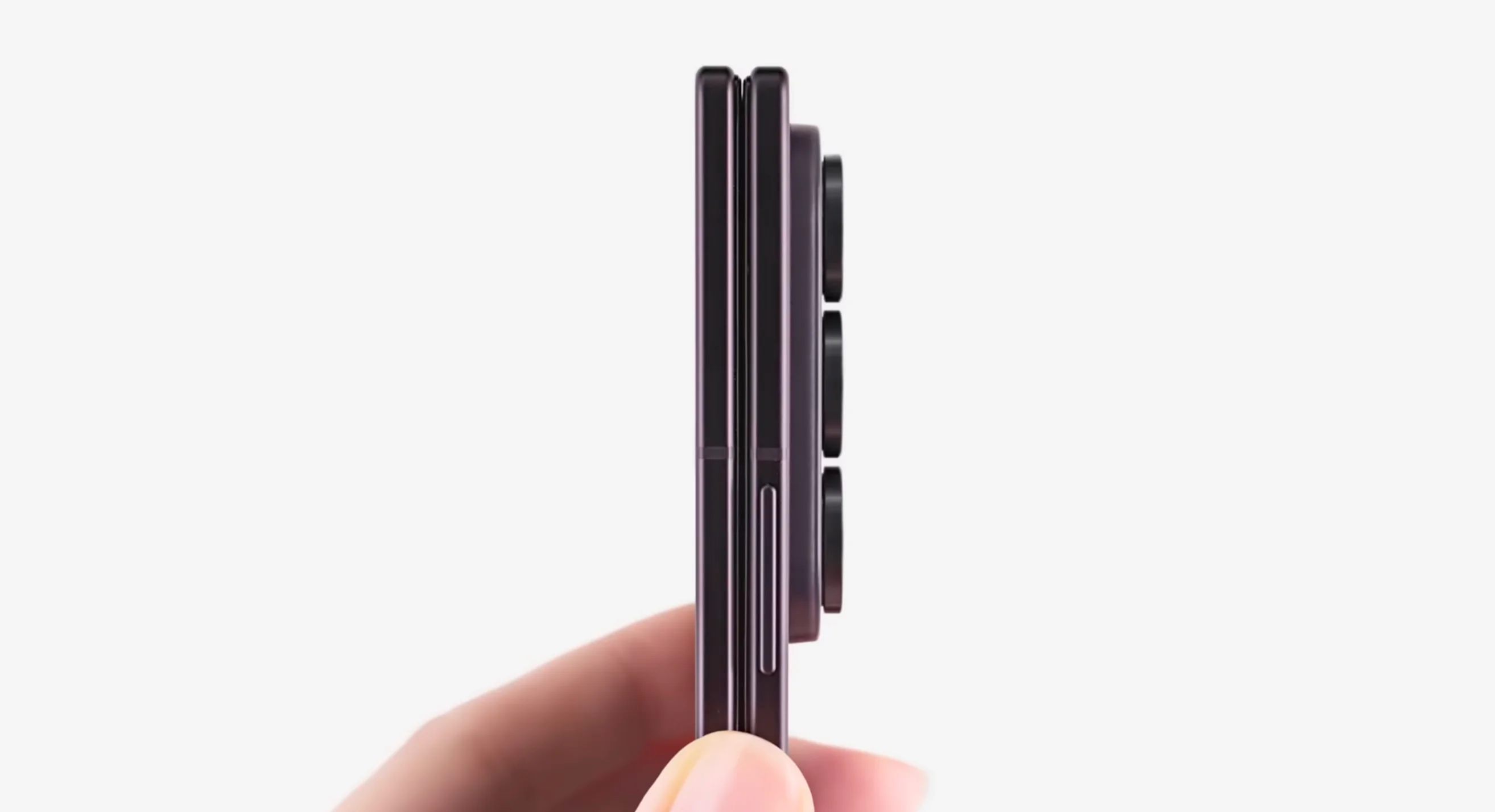
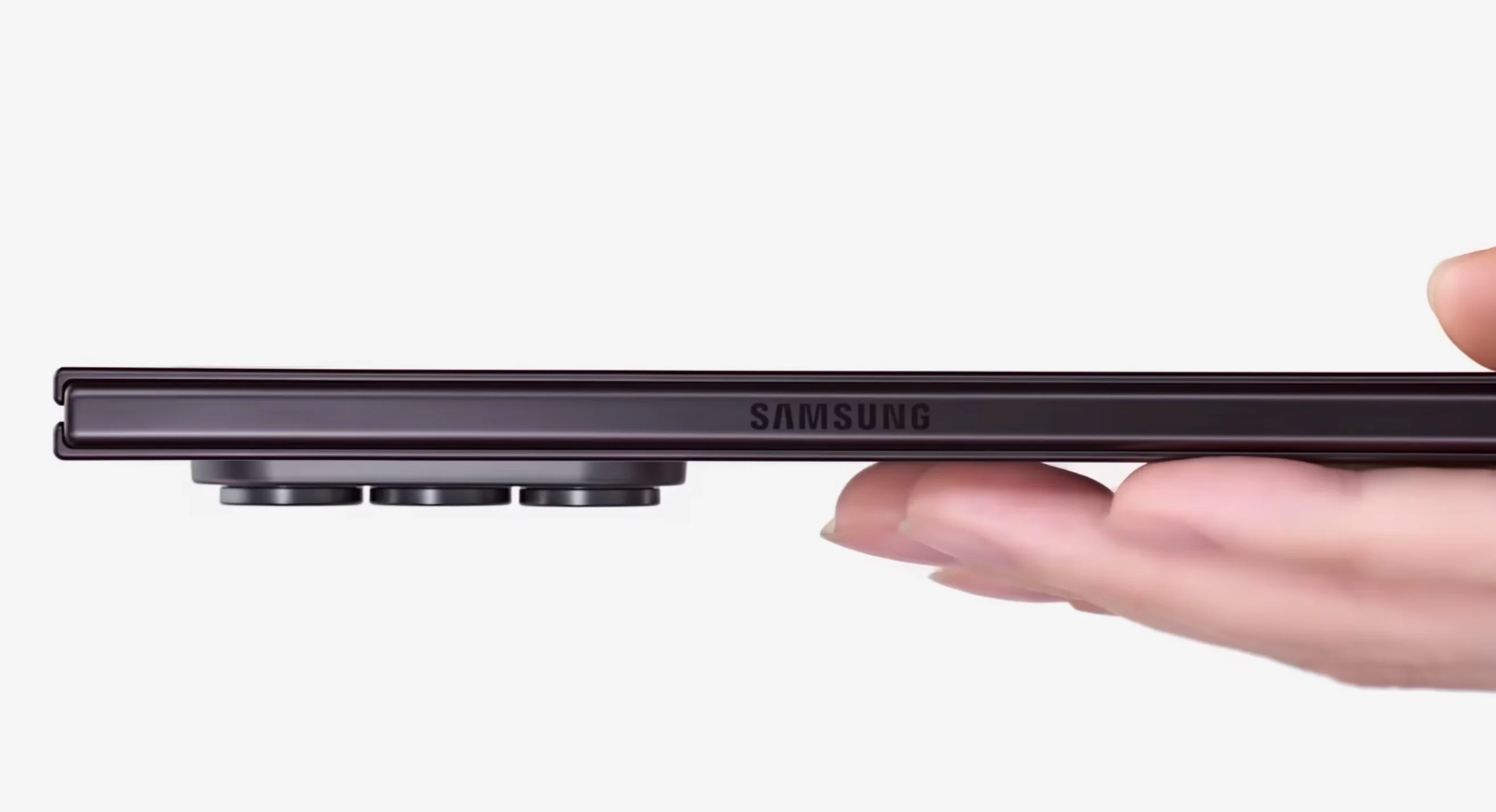
The thickness figures are the design headline. Unfolded, it measures 4.1 millimeters, one tenth less than the previous generation, and folded it comes in at 8.9. Its 215 grams put it 14 above the Fold 8, which makes sense: it has more screen, one extra camera and a larger battery.
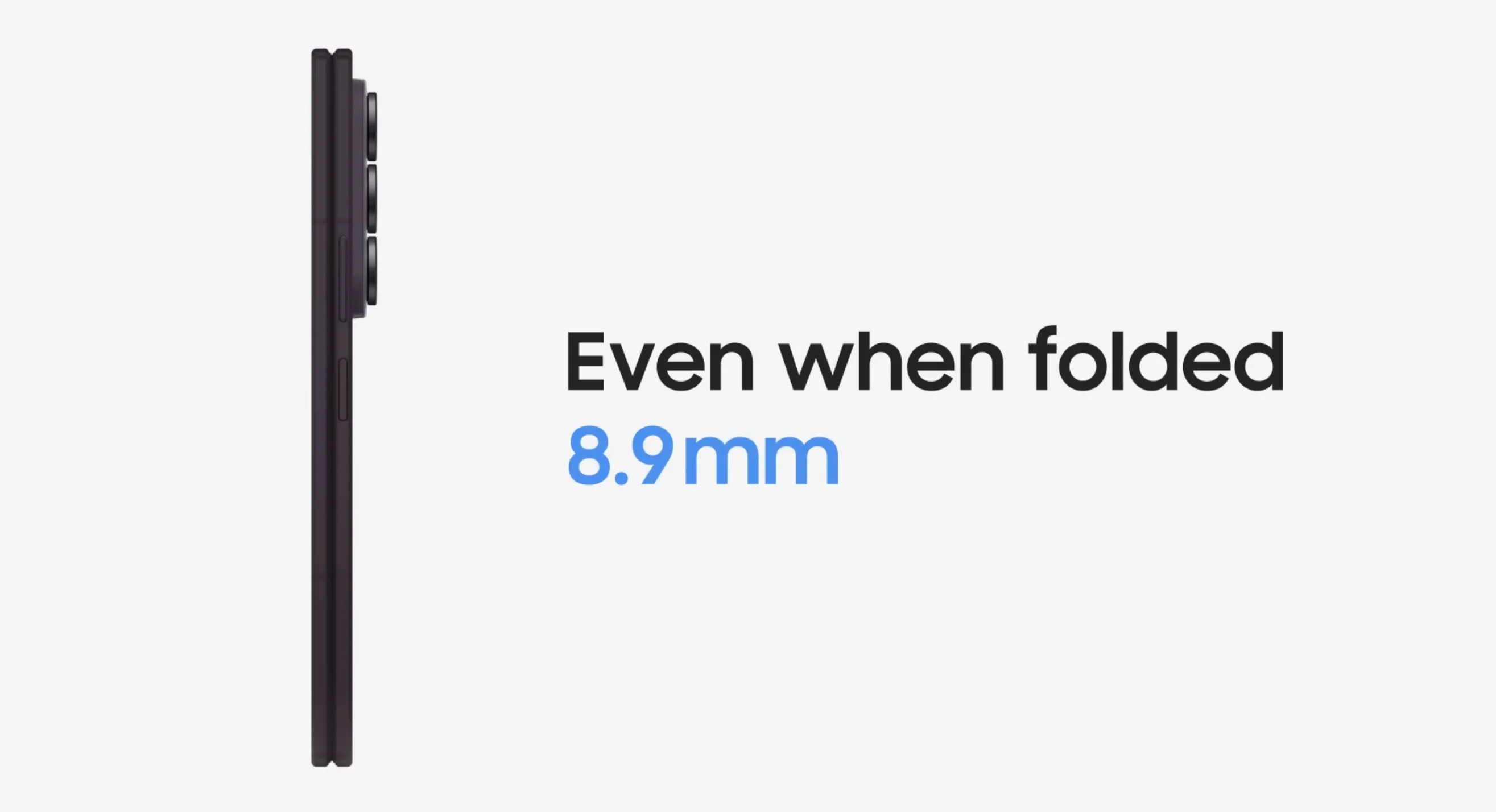
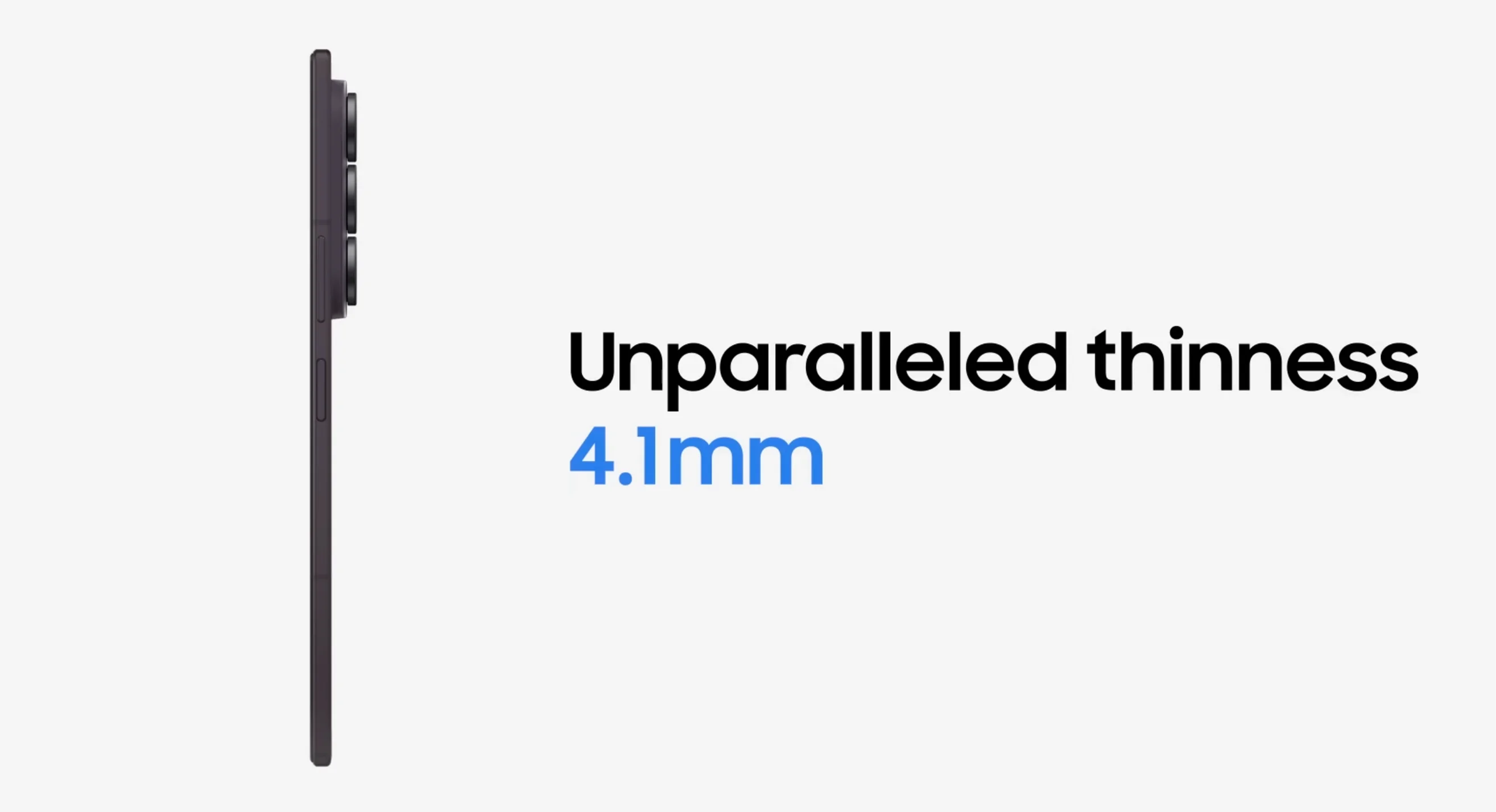
That tenth of a millimeter may look like a marketing detail until you put it next to the rest of the spec sheet: the device got thinner while adding battery capacity and keeping three rear cameras. That is where the number stops being a brochure figure and starts explaining the rest of the product’s technical decisions.
Flex Titanium: how everything fits inside
The structural answer is called Flex Titanium, and it debuts in all three 2026 foldables. It combines a titanium-alloy film with a reinforced plate made of the same material beneath the panel to better support the screen, absorb pressure and impacts, and reduce the visibility of the crease with use.
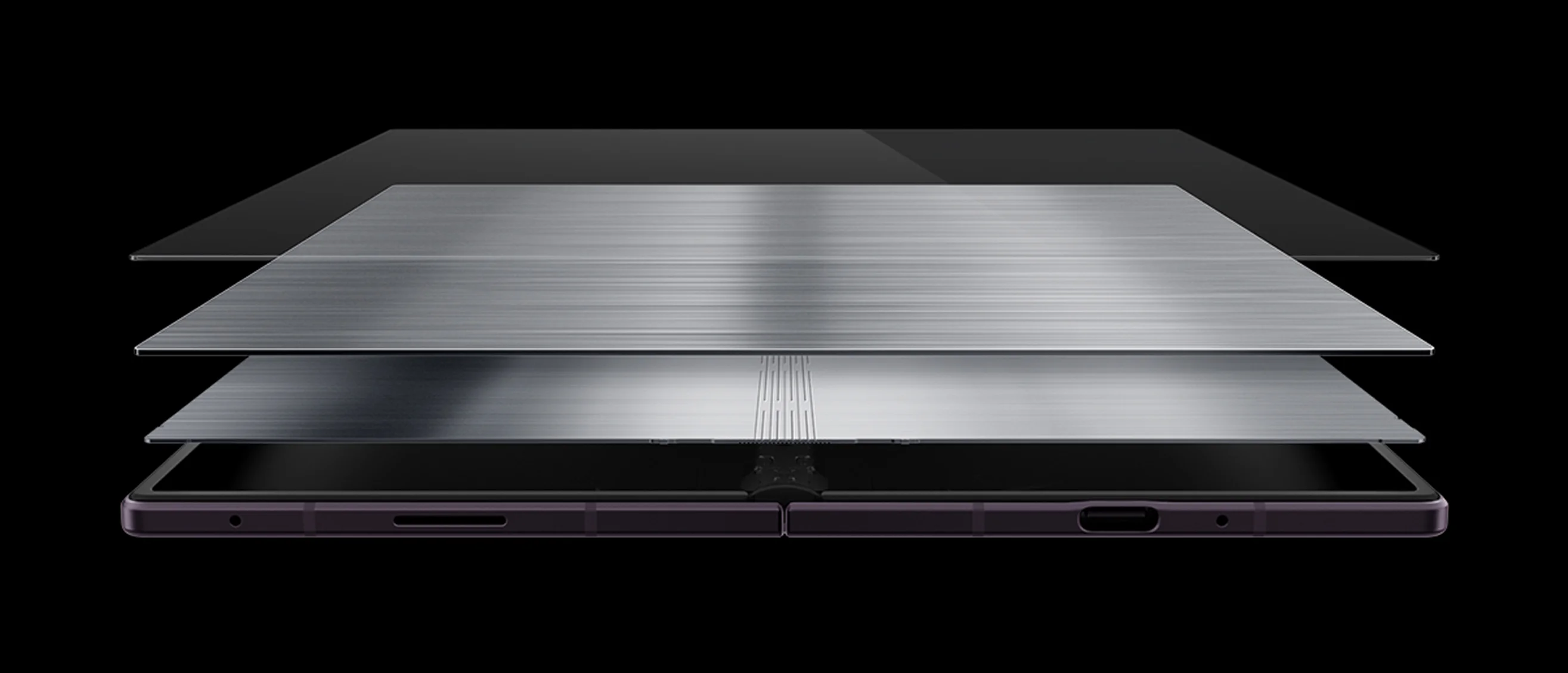
The concrete contribution is not just the claimed durability, but that a more rigid structure allows Samsung to cut thickness without leaving the panel unsupported. That is the condition that enables the 4.1 millimeters. For real-world longevity, where the reinforcement is placed matters: the crease area is the one that accumulates fatigue after thousands of opening cycles, and that is exactly where the plate sits. The promise sounds reasonable on paper, and only sustained use will confirm it.
Two screens: 6.5 and 8 inches
The outer screen measures 6.5 inches, while the main one reaches 8 inches, the largest Samsung has ever put in a foldable. The inner panel is Dynamic AMOLED 2X with 2K resolution, 120 Hz, an anti-reflective finish and a less pronounced central crease than in previous generations.
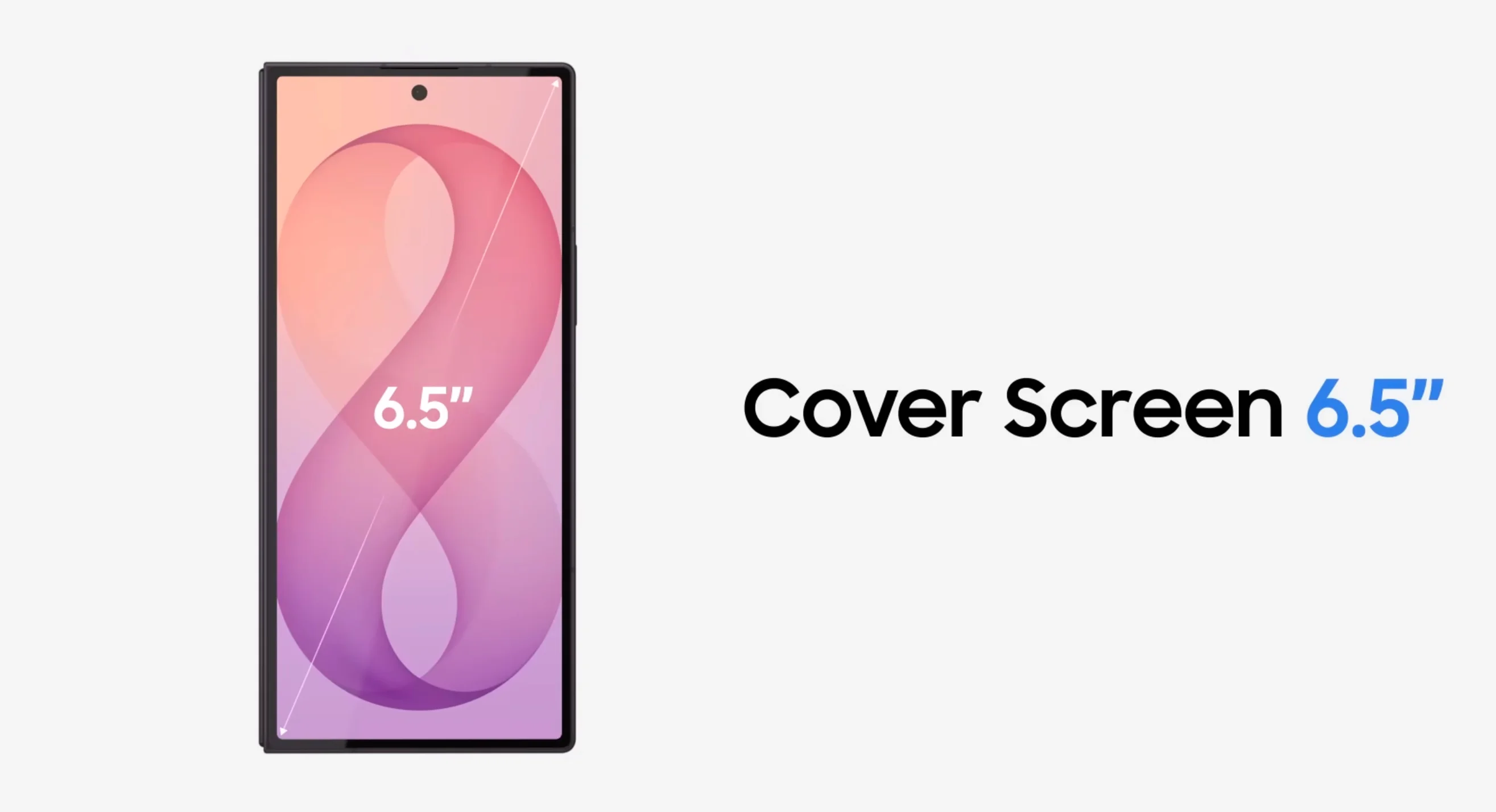
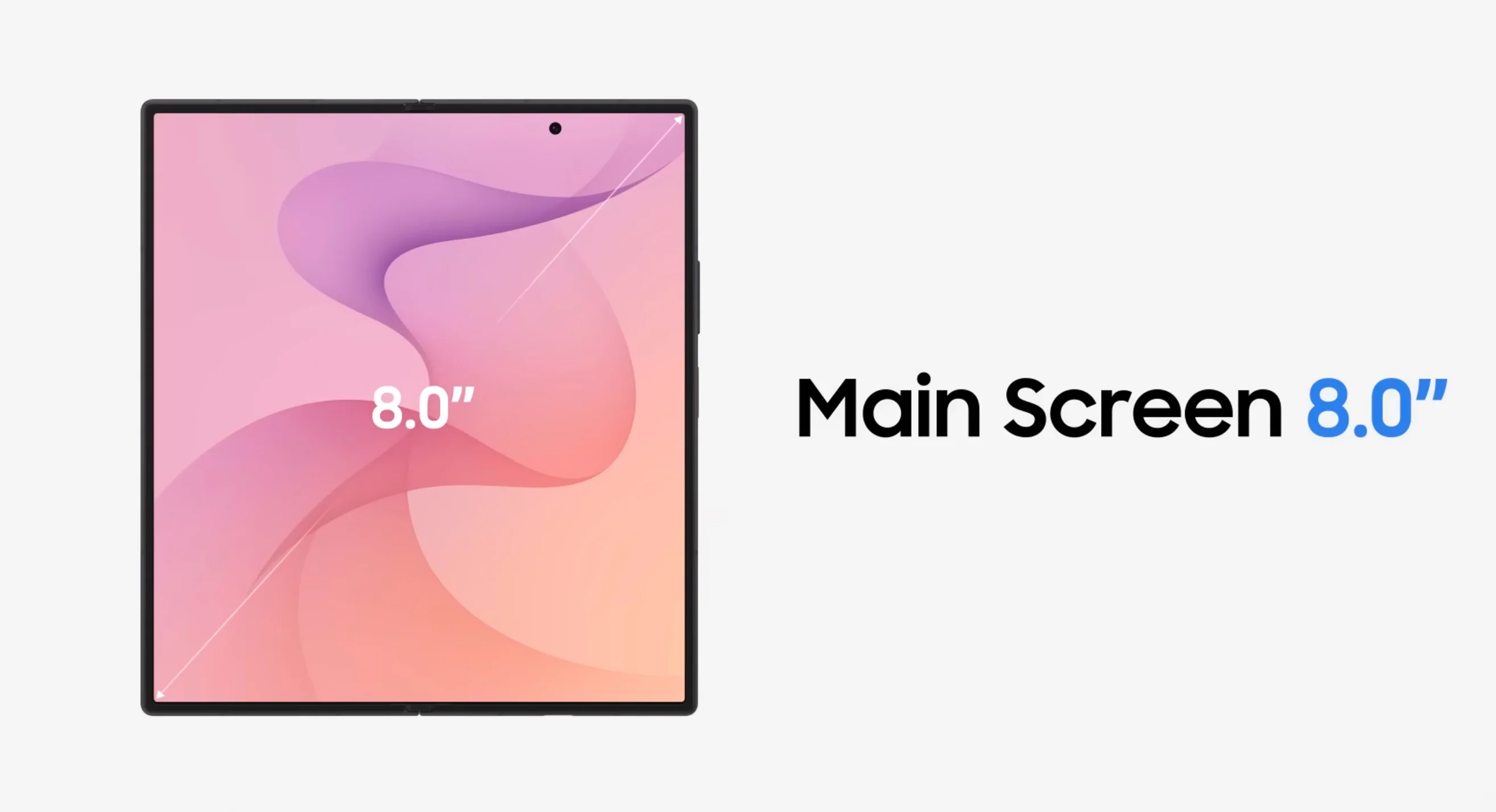
The difference in approach compared with the Fold 8 is clear here. That model is aimed at content consumption with squarer proportions; this one focuses on workspace, with real room for two side-by-side windows without either becoming unusable.
Cameras: 200 MP and the family’s only telephoto lens
The rear module has three sensors: a 200 MP wide-angle camera with optical stabilization, a 50 MP ultra-wide and a 10 MP telephoto with 3x optical zoom. It is the only Samsung foldable with a dedicated zoom lens, and the clearest difference versus its siblings, which handle zoom by cropping the main sensor.
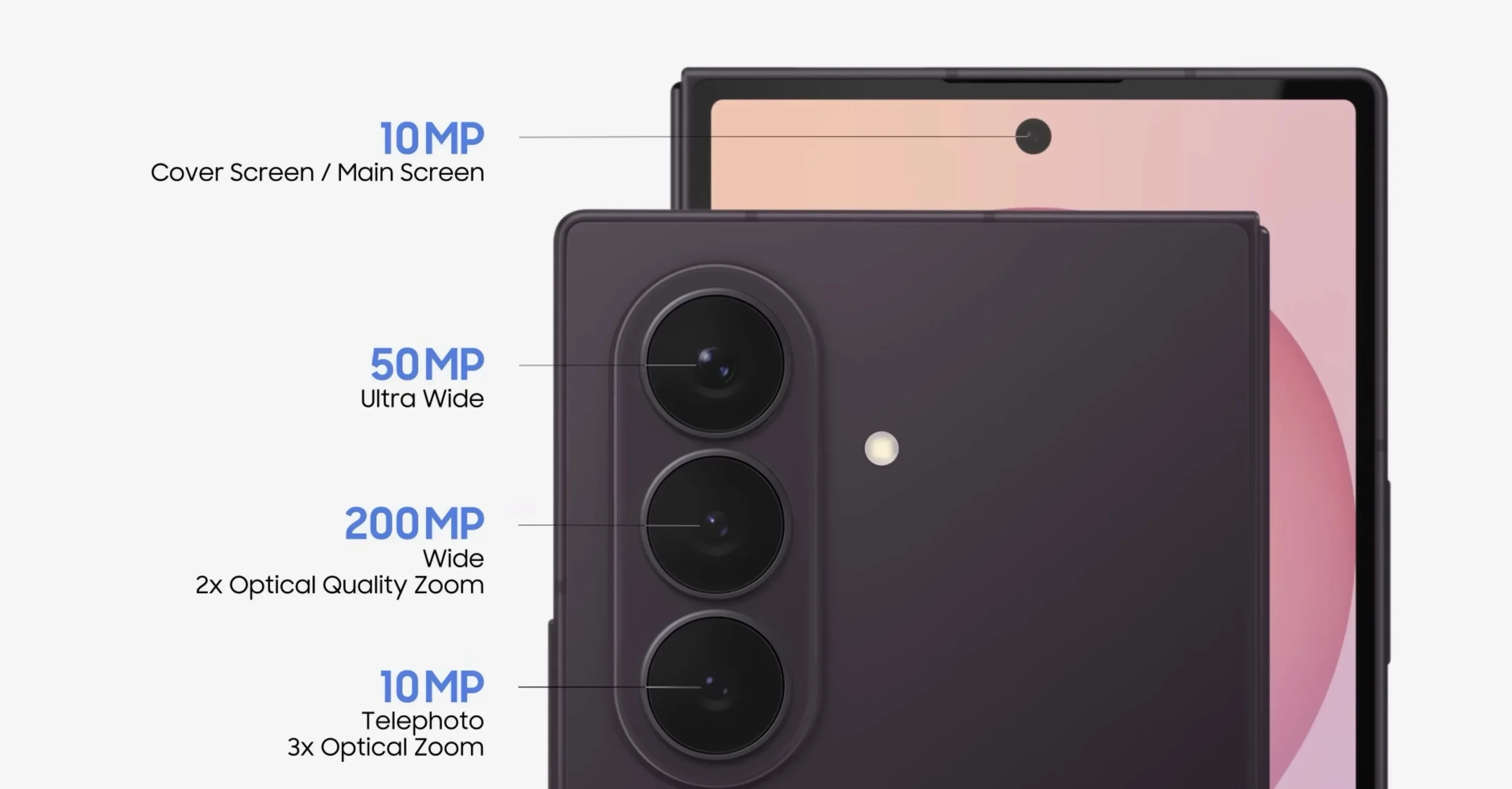
The 200 MP sensor adds HDR at its own maximum resolution and 2x optical-quality zoom by cropping, which coexists with the telephoto’s true 3x optical zoom. There are two 10 MP front cameras, one per screen, and the one on the main display opens to 100 degrees for group selfies.
On video, there is one detail Spanish-language coverage has barely mentioned: it records in 8K with the new APV codec and supports Cine LUT profiles, which let you apply cinema-style color and tone controls directly from the phone. It is a feature designed for people who edit afterward, and no other foldable from the brand has it.
Silicon-carbon battery: 5,000 mAh
Here is the generation’s most important technical change, and it is worth stating clearly because much of the coverage attributed it incorrectly. All three foldables debut silicon-carbon batteries, Samsung’s first phones with that chemistry. It is not exclusive to the Ultra.
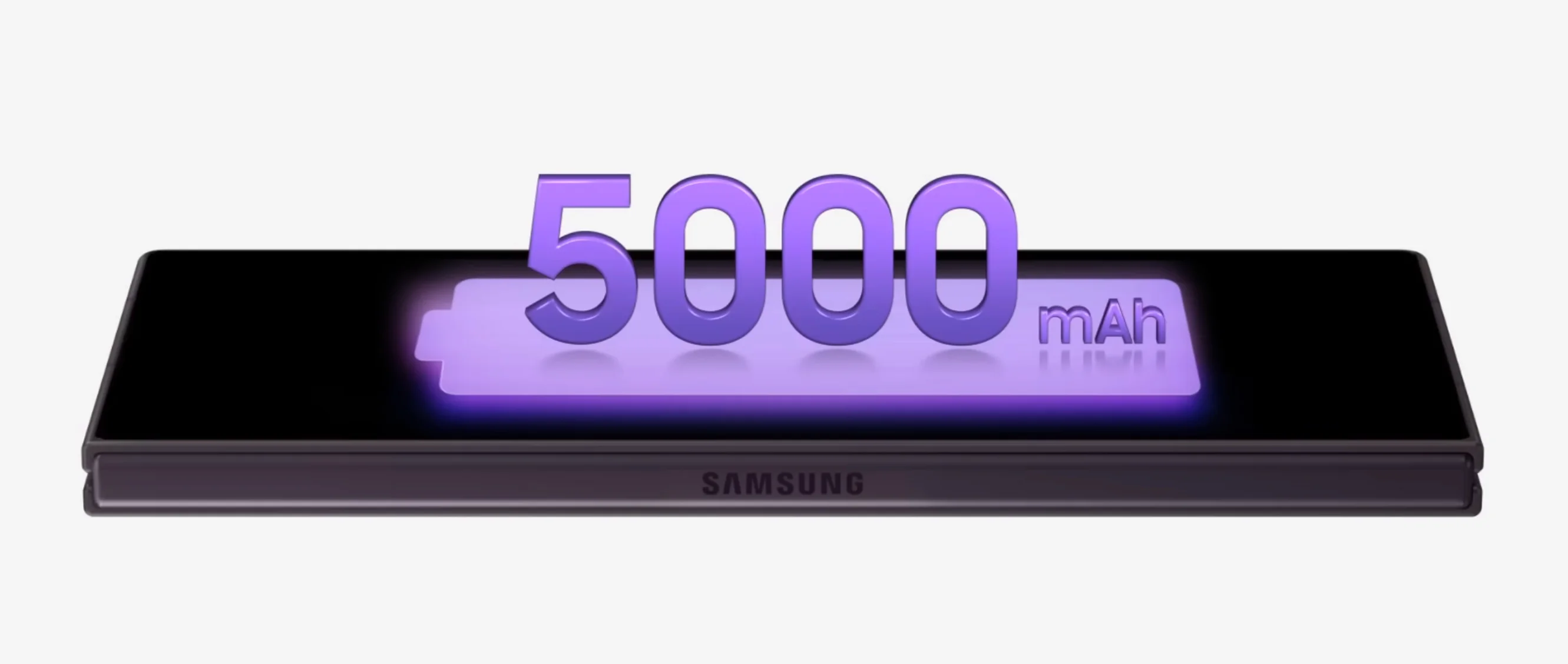
What does distinguish each model is how Samsung used that density gain. The silicon anode stores more ions than graphite in the same volume, so the manufacturer can choose between increasing capacity or slimming down the chassis. In the two Fold models, it chose capacity: the Ultra goes from the Fold 7’s 4,400 mAh to 5,000, with up to 27 hours of claimed video playback. In the Galaxy Z Flip 8, it chose the other route, kept the 4,300 mAh and used the margin to make the device thinner.
Wired charging is 45 W and debuts a dual-path architecture that distributes power more efficiently throughout the system. The charger is not included in the box.
Snapdragon 8 Elite Gen 5, graphite and Gemini Nano 4
The processor is the Snapdragon 8 Elite Gen 5 for Galaxy, the same one used in the Fold 8 but with a slightly higher frequency. It is paired with up to 16 GB of RAM and 256 GB, 512 GB or 1 TB configurations, plus a graphite dissipation system to sustain performance in a body where there is not a millimeter to spare for cooling.
On the software side, the entire family integrates Gemini Nano 4, processing text, voice and images on the device itself, with support for more than 140 languages and the ability to automate actions in more than 40 compatible apps. The system is Android 17 with One UI 9.
Colors, price and availability
Samsung lists three main finishes—Midnight Violet, Graphite and White—plus online store-exclusive colors depending on the market. The certification is IP48: it withstands immersion, but dust protection is partial, as expected in a device with moving parts.
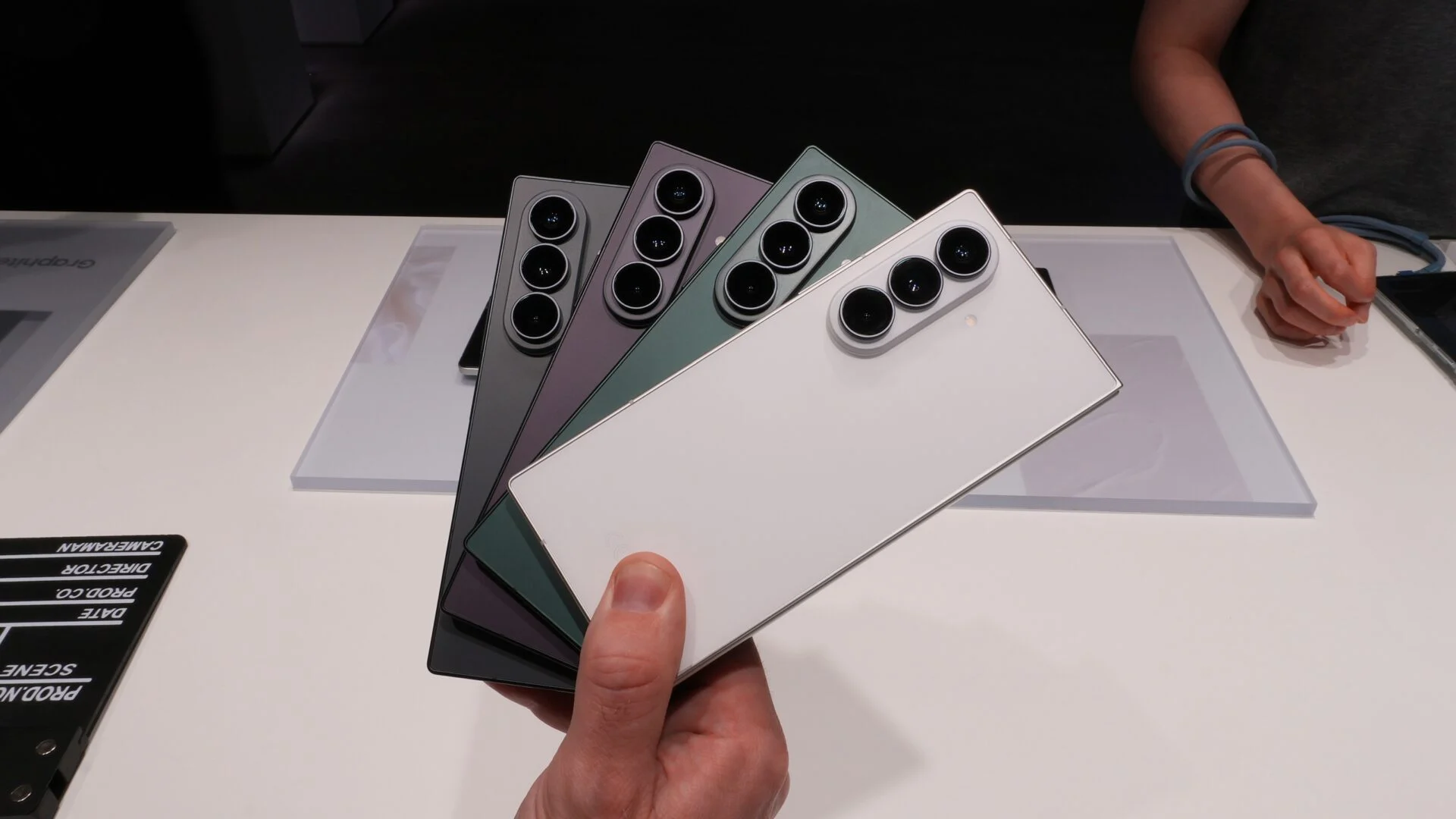
The launch price is $2,099, $200 above the Fold 8 and the highest of the entire generation. Pre-orders opened on July 22, and general sales begin on August 7 in the first markets. It is worth thinking about protection alongside the purchase: a 4.1-millimeter, $2,099 device exposes quite a lot of glass surface.
Conclusion
The Fold 8 Ultra is the product where Samsung put everything it knows how to do: the largest screen, the only camera with a telephoto lens in its foldable catalog, the thinnest body and the largest battery, with a chemistry the brand had been postponing while Chinese competitors had been using it for years. As an engineering showcase, it delivers.
For anyone with a Fold 7 who uses the device for work, the upgrade is tangible: more screen, more battery and a camera that finally does not need to apologize. For anyone who photographs at a distance, it is simply the brand’s only foldable that works. And for those who want a comfortable foldable rather than the maximum one, the Galaxy Z Fold 8 costs $200 less and weighs 14 grams less, with a different proposition. What remains to be seen is whether silicon-carbon sustains its capacity after two years of charge cycles, which is where this chemistry still has to prove that it ages well.
Frequently asked questions
How much does the Galaxy Z Fold 8 Ultra cost, and when does it go on sale?
The official launch price is $2,099. Pre-orders began on July 22, 2026, the same day as Galaxy Unpacked, and general availability starts on August 7 in the first markets.
What is a silicon-carbon battery, and what does the Fold 8 Ultra gain from it?
It is a battery whose anode uses silicon instead of graphite, allowing it to store more ions in the same volume. In practice, that means choosing between more capacity or less thickness. In the Fold 8 Ultra, Samsung chose capacity: it went from the Fold 7’s 4,400 mAh to 5,000 mAh without making the device thicker.
Does the Galaxy Z Fold 8 Ultra have a telephoto lens?
Yes, and it is the only Samsung foldable that has one. It is a 10 MP sensor with 3x optical zoom, accompanied by a 200 MP wide-angle and a 50 MP ultra-wide. The Galaxy Z Fold 8 and Flip 8 handle zoom by cropping the main sensor.
Is it worth upgrading from a Galaxy Z Fold 7 to the Fold 8 Ultra?
It depends on your use. The concrete changes are 600 mAh more battery, one tenth of a millimeter less thickness, a 200 MP main camera and 8K recording with color profiles. If the Fold 7 is used mostly for reading and replying to messages, the upgrade is not urgent; if it is used for photography or intensive work on a large screen, it is.
Galaxy Z Fold 8 Ultra
Samsung’s flagship foldable for 2026 and the first with the Ultra name. It adds an 8-inch main display, a 200 MP camera with telephoto and a 5,000 mAh silicon-carbon battery in a 4.1-millimeter body.
Pros
- It is the thinnest foldable Samsung has ever made: 4.1 millimeters unfolded.
- The brand’s only foldable with a dedicated telephoto lens and 3x optical zoom.
- The 200 MP main camera has no equivalent in any other Galaxy foldable.
- 5,000 mAh silicon-carbon battery, the largest in the Z series.
- Records in 8K with the APV codec and supports Cine LUT color profiles.
Cons
- It is the most expensive Galaxy of the generation, starting at $2,099.
- It weighs 215 grams, 14 more than the Galaxy Z Fold 8.
- The 45 W charger is not included in the box.
- The IP48 rating protects against dust only partially.
- The name is confusing: it is the successor to the Fold 7, not a version of the Fold 8.
Author
Alexis PaezReport based on official announcements and verified public sources at the time of publishing.
Comments
Share article
You might also like

Galaxy Z Fold 8 vs Fold 8 Ultra: which one makes sense and why the name is confusing
Form factor, cameras, battery, and price: all the differences between the Galaxy Z Fold 8 and the Fold 8 Ultra, and which one makes sense depending on how you use your phone.

Galaxy Z Fold 8: the world's lightest foldable debuts a new form factor and drops the telephoto camera
Samsung introduced the Galaxy Z Fold 8 with a wide form factor, 201 grams, and a 10:16 cover display. Price, full specs, and why it does not replace the Fold 7.

Samsung Galaxy Unpacked July 2026: the Fold lineup splits in two, the first foldable Ultra, and glasses with Gemini
Fold 8 in a passport-style format, the first foldable Ultra, watches with the same chip, and glasses with Gemini: everything from Galaxy Unpacked July 2026, prices, and dates.

Galaxy Z Flip 8: Samsung’s thinnest foldable improves on the outside and repeats on the inside
Samsung unveiled the Galaxy Z Flip 8: 6.1 mm, 180 grams, and Flex Titanium. Price, full spec sheet, and what really changes compared with the Flip 7.

Recent articles
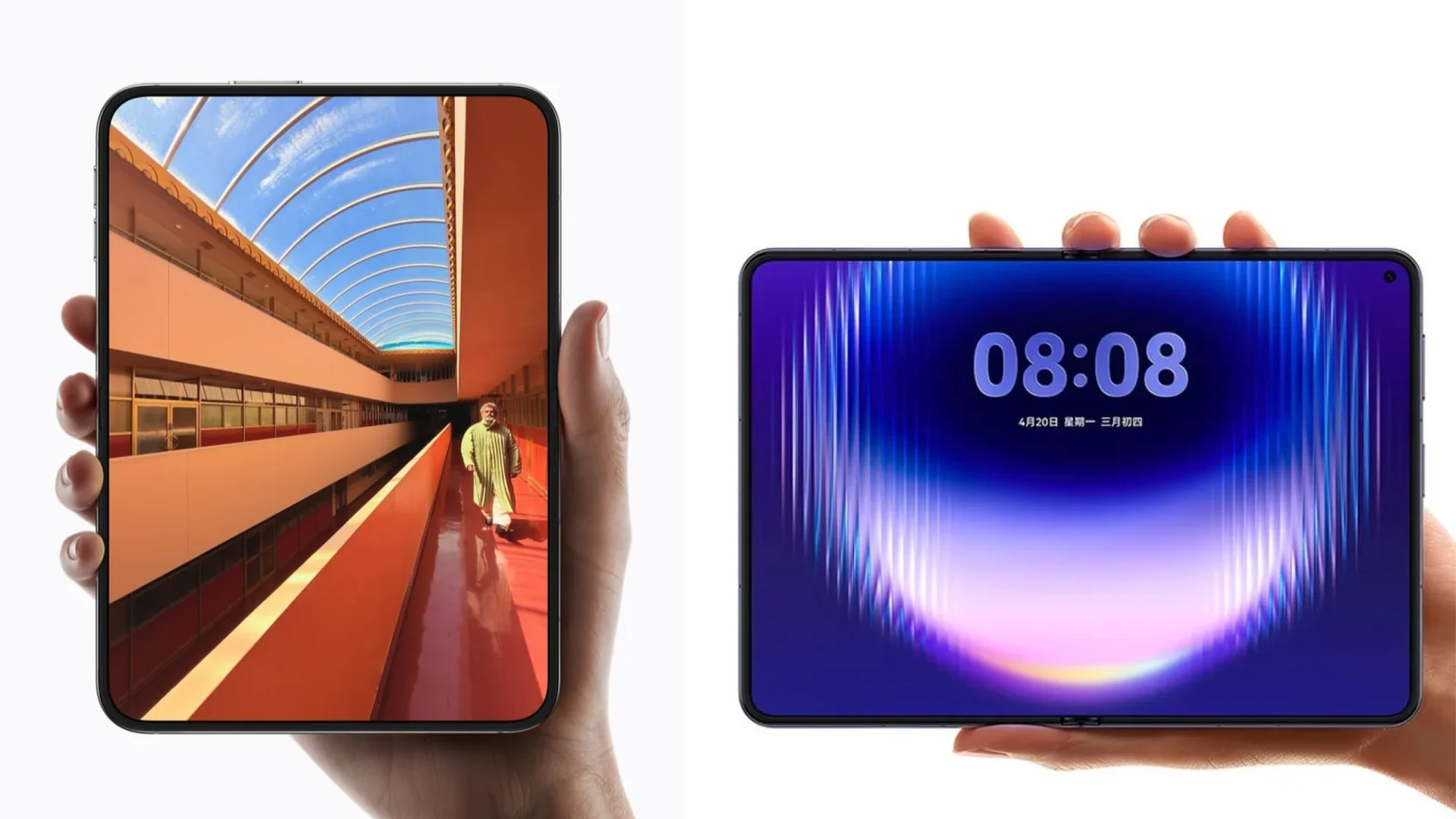
Huawei Pura X Max vs iPhone Duo: what changes beyond the foldable screen
Huawei Pura X Max vs iPhone Duo: size, multitasking, cameras, styluses, and charging. What changes in use and which one better fits your priorities.