Galaxy Z Flip 8: Samsung’s thinnest foldable improves on the outside and repeats on the inside

Index
The Galaxy Z Flip 8 was the third foldable Samsung unveiled at Galaxy Unpacked on July 22 in London, and the only one of the three that does not change its formula. It is the clamshell model in the lineup: a phone that folds in half to fit into any pocket, with an external display that handles more and more tasks without having to open it.
In this generation it reached 6.1 millimeters thick when unfolded and 180 grams, the best numbers in the series’ history. What did not change matters just as much: the battery, the two display diagonals, and the processor strategy are carried over from the previous model. It costs $1,199 and goes on sale on August 7.
What the Galaxy Z Flip 8 is
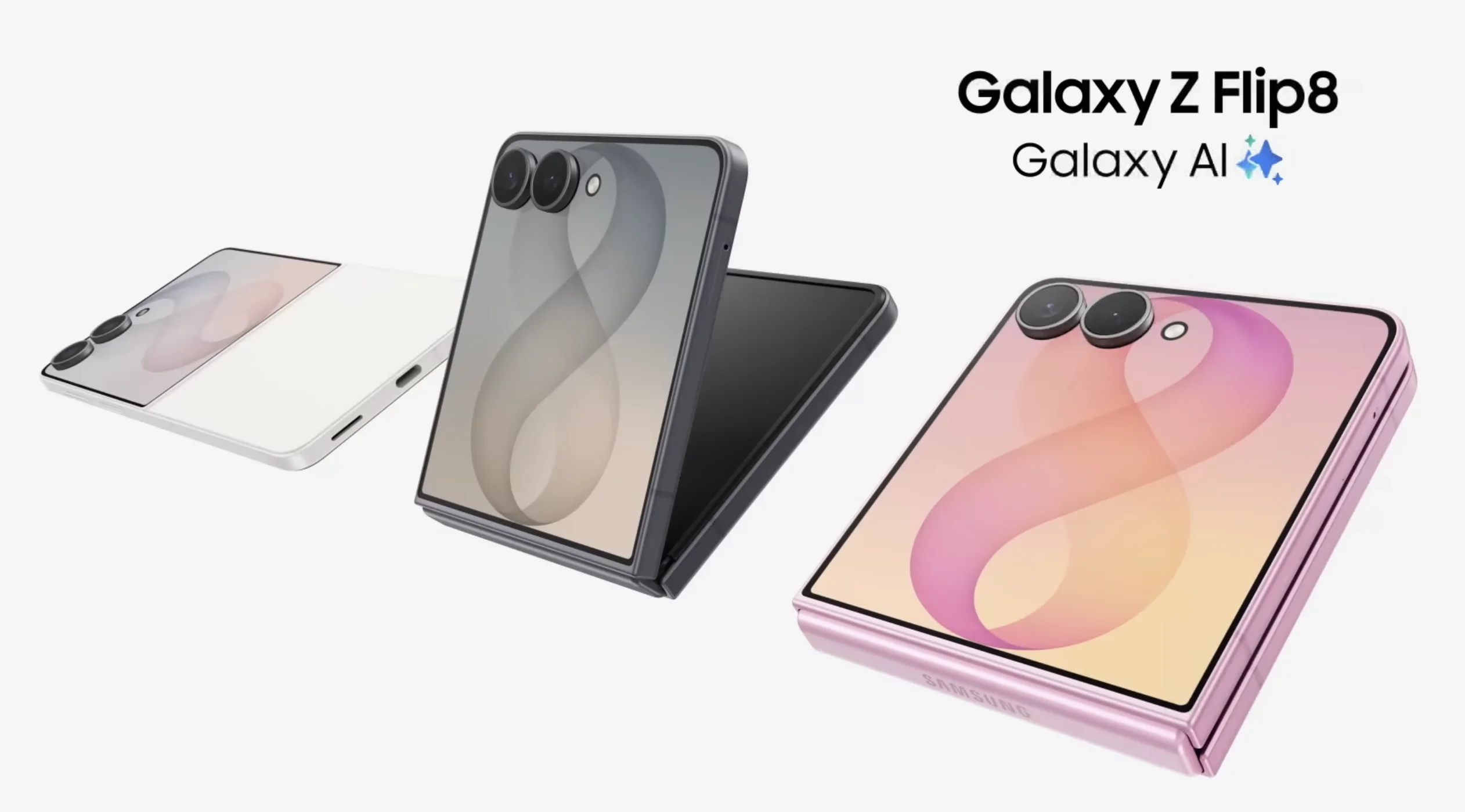
Samsung split its foldable lineup into three. The Fold 8 Ultra sits at the top of the range, the Fold 8 introduces a wider and shorter passport-style format, and the Flip 8 is the smallest and cheapest: the one that folds in on itself and targets users who want a pocketable phone, not a tablet.
It is also the only one that did not change formats in 2026. Compared with the Flip 7, it keeps the two displays with the same diagonals and focuses its upgrades on the chassis, the hinge, and the software for the external display.
Design: 6.1 mm, 180 grams, and Flex Titanium
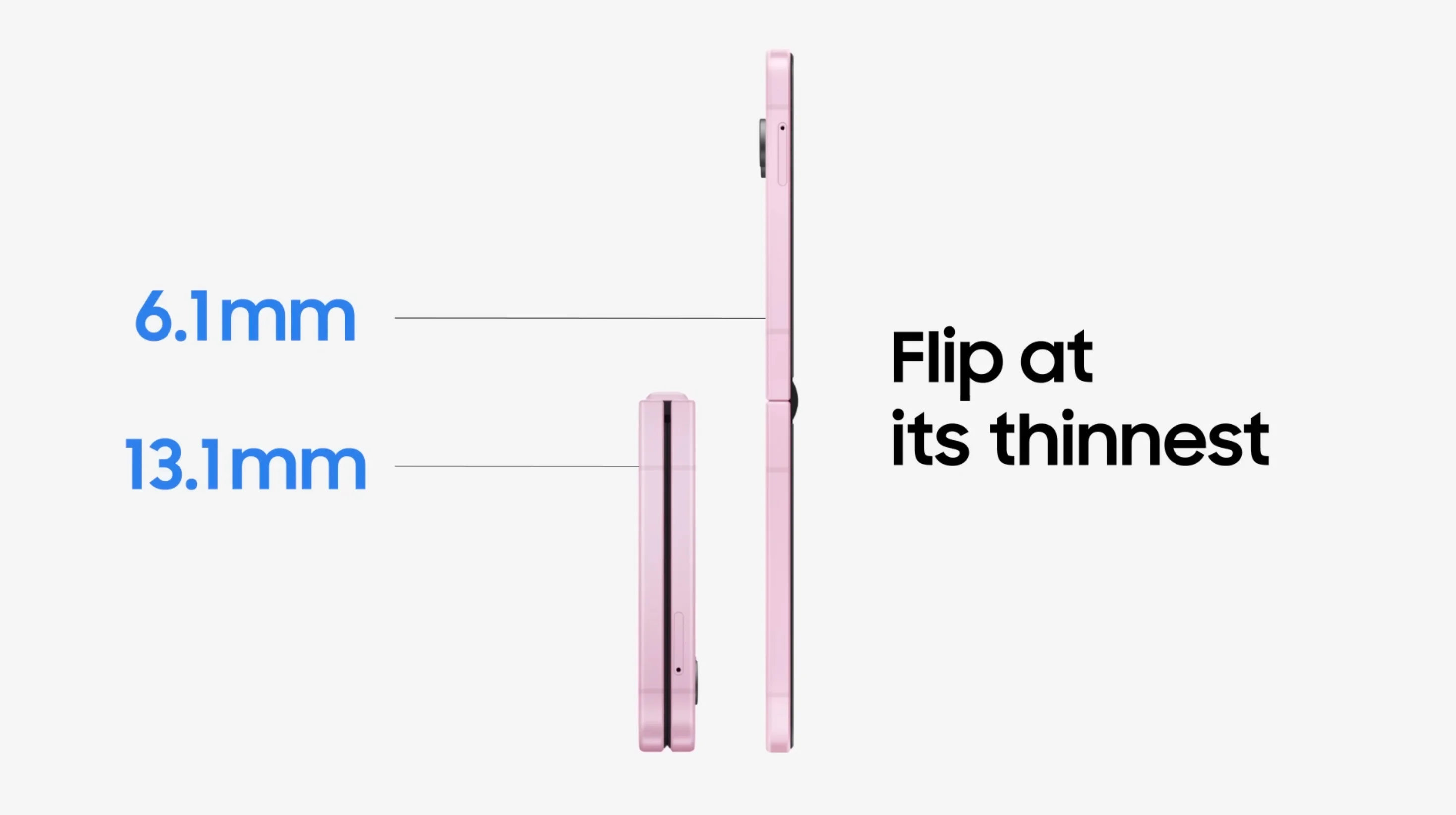
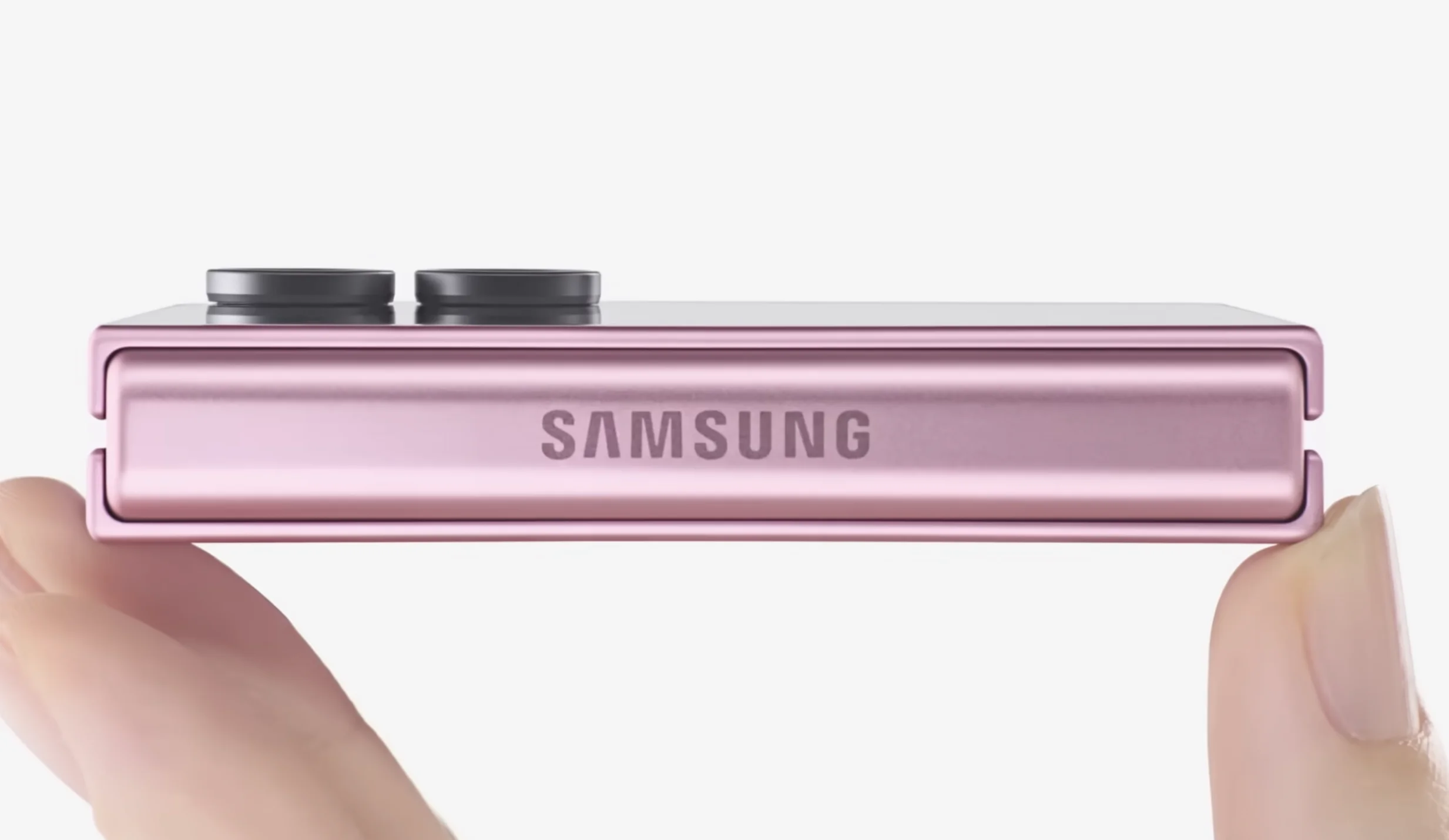
Unfolded, it measures 6.1 millimeters; folded, 13.1. It weighs 180 grams. The Flip 7 measured 6.5 millimeters and 188 grams, so the generational jump is 0.4 millimeters and 8 grams: modest on the spec sheet, noticeable in the pocket.
The structural change that makes it possible is called Flex Titanium, and it debuts across all three foldables in this generation. It combines a titanium alloy film with a reinforced plate made of the same material beneath the panel to better support the display, absorb pressure and impacts, and reduce crease visibility over time. Samsung also rebalanced the magnets, the hinge mechanism, and the panel tension so the device opens with less effort.
The interesting part is not the thickness, but where the gains were made. The titanium plate spreads the load right over the crease area, which is exactly where foldable panels start to give after thousands of opening cycles. It is a factory promise that can only be judged after years of use, but the engineering targets the right weak point.
FlexWindow: the external display does more
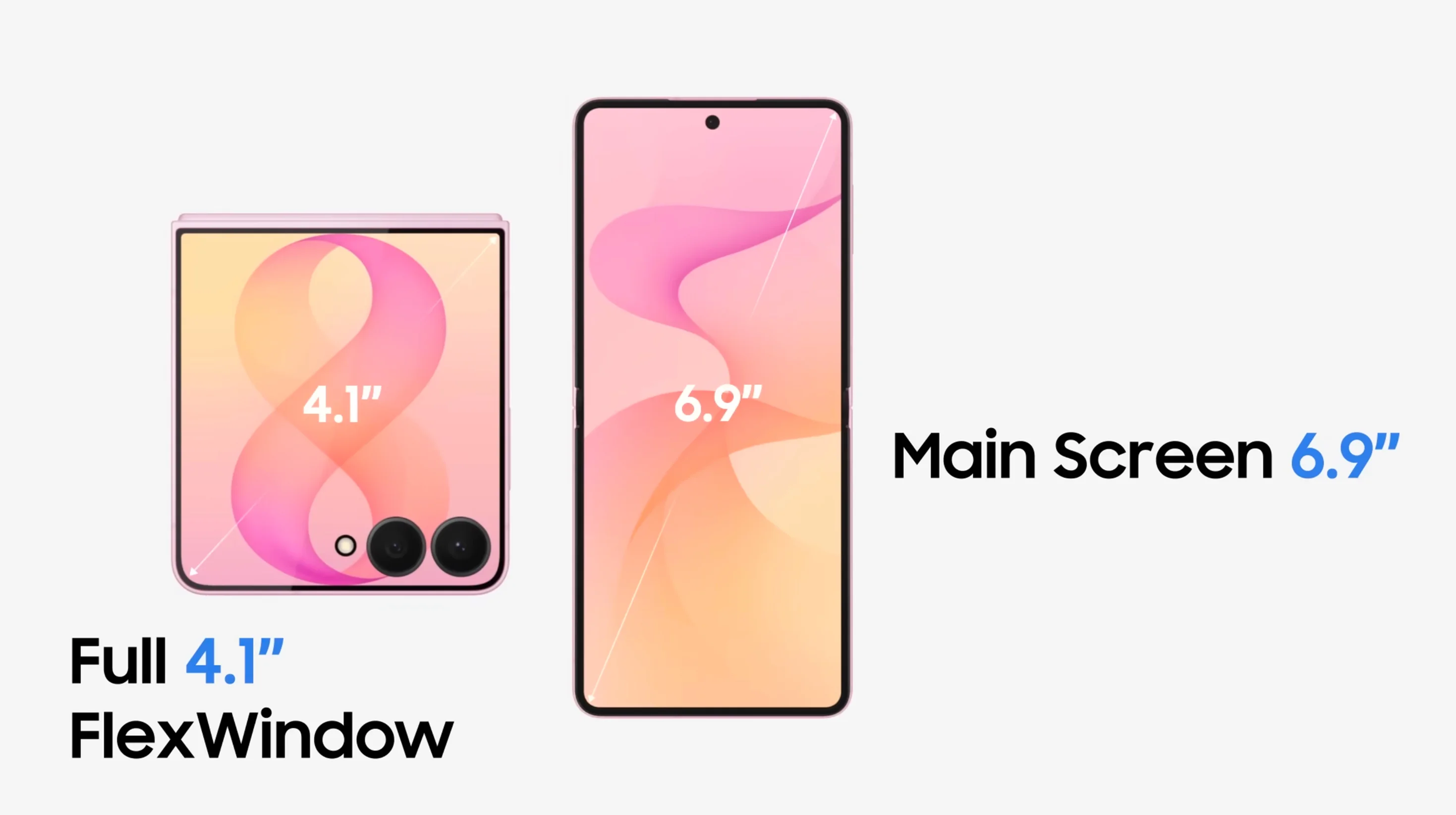
The FlexWindow remains at 4.1 inches and 120 Hz. What changed is what you can do there without opening the device: it now runs full apps, so you can browse the gallery, reply to messages, or finish short tasks with the phone folded.
On top of that, Now Brief builds personalized cards with the weather, the day’s schedule, important notifications, and data such as quotes or stocks. The cover display has stopped being a notification dashboard and has become the main interface for quick interactions, which is why most people choose a Flip in the first place.
Cameras: 50 MP and no telephoto lens
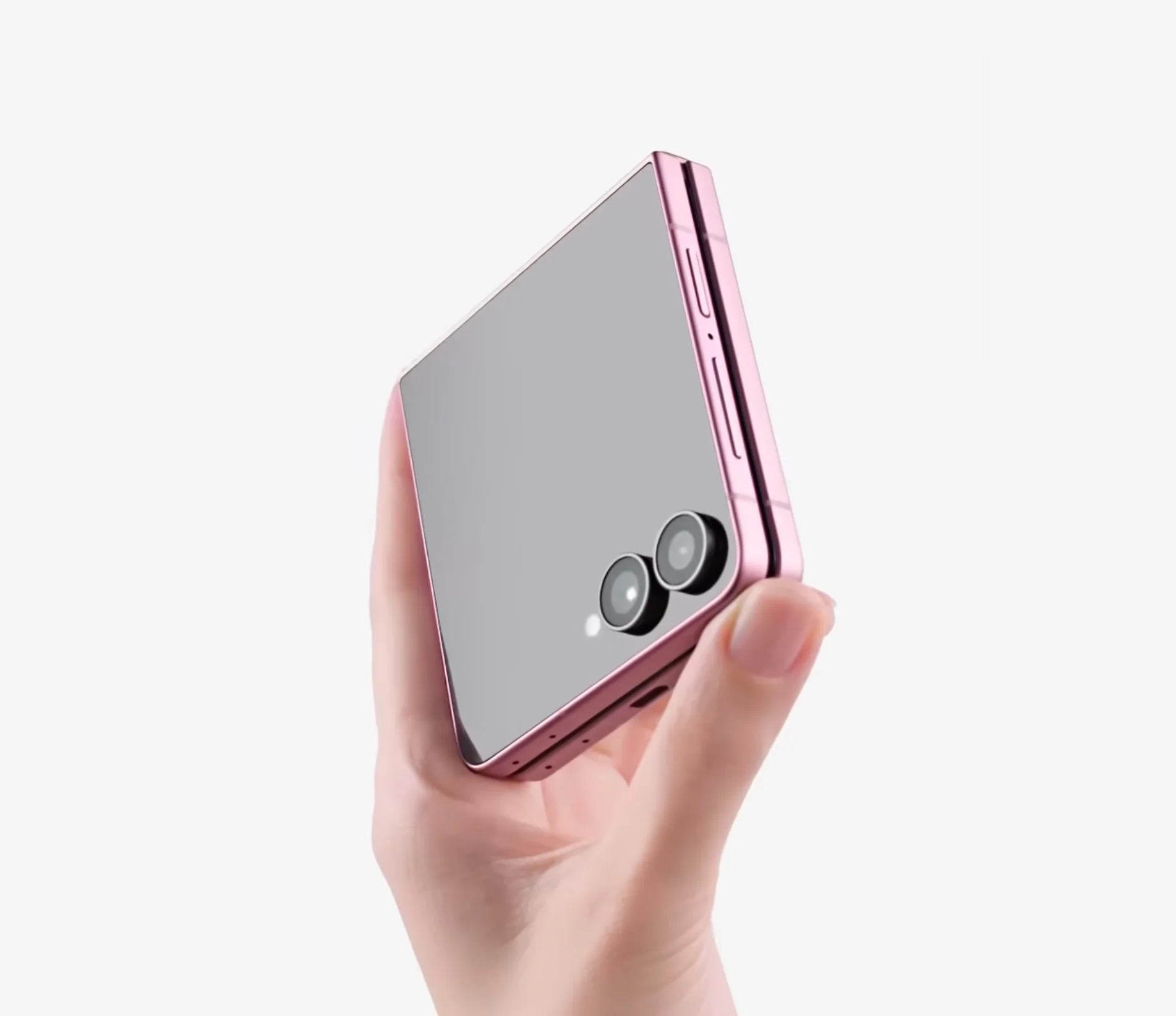
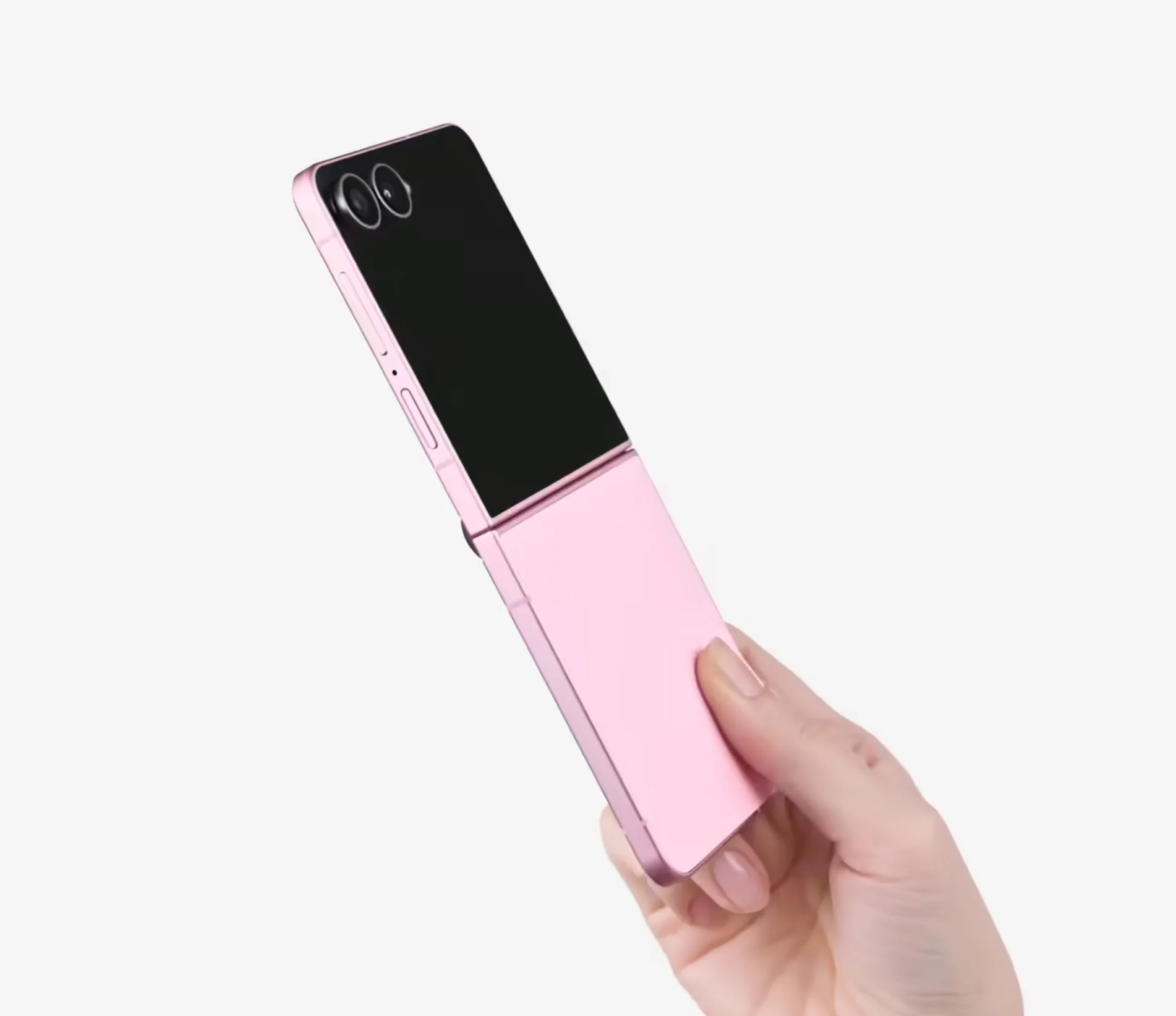
The rear module repeats the same structure: a 50 MP main camera with optical stabilization and autofocus, plus a 12 MP ultrawide. The internal camera, on the main display, is 10 MP. The large sensor incorporates this generation’s ProVisual processing engine, which Samsung links to better portraits and more natural skin tones.
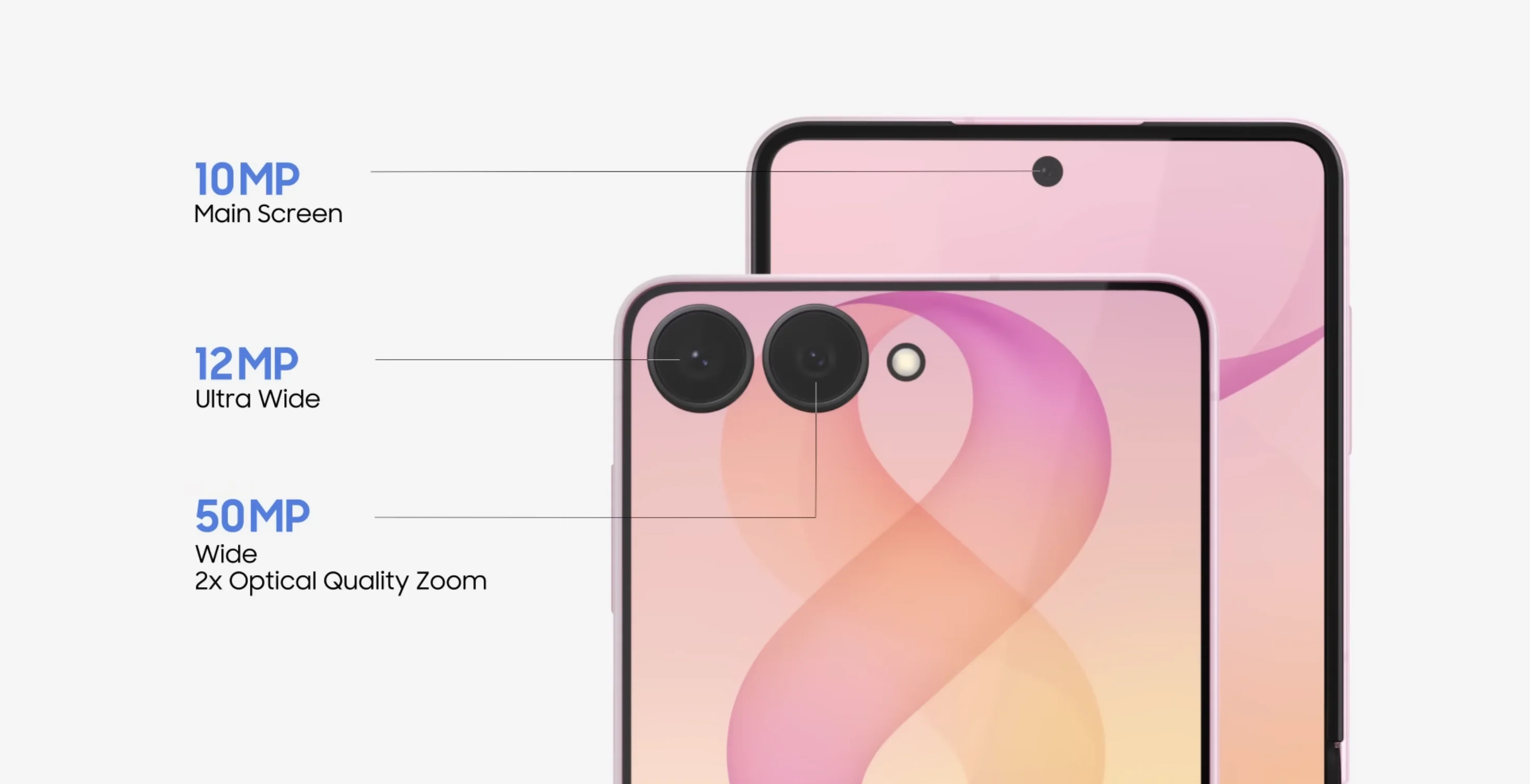
One line in the official material is worth clarifying: the "2x Optical Quality Zoom" is not a telephoto lens. The Flip 8 does not have a third camera, and that 2x comes from cropping into the 50-megapixel sensor, a technique that works well with plenty of light and loses detail when light is scarce.
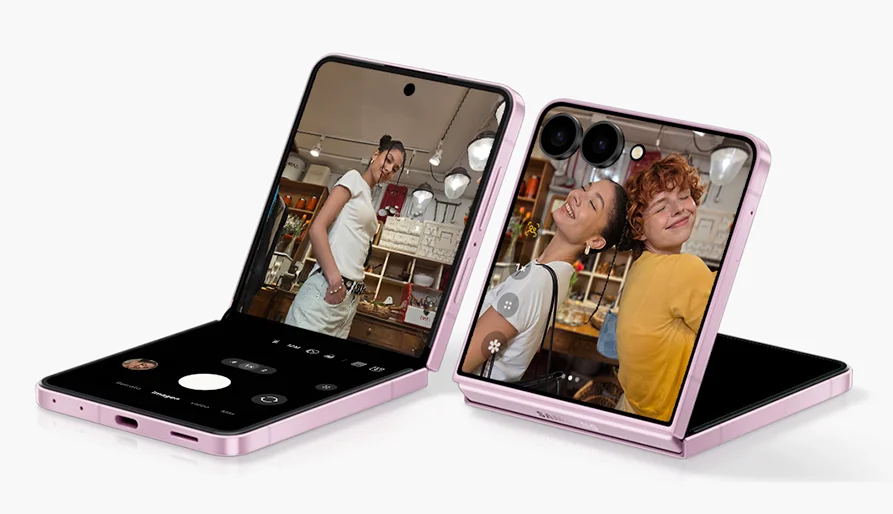
In video, the new features are in stabilization and ergonomics. Super Steady adds horizontal lock for handheld recording from the cover display, camcorder mode includes a zoom slider designed for one-handed use, and Dual Recording captures both the person filming and what they are filming at the same time, with previews on both displays. The ceiling is UHD at 60 fps: there is no 8K here, something the Fold 8 Ultra does offer.
Exynos 2600 and battery: what did not change
The Flip 8 uses a 2-nanometer, ten-core Exynos 2600, with 12 GB of RAM and 256 or 512 GB of storage. It is the only one of the three foldables without Snapdragon: both Fold models use the Snapdragon 8 Elite Gen 5 for Galaxy, and the Flip series has maintained that separation since 2025. Samsung does not name it on its product page either, where it refers to a "custom processor" and highlights 41% higher NPU performance.
The battery stays at a typical 4,300 mAh —4,174 mAh of rated capacity, according to the official spec sheet—with 25 W wired charging and about 55% in half an hour. It is the same number as the Flip 7, but for a different reason than it may seem: the Flip 8 also introduces a silicon-carbon battery, and Samsung used that density gain to slim the chassis from 6.5 to 6.1 millimeters instead of increasing capacity.
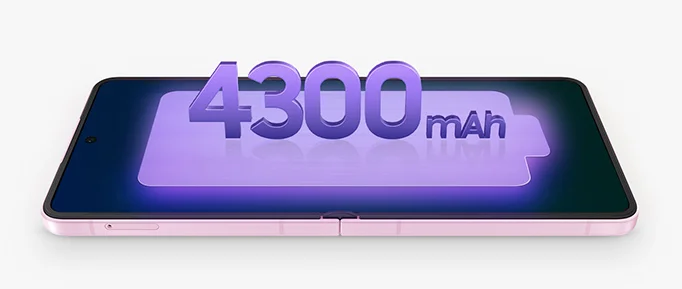
That detail explains why the promotional summary is worth reading carefully. Among the highlighted improvements are 300 mAh more battery and 0.7 inches more FlexWindow, figures that cannot refer to the jump from the Flip 7 because that model already had 4,300 mAh and a 4.1-inch external display. They are comparisons against an older generation, presented alongside the improvements that are actually year over year. This generation’s concrete display improvement is different: peak brightness rises from 2,600 to 3,000 nits.
Colors, price, and availability
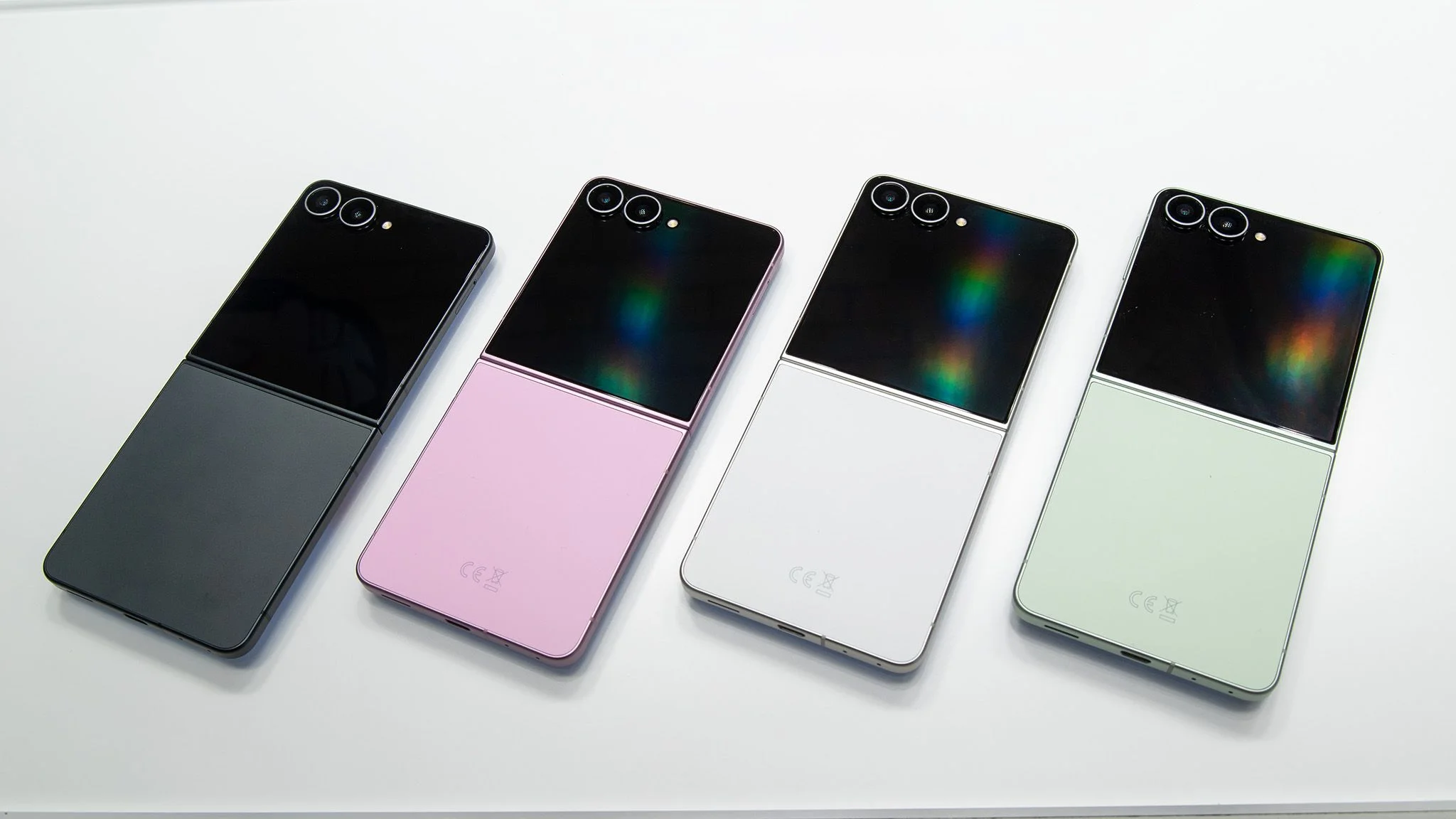
The Flip 8 comes in four finishes: black, pink, white, and green, all with the frame and hinge in matching tones. The system is Android 17 with One UI 9, and Samsung promises seven years of updates, a commitment that matters more on a foldable than on a conventional phone because it extends the useful life of a device with moving parts.
The launch price is $1,199 for the 256 GB configuration. Preorders opened on July 22, and general sales begin on August 7 in the first markets. It is the most accessible of the three foldables in this generation, $700 below the Fold 8 and $900 below the Fold 8 Ultra.
Conclusion
The Flip 8 is both a better product than its predecessor and a minor update. What Samsung improved —the chassis, hinge, display structure, and FlexWindow capabilities—is exactly what a clamshell needs to improve, because those are the variables that determine whether the format is comfortable to use and whether it survives three years of daily openings. What it left untouched was deliberate too: the displays, battery, and processor family stayed where they were.
For anyone with a Flip 7, the math does not work: 8 grams and a bit more brightness do not justify the upgrade. For anyone coming from a Flip 6 or earlier, the accumulated jump is real and noticeable in the hand. And for anyone entering the format for the first time, it remains the cheapest foldable and the easiest one to carry. The deeper question is whether Flex Titanium delivers on what it promises for the crease, and a spec sheet will not answer that: the second year of use will.
Frequently asked questions
How much does the Galaxy Z Flip 8 cost, and when does it go on sale?
The official launch price is $1,199 for the 256 GB version. Preorders began on July 22, 2026, the same day as Galaxy Unpacked, and general availability starts on August 7 in the first markets.
What is the difference between the Galaxy Z Flip 8 and the Flip 7?
The Flip 8 is 0.4 millimeters thinner and 8 grams lighter, debuts the Flex Titanium structure in the display and hinge, raises peak brightness from 2,600 to 3,000 nits, and adds full apps on the FlexWindow. The display diagonals, 4,300 mAh battery, and 25 W charging are the same.
What processor does the Galaxy Z Flip 8 have?
It has a 2-nanometer Exynos 2600 with 12 GB of RAM. It is the only foldable in this generation that does not use Snapdragon: both the Galaxy Z Fold 8 and the Fold 8 Ultra use the Snapdragon 8 Elite Gen 5 for Galaxy.
Does the Galaxy Z Flip 8 have a telephoto lens?
No. It has two rear cameras: a 50 MP main camera with optical stabilization and a 12 MP ultrawide. The 2x zoom Samsung advertises is obtained by cropping the 50-megapixel sensor, not with a dedicated lens.
Galaxy Z Flip 8
Samsung’s clamshell foldable for 2026. It is the thinnest and lightest in the series, with a Flex Titanium structure and a 4.1-inch external display that now runs full apps.
Pros
- It is the thinnest and lightest Flip Samsung has ever made: 6.1 mm and 180 grams.
- Flex Titanium reinforces panel support and makes the crease less visible.
- The FlexWindow now runs full apps without opening the device.
- Peak brightness rises to 3,000 nits, 400 more than the previous generation.
- Seven years of system updates.
Cons
- The battery and both display diagonals are the same as on the Flip 7.
- It is the only foldable in this generation without Snapdragon.
- It has no telephoto lens: 2x zoom comes from cropping the main sensor.
- Wired charging remains at 25 W.
- It does not record in 8K, unlike the Fold 8 Ultra.
Author
Alexis PaezReport based on official announcements and verified public sources at the time of publishing.
Comments
Share article
You might also like

Galaxy Z Fold 8: the world's lightest foldable debuts a new form factor and drops the telephoto camera
Samsung introduced the Galaxy Z Fold 8 with a wide form factor, 201 grams, and a 10:16 cover display. Price, full specs, and why it does not replace the Fold 7.

Galaxy Z Fold 8 Ultra: Samsung’s first Ultra foldable arrives with 200 MP, telephoto and 5,000 mAh in 4.1 millimeters
Samsung introduced the Galaxy Z Fold 8 Ultra: 4.1 mm, 200 MP camera with telephoto and a 5,000 mAh silicon-carbon battery. Price and full specs.

Samsung Galaxy Unpacked July 2026: the Fold lineup splits in two, the first foldable Ultra, and glasses with Gemini
Fold 8 in a passport-style format, the first foldable Ultra, watches with the same chip, and glasses with Gemini: everything from Galaxy Unpacked July 2026, prices, and dates.

Galaxy Z Fold 8 vs Fold 8 Ultra: which one makes sense and why the name is confusing
Form factor, cameras, battery, and price: all the differences between the Galaxy Z Fold 8 and the Fold 8 Ultra, and which one makes sense depending on how you use your phone.

Recent articles
Huawei Pura X Max vs iPhone Duo: what changes beyond the foldable screen
Huawei Pura X Max vs iPhone Duo: size, multitasking, cameras, styluses, and charging. What changes in use and which one better fits your priorities.