Galaxy Z Fold 8: the world's lightest foldable debuts a new form factor and drops the telephoto camera

Index
Samsung introduced the Galaxy Z Fold 8 at Galaxy Unpacked on July 22 in London, and it is the hardest product in the entire lineup to explain. It is not the evolution of the Fold 7: it is a new form factor, wider and shorter, that coexists with the Ultra model instead of replacing it.
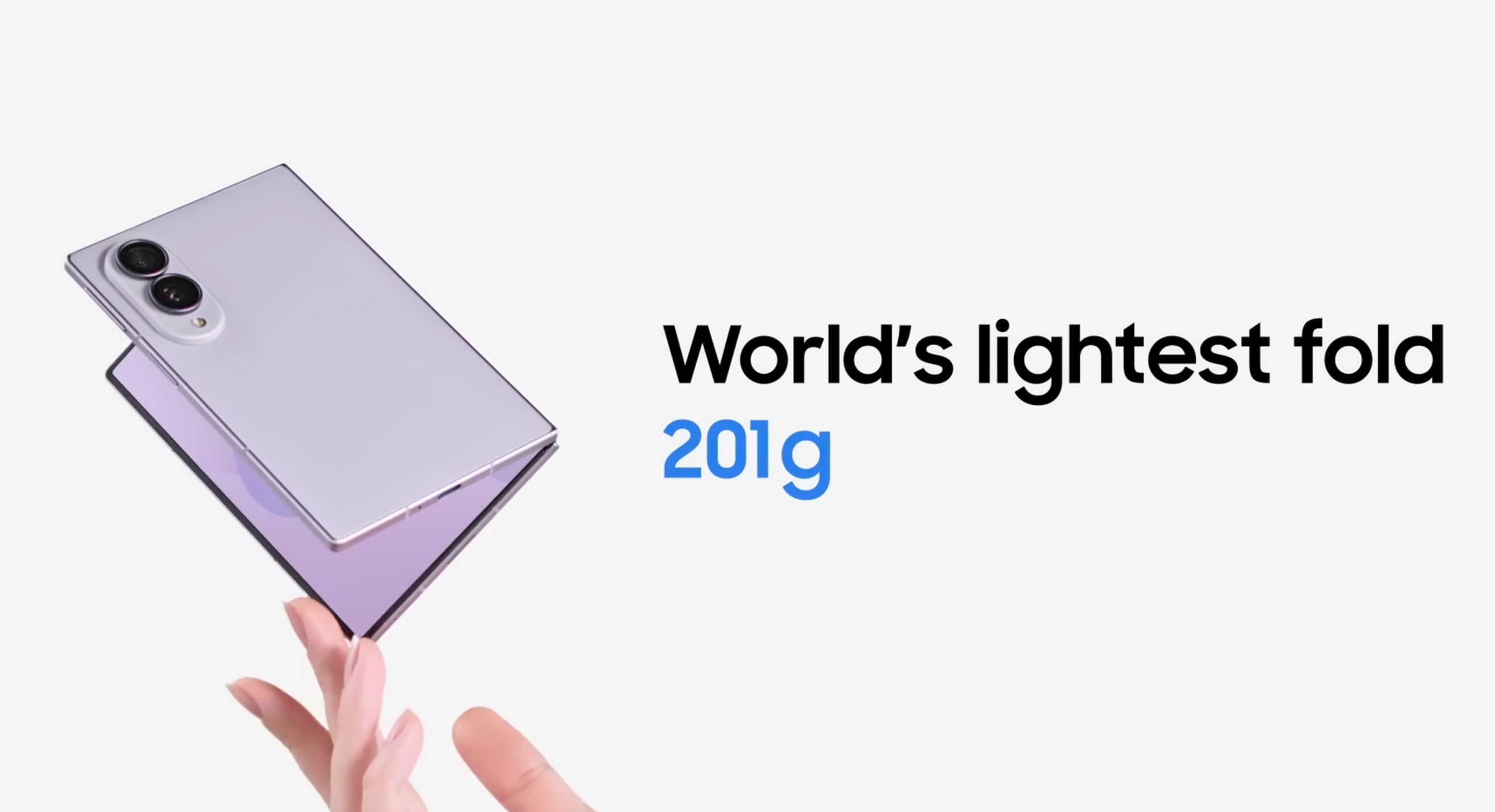
At 201 grams, Samsung presents it as the world's lightest book-style foldable. It measures 4.5 millimeters unfolded and 9.7 millimeters folded, and it costs $1,899. The trade-off shows up in the camera: it is the only model in the family that ships without a telephoto lens.
What the Galaxy Z Fold 8 is
It is worth sorting out the names, because Samsung chose them in a way that runs counter to intuition. The direct successor to the Fold 7 is the Fold 8 Ultra: it keeps the elongated form factor, increases the main display to 8 inches, and adds the triple camera with a 200 MP sensor. The Fold 8 is something else: the same surname, a different shape, and a different audience.
The Fold 8 is the more comfortable entry point, with proportions that move away from the elongated rectangle of previous generations. The idea behind the change is simple: make the device work like a regular phone while it is closed, which is most of the time, and have it open only when the large screen is needed.
The wide form factor: 201 grams and a 10:16 cover display
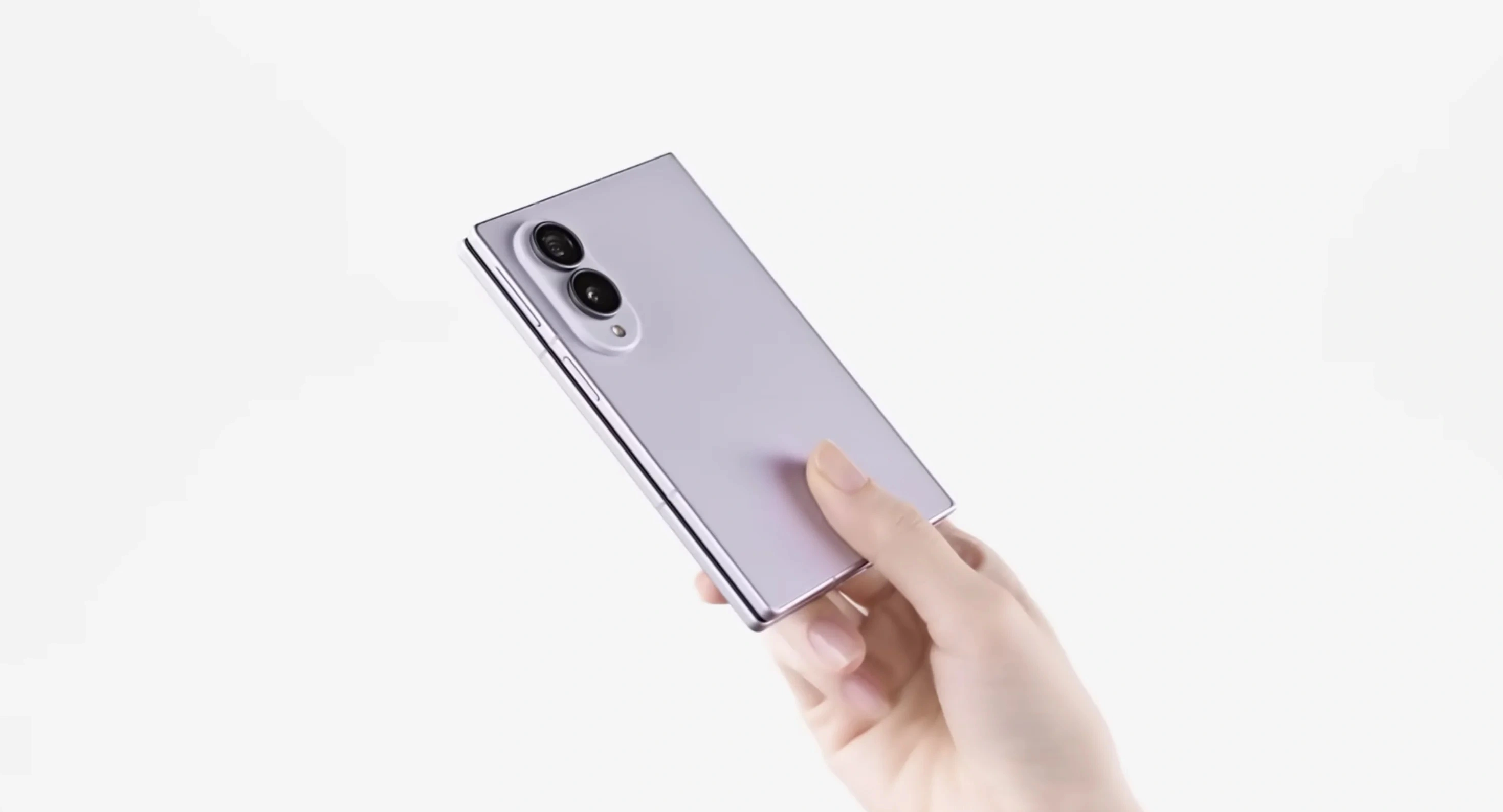
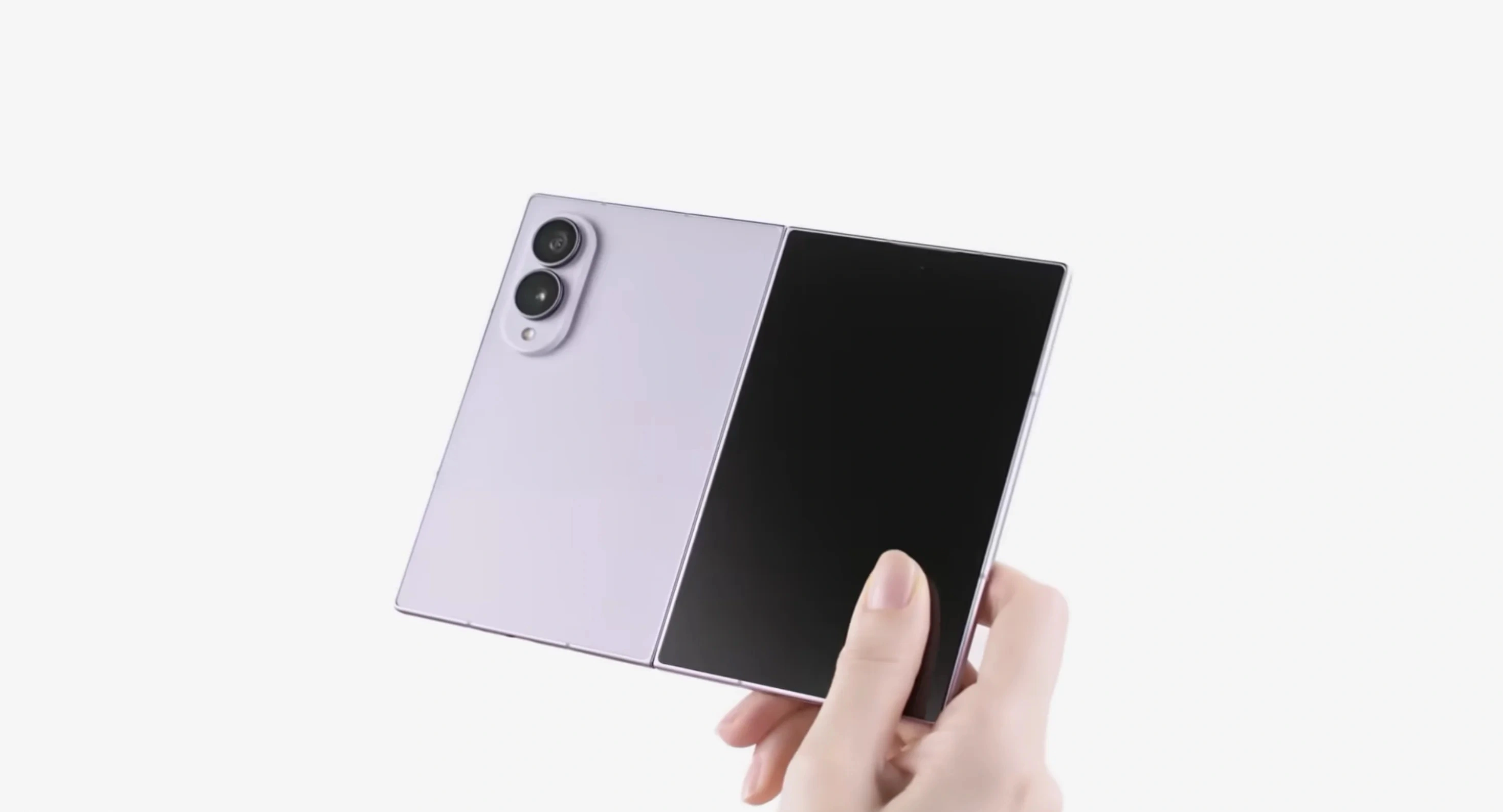
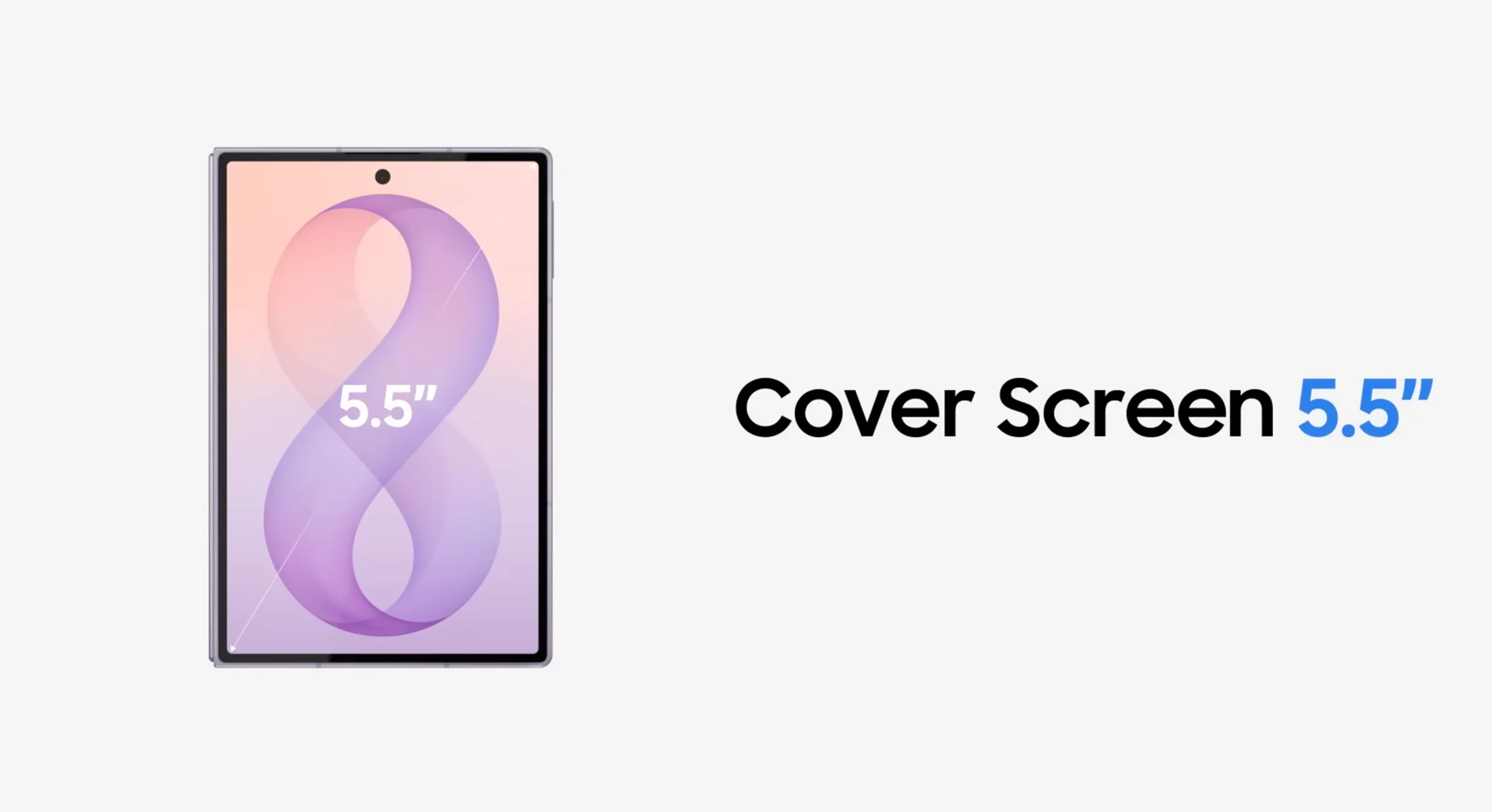
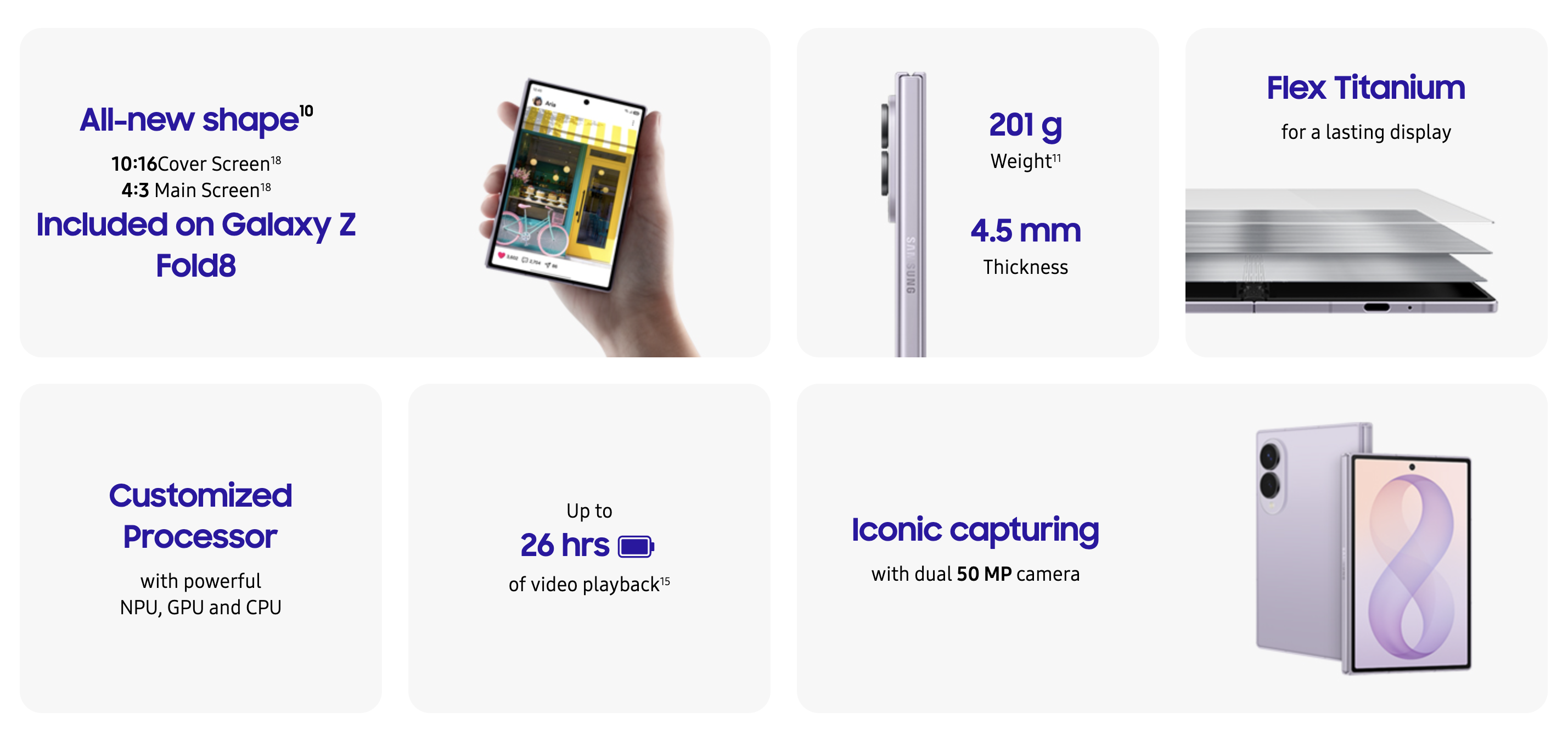
The cover display measures 5.5 inches with a 10:16 aspect ratio, practically that of a conventional phone. This is the change you feel most in daily use: previous Fold models had a narrow, tall outer screen where the keyboard felt cramped and apps looked distorted. Here, the full keyboard fits, and social networks appear in their native format.
The 201 grams complete the equation. The Fold 8 Ultra, with the traditional form factor, weighs 215 grams, and foldables in this category had accustomed users to carrying that weight. This one weighs less than several conventional large-screen phones.
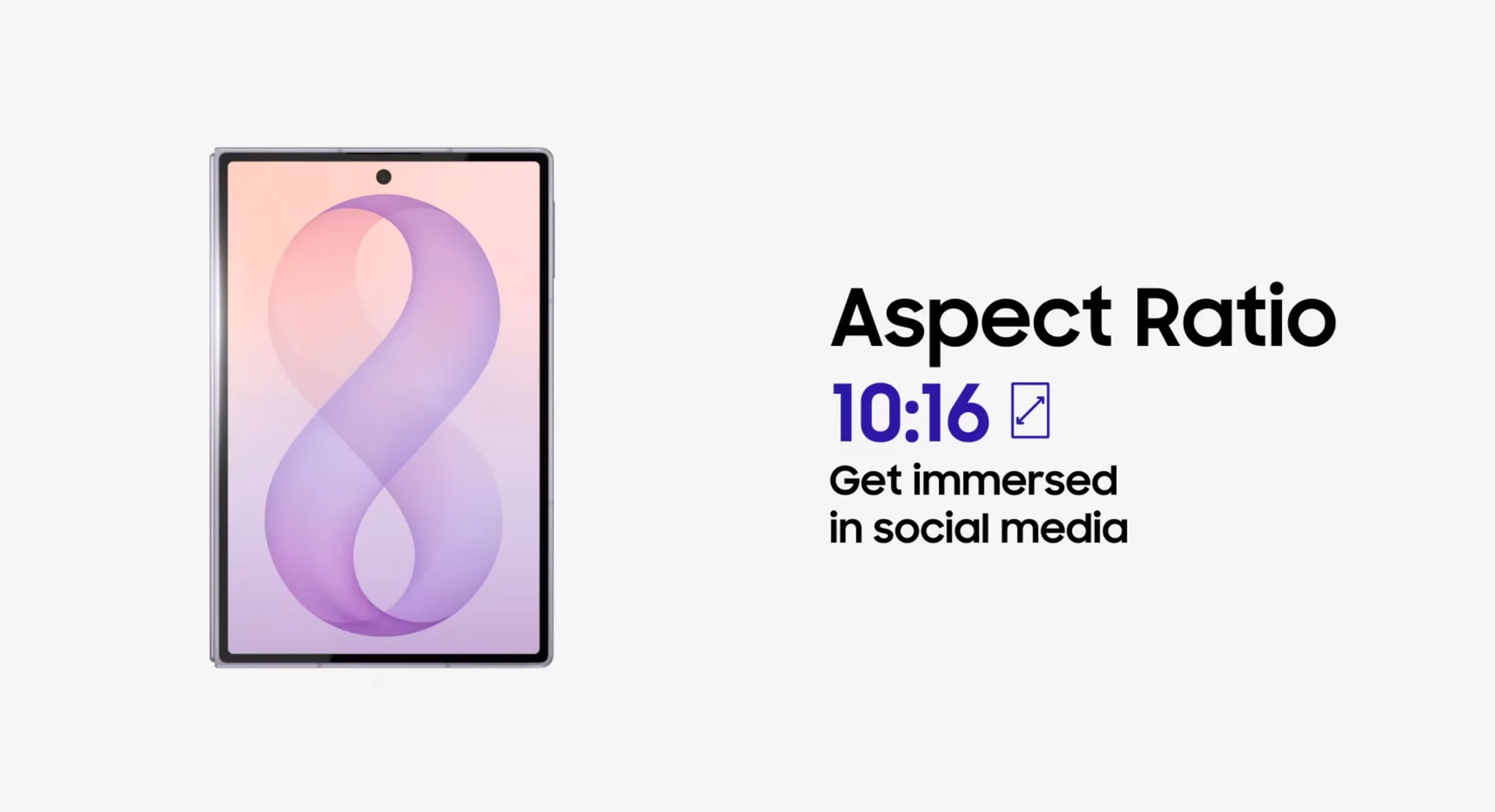
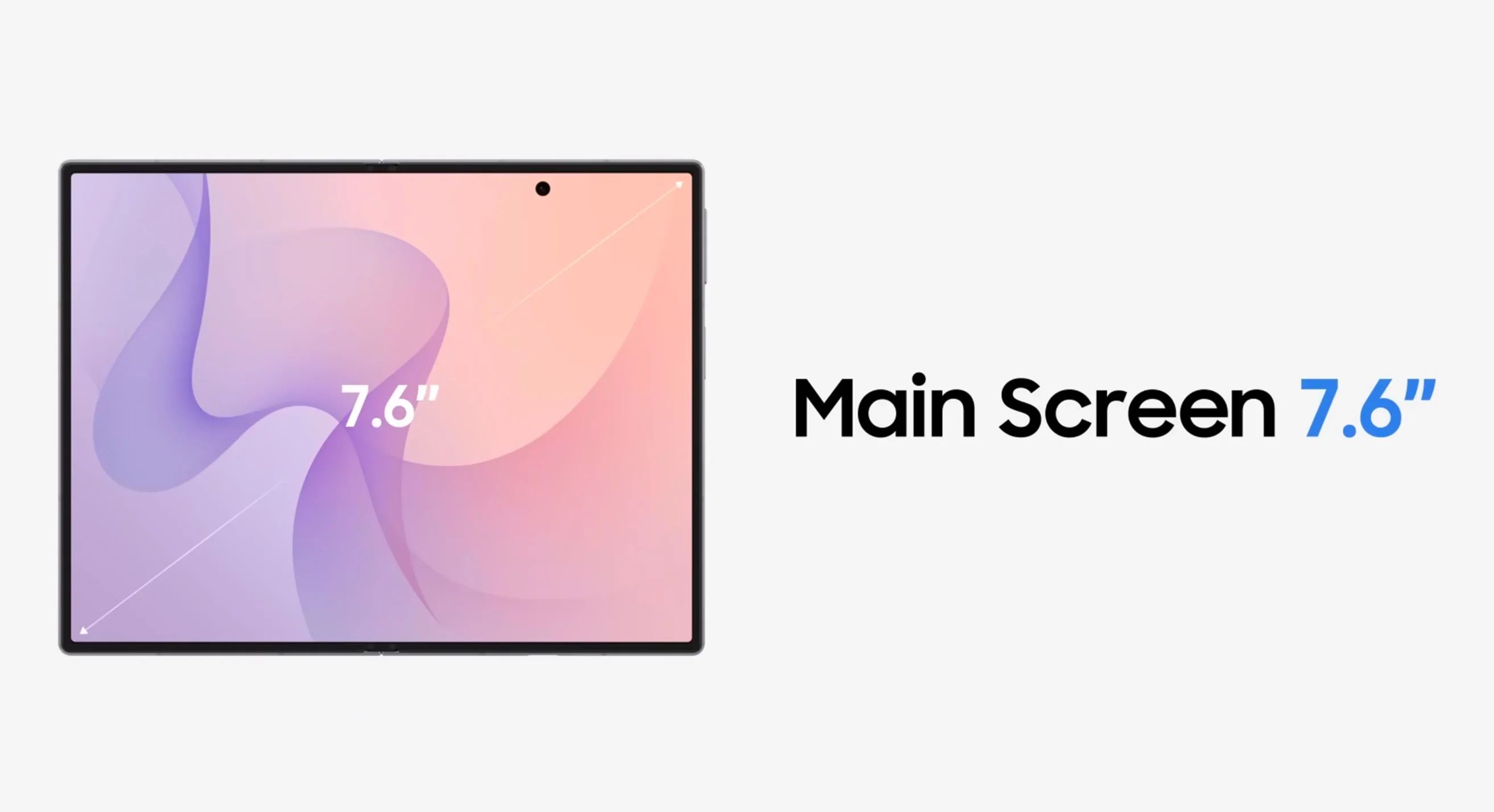
Unfolded, the 7.6-inch panel sits at 4:3 in landscape and 3:4 when rotated. It is the proportion of a small tablet, designed more for watching video, reading, and browsing than for working with two windows side by side. Both displays are 120 Hz LTPO AMOLED, with 3,000-nit peak brightness, Vision Booster, and an anti-reflective finish.
4.5 mm unfolded and 9.7 mm folded
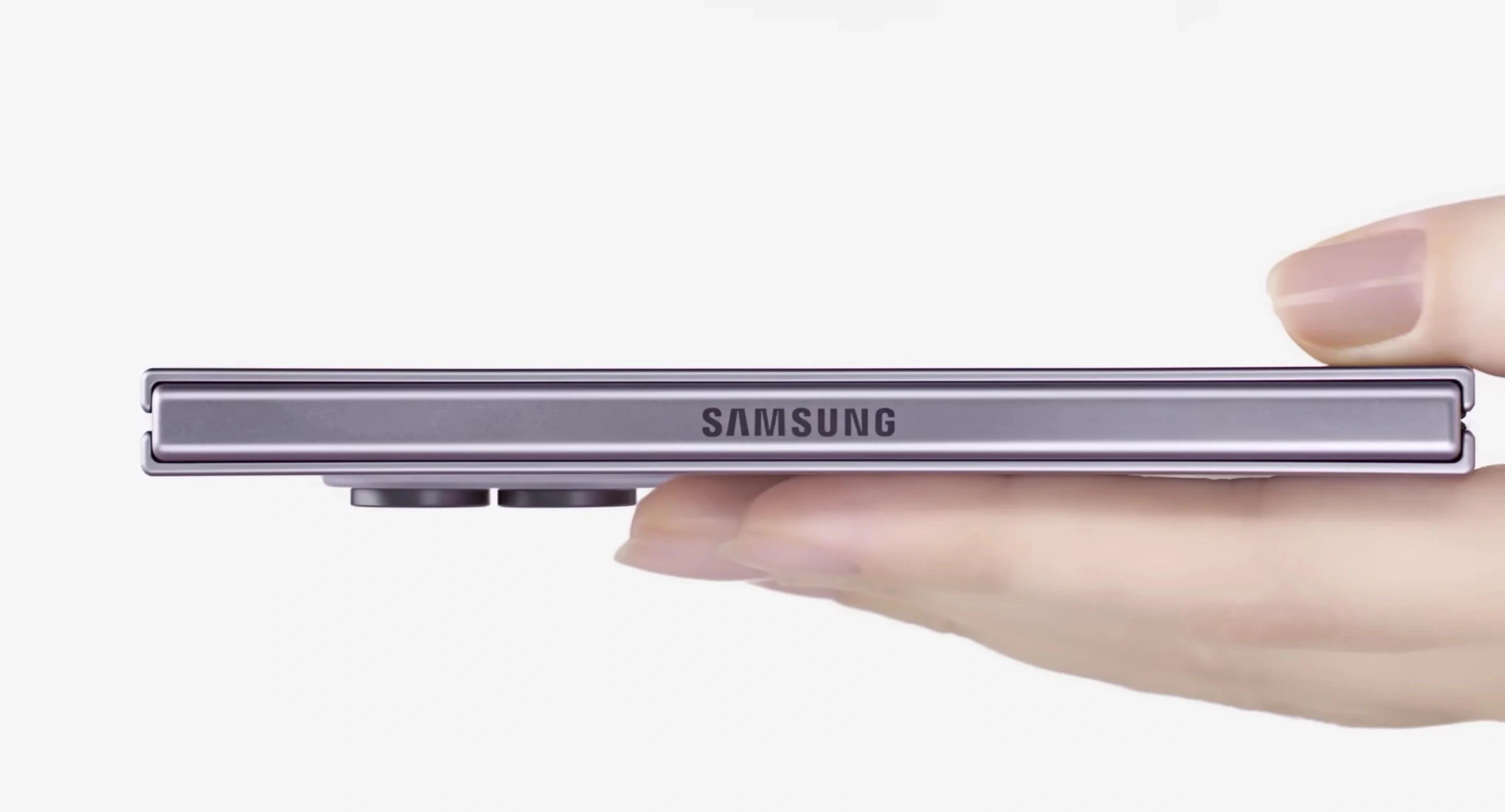
The two thickness figures explain many of the device's technical decisions. Unfolded, it measures 4.5 millimeters, just four tenths more than the Fold 8 Ultra. Folded, it reaches 9.7 millimeters, which is where it really shows: it fits in a back pocket without the bulk of a classic foldable.
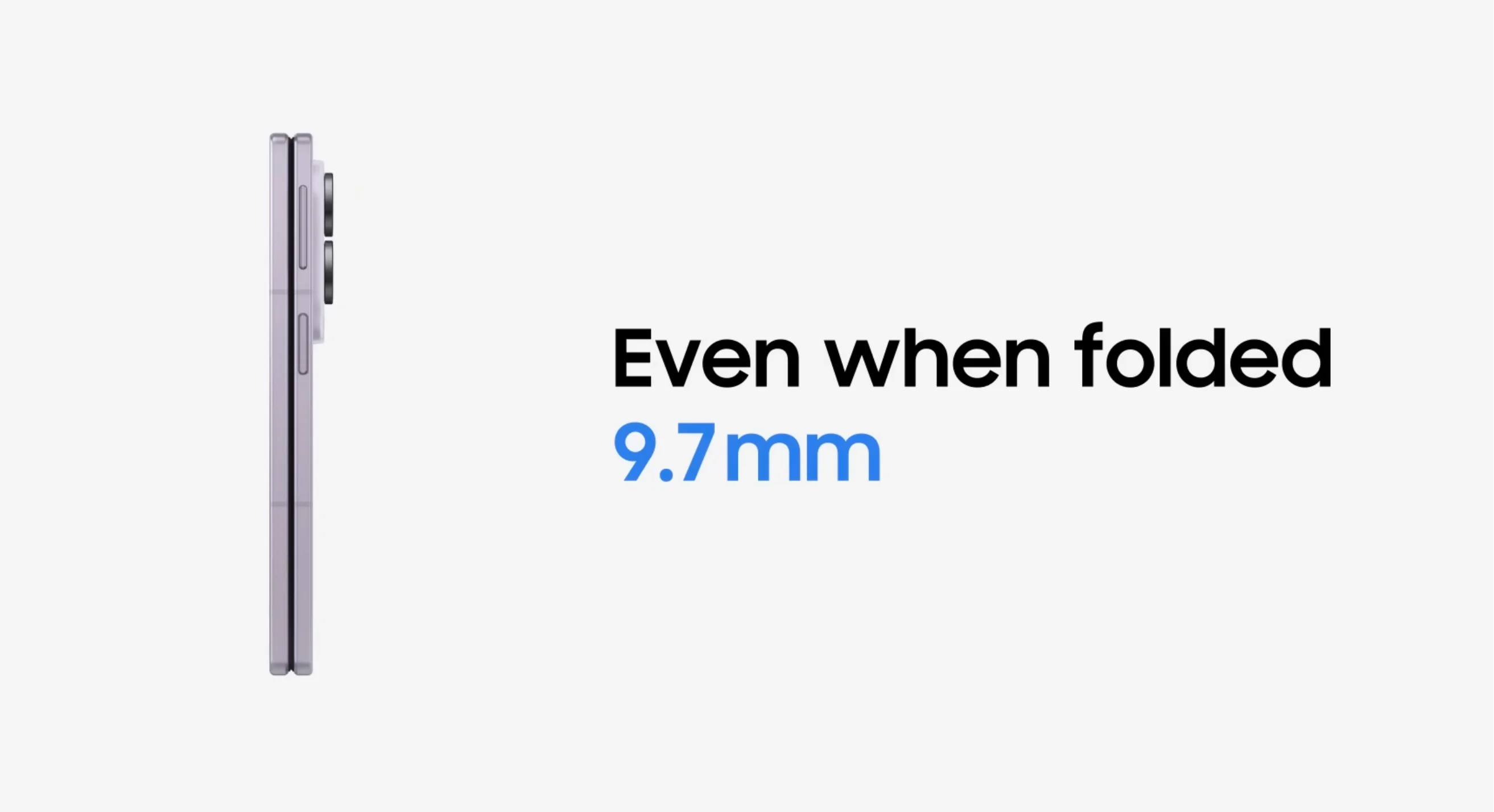
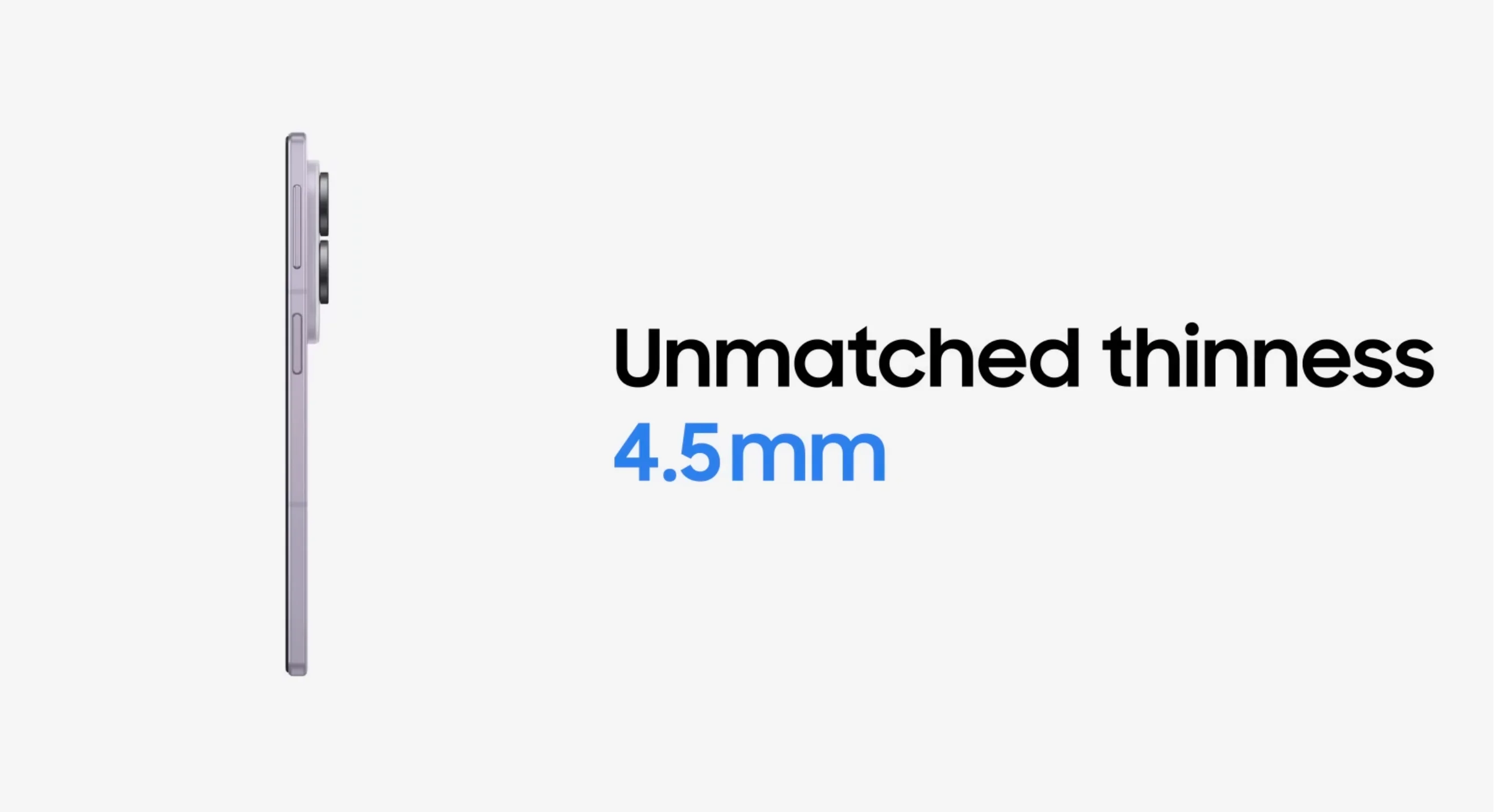
At 4.5 millimeters, there is no space to spare. That number constrains the camera module, the battery size, and even the depth of the speakers. Every spec of this phone is easier to understand when you see thickness as the starting constraint, not a consequence.
Armor FlexHinge and the dual titanium layer
The hinge is called Armor FlexHinge and includes a sloped inner bezel that makes opening easier, a small detail that solves the usual complaint of having to pry a thin foldable open with your fingernail.
Under the panel, Samsung applied a dual titanium layer over the cushioning sheet that supports the display. It is the implementation of Flex Titanium, the technology debuting across the entire 2026 Z series, combining a titanium alloy film with a reinforced plate made of the same material.
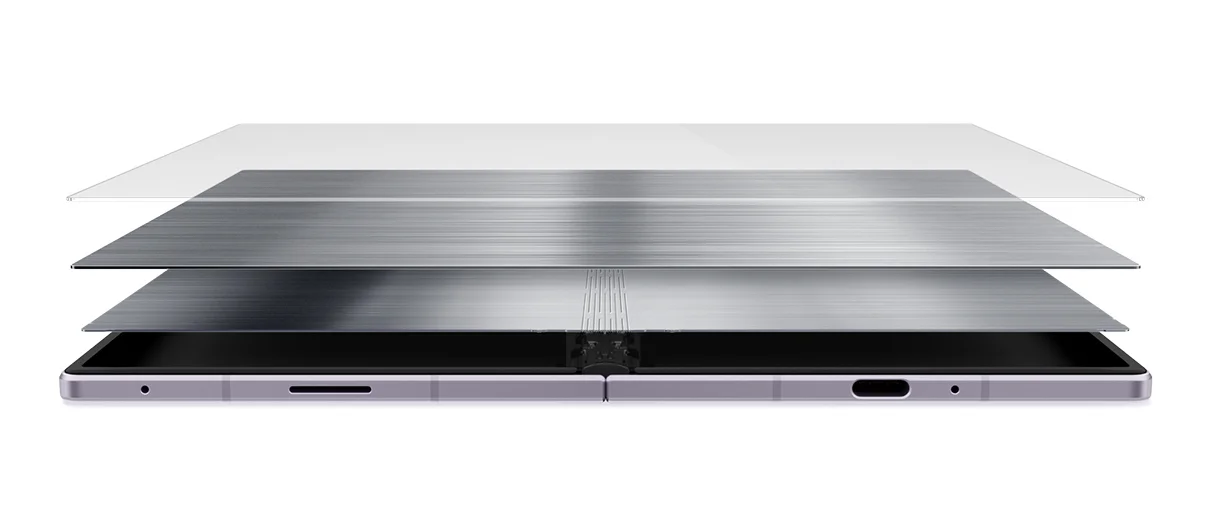
The stated goal is twofold: distribute pressure across the crease area and enable a thinner chassis without sacrificing rigidity. This is also where the product's real lifespan is at stake, because the central crease is the point that suffers most after thousands of opening cycles. The promise is reasonable on paper; the only valid test is sustained use.
Cameras: two 50 MP sensors without a telephoto lens
The rear module has two 50 MP cameras: a wide-angle camera with optical stabilization and an ultra-wide-angle camera. Two 10 MP front cameras are also included, one on each display, so selfies work the same whether the device is open or closed.
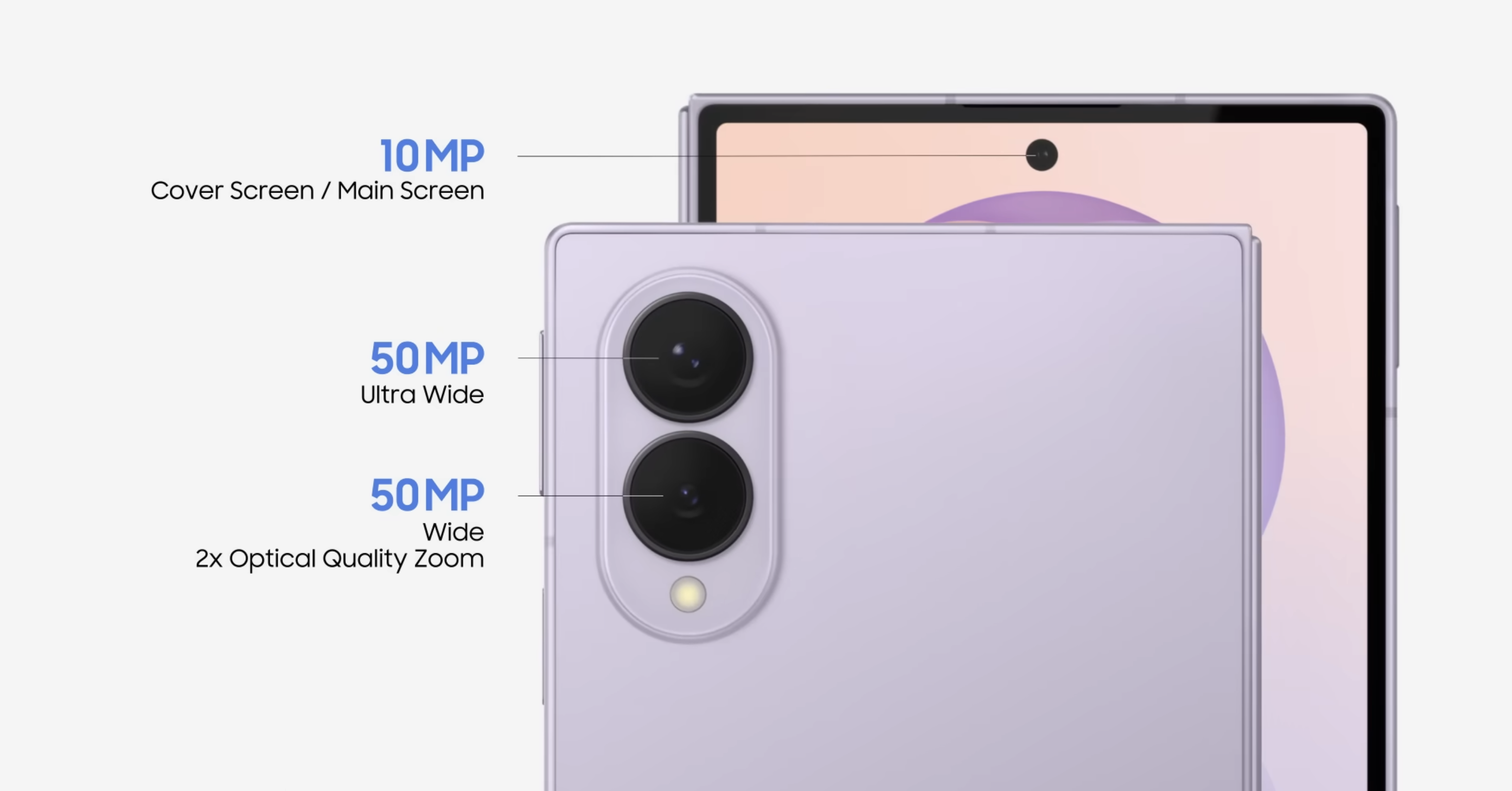
The 2x that Samsung promotes comes from cropping the main sensor, not from a dedicated lens: the spec sheet calls it optical-quality zoom and attributes it to the Adaptive Pixel sensor. It works well in abundant light and loses definition when light is scarce.
It is worth understanding why the telephoto lens is missing. Specialized coverage agrees that a third sensor would add volume and complexity to a 4.5-millimeter body, and that Samsung preferred to rely on the resolution of the main sensor rather than make the device thicker. It is an engineering decision consistent with the rest of the product, although for anyone who photographs at a distance, it is a concrete limitation. Those who need it have the Fold 8 Ultra, and that is where it makes sense to look at which of the two is better depending on use.
Snapdragon 8 Elite Gen 5 and 4,800 mAh battery
The processor is the same flagship chip used in the Ultra model: Snapdragon 8 Elite Gen 5 for Galaxy, with 12 or 16 GB of RAM and 256 GB, 512 GB, or 1 TB configurations. In raw power, there is no cut between the two Fold models, which is uncommon when a brand splits a lineup in two.
The battery is 4,800 mAh, and the official spec sheet claims more than 26 hours of video playback. Wired charging rises to 45 W, with about 63% in half an hour according to Samsung's data, and it adds wireless charging at up to 20 W. The charger is not included in the box. Compared with the Galaxy Z Flip 8's 25 W, the charging difference between the brand's two foldables is notable.
The certified resistance is IP48: it withstands immersion, but dust protection is partial, something expected in a device with moving parts and a limitation worth keeping in mind in sandy or dusty environments.
Colors, price, and availability
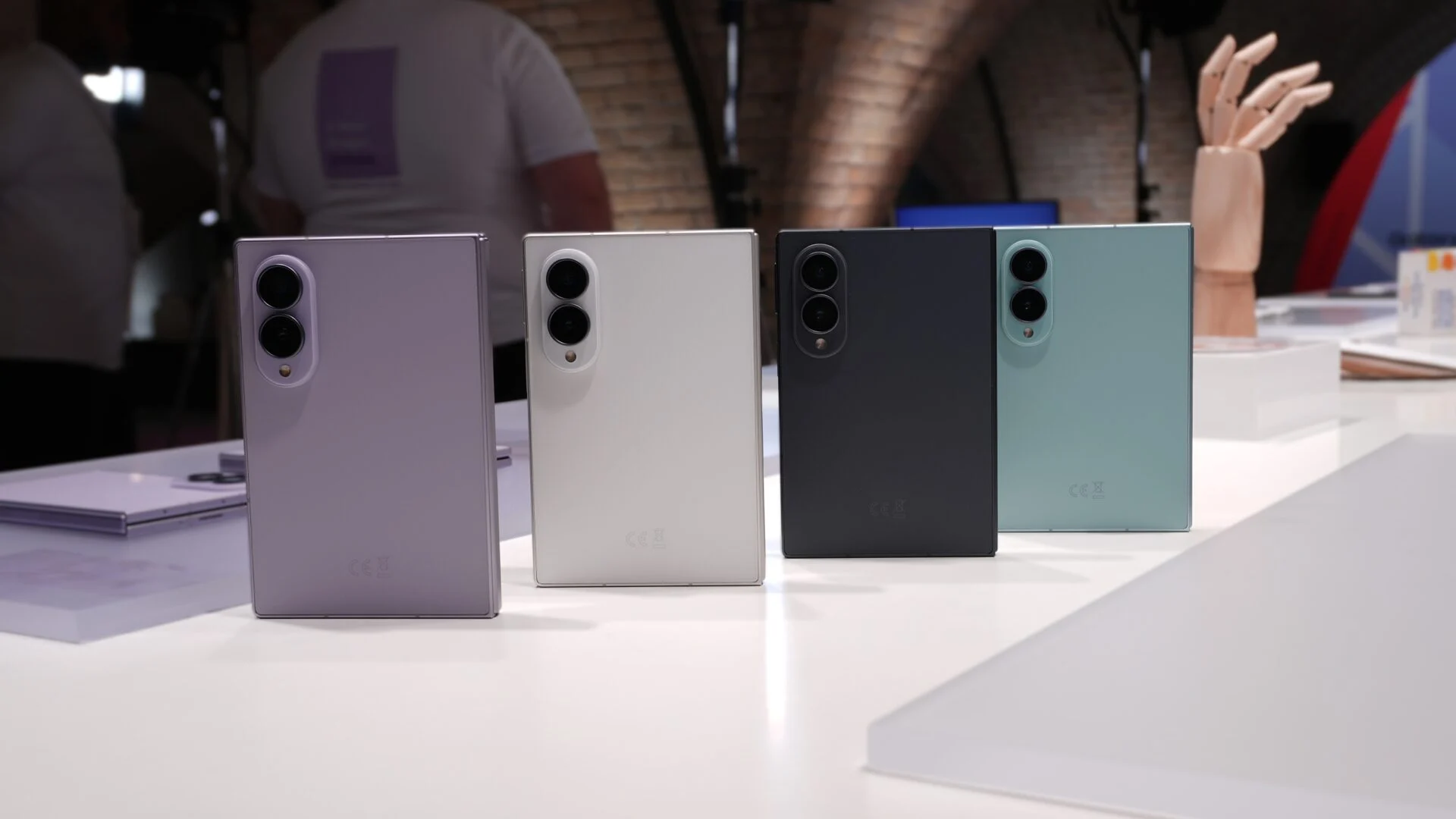
The Fold 8 comes in four finishes: lavender, silver, black, and green. The system is Android 17 with One UI 9, and the spec sheet is rounded out by Wi-Fi 7, Bluetooth 6, NFC, stereo speakers, and a side-mounted fingerprint reader.
The launch price is $1,899, $200 below the Fold 8 Ultra and $700 above the Flip 8. Preorders opened on July 22, and general sales begin on August 7 in the first markets. One detail for buyers: the device bets everything on being thin and light, so the choice of case will significantly shape the final experience.
Conclusion
The Fold 8 is Samsung's most serious attempt to solve the problem that has followed the book-style foldable since 2019: it is used closed most of the time, and closed it never quite worked well. The 10:16 cover display and 201 grams attack exactly that point, and they do it better than any previous iteration of the lineup.
For anyone who has never owned a foldable, this is the model that makes the leap easier: it behaves like a normal phone and opens when you need it. For anyone coming from a Fold 7 looking for more screen and a better camera, the right device is the Ultra, not this one, even if the number suggests otherwise. And for anyone who photographs at a distance, the lack of a telephoto lens is a limit that no software feature fully makes up for. The open question is whether the market will properly understand this lineup split or whether the name will generate more returns than sales.
Frequently asked questions
Is the Galaxy Z Fold 8 the successor to the Galaxy Z Fold 7?
No. The direct successor to the Fold 7 is the Galaxy Z Fold 8 Ultra, which keeps the elongated form factor and increases the main display to 8 inches. The Fold 8 debuts a wider, shorter form factor, with a 7.6-inch main display, and works as an alternative within the lineup, not as a replacement.
How much does the Galaxy Z Fold 8 cost, and when does it go on sale?
The official launch price is $1,899. Preorders began on July 22, 2026, the same day as Galaxy Unpacked, and general availability starts on August 7 in the first markets.
Which is better, the Galaxy Z Fold 8 or the Fold 8 Ultra?
It depends on the use case. The Fold 8 is lighter, more comfortable when closed, and $200 cheaper. The Fold 8 Ultra offers a larger main display, a triple camera with a 200 MP sensor, and 8K recording. Both share the same processor, so the decision comes down to form factor and camera, not power.
Why does the Galaxy Z Fold 8 not have a telephoto lens?
Because of space. With a thickness of 4.5 millimeters unfolded, a third sensor with a dedicated lens would add volume to the rear module. Samsung chose to rely on the resolution of the 50 MP main sensor, which allows cropping up to 2x with acceptable quality, instead of making the device thicker.
Galaxy Z Fold 8
Samsung's book-style foldable for 2026 with a completely new, wider and shorter form factor. It is the brand's lightest Fold, with a 5.5-inch cover display in a 10:16 ratio and a dual 50 MP camera.
Pros
- At 201 grams, it is the lightest book-style foldable on the market.
- The 10:16 cover display can be used one-handed like a regular phone.
- It measures 4.5 millimeters unfolded and 9.7 millimeters folded.
- It carries the same Snapdragon 8 Elite Gen 5 for Galaxy as the Ultra model.
- Charging rises to 45 W wired and adds 20 W wireless.
Cons
- It has no telephoto lens: 2x comes from cropping the main sensor.
- The 7.6-inch main display is smaller than the Fold 8 Ultra's 8-inch panel.
- The name is confusing: it is not the direct successor to the Fold 7.
- The 45 W charger is not included in the box.
- IP48 certification protects against dust only partially.
Author
Alexis PaezReport based on official announcements and verified public sources at the time of publishing.
Comments
Share article
You might also like

Galaxy Z Fold 8 Ultra: Samsung’s first Ultra foldable arrives with 200 MP, telephoto and 5,000 mAh in 4.1 millimeters
Samsung introduced the Galaxy Z Fold 8 Ultra: 4.1 mm, 200 MP camera with telephoto and a 5,000 mAh silicon-carbon battery. Price and full specs.

Galaxy Z Fold 8 vs Fold 8 Ultra: which one makes sense and why the name is confusing
Form factor, cameras, battery, and price: all the differences between the Galaxy Z Fold 8 and the Fold 8 Ultra, and which one makes sense depending on how you use your phone.

Galaxy Z Flip 8: Samsung’s thinnest foldable improves on the outside and repeats on the inside
Samsung unveiled the Galaxy Z Flip 8: 6.1 mm, 180 grams, and Flex Titanium. Price, full spec sheet, and what really changes compared with the Flip 7.

Samsung Galaxy Unpacked July 2026: the Fold lineup splits in two, the first foldable Ultra, and glasses with Gemini
Fold 8 in a passport-style format, the first foldable Ultra, watches with the same chip, and glasses with Gemini: everything from Galaxy Unpacked July 2026, prices, and dates.

Recent articles
Huawei Pura X Max vs iPhone Duo: what changes beyond the foldable screen
Huawei Pura X Max vs iPhone Duo: size, multitasking, cameras, styluses, and charging. What changes in use and which one better fits your priorities.