Mac mini with M6: the 2 nm chip arrived in Apple’s cheapest Mac, but it costs US$300 more

Index
Apple refreshed the Mac mini with two different chips: the M6, its first processor manufactured at 2 nanometers, and the M5 Pro, the same silicon that debuted in the MacBook Pro in March. Preorders opened on August 25, and the machines arrive in stores on September 22 in 30 countries.
There was no event. The announcement came via press release, alongside the new Mac Studio, and it includes one detail Apple did not put in the headline: the entry-level model went from US$599 to US$899.

What changed in the Mac mini
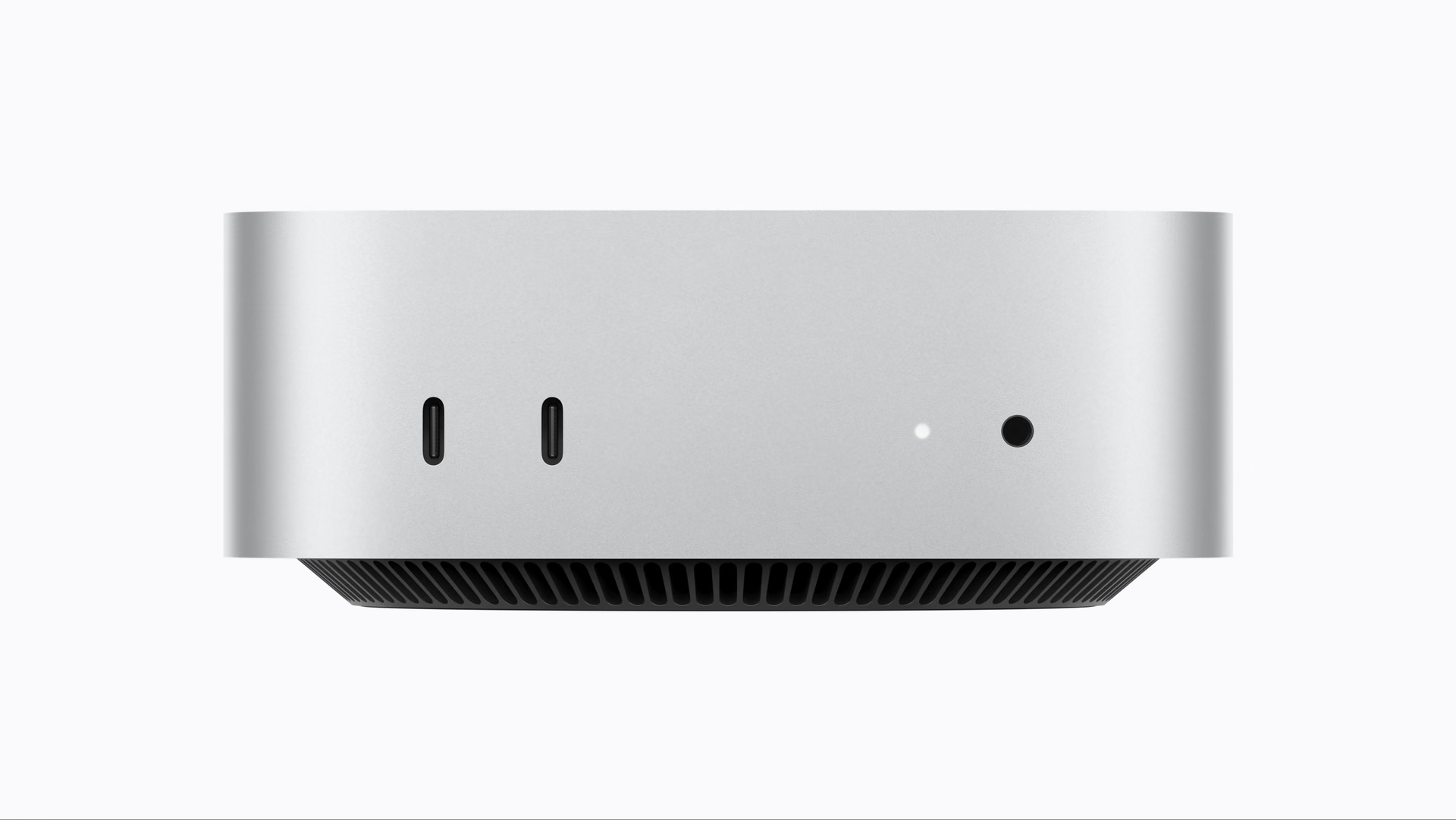
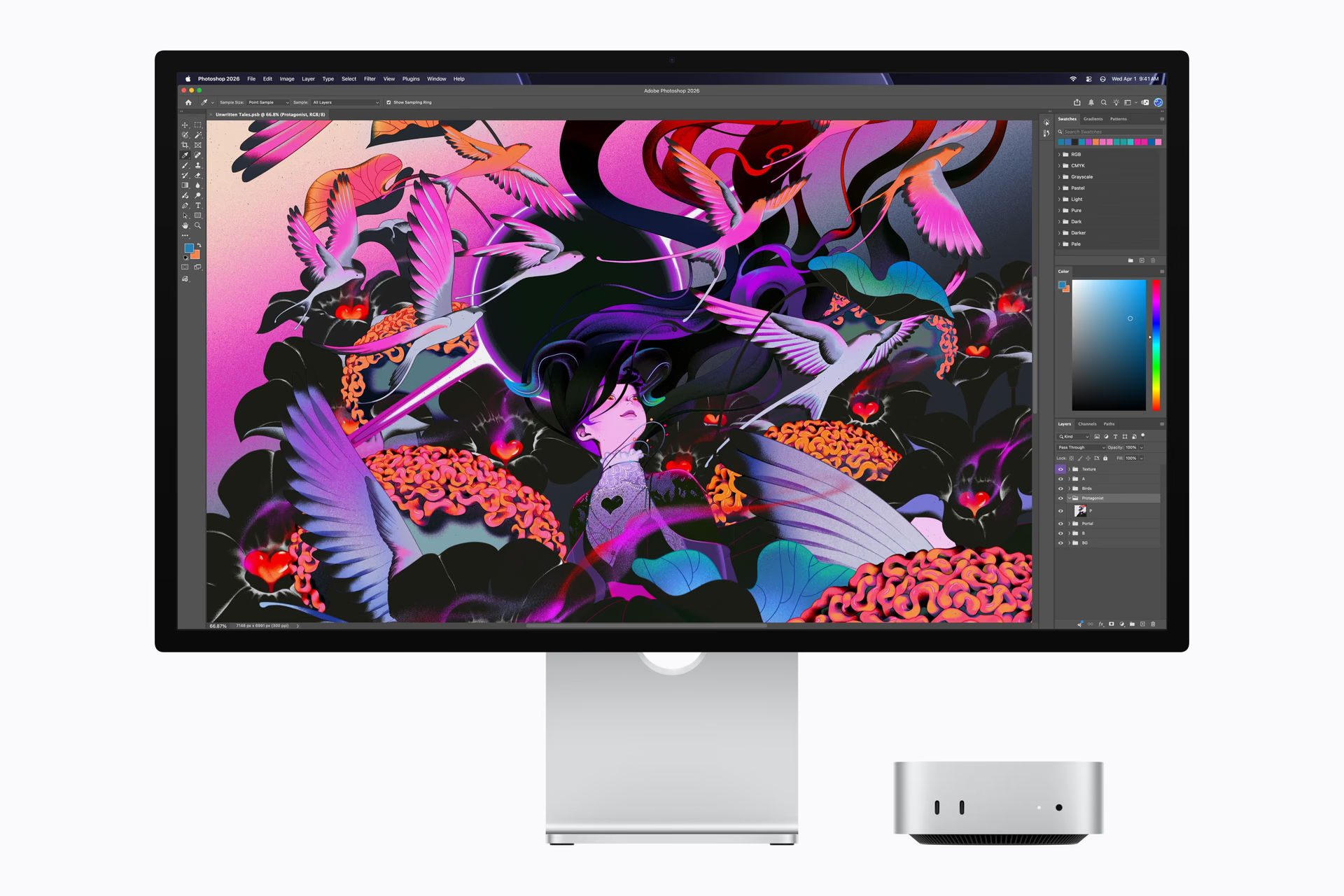
On the outside, nothing. It is still the same 5-by-5-inch aluminum cube Apple introduced in 2024, in silver, with two USB-C ports and the headphone jack on the front and the ventilation skirt at the base.
What changed is inside. Both chips are new for this machine, storage is twice as fast, 2.5 Gb Ethernet is now standard instead of optional, and the computer adds Wi-Fi 7, Bluetooth 6, and genlock support over USB-C to sync cameras in multi-signal productions without separate hardware.
M6: the first 2-nanometer chip
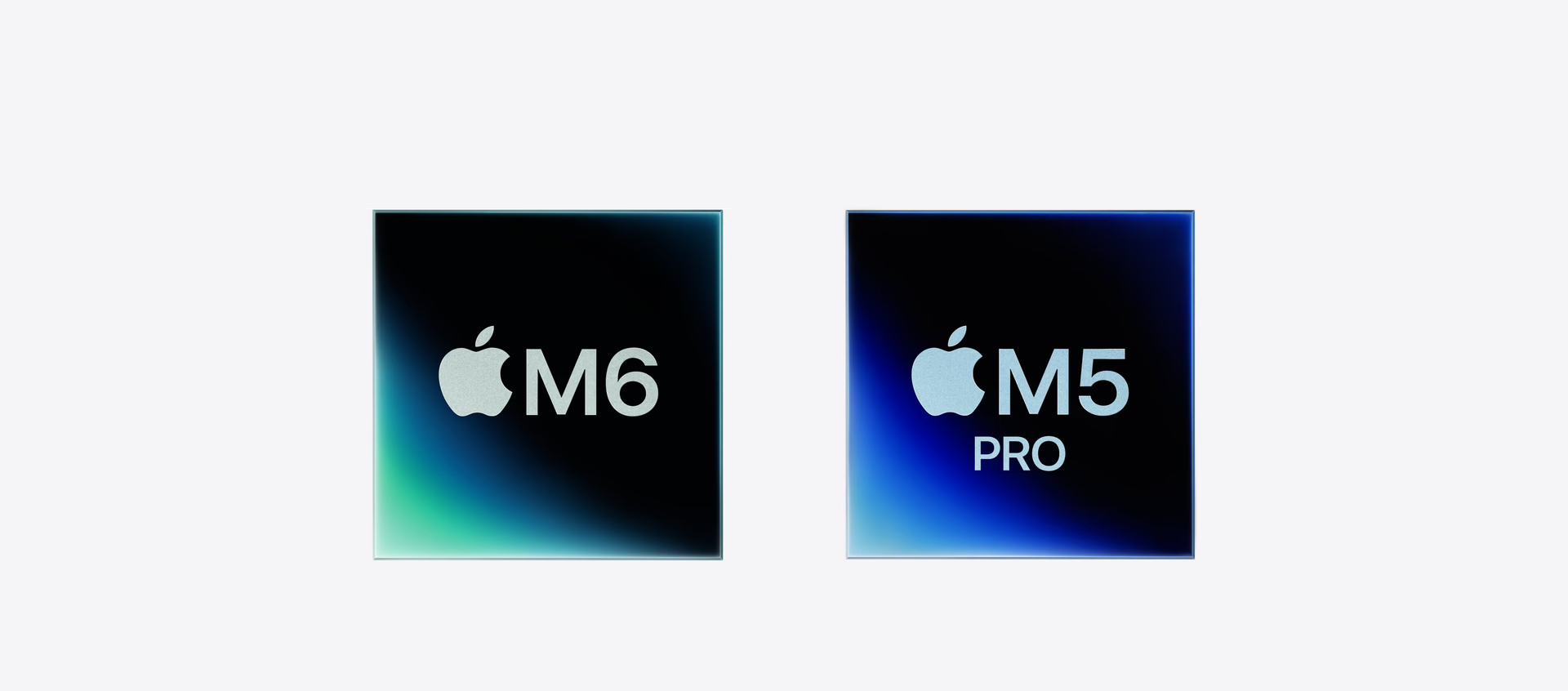
The M6 has a 12-core CPU split across three tiers: two super cores, four performance cores, and six efficiency cores. That is two more cores than the M5, and Apple says the individual core is the fastest in the world.
The GPU also moves up to 12 cores, with a Neural Accelerator in each one, and adds roughly 30% more peak AI compute compared with the M5. Geometry rates rise by 50%, something you can see in dense 3D scenes and games with hardware ray tracing.
The biggest change is in the Neural Engine: instead of one 16-core engine, the M6 has two. Apple claims up to twice the peak compute, and the practical advantage is that it can split a model across both engines or run two different models in parallel.
Memory starts at 16 GB, goes up to 32 GB, and moves 170 GB/s, 10% more than the M5. Compared with the M4 it replaces, Apple claims 40% more CPU performance, twice the graphics performance, four times the AI performance, and up to 4.8 times faster prompt processing for a language model.
M5 Pro: more cores, previous generation
The M5 Pro moves up to 18 CPU cores and 20 GPU cores, with up to 64 GB of unified memory and 307 GB/s of bandwidth, almost twice as much as the M6. Its Neural Engine is still a single 16-core unit.
It is a chip from the previous generation: it debuted in the MacBook Pro in March. That creates the strangest situation in this lineup: the cheaper Mac mini has newer silicon than the expensive one.
Compared with the M4 Pro, Apple measures up to four times faster prompt processing, 1.4 times faster ray-traced rendering in Blender, and 1.5 times faster image processing.
Thunderbolt: the cheaper model falls behind
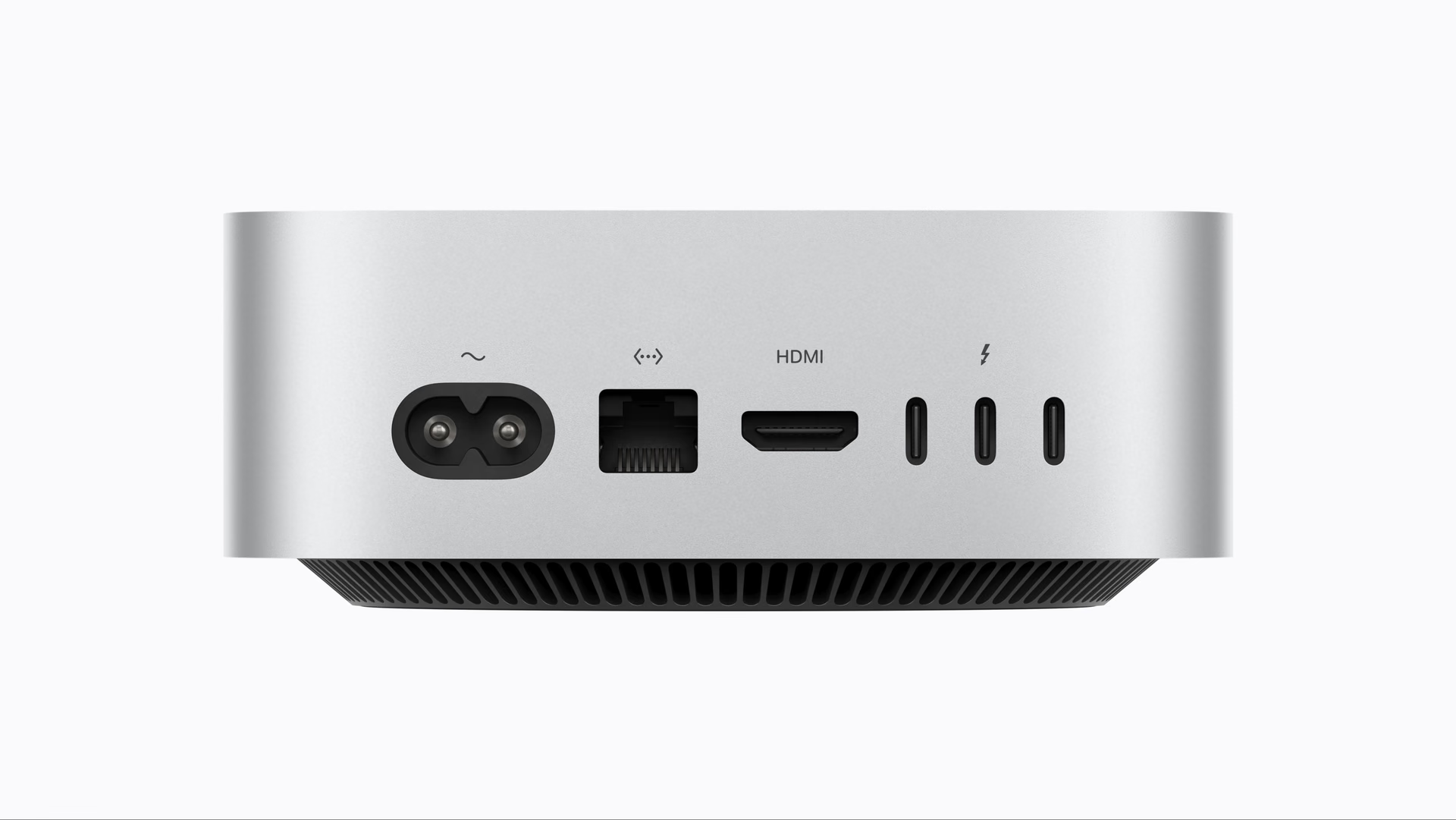
This is the detail worth checking before you buy. The Mac mini with M6 has three Thunderbolt 4 ports on the back. The M5 Pro has three Thunderbolt 5 ports, at 120 Gb/s.
The difference is not just external drive speed. Thunderbolt 5 is what enables clustering: connecting multiple machines to distribute an AI model that does not fit into the memory of a single one. The M6, despite all its silicon advantages, is left out of that.
Ports and connectivity
On the front there are two USB-C ports with USB 3 and a headphone jack that now supports high-impedance headphones. On the back, three Thunderbolt ports, HDMI, Ethernet, and power.
2.5 Gb Ethernet comes standard, with a 10 Gb option. Wi-Fi 7 and Bluetooth 6 complete the package, with Apple’s N1 networking chip.
Performance in real apps
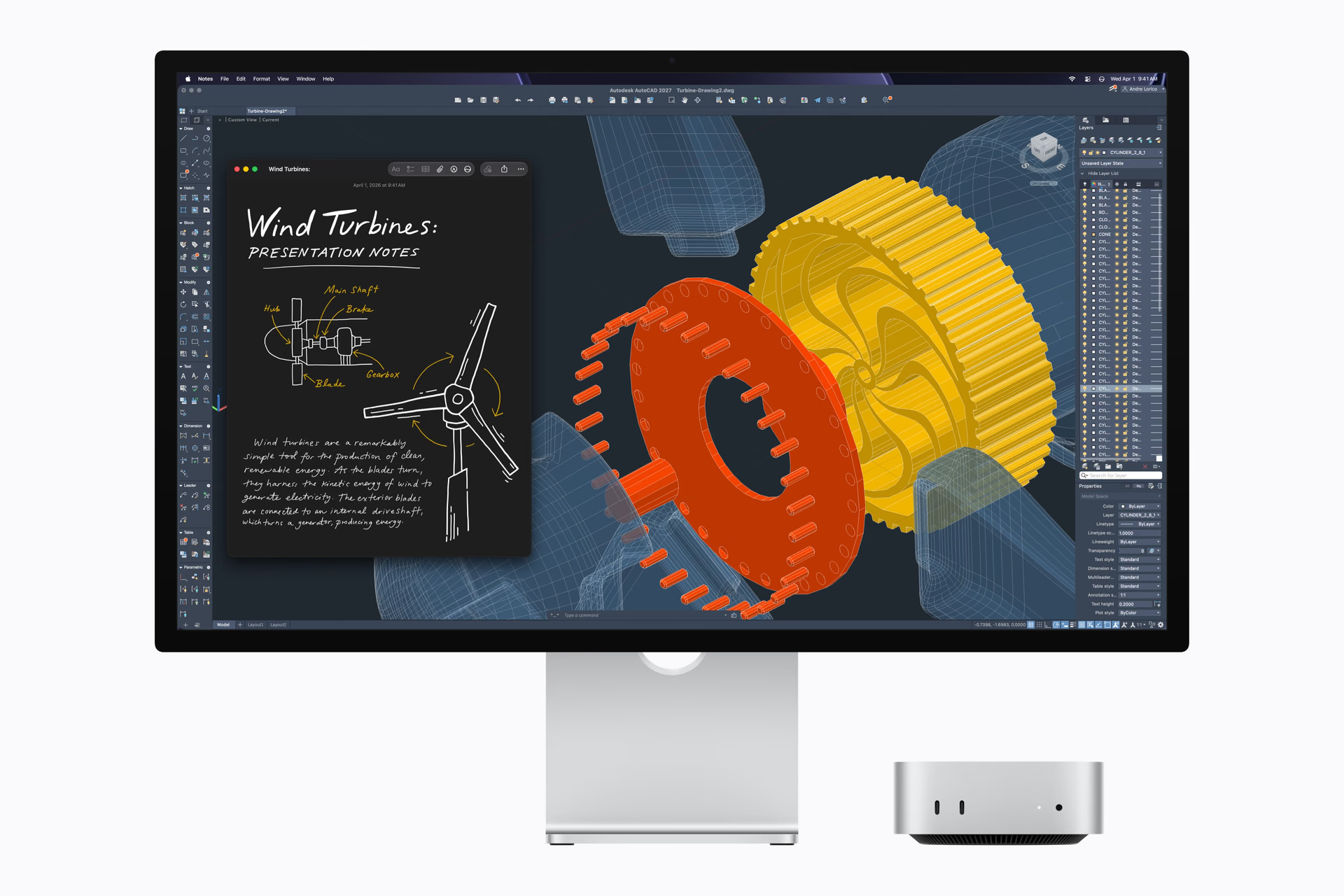
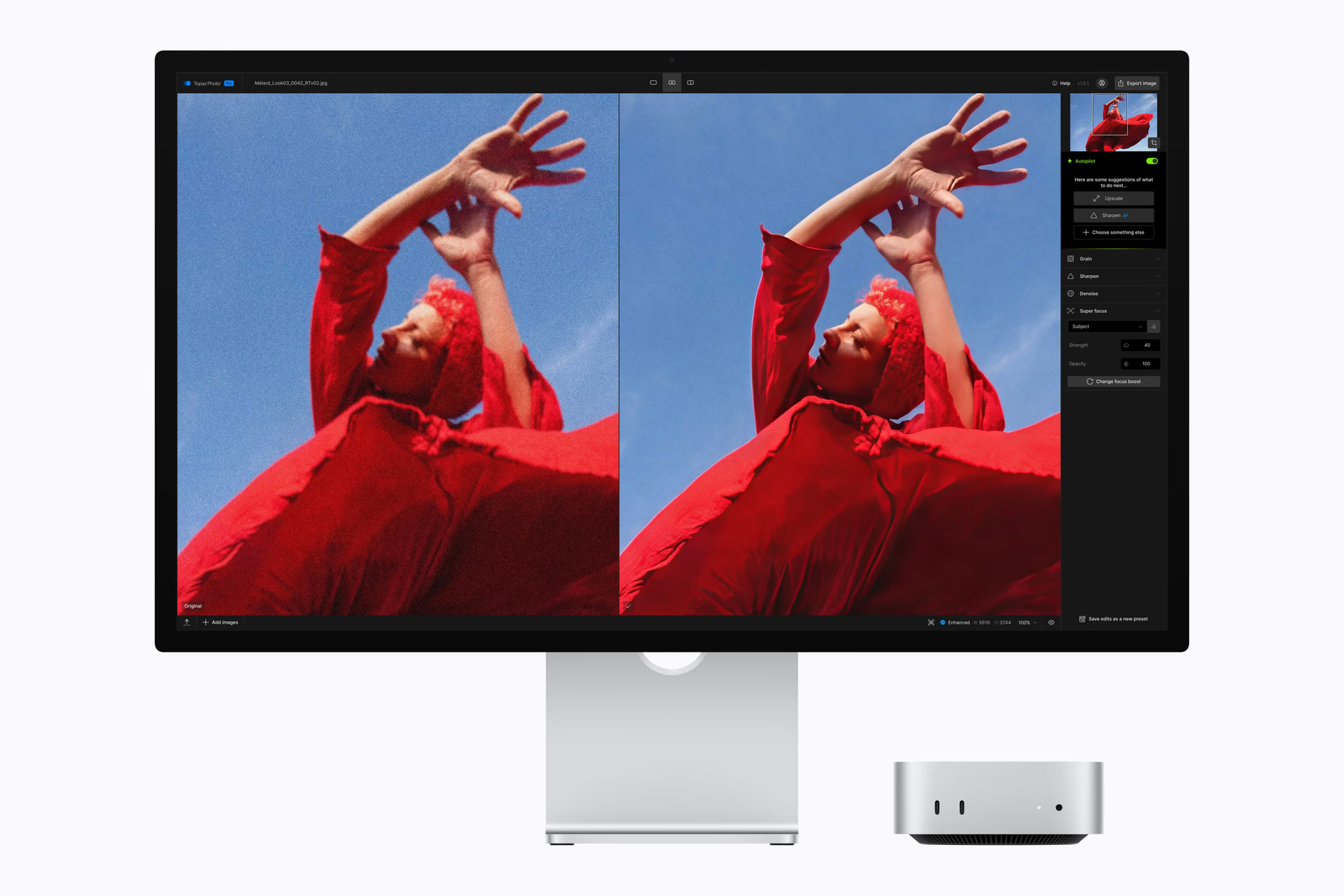
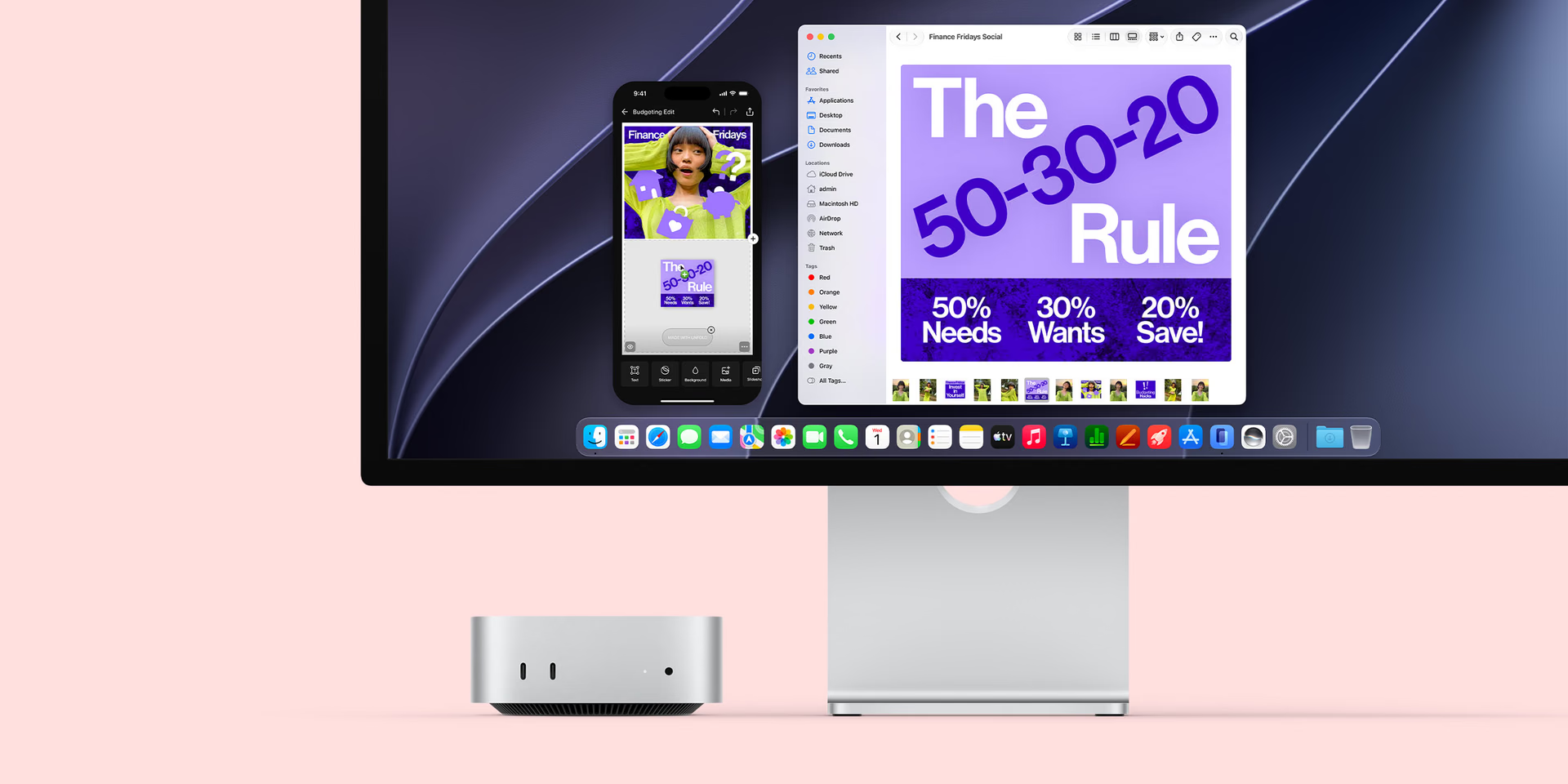
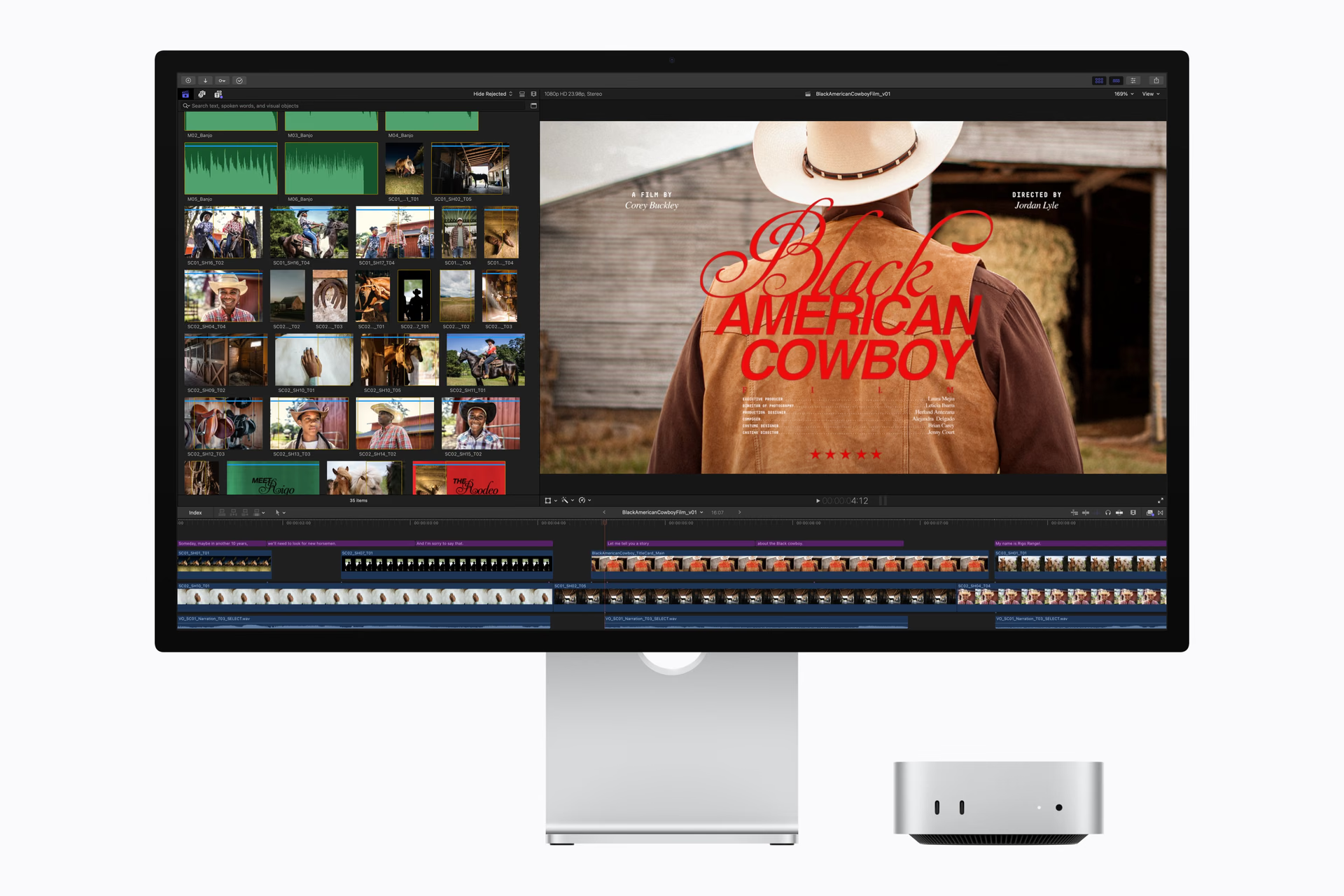
The numbers Apple shows point to two use cases: creation and local models. In Adobe Photoshop and Apple Creator Studio apps, the M6 handles heavier projects than the M4 without running out of headroom. In AutoCAD and Topaz Photo, the M5 Pro pulls ahead in AI rendering and upscaling.
These are manufacturer measurements, so the useful reference is the relationship between generations, not the absolute number.
Prices and configurations
Education prices are US$799 and US$1,599. A maxed-out configuration with M5 Pro climbs to US$6,799, and the jump to a 2 TB SSD costs US$1,000 by itself, more than the full entry-level machine.
The increase is not a whim of this generation. Apple has been passing higher component costs into its prices, especially memory, driven by demand for AI infrastructure. It is the same move that had already been seen in June across much of the lineup.
When it arrives
Preorders opened on August 25, and deliveries begin on September 22 in 30 countries. The machines ship with macOS 27 Golden Gate. The chassis uses 50% recycled material, and the enclosure aluminum is 100% recycled, as are the rare earth elements in the magnets.
Conclusion: which one should you buy?
If the Mac mini is your desktop computer, for office work, web development, light editing, or as an always-on server, the M6 with 512 GB is the sensible buy. You get Apple’s most modern silicon and the best balance between what you pay and what you actually notice day to day.
If you work with video, 3D rendering, or local language models, the M5 Pro justifies the difference through bandwidth, 64 GB of memory, and Thunderbolt 5. You do not buy it for the chip; you buy it for what surrounds the chip.
And if you are coming from an M4, wait. The real gain does not justify a US$300 price jump on a machine that still performs well.
Frequently asked questions
Is the Mac mini with M6 or M5 Pro the better buy?
The M6 is the newer chip and performs better per core, so it is the better choice for general use. The M5 Pro wins when the workload is sustained: it has almost twice the memory bandwidth, goes up to 64 GB, and adds Thunderbolt 5. The practical rule is that the M6 is enough unless you work with video, 3D, or local models.
Why did the Mac mini rise to US$899?
Because Apple passed higher component costs into its prices, especially memory, which rose sharply due to demand from AI data centers. The M4 started at US$599, and the difference is explained almost entirely by that, not by a design or materials change.
Is 256 GB of storage enough?
For browsing, office work, and home use, yes. For video editing, large photo libraries, or development with several environments, no: the system and apps take up a significant portion, and the SSD cannot be upgraded later. 512 GB is the reasonable sweet spot, and the jump to 2 TB costs US$1,000.
Mac mini
The 2026 Mac mini keeps the 5-inch chassis and is refreshed inside with the 2-nanometer M6 or the M5 Pro, with Wi-Fi 7, Bluetooth 6, and storage that is twice as fast.
Pros
- The M6 is Apple’s first 2-nanometer chip and delivers 40% more CPU performance than the M4.
- The dual Neural Engine can run two local models in parallel.
- 2.5 Gb Ethernet comes standard, with a 10 Gb option without moving up the lineup.
- Storage is twice as fast as the previous generation.
Cons
- The entry-level model starts at 256 GB, and the SSD cannot be upgraded later.
- The M6 stays on Thunderbolt 4, so it does not enable clustering.
- The entry price rose by US$300 compared with the M4.
- The M5 Pro is previous-generation silicon in the more expensive model.
Author
Alexis PaezReport based on official announcements and verified public sources at the time of publishing.