Apple sues OpenAI for stealing trade secrets for its first device

Index
Apple filed a lawsuit against OpenAI, io Products, and two of its own former engineers for misappropriation of trade secrets and breach of contract. The central allegation: OpenAI's first device is being built on stolen information — from circuit board manufacturing documents to a proprietary metal-finishing technique that a supplier carried out believing it had permission.
The July 10 filing in the U.S. District Court for the Northern District of California marks the definitive breakdown of a relationship that began as a partnership: in 2024, the two companies announced the integration of ChatGPT into Apple Intelligence. Two years later, they ended up in court.
What Apple alleges
The 41-page filing names four defendants: OpenAI, io Products, and two former Apple employees who now work with Sam Altman. Tang Yew Tan spent 24 years at Apple, rose to vice president of product design for iPhone and Apple Watch, and is now OpenAI's Chief Hardware Officer. Chang Liu was a senior electrical systems engineer for eight years and left in January 2026.
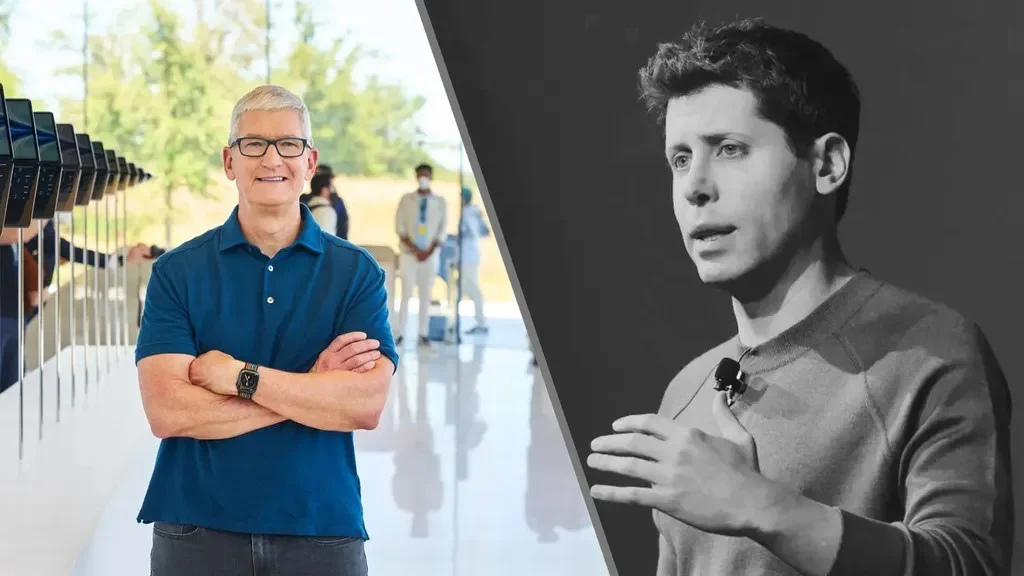
According to the filing, Apple detected "a pattern of theft" by OpenAI employees who previously worked in Cupertino, and argues that the conduct is normalized and exemplified by the company's own leadership. It asks the court to prohibit the use or disclosure of its confidential information, order the return or destruction of the stolen material, set damages, and preserve evidence, with a jury trial and an anticipated motion for preliminary injunctive relief. Before suing, Apple sent a letter in February. OpenAI never responded.
The messages supporting the accusation
The filing cites communications recovered from corporate devices, and Liu's are the most explicit. According to Apple, the engineer exploited an authentication bug to access network storage after resigning, from a former colleague's computer. "LOL, I found out I can access the [network storage], so funny," he wrote. Hours after leaving, he reported that he still had another computer: a laptop he never returned and from which he downloaded more than a thousand pages of technical materials, including manufacturing documents for the brand's product boards. He also allegedly advised a colleague on what confidential material to study before her OpenAI interview.
The allegations against Tan focus on recruiting. Apple says he used code names for unannounced projects to ask "what the plan is" in interviews, and that he asked candidates who were still working at Apple to bring "real parts," CAD files, and prototypes to "show and tell" sessions. One candidate was thrown off by the request: he did not know those parts could leave the office. The filing also describes an internal "Need to Know" document circulated among new hires with Apple's exit protocols — the guide to avoiding the escorted removal that applies to certain resignations — and an instruction to notify OpenAI "as soon as possible" if they were asked to sign anything on their way out. And not to sign.
Why a metal finish is worth a lawsuit
The most serious point in the filing is not the messages: it is the supply chain. Apple says OpenAI got one of its industrial partners to execute a proprietary metal-finishing technique by making it believe it had authorization, and that it approached a second longtime power and battery supplier using internal terminology, asking questions only an insider would know to ask.
That escalates into a federal lawsuit for one reason: Apple's real industrial secret is not the visible design, which anyone can measure with a caliper. It is the processes. A metal finish — the anodizing that achieves an exact color, the blasting that creates that texture, the polishing that avoids fingerprints — is the result of years of iteration in chemistry, tolerances, and machinery, tuned part by part alongside the supplier. The same applies to knowing which manufacturer can meet which tolerance at what yield: that map costs years and billions in trial and error.
That is the shortcut Apple is denouncing. A company that has never manufactured mass-market hardware avoids the highest cost of entering the business if it reaches each supplier knowing exactly what to ask for, with what words, and from whom. The lawsuit sums it up with a deliberately chosen metaphor: the foundations of OpenAI's hardware business are "rotten to the core" — coming from Apple, the fruit imagery is no accident.
io, Jony Ive, and the 400 former employees
OpenAI's hardware arm was born with the acquisition of io, Jony Ive's startup, for $6.5 billion in 2025. The deal brought in more than 50 engineers and designers, many of them with Apple backgrounds: Ive founded it together with Evans Hankey, Scott Cannon, and Tan himself. io Products is listed as a defendant, but neither Ive nor Hankey nor Cannon is accused personally — an absence that does not seem accidental.
The filing also provides the number that puts the exodus in perspective: more than 400 former Apple employees now work at OpenAI. And Tan has a second legal front: the startup iyO, which was already litigating against OpenAI over the "io" trademark, amended its lawsuit in March to add trade secret theft, also naming him among the accused.
What OpenAI said in response
The first reaction came hours after the filing, via X: OpenAI said it has no interest in other companies' trade secrets. On July 14, it expanded on that in a statement to Bloomberg: it takes the allegations seriously, but is not aware of "any evidence that this lawsuit has merit," and defended free competition and the right to work wherever one chooses.
Apple, meanwhile, broadened the offensive: on July 17, the Financial Times reported that it sent legal letters to about 40 former employees now at OpenAI, demanding that they preserve documents and communications relevant to the case. The investigation appears to reach well beyond the two engineers being sued.
What changes for OpenAI's hardware (and for your iPhone)
The timing does not help OpenAI. The company is preparing its first consumer device — Ming-Chi Kuo reported a smartphone with AI agents instead of apps aimed at 2028, while The Information earlier described a smart speaker — as it moves toward a historic IPO. A trade secrets trial hits both efforts: even if there is never a conviction, the process forces internal documents to be opened in discovery (the stage in which the parties must turn over files and communications), slows engineering decisions, and makes every supplier contract more expensive.
For iPhone users, there is one detail much of the coverage overlooked: the agreement that put ChatGPT inside Apple Intelligence is explicitly outside the case — the filing itself makes that clear. The integration remains in place. What no longer exists is the partnership: Bloomberg had reported in May that OpenAI was considering legal action against Apple over how the Siri partnership ended, while Apple prepares the revamped Siri arriving with iOS 27.
A lawsuit that has already served its purpose
A case like this can take years to resolve, and OpenAI is only beginning to defend itself. But for Apple, the lawsuit has been working from day one: it places OpenAI's hardware under a legal cloud before it even exists, chills the recruiting pipeline — the letters to the 40 former employees are a message to the next 400 — and warns suppliers that executing Apple processes without written permission has consequences.
The real unknown lies in discovery. Apple insists that what it has presented is only the tip of the iceberg and that the scale of the problem will emerge in OpenAI's internal documents. If it is right, Sam Altman's company's first device will reach the market with its origin story written in a court docket. If not, Apple will have paid the cost of suing the partner it chose to debut AI on the iPhone.
Frequently asked questions
What is Apple asking the court for?
An order prohibiting OpenAI from using or disclosing its trade secrets, the return or destruction of confidential material, the preservation of evidence, and compensation for damages. It also requests a jury trial and previewed a motion for preliminary injunctive relief to stop the use of its information while the case proceeds.
Does the lawsuit affect ChatGPT on the iPhone?
Not directly. The filing itself clarifies that the 2024 agreement that integrated ChatGPT into Apple Intelligence is outside the case, so the feature remains available. The commercial relationship between the two companies, however, had already been deteriorating before the filing.
Is Jony Ive being sued?
No. io Products, the company he founded and OpenAI bought in 2025, is listed as a defendant, but neither Ive nor his partners Evans Hankey and Scott Cannon are personally accused. The only individuals being sued are Tang Yew Tan and Chang Liu.
What device is OpenAI reportedly developing?
There has been no official announcement. Ming-Chi Kuo reported a smartphone with AI agents instead of apps targeting 2028, and The Information described a smart speaker as a first step. The lawsuit does not reveal the product, but it confirms Apple treats it as direct competition.
Author
Alexis PaezReport based on official announcements and verified public sources at the time of publishing.