Gemini Intelligence on the Pixel 11: which features actually arrive and which stay in the United States

Index
Google dedicated the Pixel 11 to Gemini Intelligence: a phone that does not just answer questions, but gets things done. It orders coffee, books a table, calls a business, translates a video while it plays. The demo was flawless. The conditions say that, for now, a good part of that works in the United States and in English.
What Gemini Intelligence is
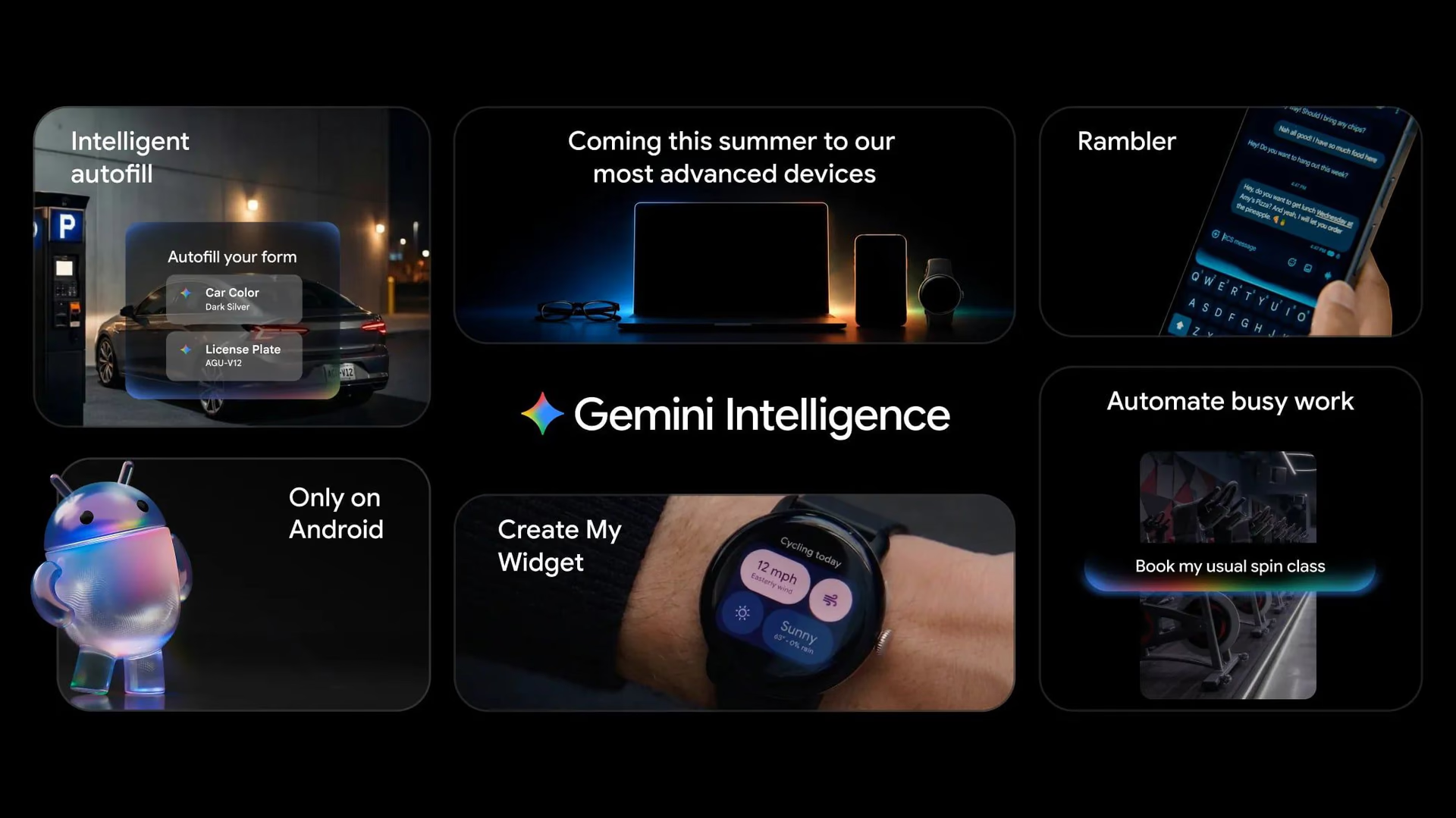
It is the AI layer that runs across the system instead of living inside an app. Gemini reads the context of what you are doing and offers to complete multi-step tasks, now across more than forty applications. It runs on the Tensor G6 with Gemini Nano 4, and Google backs it with Private AI Compute for processing that cannot be handled on the phone.
The underlying idea is not new, but the scope is: moving from suggesting to executing.
Task automation: the headline feature, with a home address
This is what opened the presentation. You ask Gemini to order groceries, request a ride, or book a table, and it does it for you inside the apps you already use. It can even call a business to get an appointment.
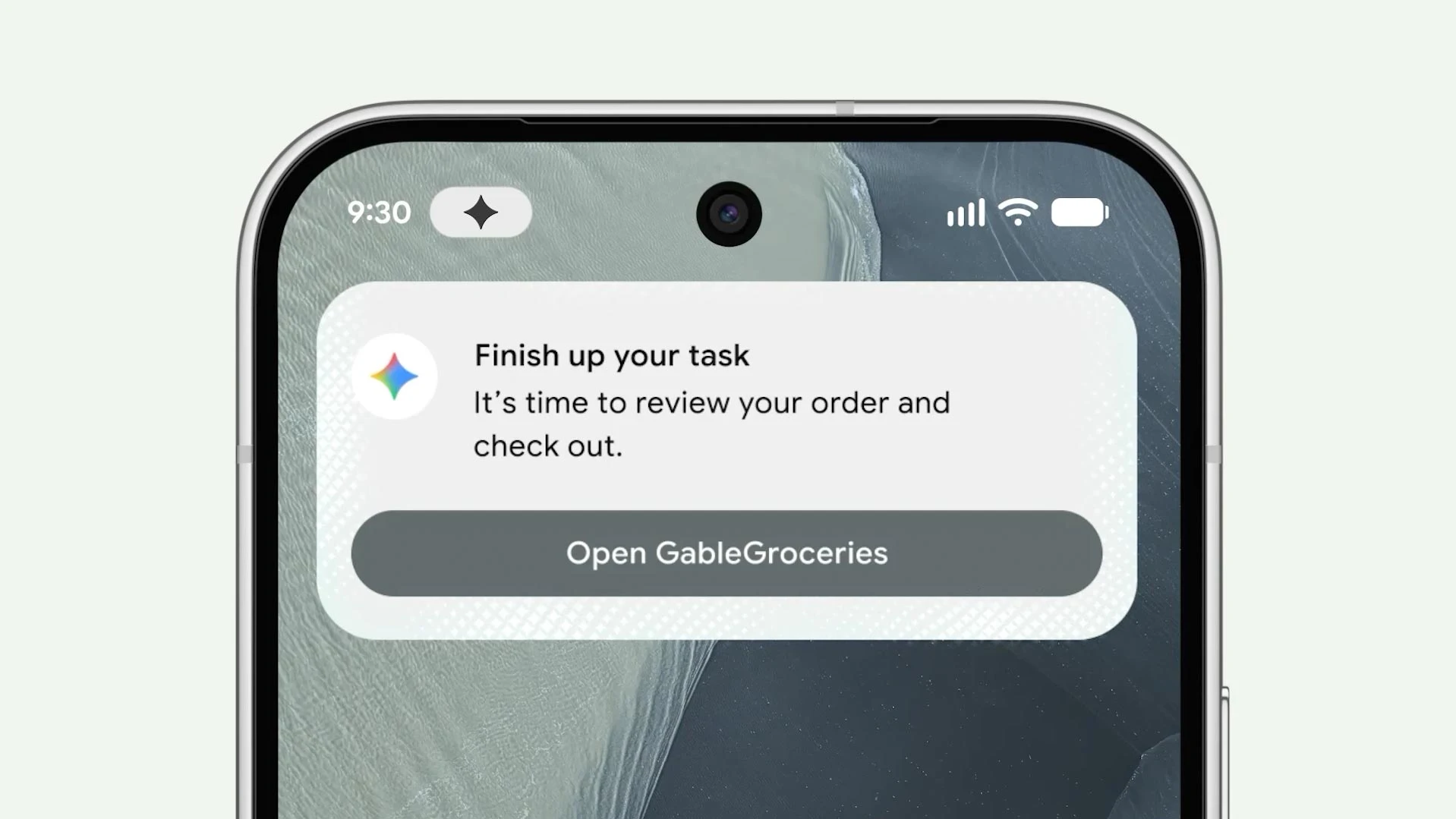
That capability starts for users located in the United States. It is not a language or hardware problem: automation needs integrations with merchants, delivery services, and booking systems that Google has not yet built out in other markets. The same phone, bought in another country, does less.
Rambler: dictation that cleans up what you say
This is the feature that will be used the most and got the fewest headlines. You speak naturally, with filler words and sentences that start over, and Gemini delivers the text in order. It does not transcribe: it interprets intent.
It works by taking over Gboard’s suggestion strip, with a wave animation while you speak. There is no live preview: you tap the check mark when you are done, and the result appears there, after which you can ask it to expand, shorten, or change the tone. It also understands when you mix two languages in the same sentence, which is exactly how many people speak.
Translation: what promises the most and depends the most on where you are
Live Translate has expanded beyond messages: it now dubs videos, podcasts, and voice messages in real time while they play. Voice Translate does the same in calls, preserving the speaker’s tone instead of replacing it with a synthetic voice.
The asterisk is on Google’s own page: the feature is available in selected countries and languages, and it does not work with all media or all apps. Before counting on automatic YouTube dubbing, it is worth checking the language pair you need.
This feature is available on the Pixel 10 and later models, including the Pixel 10 Pro Fold.
It can translate between English and the following languages:
- French, German, Hindi, Italian, Portuguese, and Spanish.
- Indonesian, Japanese, Russian, and Swedish (not available on the 10a)
The rest of the package
Create My Widget builds custom widgets by describing them in words: ask for a panel with wind speed and rain probability, and it builds it. At a Glance now changes depending on where you are. Google Messages pulls flight, location, and calendar data without you asking. And form autofill is now handled on its own.
Separately, and this deserves more attention than it received: Gboard adds sign language-to-text conversion with DeepMind’s model. It is one of the few launch features that does not save time, but enables a conversation that did not exist before.
The conditions, all in one place
Google publishes it, but spread across footnotes. Put in order, it says this: the features are available in selected countries and languages, only for users over eighteen, availability varies by feature, some require a subscription for heavier use, and several need an internet connection even if the chip processes on device.
That last point matters more than it seems. The whole argument for the Tensor G6 is that AI runs locally, but tasks that cross services still depend on the cloud and on the infrastructure Google has deployed in your country.
What remains if you are outside the United States
What works the same anywhere: Rambler, Create My Widget, Circle to Search, At a Glance, autofill, camera features, and everything processed on the phone.
What depends on the country or language: order and reservation automation, calls to businesses, and Live Translate and Voice Translate coverage depending on the language pair.
It is a relevant divide when deciding on a purchase. If the appeal of the Pixel 11 is that it solves your life by ordering food, that part does not travel. If the appeal is writing better, searching faster, and having the phone show you what you need before you ask, that arrives in full.
Conclusion
Gemini Intelligence is the Pixel 11’s strongest argument and also its most uneven one. What runs on the device works for everyone; what requires Google to have agreements with a supermarket does not cross borders, and no update can fix that because the problem is not technical.
The honest read for anyone looking from outside the U.S. market is that you are buying an excellent phone with part of its software in demo mode. The question is not whether those features will arrive, because they probably will. It is how long you will wait, and whether it makes sense to pay today for something you still cannot use.
Frequently asked questions
Does Gemini Intelligence work in Spanish?
Partly. Features that run on the phone, such as Rambler or Create My Widget, operate in the languages supported by the system. Those that depend on cloud services have coverage by country and language, so it is worth checking each feature separately before assuming it is available.
Can order automation be used outside the United States?
Not for now. The ability to order, book, or call businesses on the user’s behalf launched for people in the United States, because it requires integrations with local merchants and services that Google has not yet deployed in other markets.
Do you need to pay for a subscription to use these features?
The phone includes six months of Google AI Pro, half as much as the previous generation. Google says some features may require a subscription for heavier use, so basic use is included, but intensive use depends on the plan.
Author
Alexis PaezReport based on official announcements and verified public sources at the time of publishing.
Comments
Share article
You might also like

The Pixel 11 Pro drops to 12 GB of RAM: to get 16, you have to pay $120 more and get 512 GB
The 256 GB Pixel 11 Pro drops from 16 to 12 GB of RAM: 16 GB is reserved for the 512 GB and 1 TB models. What that means for local AI and which version makes sense.


Camera Looks, Creator Suite, and Magic Capture: what actually helps people filming with the Pixel 11
Film simulations, teleprompter, project folders, and Magic Capture. What each Pixel 11 camera feature solves and where the asterisks are.