Siri AI in Spanish: arrives in October, not with iOS 27

Index
iOS 27 was released on September 14, and Siri AI arrived with it, in beta and only in English. Spanish comes in October, alongside French, Japanese, Korean, and Portuguese. What creates confusion is that Apple Intelligence has been available in Spanish since September: they are two different layers of the same system, and that difference determines what you can use now and what you have to wait for.

When Siri AI arrives in Spanish
Siri AI arrives in Spanish in October 2026. It launched in beta on September 14 only in English, and the second wave of languages includes French, Japanese, Korean, Portuguese, and Spanish. Apple did not give an exact date within the month or clarify whether the five languages will be enabled together or one by one.
Siri AI was the biggest software announcement from the Surprise and Shine event, and the detail that changes the reading is that this is not a pending translation of a feature you already have installed. Siri AI is the complete new assistant, and until your language is supported, what answers on the iPhone is the previous Siri.
Apple Intelligence and Siri AI are not the same thing
This is the misunderstanding that runs through almost all the coverage. Apple Intelligence is the layer of models and features that runs underneath the system. Siri AI is the assistant built on top of that layer. They were announced together and are arriving separately.


The 16 Apple Intelligence languages are English, Danish, Dutch, French, German, Italian, Norwegian, Portuguese, Spanish, Swedish, Turkish, Vietnamese, Simplified Chinese, Traditional Chinese, Japanese, and Korean. So the photo editing tools, Image Playground, Notify Me in Safari, and shortcuts described in natural language have worked in Spanish since September. All of that is covered in the overview of Apple Intelligence features in iOS 27.
What does not work in Spanish is asking Siri for something and having it understand it with your personal context.
The Siri app and the rest of the system
The most visible change when it arrives is that Siri stops being just an overlay on top of the screen. It has its own app on the Home Screen, designed to resume a previous conversation or start a new one, and it uses iCloud to sync those conversations across the devices on the account. Speaking or typing, interchangeably.
It is also embedded inside system apps. In Camera, you can ask it questions about what you are seeing and request actions, such as adding several events to the calendar at once. In Phone, Apple Intelligence surfaces relevant information during the call, such as a flight confirmation code that was in an email.


On larger screens, the app opens in two columns: the conversation list on one side and the active conversation on the other. It is the same design as on the iPhone, with the space divided up.

Actions in third-party apps
This is the part that separates Siri AI from a chatbot. It does not just answer: it executes inside the apps you already have installed, and Apple says it works with more than 300,000 of them.
The examples it showed are concrete: sending a message through WhatsApp, playing a book in Audible, drafting an email in Outlook, searching for a task in Notability, or adding a restaurant recommendation to Tripsy. For developers, adopting the new capabilities does not require rebuilding the app.

On volume: Apple says its users make more than 2.5 billion requests to Siri per day. That installed base is why an assistant that performs actions, and does not just answer, changes more things than a better model would.
Expressive voices and dictation
Siri AI introduces voices you can choose and then adjust for pace and expressiveness. It is not an accent menu: there are two sliders that change how the same voice sounds.

This runs on the most advanced on-device model Apple has built, the one debuting in the iPhone 18 Pro with its A20 Pro chip. The same model improves dictation across the system, which is the less flashy part and the one you notice most: punctuation, spelling, and capitalization come out correctly without manual correction.
Siri across the ecosystem
Siri AI is not an iPhone feature. It appears on the Lock Screen as an orb that responds without unlocking, and it extends to the rest of the devices on the account.

On the watch, it relies on the paired iPhone, and there it coexists with the Audio Intelligence features of watchOS 27: Live Rewind, which transcribes the last 15 seconds, and Siri Recap, which takes notes from a conversation. Both depend on Siri AI, so they start in English and share the same timeline.

The daily limits, and Apple’s three versions
Some features do not run on the device but on servers, and that brings a limit. So far, there is agreement. What does not line up is what happens when you reach it, and there are three different official formulations.
On stage, Apple said some features would have usage limits because they depend on server models, and that expanded access would be available with most iCloud+ plans. The wording in the iPhone 18 Pro press release is more specific: it states there are daily limits that apply to Siri AI, intelligent photo editing tools, Image Playground, and AFM 3 Cloud models in Shortcuts, and clarifies that they vary depending on the feature, the complexity of the request, system demand, and other factors. The support document, however, says that expanded access will be available for a fee, and places the implementation of those limits starting with the 2027 software versions.
All three are Apple sources, and they do not say the same thing. One talks about a benefit included in a subscription many already pay for, another about a separate fee, and the third moves the clock by a year. The honest approach is to state it that way until Apple unifies the message, rather than choosing the most convenient version.
Who is left out
Three exclusions that do not appear in the headlines.
The first is the European Union. Siri AI is not available at launch on iOS, iPadOS, or watchOS in the bloc’s 27 countries, including Spain, and Apple did not provide a timeline. The reason the company gives is its interpretation of the DMA: it argues that it would force Apple to give any virtual assistant direct access to private data and the ability to control other installed apps. It proposed an alternative framework, and the European Commission did not accept it. The curious part of the cutoff is that macOS 27 and visionOS 27 do have it: the exclusion is by operating system, not by the entire region. The in-depth analysis of that decision and its effect on LATAM explains why the region ended up on the favored side for once.
The second is mainland China. Apple Intelligence does not work on devices bought there, nor with an account from that region, and Apple’s Reference Image capture is also not available at launch in that market or in the European Union.
The third is age-based: Siri AI is not available for children under 13.
Conclusion
If you are in LATAM with a compatible iPhone, the reasonable move is to update and use what is already available in Spanish, which is quite a lot, without expecting Siri to change yet. The October update is the one that matters, and it is worth looking at it with expectations set for a beta, not a finished product.
If you are in Spain or any European Union country, the October date is not enough for you: the language arrives, the assistant does not. On iPhone and iPad, the wait remains open-ended and without a deadline, and the only enabled path is the Mac.
And if what interests you is what the new Siri can do beyond the timeline, the overview of features and requirements remains the starting point. What changed with the launch is not the list of capabilities: it is that now we know when and under what conditions.
Frequently asked questions
When does Siri AI arrive in Spanish?
In October 2026. The beta started on September 14 only in English, and Spanish enters the second wave alongside French, Japanese, Korean, and Portuguese. Apple did not specify a date within the month or whether the five languages will be enabled at the same time.
Is Apple Intelligence the same as Siri AI?
No. Apple Intelligence is the system’s layer of models and features, and it has been available in 16 languages, including Spanish, since the September versions. Siri AI is the assistant built on top of that layer and follows its own timeline. You can have Apple Intelligence working in Spanish while the previous Siri is still answering.
Does Siri AI work in Spain?
Not at launch. Apple left it out of iOS, iPadOS, and watchOS in the 27 European Union countries because of its disagreement with the interpretation of the DMA, and it did not give an arrival timeline. It is available on macOS 27 and visionOS 27.
What iPhone do I need to use Siri AI?
A model with Apple Intelligence enabled and the system version up to date. Expressive voices and improved dictation rely on the most advanced on-device model, which debuts in the iPhone 18 Pro, so that is where the experience is complete. Siri AI is also not available for children under 13.
Author
Alexis PaezReport based on official announcements and verified public sources at the time of publishing.
Comments
Share article
You might also like


Recent articles
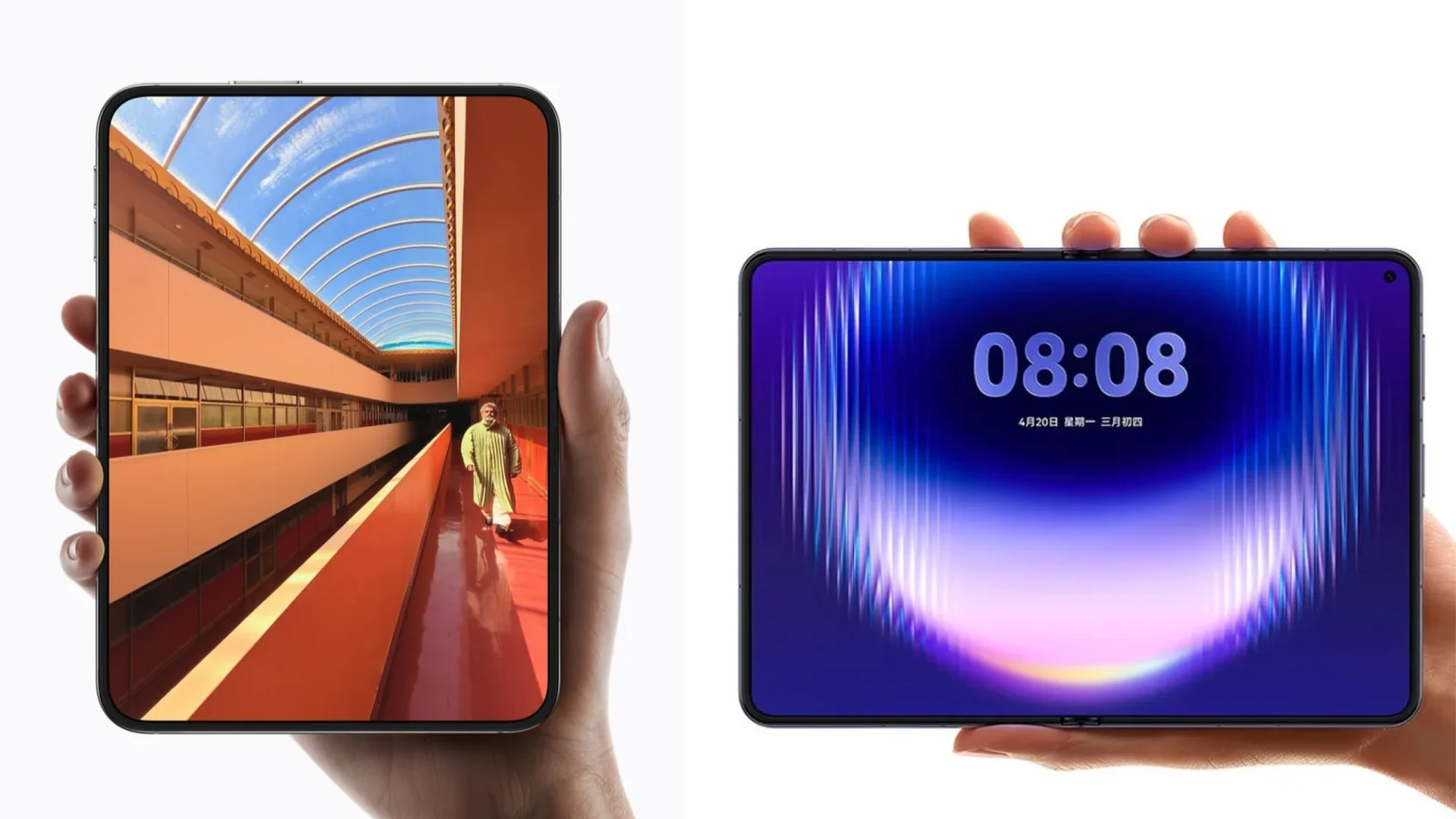
Huawei Pura X Max vs iPhone Duo: what changes beyond the foldable screen
Huawei Pura X Max vs iPhone Duo: size, multitasking, cameras, styluses, and charging. What changes in use and which one better fits your priorities.